
INTRODUCTION: WHY MOST BRANDS MISUNDERSTAND CUSTOMIZATION
In the candle industry, the word “customization” is often misunderstood, over-promised, or completely misused. Many new founders believe customization is a binary choice: either you sell generic private label candles, or you invest heavily in full custom manufacturing. This belief creates unnecessary fear for small brands and unnecessary risk for growing ones.
Small brands often assume customization is out of reach because of budget limits. As a result, they stay in private label longer than they should and struggle to build differentiation. On the other hand, brands with some early success may rush into full custom production too quickly, locking themselves into high minimum order quantities, long development timelines, and cash flow pressure they are not yet ready to handle.
The reality is much more practical: customization is a ladder, not a switch. Each level offers a different balance of control, uniqueness, cost, and operational responsibility. Semi-custom candle production exists to support this reality. It allows brands to customize what matters most first, while keeping risk under control.
This guide is written to do three things clearly:
- Explain candle customization as a step-by-step ladder
- Show what is realistically possible at different budget levels
- Help brands make manufacturing decisions that support long-term growth
If you are building a candle brand for durability and scale—not just a short-term launch—understanding this ladder is essential.
THE CANDLE CUSTOMIZATION LADDER (BIG PICTURE)
Candle customization can be divided into five clear levels. Each level builds on the previous one. Skipping levels usually increases financial and operational risk, while progressing step by step improves stability.
| Level | Manufacturing Model | Budget Pressure | Brand Control | Operational Risk |
|---|---|---|---|---|
| Level 1 | Private Label | Very Low | Minimal | Very Low |
| Level 2 | Light Semi-Custom | Low | Partial | Low |
| Level 3 | Core Semi-Custom | Medium | Strong | Controlled |
| Level 4 | Advanced Semi-Custom | Medium–High | Very Strong | Medium |
| Level 5 | Full Custom | High | Maximum | High |
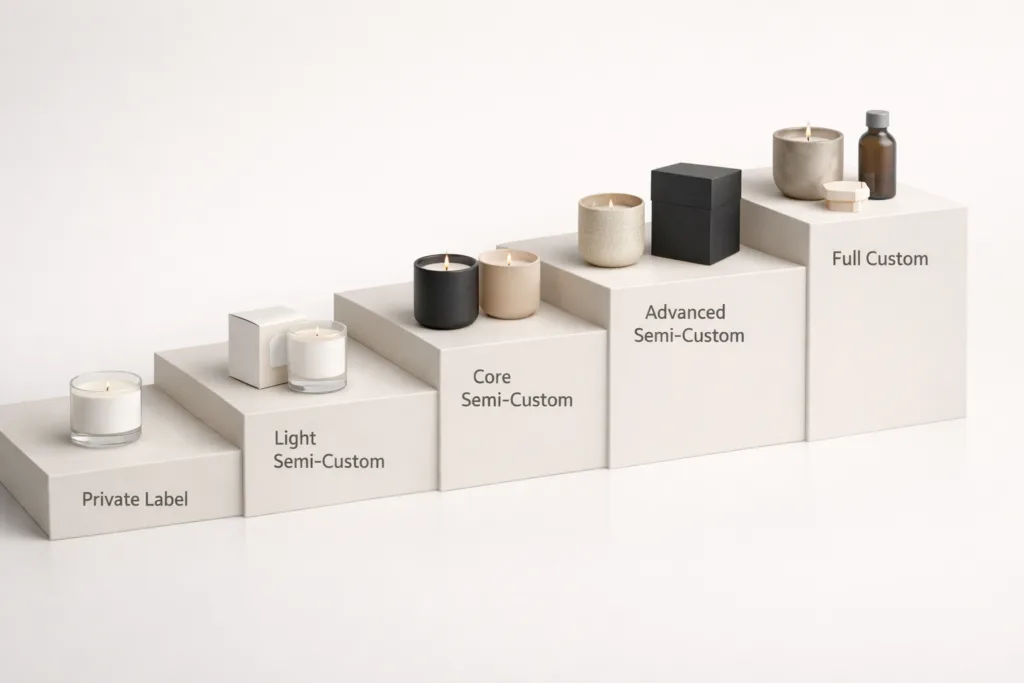 The goal is not to reach Level 5 as fast as possible. The real goal is to match your customization level to your brand stage, cash flow, and sales confidence.
LEVEL 1 — PRIVATE LABEL (THE TESTING STAGE)
Private label candles are pre-developed products manufactured at scale. Brands apply their own labels and sell them under their own name. This is the fastest and least risky way to enter the market.
What You Can Customize at Level 1
- Brand name
- Logo and label artwork
- Sometimes outer box printing
What You Cannot Customize
- Wax formulation
- Fragrance composition
- Vessel shape and size
- Wick structure
- Burn performance
Why Private Label Exists
Private label exists for one reason: speed with minimal risk. It allows founders to answer a very basic but critical question: will customers buy candles from this brand?
This level is ideal for first-time founders, influencers testing product extensions, seasonal collections, and short-term promotions. It is a testing tool, not a brand-building engine.
The Core Limitation
Private label products are shared. The same candle base may appear under dozens of different brand names. Customers can easily compare prices, and brand loyalty is fragile. Long-term differentiation is extremely difficult.
Private label should be treated as a temporary experiment, not a permanent strategy.
LEVEL 2 — LIGHT SEMI-CUSTOM (SMART ENTRY-LEVEL CUSTOMIZATION)
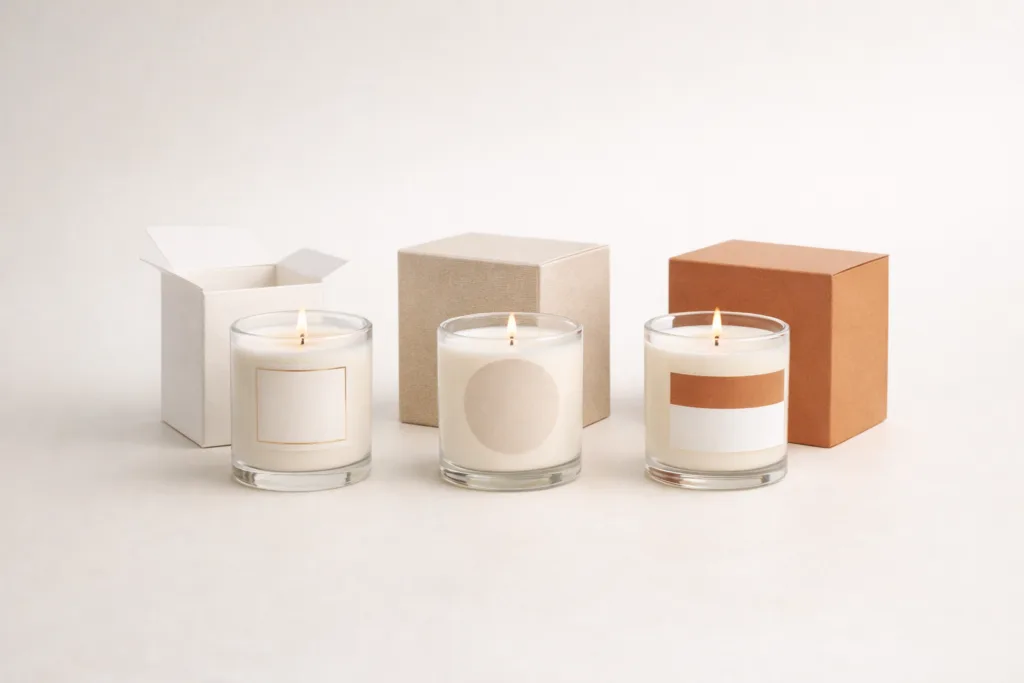 Light semi-custom production is where customization begins to create real value without introducing major risk. This level is designed specifically for small budgets with serious intent.
What Changes at Level 2
Instead of only cosmetic changes, brands begin making controlled manufacturing decisions. Typical options include:
- Selecting from multiple pre-tested wax blends
- Choosing fragrances from a professional fragrance library
- Matching wick systems to specific vessels
- Fully custom labels, boxes, and printed materials
Why This Level Works
Even though fragrances are selected rather than invented, the act of curation creates identity. Consumers respond to cohesion, not technical novelty. When scent, packaging, and story align, the product feels intentional.
Budget Reality
Light semi-custom requires higher MOQs than private label, but the investment remains accessible. For many brands, this is the first stage where the product truly feels like their own.
A Practical Level 2 Strategy
Brands with limited budgets should focus on high-impact elements:
- Strong packaging design
- A small, cohesive scent range
- Clear naming and storytelling
Trying to customize everything at once is unnecessary and risky at this stage.
LEVEL 3 — CORE SEMI-CUSTOM (WHERE REAL BRANDS ARE BUILT)
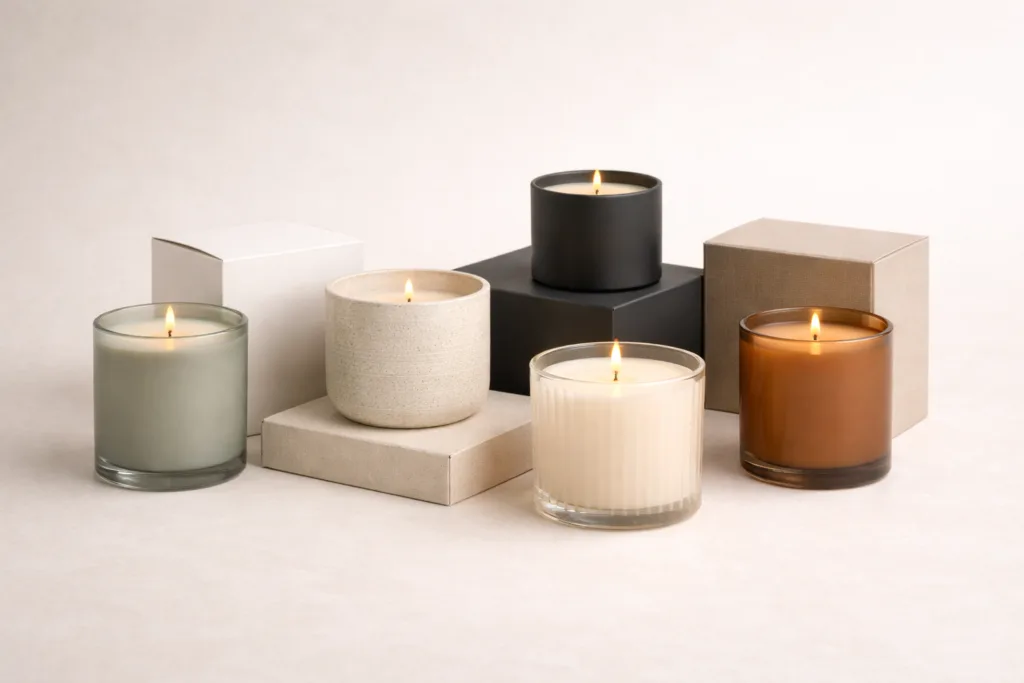 Core semi-custom is the most important stage for long-term brand growth. This is where a candle line becomes recognizable and difficult to replace.
Core Custom Elements
At this level, customization becomes structural:
- Custom fragrance blending using multiple notes
- Brand-specific scent profiles
- Exclusive scent naming systems
- Vessel color, finish, and size selection
- Inner packaging and unboxing experience design
Why Level 3 Changes Everything
Once customers associate a specific scent with your brand, price comparison becomes less relevant. They are no longer buying “a candle.” They are buying your candle.
Performance and Consistency
Core semi-custom still relies on proven wax systems and validated production processes. This ensures consistent burn quality while allowing meaningful differentiation.
Business Impact
Brands at this level often see improved margins, higher repeat purchase rates, and increased acceptance from boutiques and concept stores.
LEVEL 4 — ADVANCED SEMI-CUSTOM (SIGNATURE DEVELOPMENT)
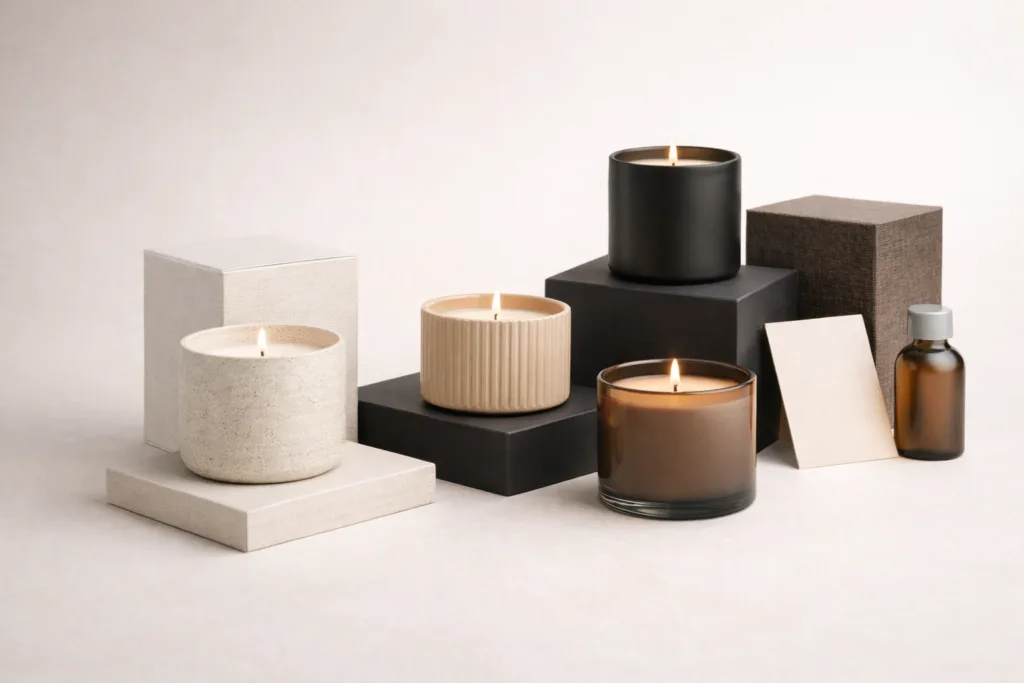 Advanced semi-custom production is designed for brands that already have traction and want deeper ownership without entering full custom risk territory.
Advanced Customization Options
- Semi-exclusive or time-bound fragrance formulas
- Shared custom vessel molds
- Market-specific wax adjustments
- Defined burn-time targets
- Sustainability-focused material upgrades
Why Brands Choose This Level
This stage strengthens intellectual property while preserving manufacturing efficiency. It allows brands to defend their positioning without long R&D cycles.
Key Advantage
Advanced semi-custom maintains scalability. Brands can grow volume without restarting the entire development process.
LEVEL 5 — FULL CUSTOM (MAXIMUM CONTROL, MAXIMUM RISK)
Full custom candle production starts from zero and requires full responsibility.
What Full Custom Involves
- New wax formulation research
- Proprietary fragrance development
- Custom vessel tooling
- Extensive burn and safety testing
- Regulatory and compliance validation
Who This Level Is For
This level is best suited to established brands with predictable demand, strong cash flow, and long-term forecasting ability.
Common Misuse
Many brands choose full custom for emotional reasons rather than strategic ones. Without volume and stability, full custom can damage margins and slow growth.
CUSTOMIZATION BY BUDGET (PRACTICAL GUIDANCE)
 Small Budget Brands
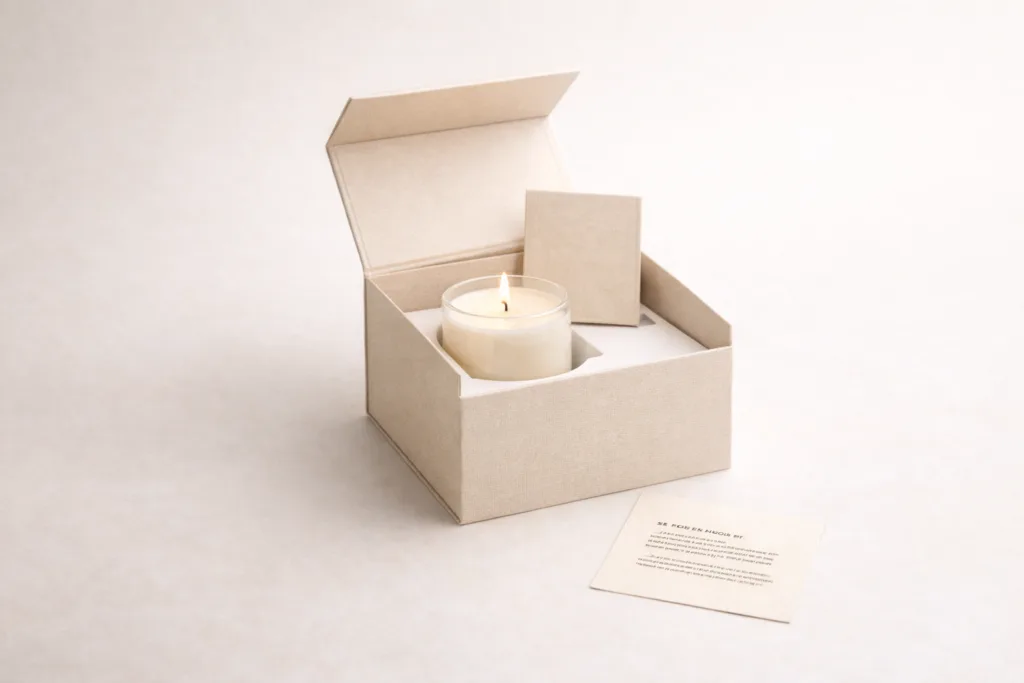
Focus on packaging quality, scent selection, and storytelling.
Medium Budget Brands
Add custom fragrance blends, vessel differentiation, and stronger positioning.
Growing Brands
Invest in signature scents, sustainability upgrades, and performance optimization.
Customization should follow revenue, not hope.
QUALITY, CONSISTENCY, AND COMPLIANCE
As customization increases, so does responsibility. Semi-custom production relies on standardized systems to ensure consistency across batches, proper labeling, and compliance with market regulations.
Quality control protects brand reputation and customer trust.
SUSTAINABILITY AS A CUSTOMIZATION LAYER
Sustainability does not need to be all-or-nothing. Brands can introduce eco-friendly materials step by step, starting with packaging and moving toward wax and vessel choices as budgets grow.
SALES-DRIVEN CLIENT QUESTIONS (REAL WORLD)
Can I start small and upgrade later? Yes. Semi-custom production is modular.
Will my candle smell consistent across batches? Yes. Systems are standardized.
Does semi-custom improve margins? Yes. Differentiation increases perceived value.
Is sustainability possible on a budget? Yes. Gradual upgrades are available.
Is semi-custom suitable for international markets? Yes. Compliance-ready materials are used.
FINAL CONCLUSION
The strongest candle brands do not rush into full customization. They climb intentionally, matching their level of customization to real sales data and operational readiness.
Semi-custom candle production is not a compromise. It is a strategic growth system designed for real businesses.
FREQUENTLY ASKED QUESTIONS (FAQ)
1. Can small or new brands really afford semi-custom candle production?
Yes. Semi-custom production is specifically designed to work in stages. Brands with small budgets can start at the Light Semi-Custom level by focusing on curated fragrance selection, packaging design, and a limited SKU strategy. This approach keeps initial investment controlled while still allowing the product to feel intentional and brand-driven.
2. What is the real difference between semi-custom and full custom candles?
The difference is not only in how unique the product is, but in risk and responsibility. Semi-custom uses proven wax systems, validated production processes, and existing infrastructure, which reduces development time and financial risk. Full custom requires new R&D, tooling, and extensive testing, making it suitable only for brands with stable volume and strong cash flow.
3. Will my candle remain consistent in scent and quality as I scale?
Yes. One of the biggest advantages of semi-custom production is consistency. Because formulas and processes are standardized and tested, each batch is produced to the same performance and scent specifications. This protects customer trust and supports repeat purchases as the brand grows.
4. Can I upgrade my customization level in the future without starting over?
Absolutely. Semi-custom production is modular by design. Brands can begin with basic customization and gradually add deeper elements—such as signature scent blends, vessel differentiation, or sustainability upgrades—without rebuilding the entire product from scratch.