
Why Candle Labels Matter for Your Brand
Candle labels represent far more than basic product identification—they deliver sensory cues, reinforce aesthetics, and provide regulatory information all in one. A compelling label anchors brand trust, especially for luxury scented creations using soy, coconut, rapeseed, or beeswax blends, like those crafted by Circe Home. From minimalist apothecary jars to bold statement vessels, every choice in your candle branding stickers will impact shelf appeal, customer experience, and regulatory compliance.
Overview of Candle Label Printing: Methods & Key Choices
How your labels are printed profoundly shapes both the cost structure and visual quality. Here’s an overview of the main candle label printing options and their manufacturing implications:
- Digital Printing: Best for short runs and prototypes. Fast, flexible, supports variable data (e.g., unique scent names or batch codes). No plate fees, so ideal for MOQs as low as 500–1000pcs.
- Offset Printing: Delivers superior detail and Pantone color consistency. Better suited to large batches (MOQs generally 3,000+). Initial plate cost is high but per-label unit price drops sharply at scale.
- Flexographic Printing: Balances speed and quality for medium to high volumes. Supports specialty inks, metallics, and varnishes.
- Screen Printing: Used for specialty effects like raised UV, foil, or printing directly on glass vessels. Higher cost, but delivers tactile appeal for luxury brands.
Circe Home Lab Insight: For emerging brands, digitally printed candle branding stickers on coated paper or waterproof synthetics are most cost-effective—delivering crisp graphics at MOQs of only 500–1000pcs without large upfront tooling costs.
Label Materials: From Classic Paper to Luxe Film Laminates
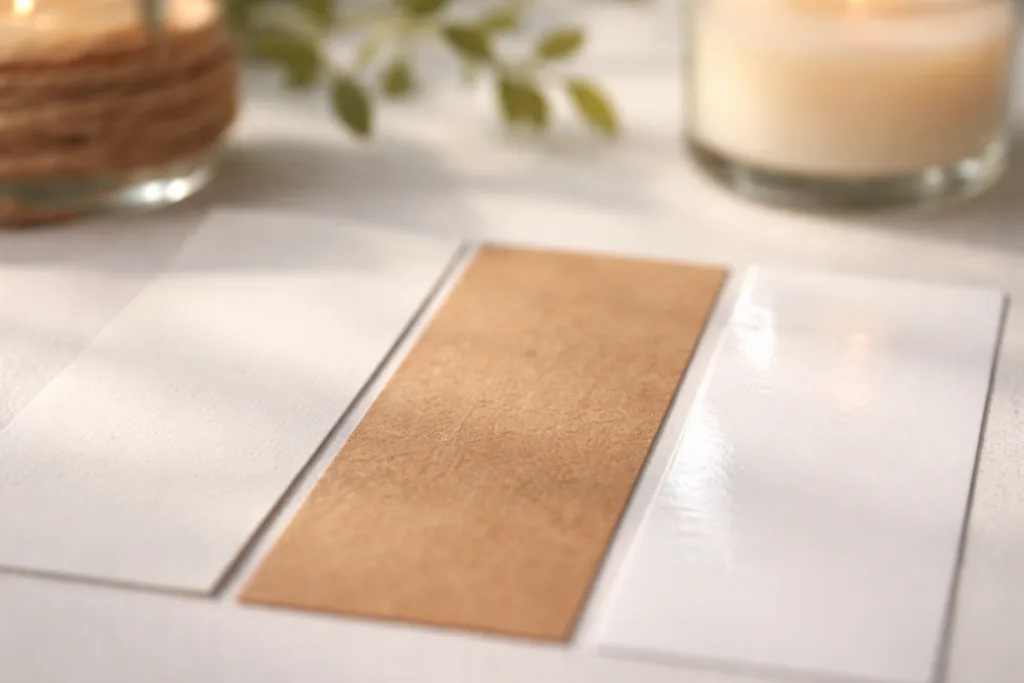
The material you select projects your product story. Let’s compare the most common candle label materials:
| Material | Finish | Durability | Water/Oil Resistance | Typical Use |
|---|---|---|---|---|
| Coated Paper | Matte / Gloss | Good | Low–Medium | Classic branding, cost control |
| Kraft Paper | Uncoated | Fair | Low | Eco-minimalist, vintage looks |
| BOPP Film (Polypropylene) | Gloss / Matte | Excellent | High | Luxury, spa, kitchen candles |
| Transparent/Clear Film | Gloss | Excellent | Excellent | No-label look, glass jars |
| Textured Paper | Linen / Felt | Good | Medium | Premium hand-crafted lines |
Specialty Foils and Laminates
Foil stamping, spot gloss, and soft-touch lamination add multi-sensory appeal. These are best reserved for higher MOQs or flagship products due to additional process steps and costs.
How Custom Labels MOQ (500–1000pcs) Empowers Brand Agility
The evolution of digital label presses now allows artisanal and startup candle brands to afford small-batch, high-quality labels at MOQs as low as 500–1000pcs. This unlocks several advantages for growing home scent collections:
- Multiple Fragrance Variations: Test and compare several scents (e.g., amber, fig, cedar) without over-committing inventory.
- Seasonal or Limited Edition Runs: Launch holiday or collaboration candles with custom branding stickers, quickly and cost-effectively.
- Fast Market Feedback: Refine visual identity and label messaging based on real-world customer response before scaling up.
Startups Tip
Order parallel sets of candle branding stickers for glass, tin, and cardboard outer packaging—matching your MOQ to your smallest vessel batch to reduce waste.
Reducing Initial Branding Costs with Stickers
Stickers (pressure-sensitive labels) offer the most cost-effective and adaptable solution at the launch phase. Here’s how to maximize impact and control cost:
- Consolidate SKUs: Standardize label size and shape across vessels where possible, and print scent or variant data via digital batch overlays to reduce art charges.
- Choose Simple Finishes: Matte or gloss turns, without foil, embossing, or complex die-cuts, keep startup costs low. Add tactile finishes later as sales scale.
- Use Multi-Purpose Labels: Design a single branding sticker that includes key regulatory details (CLP, IFRA, warnings) for use on both vessel and outer carton, especially for initial orders.
- Opt for Digital Printing: Skip plate fees and enable batch changes when your MOQ is under 1,000pcs per scent or design.
If you work with a specialty OEM like Circe Home, early-phase packaging consultations can further streamline material selection, compliance, and print prep for niche candle markets.
Candle Label Printing: Compliance, Scent Data & Safety
In regulated markets, labels are legally required to carry hazard statements, ingredient disclosures, batch codes, and country-of-origin marks. For EU/EAA, CLP and IFRA data must be present and legible, often in multiple languages depending on market. For complex blends (e.g., soy wax candles with 10% essential oil), print legibility and ink durability must stand up to fragrance load, curing time, and candle handling.
- Test label adhesives if oils are used heavily or the vessel surface is textured/frosted.
- Consider waterproof synthetics for bathroom/kitchen candles or moist environments to avoid label peel or smudge.
- Batch codes support traceability and recall compliance—a key step for retail/WMS integration.
Label Design: From Visual Branding to Sensory Impact
A successful candle label extends beyond logo placement. It communicates brand mood, scent direction, and value proposition in one cohesive experience. Consider:
- Scent Storytelling: Use evocative descriptors (“Midnight Bamboo & Amber,” “Bergamot Linen”) with support graphics to reinforce the fragrance profile.
- Visual Hierarchy: Prioritize brand mark, scent name, net weight, and warnings in clear, easy-to-read layouts.
- Finishes & Textures: Introduce subtle soft-touch or linen finishes selectively, once core SKUs are established and MOQs exceed 2,000pcs.
- Color Plan: Align palette with wax and vessel shade for an integrated look, e.g., deep emerald green for cedar and patchouli blends.
Label Templates
Request design templates from your label printer, with proper bleed and safe zones. Many suppliers provide dielines for common jar sizes (e.g., 220g/8oz, 400g/14oz), as well as resources for CLP and IFRA compliance placement.
Production Flow: Integrating Custom Labels into Candle Manufacturing
In the workshop, label application must align with vessel type, wax finish, and quality control. Here’s a typical process:
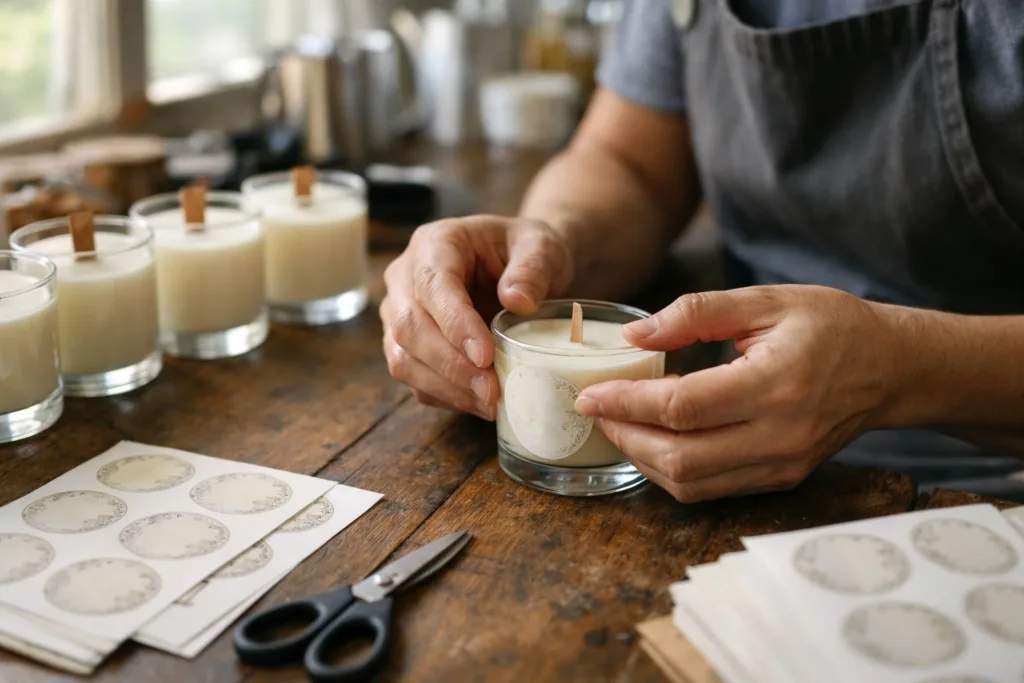
- Vessel Cleaning: Remove all dust/oil for optimal sticker adhesion.
- Manual or Semi-Auto Application: For MOQs under 1,000pcs, manual application ensures alignment; as volume scales, automated rollers improve efficiency and uniformity.
- Quality Control Checks: Check for air bubbles, edge curl, or smudged text—particularly with matte/uncoated stocks and heavily scented candles.
- Outer Packaging Sync: Apply matching branding sticker to both vessel and carton for a cohesive unboxing experience.
Sustainability & Compliance: Eco-Labeling Best Practices
Responsible production is central to Circe Home’s approach, and increasingly demanded by discerning buyers. Top practices include:
- FSC-Certified Paper Stocks: Ensures fibers from responsibly managed forests.
- Soy-Based Inks: Reduce VOCs and support compostability for container and refill programs.
- Removable Adhesives: Enable easy jar reuse or recycling—popular for luxury scented candles in glass or ceramic vessels.
- Minimal Packaging: Use multi-use branding stickers so one label serves both as front identifier and seal.
- CLP/IFRA Upgrades: Always check regulatory standards when ordering new fragrances or shifting supplier markets.
Application Scenarios: How Custom Candle Labels Elevate the Experience
Candle branding stickers directly shape how your scented collection is perceived and enjoyed across:
- Luxury Gifting: High-contrast gold foil on dark BOPP films signals exclusivity—best for special editions and holiday launches.
- Private-Label Retail: Efficient digital labels with batch-shifting design keep MOQs down as you send samples to boutiques or spas.
- Wellness & Scent Therapy: Clean, minimalist matte labels for vegan soy wax blends reinforce a modern, responsible ethos.
- Boutique Collaborations: Rapid prototype batches (e.g., 250–1,000 pcs) enable quick creative pivots as you co-brand or test pop-up events.
Summary: Making Smart Label Choices for Lasting Brand Value
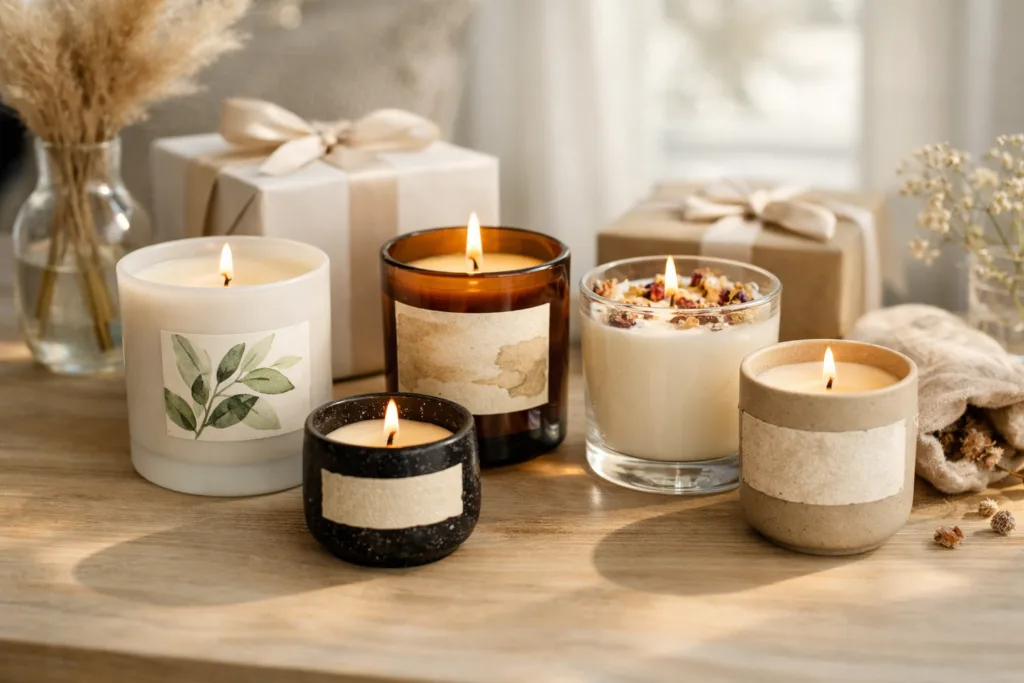
Investing in the right candle label printing pathway—especially with MOQs of just 500–1,000pcs—empowers new and scaling brands to experiment, comply, and impress. Use high-impact materials and sharp design logic to tell your scent story. Review regulatory checklists, material performance, and alignment with vessel type to guarantee a captivating, compliant final product. By leveraging digital sticker printing and sustainable stocks, your brand can balance cost and luxury from day one.
Frequently Asked Questions
What is the ideal MOQ for custom candle labels?
Digital printing allows you to order as few as 500–1,000pcs per design, making it accessible for startup and limited edition candle launches. Higher-end techniques may require larger MOQs.
Which material is best for candle branding stickers?
BOPP film offers exceptional oil and water resistance for glass and tin vessels, while coated paper provides a classic, cost-effective look suitable for most scenarios.
How does digital printing reduce label costs?
Digital presses eliminate upfront plate charges and support multiple varieties per MO. This means lower initial cost, easier design tweaks, and faster turnaround for boutique and new brands.
What label design details are legally required?
Legal requirements typically include scent/ingredient disclosures, batch code, weight/volume, producer/distributor info, and CLP/IFRA warnings if selling in the EU. Always consult regulations for your target market.
How do I ensure sticker labels remain durable on candle vessels?
Use strong adhesives, test on your final waxed vessel, and avoid label materials susceptible to smudging or peeling from fragrance oil contact or moisture. BOPP and waterproof synthetics are top performers.
Can one label cover both vessel and box?
Yes, for early-stage runs, design a versatile sticker with all required product and warning information. This reduces design and print costs, and simplifies inventory management for SKUs with smaller MOQs.