
 Introduction: The Problem Almost Every Personal Brand Faces
If you are building a personal brand—whether it is candles, home fragrance, skincare, or lifestyle products—you will eventually run into one unavoidable question:
Why does every factory ask for such a high MOQ?
You may only want 100 or 200 units to test the market. You may already have customers waiting. You may even have strong branding, beautiful visuals, and a clear vision. And yet, once you reach out to manufacturers, you keep hearing the same numbers:
- 500 units
- 1,000 units
- Sometimes even more
At this point, many founders assume one of three things:
- The factory is being inflexible
- The factory does not understand small brands
- There must be another supplier somewhere offering “real customization with low MOQ”
This assumption is understandable—but it is also where many personal brands start making expensive mistakes.
MOQ is not a random rule. It is not a barrier designed to block creativity. It is a reflection of how manufacturing actually works.
The brands that survive are not the ones who fight MOQ head-on. They are the ones who learn how to work with it.
This article explains how.
What MOQ Really Means (And Why It Exists)
 MOQ stands for Minimum Order Quantity. Most people know the definition. Very few understand the logic behind it.
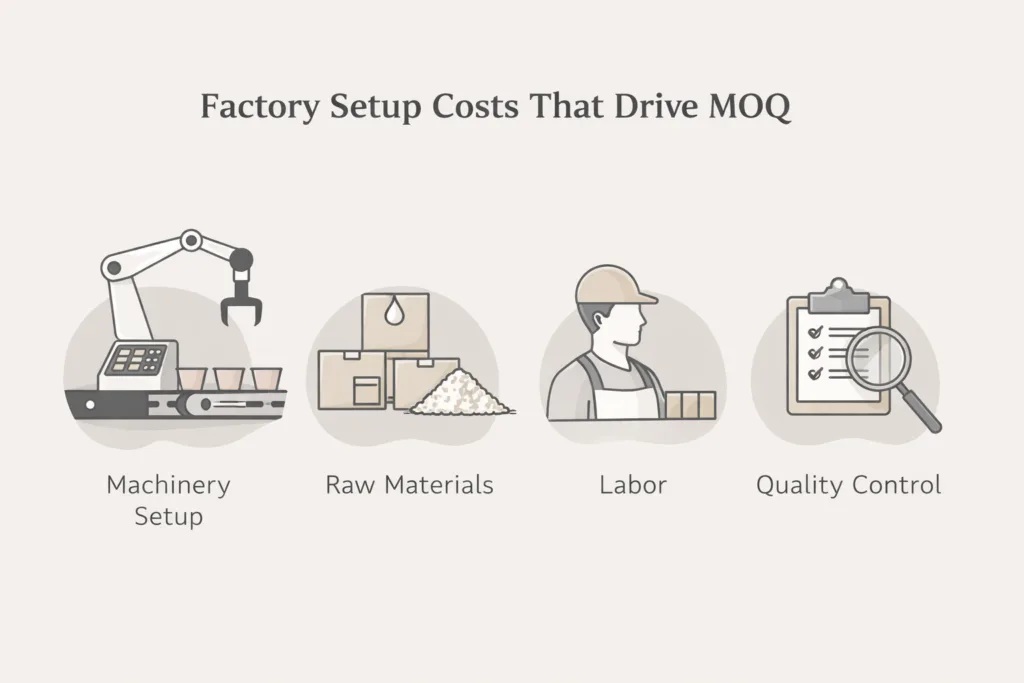
From a factory’s perspective, MOQ exists for four main reasons:
1. Setup Costs Are Real
Before a single unit is produced, a factory must:
- Prepare materials
- Set up machines
- Calibrate filling lines
- Adjust molds or tooling
- Schedule labor
These steps cost almost the same whether the order is 100 units or 1,000 units. Small orders do not remove these costs—they simply spread them across fewer products.
2. Material Purchasing Has Thresholds
Wax, fragrance oils, glass jars, wicks, labels, and packaging are rarely purchased one-by-one. Suppliers upstream also have MOQs.
When a brand requests very small quantities, the factory often has to:
- Break bulk materials
- Hold leftover inventory
- Absorb waste
This risk must be priced in—or avoided entirely.
3. Production Lines Favor Consistency
Factories are optimized for repetition. Changing scents, vessels, labels, or packaging frequently slows production and increases error rates.
Low MOQ + high customization = operational friction.
4. Risk Allocation
When an order is too small, the factory carries more risk than the buyer. If anything goes wrong, the factory absorbs time, labor, and sometimes material loss.
MOQ is how factories protect themselves from unstable production.
Once you understand this, MOQ stops feeling personal. It becomes structural.
Why “Low MOQ Full Customization” Is Usually a Trap
 Many personal brands spend months searching for suppliers advertising:
“Low MOQ, fully customized, perfect for startups.”
Sometimes these suppliers exist. More often, they create hidden problems.
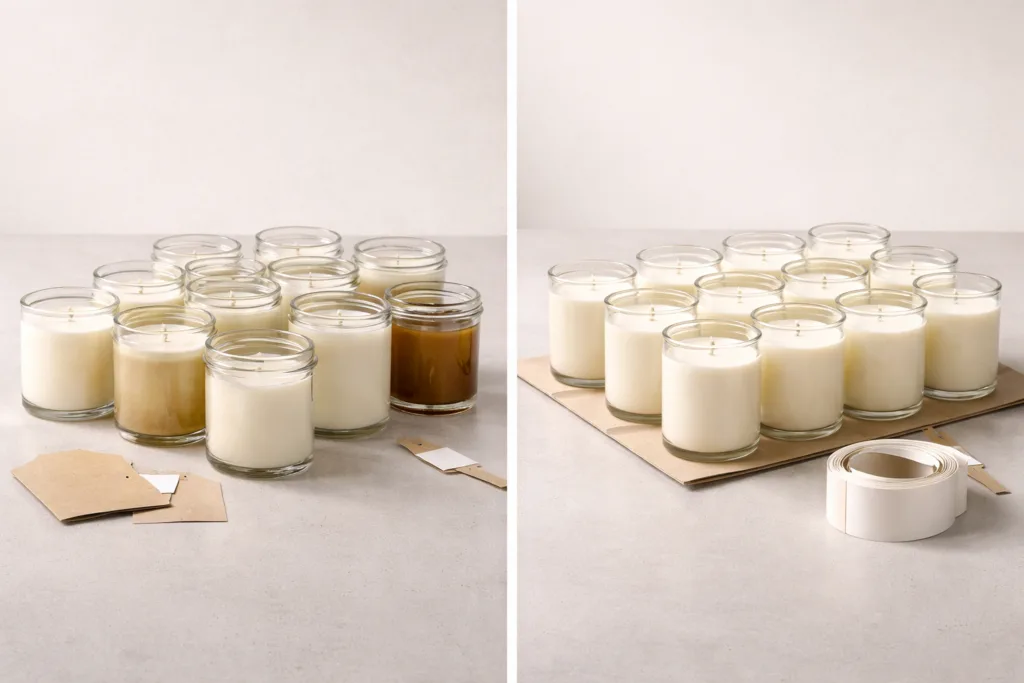
Common Issues with Extremely Low MOQ Customization
- Inconsistent quality between batches
- Limited fragrance or material options
- Higher unit cost that kills margins
- No scalability once sales increase
- Sudden MOQ increases after first order
In other words, what looks friendly at the beginning often becomes a bottleneck later.
A brand does not fail because MOQ was too high.
A brand fails because it built its foundation on a model that cannot scale.
The Core Conflict: Brand Vision vs. Manufacturing Reality
Personal brands are built on differentiation.
Manufacturing is built on standardization.
This is not a moral conflict. It is a practical one.
The key question is not:
“How do I avoid MOQ?”
The better question is:
“At my current stage, where should I customize—and where should I compromise?”
This is where strategy begins.
Stage-Based MOQ Strategy for Personal Brands
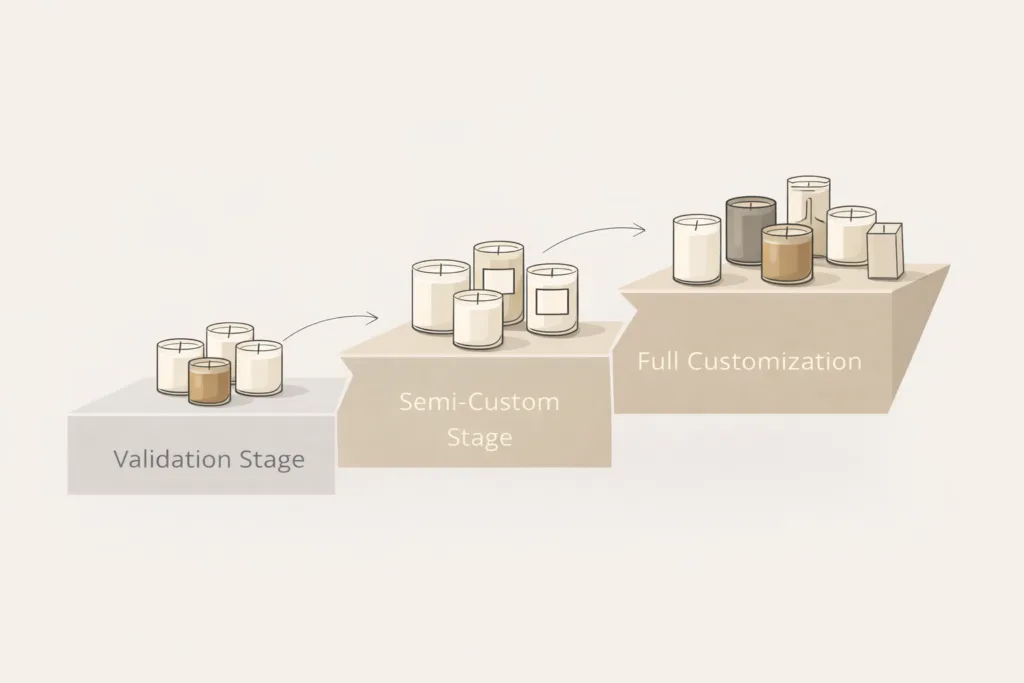 Successful personal brands rarely jump straight into full customization. They move through stages.
Stage 1: Validation Stage (0–300 Units)
Goal: Test demand, not perfection
At this stage, the biggest risk is not limited customization. The biggest risk is unsold inventory.
Recommended approach:
- Use standard vessels
- Use existing wax formulas
- Customize labels and packaging only
- Limit scent options
This allows you to:
- Keep MOQ manageable
- Control costs
- Gather real customer feedback
Many founders delay launch because they want everything to be “perfect.” In reality, clarity comes from selling, not planning.
Stage 2: Semi-Custom Stage (300–1,000 Units)
Goal: Build brand identity while staying flexible
This is where most healthy personal brands operate for a long time.
Smart customization choices:
- Custom fragrance development based on existing bases
- Slight vessel modifications (color, finish, lid)
- Custom gift boxes
- Consistent sizing across SKUs
At this stage, MOQ starts working with you instead of against you. Production becomes smoother, and unit costs begin to make sense.
Stage 3: Full Custom Stage (1,000+ Units)
Goal: Long-term differentiation and scale
Now full customization becomes practical:
- Custom molds
- Exclusive fragrance formulas
- Unique packaging structures
- Dedicated production runs
This level of customization only makes sense when volume justifies investment.
Brands that reach this stage no longer ask, “Why is MOQ so high?”
They ask, “How do we optimize it?”
Where Customization Actually Matters Most
One common mistake is spreading customization everywhere.
In reality, some elements matter far more than others.
High-Impact Customization
- Fragrance identity
- Brand story
- Visual consistency
- Packaging experience
Low-Impact Customization
- Inner wax color
- Minor vessel shape variations
- Overly complex scent lists
Smart brands focus investment where customers actually notice.
Factories respect this mindset. It signals maturity.
How to Talk to Factories Like a Serious Brand
Factories can sense intention very quickly.
Instead of saying:
“Can you lower your MOQ?”
Try asking:
- “Which parts of this project drive MOQ?”
- “What can we standardize to reduce risk?”
- “How would you suggest scaling this over time?”
This changes the relationship from negotiation to collaboration.
Manufacturers are far more flexible when they believe a brand understands production reality.
The Real “Best MOQ Strategy”
There is no universal number.
The best MOQ strategy is one that:
- Matches your current stage
- Protects your cash flow
- Respects manufacturing logic
- Leaves room to scale
Brands that survive do not fight the system.
They learn how to move within it.
Final Thoughts: MOQ Is Not the Enemy
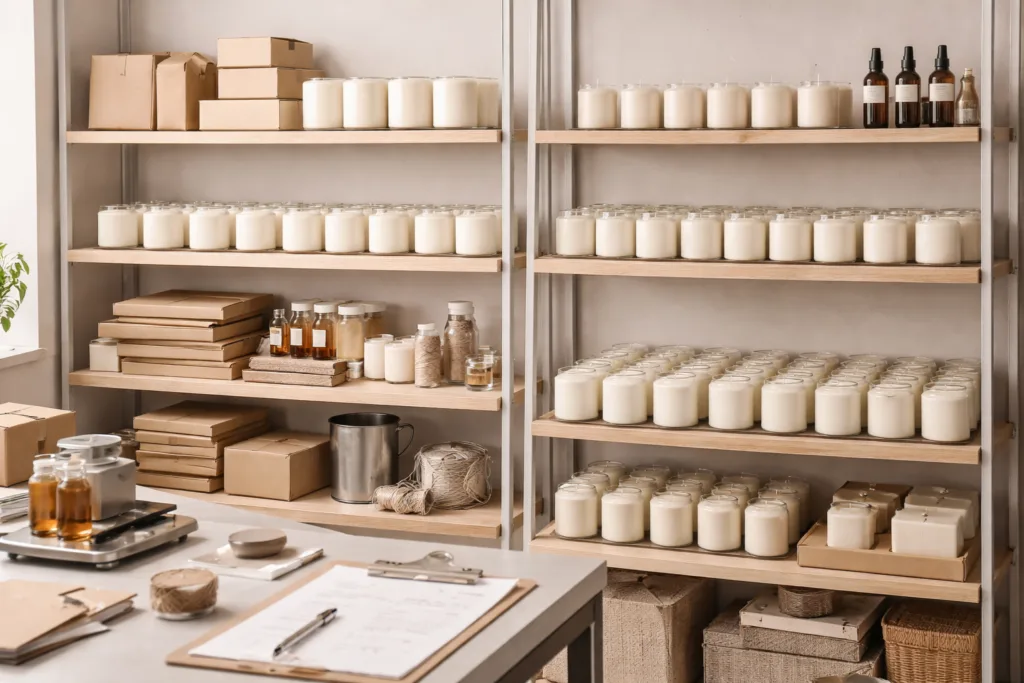 MOQ is often blamed for killing creativity.
In truth, poor strategy kills creativity far faster.
When personal brands stop chasing shortcuts and start understanding how factories work, everything changes:
- Conversations become clearer
- Costs become predictable
- Growth becomes intentional
MOQ is not a wall.
It is a framework.
And once you learn how to work inside it, you stop asking for permission—and start building something that lasts.
Frequently Asked Questions (FAQ)
What is a reasonable MOQ for a personal brand starting out?
There is no single “right” MOQ for every personal brand, but in practice, most manufacturers set MOQs between 300 and 1,000 units per SKU for stable production.
For early-stage brands, the goal should not be full customization. A more realistic approach is to use standard vessels and materials while customizing only labels or packaging. This keeps initial risk manageable while still allowing the brand to test real market demand.
Why do factories refuse very low MOQs even if I’m willing to pay more?
MOQ is not only about unit price—it is about production efficiency and risk control.
Even with a higher unit price, small orders still require the same setup time, labor allocation, quality control, and material sourcing as larger orders. From a factory perspective, extremely low MOQs disrupt production flow and increase the chance of errors, delays, and waste. In many cases, raising the price does not offset these operational risks.
How can personal brands reduce MOQ without sacrificing quality?
The most effective way to reduce MOQ is not by negotiating harder, but by simplifying the project scope.
This may include limiting the number of scents, using existing jar sizes and molds, keeping packaging structures standard, and developing fragrances based on existing formulas. By reducing complexity, factories can consolidate production steps, which often allows for more flexible MOQs without compromising consistency.
When does full customization actually make sense for a personal brand?
Full customization—such as custom molds, exclusive fragrance formulas, or unique packaging structures—usually makes sense only when a brand reaches stable, repeatable volume, often starting at 1,000 units or more per SKU.
At this stage, the brand benefits from economies of scale, and the upfront investment can be spread across larger production runs. For brands below this level, partial customization is often a smarter and more sustainable strategy.