
Understanding Low MOQ Private Label Candle Production
What is MOQ?
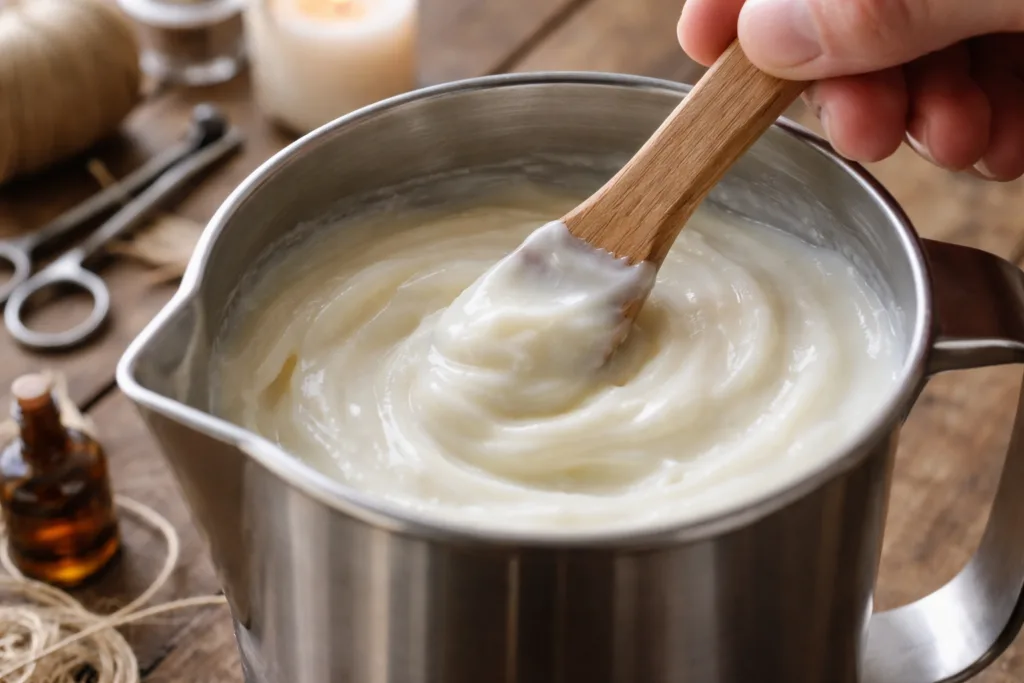
MOQ, or Minimum Order Quantity, represents the smallest number of units a manufacturer is willing to produce in one run. For private label candles, this can range from 48 pieces to several thousand, depending on the level of customization, materials, and the plant’s setup. Low MOQ offerings—often 50-200 units per SKU—allow aspiring brands and retailers to launch new hand-poured custom candle designs with controlled budgets and minimal excess inventory.
Why Low MOQ Scented Candles Matter
Low MOQ scented candles empower new concepts. Whether you’re creating a wellness blend for a studio, a curated spa gift, or a seasonal home fragrance line, small batch OEM makes it possible to test, refine, and scale—all without heavy upfront commitments. This handcrafted approach focuses on refined scent experience and boutique-grade quality rather than mass industrial speed.
The Case Against Industrial Mass Production for Low MOQ
Why Most Factories Won’t Do Low MOQ
Industrial candle factories optimize for massive throughput. Their automated pouring lines run efficiently with orders of 3,000–10,000+ units per fragrance and vessel. Attempting smaller batches disrupts their workflow, causes high wastage of wax and fragrance, and elevates labor costs per candle. These inefficiencies make small batch OEM unappealing for mainstream industrial producers.
| Production Method | MOQ | Customization | Scent Control | Flexibility |
|---|---|---|---|---|
| Industrial Line | ≥3,000 pcs | Limited (standard jars/wax) | Consistent, less unique | Low |
| Hand-Poured (Small Batch) | 48–500 pcs | High (wax, scent, packaging) | Unique, testable | Maximum |
The Artisanal Advantage
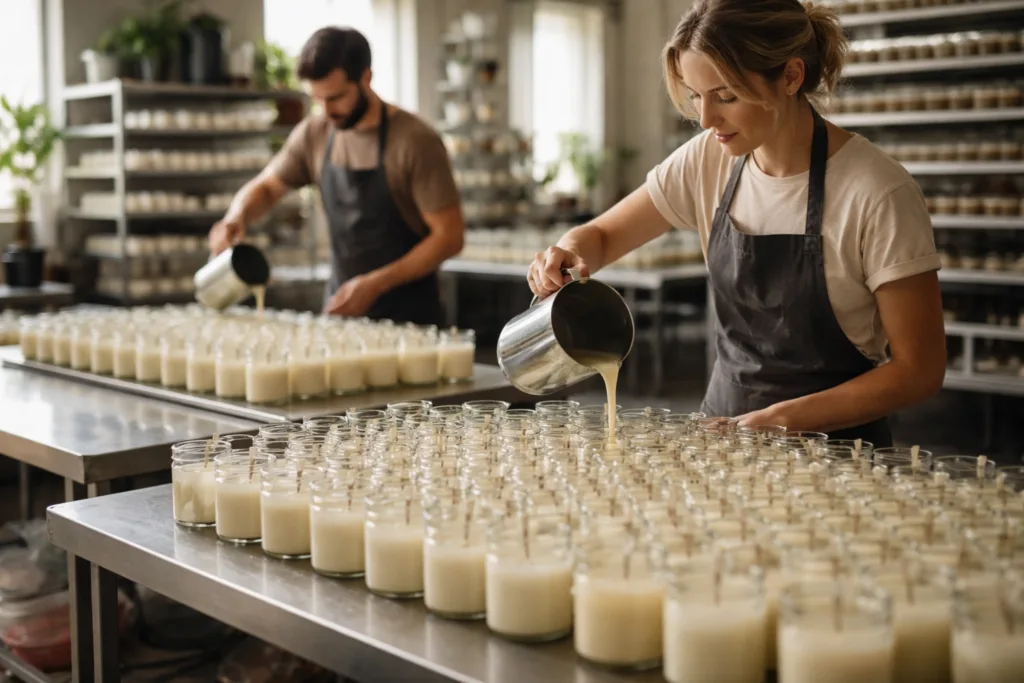
Hand-poured custom candle production sidesteps industrial constraints. Small teams can shift between vessel types, fragrance loads, and label designs quickly. This flexibility enables tailored solutions for small-budget brands who require unique aesthetics, specialty blends, and seasonal or limited drops—all in manageable MOQ.
Hand-Poured Custom Candle Production for Small Batch OEM
Step-by-Step: How Small Batch Production Works
- Fragrance Selection: Choose from a curated fragrance library or collaborate for custom scent development (essential vs. fragrance oil blends, IFRA compliance, etc.).
- Wax Blend & Wick Specification: Decide on eco-friendly soy, coconut, rapeseed, or signature blends. Select wick type and sizing matched to your vessel and burn profile goals.
- Vessel & Packaging Customization: Pick from glass, ceramic, or tin vessels. Discuss jar coatings, colorways, screen-printing, and labeling options (FSC, soy-ink, or foil details).
- Sample & Scent Validation: Receive sample candles to ensure scent throw, wick performance, and curing are perfect. Adjust formula if needed.
- Pre-Production & Pouring: Once approved, small team prepares, melts, and hand-pours in boutique batches—often under 200 units per SKU.
- Curing & Quality Checks: Each candle is cured (typically 2–7 days), trimmed, surface-checked, and burn-tested for performance consistency.
- Packing & Compliance: Candles are labeled with safety info, boxed, and prepped for shipping with full IFRA/CLP regulatory documentation.
Key Quality Control Steps
- Wax temperature consistency (within ±2°C)
- Wick centering tolerance (<3mm off center)
- Fragrance dispersion checks (cold & hot throw)
- Visual inspection for frosting or sinkholes
- Burn-time records (targeting 35+ hrs for 200g)
Circe Home Lab Insight
“Low MOQ batches allow true scent experimentation—which is why our certified technicians test burn at least three vessels per blend and log every result for clean, even burns.”
Navigating Low-Budget Brand Needs: How to Plan for Success
Launching with limited resources means maximizing every decision. Here’s how small-budget brands can achieve quality and flexibility:
- Prioritize Scent Differentiation: Focus on memorable, layered blends. Even a single hero fragrance, properly crafted, builds loyal followings.
- Use Versatile Vessels: Select standard jars available in multiple volumes to reduce mold/tooling fees and streamline reorders or line extensions.
- Embrace Minimalist Aesthetics: Simple, elegant packaging often works best (and keeps costs down). Screen printing or kraft labels can look refined and keep MOQs flexible.
- Leverage Pre-Vetted OEMs: Opt for manufacturers specializing in small batch OEM (like Circe Home) who can guide fragrance compliance and suggest cost-effective enhancements.
- Test, Iterate, Scale: Start with 48–150 pcs per fragrance, refine formulas with user feedback, then scale up with confidence once you hit product-market fit.
Choosing Wax Blends and Scents for Boutique Production
Candle wax selection impacts every aspect of your product, from burn quality to scent load and visual effect. Small batch production allows artisan choices that elevate your offering above standard lines.
Wax Blends: Performance & Aesthetics
- Soy: Soot-free, clean burn with subtle matte finish; 7–12% max fragrance load; potential for minor frosting; sustainable and vegan.
- Coconut: Creamy, smooth surface; exceptional scent throw; blends well with soy for improved hot throw and softer texture.
- Rapeseed: European favorite, excellent scent retention, low soot; blends offer unique eco story.
- Beeswax: Cleanest natural burn, deep golden hue; best for pure or wellness-oriented lines.
- Custom Blends: OEMs often create proprietary wax cocktails to optimize burn time, glass adhesion, and cold/hot throw for limited runs.
Fragrance Systems & Safety
Professional small batch OEMs use high-quality, IFRA-certified oils or essential blends that comply with EU CLP or US standards. Fragrance compatibility, flash point, load percentage (typically 7–12%), and curing time (48–168 hours) are carefully controlled for consistency and safety.
Packing, Labeling, and Compliance for Low MOQ Scented Candles
Even small batch hand-poured custom candle projects require full compliance with safety and retail standards worldwide. This means every production batch must include:
- Precise CLP/IFRA labeling (allergens, signal words, safety icons)
- Batch and lot traceability for recalls
- Outer carton standards for retail, gifting, or e-commerce
- MSDS provision for shipping and customs clearance
Packaging Options
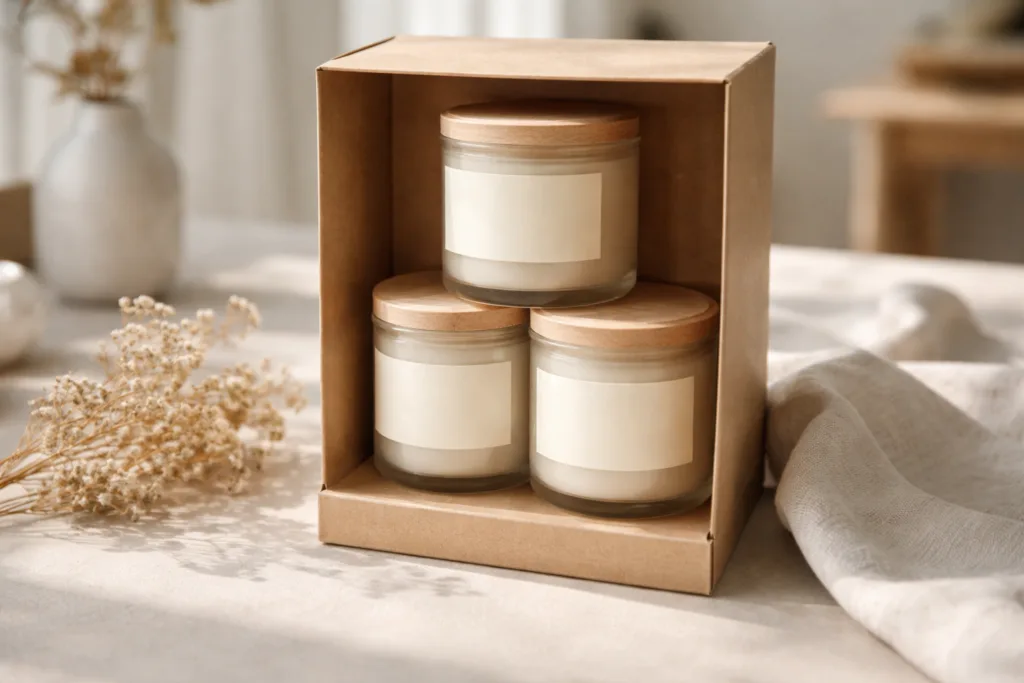
Choose from minimalist uncoated cartons, luxe foil-embossed sleeves, or eco options like compostable boxes and soy-based inks. Many OEMs streamline design and proofing to fit low MOQs—making unique brand stories accessible from your very first order.
How to Order Private Label Candles With Low MOQ
Ready to translate your candle concept into a shelf-ready product—without industrial-scale commitments? Here’s how to navigate the process:
- Outline your brand story and target audience.
- Specify wax type, vessel, desired fragrance notes, and quantity per SKU (48–200 typical for low MOQ).
- Request fragrance oil samples (essential vs. fragrance) to evaluate cold/hot throw.
- Confirm compliance requirements for intended markets (CLP for EU, IFRA for North America).
- Request OEM quotations, including mold fees if choosing a custom vessel.
- Order sample batch—iterate as needed.
- Place final POs and review QC processes with your manufacturer.
Sustainability & Responsible Production in Small Batches
Low MOQ hand-poured custom candle runs are natural fits for sustainable production. Wax blends like soy, rapeseed, and coconut, combined with FSC-certified packaging and biodegradable options, allow eco-oriented brands to minimize waste right from launch. Many specialty OEMs now run refill programs or compostable jar return schemes—aligning with the values of today’s conscious consumers.
Expanding Your Small Batch Line: Next Steps
Once your first few low MOQ scented candles have been well received, it’s simple to scale up. Many boutique OEMs allow tiered MOQ discounts for rolling reorders, new fragrance launches, or seasonal packaging shifts. With meticulous burn data and feedback-driven formulation tweaks, your hand-poured line evolves organically into a premium collection ready for larger retail placement.
Frequently Asked Questions
What is the typical MOQ for private label scented candles?
The standard low MOQ for hand-poured private label candles starts at 48–200 units per fragrance and vessel. Levels may vary based on complexity and packaging choices.
How does hand-poured candle quality compare to mass production?
Hand-poured low MOQ candles offer greater control over wax blend, fragrance load, and vessel aesthetics, resulting in unique scent expression and cleaner burns than industrial mass runs.
Can I create a custom fragrance with a small batch order?
Yes, many specialty OEMs provide custom fragrance formulation options, guided by IFRA and CLP safety standards, even at low MOQs. Sampling ensures your blend’s performance.
What containers are available for small batch OEM?
Popular choices for low MOQ include standard glass jars, ceramic vessels, metal tins, and eco-material options with a variety of finishes like matte, glossy, frosted, or colored glass.
What are key compliance points for low MOQ candles?
Every batch must have IFRA and CLP-compliant labeling, allergen declarations, batch traceability, and burn/safety testing—mirroring large-scale projects for consumer safety.
How can small brands lower their custom candle launch costs?
Choose standard vessel molds, simple labeling, and focused scent launches; partner with seasoned small batch OEMs for guidance and keep initial SKUs narrow for cost control.