
Most people overcomplicate custom candle design.
They begin with the wrong question: How do I make this look completely unique?
That question sounds creative, but in manufacturing, it often leads to higher MOQs, longer lead times, expensive sampling, and a product that becomes harder to reorder profitably. The result is not a smarter candle program. It is usually a slower one, a riskier one, and in many cases, a more fragile one.
The better question is this: How do I create a candle that feels branded, premium, and commercially viable without making the supply chain unnecessarily complicated?
That is where simplified customization becomes powerful.
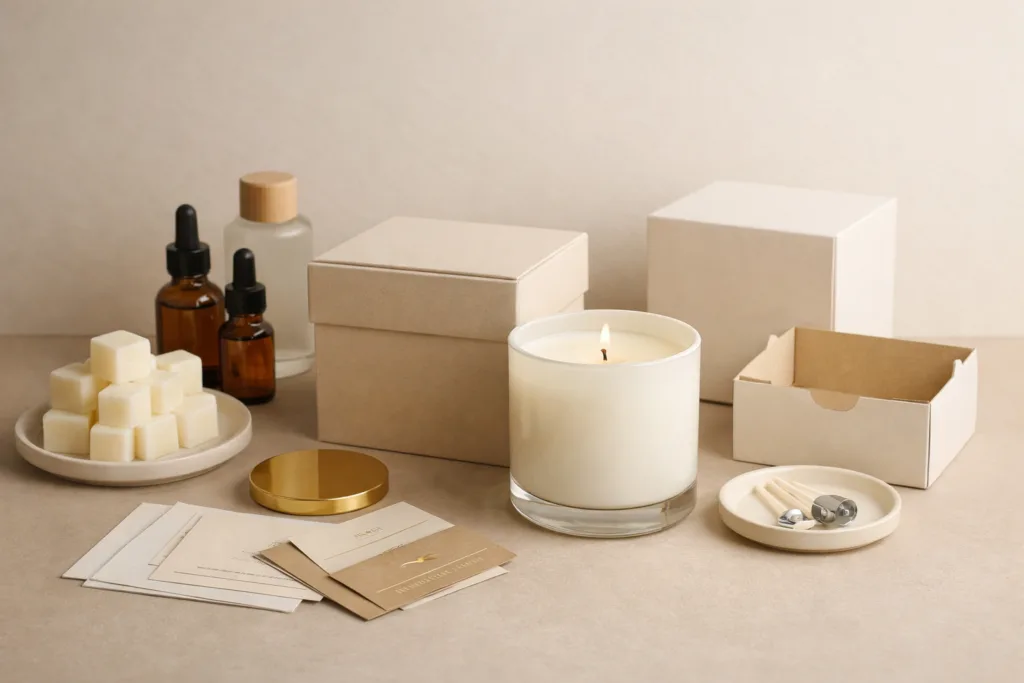
In today’s candle and home-fragrance market, buyers do not need maximum complexity. They need a product that can be launched faster, priced more competitively, replenished more easily, and scaled with fewer production variables. That is especially true for serious retail buyers, growing brands, boutiques with expansion plans, hospitality groups, gift companies, and importers who care about margin as much as appearance.
The candle category is still commercially attractive for a simple reason: it sits at the intersection of gifting, home décor, scent experience, and repeat purchase. Industry organizations and safety bodies continue to emphasize both consumer demand and the importance of compliant production, fragrance management, and labeling. In practical terms, that means the winning candle programs are no longer the ones with the most complicated development stories. They are the ones that balance design, cost control, safety, and supply continuity.
If you want larger orders over time, simplified custom candle design is not the “cheap” version of branding. It is often the most scalable version of branding.
This article breaks down exactly how to do that.
What “Simplify Custom Candle Design” Really Means
To simplify custom candle design does not mean making the product generic.
It means choosing customization points that matter to the customer while avoiding manufacturing decisions that increase cost without increasing sell-through.
In other words, you customize what creates market value and standardize what creates operational drag.
A simplified candle program usually has these characteristics:
- a proven vessel instead of a fully new mold
- a standard size instead of multiple non-standard dimensions
- an existing packaging structure instead of a new box engineering project
- a fragrance developed from an established direction rather than from zero
- limited SKUs at launch instead of a scattered assortment
- decoration methods that are repeatable at scale
- a specification set that can be reordered with minimal friction
That last point matters more than many buyers realize.
A candle is not just a sample. It is a repeatable manufacturing system. If the system is unstable, your second order becomes harder than your first. If the system is well designed, each reorder becomes more efficient, more predictable, and more profitable.
That is why simplified customization is not merely a development trick. It is a long-term sourcing strategy.
Why Over-Customization Raises MOQ, Cost, and Risk
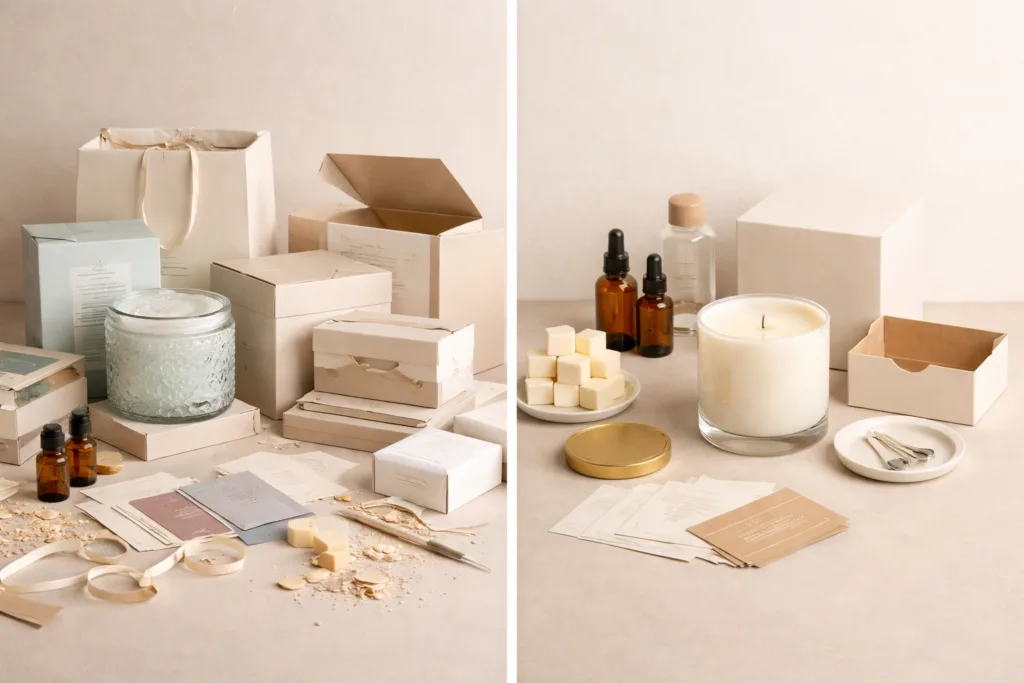
The candle business often looks deceptively simple from the outside. A jar, wax, fragrance, wick, label, and box. How hard can it be?
In reality, every additional customization layer can multiply complexity across the supply chain.
For example, a fully custom vessel is not just a visual choice. It may involve:
- new mold development
- dimensional testing
- compatibility checks for lids and boxes
- revised filling weight calculations
- carton and insert redesign
- new breakage-risk assessments during shipping
- longer approval cycles for each revision
The same logic applies to packaging. A fully custom rigid box with unique proportions, new inserts, new foil placement, specialty paper, and structural redesign may look impressive, but it can move a project into an entirely different MOQ bracket.
Fragrance can add another layer of complexity. A buyer may say, “We want our own scent,” but there is a big difference between selecting from a fragrance library, modifying an existing profile, and asking a perfumer to recreate a completely original fragrance from a vague emotional brief.
This is where many small and mid-sized buyers accidentally make expensive decisions. They assume that more custom elements automatically produce a more premium result. In manufacturing, that is often false.
Premium does not come from the number of things you customized. It comes from how well the final product is edited.
A clean amber glass jar with the right scale, correct wax fill, excellent scent throw, sharp branding, and a commercially sensible box will usually outperform a messy “fully custom” concept that is expensive, slow, and difficult to replenish.
Large and professional buyers understand this quickly. They know that every design decision must justify itself financially.
If a customization feature does not improve retail value, perceived quality, or brand recognition in a meaningful way, it may not deserve to stay.
The Real Goal: A Candle Program That Can Actually Scale
A scalable candle program is one that can do four things well:
- launch without excessive development waste
- reorder without restarting the project every time
- maintain quality consistency across batches
- support growth from smaller trials into larger production runs
That last part is crucial.
Many brands talk about wanting flexibility, but what they really need is a structure that lets them start with manageable complexity and expand only when demand proves itself.
That is what simplified customization does.
It creates a supply model where:
- the first order is feasible
- the landed cost remains competitive
- the product still looks branded and intentional
- the manufacturer can support repeat production with fewer errors
- new SKUs can be added later without rebuilding the entire line
This is not just good for new brands. It is also smart for established importers and retailers.
Even larger buyers often begin with a narrower assortment when testing a new scent family, packaging direction, seasonal collection, or regional market. The smartest ones do not rush into maximum complexity on day one. They simplify the base architecture first, then scale the parts that are already working.
That is how sustainable customization is built.
Top 7 Ways to Simplify Custom Candle Design Without Losing Brand Value
1. Start With a Standard Vessel Instead of Developing a New One
If you want to lower MOQ and reduce development cost, this is usually the first and biggest lever.
Standard vessels already have one major advantage: they are production-proven.
That means the factory typically already knows:
- how the wax performs in that shape
- what wick families are likely to work
- what fill range is commercially practical
- what lid or box sizes pair with it
- how it behaves during handling and transport
With a new vessel, all of that has to be figured out again.
For most serious buyers, a standard vessel with customized branding is the stronger commercial move.
Examples of smart standardization include:
- classic clear or amber glass jars
- proven ceramic forms already in production
- common diameter/height combinations that fit existing packaging logic
- vessels with stable sourcing availability across reorder cycles
The goal is not to avoid design. The goal is to avoid unnecessary engineering.
In the candle category, customers usually respond more strongly to overall presentation than to whether the glass shape was invented from scratch. If your label, scent, finish, color story, and packaging are well considered, the product will still feel distinctive.
A standard vessel also helps with speed. Sampling becomes faster. Quotation becomes more accurate. Freight estimation becomes easier. Reorders become cleaner.
And once the market validates the concept, you can always consider deeper customization later.
That sequence matters: prove demand first, complicate later if necessary.
2. Customize the Visible Brand Layer, Not the Hidden Manufacturing Layer
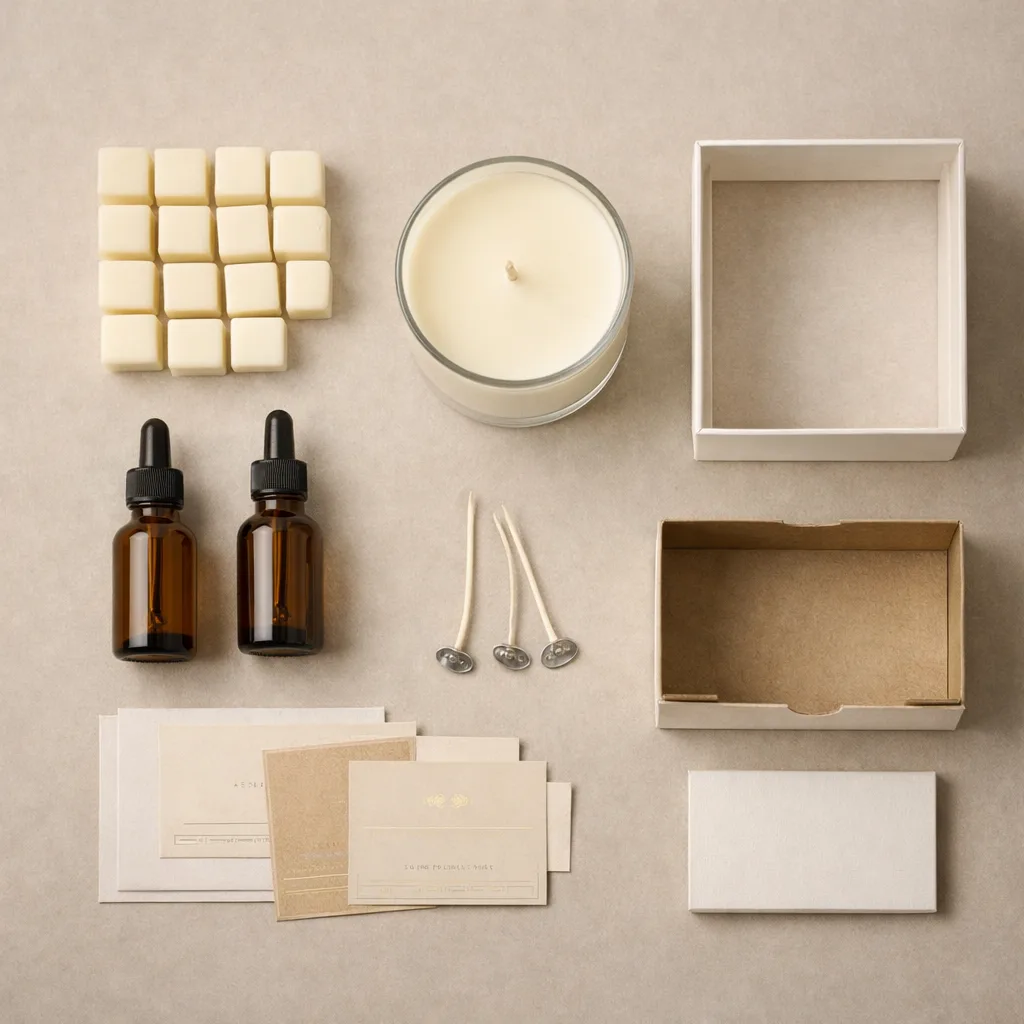
A lot of buyers spend too much money changing what the consumer barely notices and too little effort refining what the consumer actually sees.
The visible brand layer includes:
- logo application
- label design
- color palette
- print finish
- carton artwork
- gift-ready presentation
- scent naming and collection language
The hidden manufacturing layer includes:
- mold geometry
- non-standard structure changes
- unusual insert engineering
- complex component sourcing combinations
- custom technical specifications that add little visible value
When budgets are limited, the visible layer should win.
That is because the visible layer is where perception happens.
A strong foil logo, clean typography, thoughtful label proportions, and premium secondary packaging can create a much stronger impression than an overengineered vessel detail that most consumers will never consciously notice.
This is one of the most useful rules in candle development:
Customize what sells. Standardize what only complicates production.
For example, many importers and private label buyers can achieve a premium-looking result by combining:
- an existing glass jar
- one or two reliable decoration techniques
- a strong outer box design
- a fragrance profile aligned with the target market
That mix often creates a far better balance of visual value and production efficiency than chasing too many technical novelties at once.
3. Simplify Fragrance Development Instead of Starting From Zero
Fragrance is where many candle projects become emotionally ambitious and commercially inefficient.
A buyer says they want a signature scent. That is reasonable. But there are several very different ways to get there.
Level 1: Choose from an existing fragrance library
This is the fastest and lowest-risk path.
Level 2: Modify an existing profile
This may involve increasing freshness, adding warmth, softening sweetness, or shifting the top note profile.
Level 3: Recreate or reverse-engineer a scent concept
This is slower, more technical, and often more expensive.
Level 4: Build a fully original scent from zero
This can be the right move for major brands, but it is rarely the most efficient launch strategy for a commercial candle program.
In practice, many successful candle launches happen at Level 1 or Level 2.
Why? Because the customer buying the candle does not judge the sourcing process. They judge the final scent experience.
If a fragrance profile smells refined, performs well in wax, and matches the brand position, it does not matter that the development path was more practical.
A simplified fragrance strategy can reduce:
- sampling rounds
- minimum purchase pressure
- perfumery development fees
- formula approval delays
- mismatch risk between concept and actual candle performance
It can also improve speed to market, which matters in seasonal retail, gifting windows, and trend-responsive launches.
This does not mean fragrance should be treated casually. On the contrary, it should be treated professionally.
A good candle fragrance strategy considers:
- hot throw and cold throw
- wax compatibility
- burn performance
- target market preference
- regulatory and fragrance-safety documentation
- product positioning
Global fragrance safety frameworks such as IFRA remain important reference points in the industry, especially when brands sell across regions and need consistent documentation discipline. Serious buyers should not treat fragrance as a decorative afterthought. But they also should not assume that “fully custom” is the only path to brand distinction.
A smart adjustment to an existing fragrance direction can be both brand-right and commercially scalable.
4. Reduce Launch SKUs and Build a Better First Collection
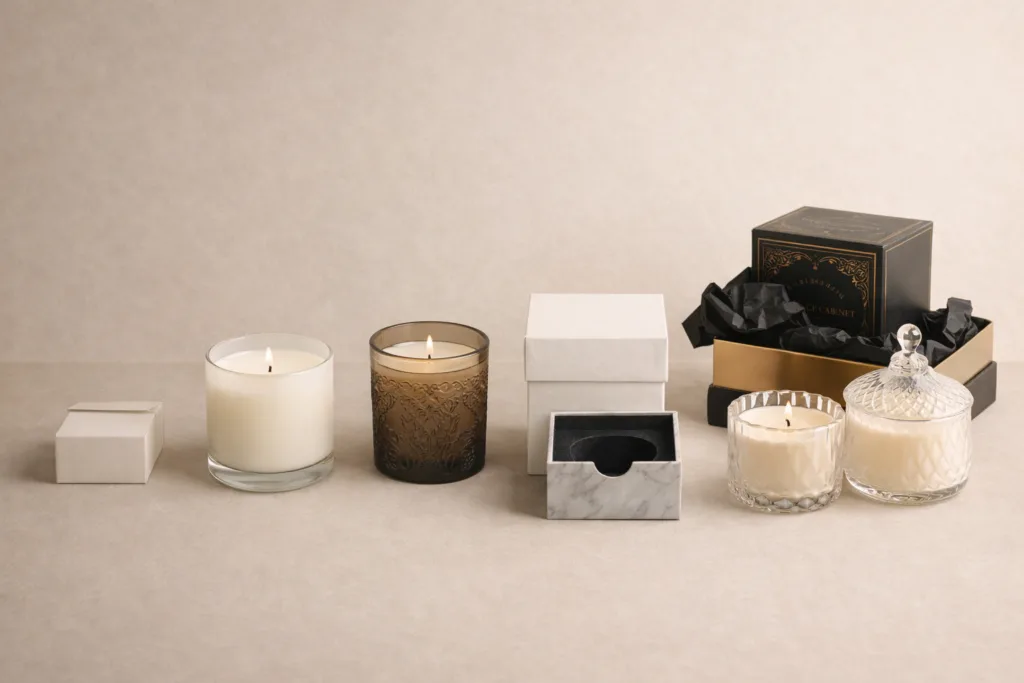
One of the fastest ways to overcomplicate custom candle design is to launch too many SKUs at once.
A buyer may want:
- four vessels
- six scents
- three box styles
- a gift set
- a seasonal edition
- multiple label colors
On paper, it sounds exciting. In production, it creates cost fragmentation.
Each SKU can affect:
- inventory planning
- packaging procurement
- production setup
- freight consolidation
- quality control
- replenishment forecasting
When volumes are spread too thinly across too many options, efficiency drops.
A stronger strategy is to launch with one of these structures:
Option A: One vessel, two to three scents
This is often ideal for testing scent response while keeping component complexity manageable.
Option B: One hero scent, one hero vessel
This is ideal for brands focused on story, photography, and building a recognizable entry product.
Option C: One candle and one gift-ready packaging version
This works well for boutique retail, gifting programs, and seasonal buyers who need a clear, commercially focused offer.
A narrow first collection does not weaken a brand. It often sharpens it.
It also sends a message that the brand has commercial discipline.
Large buyers pay attention to that. So do distributors.
A line that is easy to understand is easier to stock, easier to present, easier to reorder, and easier to scale into broader collections later.
In candle manufacturing, editing is a commercial skill.
5. Choose Packaging That Supports Margin, Not Just Appearance
Packaging can make or break a candle program.
It affects first impression, shipping cost, MOQ, packing efficiency, breakage risk, shelf presentation, giftability, and final margin.
This is where simplified customization becomes especially practical.
A buyer does not need the most elaborate packaging structure. They need packaging that aligns with the product’s price point and volume strategy.
For example:
Folding cartons
These are usually more flexible, more cost-efficient, and often easier for lower-volume branded launches.
Rigid gift boxes
These create stronger premium perception and higher gift value, but they usually require higher MOQs and a more committed commercial plan.
Existing inserts and standard formats
These reduce engineering work and often improve packing speed and consistency.
The mistake many brands make is choosing premium packaging before they have premium volume.
That is backwards.
The better sequence is:
- start with packaging that matches realistic order size
- use visual branding to elevate the presentation
- upgrade structure later when the sales volume supports it
This matters because packaging complexity does not exist in isolation. It interacts with freight.
A beautiful oversized gift box may increase cubic volume, raise shipping cost, and compress margin, especially in export business. For wholesale buyers and importers, those logistics consequences are not secondary. They are central.
The most effective packaging programs usually do three things at once:
- protect the product well
- present the brand clearly
- preserve commercial efficiency
That is what scalable customization looks like.
6. Build Around Repeatable Specifications, Not One-Off Samples
Some candle samples look good once and become difficult to reproduce consistently.
That is a warning sign.
A good custom candle program should not depend on the memory of one technician, one lucky fragrance batch, or one temporary material source. It should be documented clearly enough that the project can be repeated with confidence.
That means the specification set should be stable across:
- vessel size and finish
- wax type and fill weight
- wick selection
- fragrance load direction
- logo application method
- box structure and artwork files
- shipping pack-out method
- warning label requirements
This is not glamorous, but it is where serious scale begins.
ASTM safety standards and labeling frameworks continue to shape basic fire-safety expectations in the candle category. Buyers planning long-term programs, especially in export markets, should think beyond the sample photo and treat technical repeatability as part of product quality.
When a candle program is built around repeatable specifications, several commercial advantages follow:
- reorders are faster
- quotations are more accurate
- defect risk is lower
- internal communication is cleaner
- supplier transitions, if ever needed, are less chaotic
This is particularly important for buyers who intend to move into larger quantities later.
Big orders do not appear from nowhere. They usually grow out of systems that were designed for repeatability from the beginning.
7. Treat Simplification as a Scale Strategy, Not a Temporary Shortcut
This is the most important shift in mindset.
Some buyers think simplification is what you do only when your budget is small.
That is too narrow.
The truth is that simplified customization often remains the better strategy even as volumes increase.
Why? Because scale rewards consistency.
If your candle line is based on a clean supply architecture, you can do more with less friction:
- add seasonal scents faster
- launch regional variations more easily
- negotiate larger production more confidently
- consolidate packaging purchases more efficiently
- manage inventory with less waste
- improve lead time planning
- protect margin during freight fluctuations
This is exactly why many strong private label and wholesale programs do not begin with maximal complexity. They begin with a commercially intelligent base.
Then they scale selectively.
They may later add:
- a secondary vessel family
- a premium gift-box edition
- holiday sleeves or limited seasonal cartons
- upgraded finishes for top-performing SKUs
- market-specific fragrance variations
But because the original system was simplified, those additions build on a stable foundation rather than creating chaos.
In other words, simplification is not anti-growth.
It is growth infrastructure.
What Serious Buyers Should Prioritize First
If your goal is to build a custom candle program that can eventually support larger orders, focus on these priorities in order:
1. Commercial fit
Does the product align with your retail channel, market position, and target price point?
2. Stable vessel choice
Can this vessel be sourced and repeated reliably?
3. Strong scent direction
Is the fragrance profile commercially appealing and technically suitable for candle use?
4. Packaging discipline
Does the packaging support both presentation and margin?
5. Clear specification control
Can this product be reproduced without starting over?
6. Growth logic
Can the same product architecture support future SKUs and larger runs?
That is the checklist larger importers and more experienced buyers naturally move toward.
They do not treat customization as decoration alone. They treat it as part of a broader supply and margin strategy.
Who Benefits Most From Simplified Custom Candle Design
This approach is especially strong for:
- private label candle brands launching or expanding
- wholesale importers testing new collections
- gift companies building branded home-fragrance lines
- boutique retailers moving into private label
- hospitality groups developing branded room or spa candles
- established brands that want a more efficient replenishment model
It is also useful for buyers who already know they do not want endless development rounds.
If your business values speed, cleaner costs, more manageable MOQ levels, and a path toward repeat orders, simplified customization is not a compromise. It is likely the smarter route.
And importantly, this approach does not exclude premium positioning.
A candle can still feel premium with:
- a well-chosen vessel
- clean artwork
- a sophisticated scent direction
- quality wax performance
- thoughtful packaging
- professional documentation and production control
What makes a product feel premium is not chaos. It is coherence.
Final Thought: The Best Custom Candle Programs Are Usually Edited, Not Overbuilt
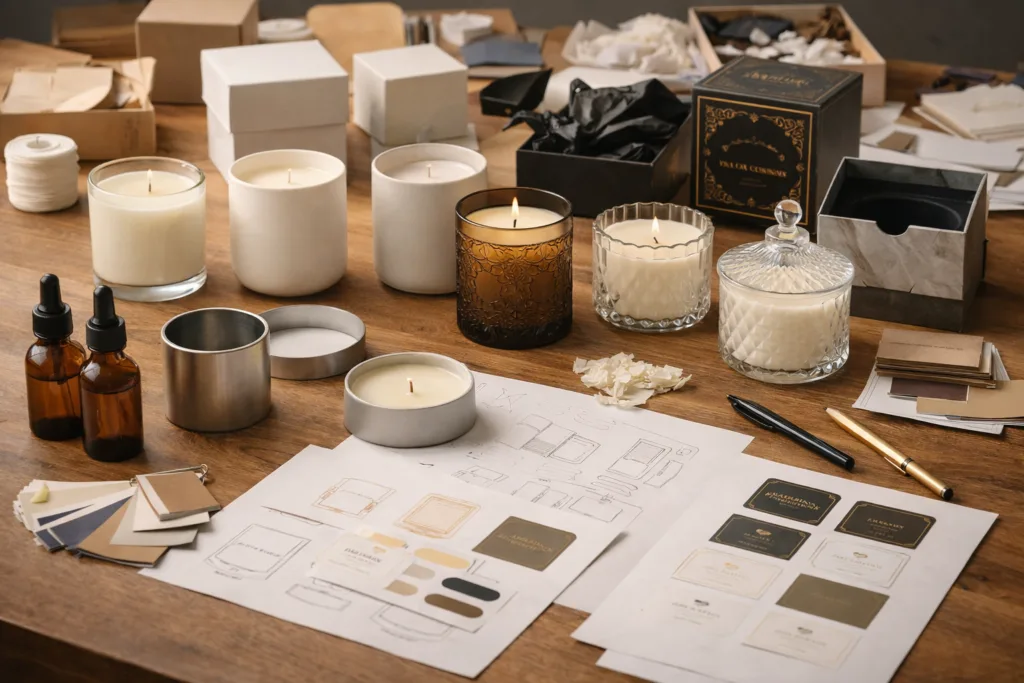
In manufacturing, restraint is often a competitive advantage.
The brands and buyers who scale best are rarely the ones who customize everything at once. They are the ones who know what to simplify, what to standardize, and where to invest for maximum visible value.
That is why simplified custom candle design works.
It reduces development waste.
It lowers MOQ pressure.
It protects margins.
It shortens lead times.
It supports cleaner reorders.
And most importantly, it creates a custom candle program that is easier to sustain as business grows.
If your goal is not merely to make one beautiful sample, but to build a candle line that can sell, reorder, expand, and support bigger volume over time, simplified customization is one of the most commercially intelligent choices you can make.
The strongest candle programs are not the most complicated.
They are the most repeatable.
And repeatability is what turns a custom project into a real business.
FAQs
1. What is the best way to simplify custom candle design?
The best way to simplify custom candle design is to start with a standard vessel, limit launch SKUs, use scalable packaging, and customize visible branding elements such as labels, printing, and logo application instead of reinventing every component.
2. Does simplified candle customization make the product look less premium?
No. A candle can still look premium with a strong fragrance profile, quality materials, refined packaging, and clean branding. Premium presentation comes from well-edited design choices, not from maximum technical complexity.
3. How does simplified custom candle design help reduce MOQ?
Simplified custom candle design reduces MOQ by using existing production components, standard packaging formats, and commercially proven specifications. This lowers development cost, improves sourcing efficiency, and makes production more feasible at scalable order levels.