
Unlocking Growth: How to Scale From 100 to 1000 Custom Candles
Taking your custom candle business from small-batch hand-pouring to efficient, industrial-scale production is both an art and a science. Navigating this transition empowers brands to command their niche, reduce per-unit costs, and offer consistent, high-end products that light up discerning spaces. Let’s explore exactly how to scale the production of custom candles—from 100 units to 1,000—while maintaining quality, optimizing costs, and sharpening your SKU strategy.
Understanding the Shift: From Batch to Bulk Custom Candle Production
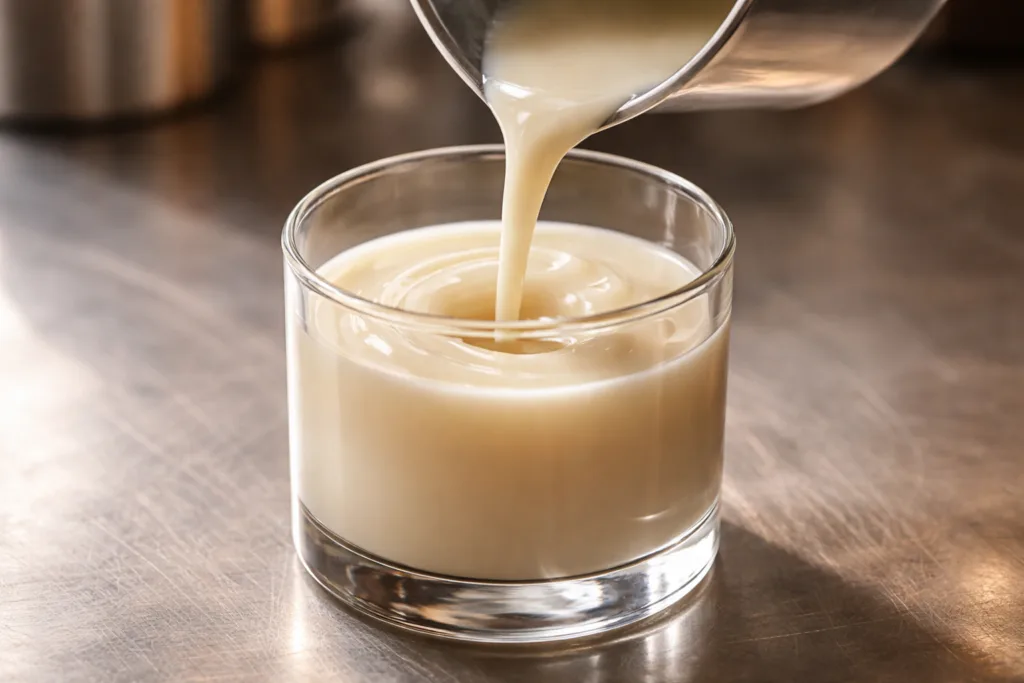
Scaling up candle production requires more than doubling ingredients: every process, from fragrance blending to vessel prep, must evolve. OEM production scaling leverages professional candle manufacturers, such as Circe Home, to integrate advanced batching, streamlined workflows, and quality control that hand-pouring alone cannot achieve.
Why Scale Up Now?
- Meet growing demand from retailers or e-commerce channels
- Benefit from cost efficiencies at higher MOQs
- Level up branding, scent development, and packaging sophistication
- Reduce manual labor and minimize production errors
Challenges in Transitioning to Industrialization
Many candle start-ups fear quality loss or design compromise during scale-up. Addressing these concerns with the right technologies, partners, and process improvements ensures industrial volume doesn’t mean industrial dullness. A balance of artistry and repeatability is essential.
Core Components of Scaling a Candle Business
Scaling custom candle production—especially to 1,000 units at a time—demands precise alignment between material selection, manufacturing workflow, and commercial strategy. Each core element interacts with the others to impact margins, efficiency, and end-user satisfaction.
Wax Selection for Superior Scaling
| Wax Type | Scent Throw | Burn Time | Cost Efficiency | Notes for Scaling |
|---|---|---|---|---|
| Soy Wax | Moderate-Strong | Slow (35-45hr/200g) | High at scale | Frosting management needed |
| Coconut Blend | Luxurious, full-bodied | Very slow | Moderate-high | Superb for artisan/luxury positioning |
| Rapeseed/Bee Blend | Clean, subtle | Medium | Stable price | Strong eco messaging |
| Paraffin | Intense | Medium | Low | Fastest for scaling, but less clean burn |
Fragrance System Optimization
Bulk production enables both custom fragrance development and reliable scent duplication. Partner with labs that blend essential and fragrance oils for maximum cold and hot throw. The key is balancing fragrance load (typically 6–12% in premium blends) against wax compatibility and combustion safety. Carefully control curing timelines—often 7–14 days for optimal scent lock-in, especially for natural waxes.
Wick Sizing and Burn Profile Calibration
- Calculate vessel diameter against wax viscosity
- Select cotton, wood, or paper-core wicks to match scent, wax, and brand aesthetic
- Test for optimal flame size, minimal mushrooming, and soot-free results
- Verify wick positioning and centering to ±2mm tolerance
- Document burn consistency for each SKU
How to Scale From 100 to 1000 Custom Candles
To move from crafting 100 to 1,000 units, transition production philosophy from small-batch ‘craft’ to industrial process excellence. Map your process across melting, blending, pouring, curing, and finishing—then strategically optimize each phase for output and cost, without losing scent complexity or finish quality.
OEM Production Scaling Steps
- Plan SKUs: Select 2–4 best-sellers for consolidation and volume leverage.
- Sourcing: Lock in sustainable bulk wax and scent suppliers with batch certifications.
- Pre-Pour Prep: Mechanize wick gluing, vessel cleaning, and batch weighing to guarantee uniformity.
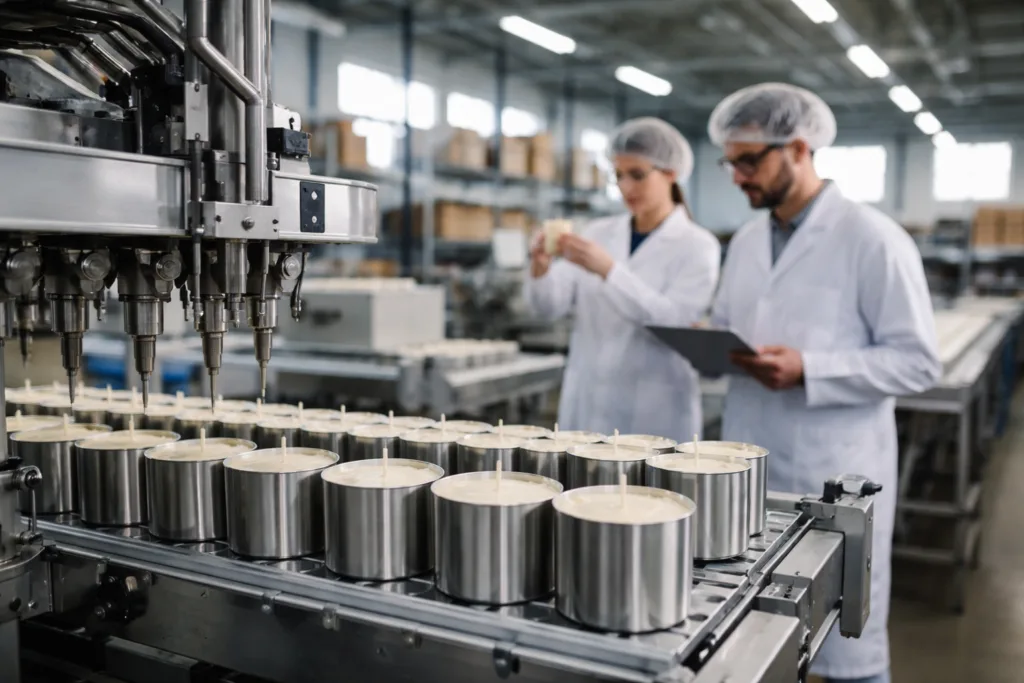
- Precision Pouring: Shift from jug-pour to automated or semi-automated dosing lines, ensuring temperature and fill level accuracy.
- Controlled Cooling & Curing: Invest in ventilated racks or climate-managed rooms to avoid frosting and promote clean set-up.
- Quality Control: Standardize visual checks, burn test samples, and scent throw logs for every batch.
- Automated Boxing: Use labeling and packing lines to boost final throughput and protect each vessel.
Choosing the Right OEM Partner
Select manufacturers experienced with your chosen waxes, scent types, and vessel sizes. Circe Home, for instance, offers luxury production at 1,000+ MOQ with custom blend capability, fragrance matching, and CLP/IFRA compliance management for every market.
Cost Reduction Strategies for Large-Scale Candle Production
Moving from hand-pouring to bulk production unlocks substantial cost savings, provided you streamline processes, reduce errors, and negotiate favorable material and logistics agreements. Target a holistic cost per unit reduction, not merely savings on wax or jars.
Actionable Cost-Cutting Levers
- Reduce batch setup and changeover by consolidating similar fragrance and color runs
- Negotiate raw material pricing annually, based on volume commitments
- Simplify packaging SKU to maximize carton and pallet utilization
- Outsource compliance labeling and safety documentation to specialized partners
- Trim non-value-add design elements (excess foil, unnecessary toppers)
- Adopt refillable or eco-packaging to appeal to premium buyers and lower logistics costs
Circe Home Lab Insight: “Batch fragrance validation and wick testing before every 1,000-unit run is non-negotiable for burn consistency and zero-soot assurance.”
SKU Rationalization: Smart Scaling Means Fewer, Sharper Products
Simplify and dominate: as you ramp up production, concentrate sales and marketing on a tight, high-momentum set of SKUs. This conserves working capital, reduces inventory complexity, and empowers branding focus.
Steps to Optimize SKU Lineup
- Analyze sales data to identify 2–4 top-performers by scent, finish, and vessel
- Shelve or rotate slow-movers, especially niche seasonal scents
- Standardize vessel, cap, and box formats across SKUs to reduce procurement headaches
- Refresh labels using colorways or coordinates, rather than designing from scratch for each scent
- Introduce new scents or formats quarterly—not all at once—to avoid cannibalization
Benefits of SKU Rationalization During Scaling
- Increases order size per SKU, reducing unit cost
- Simplifies forecasting, inventory, and fulfillment
- Enables focused, deeper marketing storytelling
- Reduces changeover and setup waste in the factory
Quality Control and Compliance at Scale
Consistent quality is non-negotiable as production grows. Layer in robust controls and safety checks at every stage to ensure each candle burns perfectly, throws scent as promised, and complies with safety regulations worldwide.
Key QC Protocols
- Precise wick centering (±2mm)
- Check for smooth, lustered wax top (no frosting, bubbles, or cracks)
- Recorded burn time for each batch (target: >35hrs for 200g)
- Verified fragrance dispersion: both cold and hot throw sampling
- Compliance with the latest IFRA and CLP standards
- Batch traceability for recalls or scent troubleshooting
Packaging Strategies: Balancing Aesthetics, Scale, and Sustainability
Packaging is your brand’s handshake—yet scaling means striking a balance between visual impact, production cost, and logistical efficiency.
Design Direction at 1,000 Unit Production
- Choose glass jars, tins, or ceramics with unified sizing
- Employ universal outer cartons, adapt with scent labels or foil stamping for variation
- Leverage eco-options: soy inks, FSC-certified boards, or compostable inserts
- Streamline inserts, cards, and wraps for operational velocity
Private Label and Branded Gifting
Scaling up production unlocks the ability to develop premium gift boxes, private label formats, or even collaborate with spas and hotels on exclusive lines. Circe Home’s ODM/OEM solutions cover full container development, scent matching, and white-label packaging for high-volume projects.
Sustainability and Compliance in Bulk Custom Candle Production

Industrialized outputs must deliver not only scale but also environmental stewardship and safety. Adhering to EU CLP labeling, the latest IFRA guidance, and employing sustainable materials (such as biodegradable packaging and responsibly sourced waxes) builds long-term brand trust.
Sustainable Manufacturing Practices
- Utilize soy, coconut, or rapeseed blends for renewable sourcing
- FSC cartons, soy-ink, and recyclable glassware for end-to-end circularity
- Offer refillable systems or vessel returns for luxury lines
- Publish clear safety and compliance documentation
Frequently Asked Questions
What’s the key to maintaining scent quality when producing 1,000 custom candles?
Control batch fragrance blending, enforce proper curing times, and burn-test samples from every production run to ensure consistent hot and cold throw. Use suppliers that provide batch-level certificates for essential and fragrance oils to guarantee purity and performance.
How does MOQ influence cost and customization for bulk custom candles?
Higher minimum order quantities (MOQs) lower per-unit costs through raw material economies and efficient process setup, but may limit extreme customization. Standardizing vessels and packaging allows for maximum savings while retaining signature fragrances or branding.
What are best practices for scaling from hand-pouring to OEM production?
Document your exact recipes and QC steps. Pilot a single batch with your OEM, review burn profile and appearance, then increase batch size iteratively. Choose a manufacturer with proven experience in your preferred wax and vessel types for precise duplication.
How can SKU rationalization help my candle brand grow?
Focusing on fewer, higher-performing SKUs raises volume per item, increases production efficiency, reduces inventory complexity, and enables sharper, more consistent branding—making scaling far more controllable and profitable.
What QC measures are essential at industrial scale?
Check wick centering, wax finish, and packaging integrity on samples from each batch. Run burn and scent dispersion tests at regular intervals. Keep documented batch records for traceability and respond quickly to any quality deviations.
How to ensure compliance with international regulations when producing 1,000+ custom candles?
Work with partners skilled in IFRA and EU CLP labeling, fragrance allergen listing, and child-safety warnings. Keep compliance files updated with every batch, and ensure all materials used are certified to required standards for your target markets.