
Luxury is rarely built by accident. It is built through repetition, sensory consistency, disciplined presentation, and a product that makes people feel they have stepped into a more elevated version of everyday life. For many emerging and established brands alike, that is exactly why custom luxury candles have become such a smart commercial choice.
A well-made candle does far more than scent a room. It shapes atmosphere, supports visual identity, turns packaging into part of the product, and gives a brand a tactile and emotional presence that many categories struggle to achieve. Compared with apparel, beauty, accessories, or even fragrance itself, custom luxury candles sit in a rare position: they are easier to develop than many premium products, but they can still create a strong sense of sophistication, taste, ritual, and giftability.
That combination matters in a market where buyers are no longer impressed by products alone. Retailers want higher-margin items with better storytelling. Hotels and spas want scent-led brand signatures that support the guest experience. Lifestyle brands want a product that feels beautiful, giftable, and brandable without the operational complexity of fashion sizing or highly regulated cosmetics. Museum stores, concept stores, and boutique retailers want items that can sit on shelves and immediately communicate taste.
Custom luxury candles answer all of those needs.
This is the real reason they have become one of the smartest tools for premium brand building. They are not only products. They are brand carriers. They are emotional shortcuts. They are visual anchors. And when developed properly, they can help serious buyers create stronger positioning, better average order value, and a far more memorable customer experience.
For brands that want to move beyond generic private label and build something with real perceived value, custom luxury candles are often the smartest place to start.
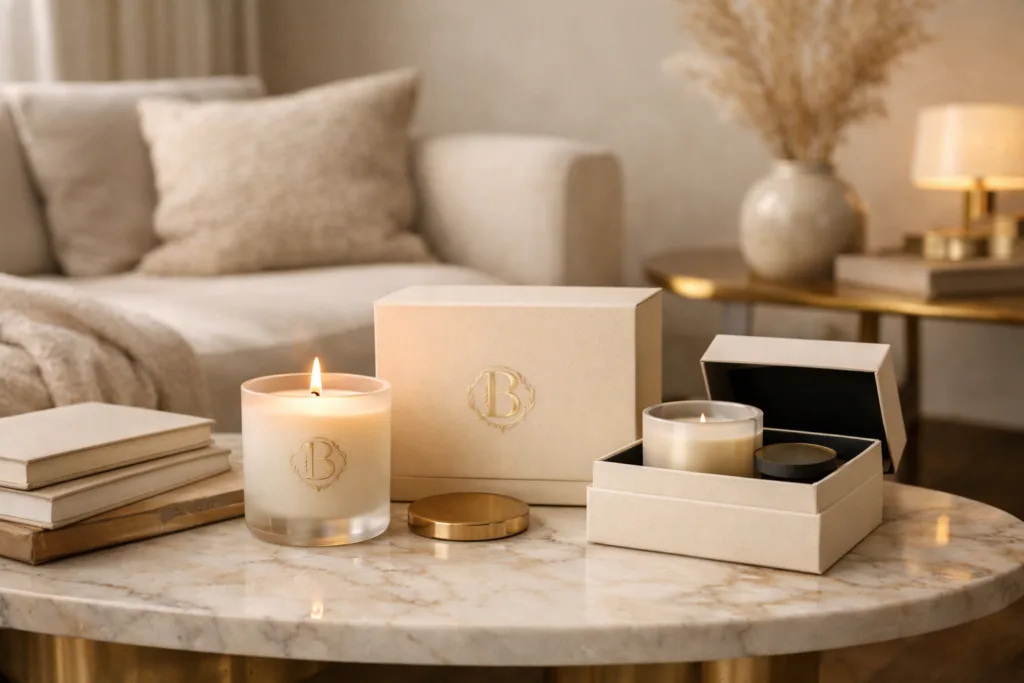
Why Luxury Candles Matter More Than Ever in Premium Branding
Luxury branding today is not just about price. It is about perception. More specifically, it is about whether the customer can immediately understand why your brand deserves attention, loyalty, and a higher price point.
That perception is built through signals. Materials, color palette, fragrance profile, vessel choice, packaging structure, finish quality, typography, and product photography all work together to create a premium impression. Luxury candles allow brands to bring all of those signals into one object.
A candle is unusually efficient in this regard. It combines home decor, fragrance, gifting, wellness, and ritual in one format. A single candle can sit on a coffee table, in a hotel suite, beside a bathtub, in a boutique gift box, or on a holiday display shelf. It functions as both use product and image product. In other words, it does something practical while also quietly telling the customer what kind of brand this is.
That is powerful.
A premium candle does not need to speak loudly. If the glass is right, the box is right, the scent is refined, and the brand language is coherent, the message is immediate. The customer feels quality before they even light the wick.
For brands trying to establish authority in lifestyle, wellness, interiors, hospitality, gifting, or premium retail, this kind of silent communication is incredibly valuable. It shortens the distance between product discovery and brand trust.
Custom Luxury Candles Turn Products Into Brand Experience
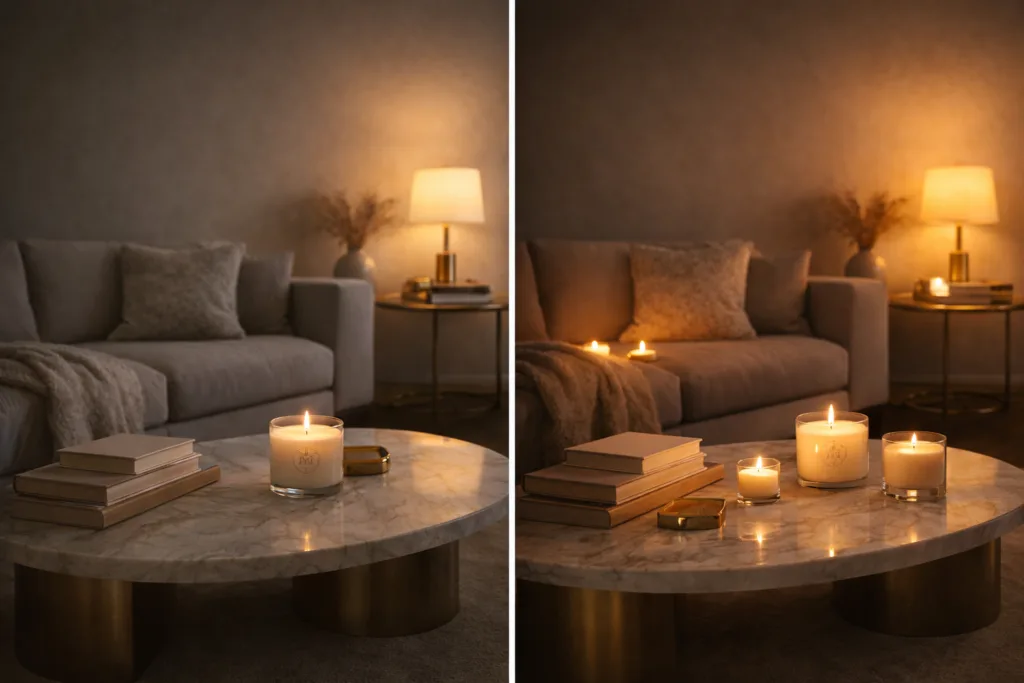
One reason so many products fail to support premium positioning is that they remain too functional. They solve a need, but they do not create a memorable experience. Luxury candles are different because they naturally operate on multiple emotional layers.
Visual Atmosphere Creates Instant Positioning
Before a candle is ever lit, it is already selling an idea. The vessel shape, glass thickness, label design, metallic finish, ceramic texture, lid material, and box construction all send a message. Matte black suggests mood and restraint. Frosted white feels calm and spa-like. Amber glass can feel warm, apothecary-inspired, and heritage-driven. Electroplated finishes speak to drama and gifting. Thick-bottom glass can communicate weight, stability, and a more expensive feel.
This is why custom development matters.
Standard stock packaging may help a brand launch quickly, but it rarely creates a distinctive visual code. Premium brands need more than a generic jar with a label. They need controlled design language. The candle needs to belong to the same world as the website, store display, campaign imagery, and broader product range.
That visual discipline is what turns a candle into a brand object rather than just a scented commodity.
Fragrance Builds Emotional Memory
Scent is one of the strongest memory triggers in consumer experience. That gives candles an advantage that many premium products simply do not have.
A customer may forget the details of a box, but they remember how a fragrance made a room feel. They remember the atmosphere during a dinner, a hotel stay, a slow Sunday, or a meaningful gift opening. When a brand develops a fragrance profile with intention, it is not just choosing a scent. It is choosing a mood, a memory, and a repeated emotional cue.
This matters for serious brand builders.
A premium candle fragrance should not feel random. It should align with the identity of the brand. A clean, contemporary interior brand may lean toward mineral woods, iris, cedar, linen, or tea-inspired blends. A warmer gifting brand may prefer amber, vanilla, neroli, fig, tonka, or sandalwood-led profiles. A spa or wellness concept may want lavender, eucalyptus, sage, bergamot, or softer botanical notes. A boutique hotel may want a signature blend designed to support recognition across rooms, lobby spaces, and retail corners.
When that fragrance identity is consistent, the candle becomes more than a product SKU. It becomes part of the brand system.
Ritual Makes the Product Feel More Expensive
Luxury is often tied to ritual. A candle naturally supports ritual because it marks a transition in time and mood. Lighting a candle turns an ordinary evening into a considered one. It tells the customer to slow down, soften the room, and pay attention to the atmosphere they are creating.
This ritual quality is one reason candles often outperform simpler decorative products in premium environments. They invite use. They create a repeated emotional pattern. They make people feel they are participating in a lifestyle, not just purchasing an object.
That repeated use cycle reinforces perceived value. The more a product becomes part of a ritual, the less likely the customer is to evaluate it only in terms of manufacturing cost.
Why Candles Are a Smarter Premium Product Than Many Alternatives
A great premium product category needs to do three things well. It needs to look expensive, feel differentiated, and remain commercially manageable.
Luxury candles are unusually strong on all three.
They Offer High Perceived Value Without Extreme Product Complexity
Compared with categories like apparel, candles are operationally simpler. There are no size curves, fit returns, or seasonal assortment problems on the same scale. Compared with cosmetics, they involve fewer regulatory complications. Compared with perfume, they are generally more approachable in price while still providing fragrance-led identity.
That balance makes candles attractive to brands that want a premium item without building an entire complicated product infrastructure.
They Work Across Multiple Sales Channels
A luxury candle can perform in retail stores, hotel shops, spa counters, museum stores, boutique homeware shops, online lifestyle stores, influencer-led collections, holiday gifting programs, and corporate gifting packages. It can sit as a standalone item, part of a boxed set, or an extension of an established collection.
That flexibility improves development logic. A brand is not committing to a product that only works in one narrow sales environment. Instead, it is investing in a format that can be merchandised in multiple ways.
They Support Strong Photography and Merchandising
Premium brands must sell visually before they sell verbally. Candles photograph well. They work in still-life imagery, lifestyle photography, hospitality scenes, festive displays, bedside settings, bathroom visuals, and tablescape content. That means they support content marketing naturally.
For SEO, social media, email marketing, wholesale line sheets, and paid ads, this matters. A product that is visually adaptable is easier to market consistently.
Custom Luxury Candles vs Private Label: What Serious Brands Should Understand
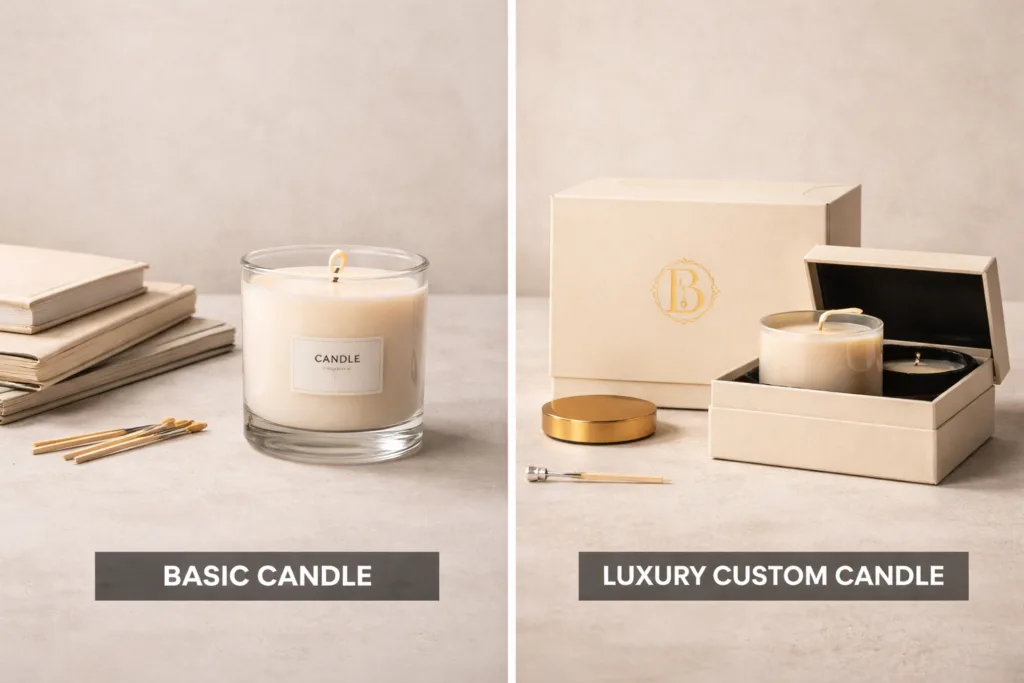
Many buyers begin with private label because it is fast and accessible. There is nothing wrong with that. It can be a practical first step, especially for testing scent direction, packaging formats, or price acceptance in the market.
But private label and custom development do not solve the same problem.
Private label helps you get a product. Custom helps you build a position.
Private Label Is Good for Speed
Private label usually means selecting from existing vessels, existing fragrance libraries, and existing packaging structures with limited branding adjustments. It is efficient. It is useful for trial runs and lower-risk launches. It also tends to reduce the time needed for sampling and production setup.
For early-stage brands with tight budgets, this can make sense.
Custom Is Better for Distinction
The problem is that speed often comes at the cost of sameness. When too many brands use similar jars, similar labels, similar box styles, and similar scent stories, the result is predictable. The product may still be nice, but it is no longer memorable.
Custom luxury candles create differentiation at the level that customers actually notice: material choice, color specificity, structural packaging, scent personality, lid detailing, logo application, and overall coherence.
This is where premium margin is built.
A custom vessel, or even a carefully chosen standard vessel paired with more elevated finishing, can change the entire perceived value of a candle. A rigid box with proper proportions, premium paper, foil stamping, and a clean insert immediately reframes the product. A scent profile that feels more nuanced and brand-specific improves retention. Better coordination across these elements makes the whole offering feel designed rather than assembled.
That difference is exactly what premium buyers are paying for.
The Right Question Is Not “Can I Make It Cheaper?”
The right question is, “Will this look and feel premium enough to justify the brand position I want?”
This is a more useful commercial question because it moves the conversation away from factory cost alone and toward long-term brand value. A cheaper candle that looks generic may save money upfront but weaken pricing power, retailer confidence, and customer memory. A more considered custom candle may cost more to develop, but it can support stronger margin, better shelf presence, and better repeat purchase behavior.
The Real Value of Customization in Luxury Candle Development
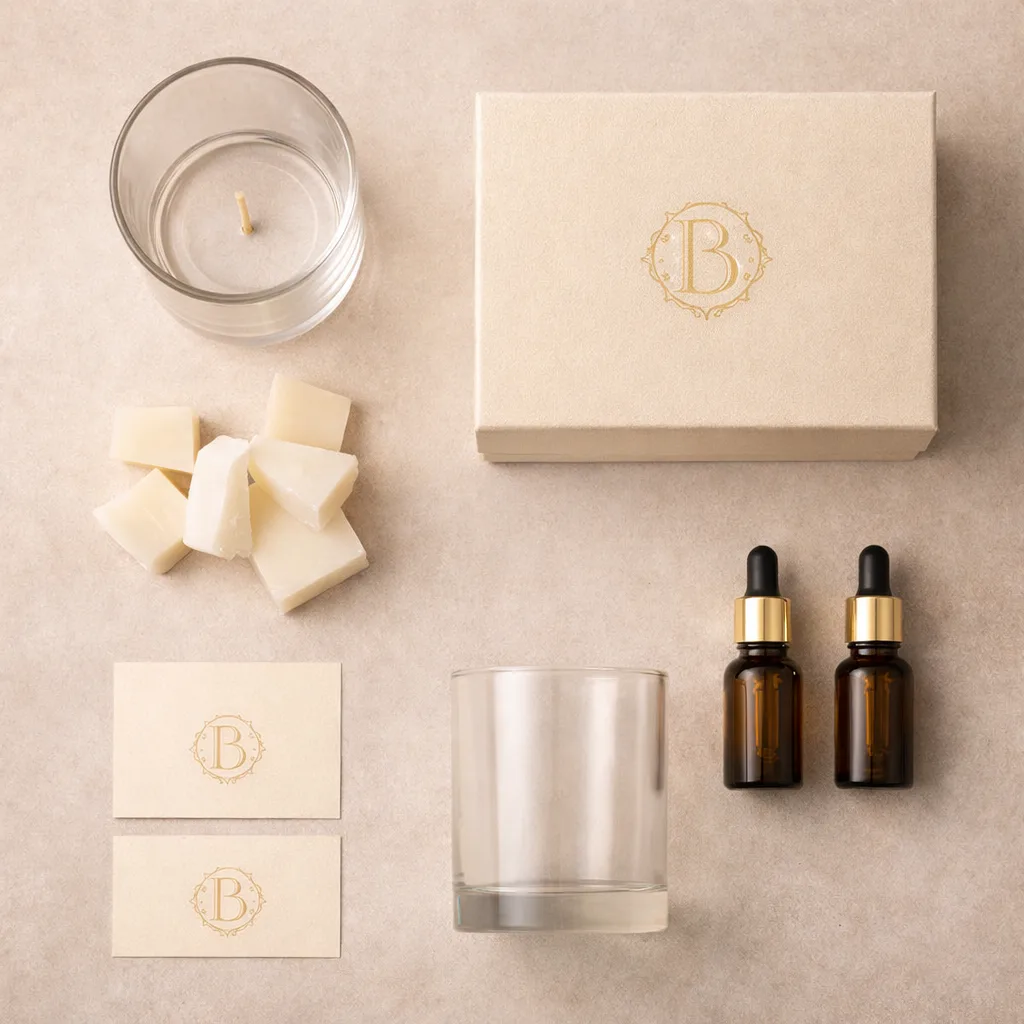
Customization is not just about adding a logo. In premium candle manufacturing, customization is the mechanism that translates brand identity into physical form.
Vessel Development Defines First Impressions
The vessel is often the first thing people judge. Even before scent, they are reacting to shape, wall thickness, finish, color, and weight. A vessel can feel minimal, architectural, romantic, playful, contemporary, hotel-like, museum-like, or festive depending on its development direction.
Brands that understand premium positioning treat the vessel as part of the product story.
Glass remains one of the most commercially efficient options because it offers flexibility in finish and a cleaner path for many projects. Frosted glass, sprayed glass, amber glass, glossy black, colored interiors, thick bases, and electroplated options can all serve different visual goals. Ceramic can feel more design-led and distinctive but often requires higher development commitment and stronger volume planning. Metal vessels can create strong giftability when executed carefully. Lids in wood, metal, or resin can further support the brand language.
These details are not small. They are often the difference between a product that feels mass-market and one that feels premium.
Logo Execution Changes Perceived Quality
How a logo is applied matters just as much as the logo itself. A basic sticker can work well for certain cleaner or lower-MOQ concepts, but premium positioning often benefits from more integrated approaches. Foil stamping, screen printing, embossing, debossing, engraving, hot stamping on rigid boxes, or carefully developed label systems can all elevate perception.
The choice depends on budget, MOQ, brand style, and target retail positioning. The important point is that premium buyers should think beyond simply placing a logo somewhere visible. The logo should feel native to the product.
Packaging Is Often Where the Premium Story Becomes Real
Many buyers underestimate packaging in the beginning. Then, as the project develops, they realize something important: packaging is not secondary. For premium candles, packaging is one of the main value drivers.
A luxury rigid box does several things at once. It protects the product, improves unboxing, supports gifting, increases shelf impact, and makes the item feel more expensive before it is even opened. Magnetic closure boxes, drawer-style boxes, telescopic rigid boxes, textured papers, foil logos, custom inserts, and refined proportions all contribute to brand authority.
In many cases, the box is what transforms a candle from a simple home fragrance item into a premium gift object.
That is why serious buyers do not treat packaging as a last-minute add-on. They treat it as part of the brand architecture.
Fragrance Direction Should Match Brand Positioning
A premium candle should not smell like an afterthought. The fragrance should support the story the brand is trying to tell.
This is where many average products fail. They may look acceptable, but the scent itself feels overly sweet, too generic, too flat, or disconnected from the rest of the identity.
Better fragrance development starts with positioning. Is the brand warm and intimate, or cool and restrained? Is it hospitality-led, fashion-led, wellness-led, or gift-led? Is the product being sold as a self-purchase indulgence, a host gift, a spa companion, or a retail shelf hero? Once that is clear, scent development becomes more strategic.
Refined candle brands tend to avoid fragrances that feel loud without nuance. They understand that premium scent often comes from balance, layering, and clean storytelling rather than from maximum intensity alone.
Luxury Candles Are Especially Powerful for Gift Sets and Brand Systems
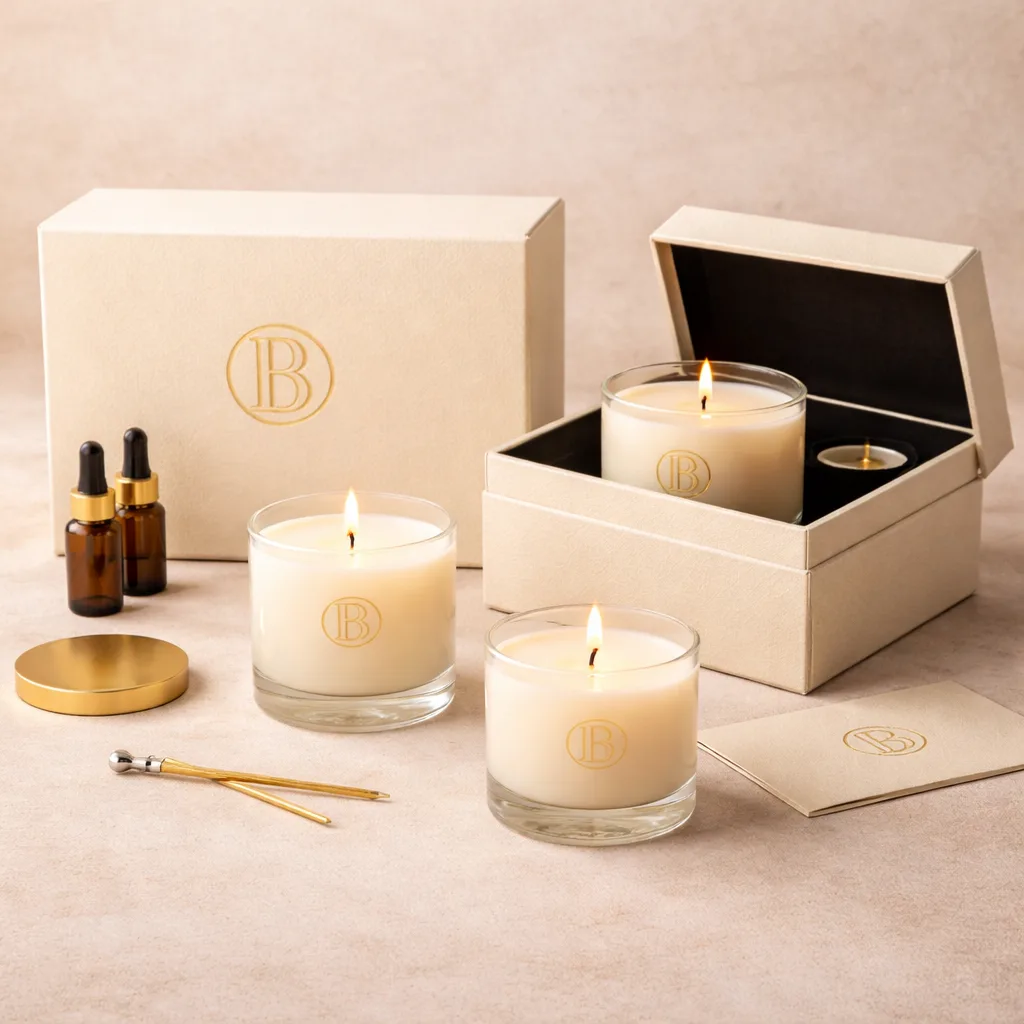
One of the smartest ways to build a premium brand is not to think in isolated products, but in coordinated systems.
A candle becomes more valuable when it is part of a family.
Gift Sets Increase Perceived Value Fast
Luxury candle gift sets are particularly effective because they combine emotional purchase logic with stronger average order value. The customer is no longer buying just one scented item. They are buying a complete gesture, a polished presentation, and a more finished experience.
Gift sets can be built in many ways:
- one candle in a rigid presentation box
- two-candle seasonal pairings
- candle plus diffuser sets
- candle plus room spray sets
- candle plus wax melt collections
- holiday or event gift boxes with accessories
These configurations improve merchandising options and give retailers more pricing flexibility. They also make it easier for brands to serve both self-purchase and gifting occasions.
Product Systems Make Small Brands Look More Established
A single candle can look attractive. A coordinated line looks like a real brand.
This is why product system thinking matters so much. Once a brand has a core vessel and fragrance direction, it can begin extending into adjacent formats. The same scent story can move into wax melts, reed diffusers, room sprays, travel tins, or gift-ready bundles. The visual identity becomes more cohesive. The brand appears more mature. Retailers see stronger assortment logic.
This creates a useful commercial effect: the brand begins to look larger, more stable, and more intentional than it might actually be at that stage.
That perceived maturity matters when approaching wholesale buyers, premium retailers, hospitality groups, and gifting programs.
The Economics of Premium Candles: Why the Category Makes Commercial Sense
Many brands are drawn to luxury candles for aesthetic reasons, but the category also makes strong business sense when positioned correctly.
Stronger Retail Markup Potential
Candles generally offer a healthy relationship between landed cost and retail price when the perceived value is strong. Packaging, scent quality, and branding execution play a major role here. A candle with refined packaging and a coherent story can move into a much higher retail bracket than a basic candle with similar wax fill.
That is precisely why premium presentation matters. Customers do not evaluate candles only by wax weight. They evaluate them as lifestyle objects, gifts, decorative pieces, and emotional purchases.
The more complete the premium experience, the easier it becomes to support higher pricing.
Better Shelf Value for Retailers
Retailers are not just looking for nice products. They are looking for products that help them make money without creating operational pain.
Luxury candles are attractive because they often combine high perceived value with manageable merchandising. They are relatively easy to display, they support seasonal storytelling, they fit gifting moments, and they photograph well for ecommerce. They also allow stores to build atmosphere within the retail environment itself.
This makes them useful not only as sellable products but also as visual tools that improve the overall store mood.
Lower Complexity Than Many Other Premium Categories
For premium brands entering physical products, candles often present fewer structural headaches than fashion, skincare, or electronics. There are still important quality considerations, of course, especially around burn behavior, fragrance compatibility, packaging durability, and container suitability. But from a brand expansion perspective, candles remain a relatively efficient way to launch something that feels elevated.
That efficiency is one reason they work so well for hotel shops, design-led retailers, personal brands, interior brands, and curated concept businesses.
Who Should Invest in Custom Luxury Candles
Not every buyer needs a fully custom candle program. But for certain types of businesses, it is an unusually smart move.
Boutique Retailers and Concept Stores
Independent retailers need products with story, visual strength, and giftability. A well-developed custom candle can help them stand out from generic home fragrance assortments and improve premium basket composition.
Hotels, Spas, and Hospitality Brands
Hospitality is one of the most natural homes for custom candles. A signature scent can extend the guest experience beyond the stay, while candles and diffusers create strong retail opportunities in lobby shops, spa corners, and curated guest gifting.
Interior, Lifestyle, and Home Decor Brands
For brands already working in premium interiors or lifestyle positioning, candles are a logical extension. They fit naturally into the home environment and strengthen the emotional atmosphere around the core brand world.
Museum Stores, Gifting Programs, and Event-Focused Brands
Giftability gives candles broad appeal. They work well for seasonal launches, premium event kits, private-label museum concepts, design collaborations, and limited-edition runs tied to exhibitions, destinations, or cultural themes.
Personal Brands and Mature Founders
For founders, creators, or designers with a strong audience and a clear aesthetic, luxury candles can be one of the most effective first premium products. They communicate taste quickly and can be developed in ways that feel intimate, collectible, or seasonally repeatable.
Why Higher MOQs Are Often Necessary for Real Luxury Candle Customization
This is the part many buyers resist at first, but serious brands eventually understand it.
Truly custom luxury candles usually require higher MOQs because premium differentiation is built from components that each have their own production realities.
Custom Vessels Need Volume
When a brand wants a unique ceramic form, custom color match, special electroplated finish, or an exclusive mold-based component, the supplier is not just producing inventory. They are setting up development, testing finish consistency, and managing more complex production risk.
That is why the MOQ rises.
Premium Packaging Also Has Its Own MOQ Logic
Rigid boxes, foil stamping, custom inserts, textured papers, and specialized printing processes usually come with minimums that are not designed for tiny runs. These packaging systems are part of what creates luxury perception, but they also require commercial viability at the factory level.
Fragrance and Material Coordination Adds Complexity
When a brand wants multiple fragrance options, different vessel colors, complex gift box combinations, or several packaging variations at once, the project becomes more fragmented. That fragmentation increases cost, slows efficiency, and pushes MOQ requirements upward if the result is still meant to look polished.
This is not a flaw in manufacturing. It is simply the cost of specificity.
Brands that want something truly distinctive must accept that uniqueness is easier to produce at meaningful volume than in tiny fragmented batches.
What High-Quality Buyers Usually Get Right
The strongest candle projects tend to come from buyers who approach development strategically rather than emotionally.
They usually do several things well.
They Know Their Positioning Before Asking for a Quote
Instead of asking for a random price on an 8 oz candle, they define the concept first. They know whether they want modern minimal, spa-clean, heritage, fashion-forward, festive gifting, or hotel-style atmosphere. That clarity makes development faster and more coherent.
They Understand That Packaging Is Not Optional
They do not treat the box as a side question. They know the packaging is part of the value perception and budget accordingly.
They Prioritize Cohesion Over Excessive Variation
Rather than creating too many scattered scents, colors, and formats at once, they build a tighter line with stronger internal consistency. This makes the brand feel more refined and usually improves production efficiency.
They Think in Systems, Not Singles
They ask how the candle fits into a broader assortment, not just whether one SKU can be made cheaply.
They Build for Margin, Not Just for Sampling
They understand that the real question is not how little the first sample costs. The real question is whether the final product can justify a premium retail position and support healthy margins.
How to Develop a Custom Luxury Candle That Actually Feels Premium
A premium candle is never the result of one expensive element alone. It comes from alignment.
Start With Brand World, Not Factory Specs
Before discussing vessel diameter or wax fill, define the brand mood clearly. What kind of room should this candle live in? What kind of person buys it? What does the brand want to be associated with: calm, boldness, refinement, intimacy, heritage, modernity, or artistic expression?
These answers guide every later decision.
Choose One Hero Direction and Execute It Well
Too many first-time projects try to do everything at once. Multiple scents, multiple vessel styles, several lid options, complicated gift box layouts, and different branding methods all in one launch often weaken the result.
A better strategy is to choose one strong direction and make it feel complete. One excellent vessel, one clear packaging language, two or three refined fragrances, and a disciplined visual identity often create a stronger premium impression than a scattered assortment.
Balance Aesthetics With Manufacturing Reality
The best premium candle development respects both design ambition and production logic. It is not enough for something to look good in a mood board. It also has to survive shipping, work with the wax system, suit the wick performance, and remain commercially sensible.
This is where experienced suppliers add value. They help brands avoid expensive aesthetic decisions that perform poorly in real manufacturing.
Think Beyond Launch
A smart luxury candle is not just a one-time product. It is a foundation. Can the vessel be extended into future scents? Can the packaging architecture support seasonal updates? Can the line expand into matching home fragrance products? Can retailers reorder it confidently?
The more scalable the system, the stronger the long-term premium brand value.
Why Custom Luxury Candles Help Brands Look More Established Than They Are
This may be one of the most commercially interesting points of all.
A well-designed candle line can make a young or small brand appear far more mature. Because candles carry such strong sensory and visual cues, they create immediate polish. Good photography, a strong vessel, refined packaging, and a convincing scent story can compress years of perceived brand development into a much shorter timeline.
This matters in wholesale. Buyers often make fast judgments. If the candle line looks disciplined, giftable, and coherent, the brand is more likely to be treated seriously.
In that sense, custom luxury candles do more than generate sales. They improve brand credibility.
Final Thoughts: A Luxury Candle Is Not Just a Product, It Is a Positioning Tool
The best premium brands understand that product development is never only about making an item. It is about making meaning.
Custom luxury candles are one of the smartest ways to do that because they combine fragrance, design, ritual, atmosphere, and packaging in a single highly brandable format. They are easier to integrate than many premium categories, more emotional than many decorative products, and more flexible than many gift items.
Most importantly, they help brands communicate quality fast.
When executed well, a custom candle can support higher pricing, stronger gifting logic, better shelf presence, and deeper emotional memory. It can anchor a product system, strengthen hospitality branding, elevate a retail assortment, or help a personal brand enter the premium market with confidence.
This is why serious buyers increasingly move beyond generic private label and invest in more considered development. They understand that luxury is not built from sameness. It is built from coherence, feeling, and detail.
A custom luxury candle is not just wax in a vessel.
It is a brand statement customers can see, smell, hold, gift, and remember.
FAQ
Are custom luxury candles better than private label candles for premium brands?
Yes, in most cases. Private label candles are useful for speed and lower-risk testing, but custom luxury candles create stronger brand distinction. If your goal is premium positioning, better perceived value, and a more memorable customer experience, custom development is usually the stronger long-term choice.
Why do custom luxury candles usually require higher MOQs?
Because true customization often involves separate minimums for vessels, finishes, rigid boxes, inserts, fragrance planning, and logo application methods. Higher MOQs help make premium production commercially viable and keep quality more consistent across the full project.
What makes a luxury candle feel premium to wholesale buyers and end customers?
It is usually the combination of vessel quality, fragrance refinement, logo execution, packaging structure, and overall coherence. Premium candles feel considered at every touchpoint. The customer should sense quality before the candle is even lit.