
The Meaning of MOQ in Candle Manufacturing
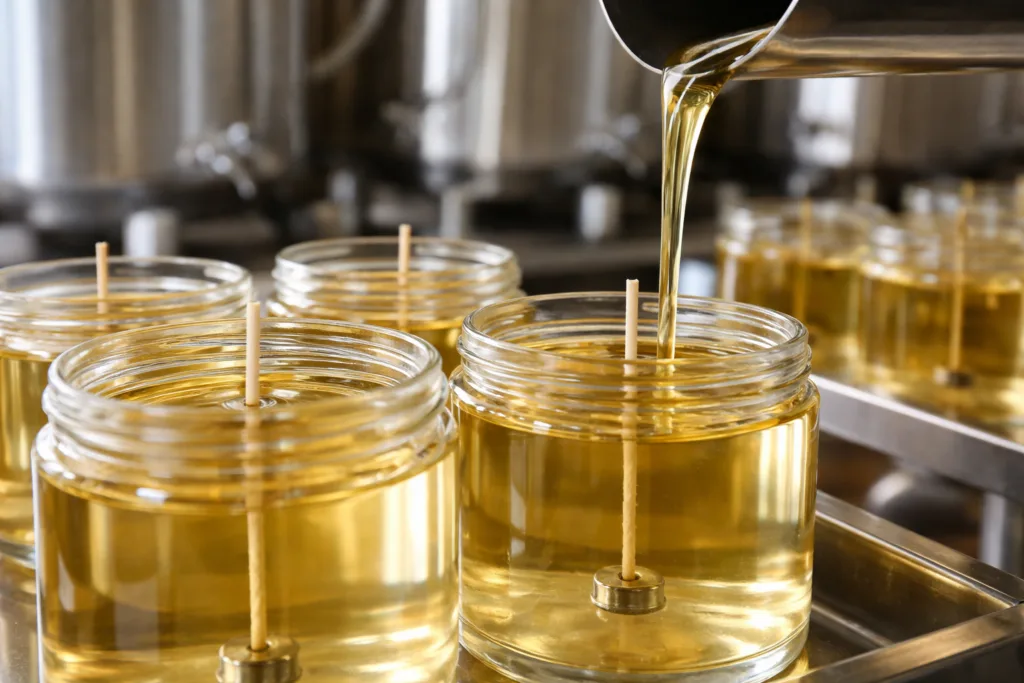
MOQ, or Minimum Order Quantity, is more than a procurement term—it’s foundational to maintaining systematic quality in large-scale candle production. By committing to a minimum batch size, manufacturers like Circe Home optimize equipment calibration, batch control, input consistency, and standardized quality checks. MOQ aligns resources, limits variation, and enables repeatable excellence, especially for luxury and private-label orders requiring meticulous detail and compliance.
Wax Selection, Batch Sizing, and Quality Assurance
Wax type and sourcing shape the heart of any candle—the burn, scent diffusion, surface finish, and overall safety. In large orders, MOQ empowers producers to purchase and blend wax in bulk, avoiding variability that plagues piecemeal batches. This synchronized procurement ensures every candle within the run shares the exact paraffin/soy/coconut/beeswax blend ratio, melting profile, and base purity.
- Bulk blending produces uniform texture and color.
- Centralized control of melt point ensures safety and performance.
- Consistent cooling curves limit defects (frosting, cracking).
For example, a MOQ of 1,000 units means a 200kg wax batch can be blended, filtered, and tested for moisture, hue, and melt point—establishing a consistent foundation for scent loading and burning behavior.
Fragrance Integration: Uniformity at Scale
Fragrance is the soul of a luxury candle. Large-scale production with set MOQ allows for consistent fragrance load percentages and controlled cold and hot scent throw across the batch. Using precision dosing systems, manufacturers can ensure every 6% or 12% fragrance addition dissipates evenly, with essential oil compatibility and allergen levels documented for compliance.
Key fragrance control points include:
- Accurate pre-weighing of fragrance (accounting for batch variance).
- Homogeneous blending to prevent scent “hot spots.”
- Standardized curing times per wax/fragrance system.
- Spot checks for flash point, volatility, and dispersion.
“Circe Home Lab Insight: Inconsistent batch sizes mean different curing profiles. Maintaining MOQ lets us schedule curing rooms for precise timelines—mitigating off-notes and ensuring a balanced hot throw.”
Wick Sourcing, Preparation, and Burn Consistency
Wick selection dramatically affects burn rate, scent release, and soot profile. Large MOQs allow manufacturers to source cotton, wooden, or paper-core wicks with identical physical and chemical specifications. This reduces variables such as mushrooming, off-center drift, or inconsistent flame heights.
| Wax Blend | Fragrance Load (%) | Wick Type | Burn Profile | MOQ Impact |
|---|---|---|---|---|
| Soy-Coconut | 8–12% | Cotton braided | Soot-free, smooth pool | Bulk-precut, center glued, exact sizing |
| Beeswax Blend | 5–8% | Wood or paper-core | Steady burn, mild scent throw | Uniform testing, batch wick prep |
| Paraffin-Luxury Fragrance | 6–10% | Stabilized fiber | High scent throw, sustained flame | Centralized sourcing, QC batch lots |
Container Preparation, Packaging, and Aesthetic Consistency
MOQ is a linchpin for consistency in glass, ceramic, metal, or concrete container preparation and decoration. Every vessel batch undergoes cleaning, coating, labeling, and packing in a controlled environment. Large-scale runs allow for foil stamping, multi-color glass, or tactile embossing without random variation in tint, gloss, or branding.
Container QC steps enabled by MOQ:
- Automated label alignment checks and tolerance gating.
- Batch-printed boxes with consistent color and ink density.
- Pre-gluing and centering of wicks in vessels.
- Synchronized inner pack height and cap fit tests.
For brands like Circe Home, MOQ supports the delivery of bespoke container finishes—matching luxury standards across every unit, enabling compliance labeling, and limiting damage in transit by optimizing inner pack design for the batch size.
Quality Control Protocols Aligned with Large-Scale MOQ
Stringent quality protocols are only feasible at scale. MOQ enables time- and resource-intensive checks, including:
- Burn Testing: Measuring burn rate, wick performance, and complete wax pool formation (e.g., >35 hours for 200g jar).
- Soot and Carbon Check: Monitoring for smoke or carbon deposit, recalibrating wick or fragrance as needed.
- Surface and Scent Testing: Ensuring gloss, smoothness, and scent throw stability from first to last candle in the batch.
- Compliance Testing: IFRA/CLP label conformity, child-resistance, and allergen declarations per market rules.
In large batches, spot-testing every 20th candle or using statistical sampling is practical, driving confidence in batch homogeneity and minimizing post-shipment issues.
Production Process Optimization: From Pre-Pour to Curing
Batch size and MOQ dictate the design of melting, blending, pouring, and curing stations within the factory. Consistent batch size means calibrated automation—bulk melting tanks, transfer lines, and filling heads stay dialed-in for precise wax temperature, fragrance addition, and top-off levels.

- Raw material prep (weigh-in, presorting wicks and scents)
- Batch melting and blending (temperature and agitation monitored)
- Pouring—timed for ambient control to deter frosting or tunneling
- Curing—minimum 48-72 hours per system, with airflow and temp recorded
- Pre-shipment QC (burn, scent, appearance)
With set MOQ, dedicated lines and curing rooms eliminate “carry-over” risks from prior runs, tightening traceability and reducing human error.
How MOQ Enables Customization without Sacrificing Quality
Many buyers want unique fragrances, colors, or vessel designs. Circe Home, for example, leverages MOQ to offer tailored fragrance blends, private-label packaging, or vessel embossing—while keeping every unit within specifications. That’s only possible on runs above MOQ, where setup and testing costs are amortized, and each variable is locked before scaling up.
For instance, a spa candle line might demand a vegan soy-coconut wax, 10% essential oil, FSC carton, and compostable label. With MOQ enforced, each customization is validated, and “drift” is eliminated throughout the run. This is critical for high-end retail and white-label clients requiring consistency on every shelf, batch after batch.
Sustainability and Compliance: MOQ’s Role in Standards and Best Practices
Meeting environmental and safety commitments at scale—non-toxic waxes, clean burning, FSC cartons, and IFRA/CLP compliance—is best delivered with MOQ-managed procurement and operations. Large runs allow for consistent use of soy ink, minimized waste, and bulk recycling initiatives.
Batch tracking for regulatory documentation, allergen/nano-declarations, and IFRA certificates becomes more robust, guaranteeing compliance with the 51st amendment or stringent EU/US labeling rules.
Industry Applications: Luxury, Retail, and Bespoke Opportunities

MOQ ensures that luxury gifting, private label, spa-branded, and minimalist home décor candles are as reliable at scale as in boutique batches. Clients benefit from predictable lead times, uniform burn/scent quality, and seamless compliance—key for entrepreneurs scaling new fragrance lines or established brands expanding across regions.
Frequently Asked Questions
What is MOQ and why does it matter for candle production quality?
MOQ stands for Minimum Order Quantity—the smallest batch a manufacturer will produce. Adhering to MOQ enables consistent raw material sourcing, precision blending, and rigorous quality controls across every candle. This establishes reliability and compliance in every large-scale run.
How does MOQ affect fragrance consistency in candles?
Maintaining MOQ ensures that fragrance oils and wax are blended in precise proportions, yielding uniform cold and hot throws across the batch. It also allows controlled curing and testing for allergen compliance and scent load accuracy.
Can customized candles meet strict quality benchmarks above MOQ?
Yes. MOQ creates the operational space for custom wax blends, fragrances, containers, and packaging—each tested for performance and safety before scaling. This secures consistent, high-quality results in every unit.
How does MOQ improve compliance with safety standards?
Larger batches allow systematic burn, soot, and label testing, ensuring every candle meets IFRA, CLP, and other regional safety and allergen requirements. Batch documentation and traceability are also easier to manage at scale.
What is the role of MOQ in eco-friendly candle manufacturing?
MOQ supports bulk procurement of certified materials like soy or rapeseed wax, soy ink, and FSC cartons. This enables consistent eco-quality and reliable execution of sustainability programs in packaging and production.
Does MOQ hinder creative design or does it enable it?
MOQ actually enables creative design at scale—it allows for specialized vessel finishes, custom labeling, and unique fragrance development, all while maintaining strict quality and aesthetic standards across the batch.