
 Buying fragrance oils for candles sounds simple—until you’re the one responsible for results.
If you’re developing a candle line for retail, private label, hospitality, or e-commerce, the question isn’t “What smells best?” It’s:
- Which fragrance oils perform consistently in wax?
- Which scent families sell in your market?
- Which suppliers can support scale, compliance paperwork, and repeatable quality?
This guide is built for buyers who need commercial answers: founders, product developers, importers, wholesalers, and retailers working with OEM/ODM factories.
1) What “Best Candle Fragrance Oils” Really Means
“Best” can’t be a single list because fragrance oils are not a universal ingredient. The right choice depends on your wax, your vessel, your burn profile, your customer, and your compliance market.
A fragrance oil that performs beautifully in a paraffin pillar can fail in a soy container. A gourmand that sells fast in North America can underperform in parts of Europe where cleaner, less-sweet profiles dominate. And a “strong” oil that throws aggressively can still be a bad purchase if it creates soot, frosting issues, or label compliance headaches.
So in this buyer’s guide, “best candle fragrance oils” means:
- Performance: consistent cold throw + hot throw without burn issues
- Stability: behaves across production variables (wax batch, dye, wick)
- Scalability: reliable supply and repeatable lots
- Compliance-ready: IFRA, SDS, allergen/CLP support where required
- Commercial fit: aligns with your brand positioning and target market
2) Fragrance Oils vs Essential Oils for Candles (Commercial Reality)
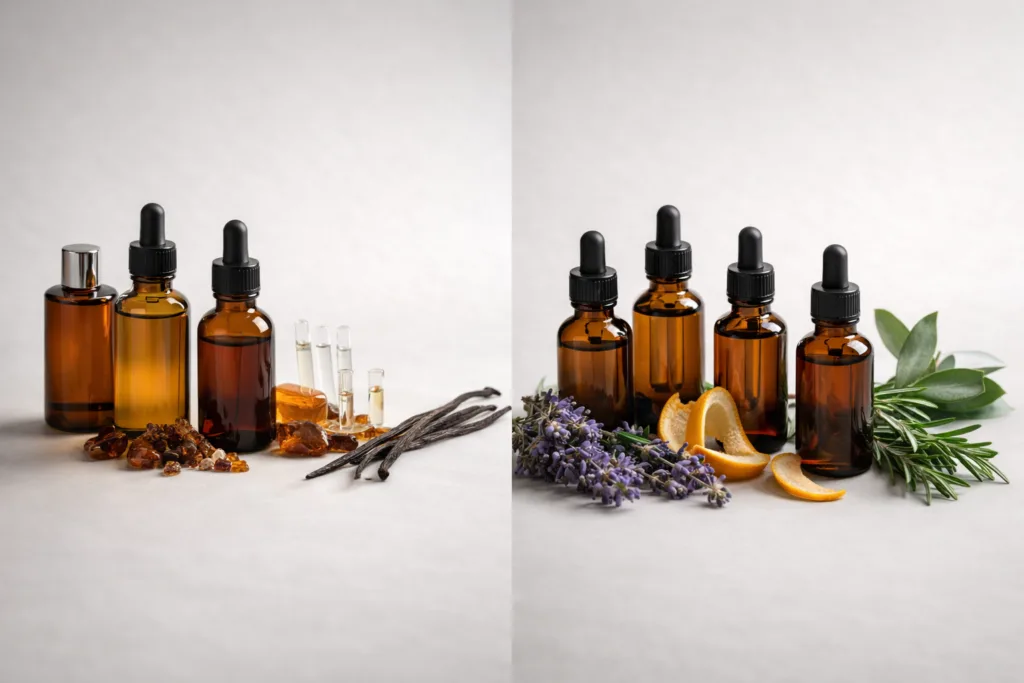 Many first-time buyers assume essential oils are “better” because they’re natural. In commercial candle making, that assumption often breaks down.
Fragrance oils (FO)
What they are: crafted aromatic blends (often a mix of aroma molecules and sometimes natural isolates) designed for stability and performance.
Why commercial brands use them:
- Stronger and more reliable hot throw at practical dosage
- Better stability during heating, curing, and burning
- Wider variety of signature accords (amber, musk, laundry, “luxury hotel”)
- More predictable compliance documentation from established suppliers
Essential oils (EO)
What they are: natural extracts from plants.
Where they can fit:
- Certain botanical-forward products (limited profiles)
- Blended at low percentages inside a fragrance structure
Common commercial drawbacks:
- High cost (can wreck margin quickly)
- Narrower scent library (hard to build a full collection)
- Variable crop lots and seasonal differences
- Some EOs behave poorly in combustion (weak throw, off-notes, instability)
Practical takeaway:
If your goal is a sellable, scalable candle line with consistent performance, fragrance oils are usually the primary tool. Essential oils can be used selectively, but they’re rarely the backbone of a full commercial collection.
3) The Five Performance Metrics Buyers Should Demand
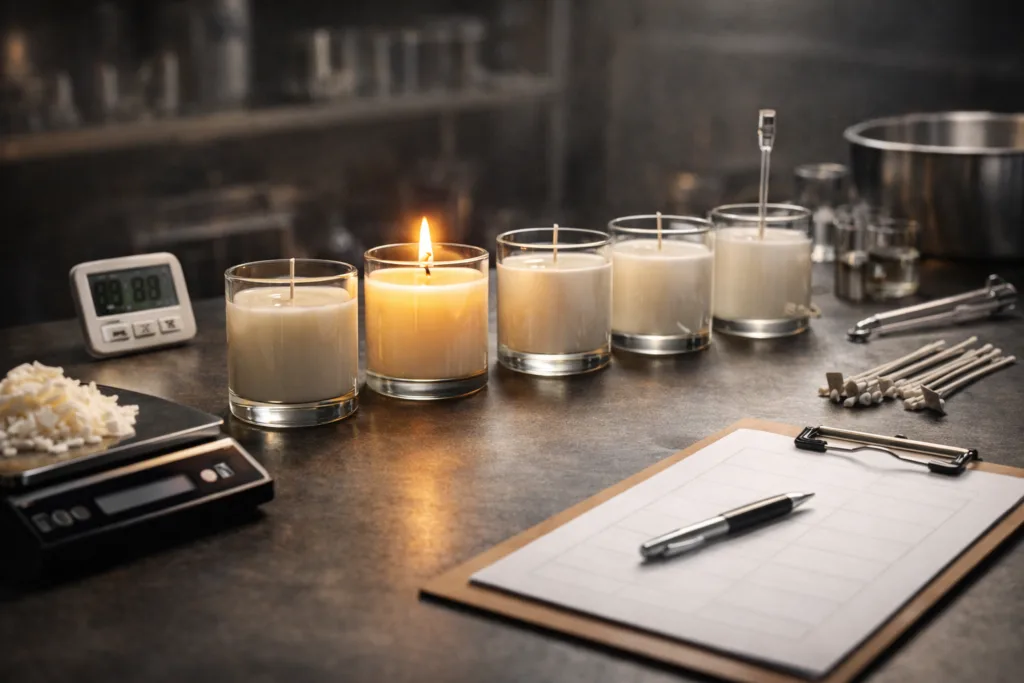 If you only evaluate fragrance oils by sniffing the bottle, you’re buying blind.
Below are the metrics professional buyers use to determine whether an oil is actually “top-performing” in candles.
1) Cold throw (CT)
How strongly the candle smells unlit. Important for retail shelves and unboxing impressions.
Buyer note: CT can be misleading. Some oils smell fantastic cold but collapse when burning.
2) Hot throw (HT)
How well the candle scents the space when lit. This is what customers pay for.
Buyer note: HT depends on the full system—wax, vessel, wick, fragrance load, cure time.
3) Scent integrity under heat
Does the fragrance keep its character after being heated in wax and then combusted over hours?
Watch for:
- “Burnt sugar” distortion in gourmands
- “Plastic” or “chemical” edges in some fresh profiles
- Top-note evaporation that leaves a flat base
4) Wax compatibility and stability
A strong oil can still cause problems:
- sweating/bleeding
- frosting changes
- discoloration
- poor adhesion
5) Repeatability (lot-to-lot consistency)
Commercial buying is about repeatable outcomes.
Ask suppliers:
- do you provide COA or batch references?
- how do you manage reformulations?
- can you guarantee continuity for bestsellers?
4) Compliance: IFRA, SDS, CLP—What a Buyer Should Ask For
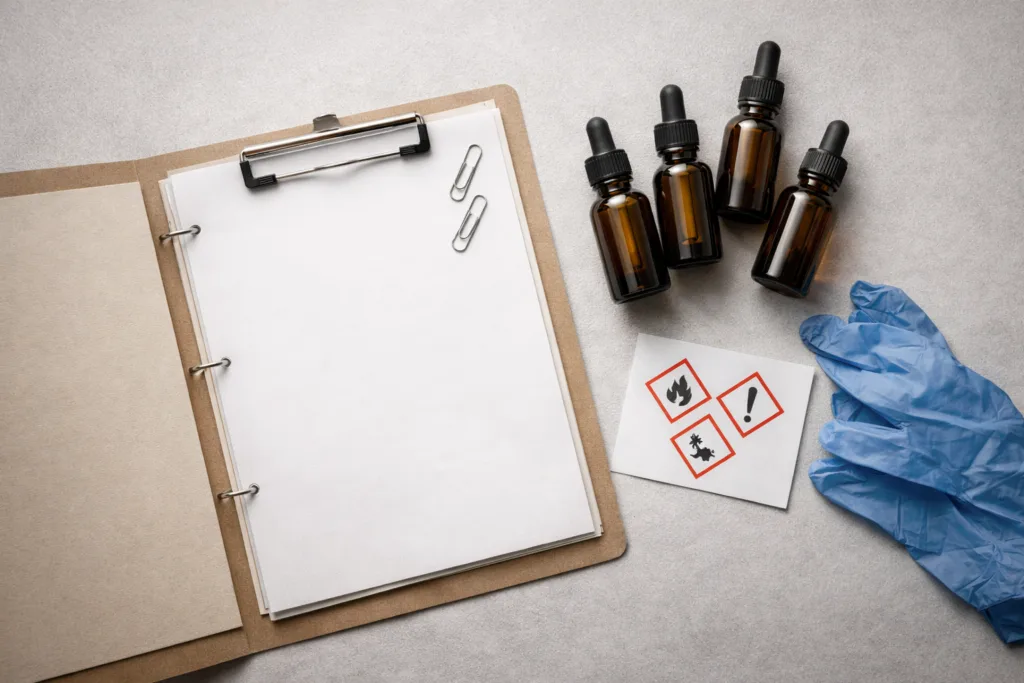 If you sell in regulated markets, documentation is not optional.
Minimum documents you should expect
- IFRA certificate for the specific fragrance code
- SDS (Safety Data Sheet)
For EU/UK (typical needs)
- CLP labeling inputs (hazard statements, pictograms where required)
- allergen disclosure for labeling
For B2B buyers
If you’re supplying retailers, subscription boxes, hotels, or distributors, you’ll often be asked for:
- compliance packets (IFRA + SDS + allergen info)
- confirmation of restricted materials
Buyer tip:
If a supplier cannot provide IFRA/SDS quickly and clearly, it’s a serious risk—especially when you scale or enter new markets.
5) The Best-Selling Candle Scent Families (And Why They Convert)
“Best” often correlates with what buyers recognize, gift, and repurchase.
Below are the five families that consistently support commercial candle sales.
A) Fresh / Clean (linen, cotton, soap, ozone)
Why it sells: universal, easy to gift, low barrier.
Best uses:
- mass retail
- hotel-style home fragrance
- spring/summer launches
Buyer watch-outs: some clean profiles skew “detergent.” Test burn for harshness.
B) Gourmand (vanilla, caramel, bakery, chocolate)
Why it sells: comfort + emotional pull.
Best uses:
- North America retail
- holiday collections
- gift sets
Buyer watch-outs: heat distortion and sweetness overload. Look for balanced vanillas with wood/amber structure.
C) Floral (rose, jasmine, peony, lavender)
Why it sells: classic and brandable—from romantic to spa.
Best uses:
- boutique retail
- wellness positioning
- premium minimalist lines
Buyer watch-outs: florals can read “powdery” or “old-fashioned” if not modernized.
D) Woody / Aromatic (sandalwood, cedar, pine, herbal)
Why it sells: “luxury” signal + gender-neutral appeal.
Best uses:
- luxury lines
- EU/UK markets where sweetness is less dominant
- year-round signature scents
Buyer watch-outs: ensure the base is smooth; some woody aromachemicals can feel sharp.
E) Amber / Oriental (amber, resin, musk, incense)
Why it sells: depth, warmth, perceived sophistication.
Best uses:
- premium collections
- autumn/winter
- “signature scent” storytelling
Buyer watch-outs: compliance restrictions can be tighter for some materials; documentation matters.
6) “Best Candle Fragrance Oils” by Business Goal (A Buyer’s Shortlist Framework)
Instead of chasing a giant list, build your fragrance plan around your product strategy.
If you’re launching a first collection (6–8 SKUs)
You need range without fragmentation:
- Clean/fresh bestseller
- Vanilla/gourmand bestseller
- Wood/amber signature
- Floral spa profile
- Seasonal slot (holiday or summer)
- Wildcard for brand differentiation
If you’re building a luxury line
Focus on complexity and restraint:
- woody amber with textured base
- incense-resin compositions
- modern florals (not overly sweet)
If you’re serving retail / wholesale volume
Optimize for familiarity + strong throw:
- clean cotton/linen
- vanilla + amber
- lavender
- seasonal bestsellers (pine, cinnamon, pumpkin-like profiles—market dependent)
7) How to Test Fragrance Oils Like a Professional Buyer
A buyer’s test should be repeatable and documented.
Step 1: Standardize your candle system
Pick one baseline:
- wax type
- vessel
- wick series
- fragrance load (start with 8–10% where applicable)
- cure time (minimum 7–14 days depending on wax)
Step 2: Use a controlled test plan
For each fragrance oil, record:
- cold throw at Day 2 / Day 7 / Day 14
- hot throw performance in a defined room size
- burn behavior (mushrooming, soot, flame stability)
- discoloration and surface changes
Step 3: Evaluate “sellability,” not just strength
Ask:
- Is the scent instantly understandable to the target customer?
- Does it feel premium or cheap?
- Would it work as a gift?
- Can you name it cleanly for marketing?
8) Choosing a Fragrance Oil Supplier (What to Ask Before You Buy)
Your supplier determines your consistency more than your copywriting does.
Minimum questions to ask
- Can you provide IFRA + SDS for every fragrance code?
- Are fragrances reformulated often? How is it communicated?
- Do you offer production-scale continuity (same code, stable supply)?
- Can you support customization (adjust sweetness, add wood, reduce allergen impact)?
- What is the MOQ and lead time for repeat orders?
Red flags
- unclear documentation
- inconsistent naming or missing codes
- no guidance on max usage rates
- cannot discuss wax compatibility
Buyer tip:
A credible supplier will talk about performance constraints clearly. Overpromising is a warning sign.
9) Building a “Top” Fragrance Range Without Copying Everyone
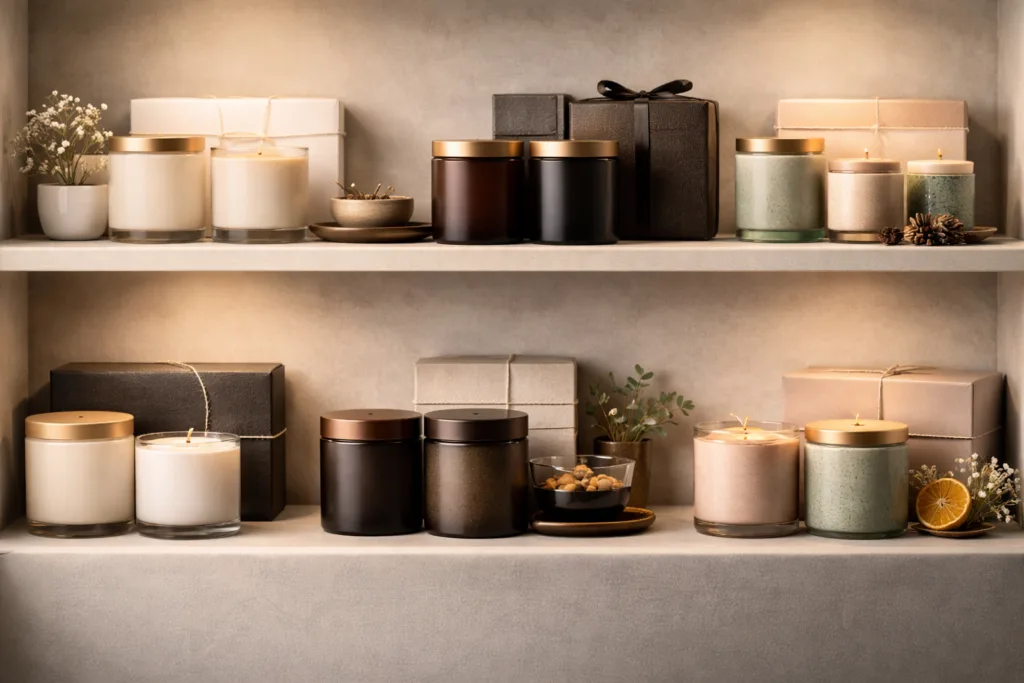 Many brands launch with the same scent menu. You can avoid that while staying commercial.
Use a “hero + signature + seasonal” structure
- Hero scents: the ones customers expect (clean, vanilla)
- Signature scents: your brand identity (wood/amber, resin, tea, mineral)
- Seasonal scents: limited drops for marketing momentum
Create differentiation through structure
Even within a common category, you can stand out by:
- making vanilla less sweet and more woody
- modernizing florals with green notes
- adding mineral/tea facets to fresh profiles
This is where supplier capability matters: the best fragrance oil partners can tweak an accord for your positioning.
10) Quick Buyer Checklist
Before you commit to bulk fragrance oil purchasing, confirm:
- ✅ oil performs in your wax and vessel (CT + HT)
- ✅ stable after curing and burning
- ✅ IFRA certificate available for the exact code
- ✅ SDS available
- ✅ supplier can support repeat orders at scale
- ✅ your collection structure matches your market
If any of these are unclear, you’re not ready for bulk—test first.
FAQs
1) Are fragrance oils safe for candles?
Fragrance oils formulated for candles can be safe when used within supplier IFRA limits and paired with correct wicks and containers. Always request IFRA + SDS.
2) How much fragrance oil should I use per kg of wax?
Many container candles use roughly 6–12% fragrance load depending on wax type and fragrance strength. Start with a controlled test plan and follow supplier max usage.
3) Why does my candle smell weak when burning?
Weak hot throw is usually a system issue: wax type, wick choice, cure time, or a fragrance that doesn’t perform under heat. Standardize testing and adjust one variable at a time.