
Choosing Fragrances for Glass Jar Candles
Crafting a memorable scented candle begins with a keen focus on fragrance selection, especially when designing glass jar candles for luxury, private-label, or home décor applications. The fragrance you choose shapes the entire sensory experience—dictating throw, longevity, and overall market appeal. This in-depth guide explores the dynamics of fragrance suitability for glass jar candles, offering practical insight on diffusion, stability, and olfactory direction. Throughout, you’ll find proven technical considerations and creative possibilities for elevating your glass jar candle range, with expertise gleaned from specialist manufacturers such as Circe Home.
Understanding Fragrance Diffusion in Glass Jar Candles
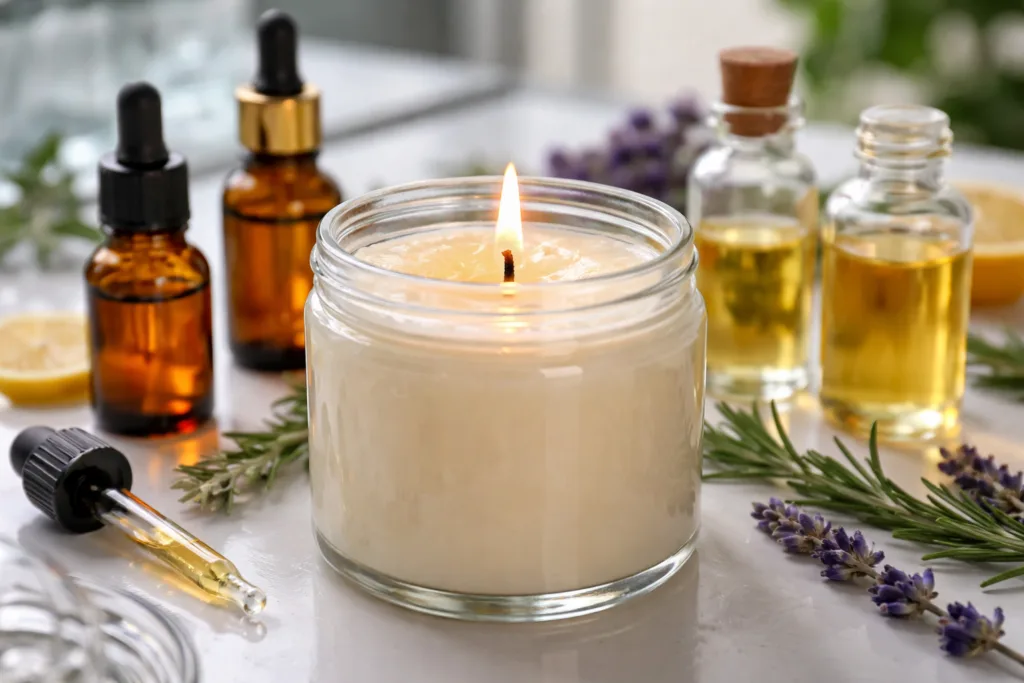
The vessel material and geometry have a direct bearing on how scent is dispersed—known as the “throw.” Glass jars excel at amplifying fragrance performance due to their smooth interior, airtightness, and heat retention. This mix helps essential and fragrance oils release predictably during burn. But, maximizing diffusion means harmonizing wax blend with vessel profile and fragrance load.
Hot Throw vs. Cold Throw
Cold throw measures the candle’s scent in an unlit state, crucial for shelf appeal and first impressions. Hot throw indicates the aroma delivered when burning. For glass jar candles, aim for fragrance blends with robust cold throw and a clean, lingering hot throw: optimal with high-quality waxes and well-matched wicks.
Comparative Fragrance Throw Table
| Wax Blend | Fragrance Load (%) | Cold Throw | Hot Throw | Burn Time (200g) |
|---|---|---|---|---|
| Soy (Premium) | 7–10 | Strong | Rich, Clean | 38–45 hrs |
| Beeswax Blend | 5–8 | Moderate | Soft, Gentle | 40–48 hrs |
| Coconut-Soy | 8–12 | Lush | Expansive | 42–47 hrs |
| Paraffin | 5–7 | Medium | Immediate | 34–38 hrs |
Fragrance Stability: Longevity and Consistency
For glass jar candles, fragrance stability determines how well the scent profile remains intact over weeks or months. Factors such as wax composition, oil purity, storage conditions, and curing times play key roles. Leading manufacturers like Circe Home design blends with slow evaporation rates and optimized curing protocols for peak consistency.
Wax Blend Influence
Soy wax offers excellent fragrance retention and a clean burn. Coconut and rapeseed blends provide softness and amplify cold throw. Beeswax lends natural stability—ideal for scent notes that fade quickly.
Curing & Aging
Proper curing—typically 7–14 days—allows fragrance molecules to bind evenly with the wax. Neglecting this phase can weaken both throw and stability.
- Store in temperature-controlled environments (18–24°C).
- Minimize sunlight and moisture exposure.
- Test scent retention at 2-week, 4-week, and 8-week intervals.
Stylistic Fragrance Routes for Scented Candles
Identifying a compelling fragrance route is a blend of technical feasibility and creative vision. For glass jar candles, manufacturers curate olfactory palettes that reflect brand ethos, seasonal trends, and market demand.
Popular Fragrance Directions
- Botanical: Eucalyptus, Lavender, Jasmine
- Gourmand: Vanilla, Tonka Bean, Coffee
- Woody: Cedar, Sandalwood, Vetiver
- Marine: Sea Salt, Driftwood, Moss
- Citrus: Bergamot, Lemon Zest, Grapefruit
- Oriental: Oud, Amber, Spice blends
Designing Signature Blends
Scented candle brands thrive by customizing blends with unique top, heart, and base notes. Circe Home, for instance, leverages bespoke fragrance design and IFRA-compliant formulations that balance powerful throw with safe, enduring profiles—tailored for glass vessel applications.
Glass Jar Candle Fragrance Compatibility
Not all fragrances behave equally across wax types and vessel forms. Glass jars—thanks to their nonporous surfaces and excellent thermal properties—handle complex scents and high fragrance loads, but testing is crucial for safety and efficacy.
Essential Oils vs. Synthetic Fragrance Oils
Essential oils offer pure, authentic aromas but sometimes flash off quickly or degrade in high-heat burning. Quality fragrance oils, when IFRA-approved, maintain strength and are more predictable in performance for glass jar candles.
Flash Point & Load Percentage
Match fragrance flash point to wax melt temperature. Typical max fragrance load for glass jar candles sits between 7–12%, modulated according to wax viscosity and wick sizing.
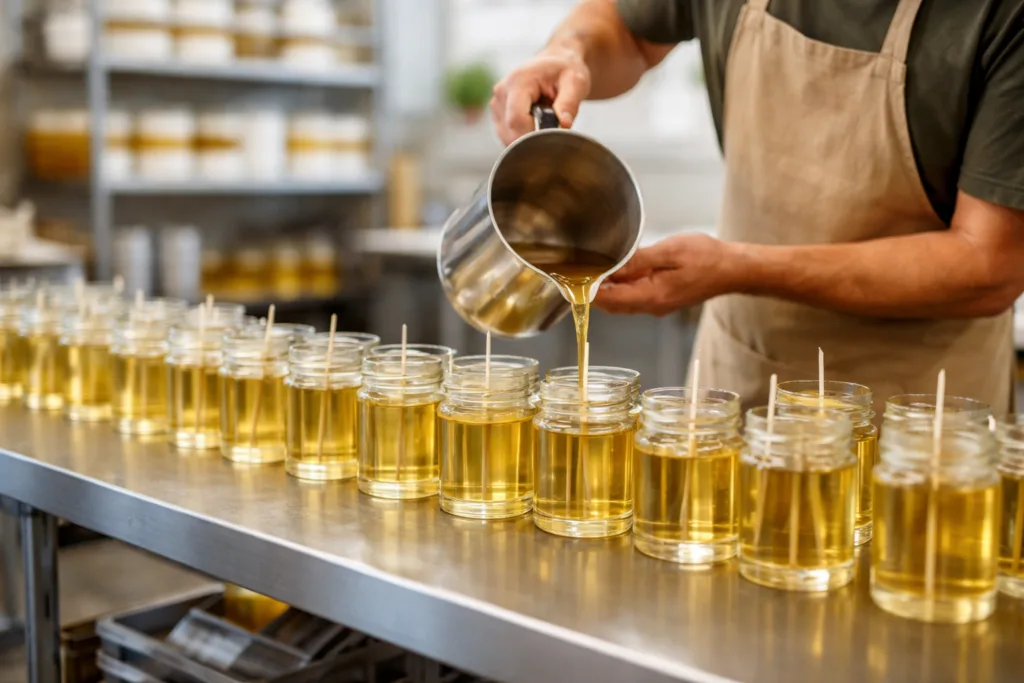
Circe Home Lab Insight: “For luxury glass jar candles, fragrance compatibility tests include multiple burn cycles, wick centering checks, and accelerated aging protocols to ensure every batch delivers a clear, soot-free scent without fading or discoloration.”
Formulating Glass Jar Scented Candles: Step-by-Step
Successful glass jar candle production hinges on meticulous formulation, safety, and aesthetic precision. The following workflow reflects industry best practices for private-label and OEM manufacturing.
- Wax Melting: Melt base waxes to 75–85°C, avoiding overheating.
- Fragrance Addition: Blend oils below 70°C for optimal integration.
- Container Prep: Clean, wick-glue, and preheat glass jars.
- Pouring: Pour blend slowly to reduce air pockets.
- Cooling: Control ambient temp—slow cooling reduces frosting.
- Curing: Let set 7–14 days for full scent alignment.
- QC Checks: Inspect for wick centering, surface quality, and uniform burn profile.
- Packing: Add labels, boxes, and compliance inserts to finish.
Quality Assurance & Fragrance Testing for Glass Jar Candles
Rigorous quality control protects both candle safety and brand reputation. Standardized tests ensure even fragrance dispersion and a soot-free burn.
Quality Control Checklist
- Wick length/centering tolerance & burn profile alignment
- Burn time consistency (>35 hrs for 200g)
- Fragrance dispersion uniformity across batches
- Soot index testing (visual, particulate analysis)
- IFRA/CLP compliance review
Elegant Packaging & Branding Considerations
Packaging elevates perceived quality and scent experience. Glass jars invite customization—embossed details, tinted glass, gold foil caps, and FSC-certified cartons set luxury candles apart. For high-end scented candles, naming conventions and scent descriptors anchor the fragrance route and influence buying decisions.
Private Label & OEM Customization
Brands, including Circe Home, offer full-spectrum customizations: fragrance, glass jar shape, outer boxing, labeling, and compliance documentation—designed for both retail and gifting.
Sustainability & Compliance in Scented Glass Jar Candles
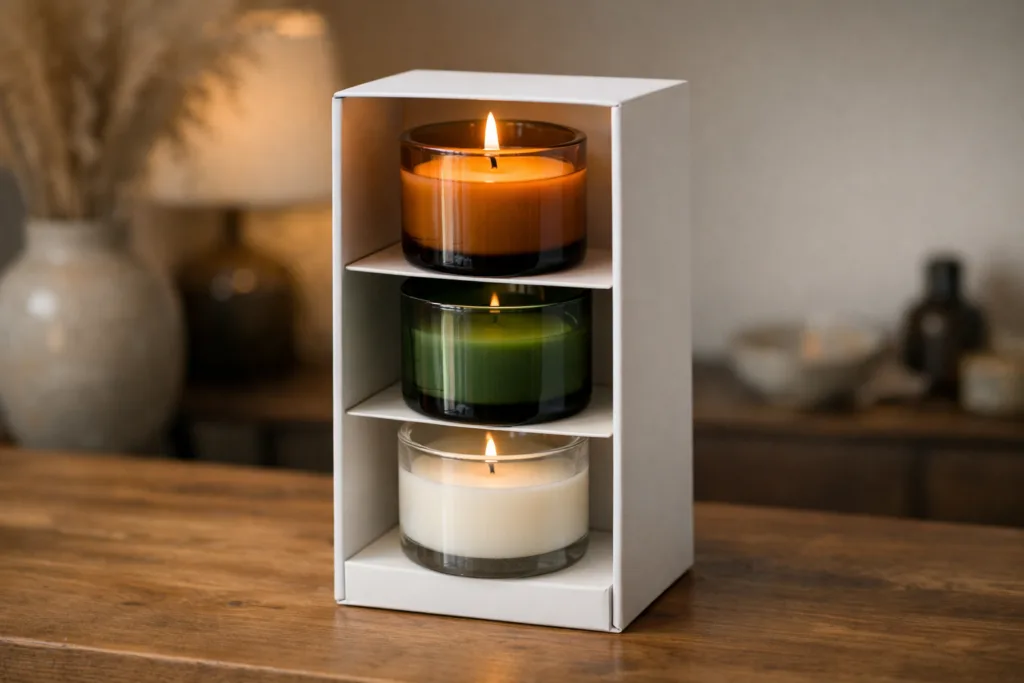
Eco-minded production and international compliance are vital for modern candle businesses. Glass jars, when paired with natural waxes and recyclable components, support environmental goals. Ensure all fragrance formulations comply with IFRA 51st Amendment, and EU-bound candles meet CLP labeling standards. Popular additions include soy ink printing, FSC-certified packaging, and refillable/reusable jar programs.
Frequently Asked Questions
Which wax blends deliver the strongest fragrance throw in glass jar candles?
Soy and coconut blends typically yield the richest cold and hot throw profiles. They permit higher fragrance loads without sacrificing burn quality, making them ideal for luxury or highly-scented glass jar candles.
How can I prevent fragrance fading in glass jar candles over time?
Store candles away from sunlight and excess humidity, cure blends for 7–14 days, and choose waxes with strong scent retention. Well-designed packaging and airtight seals further protect fragrance longevity.
What’s the ideal fragrance load for glass jar candles?
A fragrance load between 7–12% is standard, depending on wax blend and vessel size. Always test scent throw and burn safety when adjusting load, as exceeding recommended percentages can lead to poor burning or oil seepage.
Are essential oils suitable for glass jar scented candles?
Essential oils produce natural, authentic scents but may exhibit less stability or strength in candle applications compared to high-quality fragrance oils. Blending is key to balance performance with olfactory character.
What packaging options enhance the scent experience for glass jar candles?
Tinted or embossed glass, foil toppers, custom labeling, and luxury cartons not only raise aesthetic appeal but help seal in the fragrance. Physical protection and branding add value to the consumer experience.
How does Circe Home ensure fragrance consistency in glass jar candles?
Circe Home performs multi-phase testing: batch scent checks, accelerated aging, burn cycle validations, and compliance audits. This ensures every glass jar candle delivers both safety and reliable olfactory performance.