
1. What Candle Sample Calibration Means
In private label candle manufacturing, a sample is often treated as a simple preview: the buyer checks the scent, looks at the vessel, reviews the label, and decides whether to move forward.
At Circe Home, we see it differently.

A candle sample is not just a starting point or an approval formality. It is a calibration tool that helps us define, improve and lock the right standard for bulk production.
That difference matters.
A sample should not merely answer the question, “Do you like this candle?” It should help answer deeper production questions:
What exactly should be repeated in bulk production?
The scent strength, wax blend, vessel finish, fill weight, wick behavior, label placement, packaging structure and final presentation should all be reviewed before mass production begins.
What can be improved before bulk production?
Sometimes the first sample is already close to the target. Sometimes it reveals useful improvements: a smoother wax surface, a better-matched wick, a stronger inner box, a cleaner label edge, a more balanced fragrance load or a more premium vessel finish.
What standard should the factory lock?
The approved sample becomes meaningful only when its details are translated into a repeatable production standard.
This is why candle sample calibration is not a small step. For serious private label candle buyers, it is the bridge between product idea and stable bulk order.
2. Why a Candle Sample Is Not the Final Product
A candle sample is usually produced in a small quantity. It may be handmade, adjusted carefully, packed individually and reviewed with more flexibility than a bulk order. That does not make it unreliable. It simply means the sample belongs to the development stage.
Bulk production is different.
A bulk order must be repeatable across hundreds, thousands or tens of thousands of pieces. It must remain stable through wax melting, fragrance blending, vessel filling, cooling, curing, labeling, boxing, carton packing and international shipping.
That is why the sample should not be treated as the final product. It should be treated as a calibration checkpoint.
The sample shows the direction.
It helps the buyer confirm the visual style, fragrance profile, vessel choice and brand feeling.
Calibration makes the direction manufacturable.
It turns the approved idea into measurable details that production teams can follow.
Bulk production proves whether the standard works.
The goal is not to make one beautiful candle. The goal is to make a stable candle line that can be sold, reordered and trusted.
For Circe Home, the sample is not the finish line. It is the point where design, fragrance, material, packaging and production reality meet.
3. Why Mature Buyers Care About Sample-to-Bulk Consistency
Small buyers often focus on whether the sample looks attractive. Mature buyers think further.
They ask:
- Will the bulk order match the approved direction?
- Can the scent remain stable across batches?
- Will the candle burn properly in the final vessel?
- Will the packaging survive international shipping?
- Can the supplier repeat this product for future orders?
- Will the product be ready for retail, gift sets, hospitality use or wholesale distribution?
For a mature buyer, a candle is not just a decorative object. It is inventory, brand reputation, cash flow and customer experience.
If the sample is beautiful but the bulk order is unstable, the buyer faces real commercial risk: delayed launch dates, inconsistent retail shelves, customer complaints, damaged packaging, poor reviews, rejected shipments or difficult reorder management.
This is why professional buyers care less about “Can you make a sample?” and more about “Can you control the production standard after the sample is approved?”
Circe Home is built around that second question.
4. The Difference Between Sample Approval and Sample Calibration
Sample approval and sample calibration sound similar, but they are not the same.
Sample approval is a decision.
The buyer says yes or no to the sample.
Sample calibration is a process.
The supplier reviews what must be adjusted, measured, recorded and locked before bulk production.
A buyer may approve the scent but request a cleaner label position. A buyer may like the ceramic vessel but want a warmer ivory tone. A buyer may accept the wax color but ask for a smoother surface. A buyer may approve the outer gift box but require a stronger inner tray for shipping.
That is calibration.
It means the supplier does not blindly copy the first sample. Instead, the supplier uses the sample to refine the final production standard.
4.1 Why Blind Copying Is Not Enough
A sample may contain small imperfections that should not be repeated. For example:
A slightly uneven wax surface
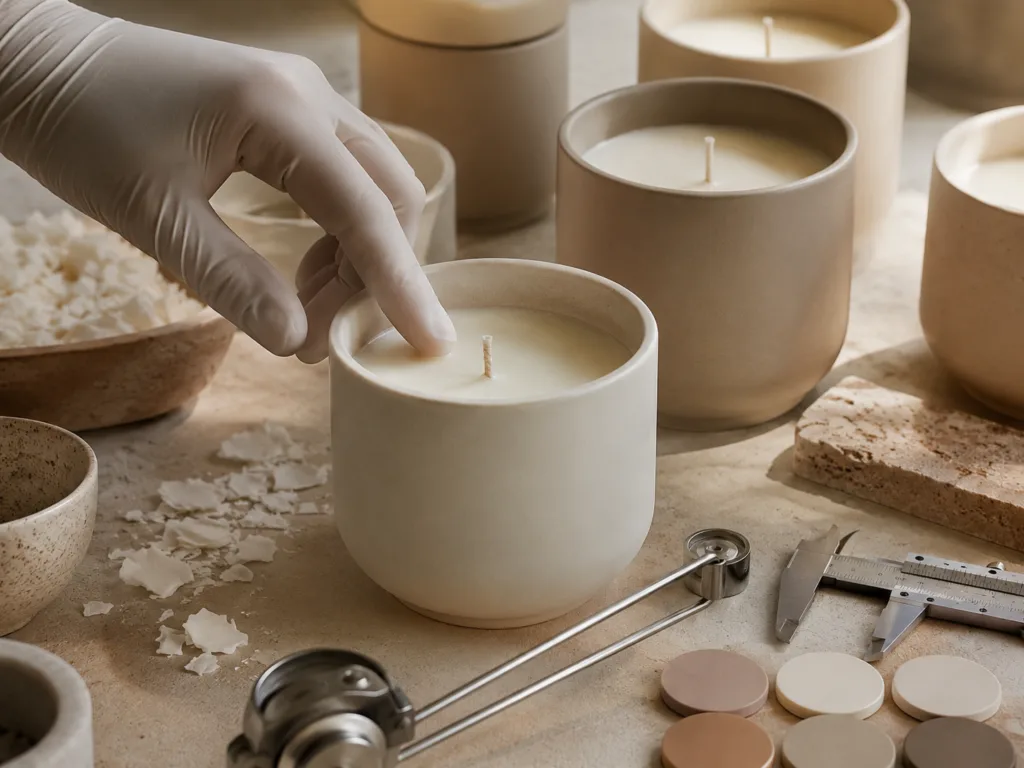
This can be improved by adjusting pouring temperature, cooling environment or wax formula.
A weak cold throw
This may require fragrance load review, curing time adjustment or fragrance selection refinement.
A label that looks 2mm too low
This should become a labeling standard before bulk production.
A gift box that looks beautiful but lacks protection
This should be improved before shipping hundreds of cartons overseas.
The goal is not to copy the sample blindly. The goal is to lock the best production standard.
5. How Search and Marketplace Trends Changed Candle Sampling
Today’s candle buyers are not sourcing in the dark.
Before they contact a supplier, they may have already checked Google search trends, Amazon best-selling candles, LinkedIn industry discussions, Alibaba listings, Made-in-China suppliers, competitor packaging, retail price ranges and customer reviews.
This creates a smarter buyer — but also a more demanding one.
Buyers no longer want a generic scented candle. They want candles that fit a specific market position:
- wellness candles
- aromatherapy candles
- soy wax candles
- coconut wax blend candles
- ceramic vessel candles
- luxury gift candles
- hotel amenity candles
- wedding and event candles
- private label candle collections
- seasonal home fragrance lines
Google Trends can help buyers compare interest in fragrance notes, seasonal demand and product terms. Amazon best-seller pages show what consumers respond to: long-lasting fragrance, soy wax blends, giftable packaging, clean burning claims and attractive vessel design. B2B marketplaces show that sample orders, OEM/ODM customization, MOQ and packaging options are standard parts of candle sourcing.
But data only gives direction.
It does not guarantee that a supplier can turn a trending candle idea into a stable bulk order.
That is where sample calibration becomes important.
6. Why Amazon-Level Buyers Need Production Stability
A candle brand selling on Amazon, in retail stores or through wholesale channels cannot rely on inconsistent production.
Consumers notice details quickly. They compare scent strength, burn time, packaging, wax surface, vessel quality and perceived value. A candle that looks good in product photos but arrives with a weak scent, damaged box or uneven wax surface can damage repeat sales.
For marketplace sellers, consistency is not only a quality issue. It affects reviews, return rates, listing performance and brand trust.
For wholesalers and retailers, consistency affects shelf presentation, reorder confidence and customer complaints.
For gift companies, consistency affects the entire unboxing experience.
For hotels and hospitality buyers, consistency affects brand atmosphere and guest experience.
This is why Circe Home approaches candle samples as calibration tools. The sample stage is the right moment to test and improve the parts that later influence commercial performance.
A good candle is not only pleasant to smell. It must be stable enough to sell.
7. What Alibaba and Made-in-China Reveal About Sample-Based Sourcing
B2B platforms such as Alibaba and Made-in-China make one thing very clear: samples are central to international candle sourcing.
Many candle suppliers mention sample orders, OEM/ODM services, custom logo options, sample lead times, MOQ requirements, packaging customization and production timelines. This reflects how the industry works. Buyers want to test before committing to a bulk order.
But the existence of a sample service does not automatically mean the supplier has strong sample-to-bulk control.
A supplier may be able to make one sample quickly. That is not the same as controlling bulk consistency.
Mature buyers should look beyond sample availability and ask:
Does the supplier document the approved sample details?
This includes wax type, fragrance load, wick type, vessel size, wax weight, label position and packaging structure.
Does the supplier review the production risks before bulk?
For candles, risk may come from wax surface behavior, fragrance compatibility, vessel tolerance, wick performance, packaging strength or shipping temperature.
Does the supplier keep a production benchmark?
The approved sample should become a reference for QC, not just a photo in a chat history.
Does the supplier perform pre-shipment inspection?
Bulk consistency should be checked before the goods leave the factory.
Circe Home uses the sample stage to answer these questions before production begins.
8. The Core Risk: A Beautiful Sample That Cannot Scale
One of the most common sourcing risks is simple: the sample looks better than the bulk order.
This can happen when the sample is made with extra manual care, but the bulk production process is not standardized. It can also happen when the supplier changes materials, uses a different vessel batch, adjusts fragrance load without confirmation, skips burn testing or treats packaging as an afterthought.
For private label candles, the most serious problems often appear in these areas:
- scent strength changes
- wax surface becomes rough or cracked
- frosting or sweating appears
- wick burns too fast or too weak
- vessel color shifts
- label placement becomes inconsistent
- gift boxes are weaker than expected
- cartons are not suitable for export shipping
At Circe Home, we believe the sample stage should reduce these risks, not create false confidence.
A sample is useful only when it helps the buyer and supplier build a standard that can scale.
9. Fragrance Calibration: Cold Throw, Hot Throw and Scent Strength

For scented candles, fragrance is the emotional core of the product.
A candle may look beautiful, but if the scent is too weak, too sharp, too sweet or unstable after burning, the product will not perform well in the market.
Fragrance calibration includes several points.
Cold Throw
Cold throw is how the candle smells before burning. It matters for retail shelves, gift boxes and first impressions.
Hot Throw
Hot throw is how the candle smells when burning. It matters for actual user experience.
Fragrance Load
The fragrance percentage must match the wax system and vessel size. More fragrance is not always better. Too much fragrance may cause sweating, poor burn performance, unstable wax surface or safety concerns.
Fragrance Direction
A buyer may request lavender, sandalwood, vanilla, fig, honey, neroli or amber. But each fragrance note can have many interpretations. Honey can be floral, creamy, waxy, herbal or syrup-like. Sandalwood can be dry, milky, smoky or soft. Neroli can be green, floral, bitter or clean.
This is why fragrance calibration is not only about choosing a scent. It is about matching the scent to the brand, market and wax system.
At Circe Home, fragrance sampling helps buyers confirm the olfactory direction before bulk production. Once confirmed, the selected fragrance, wax blend and production details are locked as part of the bulk standard.
10. Wax Calibration: Natural Wax, Surface Finish and Stability
Wax affects appearance, scent throw, burn behavior, texture and temperature stability.
Common candle wax choices include soy wax, coconut wax blends, beeswax, paraffin wax, palm wax and mixed wax systems. Many private label buyers now prefer natural or eco-conscious wax directions, especially for wellness, home fragrance and premium gift markets.
But every wax has trade-offs.
Soy wax can support a natural positioning, but it may show frosting or surface texture changes. Coconut wax blends can feel premium and creamy, but formula control matters. Beeswax has its own natural scent and color. Paraffin can provide strong scent throw and smooth finish, but some buyers avoid it for brand positioning reasons.
Wax calibration helps answer:
- Does the wax match the brand story?
- Is the surface smooth enough for retail?
- Does the wax hold the fragrance well?
- Does the candle sweat under heat?
- Does the wax pull away from the vessel?
- Is the color stable after curing?
- Is the formula suitable for bulk production?
At Circe Home, wax selection is not treated as a generic material choice. It is part of product engineering. The sample helps us confirm whether the wax system supports both the visual standard and the performance standard.
11. Wick Calibration: Burn Pool, Flame Size and Safety
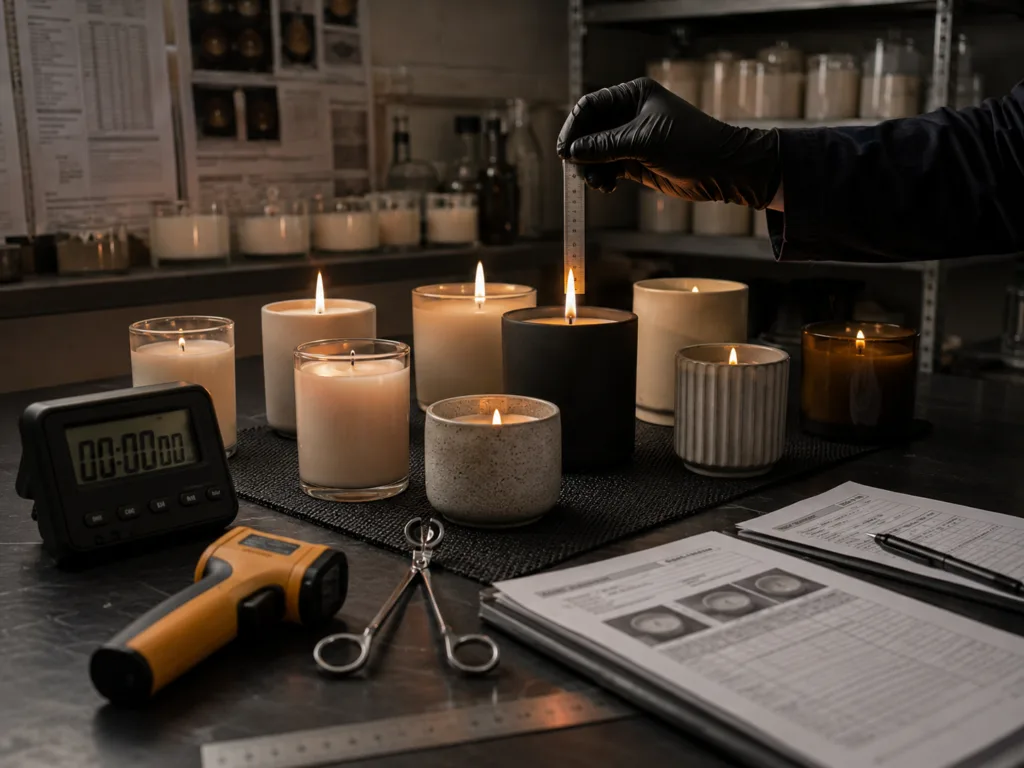
The wick is small, but it controls the candle’s performance.
A wrong wick can create tunneling, excessive flame, soot, poor scent throw, overheating or uneven wax consumption.
Wick calibration depends on several factors:
- vessel diameter
- wax blend
- fragrance load
- dye or pigment
- candle size
- desired burn time
- number of wicks
- container material
- safety requirements
A ceramic candle, a glass jar candle, a pillar candle and a tin candle may all require different wick decisions.
11.1 What We Observe During Wick Calibration
Melt Pool
The melt pool should expand properly without overheating the vessel.
Flame Height
The flame should look stable, not weak or aggressive.
Soot Behavior
A clean burn is important for premium home fragrance positioning.
Burn Time
Buyers often use burn time as a selling point, so the sample stage should check whether the target is realistic.
Vessel Heat
The container should not become dangerously hot during normal use.
This is why a candle should not be approved by appearance alone. A beautiful candle that burns poorly is not ready for bulk production.
12. Vessel Calibration: Glass, Ceramic, Tin and Custom Containers
The vessel shapes the customer’s first impression.
For private label candles, buyers often request glass jars, ceramic cups, tins, concrete vessels, travel tins, pillar molds or special decorative containers. Each vessel type has its own production and quality considerations.
Glass Vessels
Glass jars need attention to thickness, color, transparency, coating, printing and heat resistance.
Ceramic Vessels
Ceramic vessels are popular for premium and minimalist candle lines. They can create a warmer, more decorative feeling than standard glass. However, ceramic production may include natural tolerance in diameter, height, glaze tone and surface texture.
Tin Containers
Tin candles are lightweight and suitable for travel, gift sets and low-breakage shipping. But printing, lid fit and inner coating should be checked.
Custom Containers
Custom molds or special shapes require extra calibration because small changes in vessel size can affect wax weight, wick choice, packaging and shipping cost.
At Circe Home, vessel calibration ensures that the container does not only look good in the sample stage. It must also support stable production, safe burning, brand presentation and export delivery.
13. Packaging Calibration: From Gift Box to Export Carton
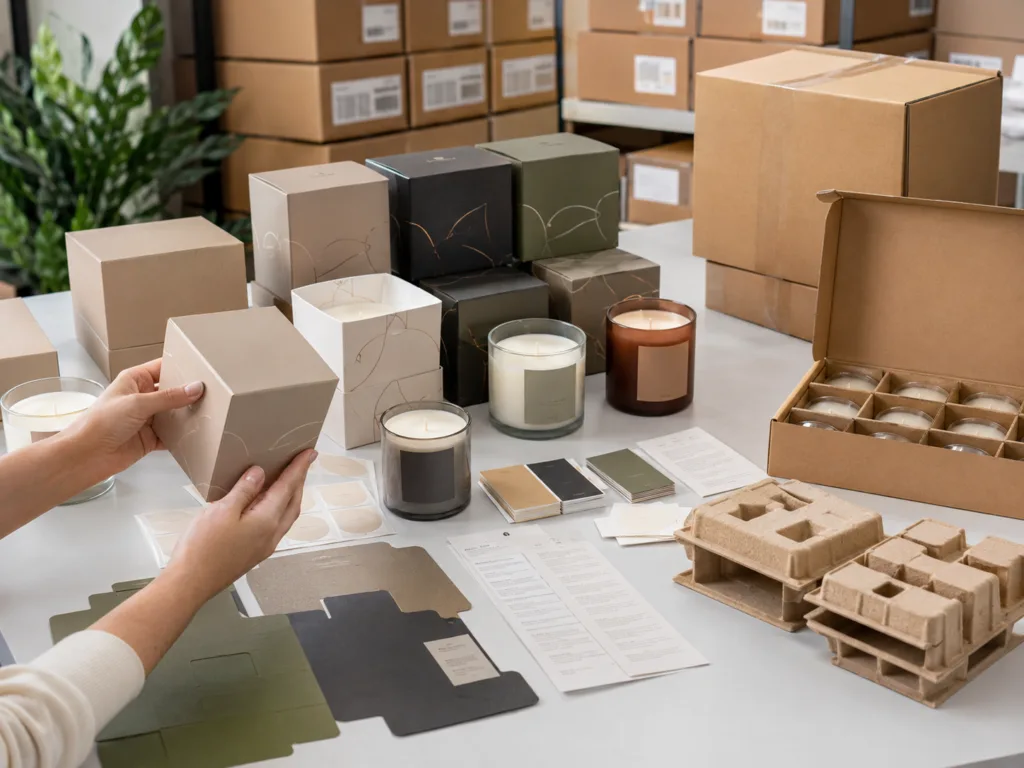
Packaging is often underestimated.
A candle buyer may spend weeks choosing scent and vessel design, then rush packaging decisions. That is risky because packaging affects retail value, gifting experience, shipping protection and brand perception.
Packaging calibration includes:
- label material
- label size
- label placement
- logo printing
- foil stamping
- gift box structure
- color box material
- insert or inner tray
- barcode placement
- care label
- warning label
- master carton strength
- pallet and export packing method
For gift candles, packaging is part of the product. A premium candle in a weak box does not feel premium.
For international bulk orders, packaging must also protect the goods during transport. Candles can face heat, pressure, vibration and long transit time. Good packaging reduces damage risk before the goods reach the buyer’s warehouse.
At Circe Home, we treat packaging as part of sample calibration, not as a last-minute accessory.
14. Compliance Calibration: Labeling, MSDS, IFRA and Buyer Trust
For mature candle buyers, compliance is part of sourcing quality.
Different markets may require different levels of documentation, labeling and safety communication. Buyers selling in North America, Europe or Australia often ask about warning labels, fragrance documentation, MSDS/SDS, IFRA-related information, REACH considerations, CLP labeling or general product safety.
Compliance calibration helps buyers avoid problems later.
A candle may look beautiful, but if the warning label is missing, the fragrance documents are unclear, or the packaging does not support market requirements, the product is not fully ready.
At Circe Home, we support buyers with private label candle development, fragrance documentation communication, packaging review and export-oriented preparation. The goal is not only to make a candle that looks good, but to help buyers develop a product that is more ready for real market channels.
14.1 Why Compliance Belongs in the Sample Stage
The sample stage is the best time to check:
Label space
Can the candle or box carry the required information?
Fragrance documentation
Can the selected fragrance provide the documents the buyer needs?
Packaging layout
Does the design leave room for warnings, batch codes, barcodes or importer details?
Final production note
Compliance should not be added after production. It should be considered before the bulk order starts.
15. How Circe Home Locks the Bulk Production Standard
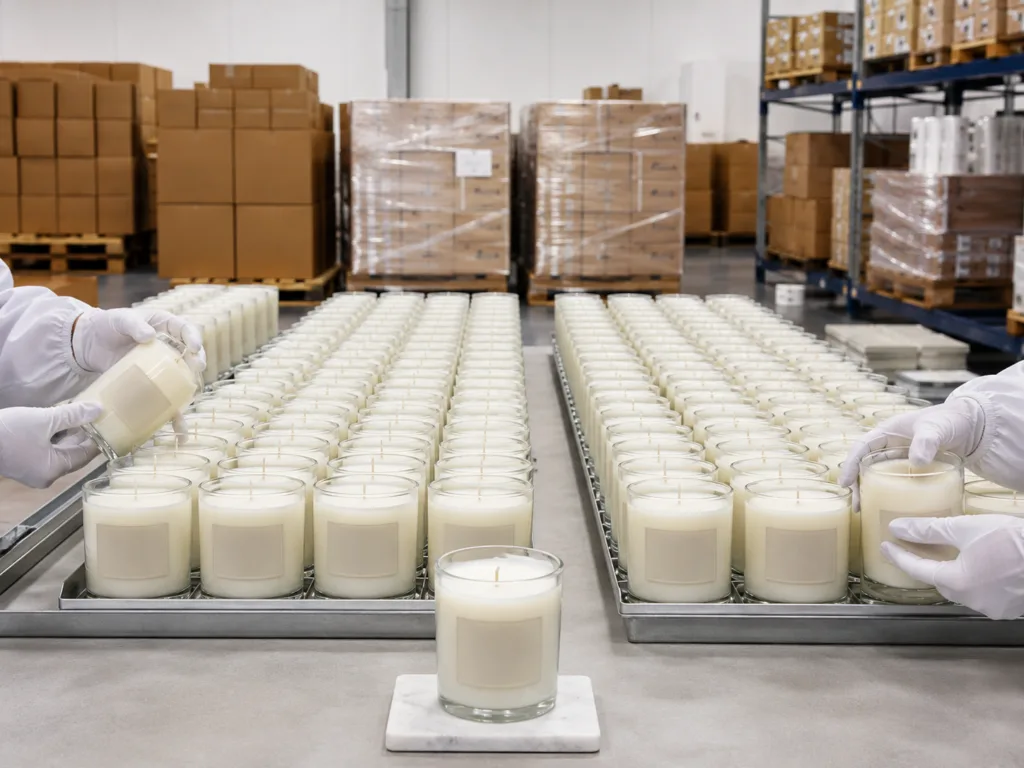
At Circe Home, sample calibration is a structured process.
We use the approved sample to define what should be repeated, what should be improved and what should be locked before production.
Our calibration process can include:
| Calibration Area | What We Check | Bulk Order Benefit |
|---|---|---|
| Fragrance | Cold throw, hot throw, scent direction, fragrance load | More stable scent performance |
| Wax | Wax blend, color, surface, sweating, frosting | Cleaner and more consistent appearance |
| Wick | Melt pool, flame, soot, burn time, vessel heat | Better burn performance |
| Vessel | Size, color, finish, lid fit, tolerance | More consistent visual presentation |
| Labeling | Position, material, print quality, alignment | More professional retail appearance |
| Packaging | Gift box, inner tray, carton, export protection | Lower damage risk and better unboxing |
| Compliance | Warning label, fragrance documents, buyer market needs | Stronger buyer trust and smoother launch |
This is how a sample becomes a production standard.
Not by assumption. Not by memory. Not by “almost the same.”
By calibration.
For private label candle buyers, this process is especially valuable because it supports repeat orders. A buyer is not only purchasing one batch of candles. They may be building a fragrance line, a seasonal gift collection, a hotel amenity program or a wholesale product range.
In that case, the first sample is not the end of development. It is the beginning of a controlled standard that can be repeated.
Circe Home’s goal is not only to make the bulk order match the approved sample. Our goal is to make the approved standard strong enough for stable, repeatable and sellable bulk production.
16. Conclusion: Better Bulk Orders Start With Better Calibration
A candle sample is not the final product.
It is not just a pretty preview, a formality or a small order before the real order. For serious private label candle development, the sample is a calibration tool.
It helps buyers and suppliers define scent, wax, wick, vessel, packaging, compliance and presentation before committing to bulk production.
This is especially important in today’s candle market, where home fragrance is no longer only about decoration. Buyers are developing products for wellness, gifting, hospitality, retail, e-commerce and lifestyle branding. Customers expect candles to smell good, look refined, burn properly, arrive safely and support the brand experience.
At Circe Home, we use the sample stage to reduce uncertainty before mass production begins.
A good sample shows the product direction.
A calibrated sample defines the production standard.
A controlled bulk order proves the supplier’s real capability.
If you are developing a private label candle line, share your target fragrance, vessel idea, packaging direction and order plan with Circe Home. We can help you use the sample stage as a calibration process — so your bulk candle order can be more consistent, more refined and more ready for retail.
FAQ
1. What is candle sample calibration?
Candle sample calibration is the process of using a sample to define and improve the final production standard before bulk manufacturing. It includes checking fragrance, wax, wick, vessel, label, packaging and compliance details.
2. Is a candle sample supposed to be exactly the same as the bulk order?
The approved sample should guide the bulk order, but professional calibration may improve small details before mass production. The goal is not blind copying. The goal is to lock the best repeatable production standard.
3. Why can bulk candles sometimes look different from samples?
Differences may come from wax batch behavior, fragrance load, vessel tolerance, pouring temperature, cooling conditions, label application, packaging material or insufficient QC. A strong supplier controls these points before production.
4. What should private label buyers confirm before bulk candle production?
Buyers should confirm fragrance direction, wax type, vessel size, wick performance, fill weight, label design, packaging structure, warning labels, export packing and order quantity before mass production begins.