
Introduction: The Most Misunderstood Stage in Candle Manufacturing
One of the most common questions we hear from both new and experienced buyers is:
“Why does a candle sample take 2–3 weeks?”
At first glance, it seems simple. A candle is just wax, fragrance, and a container—how complicated could it be?
But in reality, sampling is not production.
It is product development.
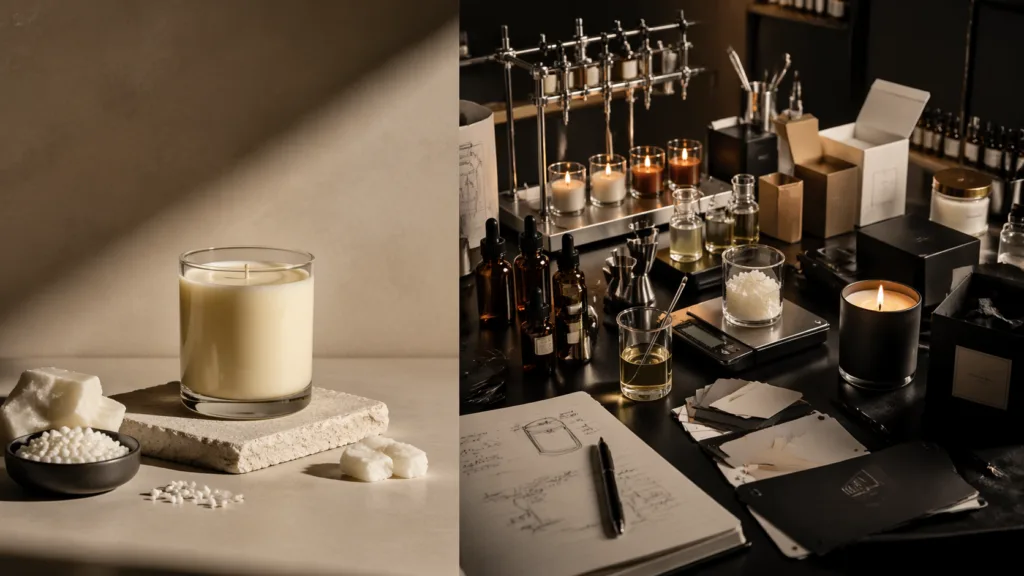
And for serious B2B buyers—especially those building a scalable brand—the sampling stage is where everything is decided:
- Product quality
- Cost structure
- Production feasibility
- Supplier capability
This is the stage where a supplier proves whether they truly understand candle manufacturing—or are simply assembling components.
In this article, we break down exactly why candle samples take time, what is happening behind the scenes, and how experienced buyers accelerate the process without compromising quality.
1. Candle Sampling Is Not Manufacturing—It’s Engineering
A common misconception is that sampling is just a smaller version of production.
It’s not.
Sampling is a controlled development process where multiple variables are still being defined:
- Wax formulation
- Fragrance compatibility
- Wick selection
- Burn performance
- Container behavior
- Packaging structure
Even a single change—like adjusting fragrance percentage—can affect burn stability, flame size, and soot levels.
This is why professional candle sampling is treated as a technical process, not a quick task.
2. The Real Candle Sample Timeline (Step-by-Step)
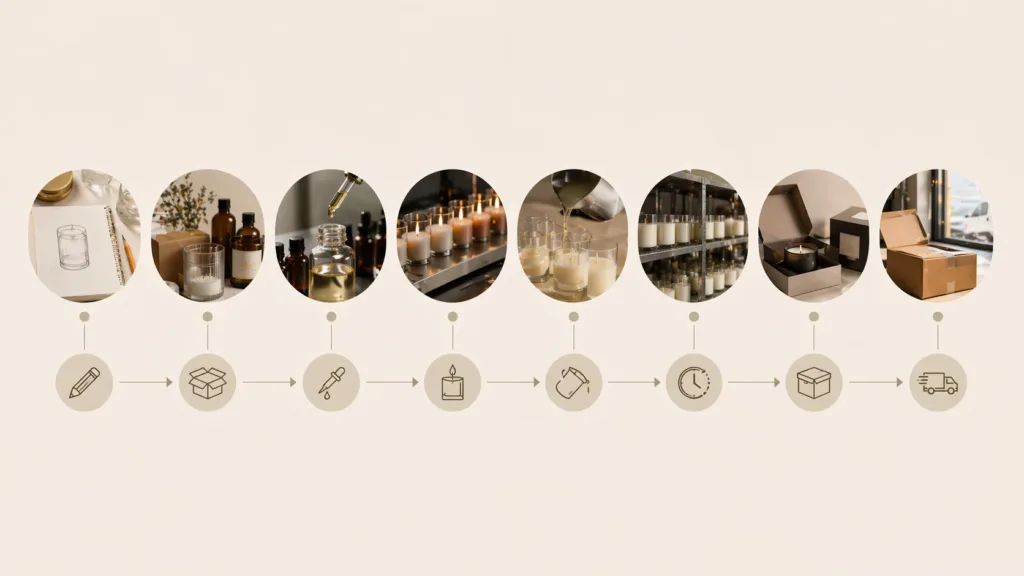
Step 1: Design & Specification Confirmation (1–3 days)
Before production begins, every key detail must be confirmed:
- Vessel size and material
- Wax type (soy, paraffin, blend)
- Fragrance direction
- Packaging structure
- Branding method (sticker, print, foil)
This step is often underestimated, but unclear specifications are the biggest source of delays later.
Step 2: Material Sourcing (2–5 days)
Not all materials are stocked at all times.
Typical sourcing includes:
- Glass or ceramic vessels
- Fragrance oils
- Wicks (different series and sizes)
- Packaging components
If custom elements are involved, sourcing time increases significantly.
Step 3: Wax & Fragrance Development (2–4 days)
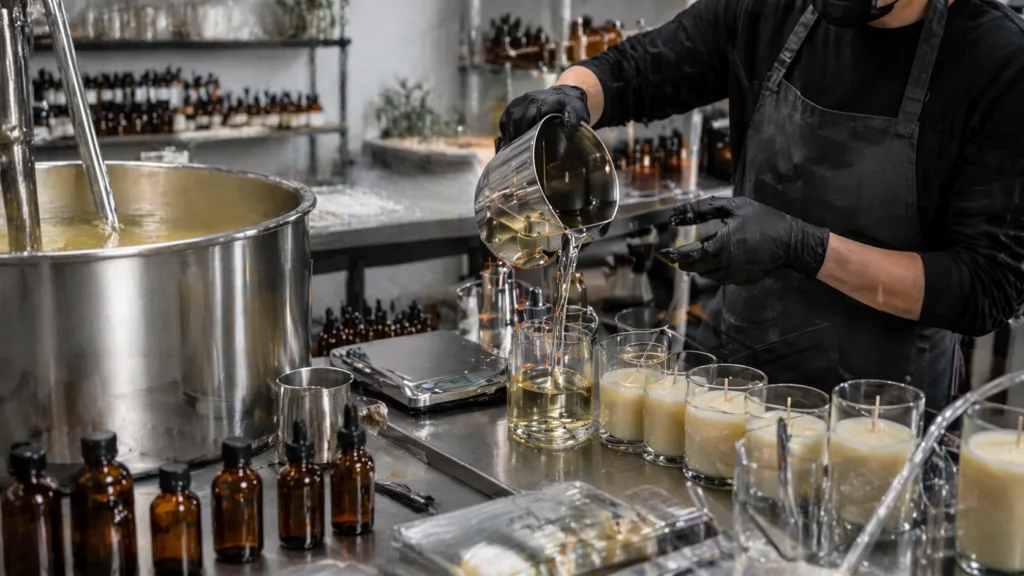
This is where real expertise begins.
Fragrance is not simply added into wax—it must be engineered.
Key factors include:
- Fragrance load (typically 5–10%)
- Mixing temperature
- Compatibility with wax base
Poor formulation leads to:
- Weak scent throw
- Smoke issues
- Unstable burning
Professional suppliers test and adjust before proceeding.
Step 4: Wick Testing (3–7 days)
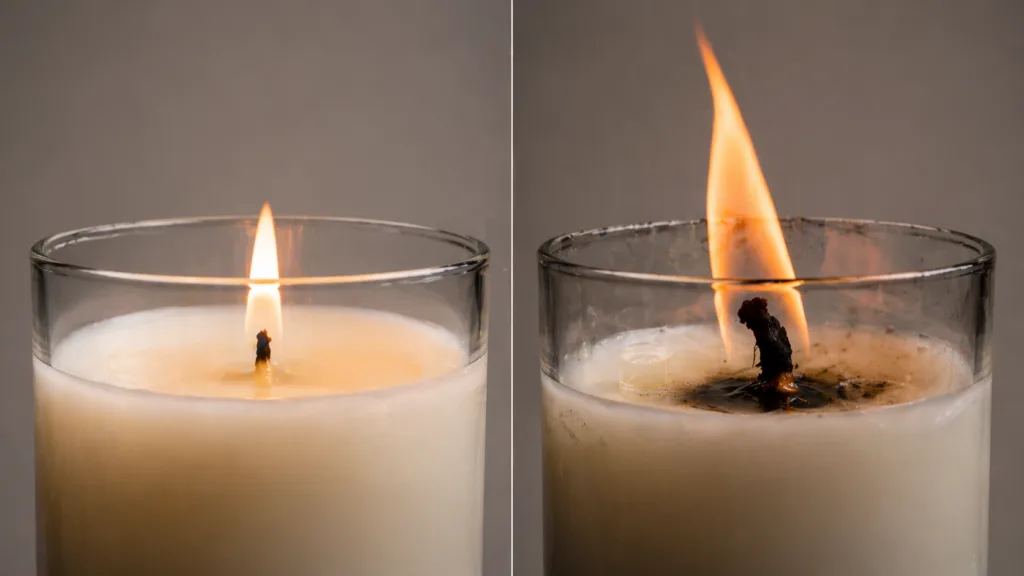
Wick selection is critical and often underestimated.
Each candle requires testing of:
- Wick size
- Wick type
- Burn behavior over time
Testing involves multiple burn cycles, observing:
- Melt pool formation
- Flame stability
- Soot levels
This process cannot be rushed.
Step 5: Pouring & Cooling (1–3 days)
Once formulation is ready, candles are poured.
However, cooling must be controlled.
Fast cooling can cause:
- Sinkholes
- Surface defects
- Structural instability
Proper cooling ensures a stable final product.
Step 6: Curing (3–14 days)
This is one of the most overlooked steps.
Curing allows fragrance and wax to fully bind and stabilize.
Typical curing times:
- Soy wax: 3–7 days
- Natural blends: up to 14 days
Skipping curing leads to inaccurate scent performance evaluation.
Step 7: Packaging Sampling (3–7 days)
Packaging development is a separate process:
- Structure validation
- Insert fitting
- Digital printing
At the sample stage, digital printing is used—not final finishes like foil stamping.
Step 8: Shipping (5–10 days)
Even with air freight, shipping includes:
- Export handling
- Customs clearance
- Final delivery
3. Why Candle Samples Feel Slow
From a buyer’s perspective, 2–3 weeks can feel long.
But the issue is not speed—it’s expectation.
Many assume samples are pre-made products.
In reality, they are prototypes requiring validation.
Every stage ensures that the final bulk production will perform consistently.
4. The Hardest Part: Fragrance Development
Fragrance is the most complex and time-consuming element in candle sampling.
A fragrance must:
- Smell appealing cold
- Perform when burning
- Remain stable over time
- Not interfere with combustion
Matching or developing a scent often requires multiple iterations.
At a professional level, fragrance work involves both technical formulation and sensory evaluation.
This is where experienced suppliers stand out.
Real case (from our projects): A client asked us to match a niche sandalwood profile they were already retailing in small batches. The first sample had a strong cold throw but flattened when burning. In round 2, we adjusted the fragrance load and switched to a different base note balance—hot throw improved, but the top note opened too sharply. By round 3, we tuned the oil ratio and pouring temperature, and changed the wick series to stabilize the melt pool. The final sample matched both the scent profile and burn performance the client expected.
In total, it took 3 rounds of fragrance and burn optimization—and we only charged one sample fee. This is the difference between simply “adding fragrance” and actually developing a product that works at scale.
5. What Actually Delays Candle Samples
Most delays do not come from factories.
They come from process inefficiencies.
Unclear Requirements
Vague instructions lead to repeated revisions.
Changing Too Many Variables
Adjusting fragrance, vessel, and packaging simultaneously creates confusion.
Over-Customization at Low MOQ
Highly customized designs require more development time and are not compatible with small quantities.
Slow Feedback
Delayed approvals significantly extend timelines.
6. How to Speed Up the Process
Experienced buyers don’t rush production—they optimize decisions.
Start with Existing Components
Using standard vessels and molds reduces development time significantly.
Lock Key Decisions Early
Confirm structure and design before sampling begins.
Separate Testing Variables
Test fragrance first, then packaging.
Use Digital Printing
Avoid complex finishing at the sample stage.
Limit Fragrance Options
Focus on 1–2 key scents initially.
Work with an Experienced Supplier
A strong supplier will guide decisions and prevent delays.
7. What Professional Buyers Do Differently
Professional buyers focus on efficiency, not speed.
They ask:
“What is the fastest path to a production-ready product?”
Instead of:
“Can you make it faster?”
This mindset leads to better outcomes.
8. Our Approach
At Circe Home, we focus on clarity and execution.
What we do:
- Provide structured sampling guidance
- Optimize development timelines
- Support fragrance customization until satisfaction
- Communicate feasibility upfront
What we don’t do:
- Promise unrealistic timelines
- Skip critical testing steps
- Accept technically flawed designs
Because a weak sample leads to bigger problems in bulk production.
9. Final Thoughts
Candle sampling is not slow—it is precise.
With the right approach:
- Clear specifications
- Controlled development
- Efficient communication
The process becomes predictable and optimized.
Speed comes from clarity, not pressure.
Conclusion
If you are planning a custom candle project, the best starting point is clarity.
Share your concept, and a professional supplier will guide you toward the fastest and most reliable path to production.
FAQ
How long does candle sampling take?
Typically 2–3 weeks depending on testing, curing, and packaging requirements.
Why is fragrance testing important?
Because scent performance depends on wax compatibility and burn behavior, not just smell.
Can sampling be faster?
Yes, by using standard components, limiting revisions, and working with an experienced supplier.