
For many candle brands, MOQ feels like a supplier’s favorite word for saying “no.” A buyer sends a beautiful concept: three vessel colors, two fragrances, a custom rigid gift box, gold foil logo, printed insert card, maybe a matching sleeve, and a launch quantity of 100 pieces. The buyer expects a simple quote. The supplier replies with multiple MOQ numbers: 500 pieces for boxes, 500 or 1,000 pieces for ceramic vessels, 200 pieces per fragrance, higher quantities for molded colors, and separate sample fees.
At that moment, MOQ starts to feel confusing, rigid, or even unfair.
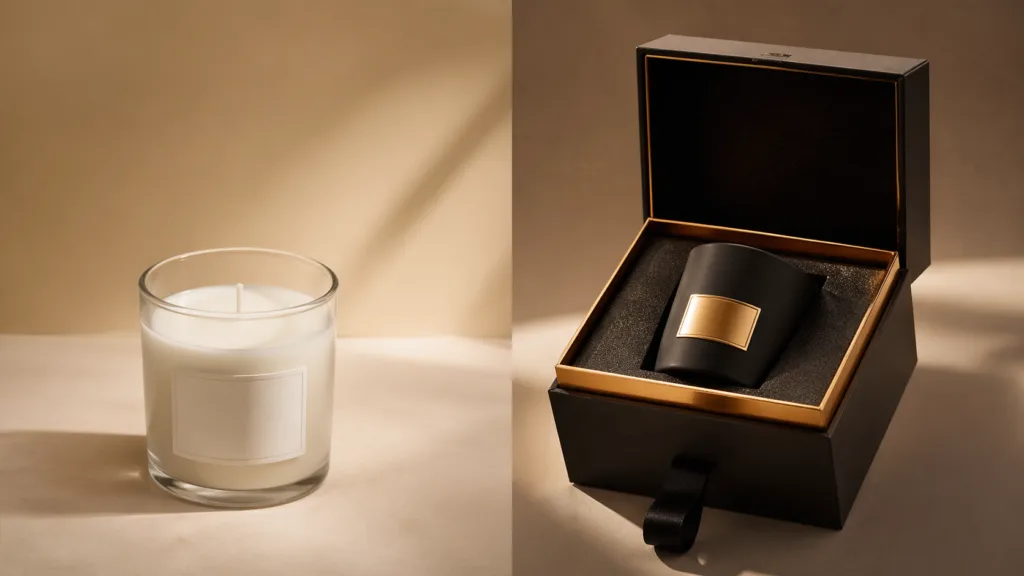
But in candle manufacturing, MOQ is rarely about a supplier being unwilling to support a new brand. It is usually about how the supply chain is built. A candle is not just wax poured into a cup. A sellable private label candle is a small system made of several production categories: vessel, wax, fragrance, wick, label, safety sticker, inner protection, outer packaging, carton, and sometimes retail display requirements. Each part has its own factory logic, setup cost, material waste, labor process, color tolerance, and production threshold.
That is why the real question is not simply, “What is your candle MOQ?”
The better question is:
Which part of my candle project is creating the MOQ?
For B2B buyers, especially wholesalers, retailers, importers, hospitality groups, gift companies, Amazon sellers, and established lifestyle brands, understanding this difference can save weeks of negotiation and prevent a project from being designed in a way that is commercially impossible from the beginning.
This guide explains candle MOQ from the perspective that matters most in real sourcing: glass vs ceramic vs packaging. These three areas are often where buyers lose control of quantity, cost, and launch timing. Wax and fragrance matter for quality, but vessels and packaging usually decide whether a project can start at 100 pieces, 500 pieces, 1,000 pieces, or much higher.
If you are planning a private label candle order, this article will help you understand why MOQ exists, how packaging limits MOQ, why glass is usually the most flexible option, why ceramic pushes quantity higher, and how mature buyers structure orders to move from concept to bulk production without wasting time.
1. Why Candle MOQ Exists in the First Place
MOQ means Minimum Order Quantity. It is the lowest quantity a supplier or factory can accept for a specific product, specification, material, color, mold, or packaging design.
In candle sourcing, MOQ exists for five main reasons:
- Production setup cost
Factories need to prepare materials, machines, molds, printing plates, color matching, fragrance batching, wicks, labels, packaging, and workers. These preparation costs exist whether the order is 100 pieces or 10,000 pieces. - Material purchasing thresholds
Glass factories, ceramic factories, paper box factories, fragrance suppliers, wick suppliers, and printing suppliers often have their own minimum purchasing requirements. Your candle supplier may be willing to help, but the upstream factory may not start a line for a very small quantity. - Line efficiency
A factory cannot run every tiny order as if it were a handmade studio project. Changing colors, switching vessels, cleaning wax tanks, adjusting fragrance batches, and changing packaging processes all take time. When the order is too small, the setup time becomes larger than the production value. - Quality control consistency
Candle production is sensitive. Vessel dimensions, wax temperature, fragrance load, wick size, curing time, and packaging protection all affect final performance. If a project is too fragmented, quality control becomes more expensive and less stable. - Unit economics
A buyer may ask, “Can you make only 100 pieces?” Technically, sometimes yes. Commercially, the unit cost may become so high that the product no longer makes sense for wholesale, retail, or resale.
This is why MOQ is not only a quantity rule. It is a cost structure.
For mature buyers, MOQ is not an obstacle. It is a signal. It tells you which part of the design is expensive to activate, which part should be simplified, and which specification should be saved for a larger production round.
2. The Candle Is Not One Product — It Is a Supply Chain
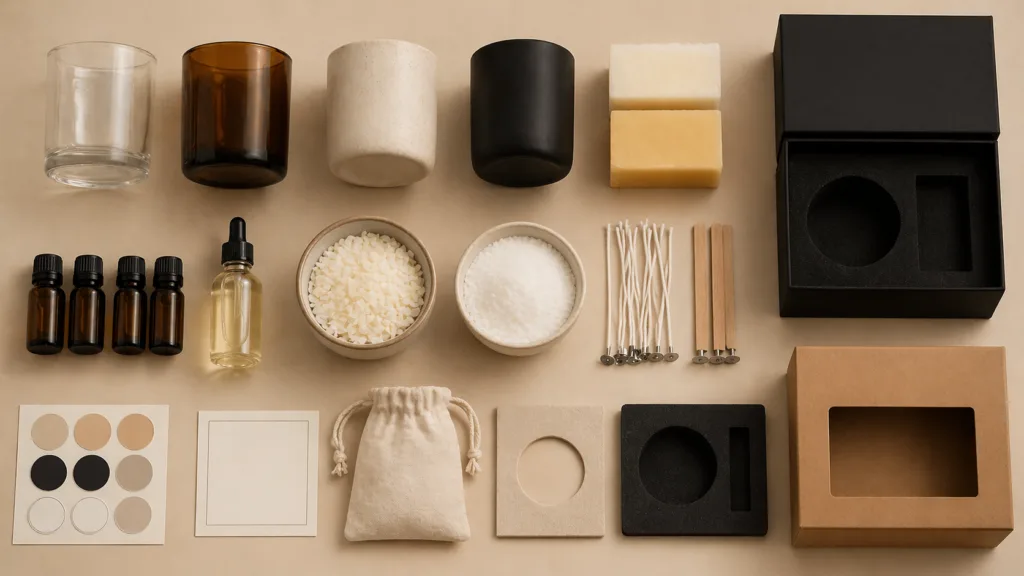
A common mistake among first-time buyers is thinking of a candle as one item. In reality, a private label candle is a combination of multiple manufactured components.
A standard scented candle may include:
- Glass jar, ceramic vessel, tin, or concrete container
- Wax blend, such as soy wax, coconut wax, beeswax blend, paraffin blend, or mixed vegetable wax
- Fragrance oil
- Wick, such as cotton wick, wood wick, or specialty wick
- Wick sticker or wick holder
- Dust cover or lid
- Product label
- Warning label
- Outer box
- Inner insert or protection material
- Retail barcode label
- Shipping carton
- Export carton marks
- Compliance documents such as SDS/MSDS or labeling guidance
Each component can have a different MOQ.
For example, the wax filling factory may accept 200 pieces per scent. The glass jar may be available from stock with low MOQ. The label may be printed at 100 pieces. But the rigid gift box may require 500 pieces per design, and the ceramic vessel may require 500 pieces per color.
So when a buyer says, “I only need 100 candles,” the supplier must ask:
- 100 candles using stock glass jars?
- 100 candles using custom ceramic vessels?
- 100 candles with standard packaging?
- 100 candles with a custom rigid box?
- 100 candles across 5 scents?
- 100 candles across 4 vessel colors?
- 100 candles with foil stamping and custom inserts?
The difference is huge.
A 100-piece order with a standard glass jar and sticker logo can sometimes be workable as a test order. A 100-piece order with custom ceramic vessels and rigid luxury boxes is usually not a small order. It is a high-customization project with a quantity that is too low to support the production structure.
This is the core of candle MOQ.
3. Glass Candle Jars: The Most Flexible MOQ Option
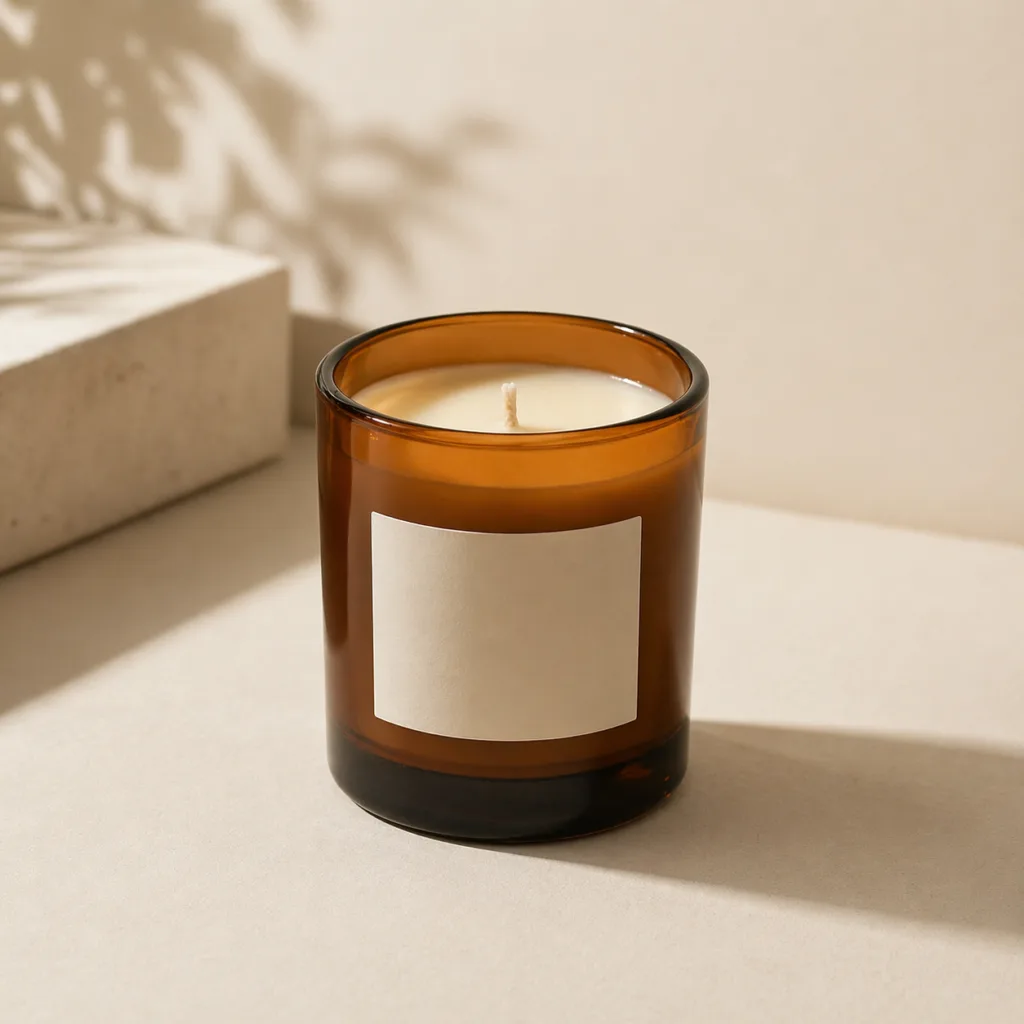
Among glass, ceramic, and packaging, glass jars are usually the most flexible starting point for private label candle buyers.
The reason is simple: many glass candle jars already exist as standard molds. Factories produce them continuously because they are used by many brands. Common shapes include straight-sided jars, amber jars, clear jars, frosted jars, apothecary jars, tumbler jars, round jars, square jars, and jars with lids.
When a buyer chooses a standard glass jar, the supplier does not need to develop a new mold. The jar may already be available in the supply chain. This allows buyers to start with a lower MOQ compared with custom ceramic or custom molded glass.
Typical MOQ logic for standard glass jars
For standard glass jars, MOQ can often be much lower than ceramic. Depending on the jar, supplier, stock availability, color, finish, and decoration method, test orders may start from around 100 to 500 pieces.
A typical B2B structure may look like this:
- Stock clear glass jar: lower MOQ
- Stock amber glass jar: lower to medium MOQ
- Stock frosted glass jar: medium MOQ depending on inventory
- Stock jar with sticker logo: lower MOQ
- Direct printing on glass: higher MOQ
- Foil logo on glass: higher MOQ
- Custom glass color: higher MOQ
- New glass mold: very high MOQ
This is why glass is often the best first step for new brands and testing projects.
Why glass works well for test orders
Glass jars are easier to source because many shapes are already standardized. If a brand wants to test a fragrance line, validate a retail concept, or create a small wholesale batch, glass gives the buyer more room to control MOQ.
A buyer can choose:
- A stock glass jar
- A standard wax fill weight, such as 150g, 200g, 220g, 250g, or 300g
- A sticker label instead of direct printing
- A simple warning label
- A standard folding carton or no individual box
- One or two fragrance options instead of five
This structure makes the project more realistic.
For example, a boutique brand may want to launch a 250g soy candle with two scents. Instead of developing a custom ceramic jar immediately, the brand can choose a standard amber glass jar, apply a high-quality label, use an existing lid, and test the product in retail or online sales.
That is not a weak product strategy. It is often the smartest strategy.
When glass MOQ becomes higher
Glass becomes less flexible when the buyer moves away from stock options.
The MOQ increases when the project requires:
- A new glass mold
- A custom glass shape
- A custom glass color
- Sprayed color coating
- Electroplating
- Heavy glass base
- Embossed or debossed logo in the glass
- Special lid development
- Direct screen printing
- Multi-color printing
- Gold foil or metallic logo treatment
- Matching custom box and insert
A buyer may think, “It is still glass, so the MOQ should be low.” But that is not always true. Standard glass is flexible. Custom glass is a manufacturing project.
If the design requires a new mold or custom glass finish, MOQ can move into thousands of pieces. In some cases, highly customized glass vessels can require 5,000 to 10,000 pieces or more to make sense for the glass factory.
Best use case for glass
Glass is best for:
- New brand testing
- Wholesale buyers launching a first candle line
- Retailers testing private label candles
- Amazon sellers validating demand
- Gift companies needing faster turnaround
- Brands that care more about fragrance, label design, and packaging than vessel uniqueness
- Buyers who want lower risk before committing to custom molds
Glass is not automatically cheap, but it is usually the most scalable starting point.
For mature buyers, the key is not to ask for “low MOQ candles.” The better approach is to ask for standard glass options that can support private label branding at a realistic quantity.
4. Ceramic Candle Vessels: Premium Look, Higher MOQ
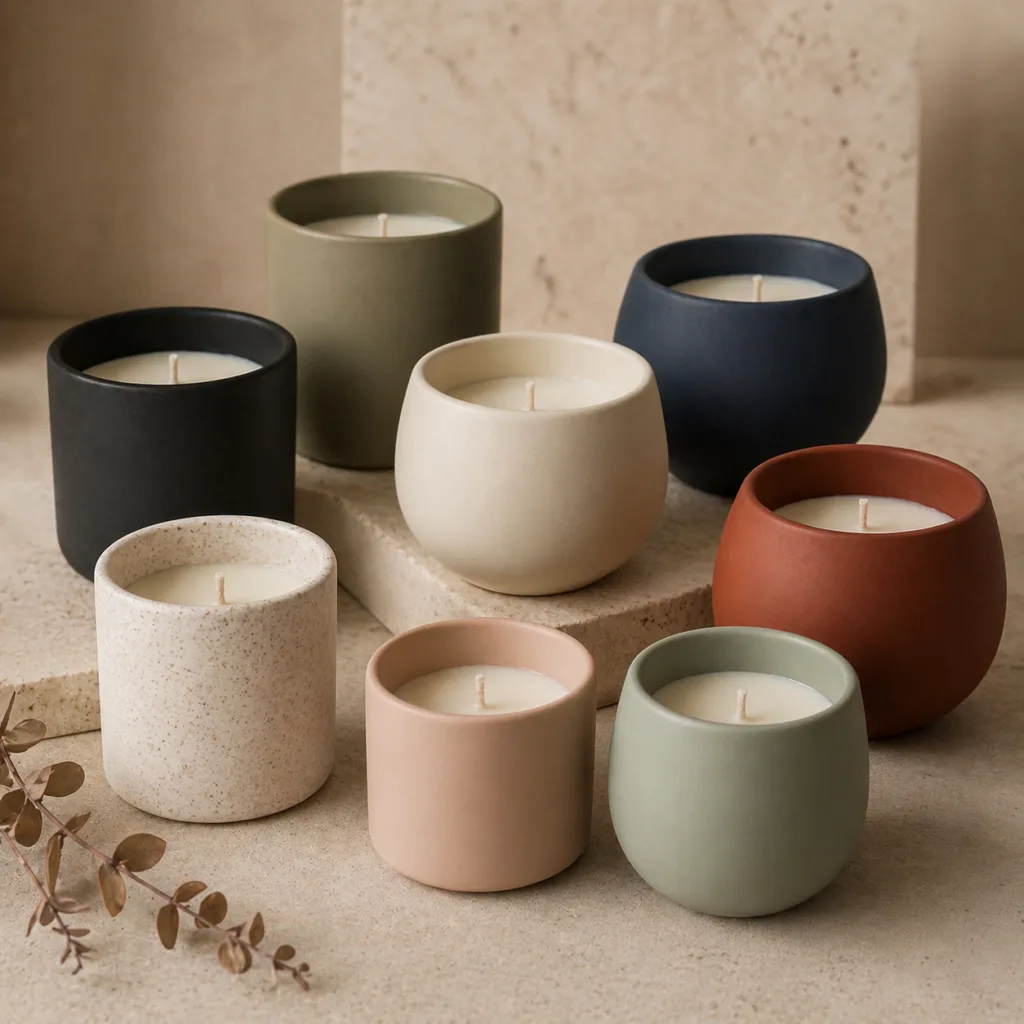
Ceramic candle vessels are attractive for luxury brands because they create a heavier, more decorative, and more permanent feeling than standard glass. Ceramic can look handmade, sculptural, matte, organic, minimalist, colorful, or highly premium. It works well for home décor brands, boutique retailers, hotels, spas, and gift collections.
But ceramic has a very different MOQ logic from standard glass.
Ceramic is not just a container choice. It is often a separate production project.
Why ceramic MOQ is higher
Ceramic vessels usually require more steps:
- Clay body preparation
- Mold or forming process
- Drying
- Trimming
- First firing
- Glazing or surface finishing
- Second firing
- Color control
- Size tolerance control
- Inspection for cracks, pinholes, deformation, and glaze defects
- Packing and protection
Compared with stock glass jars, ceramic has more variability. Color can shift during firing. Size can vary slightly because ceramic shrinks during production. Matte glaze, reactive glaze, speckled finishes, embossed logos, or custom shapes can create additional complexity.
This is why ceramic factories often require higher MOQ, especially when the buyer wants custom color, custom shape, or multiple colors.
Typical MOQ logic for ceramic candle vessels
Ceramic MOQ depends heavily on whether the buyer uses an existing mold or develops a new shape.
A practical sourcing structure may look like this:
- Existing ceramic vessel shape: medium MOQ
- Existing shape with standard glaze: medium MOQ
- Existing shape with custom color: higher MOQ
- Multiple colors: MOQ applies per color
- Custom ceramic mold: higher MOQ plus mold cost
- Embossed logo or special texture: higher MOQ
- Matching lid: separate MOQ consideration
For many private label projects, ceramic vessel MOQ commonly starts around 500 pieces per style or color, and can move to 1,000 pieces or more depending on customization. If the buyer wants three ceramic colors, the MOQ may not be 500 total. It may become 500 per color.
This is where many projects become commercially unrealistic.
A buyer may request:
- 100 pieces total
- 3 ceramic colors
- 3 fragrances
- Custom box for each color
From a marketing perspective, this looks like a small launch collection. From a manufacturing perspective, it may be 9 production combinations plus custom packaging.
That is why suppliers often push back.
Ceramic is a better fit for mature buyers
Ceramic can be excellent for brands that already know their market and can commit to volume.
It is suitable for:
- Established retailers
- Premium home fragrance brands
- Hotel and spa groups
- Gift set buyers
- Home décor importers
- Brands with stable repeat orders
- Buyers launching a hero product
- Buyers with a clear annual forecast
Ceramic is less suitable when a brand is still testing basic market demand.
If the buyer does not yet know which fragrance sells, which size sells, or which price point works, custom ceramic can lock too much budget into the vessel before the market has validated the product.
The hidden cost of ceramic: color and defect rate
Ceramic also has a hidden sourcing issue: tolerance.
Unlike glass, ceramic can have more visible variation in:
- Color tone
- Glaze thickness
- Surface texture
- Shape symmetry
- Rim smoothness
- Base flatness
- Small black dots or pinholes
- Shrinkage variation
For some brands, these variations are acceptable and even part of the handmade look. For luxury retail buyers, they may require stricter QC, which increases cost and rejection risk.
This matters because candle buyers often focus only on the outside appearance. But a candle vessel also needs to perform safely. The vessel must handle heat, fit the wick and wax system, and remain stable during burning.
A beautiful ceramic jar is not useful if the size tolerance affects filling weight, label position, packaging fit, or heat behavior.
Best use case for ceramic
Ceramic is best when:
- The buyer can commit to at least several hundred pieces per design
- The vessel itself is a major part of brand value
- The product is positioned as premium, decorative, or reusable
- The buyer has a clear packaging budget
- The brand is not relying on a very small test quantity
- The buyer understands that each color or design may create a separate MOQ
In short, ceramic is powerful, but it should be treated as a scaling decision, not always a first test decision.
5. Packaging: The Real MOQ Driver in Candle Projects
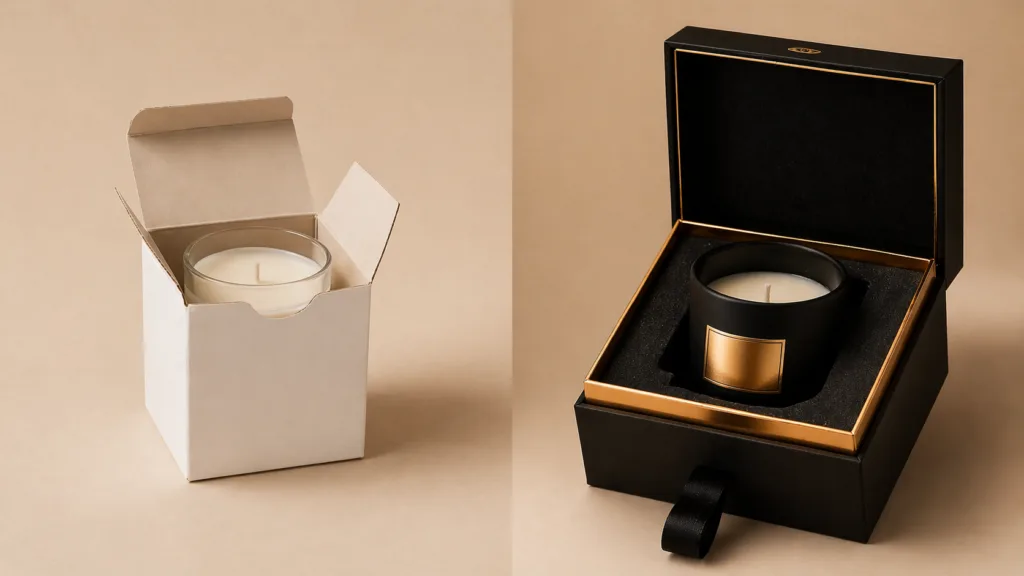
Many buyers assume the candle vessel controls MOQ. In reality, packaging often controls the order more than the candle itself.
This is especially true for luxury candles, gift sets, holiday collections, retail-ready products, influencer boxes, hotel amenities, and private label launches.
A candle can sometimes be produced in a standard glass jar at a relatively low quantity. But once the buyer asks for a custom rigid box, printed sleeve, foam insert, foil logo, spot UV finish, magnetic closure, drawer box, or multi-SKU gift set, the MOQ often jumps.
Packaging is where many candle projects become difficult.
Why packaging has its own MOQ
Custom packaging requires several production steps:
- Paper material sourcing
- Board cutting
- Printing setup
- Color proofing
- Lamination
- Foil stamping or embossing
- Die-cutting
- Hand assembly for rigid boxes
- Insert cutting
- Glue setup
- Quality inspection
- Packing and cartonization
Every step has setup cost.
For simple folding cartons, the process may be more flexible. For rigid gift boxes, especially lid-and-base boxes or drawer boxes, the process becomes more labor-intensive.
A rigid candle box is not just printed paper. It may include greyboard, wrapped paper, inner lining, foam or pearl cotton insert, ribbon, magnetic closure, and surface finishing. Even if the buyer only wants 100 boxes, the factory still needs to set up printing, cutting, board wrapping, and assembly.
That is why packaging MOQ often starts around 500 pieces per design in many practical candle supply chains. Some packaging suppliers may advertise lower MOQs, especially for digital printing or local short-run production, but the unit cost can be much higher. For export-ready B2B candle production, 500 pieces is often a more realistic starting point for custom rigid packaging.
Packaging MOQ is usually per design, not per total order
This is one of the most important details for buyers.
If you order 500 candles but want five different box designs, the packaging factory may treat that as five separate production runs. That means the MOQ may apply to each design.
For example:
- 500 boxes with one design: workable
- 500 boxes split into five designs of 100 each: often not workable
- 500 boxes with one exterior design and different stickers: more workable
- 500 boxes with one box size used across multiple scents: more workable
This is why experienced buyers standardize packaging.
They may use the same box structure and same outer artwork across multiple fragrances, then differentiate scents through stickers, belly bands, small labels, or insert cards. This keeps MOQ under control while still allowing SKU variation.
Rigid boxes vs folding cartons
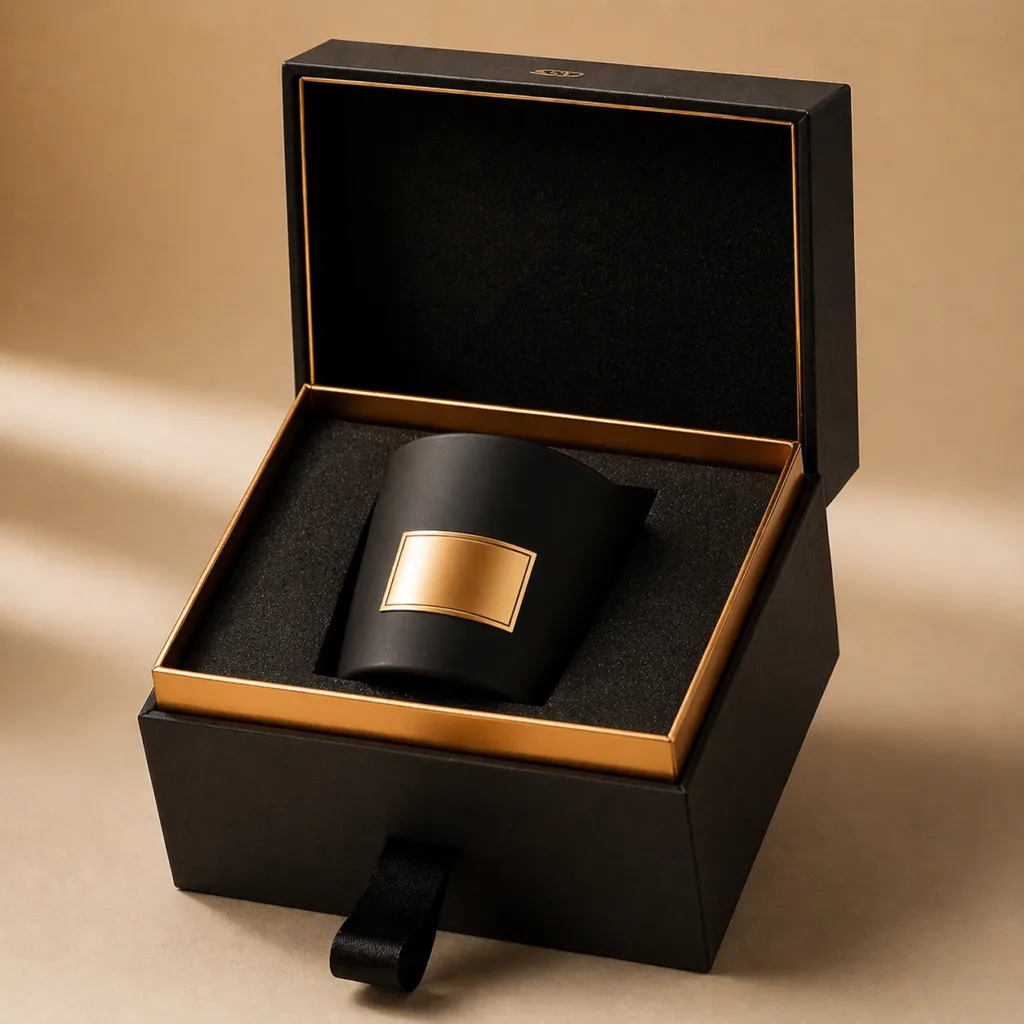
Not all packaging has the same MOQ pressure.
A folding carton is usually lighter, simpler, and easier to produce. It can be suitable for candles sold online, retail shelves, or lower price points.
A rigid box is thicker, stronger, and more premium. It is commonly used for luxury candles and gift sets. It improves perceived value, but it also increases cost, production time, storage volume, freight weight, and MOQ pressure.
A simple comparison:
| Packaging Type | MOQ Pressure | Cost | Best For |
|---|---|---|---|
| No individual box | Low | Low | Testing, wholesale refills, simple online sales |
| Sticker label only | Low | Low | Small batch private label |
| Folding carton | Medium | Medium | Retail-ready candles |
| Sleeve box | Medium | Medium | Simple branding upgrade |
| Rigid lid-and-base box | High | High | Luxury candles, gifts, premium retail |
| Drawer box | High | High | Gift sets and premium unboxing |
| Custom insert | High | Medium to high | Fragile vessels, gift sets, multi-piece sets |
The more premium the packaging, the more MOQ-sensitive the project becomes.
Inserts can create another MOQ problem
Buyers often focus on the outside box, but the insert can also limit MOQ.
For candles, inserts may be needed to protect the vessel during shipping. Common options include:
- Foam insert
- Pearl cotton insert
- Paperboard insert
- Molded pulp insert
- EVA insert
- Cardboard divider
The insert must match the exact vessel shape and box size. If the buyer has multiple vessel shapes, multiple sizes, or multiple gift set combinations, each insert may require different cutting.
This means a gift set with three candle shapes can be much harder than a single candle box.
A luxury candle gift set may look simple in a design file, but the packaging supplier sees:
- Box size
- Insert shape
- Product cavity
- Protection thickness
- Lid height
- Shipping pressure
- Hand assembly
- Material waste
- Tolerance between vessel and insert
This is why packaging is often the real bottleneck in MOQ discussions.
6. Glass vs Ceramic vs Packaging: How They Work Together
The most important point in candle MOQ is that glass, ceramic, and packaging do not work separately. They affect each other.
A change in vessel changes the packaging. A change in packaging changes the MOQ. A change in vessel size changes shipping weight and carton size. A change in color may create separate production batches. A change in fragrance may require separate wax filling batches and labels.
This is why buyers should avoid designing each component independently.
Example 1: Standard glass jar + sticker + no box
This is the most flexible structure.
A buyer chooses:
- Standard glass jar
- One or two fragrances
- Sticker logo
- Standard warning label
- No custom box or simple stock box
MOQ pressure is relatively low. The buyer can test the market, confirm fragrance direction, and collect customer feedback before investing in more expensive packaging.
This structure works well for small launches, market testing, boutique wholesale, and early-stage private label programs.
Example 2: Standard glass jar + custom rigid box
The jar may be easy, but the box changes everything.
A buyer chooses:
- Standard glass jar
- Custom rigid box
- Gold foil logo
- Pearl cotton insert
- Two scents
Even if the jar can be sourced at a lower quantity, the box may require 500 pieces per design. If the buyer wants different box artwork for each scent, MOQ increases again.
This is a common situation. The candle itself is not the issue. The packaging is the issue.
Example 3: Custom ceramic vessel + custom box
This is a high-customization project.
A buyer chooses:
- Custom ceramic vessel
- Three colors
- Three fragrances
- Custom rigid box per color
- Custom insert
This project is not suitable for a tiny test order. It should be planned as a larger launch with serious budget, clear forecasting, and realistic production time.
If the buyer wants to reduce MOQ, the supplier may recommend:
- One ceramic color first
- One box design for all scents
- Sticker differentiation
- Existing ceramic mold
- Standard insert structure
- Fewer fragrance options
This is how mature buyers keep projects alive.
7. The Most Common MOQ Mistake: Too Many SKUs Too Early
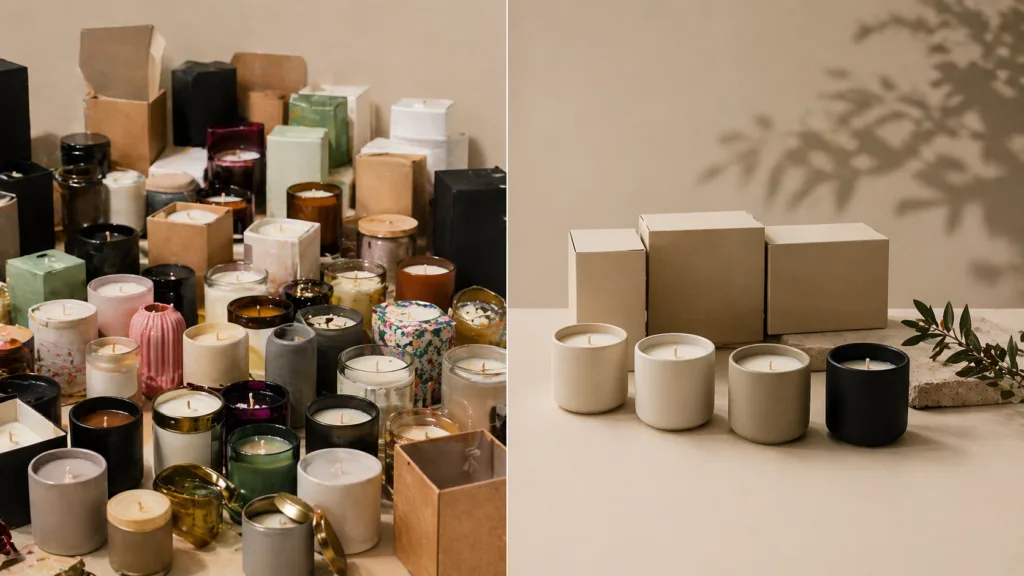
The fastest way to make a candle project impossible is to create too many SKUs at the beginning.
A buyer may think:
“I only need 300 candles.”
But the order may actually be:
- 3 fragrances
- 3 vessel colors
- 2 box designs
- 2 label designs
That creates many combinations.
If the buyer wants 300 candles across 3 fragrances and 3 vessel colors, that is only about 33 pieces per combination. For a factory, this is not efficient. It creates too much setup, too much switching, too much QC work, and too much packaging complexity.
The more SKUs you create, the higher the effective MOQ becomes.
Mature buyers reduce SKU complexity
Experienced candle buyers usually start with a cleaner structure:
- 1 vessel type
- 1 box size
- 1 packaging structure
- 1 to 3 fragrances
- 1 label system
- 1 warning label format
- 1 shipping carton solution
Then they expand after sales data proves demand.
This is not boring. It is commercially intelligent.
A candle brand does not need ten SKUs to look professional. It needs the right SKU structure, good fragrance performance, reliable packaging, and consistent supply.
8. Realistic MOQ Planning by Buyer Type
Different buyers should approach MOQ differently.
New private label brands
New brands should avoid custom ceramic vessels and complicated rigid boxes in the first order unless they have strong funding and a clear launch plan.
Best starting structure:
- Standard glass jar
- Sticker label
- One box style or no individual box
- One to three fragrances
- Paid samples first
- Bulk order after sample approval
Goal: validate product-market fit.
Retailers and boutiques
Retailers should focus on shelf presentation and margin. They may need retail-ready packaging, but they should avoid too many designs at first.
Best structure:
- Standard glass or existing ceramic vessel
- One packaging size
- Unified box artwork
- Fragrance differentiation by sticker or small label
- Clear barcode and warning label plan
Goal: launch a clean private label line without overbuilding.
Wholesalers and importers
Wholesalers and importers often care about landed cost, carton efficiency, and repeat supply.
Best structure:
- Standardized vessel sizes
- Strong carton packing
- Stable fragrance options
- Repeatable packaging
- Price tiers at 500, 1,000, 3,000, and 5,000 pieces
Goal: build a product line that can scale and reorder.
Hotels, spas, and hospitality buyers
Hospitality buyers often need consistent fragrance, safe burning performance, simple branding, and reliable replenishment.
Best structure:
- Standard glass jar or tin
- Neutral label
- Minimal packaging
- Strong compliance labeling
- Stable reorder plan
Goal: operational reliability rather than over-customization.
Luxury brands
Luxury brands may need ceramic vessels, rigid boxes, foil stamping, custom inserts, and premium fragrance development. But they should accept that this requires higher MOQ and longer development time.
Best structure:
- Existing ceramic mold if possible
- One hero vessel first
- One or two colors first
- Premium rigid box at realistic quantity
- Full sample development before bulk order
Goal: protect brand value while keeping manufacturing feasible.
9. How Packaging Limits MOQ More Than Buyers Expect
Packaging limits MOQ because it is often designed before the buyer understands production.
A designer may create a beautiful box with exact colors, custom structure, foil logo, printed inside lining, special insert, and different artwork for each scent. Visually, the design looks excellent. Operationally, it may create six separate production problems.
Packaging variables that raise MOQ
The following packaging choices usually increase MOQ:
- Rigid box instead of folding carton
- Drawer box instead of standard lid-and-base box
- Magnetic closure
- Foil stamping
- Embossing or debossing
- Spot UV
- Textured paper
- Custom insert
- Multiple box sizes
- Multiple artwork versions
- Multiple colorways
- Inside and outside printing
- Small batch split across many scents
Every additional variable reduces flexibility.
Why one box design is often better
A mature buyer may use one box design for the entire candle line. Then the brand can differentiate SKUs through:
- Front label
- Bottom label
- Scent sticker
- Belly band
- Hang tag
- Insert card
- Barcode sticker
This approach allows the buyer to meet packaging MOQ while still offering multiple fragrance options.
For example, instead of ordering:
- 100 boxes for Lavender
- 100 boxes for Sandalwood
- 100 boxes for Fig
- 100 boxes for Vanilla
- 100 boxes for Rose
A better structure is:
- 500 universal boxes
- 100 scent stickers for each fragrance
This single change can make the project feasible.
Packaging also affects freight
Packaging does not only affect MOQ. It also affects shipping cost.
Rigid boxes are heavier and take more space than folding cartons. Foam inserts and gift set structures increase volumetric weight. For candles, which are already heavy because of glass and wax, packaging can make freight cost significantly higher.
This matters for B2B buyers calculating landed cost.
A candle may look profitable at EXW price, but after adding rigid box weight, carton volume, air freight, duties, and last-mile delivery, the margin may shrink.
That is why mature buyers compare:
- Product cost
- Packaging cost
- Carton quantity
- Gross weight
- Volume weight
- Sea freight vs air freight
- DDP landed cost
- Retail margin
MOQ is only one part of the sourcing decision. Packaging affects the whole financial model.
10. How to Reduce Candle MOQ Without Making the Product Look Cheap
Reducing MOQ does not mean making a bad product. It means choosing the right customization sequence.
Here are practical ways to reduce MOQ while keeping the product professional.
1. Start with standard glass
A standard glass jar gives you the easiest path to market. You can still make it look premium with:
- Good label design
- Strong fragrance positioning
- Clean wax finish
- Matching lid
- Quality photography
- Elegant warning label
- Simple but refined packaging
Many successful candle brands started with standard glass before developing custom vessels.
2. Use labels before direct printing
Direct printing, foil stamping, engraving, and coating increase MOQ and cost. A high-quality sticker label is often more practical for testing.
Labels allow you to:
- Test multiple scents
- Adjust branding later
- Avoid glass decoration MOQ
- Reduce waste
- Launch faster
For small and medium orders, labels are not a compromise. They are a smart control method.
3. Use one universal box
Instead of making separate boxes for each scent, use one box design and differentiate scents with stickers or small labels.
This helps you meet packaging MOQ while keeping SKU flexibility.
4. Limit fragrance count
Every fragrance requires separate batching, filling, labeling, and QC. If the first order is small, start with one to three fragrances.
A focused fragrance line often performs better than a large but unfocused one.
5. Avoid custom ceramic in the first order
Unless your brand depends on a ceramic vessel, use glass first. Once sales data proves demand, move to ceramic for your hero product or premium line.
6. Keep one vessel size
Multiple sizes create multiple wicks, labels, boxes, inserts, cartons, and burn test requirements.
One size is easier to control.
7. Use existing packaging structures
Custom structure creates cost and risk. Existing lid-and-base box sizes, standard folding cartons, or adaptable inserts can reduce MOQ pressure.
8. Plan MOQ by annual volume, not only first order
If you are a serious buyer, share your annual forecast. A supplier may support a more flexible first order if there is a clear reorder plan.
For example:
- First order: 500 pieces
- Reorder plan: 2,000 pieces per quarter
- Annual forecast: 8,000 to 10,000 pieces
This is more persuasive than asking for 100 pieces with no future plan.
11. Sample Orders vs Bulk Orders: Do Not Confuse the Two
Samples and bulk orders serve different purposes.
A sample is for confirming:
- Vessel appearance
- Wax finish
- Fragrance direction
- Wick performance
- Label size
- Box structure
- Packaging fit
- General product presentation
A bulk order is for actual production.
A supplier may make a few samples even when the final MOQ is 500 pieces. That does not mean the supplier can produce 50 or 100 pieces at bulk pricing.
Sample production is often handmade or semi-handmade. Materials may be purchased in small quantities. Digital printing may be used instead of final offset printing or foil stamping. The sample box may look close to final packaging but may not use full production tooling.
This is normal.
Buyers should not assume sample flexibility equals bulk flexibility.
A professional sourcing process looks like this:
- Confirm product direction
- Choose vessel and packaging structure
- Confirm realistic MOQ
- Pay sample fee
- Review sample
- Adjust fragrance, wick, label, or packaging if needed
- Approve final specification
- Start bulk production
- Conduct QC
- Arrange shipping
Skipping MOQ discussion before sampling is a mistake. A buyer may approve a beautiful sample and later discover that the packaging MOQ is too high for the intended order.
12. What Mature Buyers Should Ask Before Requesting a Quote
If you want a useful quotation, do not only ask, “How much is this candle?”
Ask better questions.
Vessel questions
- Is this a stock glass jar or custom mold?
- What sizes are available?
- What is the MOQ for this vessel?
- Does MOQ apply per color?
- Can we use a sticker label instead of direct printing?
- Is the lid available from stock?
- What is the weight of the empty vessel?
Ceramic questions
- Is this an existing ceramic shape?
- What glaze colors are available?
- What is the MOQ per color?
- Is there a mold cost?
- What tolerance should we expect?
- What defect rate is normal?
- Can the vessel pass burn and heat testing?
Packaging questions
- What is the MOQ for the box?
- Is MOQ per design or total quantity?
- Can one box be used for multiple scents?
- What is the MOQ for inserts?
- Can we use pearl cotton, paperboard, or molded pulp?
- Is foil stamping available at this quantity?
- What is the box weight and carton size?
Production questions
- What is the MOQ per fragrance?
- What wax blend is recommended?
- What fragrance load is realistic?
- What wick testing is needed?
- What is the sample lead time?
- What is the bulk production lead time?
Shipping questions
- What is the gross weight per carton?
- What is the carton size?
- What is the estimated sea freight cost?
- What is the estimated air freight cost?
- Can you provide DDP shipping?
- What documents are available?
These questions show that you are a serious buyer. They also help the supplier give you a quote that reflects real production, not just a rough guess.
13. Practical MOQ Scenarios
Below are practical examples that show how glass, ceramic, and packaging affect MOQ.
Scenario A: Low-risk private label launch
Buyer request: 300 pieces, one standard glass jar, two fragrances, sticker logo, no individual box.
MOQ pressure: Low to medium.
Why it works: The vessel is standard, branding is flexible, and packaging is simple. The supplier mainly needs to manage wax filling, fragrance batching, labels, and safety stickers.
Best for: New brands, small retailers, online testing.
Scenario B: Retail-ready glass candle
Buyer request: 500 pieces, standard glass jar, three fragrances, custom folding carton, same box design with scent stickers.
MOQ pressure: Medium.
Why it works: The packaging is custom but controlled. One box design supports multiple fragrances, reducing packaging complexity.
Best for: Boutiques, gift shops, private label retail.
Scenario C: Luxury candle gift box
Buyer request: 500 pieces, glass jar, rigid lid-and-base box, gold foil logo, pearl cotton insert.
MOQ pressure: Medium to high.
Why it works: The jar is standard, but packaging drives MOQ and cost. The buyer must be ready for higher packaging cost and longer lead time.
Best for: Premium gift buyers, holiday sets, luxury retail.
Scenario D: Ceramic vessel collection
Buyer request: 1,500 pieces, existing ceramic vessel, three colors, one universal rigid box.
MOQ pressure: High but realistic.
Why it works: The buyer accepts that ceramic MOQ applies by color and keeps packaging standardized.
Best for: Established home fragrance brands.
Scenario E: Unrealistic early-stage request
Buyer request: 100 pieces total, custom ceramic vessel, three colors, three scents, custom rigid box for each color, foil logo, custom insert.
MOQ pressure: Very high.
Why it fails: The order is too fragmented. Ceramic, packaging, color, scent, and insert requirements all create separate minimums.
Better solution: Start with one glass jar, one universal box, one to two fragrances, then scale into ceramic after market validation.
14. MOQ and Price: Why Smaller Orders Cost More
Buyers often ask why the unit price is much higher at low quantity.
The answer is simple: fixed costs are spread across fewer pieces.
For example, if packaging setup, printing preparation, color proofing, and material purchasing create a fixed cost, that cost must be divided into the order quantity.
At 100 pieces, each candle carries a large share of setup cost. At 1,000 pieces, the same setup cost is spread across more units.
This affects:
- Vessel cost
- Wax filling cost
- Packaging cost
- Label cost
- Labor cost
- QC cost
- Carton cost
- Freight cost
That is why suppliers usually provide price tiers.
A serious buyer should request quotes at different quantities, such as:
- 300 pieces
- 500 pieces
- 1,000 pieces
- 3,000 pieces
- 5,000 pieces
This gives a clearer view of margin and helps decide whether the product can support wholesale or retail pricing.
For B2B buyers, the cheapest sample is not the goal. The goal is a scalable landed cost.
15. MOQ and Lead Time: Why Custom Projects Take Longer
MOQ and lead time are closely connected.
A simple standard glass candle may move faster because the vessel is available and packaging is simple. A ceramic vessel with custom glaze and rigid box may require much longer because several supply chains must be coordinated.
Typical lead time factors include:
- Vessel availability
- Ceramic firing schedule
- Glass coating schedule
- Fragrance development
- Wick testing
- Label printing
- Box proofing
- Bulk packaging production
- Candle curing time
- Final assembly
- Export packing
- Freight booking
If a buyer has a strict launch date, the product should be simplified.
For example, if a retailer needs candles for a holiday season, a standard glass jar with existing packaging may be safer than custom ceramic with new rigid boxes.
A mature buyer plans backward from the launch date:
- Retail delivery date
- Shipping time
- QC and packing time
- Bulk production time
- Packaging production time
- Sample approval time
- Design confirmation time
MOQ is not just about quantity. It is also about time risk.
16. The Best MOQ Strategy for B2B Candle Buyers
The best MOQ strategy depends on your business stage.
Stage 1: Market testing
Use:
- Standard glass
- Sticker logo
- Simple packaging
- Limited fragrance count
- Paid samples
Avoid:
- Custom ceramic
- Too many colors
- Complex rigid boxes
- Multiple box designs
Main goal: confirm demand.
Stage 2: Retail launch
Use:
- Standard glass or existing ceramic
- One box structure
- Better label system
- Folding carton or simple rigid box
- More polished brand presentation
Avoid:
- New molds unless volume supports it
- Too many SKUs
- Overly heavy packaging if freight cost matters
Main goal: improve shelf appeal and margin.
Stage 3: Brand scaling
Use:
- Custom ceramic or custom glass
- Premium packaging
- Better inserts
- Foil stamping or advanced finishes
- Larger production runs
- Annual forecast planning
Avoid:
- Frequent design changes
- Too many low-volume SKUs
- Unstable fragrance library
Main goal: build a repeatable product line.
Stage 4: Large-volume procurement
Use:
- Standardized specifications
- Price tiers
- Clear QC standards
- Stable packaging system
- DDP or planned freight options
- Reorder schedule
Avoid:
- Last-minute design changes
- Unapproved packaging artwork
- Unclear compliance labeling
Main goal: supply chain stability.
17. Why Serious Suppliers Say No to Some Low-MOQ Projects
A good supplier does not say yes to every inquiry.
If a supplier accepts an unrealistic project, the buyer may face delays, unstable quality, wrong packaging, high unit cost, or production failure. Saying no early can be more professional than promising something impossible.
For example, if a buyer wants custom ceramic vessels at 100 pieces, a serious supplier may recommend standard glass instead. This is not rejection. It is risk control.
A supplier that understands B2B candle production should help buyers adjust the project into a workable structure.
A good supplier will explain:
- Which component causes MOQ
- Which option can reduce MOQ
- Which customization should wait until larger volume
- Which packaging structure is realistic
- Which quantity gives better unit cost
- Which parts need sampling first
This is the difference between a product partner and a simple quote provider.
18. How to Brief a Candle Supplier for the Fastest Accurate Quote
To receive an accurate quote, prepare a clear sourcing brief.
Include:
- Target quantity
- Target market
- Vessel preference: glass, ceramic, tin, or open to suggestions
- Candle fill weight
- Number of fragrances
- Fragrance direction
- Wax preference
- Wick preference
- Branding method: sticker, printing, foil, engraving
- Packaging type: no box, folding carton, rigid box, gift box
- Insert requirement
- Reference images
- Target retail price
- Target launch date
- Shipping destination
- Required documents
Also state whether you are flexible.
For example:
“We prefer ceramic, but if MOQ is too high, we are open to standard glass for the first order.”
This helps the supplier propose a realistic path.
A mature buyer does not only send a beautiful mood board. A mature buyer sends a commercial brief.
19. Final Takeaway: MOQ Is a Design Decision
Candle MOQ is not random. It is the result of design choices.
Glass, ceramic, and packaging each create different MOQ pressure:
- Glass is usually the most flexible when using standard jars.
- Ceramic creates higher MOQ because of mold, glaze, firing, color, and tolerance control.
- Packaging often becomes the real MOQ driver, especially with rigid boxes, inserts, foil stamping, and multiple artwork versions.
If you want a lower MOQ, simplify the structure.
If you want premium customization, prepare for higher quantity.
If you want both low MOQ and high customization, you may need to compromise on vessel, packaging, or SKU count.
The smartest candle buyers do not fight MOQ blindly. They design around it.
They start with standard glass when testing, standardize packaging when launching, move into ceramic when volume supports it, and use custom rigid boxes when the product has enough margin and demand.
That is how a candle idea becomes a sellable B2B product.
MOQ is not just a supplier rule. It is a roadmap for building a candle line that can actually be manufactured, shipped, sold, and reordered.
FAQ
1. What is a realistic MOQ for private label candles?
A realistic MOQ depends on the vessel, fragrance count, branding method, and packaging. Standard glass candles with sticker labels may support lower quantities (sometimes 100–300 pcs for testing), while projects involving custom packaging or multiple SKUs usually require 500 pcs or more. For serious B2B production with retail-ready packaging, 500–1,000 pcs is often the practical starting point.
2. Why does candle packaging increase MOQ so much?
Packaging increases MOQ because it involves multiple production steps such as printing setup, die-cutting, lamination, and assembly. Rigid boxes especially require manual labor and material preparation. MOQ is typically applied per design, not total quantity, so multiple box designs can multiply the required order volume.
3. Is glass or ceramic better for a first candle order?
Glass is usually better for a first order because it allows more flexibility, faster production, and lower MOQ when using stock jars. Ceramic is better suited for brands that already have validated demand and can commit to higher volumes.
4. Can I mix different scents or colors under one MOQ?
In most cases, MOQ applies per variation. This means:
- Fragrance: MOQ per scent (e.g., 200 pcs each)
- Ceramic color: MOQ per color
- Packaging: MOQ per design
To keep MOQ manageable, buyers often standardize packaging and differentiate products using labels or stickers instead of fully separate designs.
5. How can I lower MOQ without sacrificing product quality?
You can lower MOQ by simplifying the structure rather than lowering quality:
- Use standard glass jars instead of custom molds
- Use high-quality labels instead of direct printing
- Use one universal box design for multiple scents
- Limit SKU count in the first order
- Avoid custom inserts if not necessary
This approach keeps the product professional while making production feasible.
6. Why is the unit price higher at lower MOQ?
At lower quantities, fixed costs such as setup, material sourcing, and labor are spread across fewer units. This increases the cost per candle. As quantity increases, the same fixed costs are distributed over more units, reducing the per-unit price. This is why suppliers often provide tiered pricing based on volume.
7. Should I finalize MOQ before or after sampling?
MOQ should be discussed before sampling. Samples are used to confirm design, fragrance, and structure, but they do not reflect production feasibility at low quantities. If MOQ is not aligned early, buyers may approve a sample that cannot be produced at their intended order quantity.