
Introduction: Why “Best Scented Candle” Means Something Different in B2B
For a consumer, the best scented candle may simply mean a candle that smells beautiful, looks good on a coffee table and feels worth the price. For a wholesale buyer, retailer, importer or private label brand, the meaning is very different.
A candle for commercial sales must do more than smell pleasant. It has to perform consistently, burn safely, fit a target retail price, look attractive on shelves, support repeat orders and meet the documentation needs of international markets. A beautiful candle that tunnels, smokes, leaks fragrance oil, arrives with weak scent throw or comes in packaging that cannot pass retail standards is not the best candle for a business buyer.
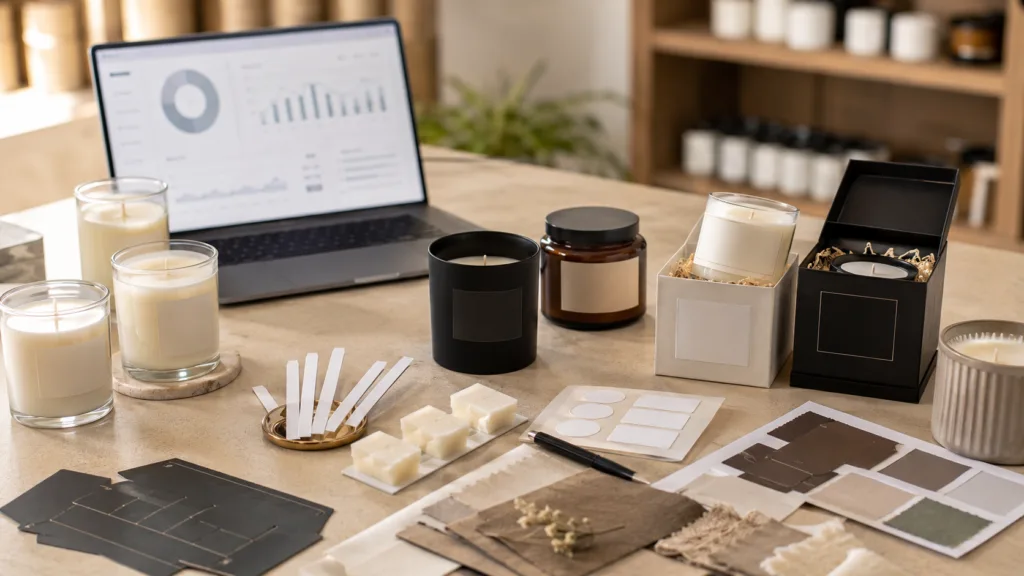
That is why choosing the best scented candle for wholesale, retail and private label projects requires a structured sourcing process. Buyers need to evaluate fragrance, wax, wick, vessel, packaging, MOQ, compliance, lead time and supplier capability before placing a bulk order.
This guide is written for B2B buyers who need more than a nice fragrance sample. It is for wholesalers building seasonal collections, retailers sourcing private label home fragrance lines, hotels and spas looking for branded amenities, and gift companies developing custom candle sets for corporate clients.
At Circe Home, we help international buyers develop scented candles that are not only visually appealing, but also practical for export, retail display, gifting and repeat production.
1. Market Context: Why Scented Candles Remain a Strong B2B Category
Scented candles continue to perform well because they sit at the intersection of home décor, fragrance, wellness, gifting and lifestyle consumption. Unlike many decorative products, candles are consumable. A customer may buy one candle, finish it and return for another fragrance, another size or another seasonal collection.
For B2B buyers, this creates strong commercial potential. A candle line can be developed for Christmas, Valentine’s Day, Mother’s Day, spa collections, hotel rooms, wedding gifts, subscription boxes, retail shelves or corporate gifting. The same production structure can support different fragrance families, packaging styles and brand stories.
The growth of home fragrance also shows why candles remain relevant. Consumers are increasingly treating their living spaces as emotional environments. They want calm, warmth, comfort, identity and atmosphere. A candle is no longer only a household accessory. It is part of a lifestyle ritual.
This is especially important for wholesale and private label buyers. When the market becomes more fragrance-driven and design-conscious, buyers cannot compete only by offering a generic candle in a plain jar. The best scented candle for a B2B project should feel intentional: the scent, wax, vessel, label, box and price point all need to work together.
2. Define the Buyer Type Before Choosing the Candle
Before selecting wax, fragrance or packaging, a buyer should first define the commercial purpose of the candle.
For Wholesalers
Wholesalers usually need stable, repeatable, cost-controlled candle products. They may sell to small retailers, gift stores, lifestyle shops or online boutiques. For this buyer type, the best scented candle should offer reliable production, popular fragrance directions, manageable MOQ and packaging that works across different retail environments.
For Retailers
Retailers need candles that can attract attention on shelves or online product pages. Visual presentation matters. Label design, box quality, color palette, fragrance naming and product photography potential all influence sales. Retailers should choose candles that support clear storytelling.
For Hotels and Spas
Hotels and spas need scent consistency and a calm brand experience. Their candles should not be too aggressive, smoky or unstable. Soft woody, herbal, floral, citrus, tea, musk and clean linen directions often work well for hospitality environments. Packaging can be elegant and minimal, but the candle must feel premium.
For Private Label Brands
Private label buyers need flexibility. They may want custom scents, brand labels, custom boxes, special vessels, gift sets or seasonal collections. For this buyer type, supplier communication and sample development are just as important as unit price.
For Corporate Gift Buyers
Gift buyers need products that feel valuable and presentable. A candle gift set should have strong unboxing appeal, clear branding, safe packaging and reliable delivery timing. For corporate gifts, packaging often matters as much as fragrance.
3. Fragrance Direction: The Core of the Best Scented Candle
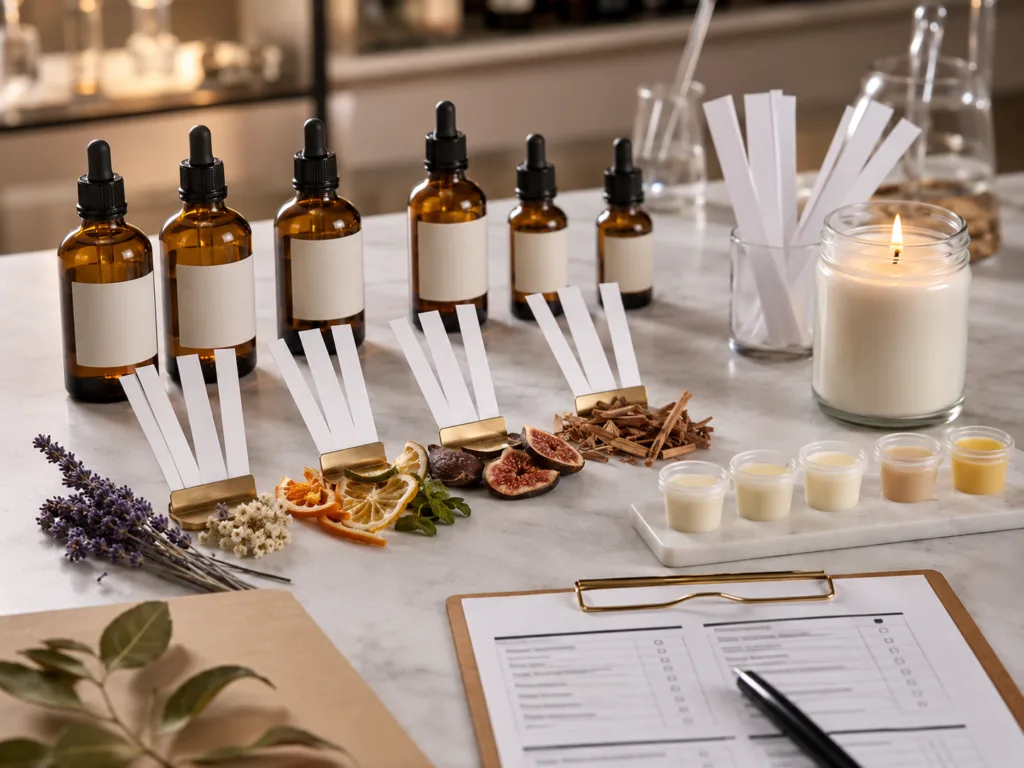
Fragrance is the emotional center of a scented candle. In B2B sourcing, however, choosing fragrance is not only about personal taste. It is about market fit.
A buyer should ask:
Who is the end customer?
What season will this candle be sold in?
Is the candle for daily home use, gifting, spa, hotel, holiday décor or luxury retail?
Should the scent feel natural, sweet, woody, clean, floral, gourmand or festive?
Does the fragrance fit the brand’s visual identity?
For wholesale and retail projects, safe commercial fragrance families usually include:
- Vanilla, amber and musk for warm comfort
- Lavender, eucalyptus and tea for wellness
- Sandalwood, cedarwood and oud for sophistication
- Citrus, bergamot and grapefruit for freshness
- Rose, jasmine and peony for floral collections
- Fig, pear, blackcurrant and pomegranate for modern fruity profiles
- Cinnamon, pine, gingerbread and cranberry for holiday launches
The best scented candle should have both cold throw and hot throw. Cold throw is the scent released when the candle is unlit. This matters for retail shelves because buyers often smell the candle before purchase. Hot throw is the scent released during burning. This determines whether the customer is satisfied after using the candle at home.
A candle with strong cold throw but weak hot throw may sell once but fail to generate repeat purchases. A candle with excellent hot throw but poor cold throw may struggle in retail display. B2B buyers need both.
4. Signature Scent Development and Personalization
One of the strongest fragrance trends is personalization. Consumers want scents that feel more specific, layered and emotionally connected. This is why “signature scent” thinking is moving from personal fragrance into home fragrance.
For private label projects, this creates an opportunity. Instead of choosing only standard scents such as lavender or vanilla, buyers can develop more memorable blends:
- Fig & Sandalwood
- White Tea & Cedar
- Bergamot & Amber
- Neroli & Musk
- Honey & Olive Blossom
- Black Orchid & Vanilla
- Matcha & Smoked Wood
- Pear & Champagne
A good supplier should help the buyer refine fragrance direction during sampling. The first sample may not be final. Sometimes the scent is too sweet, too weak, too sharp or not aligned with the target brand. Mature B2B buyers understand that fragrance development may require several rounds of adjustment.
At Circe Home, fragrance development is treated as part of the product strategy, not just a scent selection step. For private label and wholesale projects, we help buyers choose or adjust fragrance directions based on target market, season, vessel style, wax type and price positioning.
5. Wax Selection: Soy, Beeswax, Paraffin and Blended Wax
Wax choice affects fragrance throw, burn time, surface appearance, cost, market positioning and production stability.
Soy Wax
Soy wax is popular for natural, wellness and eco-conscious brands. It has a clean image and works well for many private label candle projects. However, soy wax can sometimes have frosting, uneven surfaces or weaker scent throw compared with certain blended wax systems. Buyers should evaluate both appearance and performance.
Beeswax
Beeswax has a natural premium image and a subtle honey-like character. It is suitable for high-end, natural or artisanal positioning. However, pure beeswax can be expensive and may not always deliver the desired fragrance throw. Many commercial projects use beeswax blends to balance natural appeal, cost and performance.
Paraffin Wax
Paraffin wax is often valued for strong scent throw, smooth appearance and cost efficiency. Some buyers avoid it for natural positioning, but it remains widely used in commercial candle manufacturing. For mass retail, promotional gifts or price-sensitive wholesale collections, paraffin or paraffin blends may be practical.
Blended Wax
Blended wax is often the most realistic option for B2B projects. A blend can balance fragrance throw, burn quality, surface finish, cost and production stability. For example, soy-paraffin blends, coconut-soy blends or beeswax-soy blends can be developed depending on the buyer’s goals.
The best wax is not always the most expensive or the most “natural-sounding.” The best wax is the one that fits the brand promise, target retail price, fragrance load, burn performance and market expectation.
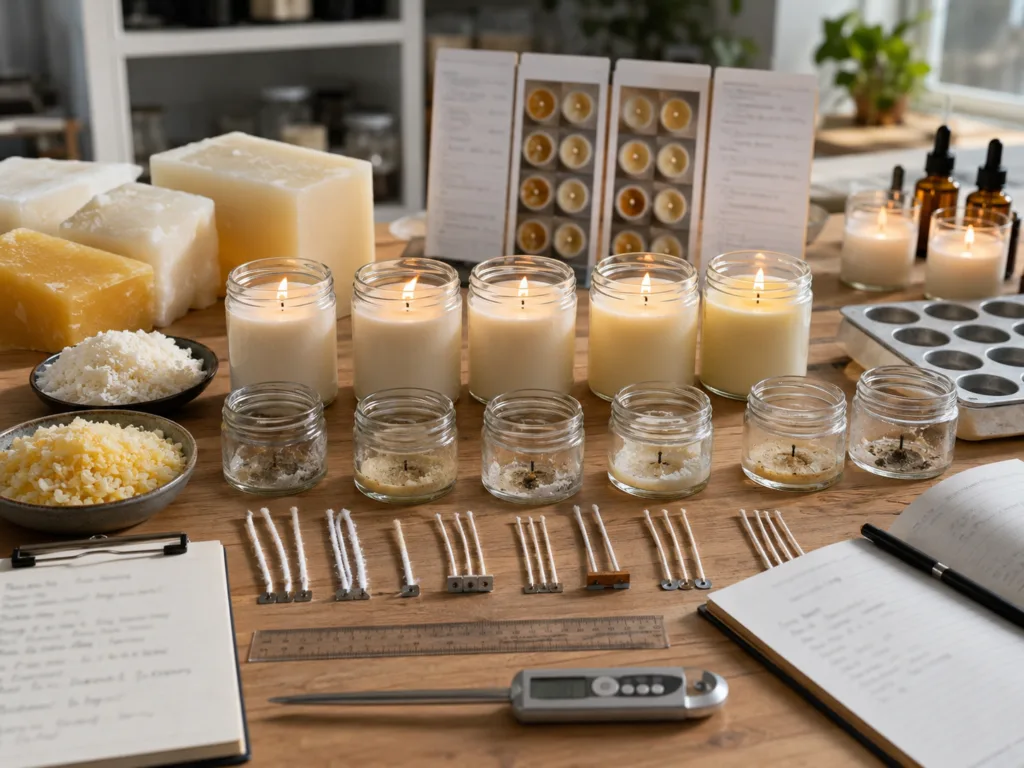
6. Wick Testing: The Small Detail That Controls Performance
The wick may look like a small component, but it controls much of the candle’s performance. A wrong wick can cause tunneling, excessive flame, weak melt pool, smoking, overheating or poor fragrance release.
B2B buyers should never approve a candle based only on appearance. A candle needs burn testing.
During wick testing, the supplier should evaluate:
- Flame height
- Melt pool diameter
- Container temperature
- Smoke level
- Wax consumption
- Burn time
- Scent release
- Tunneling or mushrooming
- Safety performance
The same fragrance and wax may need different wick sizes depending on vessel diameter, wax blend, fragrance load and colorant. A candle in an 8 cm jar may not use the same wick as a candle in a 10 cm jar. Even a small change in vessel size can affect the wick decision.
For wholesale and private label projects, wick testing should happen during the sample stage, not after mass production. This protects the buyer from quality complaints, returns and brand damage.
7. Vessel Choice: Glass, Tin, Ceramic, Concrete or Wood
The vessel is part of the candle’s identity. It affects perceived value, cost, shipping weight, packaging structure and safety testing.
Glass Jars
Glass is the most common choice for scented candles. It is versatile, suitable for retail, easy to decorate and available in many shapes, colors and finishes. Frosted glass, amber glass, clear glass and painted glass can support different brand styles.
Tin Containers
Tin candles are lightweight, durable and practical for travel candles, promotional gifts and price-sensitive projects. They are usually easier to ship than heavy glass jars.
Ceramic Vessels
Ceramic vessels look premium and reusable, but they often have higher MOQ, higher cost and more complicated development. For small orders, ceramic customization may not be practical unless the buyer accepts existing stock options.
Concrete Vessels
Concrete candles have a modern, architectural look. They suit minimalist, luxury or design-led brands. However, buyers should check sealing, oil absorption and weight.
Wood Vessels
Wood vessels can look warm and natural, but they require special safety consideration. Direct wax filling into wood is risky unless the structure, inner liner or coating has been properly tested. For commercial projects, safety testing is essential.
The best vessel is not only beautiful. It must be safe, scalable and suitable for the buyer’s budget and MOQ.
8. Candle Size, Burn Time and Retail Price Planning
A candle’s size affects almost every commercial decision. Larger candles have higher perceived value but also higher wax cost, vessel cost, shipping cost and breakage risk. Smaller candles are easier to sell in sets, but they may have lower margins if packaging cost is high.
Common B2B candle formats include:
- 60g to 90g mini candles for gift sets and sampling
- 120g to 180g candles for retail entry-level products
- 200g to 250g candles for standard home fragrance lines
- 300g and above for premium jar candles
- Taper candles and pillar candles for decorative or ceremonial use
- Wax melts for fragrance-only home use
Buyers should plan candle size together with target retail price. A candle that costs too much to produce may not work if the target customer expects a lower shelf price. On the other hand, a candle that is too small may feel weak for luxury branding.
For wholesale projects, it is useful to build a collection with multiple sizes: one entry product, one standard retail product and one giftable premium product.
9. Packaging: What Makes a Candle Retail-Ready
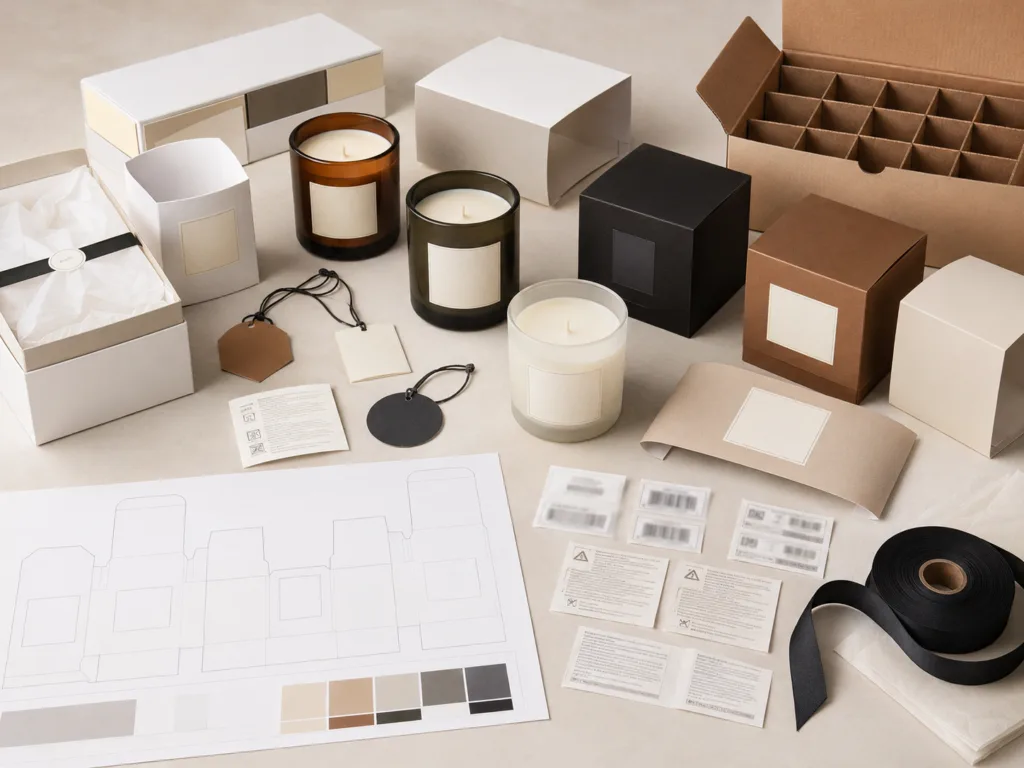
Packaging is not decoration. In B2B candle sourcing, packaging is part of the product system.
Retail-ready candle packaging may include:
- Front label
- Bottom warning label
- Dust cover
- Lid
- Individual box
- Gift box
- Belly band
- Hang tag
- Barcode sticker
- Carton mark
- Inner dividers
- Export carton
For private label projects, packaging should communicate brand value quickly. A good candle box should protect the product, present the brand clearly and support retail display or online photography.
For gift projects, packaging may need a stronger unboxing effect. Rigid boxes, sleeve boxes, magnetic boxes, ribbon details or custom inserts can make the candle feel more premium.
However, buyers should remember that packaging increases cost and lead time. Custom boxes usually require separate sampling and printing approval. If the buyer is working under a tight deadline, stock packaging with custom labels may be more practical.
10. Compliance and Documentation for Export Markets
Mature B2B buyers care about compliance because they are responsible for selling the product in their market.
Depending on the destination and sales channel, buyers may need:
- MSDS or SDS documents
- IFRA-related fragrance information
- Allergen information where applicable
- Warning labels
- Ingredient or material information
- Country-of-origin marking
- Carton marks
- Packing list
- Commercial invoice
- Export documents
- Retail barcode labels
For North American and European markets, warning labels and documentation are especially important. Large retailers, importers and distributors often require clear product information before approval.
A supplier who cannot provide basic documentation may create problems later, even if the unit price looks attractive. The best scented candle supplier should understand export requirements and communicate clearly before production.
At Circe Home, we support export-ready candle projects with documentation preparation, packaging communication and production coordination for international buyers.
11. MOQ and Bulk Order Strategy
MOQ is one of the biggest differences between hobby-level candle buying and serious B2B sourcing.
Small buyers often ask for 30, 50 or 100 pieces with full customization. In real manufacturing, this is usually not efficient. Custom fragrance, custom vessel, custom box, custom label and production setup all require time and cost. Very low quantities may lead to high unit prices or limited customization options.
For mature buyers, MOQ is not only a barrier. It is a planning tool.
A serious buyer should consider:
- How many SKUs to launch
- Quantity per fragrance
- Quantity per vessel color
- Seasonal sales forecast
- Reorder plan
- Warehouse capacity
- Retail launch date
- Budget for sampling and packaging
For private label scented candles, MOQ often depends on the level of customization. Stock jars with custom labels may allow lower MOQ. Fully custom vessels, custom molds or custom packaging usually require higher MOQ.
The best approach is to match customization depth with order volume. If the buyer is testing a new market, start with existing vessel options and custom labels. If the buyer has confirmed demand, then move into custom molds, custom colors or exclusive packaging.
12. Sampling and Approval Process
A professional candle project should not move directly from idea to mass production. Sampling protects both buyer and supplier.
A complete sample approval process may include:
Fragrance Sample
The buyer evaluates scent direction, cold throw and general market fit.
Candle Sample
The supplier produces the fragrance in the selected wax and vessel for real performance testing.
Burn Test
The candle is burned to check wick performance, melt pool, scent throw, smoke level and safety.
Packaging Sample
Labels, boxes and inserts are checked for color, material, size and brand accuracy.
Pre-Production Sample
Before mass production, the final approved version is confirmed.
For B2B buyers, skipping sampling may save time at the beginning but create bigger risks later. The cost of correcting a full production order is much higher than adjusting samples.
13. Sustainability and Natural Fragrance Positioning
Sustainability is important, but buyers need to use accurate claims.
Eco-conscious candle development may include:
- Soy wax or plant-based wax blends
- Beeswax blends
- Recyclable glass jars
- Reusable vessels
- Paper packaging
- Reduced plastic
- FSC-style paper options where available
- Minimalist packaging
- Refillable candle concepts
Natural fragrance positioning should be handled carefully. Essential oils can sound attractive, but they do not always perform well in candles. Some essential oils have weak hot throw, poor stability or higher cost. Fragrance oils can be designed for candle burning performance and may come with documentation.
The best scented candle for a natural brand should balance honesty, safety, scent performance and cost. Buyers should avoid vague claims if they cannot be supported.
Circe Home can help buyers compare fragrance options and choose a realistic direction for natural, eco-friendly or premium home fragrance collections.
14. Shipping, Warehousing and Lead Time
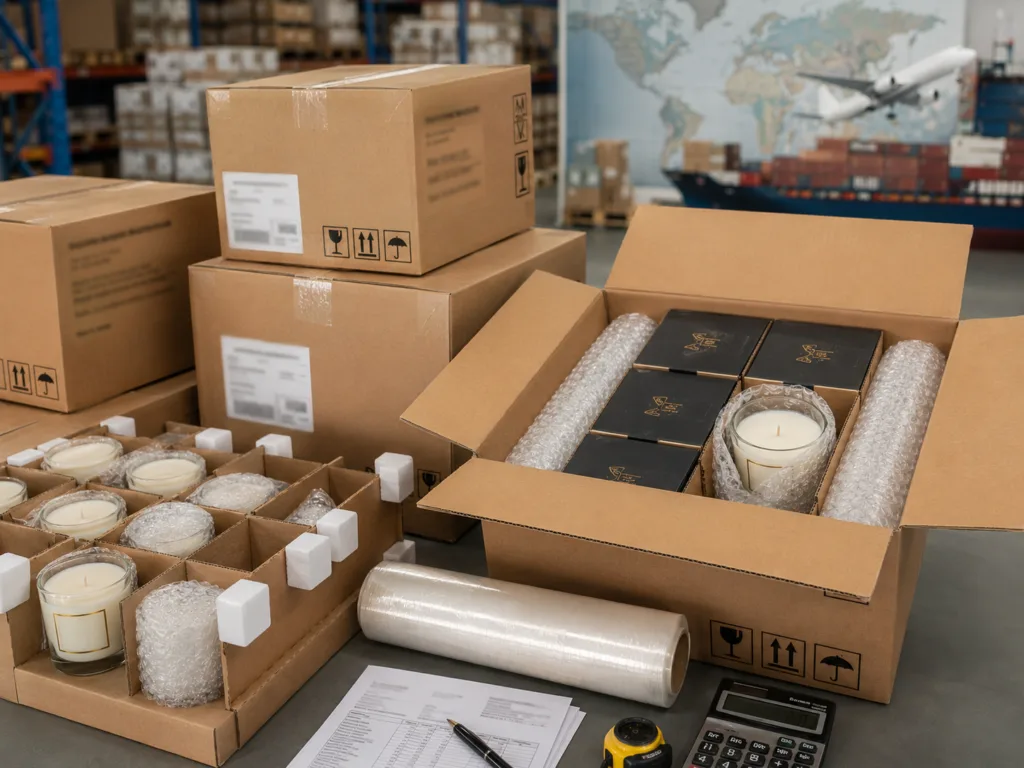
Candles are heavy, fragile and temperature-sensitive. Logistics planning is therefore part of product development.
A buyer should consider:
- Carton size
- Gross weight
- Inner protection
- Breakage risk
- Heat exposure
- Shipping method
- Customs documentation
- Delivery deadline
- Seasonal launch timing
- Warehouse or distribution requirements
For large wholesale or retail orders, carton packing should be confirmed before production. A beautiful candle with weak export packing can arrive damaged and create loss for both sides.
Lead time also matters. Custom fragrance, custom packaging and bulk production cannot always be rushed. Buyers planning Christmas or holiday collections should start development months in advance.
Circe Home supports B2B buyers with production scheduling, export packing communication and shipping coordination for international projects.
15. Supplier Evaluation: How to Choose a Reliable Candle Manufacturer
The best scented candle project depends heavily on the supplier. A low unit price is not enough.
A reliable candle manufacturer should offer:
- Clear MOQ and pricing structure
- Fragrance development support
- Wax and wick testing
- Packaging customization
- Export packing experience
- Documentation support
- Stable communication
- Realistic lead time
- Sample approval process
- Quality control before shipment
Buyers should be cautious if a supplier says yes to everything without checking technical details. Candle manufacturing involves fragrance chemistry, wax behavior, vessel safety, packaging accuracy and shipping protection. A good supplier will ask questions before quoting.
Professional questions may include:
- What is your target quantity?
- What market will you sell to?
- Do you need private label packaging?
- What vessel size do you prefer?
- What fragrance direction do you want?
- Do you need MSDS or IFRA-related information?
- What is your target retail price?
- Do you have a launch deadline?
These questions are not delays. They are part of responsible product development.
16. How Circe Home Supports Wholesale, Retail and Private Label Projects
Circe Home works with international buyers who need custom scented candles for wholesale, retail, hospitality, gifting and private label collections.
Our development support can include:
- Custom fragrance selection and adjustment
- Soy wax, beeswax blend and other wax options
- Glass jar, tin, ceramic-look and gift candle solutions
- Private label logo and packaging customization
- Retail-ready label and box development
- Gift set planning
- Sample development before bulk production
- Export packing and shipping coordination
- Documentation support for international buyers
We understand that mature buyers are not only purchasing candles. They are building a sellable product line. That means every detail must work together: scent, vessel, wax, wick, box, label, carton, MOQ, lead time and final delivery.
For buyers in North America, Europe and Oceania, Circe Home can support custom scented candle projects with a practical manufacturing approach, competitive pricing and export-ready production planning.
17. Conclusion: The Best Scented Candle Is the One Built for Your Market
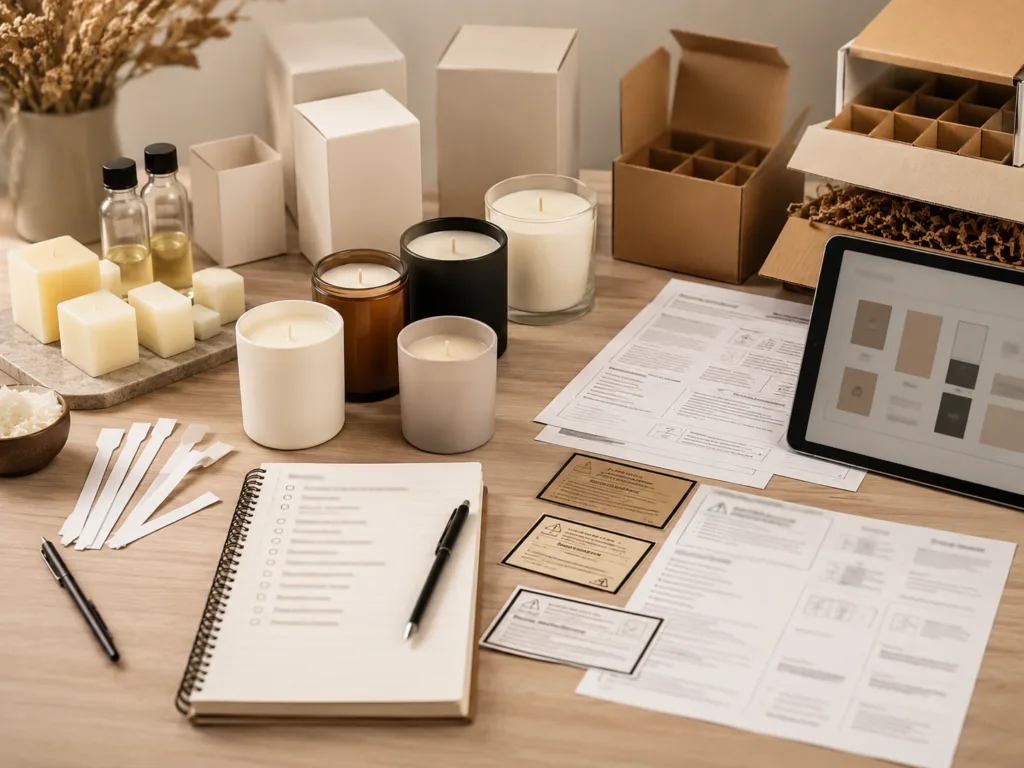
The best scented candle is not the same for every buyer. A candle that works for a luxury boutique may not work for a hotel group. A candle designed for corporate gifting may not be right for mass retail. A small-batch natural candle may not be suitable for a large wholesale program.
For B2B buyers, the best scented candle should meet five standards:
It fits the target customer.
It performs well in fragrance and burning.
It looks retail-ready.
It can be produced at a realistic MOQ and cost.
It is supported by a reliable supplier.
Before placing a bulk order, buyers should evaluate fragrance, wax, wick, vessel, packaging, compliance, sampling, MOQ and shipping. This process helps avoid weak scent throw, unstable burning, packaging mistakes, unrealistic pricing and delivery delays.
If you are developing scented candles for wholesale, retail, hotel amenities, corporate gifts or private label collections, Circe Home can help you turn a fragrance idea into a complete export-ready product.
Contact Circe Home to discuss your next scented candle project, request fragrance options and explore custom packaging solutions for bulk orders.
FAQ
1. What is the best scented candle for wholesale buyers?
The best scented candle for wholesale buyers is one that offers stable fragrance performance, safe burning, attractive packaging, realistic MOQ and reliable repeat production. Wholesale buyers should evaluate wax, wick, vessel, packaging and supplier capability before placing bulk orders.
2. Can I customize scented candles for my private label brand?
Yes. Private label scented candles can usually be customized with fragrance, wax type, vessel, label, box, lid, gift packaging and carton marks. The available customization depends on order quantity, budget, lead time and supplier capability.
3. What should B2B buyers test before ordering scented candles in bulk?
B2B buyers should test cold throw, hot throw, wick performance, burn time, smoke level, vessel safety, label accuracy and packaging structure. A sample approval process helps reduce risks before mass production.
4. What MOQ is common for custom scented candles?
MOQ depends on the customization level. Stock vessels with custom labels may support lower MOQ, while custom molds, custom packaging or exclusive fragrance development usually require higher MOQ. Mature buyers should match customization depth with realistic order volume.