
Introduction
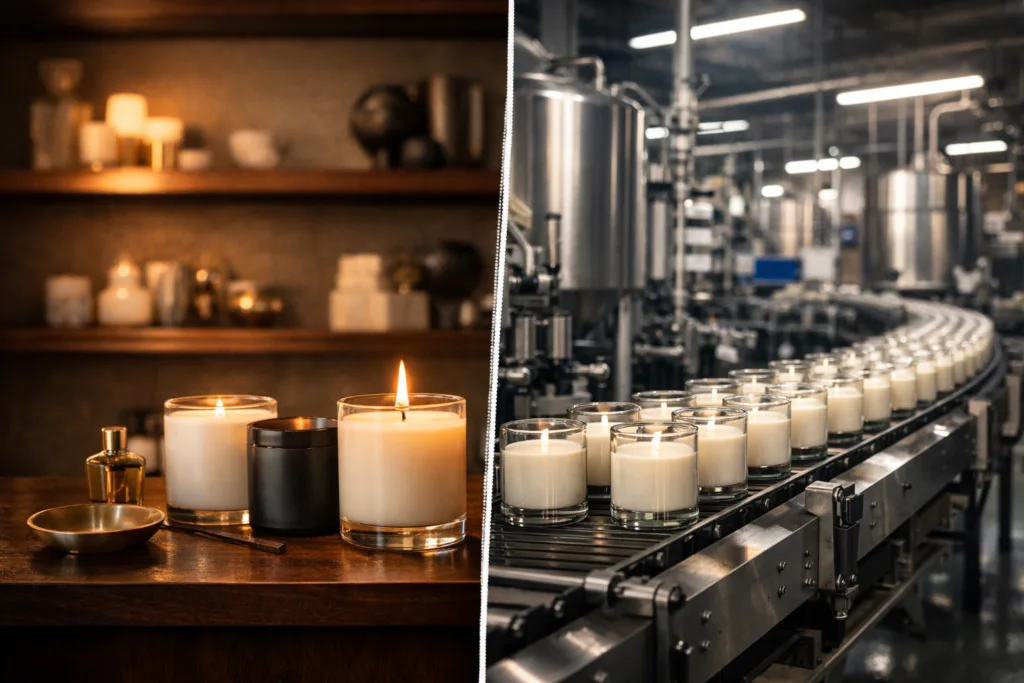
Open with the contrast between what shoppers see and what actually happens behind the scenes.
Suggested direction:
Retail brands are often judged by beautiful packaging, product quality, and consistent stock availability. But in many cases, those strengths are not created by the brand alone. Behind every polished launch, replenishment cycle, and seasonal collection, there is usually a manufacturer solving problems the end customer never sees.
Possible angle sentence:
A successful retail brand is rarely supported by branding alone. It is often held up by a supply chain system working quietly in the background.
The introduction should frame manufacturers not as anonymous factories, but as operational partners that influence product quality, scalability, speed, packaging, margins, and long-term growth.
1. They Help Shape the Product Before It Exists
Main angle
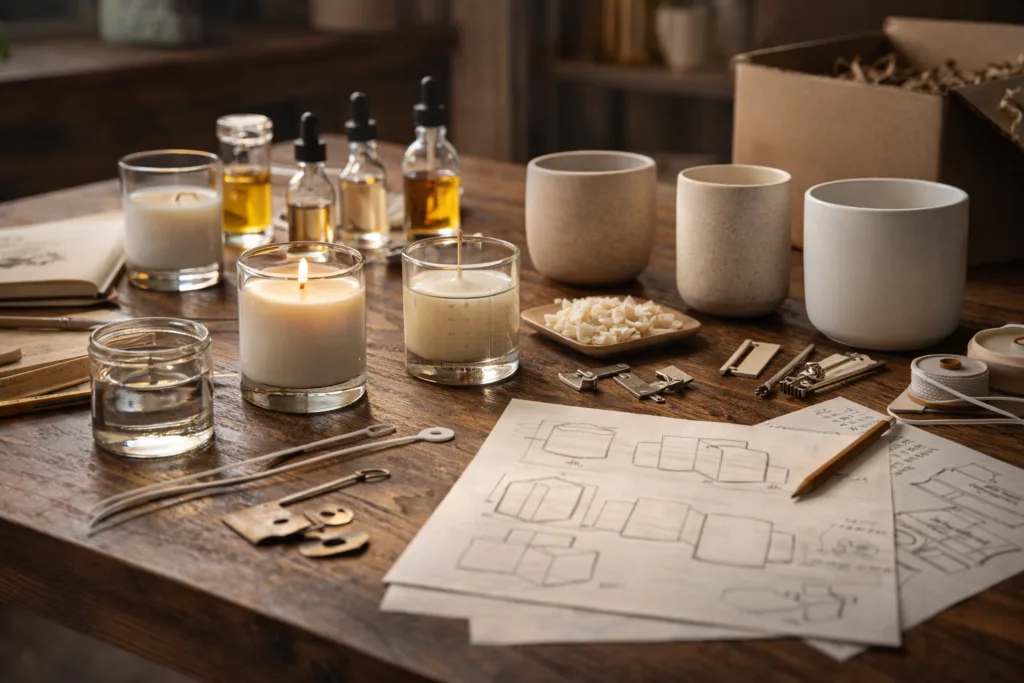
Many retailers assume product development starts inside the brand, but in reality, manufacturers often help turn rough ideas into workable products.
Points to cover
- Translating inspiration into feasible products
- Recommending jar sizes, candle dimensions, wax types, and wick options
- Matching products to price targets and retail positioning
- Advising on fragrance load, burn time, and vessel compatibility
- Helping avoid expensive design or performance mistakes early on
Industry examples to weave in
- A boutique brand may know it wants a “luxury candle,” but not know the right vessel thickness, wax blend, or fill weight.
- A supplier can guide decisions that affect both performance and perceived value.
Natural keyword insertion
- custom candle development
- candle size
- candle dimension
- candle vessel sourcing
2. They Often Guide Scent Development More Than People Realize
Main angle
Retailers may have a scent direction in mind, but manufacturers often provide the fragrance library, compliance guidance, and formulation practicality.
Points to cover
- Access to existing fragrance libraries
- Scent matching or inspired fragrance development
- Guidance on hot throw and cold throw expectations
- Advising which fragrance concepts work commercially in different markets
- Compliance support such as IFRA-related fragrance documentation
Insight angle
A brand may choose the scent story, but the manufacturer often determines whether that scent can be produced consistently, safely, and at scale.
Natural keyword insertion
- custom scent candles
- fragrance oil candles
- candle fragrance development
3. They Build Packaging Systems, Not Just Boxes
Main angle
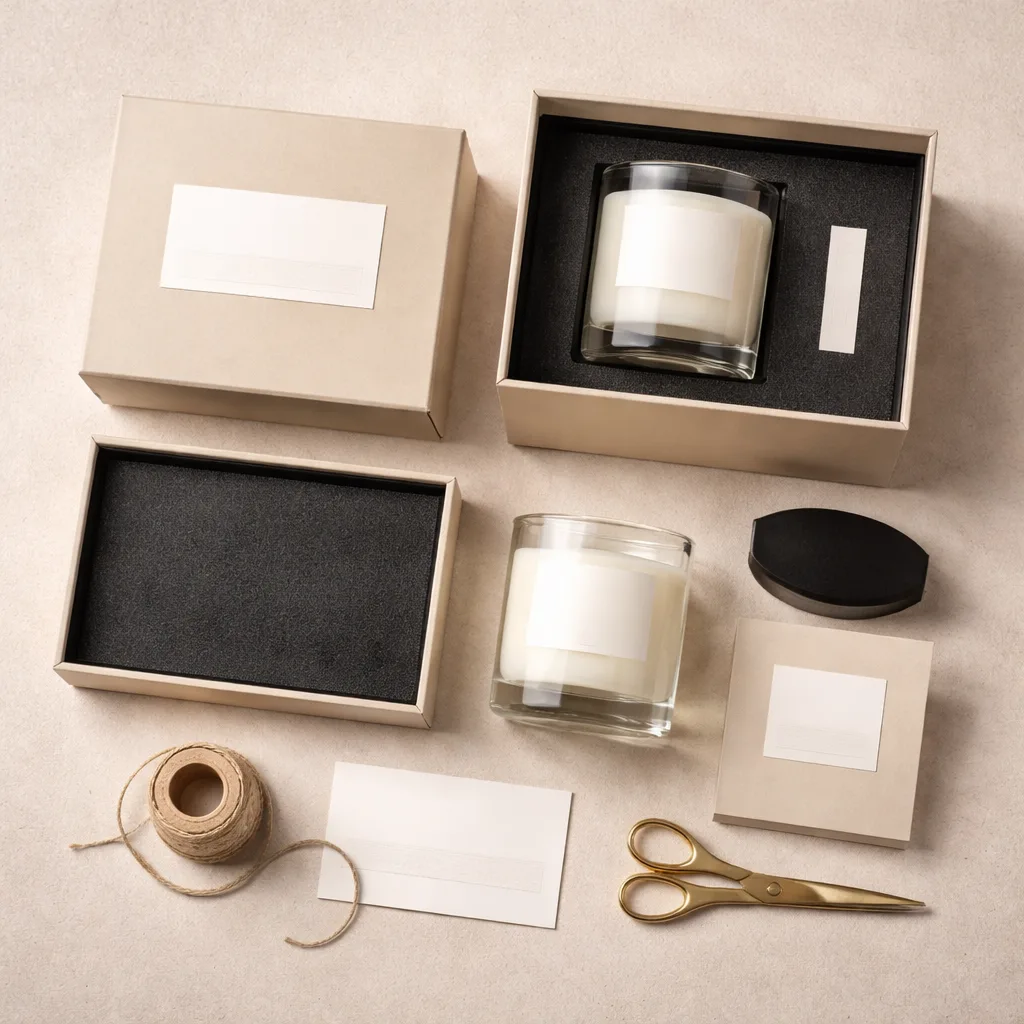
Packaging is not only a visual decision. It is a structural, logistical, and cost-management system.
Points to cover
- Difference between rigid boxes, folding cartons, mailer boxes, and inserts
- Protection for fragile candle jars during domestic and international shipping
- How packaging influences unboxing, gifting, and shelf display
- Matching packaging format to retailer channel: boutique shelf, e-commerce shipment, gift set, subscription box
- Balancing premium appearance with packing efficiency and freight cost
Insight angle
A strong manufacturer does not simply ask what box the buyer wants. They help engineer a packaging format that can actually survive transport, align with margin goals, and support brand presentation.
Natural keyword insertion
- candle gift set packaging
- private label packaging
- custom candle box
4. They Use MOQ to Protect Efficiency, Quality, and Margin
Main angle
MOQ is often misunderstood as a barrier, but in many cases it protects production consistency and commercial viability for both sides.
Points to cover
- Why custom color, packaging, ceramic vessels, and printing require minimum volume
- Why very low quantities create inefficiency and inconsistent costs
- Difference between standard stock components and fully customized development
- How MOQ helps brands avoid unstable repeat pricing later
- Why serious product launches benefit from a more realistic volume strategy
Insight angle
MOQ is not only about factory convenience. It also helps retailers avoid building a brand on a fragile supply structure.
Natural keyword insertion
- why manufacturers require MOQ
- custom candle MOQ
- private label MOQ
5. They Quietly Manage Product Consistency Across Batches
Main angle
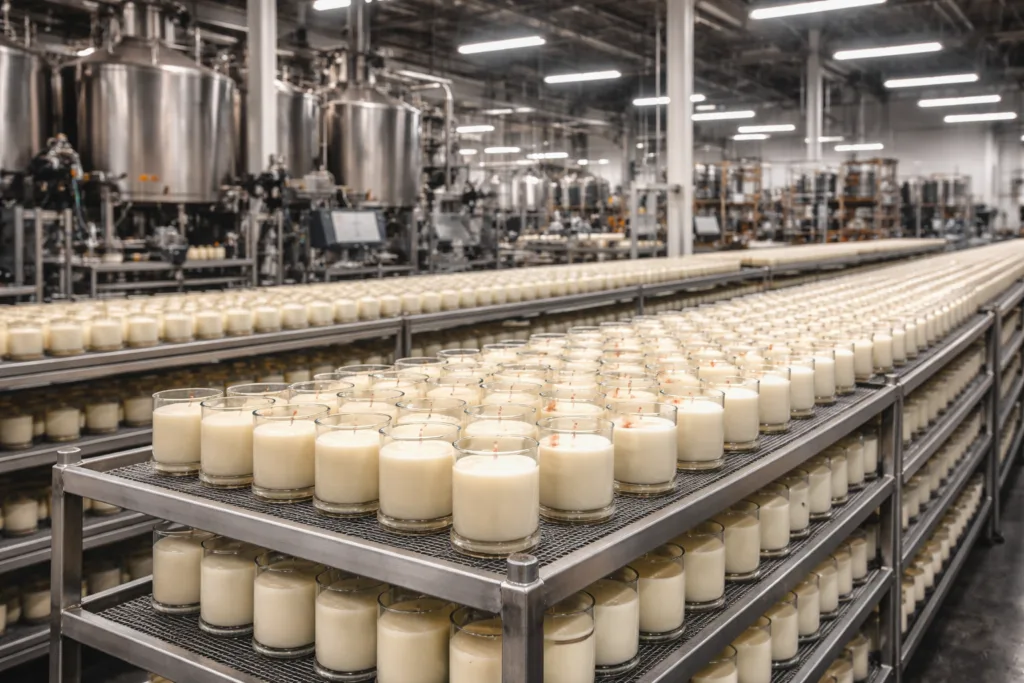
Retailers care deeply about consistency, but that consistency usually comes from factory-side process control.
Points to cover
- Color matching and batch stability
- Fragrance consistency over repeat orders
- Burn performance and wick testing
- Fill weight accuracy
- Surface finish, label alignment, and packaging quality checks
- Why retail trust depends on consistency, not just product design
Insight angle
Customers may praise the brand for quality, but much of that quality depends on the manufacturer’s ability to repeat the same standard over and over.
Natural keyword insertion
- candle quality control
- candle manufacturing process
- consistent candle production
6. They Help Retailers Plan Inventory and Seasonal Timing
Main angle
One of the most overlooked ways manufacturers support retailers is through production planning and timing discipline.
Points to cover
- Forecasting for holiday launches and seasonal spikes
- Advising when to place orders before peak periods
- Managing lead times for custom packaging and accessories
- Preventing stockouts during promotions or gift seasons
- Supporting phased launches with repeatable replenishment planning
Insight angle
Retailers often focus on product selection, but long-term success depends heavily on having the right inventory at the right time.
Natural keyword insertion
- bulk candle supply
- wholesale candle production
- candle lead time
7. They Make Global Shipping and Export Possible
Main angle
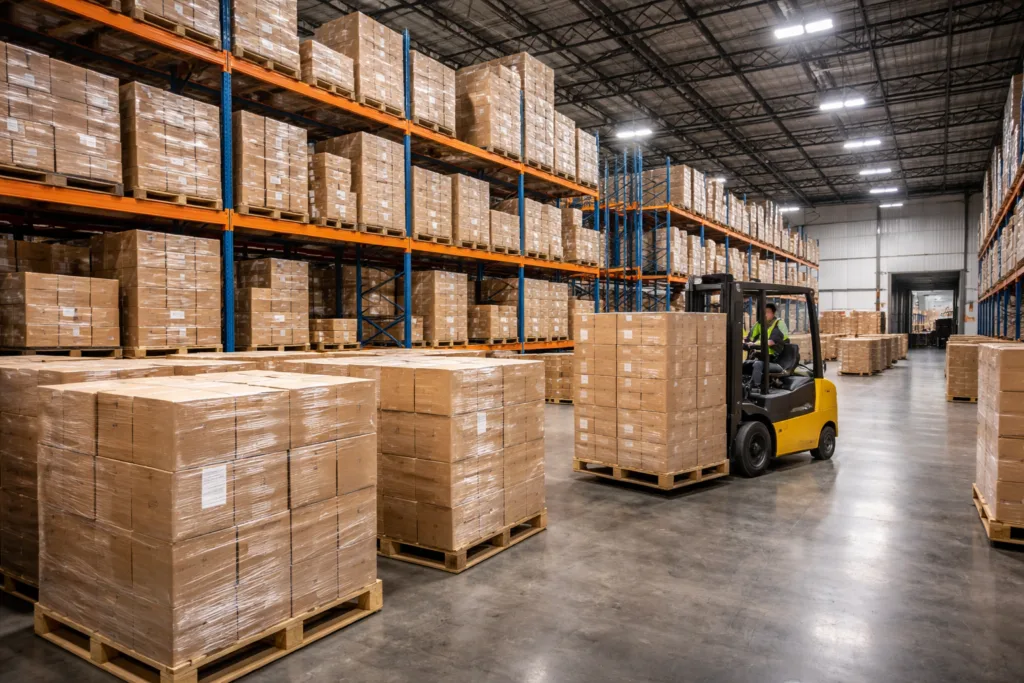
For many growing brands, manufacturers are also the operational bridge between production and international delivery.
Points to cover
- Export carton standards and pallet planning
- Labeling and packing requirements for different regions
- Supporting sea freight, air freight, DDP, DDU, or FOB arrangements
- Reducing breakage risk through packing design
- Coordinating factory output with logistics timelines
Insight angle
A product that looks beautiful in a sample photo still fails if it cannot arrive intact, on time, and at a workable landed cost.
Natural keyword insertion
- global shipping candles
- candle export logistics
- international candle supply
8. They Help Retailers Protect Their Margin Through Private Label
Main angle
Private label is not only about putting a logo on a product. It is a margin strategy and differentiation strategy.
Points to cover
- Why retailers often earn more from private label than resale brands
- Greater control over positioning, packaging, and storytelling
- Ability to create exclusive product lines instead of competing on identical wholesale items
- Better pricing structure over time when product architecture is planned well
- Opportunity to build brand equity through repeatable signature products
Insight angle
The right manufacturer helps a retailer move from simply buying inventory to building a controlled, profitable product line.
Natural keyword insertion
- private label candles
- custom candles with logo
- luxury candle brand
9. They Scale With the Brand Over Time
Main angle
A good manufacturer supports not just the first order, but the brand’s future growth.
Points to cover
- Starting with simpler components, then moving into more customized development
- Transitioning from launch quantities to repeat production
- Expanding into gift sets, wax melts, new sizes, or seasonal editions
- Supporting process improvements as the brand becomes more established
- Why long-term compatibility matters more than finding the absolute lowest initial price
Suggested concluding line for this section
The right manufacturer does not just make your product. It helps determine how far your retail brand can go.
Natural keyword insertion
- scalable candle manufacturing
- long term private label supplier
- candle gift set manufacturer
Conclusion
The conclusion should bring the article back to its main idea: retail brands may own the front-end story, but manufacturers often carry the back-end complexity that makes consistent growth possible.
Suggested direction:
Behind every well-executed retail product is a long list of invisible decisions—materials, timing, testing, packaging, logistics, and repeatability. The strongest manufacturers do much more than fill orders. They quietly reduce risk, improve consistency, protect margins, and make it easier for brands to grow with confidence.
Soft CTA direction:
If you are planning a private label candle collection, a custom candle gift set, or a broader home fragrance line, choosing a manufacturer that supports more than production can make a major difference in how efficiently your brand launches and scales.
Conversion Strategy Inside the Article
This article should not feel salesy, but it should naturally position Circe Home as a knowledgeable manufacturing partner.
Soft conversion points to insert naturally
- product development support
- custom scent and vessel guidance
- custom candles with logo
- candle gift set packaging support
- global shipping coordination
- scalable production for growing brands
Suggested CTA placements
- End of introduction: subtle mention of why supplier choice matters
- After MOQ section: transition from cost to long-term stability
- Near conclusion: mention custom candles, wax melts, and gift sets as expandable categories
Recommended FAQ Section
FAQ 1
How do manufacturers help retail brands beyond production?
Manufacturers often support product development, packaging structure, quality control, inventory planning, compliance, and logistics—not just physical production.
FAQ 2
Why do custom retail products usually require MOQ?
Because custom components such as vessels, packaging, printing, and fragrance development create setup costs and production complexity that become commercially workable at higher volumes.
FAQ 3
Can a manufacturer help a small retail brand launch a candle line?
Yes, many manufacturers can help newer brands start with standard components and gradually move toward more customized products as order volume grows.
FAQ 4
What should retailers look for in a private label manufacturer?
They should look for consistency, communication, packaging support, realistic MOQ structure, quality control, and the ability to scale over time.
FAQ 5
Why is supply chain support important for retail growth?
Because retail success depends on more than product design. It also depends on repeatability, stock timing, landed cost control, and reliable production support.
Internal Linking Suggestions
Link this article naturally to:
- Why Do Manufacturers Require MOQ?
- Candle Gift Set Ideas That Retailers Can Sell All Year
- Jar Candles vs Shaped Candles vs Wax Melts
- Essential Oils vs Fragrance Oils
- How We Helped a Startup Launch Their Candle Line