
 If you are sourcing custom products for the first time, one question appears almost immediately:
Why do manufacturers require minimum order quantities at all?
From the buyer’s side, MOQ can feel like friction. You may only want to test the market, validate a concept, or launch a limited collection. You may be thinking: If I am willing to pay, why can’t a factory just make 100 pieces?
That reaction is understandable, but it misses the real economics of manufacturing.
In serious B2B production, MOQ is not an arbitrary rule, a personality issue, or a tactic designed to pressure customers into buying more. It is a financial threshold built around cost recovery, production efficiency, raw material purchasing, labor planning, supply chain coordination, and commercial risk.
The short version is simple:
Manufacturers require minimum order quantities because below a certain volume, the order no longer works as a factory project.
For large buyers, this matters even more than for small ones. Experienced importers, retail chains, distributors, and private label operators do not just ask whether MOQ is “high” or “low.” They ask a more useful question:
What cost structure sits behind that MOQ, and how does volume change the business case?
That is the real conversation.
This article breaks down the business logic behind minimum order quantities in practical terms. We will look at what MOQ really means, why fully custom products always require higher volume, how supply chain costs stack up behind the scenes, and why serious buyers often get better margins, more stable quality, and stronger factory support by planning for larger, commercially viable runs.
MOQ Is Not a Sales Trick. It Is a Cost Structure.
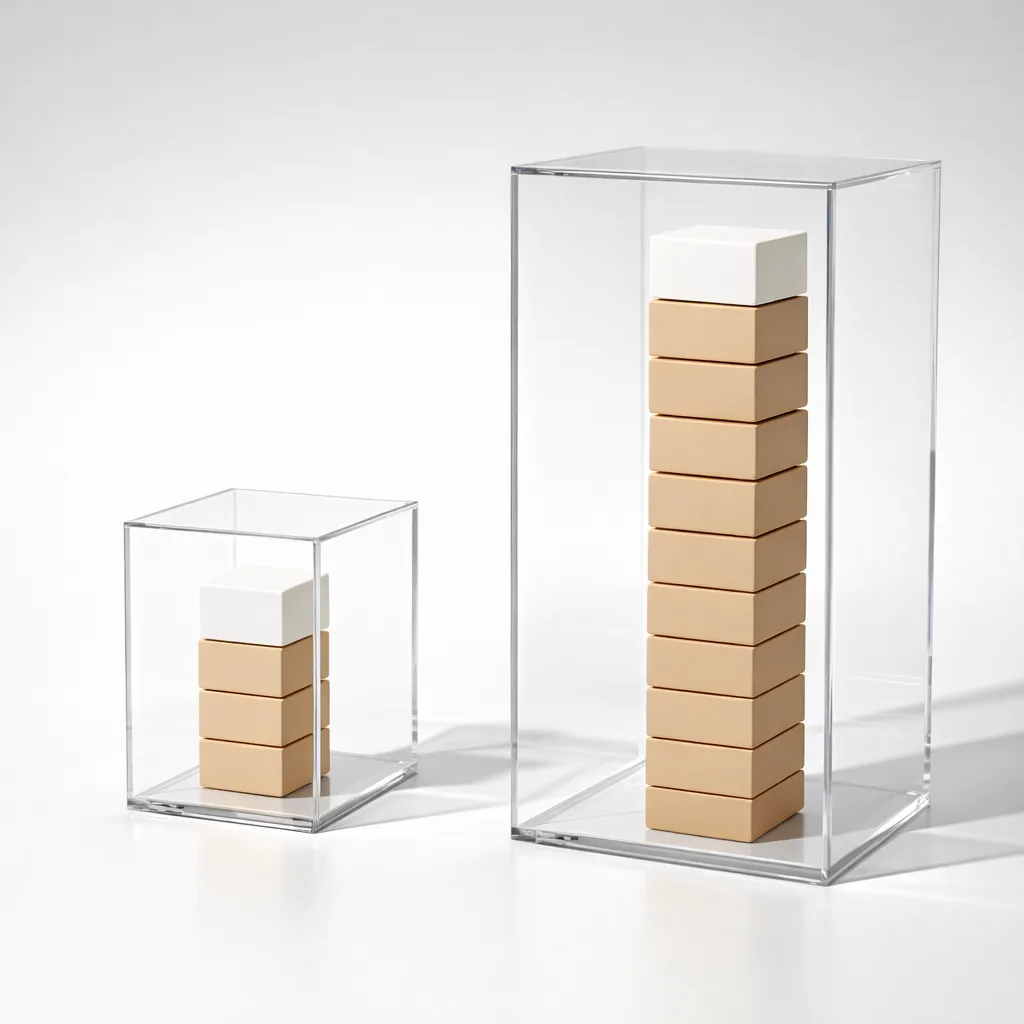 The biggest misunderstanding around MOQ is the belief that it exists mainly to help factories “force” bigger orders.
In reality, MOQ is usually the opposite of a sales tactic. It is the minimum volume at which the supplier can produce an order without damaging efficiency, margin, or operating stability.
A factory does not make money simply because an order exists. It makes money only when that order fits a workable production model.
Every manufacturing project includes two broad cost categories:
- Fixed costs – costs that occur whether you make 100 units or 10,000 units.
- Variable costs – costs that rise more directly with quantity, such as wax, fragrance oil, packaging material, labor per piece, and shipping carton consumption.
MOQ exists because fixed costs must be spread across enough units to make the final product commercially realistic.
Here is the simplest version of the math:
Unit cost = Fixed costs / quantity + Variable cost per unit
When quantity is too low, fixed costs are carried by too few units. That pushes the unit price up sharply.
For example, imagine a custom candle project with the following pre-production and setup costs:
- packaging setup and print preparation
- label proofing and approval
- fragrance testing and sample adjustment
- production line setup
- raw material purchasing coordination
- QC planning and factory scheduling
Even if none of these line items look dramatic on their own, together they can create a meaningful upfront burden. Spread that across 10,000 units, and the impact per unit is manageable. Spread it across 200 units, and suddenly the project becomes expensive, slow, and unattractive for both buyer and supplier.
This is why MOQ is fundamentally a cost allocation tool.
It tells you the point at which a project begins to behave like real production instead of a one-off experiment.
Why Small Orders Often Cost More Than Buyers Expect
Many buyers assume that ordering fewer units should reduce their financial risk. On the surface, that sounds rational: spend less cash, buy less inventory, test demand, then reorder later.
The problem is that manufacturing does not behave like retail.
A retailer can sell one item from stock with very little disruption. A factory cannot rebuild its workflow around tiny custom runs without absorbing costs that do not disappear just because the order is small.
A small order can actually be disproportionately expensive because it carries:
- the same communication workload as a larger order
- the same engineering or development touchpoints
- the same line setup requirements
- the same supplier coordination effort
- the same quality control checkpoints
- the same export documentation process
- the same project management overhead
In some cases, a 300-unit custom order can consume nearly as much operational attention as a 3,000-unit order while generating only a fraction of the revenue.
This is the core reason experienced factories protect MOQ.
They are not trying to reject opportunity. They are trying to avoid using industrial resources on projects that do not make economic sense.
For buyers targeting professional retail, hospitality, gifting, or distribution channels, this distinction matters. If your product must hit a specific margin, retail price point, and presentation standard, then understanding why tiny runs distort cost is essential.
MOQ is often the dividing line between:
- an unstable, overengineered launch that struggles on price
- and a scalable program that can support future replenishment, stable packaging, and predictable margins
The Real Cost Drivers Behind MOQ
To understand why manufacturers require minimum order quantities, you need to look behind the quotation sheet.
MOQ is usually the visible result of several cost layers working together.
1. Raw Material Purchasing Has Its Own Minimums
Factories do not operate in a vacuum. They buy from upstream suppliers, and those suppliers often have their own MOQs.
For example, in a custom candle project, the factory may need to source:
- glass jars or ceramic vessels
- lids
- fragrance oils
- wax blends
- cotton or wooden wicks
- labels
- rigid boxes or folding cartons
- inserts, trays, or protective packaging
- master cartons
Each of those components may come from a different supplier. Each supplier has commercial minimums based on machine time, mold use, material cutting efficiency, print setup, or freight consolidation.
A buyer might ask for 500 finished units, but if the packaging vendor requires 1,000 printed boxes and the vessel supplier requires 2,000 units per colorway, the factory cannot simply ignore those upstream requirements.
This is one of the most important truths in custom manufacturing:
A factory’s MOQ is often a reflection of the supply chain’s MOQ.
That is why projects using standard components usually support lower MOQs than projects built from fully custom parts.
If you select an existing jar, existing lid size, existing carton dimension, and a fragrance from a tested library, the factory may be able to reduce the threshold because less of the supply chain has to restart around your order.
If you request a custom vessel, exclusive mold, new color, new finish, unique insert, private fragrance blend, and custom gift box, the commercial floor rises quickly.
2. Production Line Setup Costs Do Not Vanish at Low Volume
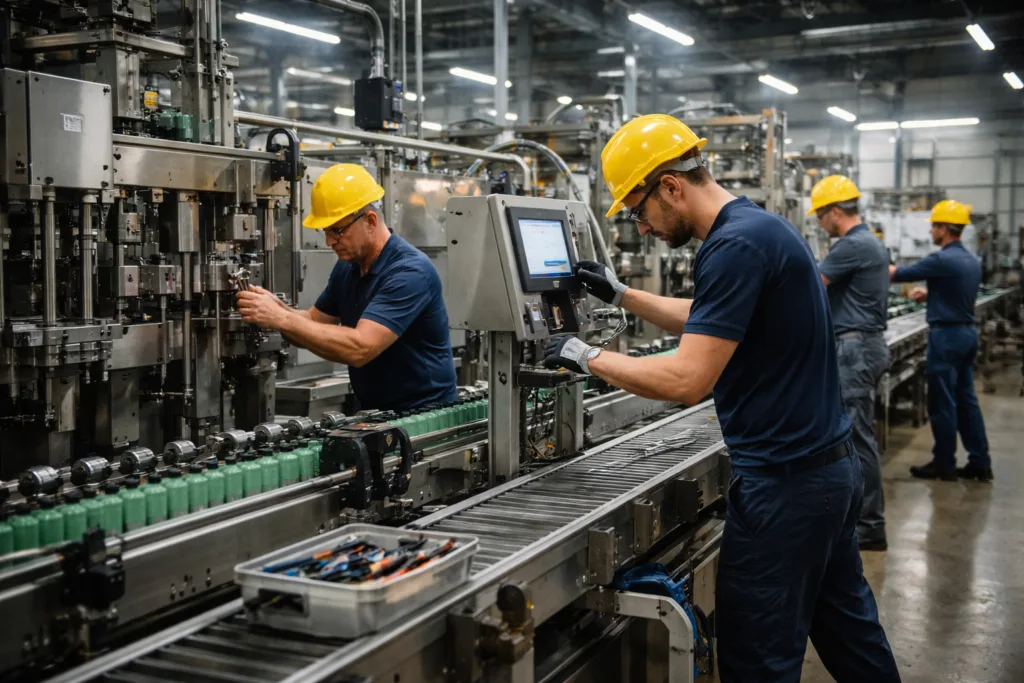 Factories build efficiency through repetition.
Production lines work best when they can process larger batches with fewer interruptions. Every time a line changes from one product to another, there are setup costs:
- machine adjustment
- vessel or packaging calibration
- wax temperature tuning
- fragrance fill ratio checks
- wick centering verification
- burn performance review
- packing method confirmation
- worker instruction and workflow alignment
These steps take time whether the run is 300 pieces or 30,000 pieces.
In low-volume custom production, setup time becomes a large percentage of the total project. That is commercially inefficient.
For buyers, the takeaway is simple:
MOQ protects line efficiency.
Without enough volume, the setup burden consumes too much of the order value.
3. Labor Planning Requires Volume, Not Guesswork
Factories schedule labor in blocks. Workers are assigned to production, packing, labeling, inspection, and warehouse movement according to production plans.
Tiny custom orders create problems because they:
- break line rhythm
- interrupt standard runs
- increase changeover frequency
- add coordination burden across multiple departments
- reduce output per labor hour
A factory cannot sustainably run on constant micro-orders unless it is structured as a workshop with high pricing. Most export manufacturers are built for repeatable batch production, not boutique-scale artisan experimentation.
This is another reason larger buyers often receive better support. Larger programs justify planned labor allocation, process discipline, better throughput, and stronger operational focus.
4. Packaging Economics Strongly Influence MOQ
In many private label projects, packaging is one of the biggest hidden drivers of MOQ.
Buyers often focus on the product itself and underestimate packaging complexity. But custom packaging may require:
- die-line creation
- plate making
- print setup
- foil stamping setup
- embossing/debossing tooling
- insert development
- dimension testing
- drop test adjustments
- assembly planning
Premium packaging looks simple when it is done well. In reality, it can carry meaningful development cost.
For large retail buyers, this is where MOQ often starts to make strategic sense. A rigid box, magnetic closure set, premium label finish, or molded insert rarely performs economically at very low quantities.
If brand presentation matters, larger order volume is not just a factory preference. It is often the only way to make premium packaging commercially efficient.
5. Quality Control Has a Base Cost
Professional manufacturing includes quality control before, during, and after production.
That may include:
- incoming material checks
- color verification
- burn test review
- adhesion testing for labels
- packaging inspection
- finished goods sampling
- carton drop checks
- export loading verification
These processes have a labor cost whether the order is small or large. The smaller the order, the less efficiently QC cost is absorbed.
Large buyers usually understand this well. Stable QC systems do not happen for free. They are supported by scale.
6. Project Management and Communication Carry Real Cost
A custom order is not just a production event. It is a managed project.
Emails, sample revisions, artwork confirmation, quote updates, timeline alignment, shipping coordination, and issue resolution all require skilled labor from the supplier side.
This workload can be significant, especially in export manufacturing where buyers need English communication, documentation clarity, packaging coordination, and commercial problem-solving.
That labor does not disappear because the order is small.
For factories focused on long-term B2B growth, MOQ helps ensure that the management effort invested in a client relationship has a commercially reasonable base.
Why Fully Custom Products Always Require Higher MOQ
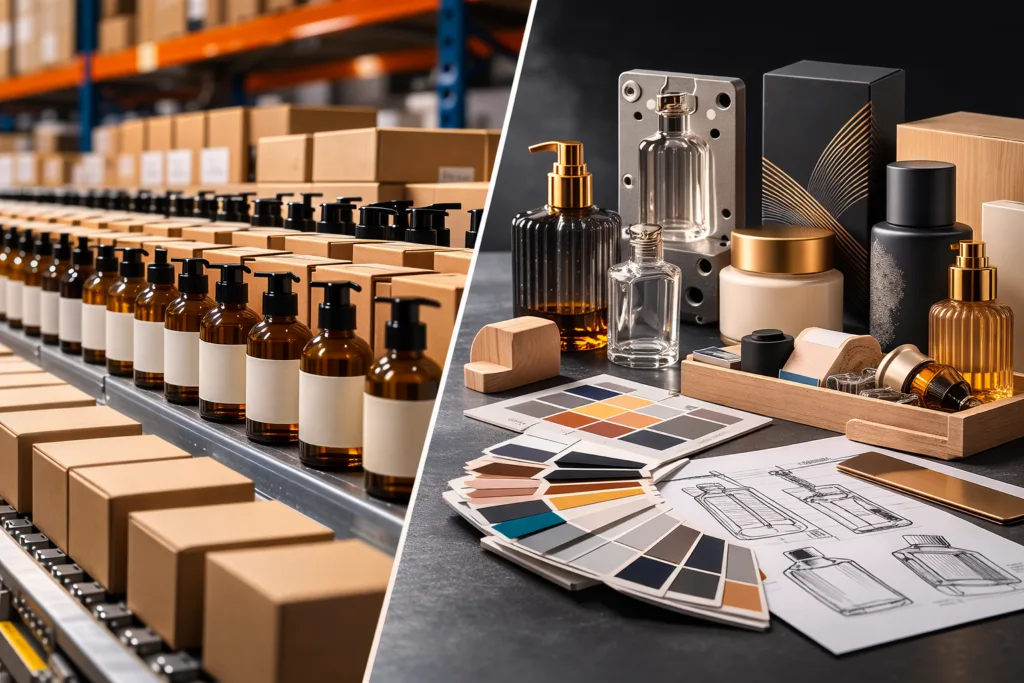 This is where many buyers miscalculate.
They hear that “custom is possible” and assume that means “custom is possible at any volume.”
It is not.
There is a huge difference between:
- semi-custom production using existing infrastructure
- and fully custom production built around unique components
Semi-Custom Production
This usually means the buyer chooses from existing factory options, such as:
- standard jar sizes
- standard lid types
- existing wax systems
- tested fragrance options
- existing packaging dimensions
- logo customization through labels or printed cartons
Because the factory is not rebuilding the entire supply chain, MOQ can often be lower.
Fully Custom Production
This may involve:
- custom vessel shape
- custom mold development
- exclusive fragrance blend
- special wax performance requirements
- custom Pantone color matching
- unique label material or finish
- custom gift box structure
- non-standard insert system
- special compliance or testing requests
Now the project includes development cost, approval cycles, supply chain complexity, and greater risk of unused inventory if the buyer does not reorder.
That is why fully custom projects almost always require a higher MOQ.
The business logic is straightforward:
Fully custom means fewer shared costs, less reuse, more setup, more risk, and more dead-stock exposure.
If a supplier creates custom tooling or purchases custom materials only for one buyer, those assets cannot always be repurposed later. The supplier must recover enough value from the first production run to justify that commitment.
This is especially true for categories such as candles, home fragrance, cosmetics, personal care, and premium gifting, where the perceived simplicity of the final product hides substantial development detail.
For enterprise buyers, the question is not whether custom MOQ feels “high.” The right question is whether the expected sell-through, margin profile, and brand positioning justify a dedicated supply chain model.
That is the commercial lens large buyers should use.
MOQ and Unit Economics: Why Bigger Orders Usually Win
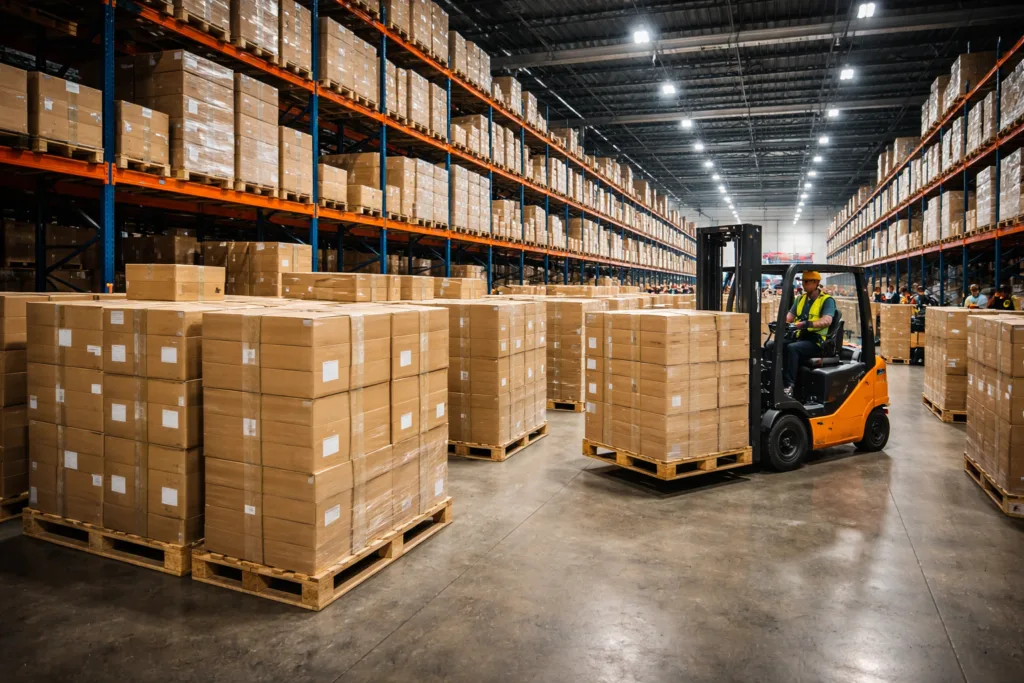 There is a point where chasing a lower MOQ stops reducing risk and starts creating a worse business model.
This is one of the most important ideas in procurement strategy.
Buyers sometimes aim for the smallest possible initial run because they want flexibility. But if the resulting cost structure pushes the product into a weak margin zone, the launch may fail not because demand is weak, but because the unit economics were wrong from the beginning.
Here is what larger order volume often improves:
- lower per-unit packaging cost
- better raw material pricing
- lower development burden per piece
- better freight efficiency
- cleaner warehouse packing ratios
- better quote stability for repeat orders
- stronger attention from the supplier
- easier long-term replenishment planning
In practical terms, a buyer ordering 5,000 units may achieve a noticeably better landed cost than a buyer ordering 1,000 units, even when the product specification is identical.
That difference can reshape the entire retail equation:
- wholesale margin becomes healthier
- distributor pricing becomes more workable
- promotions become possible without destroying profit
- premium packaging becomes feasible
- reordering becomes easier because the launch did not start at a distorted cost base
This is why serious private label programs, hotel groups, large retail accounts, and established importers tend to treat MOQ as part of strategic planning, not as an obstacle.
They know scale buys more than volume. It buys structure.
Why Manufacturers Prefer Large, Stable Buyers
Some buyers wonder why suppliers appear much more flexible when speaking with large accounts.
The answer is not personal. It is structural.
Large, stable buyers are attractive because they reduce uncertainty and increase operational efficiency. They often bring:
- better forecasting
- larger production runs
- stronger repeat potential
- faster approval cycles
- more professional artwork and packaging processes
- better payment reliability
- clearer product roadmaps
From the factory’s perspective, a large buyer is not only purchasing units. They are supporting better production planning.
That makes the supplier more willing to:
- hold raw material positions
- reserve capacity
- negotiate pricing
- support more advanced packaging
- invest in development
- prioritize communication and troubleshooting
This is why enterprise buyers should not frame MOQ as a barrier. They should frame it as a negotiation around program viability.
The stronger your volume story, the more leverage you usually gain on price, development support, lead time planning, and supply continuity.
The Hidden Risk of Forcing MOQ Too Low
There is a popular belief in sourcing that buyers should always push MOQ down as far as possible.
That approach can work in some standard-product scenarios, but in custom manufacturing it often creates downstream problems.
When MOQ is forced too low, one or more of the following usually happens:
- the unit price becomes uncompetitive
- packaging quality is downgraded
- the supplier substitutes easier materials
- lead times become less reliable
- the order receives lower internal priority
- reorders become inconsistent because the first run was not built on a scalable structure
This does not mean buyers should accept every MOQ without discussion. It means they should understand what lowering MOQ actually changes.
Sometimes a lower MOQ is possible only if the specification changes.
For example:
- use a standard vessel instead of a custom mold
- use an existing carton size instead of a new structure
- choose a stock fragrance base rather than a custom blend
- simplify decoration or finishing
- consolidate SKUs for the first run
This is the right way to negotiate MOQ: not by demanding a factory absorb irrational cost, but by redesigning the project to fit a commercially workable model.
That is how experienced buyers protect both brand standards and cost discipline.
How Smart Buyers Approach MOQ Strategically
If you are building a serious private label or OEM program, the goal should not be “the lowest MOQ possible.”
The real goal is:
the lowest-risk MOQ that still supports strong unit economics and scalable execution.
Here are the most effective strategies.
1. Separate Launch Ambition from Supply Chain Reality
Many buyers build product concepts without first validating the production model. The result is a beautiful concept with unworkable cost.
A better approach is to decide early whether your first order is meant to:
- test a concept cheaply
- validate packaging and consumer response
- support a retail rollout
- launch at distributor level
- establish a long-term hero SKU
Each of these goals points to a different MOQ strategy.
2. Start with Semi-Custom, Then Move Toward Full Custom
For many brands, the smartest first move is not full customization. It is semi-custom development with strong branding.
This can still create a premium result while keeping costs grounded.
Later, once sales data supports the move, the buyer can invest in exclusive molds, more advanced packaging, or a dedicated fragrance profile.
3. Consolidate Volume Across Fewer SKUs
One of the biggest mistakes new buyers make is launching too many variations at low volume.
That weakens purchasing power and complicates production.
Larger buyers usually do the opposite: they build volume around core SKUs first.
That concentration improves:
- packaging efficiency
- material purchasing
- production scheduling
- inventory control
- quote leverage
4. Evaluate Landed Cost, Not Just EXW or FOB Price
MOQ discussions often focus narrowly on factory price. But buyers should look at the full landed cost picture.
A slightly higher order quantity can reduce:
- unit production cost
- packaging cost per piece
- carton inefficiency
- freight cost per saleable unit
- replacement risk from damage or poor pack-out
Sometimes the “bigger” order is actually the more conservative commercial decision once total economics are calculated.
5. Build a Reorder Plan Before the First Production Run
Factories become more flexible when they believe the first order is the start of a program, not a one-time experiment.
A clear reorder path can improve negotiation because it shows volume continuity.
Large buyers understand this instinctively. They do not only buy production. They build supply relationships.
MOQ in Premium Private Label and Custom Candle Manufacturing
MOQ is especially important in candle manufacturing because the product seems simple from the outside but is operationally layered.
A premium custom candle order may involve:
- fragrance oil compatibility
- wax formula behavior
- wick matching
- jar tolerance consistency
- fill weight accuracy
- surface finish control
- label adhesion
- carton fit
- insert protection
- burn test performance
- shipping durability
Once packaging enters the picture, complexity rises further. A gift-ready candle collection for retail, hospitality, subscription, or seasonal promotions is not just a wax fill project. It is a coordinated packaging and logistics project.
This is where larger clients gain a real advantage.
A buyer placing a commercially meaningful order can justify:
- tighter cost engineering
- more consistent material sourcing
- stronger packaging execution
- more reliable QC structure
- better freight planning
- smoother repeat ordering
In contrast, ultra-low-volume custom requests often create an awkward middle ground: too custom to be efficient, too small to be economical.
That is why large-volume buyers typically receive the best manufacturing outcome.
Not because factories like them more, but because the project structure supports better results.
What Buyers Should Ask Instead of “Can You Lower MOQ?”
A better sourcing conversation starts with smarter questions.
Instead of only asking whether MOQ can be reduced, ask:
- Which part of the specification is driving the MOQ?
- Is the MOQ coming from the vessel, packaging, fragrance, or overall production setup?
- If we keep the branding but simplify one component, how much can the MOQ change?
- What order quantity gives the best balance between unit cost and launch risk?
- Which version of this product would be most scalable for repeat orders?
These questions move the discussion away from friction and toward engineering logic.
That is exactly how professional buyers operate.
The strongest procurement teams understand that MOQ is not just a number on a quote. It is a map of the project’s cost structure.
Final Thoughts: MOQ Is the Price of Industrial Efficiency
So, why do manufacturers require minimum order quantities?
Because real manufacturing depends on economic thresholds.
MOQ protects the factory from absorbing setup, labor, supply chain, packaging, and management costs that low-volume custom orders cannot reasonably cover. More importantly, it protects the buyer from launching with a distorted cost structure that damages margin, pricing flexibility, and long-term scalability.
For serious buyers, MOQ should not be viewed as a wall. It should be viewed as a signal.
It tells you:
- how custom your project really is
- how much of the supply chain must be built around your order
- whether your volume plan matches your brand ambition
- and whether your launch economics are strong enough for sustainable growth
The most successful B2B buyers do not fight manufacturing logic. They use it.
They align design ambition, packaging decisions, launch strategy, and order volume into a commercially sound plan. That is where better pricing, stronger execution, and healthier margins begin.
If your business is targeting premium retail, wholesale distribution, hotel programs, corporate gifting, or private label growth, the right MOQ is not the lowest number possible.
It is the quantity that turns your product from an expensive idea into a scalable business.
FAQs
1. Why do manufacturers require minimum order quantities instead of producing any quantity a buyer requests?
Manufacturers require minimum order quantities because production includes fixed costs such as setup, sourcing coordination, packaging preparation, labor planning, and quality control. If order volume is too low, those costs cannot be spread efficiently, which makes the project commercially weak.
2. Why is MOQ usually higher for fully custom products?
Fully custom products require more dedicated resources, including custom molds, special materials, exclusive packaging, unique testing, and greater supply chain coordination. Because those costs cannot usually be shared with other orders, factories need a higher MOQ to make the project viable.
3. Can MOQ be reduced without damaging the business case?
Sometimes yes, but usually only by changing the specification. Buyers may reduce MOQ by choosing standard components, simplifying packaging, consolidating SKUs, or starting with semi-custom production instead of full custom development.