
Understanding Custom Candle Manufacturing: Key OEM/ODM Concepts
Service models shape your production options. OEM (Original Equipment Manufacturer) means you specify design, formula, and branding—your factory executes. ODM (Original Design Manufacturing) provides end-to-end design, formulation, and packaging from the manufacturer, customized but based on proven templates. Circe Home, for example, offers both: brands can submit their own concepts for OEM or select from curated blends and packaging via ODM. The choice impacts timelines, costs, and technical flexibility.
Container Selection: Material, Form and Performance
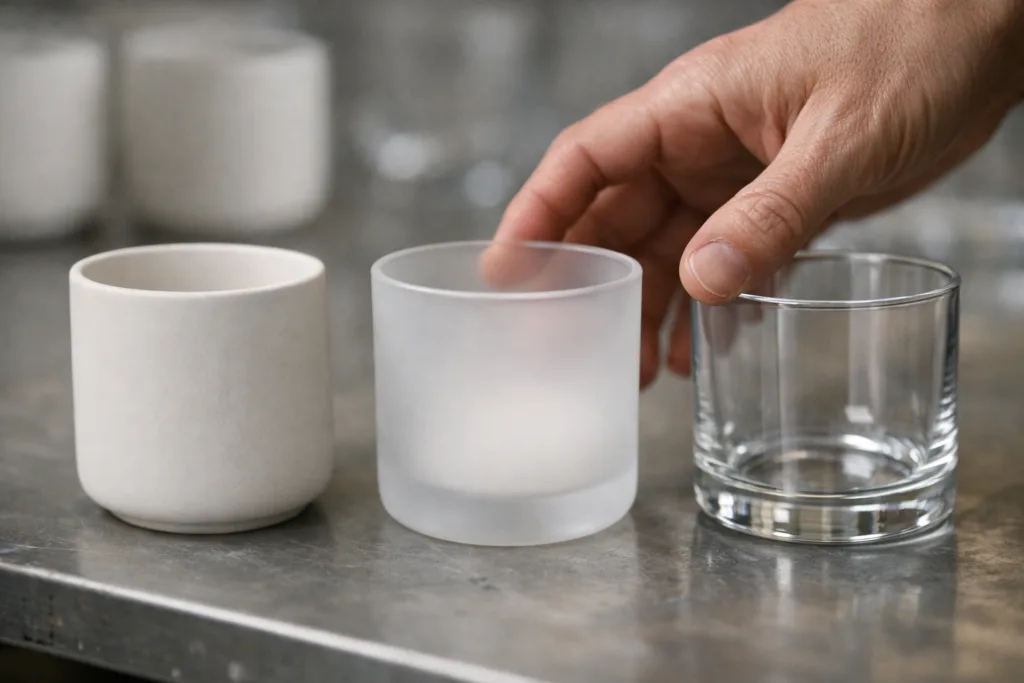
The manufacturing journey starts with choosing your vessel. Containers shape the candle’s burn profile, aesthetic, and compliance. Options span clear glass jars, frosted glass, colored ceramics, metals, and eco-materials; finishes include coatings, embossing, custom caps, and laser etching. Wax compatibility, wick placement, heat resistance, and capacity all matter. A 200g soy wax fill may work best in thick glass, but a spa-inspired coconut blend could suit a matte ceramic.
Key Container Variables
- Material (Glass, ceramic, tin, cement)
- Shape & diameter (affects burn)
- Finish (coating, color, foil cap)
- Label & branding options
- Outer box formats (slip, hinged, sleeve)
Comparative Table: Container Materials vs. Performance
| Material | Pros | Cons | Scent Throw | Burn Time |
|---|---|---|---|---|
| Clear Glass | Elegant, recyclable | Heats up faster | Strong | Long |
| Ceramic | Artisanal, retains heat | Price, weight | Good | Medium |
| Metal Tin | Portable, light | May affect scent | Moderate | Short-Medium |
| Concrete | Unique, thermally stable | Cost, shipping | Subtle | Long |
Custom Fragrance Development: Precision Blending
The candle’s personality emerges in fragrance development. Manufacturers like Circe Home blend essential oils and fine fragrance oils, considering maximum load %, flash points, allergen safety, and IFRA compliance. Whether you want a minimalist single-note or complex multi-layered scent, compatibility with the chosen wax—soy, coconut, or beeswax—is tested. Cold throw (unlit aroma) and hot throw (burning intensity) are measured via small-batch pours, with attention to curing times for optimal scent fusion.
Formulation Steps
- Briefing: Sensory profile, market positioning, safety goals
- Oil selection: Natural vs. synthetic, allergen checks
- Blend trials: Vary fragrance load, test performance
- Curing: 24–72 hours, scent stabilization
- Lab validation: IFRA, CLP, safety sheets, stability
Circe Home Lab Insight: “Matching fragrance load and wax type maximizes throw while ensuring a clean, soot-free burn in luxury candles.”
Wax Blending and Pouring: From Formula to Form
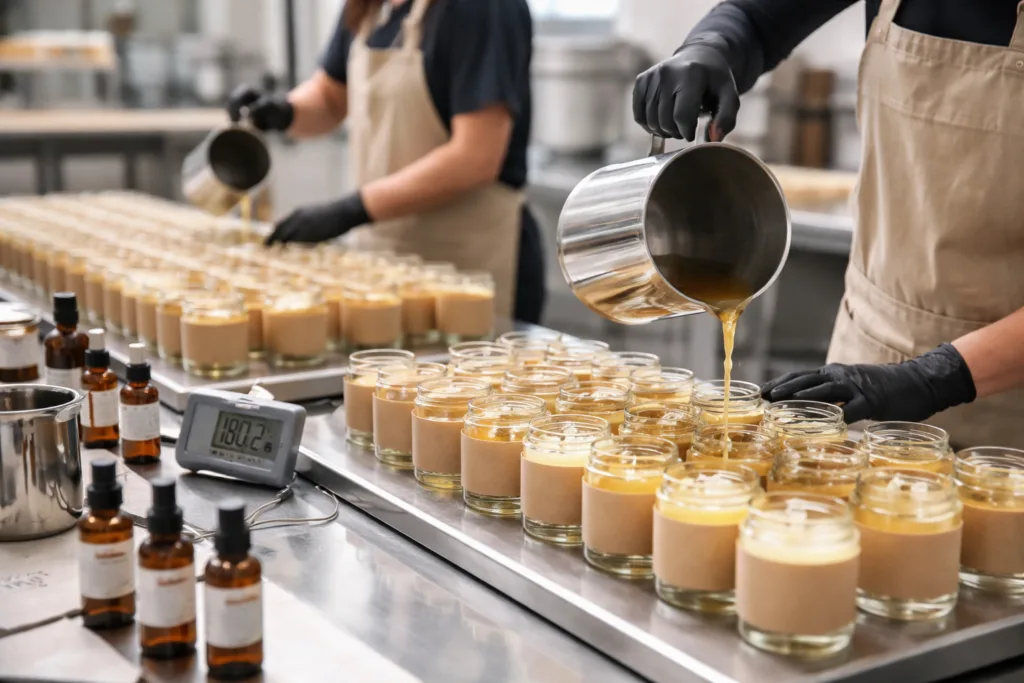
Each wax blend—soy, coconut, rapeseed, beeswax, paraffin—offers unique burn times, scent retention, and visual effects. Factory workflow involves controlled melting, blending with fragrance at precise temperatures, and hand- or machine-pouring into prepped vessels (wicks already fixed). The ratio of fragrance to wax (typically 6–12% for premium brands) is calculated to avoid performance issues: frosting, sweatiness, poor throw. Advanced manufacturers monitor melt point, viscosity, and cooling speeds for a flawless pour.
Popular Wax Blends
- Soy wax: Clean burn, strong throw, minimal soot
- Coconut wax: Creamy texture, slow burn, luxury feel
- Beeswax: Natural ambiance, subtle scent, long burn
- Custom blends: Tailored for specific projects
Technical Parameters
- Melting temp: 60–90°C (varies by wax type)
- Pour temp: 65–75°C for optimal bonding
- Curing time: 24–72 hours minimum
- Flash point: Ensures safe incorporation of fragrance oils
Wick Selection and Placement: Ensuring Clean Burn
Wicks determine burn profile, scent dispersion, and safety. Cotton, wood, and paper-core options are sized for vessel diameter and wax blend, reducing risks like tunneling, mushrooming, or excessive soot. Factories conduct burn tests—trim length, centering tolerance, melt pool diameter—before production approval. For complex blends, double wicking or layered wicks may improve performance. A meticulous factory like Circe Home maintains strict QC for wick centering and adhesion to prevent shifting during shipping.
Burn Profile Optimization
- Wick diameter: matches container size
- Material: cotton (classic), wood (crackling), paper-core (fast start)
- Soot index: factory target <0.10g/hr
- Consistency: test batch candles burned to >35 hrs for QC
Packaging, Labeling, and Outer Box Solutions
Packaging conveys story, function, and luxury, influencing shelf appeal and regulatory compliance. Factories source custom boxes, FSC-certified cartons, compostable wraps, and eco-friendly liners; print with soy-based inks; and offer embellishments like foil, embossing, or scent-specific colorways. Labels provide ingredient transparency, allergen statements, and CLP warning details (for EU/UK). Circe Home supports private-label branding and custom scent naming, with packaging tested for transport durability and visual harmony.
Packaging Checklist
- Inner protection (pad, sleeve, liner)
- Outer box (branded, coded, material selection)
- Label (fragrance, compliance, batch code)
- Transport testing (drop, vibration, climate)
Quality and Safety Control: Factory Workflow
QC is non-negotiable in custom candle manufacturing. From incoming material inspection to final pre-shipment checks, quality teams monitor wax purity, scent dispersion, fill weight, wick position, and labeling accuracy. Each batch undergoes burn time measurement (targeting >35 hours for luxury 200g) and soot index testing. Regulatory compliance (IFRA, CLP, safety warnings) is applied, with finished products sampled for cold and hot throw consistency. Production records trace every step, supporting transparency and recall protection.
Standard QC Steps
- Ingredient analysis and blend validation
- Visual inspection of wax and vessel
- Wick alignment and adhesion check
- Burn profile and soot test
- Pack-out audit before shipment
OEM vs ODM: Differences, Lead Times, and Flexibility
OEM production delivers fully tailored candles based on client design specs, fragrance, vessel, and branding. ODM offers curated, factory-developed scents, blends, and packaging with moderate customization (labeling, minor tweaks). The main differences are:
- OEM: Maximum control, higher MOQs, longer lead time (8–13 weeks), deep pre-production prototyping
- ODM: Fast launch (typically 4–8 weeks), lower MOQs, limited options
Standard factory production runs—using existing formulas, containers, and packaging—can offer shelf-ready candles with a lead time as short as 4 weeks. Deep custom projects may require 2–4 weeks for formulation, 1 week for prototyping, and 6–8 weeks for full production/shipping. Circe Home provides detailed calendars for both tracks, allowing buyers to synchronize launches and manage supply chain risks.
Compliance, Sustainability and Ethical Production
Premium candle manufacturers adhere to strict standards: IFRA 51st amendment on fragrance allergens and safety, CLP labeling for EU/UK, batch tracking, and eco-packaging mandates. Sustainability options include soy/coconut blends, recyclable vessels and cartons, compostable wraps, and refill programs. Responsibly sourced wax and essential oils, paired with transparent supply chains, are increasingly demanded by luxury brands and retailers. Circe Home integrates these values for both OEM and ODM clients seeking clean, elegant, and conscious products.
Applications and Use Scenarios: Custom Candles in the Market
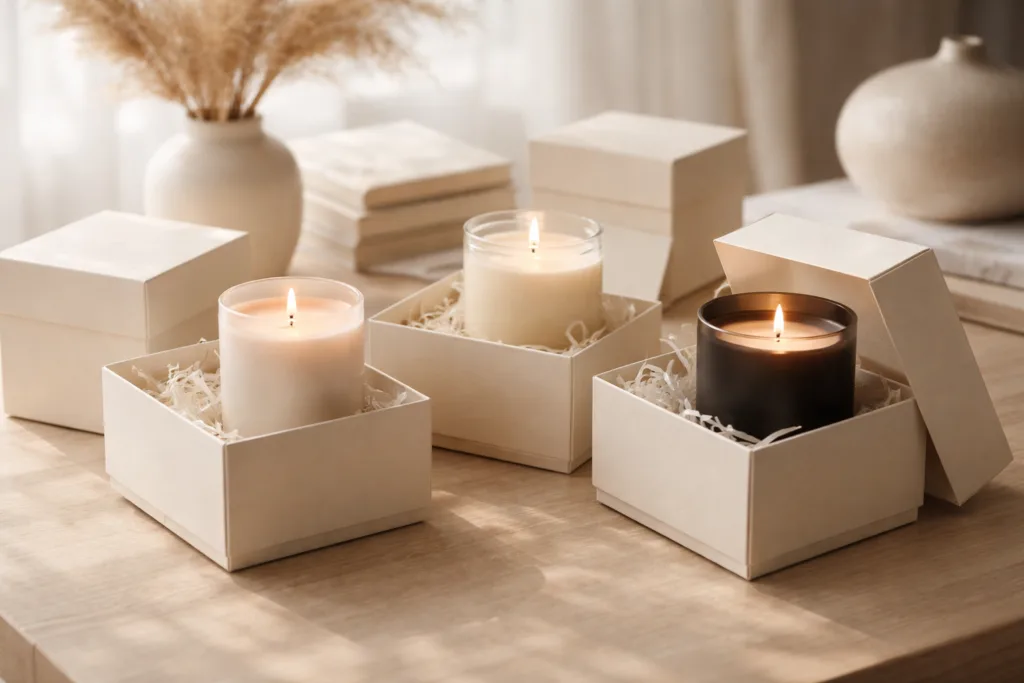
Custom candle manufacturing supports diverse markets: luxury gifting, branded retail, spa and wellness, minimalist home décor, and hotel amenities. Bespoke fragrances and refined packaging create differentiation and conversion potential—whether you’re targeting high-end department stores, boutique wellness outlets, or direct-to-consumer subscriptions. Flexibility in blend, vessel, and compliance unlocks new product lines and reinforces brand identity.
Frequently Asked Questions
What is the difference between OEM and ODM in candle manufacturing?
OEM produces candles based on your complete specifications for formula, vessel, and packaging, while ODM offers curated factory-developed options that you can customize.
How long does a custom candle manufacturing process take?
Standard ODM runs may launch in 4–8 weeks; OEM with full customization typically requires 8–13 weeks for development, prototyping, and production.
Which wax blends are best for luxury scented candles?
Soy and coconut blends provide clean burn, strong scent throw, and premium texture; beeswax adds natural ambiance, while custom blends can be tailored for performance.
What quality checks do factories perform during production?
Checks include ingredient purity, wick centering, scent dispersion, fill weight, burn time, soot index, and compliance labeling to ensure each candle meets standards.
How are fragrances developed for custom candles?
Fragrances are blended from essential or fine fragrance oils, formulated for scent throw, wax compatibility, allergen safety, and regulatory compliance via lab trials.
What packaging options are available for private-label candles?
Options include glass, ceramic, or metal vessels, branded cartons, FSC-certified boxes, compostable liners, custom labels, and special finishes like embossing or foiling.