
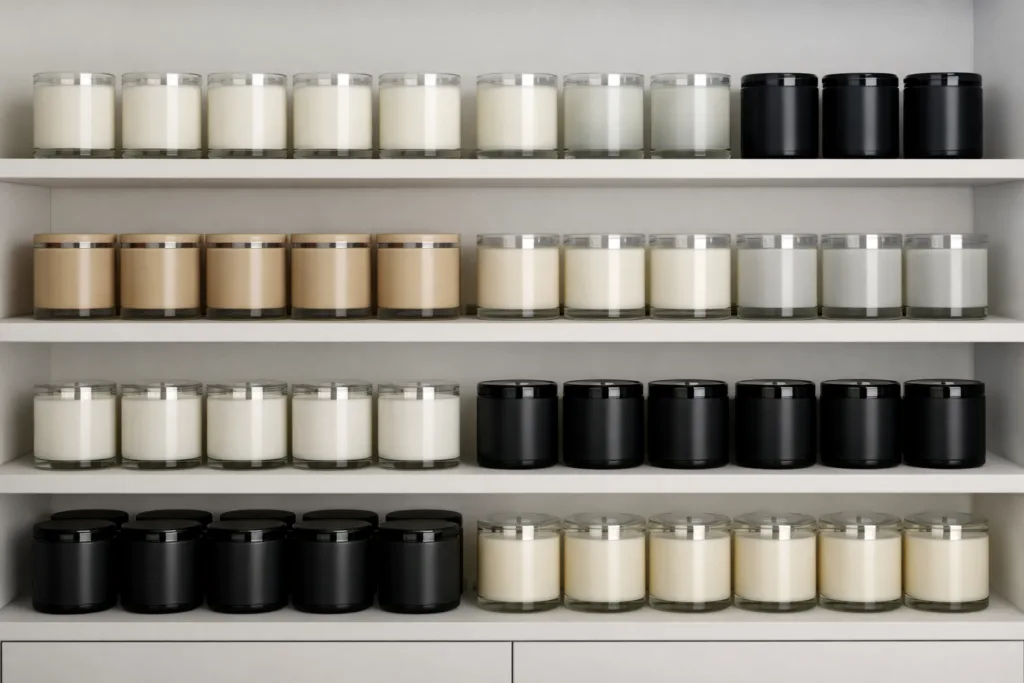
 Introduction: Candle Product Selection Is a Retail Strategy Decision, Not a Design Decision
Most retail candle buyers make a critical mistake at the beginning: they select products based on aesthetics, personal taste, or perceived brand image rather than retail performance.
They choose vessels because they look elegant. They select sculptural ceramics because they appear luxurious. They prioritize uniqueness over scalability.
This approach often leads to slow sales, trapped capital, and unpredictable cash flow.
In reality, profitable candle retail is not built on visual appeal alone. It is built on retail logic.
Every candle product must be evaluated based on four measurable business outcomes:
• Inventory turnover speed
• Profit margin after logistics and overhead
• Repeat purchase frequency
• Compatibility with target customer behavior
Jar candles and wax melts behave very differently across these variables.
Understanding these differences allows retailers to build product lines that generate predictable, repeatable revenue instead of accumulating unsold stock.
This guide explains how experienced retailers, distributors, and private label brands choose profitable candle formats using retail economics rather than subjective preference.
Part I: The Core Retail Economics Behind Profitable Candle Products
Inventory Turnover Is the Primary Driver of Profitability
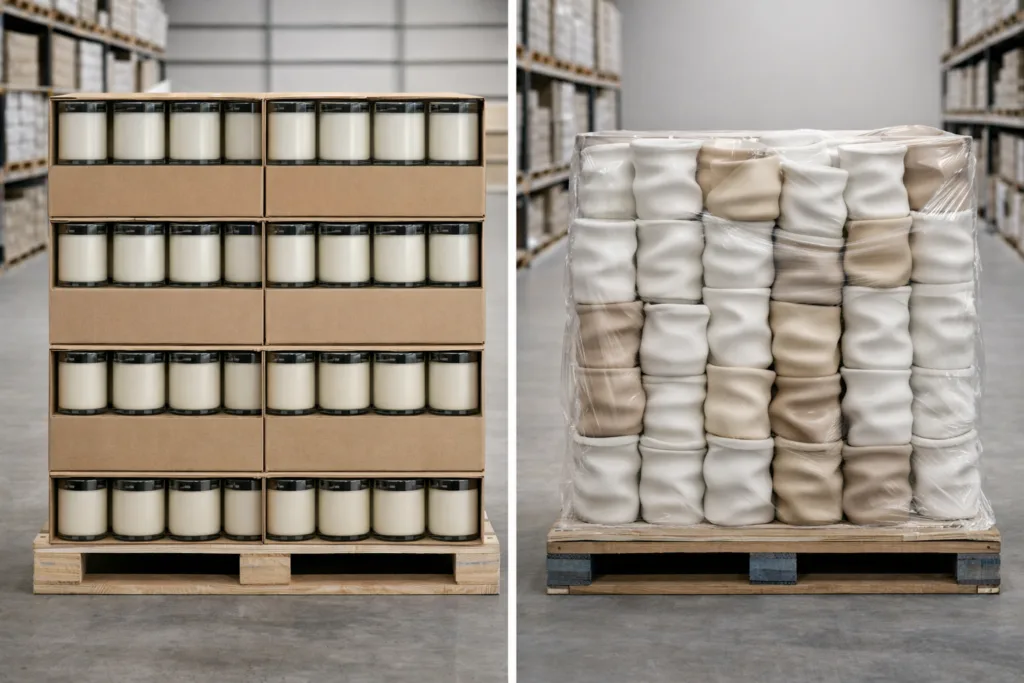 Profitability in candle retail is not determined by unit margin alone. It is determined by how quickly inventory converts into cash and is replenished.
A candle with a 70% margin but selling once every six months generates less real profit than a candle with a 45% margin selling weekly.
Fast-moving products create compounding revenue cycles.
Slow-moving products freeze capital.
This distinction separates profitable candle businesses from those struggling with inventory burden.
Profitable candle formats share three characteristics:
• Predictable consumer demand
• Price accessibility
• Operational efficiency
Wax melts and standard jar candles excel in these areas.
Highly customized or sculptural candle formats often do not.
Retail Pricing Strategy Determines Which Candle Formats Work
Retail pricing directly influences customer purchase behavior.
Most candle markets naturally organize into three pricing tiers:
Entry Tier: $8–$18 retail
Core Tier: $18–$35 retail
Premium Tier: $35–$65 retail
The Core Tier generates the highest volume globally.
This is the price range where most consumers feel comfortable purchasing repeatedly.
Products positioned too far above this range sell slower.
Products positioned too low struggle to support sustainable margin.
Jar candles sized between 180g and 300g align perfectly with this optimal pricing band.
Wax melts fall into the entry tier and generate frequent repeat purchases.
This makes both formats structurally aligned with profitable retail pricing behavior.
Customer Behavior Determines Product Profitability
Different candle formats serve different psychological purchase roles.
Jar candles serve as anchor products.
They define the brand’s identity, visual presence, and core revenue.
Wax melts serve as repeat purchase accelerators.
They encourage customers to try multiple scents and return frequently.
Retailers who rely solely on large, expensive candles often experience slower revenue cycles.
Retailers who combine jar candles with wax melts create faster inventory turnover and higher lifetime customer value.
This combination stabilizes cash flow.
Part II: Profitable Jar Candle Formats Based on Retail Performance
Standard Cylindrical Glass Jar Candles: The Global Retail Standard
Standard glass jar candles represent the most commercially stable candle format worldwide.
Typical specifications:
Diameter: 7–9 cm
Wax weight: 180g–300g
Single cotton wick
Glass vessel
This format is profitable because it aligns perfectly with retail realities.
It balances affordability, durability, and visual appeal.
Consumers understand the format intuitively.
Retailers benefit from predictable sales velocity.
Glass jar candles also offer major operational advantages:
Efficient packaging
Low breakage risk
Stackable storage
Low shipping cost per unit
These operational efficiencies directly improve net profit.
Neutral Luxury Jar Candles: Premium Margin Without Inventory Risk
Luxury positioning increases profit margin when executed with restraint.
The most profitable luxury candle vessels avoid extreme or experimental design.
Instead, they focus on:
Minimalist shapes
Neutral colors
High material quality
Timeless visual language
Neutral design expands market compatibility.
It allows the same candle to appeal across multiple customer demographics.
This improves inventory flexibility.
Retailers avoid being locked into narrow aesthetic trends.
Timeless products protect long-term sales stability.
Medium-Size Jar Candles Generate the Highest Retail Efficiency
Oversized candles often appear attractive from a branding perspective but perform poorly in inventory efficiency.
Medium-size candles offer the best balance between:
Price accessibility
Perceived value
Shipping efficiency
Purchase frequency
Most successful retail candle brands build their core revenue around medium-size jar candles.
This size aligns naturally with consumer purchase habits.
Part III: Wax Melts: The Most Efficient Repeat Revenue Product
Wax Melts Reduce Customer Purchase Friction
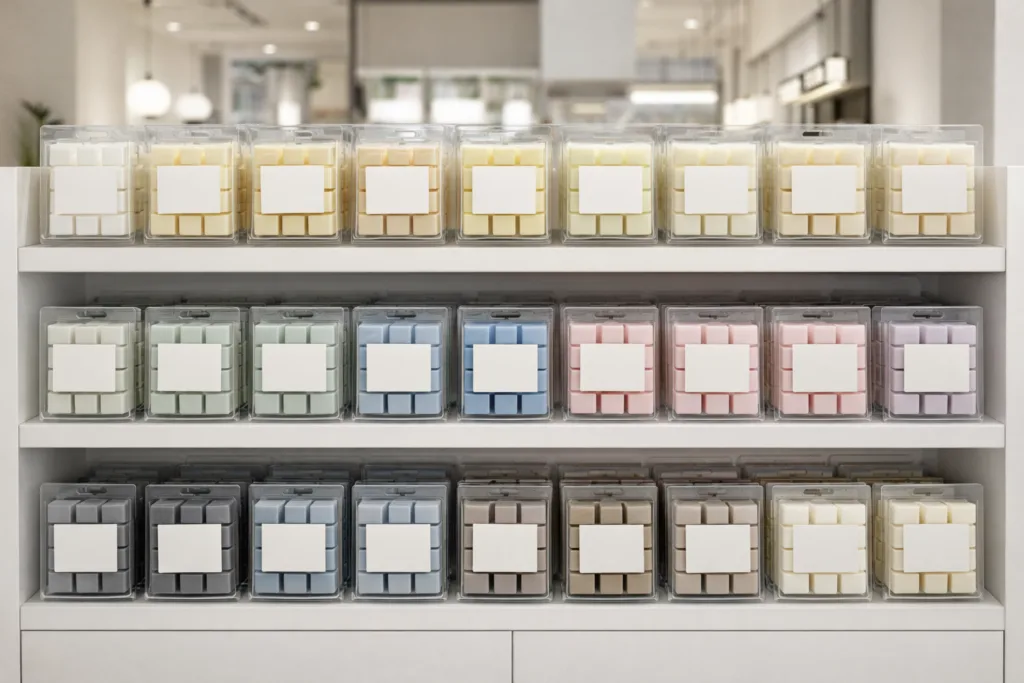 Wax melts have structural advantages that accelerate sales velocity.
They cost less.
They require less commitment.
They allow customers to explore scents easily.
This makes them ideal for repeat purchases.
Customers often purchase multiple wax melt scents simultaneously.
This increases average order value.
Wax Melts Improve Inventory Efficiency
Wax melts offer superior operational efficiency.
They are:
Lightweight
Compact
Durable
Easy to ship
Retailers can store more units per square meter.
This improves warehouse efficiency.
Shipping costs decrease.
Profit margin increases.
Wax Melts Support Scalable Product Expansion
Retailers can expand scent offerings without major inventory risk.
Wax melts allow retailers to test scent demand quickly.
Successful scents can later be expanded into jar candles.
This creates a structured product development pathway.
Wax melts function as a market testing tool.
Part IV: Inventory Trap Candle Products Retailers Should Avoid
Sculptural or Highly Complex Candle Vessels
These products appear attractive but often perform poorly in retail environments.
Problems include:
High production cost
High shipping cost
Limited customer appeal
Storage inefficiency
These products sell slower.
They trap capital.
They should remain limited to small quantities.
Trend-Dependent Candle Designs
Trends change rapidly.
Products designed around temporary aesthetics lose demand quickly.
Retailers risk unsold inventory.
Timeless design protects profitability.
Oversized Luxury Candle Formats
Oversized candles increase logistics cost disproportionately.
They also reduce purchase frequency.
These products should not form the core revenue base.
They function better as niche premium offerings.
Part V: Building a Profitable Candle Product Structure
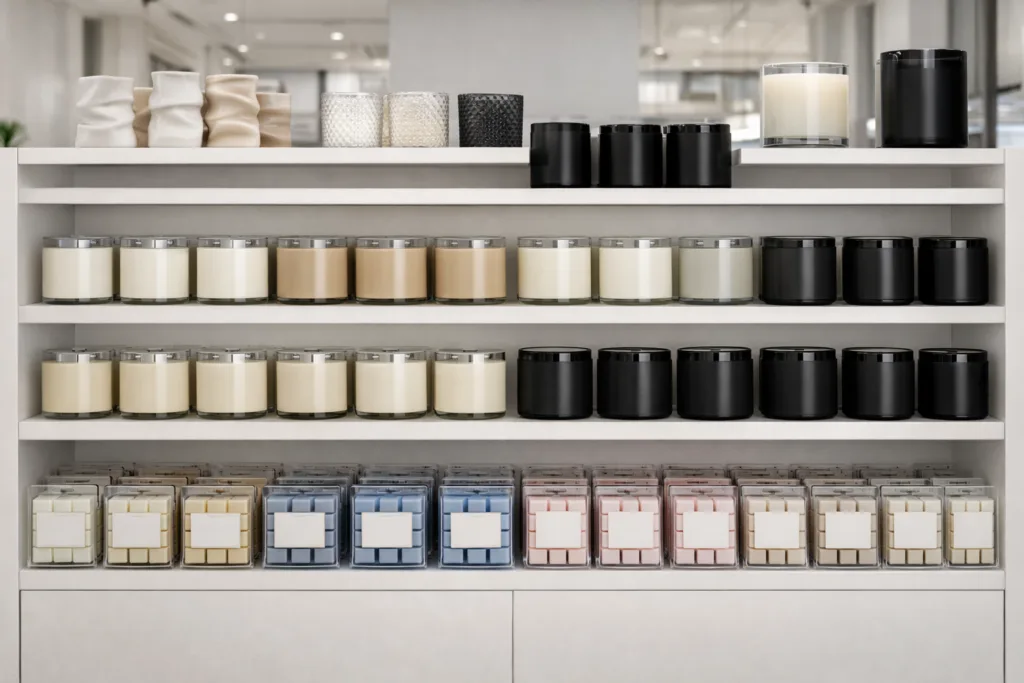 The most profitable candle retail brands use layered product structures.
Typical profitable structure:
Core Revenue Layer:
Standard jar candles
Repeat Revenue Layer:
Wax melts
Premium Layer:
Limited luxury vessels
This structure balances revenue stability and brand positioning.
Part VI: Aligning Candle Product Selection With Target Customer Profile
Retail success depends on alignment between product selection and customer behavior.
Retailers must define:
Target price range
Customer demographic
Purchase frequency expectations
Brand positioning
Product selection must support this framework.
Not contradict it.
Part VII: How Suppliers Support Retail Profitability
 Experienced candle manufacturers do not simply produce attractive products.
They support retail scalability.
They provide:
Proven vessel formats
Scalable production capacity
Stable quality consistency
Efficient logistics compatibility
This allows retailers to grow predictably.
Suppliers function as infrastructure partners.
Not just producers.
Circe Home supports retail brands by focusing on scalable product formats aligned with retail economics.
This enables brands to expand safely.
Conclusion: Profitable Candle Retail Is Built on Retail Logic
Profitable candle retail is not driven by aesthetics alone.
It is driven by retail performance.
Standard jar candles and wax melts provide the highest inventory efficiency and repeat purchase potential.
Retailers who align product selection with retail economics achieve sustainable growth.
Retailers who prioritize aesthetics without considering inventory performance often face slow sales and capital inefficiency.
Strategic product selection transforms candles from decorative products into scalable retail assets.
FAQ
What candle format generates the highest repeat purchase rate?
Wax melts generate the highest repeat purchase frequency because of their lower cost, lower commitment, and ease of scent experimentation.
What jar candle size is most profitable for retail?
Jar candles between 180g and 300g offer the best balance between retail price accessibility, shipping efficiency, and customer demand.
Should retailers avoid luxury candle vessels entirely?
No. Luxury vessels can increase margin but should remain a limited portion of inventory. Core revenue should rely on scalable, proven formats.