
Mapping Your Candle Business Vision
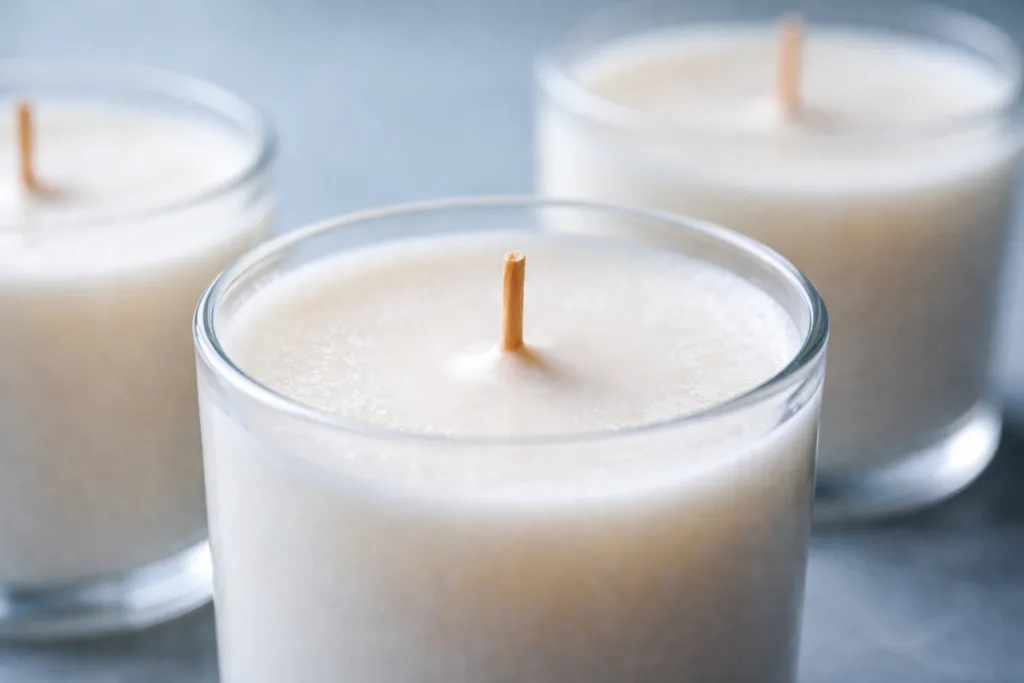
Begin by defining your business model. Do you plan to manufacture for wholesale clients and supply retailers or launch your own branded retail line? Wholesale demands operational consistency, high-volume production, and robust supply chain management. Retail focuses on brand storytelling, customer experience, and design differentiation—a choice that shapes every decision from wax sourcing to vessel design.
Wholesale vs. Retail: A Quick Primer
| Aspect | Wholesale (Supply Chain) | Retail (Brand/Direct) |
|---|---|---|
| Volume | High, Bulk Orders | Small Batch, Customizable |
| Customization | Standardized SKUs | High, Brand-Driven |
| Packaging | Label, Simple Carton | Branded, Premium Packaging |
| Minimum Order | MOQ enforced | Flexible or Made-to-Order |
| Core Concern | Cost & Consistency | Experience & Brand Value |
Refining Your USP (Unique Selling Proposition)
Whether you supply retailers or sell direct, pinpoint what sets your candles apart: Is it fragrance authenticity, luxury wax blends, visual design, or sustainable practices?
Planning for Production: Wax Selection & Blending
Your choice of wax lays the foundation for scent throw, appearance, and burn quality. Top waxes include soy, coconut, rapeseed, and beeswax. Manufacturers such as Circe Home offer advanced blends optimized for clean burn and premium aesthetics, as well as sustainable sourcing.
Main Wax Types and Performance
- Soy Wax: Natural, excellent scent throw, minimal soot, prone to frosting, long cure time.
- Coconut Wax: Smooth finish, enhanced fragrance load, soft texture, premium format.
- Rapeseed Wax: European eco-choice, firm texture, clean burn, slightly muted scent throw.
- Beeswax: Luxe, golden hue, subtle honey scent, superior burn time, higher cost.
- Paraffin: High scent throw, glossy look, budget-friendly, less eco-friendly.
Wax Blending Insights
Circe Home Lab Insight: “For maximum scent retention and smooth surface, blending soy and coconut at 80:20 ratio often optimizes both fragrance load and burn profile. Always match blend to fragrance compatibility for IFRA compliance.”
Fragrance Systems: Scent Development & Testing
Scent is the soul of every candle brand. Choices include essential oils, fragrance oils, or custom blends. The right mix delivers both cold throw (unlit scent diffusion) and hot throw (fragrance while burning).
Technical Notes on Fragrance Load & Cure
- Typical fragrance load: 6–12% by wax weight (depending on blend and compliance)
- Essential oil blends offer authenticity but lower hot throw and complex stability
- Fragrance oils yield stronger, more reliable scent dispersion; ideal for consistent retail offerings
- Minimum cure time: 48–72 hours for soy blends, up to 7 days for complex formulas
- Allergen declarations & IFRA certification required for most professional launches
Fragrance Compatibility
Each wax interacts uniquely with different fragrance components. For example, coconut blends handle floral and gourmand notes with superior retention, while rapeseed wax offers clean diffusion suited to citrus and herbal profiles.
Wicks & Burn Profile: Getting the Flame Right
Choosing the correct wick ensures optimal burn time, minimal soot, and full scent release. Cotton, wood, or paper-core wicks each deliver distinct flame qualities.
Wick Selection Criteria
- Diameter of vessel: Larger jars require thicker or dual wicks
- Wax blend: Softer blends (e.g., coconut) need lower resistance wicks
- Fragrance load: High loads can inhibit burn—adjust wick size accordingly
- Visual goals: Wood wicks provide crackle sound and contemporary look; cotton for smooth, soot-free burn
Burn Testing Protocols
Ideal burn profile: steady flame with minimal mushrooming, soot index below regulatory thresholds, and full melt pool formation by third hour.
Containers & Packaging: Design, Durability, and Brand Story
Container choice sets the tone for retail or gifting appeal. Glass, ceramic, tin, or concrete vessels offer diverse aesthetics and print options. Circe Home specializes in custom container design, including coatings, labeling, and elegant packaging that supports retail presence and private-label launches.
Packaging Elements to Finalize
- Primary vessel: shape, coating, color, embossing (glass, ceramic, tin)
- Label: waterproof, foil accent, scent description, compliance info
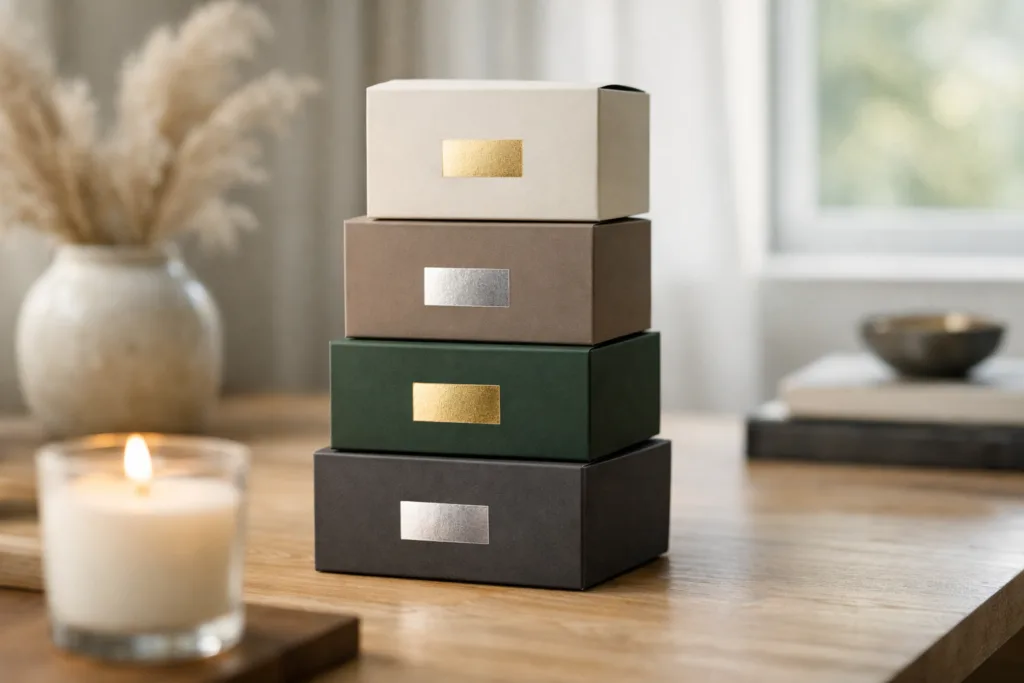
- Outer carton: rigid box, FSC-certified board, soy ink, window cut-out
- Leaflet: safety info, brand story, scent notes
Design Tips
Choose packaging that echoes your brand’s core values—minimalist matte for wellness, foiled edges for luxury, or earthy tones for eco lines.
Quality Control & Safety: Ensuring Every Batch Delivers
Consistency is king in wholesale, while retail demands consumer-safe, flawless product. Quality assurance protocols cover wax melt point checks, wick centering tolerance, and regulated burn tests.
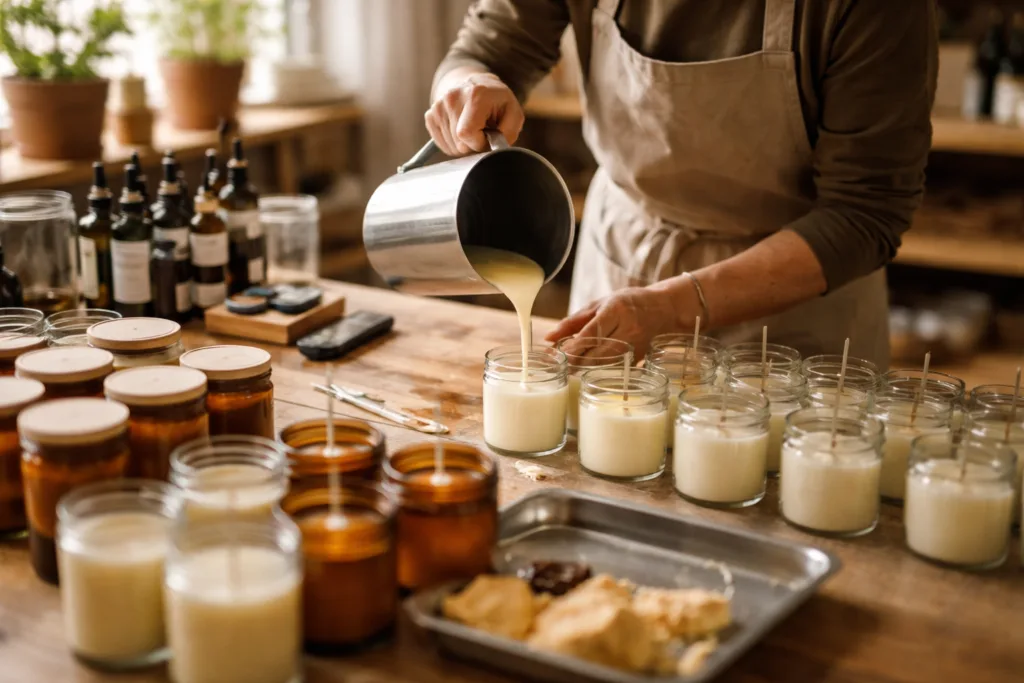
Essential QC Steps
- Pre-production sample validation for scent/appearance
- Wick gluing and centering checks (±2mm acceptable)
- Burn time validation (>35 hours for standard 200g jar)
- Soot index & fragrance dispersion tests
- IFRA compliance review for fragrances
- CLP labeling for EU-bound exports
Production Safety
Ensure labeling includes allergen info, batch numbers, and safety warnings. Regular testing prevents recall risk and builds brand trust.
Manufacturing Workflow: Scalability & Customization
Production processes depend on scale (wholesale vs. boutique retail) and degree of customization. Circe Home’s OEM/ODM routes offer flexibility—from raw material selection to full private-label launches.
- Wax melting at precise temperature (55–75°C, depending on blend)
- Fragrance blending under sealed conditions
- Wick placement and vessel preheating
- Hand-pouring or automated filling
- Surface topping, cooling, and curing
- Final boxing & inventory labeling
MOQ vs. Customization
Low MOQ typically restricts options to standard blends and vessels; higher MOQ unlocks full bespoke formulation and packaging possibilities.
Compliance & Responsible Production
Modern candle businesses must uphold international standards, from IFRA’s latest amendment for fragrances to CLP labeling for safety, especially if exporting. Choose FSC-certified cartons, soy ink, and eco options where possible. Brands may offer refill programs or compostable packaging for further sustainability.
IFRA & CLP: Checklist
- IFRA certification for fragrance blends
- CLP compliant labeling: hazard pictograms, allergen warnings
- SDS documentation for wholesale clients
- Eco-packaging: compostable or recyclable materials
- Responsible manufacturing—reducing VOCs, clean burn protocols
Applications & Inspiration: Where Your Candles Fit
Candles are coveted in luxury gifting, spa and hotel amenities, wellness ranges, minimalist décor, and private-label white-label programs. Consider target scenarios and develop scent and vessel options that suit each—be it a sophisticated boxed set for holidays or subdued blends for wellness retreats.
How to Start a Candle Business for Wholesale or Retail – What You Must Know
Whether you pursue wholesale supply chain mastery or retail brand innovation, success lies in harmonizing premium materials, precise scent formulation, elegant presentation, and robust compliance. Circe Home exemplifies these principles but always tailor production and storytelling to reflect your vision. Ready to ignite your own candle business journey? Make every product a clear reflection of expertise and intentionality.
Frequently Asked Questions
What wax blend is best for luxury candle brands?
Blends of soy and coconut wax yield excellent scent throw, smooth surfaces, and a clean burn, making them a preferred choice for high-end brands aiming for a refined experience and premium presentation.
How do I ensure my candles comply with IFRA and CLP regulations?
Source fragrance ingredients with IFRA certification, ensure allergen and hazardous component disclosure on labels, and follow CLP guidance for containers and carton markings before exporting or selling in EU markets.
What is a typical wholesale minimum order quantity (MOQ)?
Most manufacturers set MOQs from 500 to 2,000 units per SKU for wholesale, depending on custom design level and packaging complexity. Higher volume unlocks broader customization options.
Which wick type creates a soot-free burn?
Cotton wicks are favored for their ability to hold a steady flame, minimize soot, and align with a broad range of wax blends for clean, even burning. Wood wicks offer aesthetic value but require careful sizing.
How long should candles cure before sale?
Most wax blends require at least 48–72 hours of cure time to reach optimal scent dispersion and surface stability; complex soy/coconut blends may need up to seven days for full fragrance development.
What trends are shaping luxury candle packaging?
Current trends include FSC-certified cartons, minimalist matte vessels, textured finishes, and compostable or refillable packaging designed for sustainability and upscale gifting experiences.