
Decoding MOQ in Candle Manufacturing
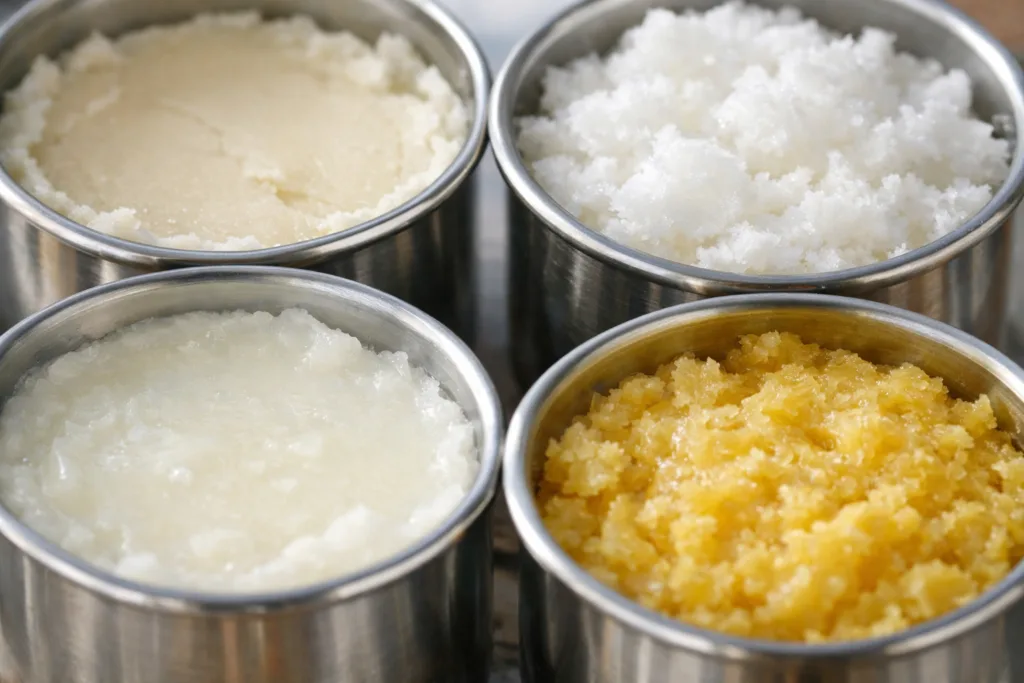
The Minimum Order Quantity (MOQ) is more than a baseline for production—it represents the threshold at which economies of scale begin to work in your favor. For candles, MOQs are set to cover setup costs, specialized blending, fragrance compliance, container sourcing, and quality assurance—each a critical element in premium candle making.
Why Is There an MOQ?
Setting an MOQ ensures manufacturing efficiency and quality control. It covers fixed costs such as formula development, fragrance oil compatibility tests, mold and container procurement, and label customization. For custom projects, like private-label candles or bespoke fragrances, MOQs may start at 500–1,000 pieces due to the involved process stages.
MOQ in Luxury Candle Production
Brands like Circe Home leverage MOQs to guarantee their refined scent experience and premium wax formulas while maintaining clean burn standards and responsible production. Smaller runs require the same setup as large batches, spreading costs across fewer units—which raises the unit price.
| Wax Type | Fragrance Load (%) | Burn Time (hrs) | Scent Throw | MOQ Impact |
|---|---|---|---|---|
| Soy | 7–10% | 35–45 | Strong, clean | Higher MOQ for consistent results |
| Coconut | 8–12% | 30–40 | Velvety, natural | Low MOQ possible, but higher unit cost |
| Rapeseed | 7–10% | 32–38 | Subtle, stable | Requires larger MOQ for custom blends |
| Beeswax | 2–6% | 40–50 | Mild, clean | Very high MOQ due to material handling |
The Cost Equation: Breaking Down Candle Pricing
Candle unit pricing comprises multiple layers: raw material sourcing, fragrance development, testing, container design, labeling, and packaging. For smaller orders, these fixed costs are distributed over fewer pieces, resulting in a noticeable uptick in the unit cost.
Fixed vs. Variable Costs in Candle Production
- Fixed costs: Scent formula R&D, mold and vessel setup, compliance registration
- Variable costs: Wax, wicks, oils, labor for each candle produced
Examples of Cost Drivers
For handcrafted candles with high fragrance loads or bespoke containers, small batches demand the same level of precision and testing as mass produced lines, magnifying the unit price. Custom embossing, foiling, and premium packaging also command higher entry costs at low volumes.
Sourcing Dilemma: Why Not Order Less?
While lower quantities may sound appealing for boutique brands or first-time launches, the reality is nuanced. Manufacturing fewer candles dilutes purchasing power, increases supply chain complexity, and can even stretch lead times, since smaller runs don’t benefit from bulk scheduling or dedicated production slots.
Impact on Materials and Quality
- Minimum fill requirements for fragrance systems and wax melts
- Container sourcing—small runs often limit choices or trigger surcharges
- Testing and compliance—each batch requires IFRA and CLP evaluations, regardless of size
Luxury Brand Perspective
For an OEM partner like Circe Home, maintaining signature clean burn and scent dispersion across every unit means that MOQ policies safeguard both brand reputation and product consistency.
Customization and MOQ: Balancing Vision and Cost
Customization elevates a candle line’s uniqueness but can fundamentally reshape the cost structure in low-volume scenarios. Each custom element—from fragrance blends to branded cartons—requires individual setup and assessment, cemented into the MOQ.
Common Customization Steps
- Bespoke fragrance development and allergen declarations
- Wax blend customization (soy-coconut hybrid, rapeseed-beeswax, etc.)
- Container selection—glass etching, custom caps, foiling
- Outer box finishing—FSC cartons, soy ink, embossing
Formulation and Curing
Fragrance load and curing time must be validated in each blend/container combination. Essential oil compatibility testing, burn profile analysis (cotton vs. wood wick), and exterior packaging safety checks all add fixed costs usually absorbed only at higher MOQs.
Wax Blends, Fragrance Loads, and MOQ Synergy
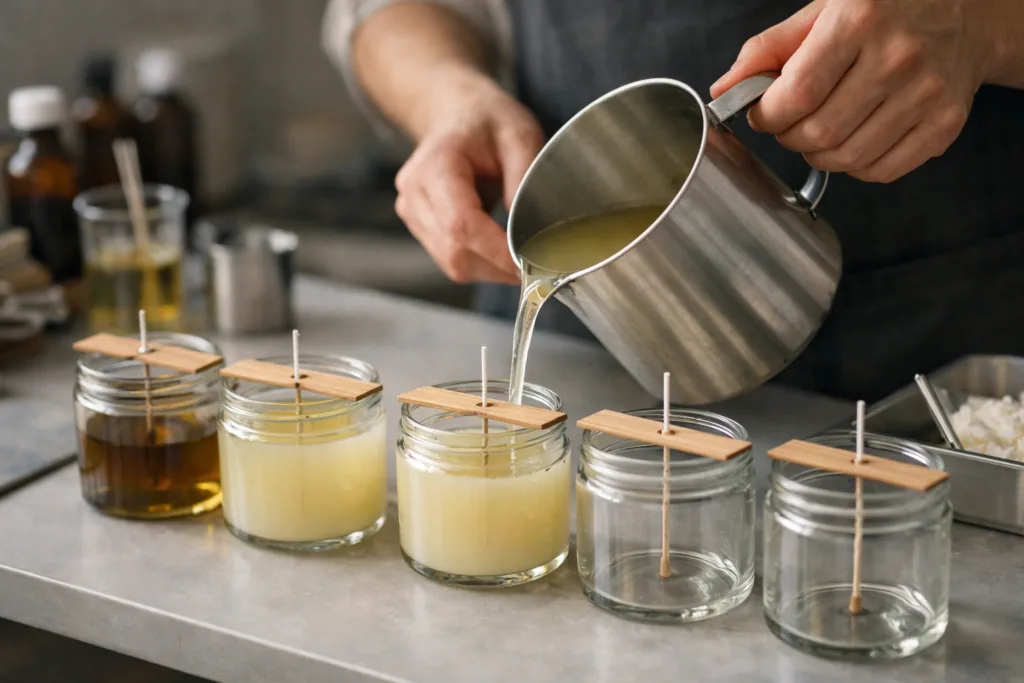
Different wax bases and scent formulations bring unique technical demands that influence MOQ thresholds. For instance, custom blends (like soy-coconut) require trial pours, hot and cold throw calibration, and stability testing—processes that are far more economical at scale.
Performance Factors Linked to MOQ
- Melt Point: Impacts machinery setup and batch size
- Fragrance Load %: Max load varies per wax, requiring batch validation
- Curing Time: Each fragrance system needs its curing protocol
- Container Type: Dictates wick sizing and pour method
Manufacturing Insight
“Circe Home Lab Insight: Scaling up custom blends reduces risk of fragrance migration and ensures uniform burn profiles, critical for luxury candle lines.”
Container, Label, and Packaging Costs at Low MOQ
Glass, tin, ceramic, and concrete vessels each have minimum procurement volumes from suppliers. At low MOQs, surcharges for specialty coatings, colored glass, or foil caps escalate rapidly. Similarly, private label packaging and scent-specific labeling often have minimum print runs—with costs absorbed into fewer units.
Container Aesthetic Decisions
- Embossed or screen-printed glass jars
- Ceramic vessels with custom glazes
- Metal tins with color-matched lids
Labeling and Box Sourcing
Premium candle brands rely on custom-cut labels, scent naming, and FSC-certified cartons for their outer packaging. At low volumes, die-cutting and foil stamping add disproportionate per-unit costs compared to larger runs.
Quality Assurance and Compliance: Unit Cost Effects
Testing each batch for burn time (>35 hours for 200g), maximizing soot-free performance, and ensuring fragrance compliance (using IFRA 51st data) are non-negotiable for luxury candles. These checks—wick centering, fragrance dispersion, allergen declarations, CLP labeling—require dedicated time and resources regardless of order size.
Standard QC Procedures for Luxury Candles
- Test pours for fragrance system stability and scent throw
- Wick sizing and burn profile testing
- Soot index assessment
- Container safety and heat resistance checks
- Labeling for allergen and safety compliance (CLP/IFRA)
Eco-Packaging and Sustainability
Implementing soy ink, compostable refills, or FSC cartons at low volumes means less negotiating power with suppliers—pushing up costs for each sustainable element ordered below bulk thresholds.
MOQ vs Unit Price: Why Fewer Candles Mean Higher Cost
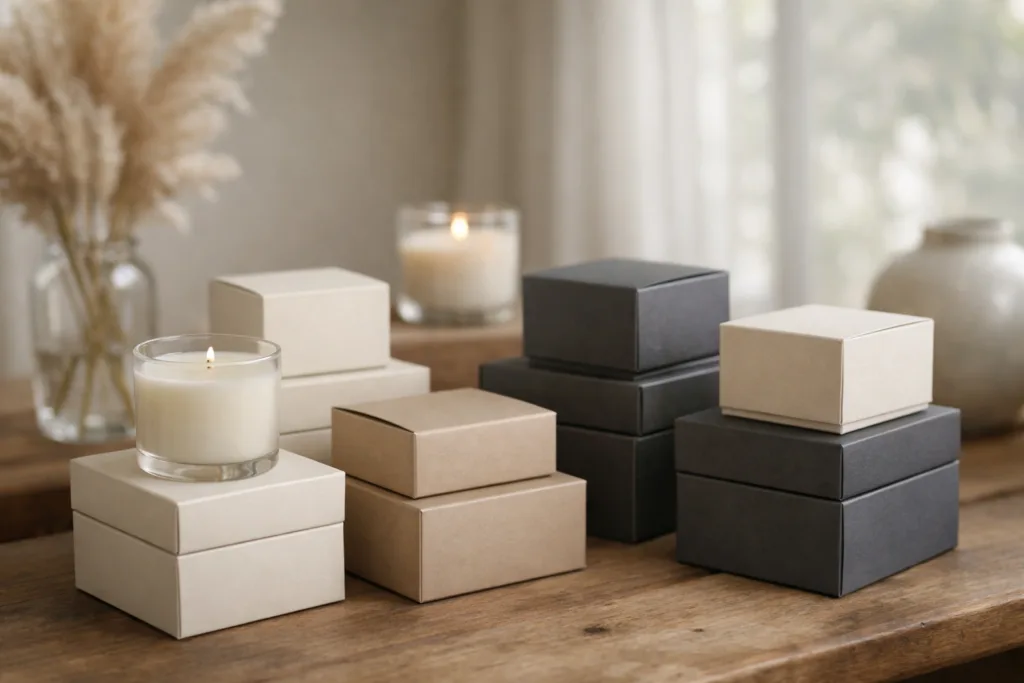
Reducing your candle MOQ may offer flexibility, but it intrinsically raises the unit price due to unchanging fixed costs, increased procurement overhead, and less efficient supply chains. Especially for complex blends and custom packaging, every candle must absorb the full spectrum of developmental and compliance expenses. Strategic buyers leverage the synergy between higher MOQ and lower per-unit cost for long-term brand presence and profitability.
Circe Home and other luxury OEMs set MOQs not only to protect quality but also to preserve the integrity of their refined scent profiles, premium wax blends, and elegant packaging. The balance between MOQ and unit price is at the heart of a successful, functional, and sustainable candle sourcing strategy.
Frequently Asked Questions
What is a typical MOQ for luxury candle production?
MOQs for luxury candles commonly range from 500 to 1,000 units, covering the requirements for custom fragrance blending, compliance testing, premium vessel sourcing, and packaging. Smaller runs may be available but at higher unit costs due to fixed setup expenses.
How does custom fragrance development affect MOQ?
Custom fragrance work involves formulation trials, compatibility testing across wax blends, and regulatory checks. These steps add fixed costs, so custom scents usually come with higher minimum order requirements to balance economic feasibility.
Are there ways to reduce the unit price at low MOQs?
Some strategies include selecting standard vessels, reducing packaging complexity, or opting for stock fragrance profiles. However, premium waxes, custom scents, and advanced packaging will always drive up unit price when MOQs are low.
Why do packaging costs increase with smaller orders?
Outer boxes, custom labels, and printing services are often quoted for bulk minimums. At low MOQs, setup fees are split between fewer candles, increasing the per-piece packaging cost substantially.
How is candle compliance managed in low-volume production?
Regardless of batch size, regulatory testing for IFRA, CLP, and safety labeling is mandatory. These compliance measures require fixed investment in laboratory analysis and documentation—a factor that doesn’t diminish with order size.
Does the choice of wax affect MOQ and unit price?
Certain waxes like beeswax or custom blends entail specialized handling and supplier minimums, resulting in higher MOQs and additional costs. Standard soy or coconut waxes may allow for lower MOQs but still reflect added costs at small volumes.