
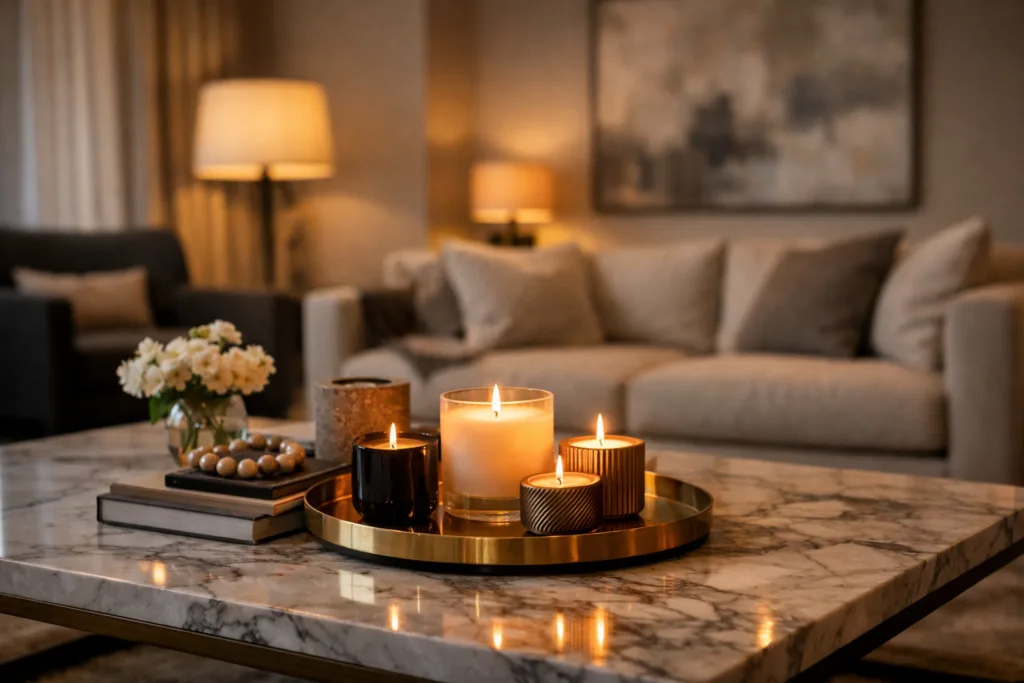
 Interior design has never been only about what a room looks like. The best spaces have always done something more difficult: they shape how people feel the second they enter. A well-designed interior slows the breath, softens the mind, and makes even an ordinary moment feel more intentional. Furniture, lighting, textiles, artwork, and color all help create that effect—but increasingly, luxury candles are becoming one of the most underrated tools in the designer’s kit.
For interior designers working on upscale residences, boutique hospitality spaces, show homes, wellness environments, or branded retail interiors, candles are no longer just decorative add-ons. They are mood-builders. They are sensory anchors. They are finishing pieces that make a room feel inhabited rather than staged. A beautiful vessel can echo the materials palette of a room. A sophisticated fragrance can deepen a design story. A soft flame can turn a technically perfect space into one that feels intimate, warm, and memorable.
That matters because today’s clients are not simply buying furniture layouts or paint schemes. They are buying atmosphere. They want homes that feel calm after long workdays, guest rooms that feel expensive without trying too hard, bathrooms that evoke a spa, and living spaces that photograph beautifully yet still feel human. Luxury candles help bridge that gap between visual styling and lived experience.
For designers, this opens a meaningful commercial and creative opportunity. Candles can elevate the final reveal of a residential project, enhance the emotional appeal of a show unit, support a hospitality brand identity, and even become part of a bespoke product program for clients who want something branded, collectible, or giftable. In other words, candles are not a side note. Used well, they become part of the interior language itself.
This guide explores how luxury candles transform interior design spaces, why they matter in premium projects, how designers can use them more strategically, and what makes a candle supplier worth partnering with when the goal is not simply decoration—but a complete sensory experience.
Why Luxury Candles Matter in Interior Design Today
Modern interior design has moved well beyond pure visual composition. Over the last decade, the idea of multi-sensory design has gained real traction across high-end residential, hospitality, and wellness projects. Designers now think in layers: natural light during the day, ambient light at night, texture under the hand, acoustics within the room, and increasingly, scent in the air.
This shift is important. A room may be visually flawless, but if it feels cold, generic, or emotionally flat, clients notice. The problem is that visual perfection alone can sometimes create spaces that are more impressive than lovable. Luxury candles solve part of that problem because they introduce three things at once: warmth, softness, and atmosphere.
The flame creates movement in a room. Unlike fixed lighting, candlelight is alive. It flickers against stone, metal, glass, and textiles, adding a subtle dynamism that hard architectural lines often need. Fragrance adds an invisible design layer. It can make a room feel restorative, grounding, expansive, crisp, intimate, or quietly indulgent. The vessel itself, if well designed, acts as an object of styling—something between sculpture, table accessory, and decorative utility.
For interior designers, that combination is unusually efficient. Few objects can contribute to the emotional tone, visual styling, and lifestyle positioning of a space all at the same time.
That is especially relevant in luxury interiors, where the difference between “nice” and “remarkable” often lies in refinement, restraint, and sensory coherence. A large, poorly made candle with a harsh fragrance can cheapen a room. A well-proportioned candle in a glass, ceramic, or stone-inspired vessel with an elegant scent profile can make the space feel curated.
In premium projects, the client is often responding to cues that are hard to quantify. Why does one living room feel polished but forgettable, while another feels magazine-worthy and inviting? Why does one bathroom look expensive, while another feels expensive? The answer is almost always in the details—and luxury candles are one of those details that quietly do more work than they appear to.
How Luxury Candles Change the Perception of Space
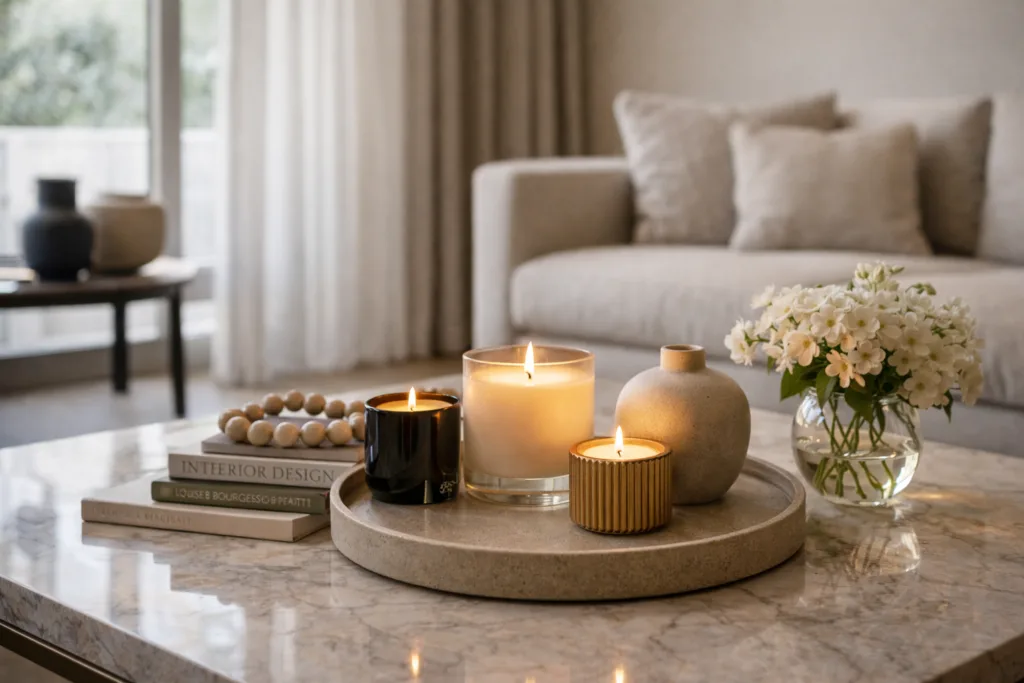 Designers spend a great deal of energy thinking about scale, proportion, light, and material harmony. Candles interact with all four.
1. They soften architectural rigidity
Many contemporary interiors rely on clean lines, disciplined geometry, restrained color palettes, and strong surfaces such as concrete, marble, plaster, smoked glass, dark wood, or matte metal. These materials are beautiful, but they can also read as cool or austere if not balanced properly.
Luxury candles soften that effect. A rounded vessel on a rectilinear coffee table adds relief. A glowing flame on a stone vanity tempers the hardness of the material. A warm amber glass or creamy ceramic finish introduces visual warmth without disrupting the design palette. Designers often need these softer counterpoints to keep a project from feeling overly formal.
2. They add emotional warmth without visual clutter
Throw pillows, extra accessories, and layered decor can certainly create warmth, but they can also make a room feel busier. Candles achieve warmth more efficiently. One well-placed candle on a side table, console, or shelf can make a space feel intentionally lived in without compromising a minimalist or edited aesthetic.
That is especially valuable in luxury interiors, where restraint is often part of the brand language. The room should feel finished, not crowded. Candles support that balance.
3. They create visual focal points at human scale
Interior design often succeeds when it works on multiple scales: the room as a whole, the furniture group, the tabletop composition, and the close-up details someone notices while sitting, passing, or photographing the space. Candles are ideal at the human scale. They pull attention gently downward onto surfaces such as trays, shelves, consoles, bathtubs, bedside tables, and dining settings.
This helps create micro-moments within larger spaces. A spacious open-plan room can feel more intimate when candles define smaller zones within it—such as a reading corner, a bar area, or a lounge grouping.
4. They make spaces feel finished
Designers know the frustration of delivering a technically complete room that still feels like it needs something. Often, what is missing is not another major object but a sensory finishing touch. Luxury candles frequently solve that final 5 percent problem. They can make a photoshoot styling setup more believable, a model apartment more seductive, or a newly completed residence more welcoming.
The Role of Scent in Interior Design Spaces
Scent is one of the fastest ways to create emotional association. Long after people forget exact furniture dimensions or upholstery details, they often remember how a place felt. Fragrance is part of that memory.
In interior design, scent does not need to dominate to be effective. In fact, the opposite is usually true. The best fragrance for a space is often subtle, layered, and aligned with the atmosphere the designer wants to create.
A few broad scent directions are especially useful in design-led spaces:
- Woody notes such as cedar, sandalwood, oud, palo santo, or soft vetiver often suit darker, moodier, or masculine interiors. They pair well with walnut, smoked oak, leather, bronze, and stone.
- Floral notes such as jasmine, neroli, rose, or orange blossom can elevate elegant, feminine, or classic spaces, especially when handled with restraint rather than sweetness.
- Fresh notes such as bergamot, green tea, fig leaf, linen, eucalyptus, or citrus blends work beautifully in bright contemporary interiors, bathrooms, and hospitality spaces where cleanliness and airiness matter.
- Warm gourmand-adjacent notes like vanilla bean, tonka, amber, or soft spice can bring comfort to lounge spaces and bedrooms, but they need sophistication to avoid feeling heavy or overly commercial.
For designers, the key is not selecting a candle based on personal taste alone. It is choosing a fragrance profile that matches the room’s materiality, function, and emotional goal.
A spa-style bathroom designed with light limestone, brushed nickel, fluffy white towels, and diffused lighting will likely benefit from a clean herbal or mineral-inspired scent. A moody library with darker tones, textured fabrics, and lower lighting may call for a resinous or woody candle. A high-end open house staged for broad buyer appeal may need something universally pleasing and softly luxurious rather than conceptually bold.
In that sense, fragrance behaves much like color. It can support the palette, contrast it, or throw the entire composition off if used carelessly.
Where Designers Use Luxury Candles Most Effectively
Candles work best when they are integrated intentionally rather than scattered generically. The following spaces tend to benefit the most.
Living rooms
The living room is often where candles have the highest visual impact. They can anchor coffee table styling, soften console arrangements, enrich shelving, and bring depth to side-table vignettes. In larger living rooms, a combination of one statement candle and smaller secondary candles can create a rhythm across surfaces.
Designers should pay attention to scale here. A tiny candle can disappear on a substantial table, while an oversized vessel may overpower a quieter composition. The goal is proportional harmony.
Candles also work beautifully when paired with books, trays, florals, and low sculptural objects. In these arrangements, the candle often functions as the emotional center of the grouping because it contributes both shape and atmosphere.
Bedrooms
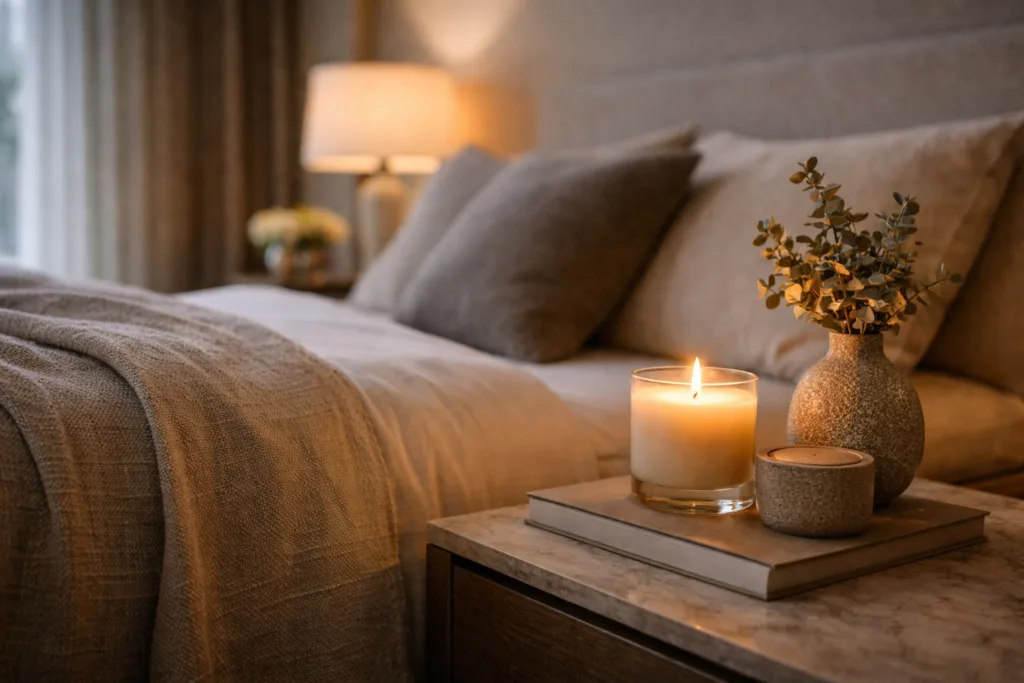 Bedrooms respond especially well to candlelight because the room’s purpose is already emotional: rest, privacy, and calm. Bedside candles, dresser candles, and window ledge candles all help make the room feel softer and more personal.
The fragrance choice is critical. Heavy or aggressive scents can feel intrusive in sleep spaces. Designers usually do better with calming profiles—soft woods, airy florals, tea notes, subtle musk, or very restrained aromatics.
A luxury candle in the bedroom should suggest ritual. It tells the client this is a room to slow down in, not merely pass through.
Bathrooms and dressing areas
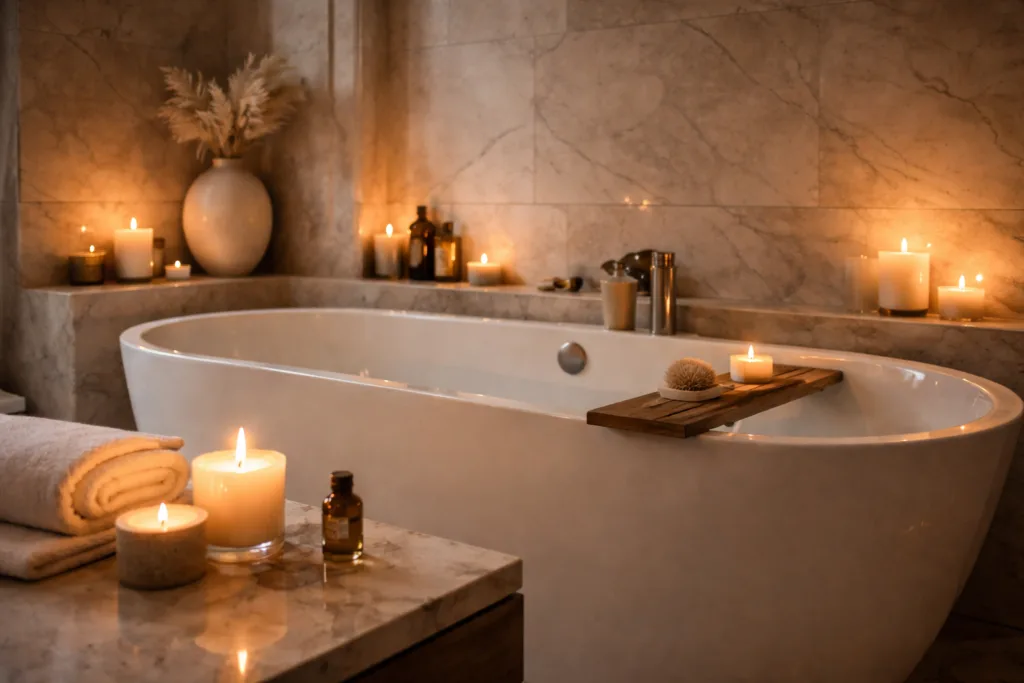 This is one of the strongest applications for luxury candles in interior design spaces. Even a compact bathroom feels more refined with the addition of a well-placed candle. In larger bathrooms, especially those with freestanding tubs, stone counters, niches, and layered lighting, candles can transform the room from functional to indulgent.
The same is true for dressing rooms and vanity areas. A candle on a marble counter, lacquered shelf, or custom millwork island instantly enhances the luxury narrative of the space.
Entryways and consoles
A candle placed near the entry is often the first sensory cue a visitor experiences. That makes it particularly useful in homes designed for entertaining, show flats, and hospitality-style residences. It creates an immediate tone: polished, warm, and intentional.
Dining rooms
Designers sometimes overlook scented candles in dining environments because fragrance can interfere with food. But in formal dining rooms used more for ambiance than daily meals, or in adjacent sideboards and bar areas, luxury candles can contribute meaningfully to atmosphere. Unscented or lightly scented options may be the best choice here.
Boutique hotels, model homes, and wellness spaces
These spaces are where candles move from decorative object to branding tool. A candle can reinforce the identity of a hotel suite, a spa treatment room, a sales gallery, or a luxury rental property. In these projects, consistency matters. Designers may want the same vessel language or scent family repeated throughout a property to create recognition and cohesion.
What Makes a Candle Feel Truly Luxurious in an Interior
Not every expensive-looking candle is actually suitable for a design-led project. Designers evaluating candles for professional use should look beyond branding and ask whether the object will genuinely contribute to the interior.
Vessel design
The vessel is often the first thing a designer notices, and for good reason. Before a candle is lit, it is a visual object. Good vessels should have:
- balanced proportions
- refined finish quality
- a material or surface treatment that aligns with the project
- enough visual weight to hold its place in the room
- a silhouette that feels timeless rather than trend-dependent
Clear glass works well in many projects because it is versatile and clean. Frosted glass can feel softer and more atmospheric. Matte ceramic often suits more editorial, tactile, or artisanal spaces. Stone-look or concrete-inspired vessels can work in minimalist or architectural interiors, provided the finish remains elevated.
Fragrance quality
Luxury fragrance should feel layered and intentional. A flat, one-dimensional scent will rarely hold up in a premium interior. The best candles tend to have a more structured scent profile with top, heart, and base note development, even if the overall effect is quiet.
Designers sourcing for clients should also consider burn behavior and scent throw. A candle should not tunnel badly, smoke excessively, or overwhelm the room. Performance affects perception.
Wax and wick execution
While many end clients may not ask technical questions, poor execution becomes visible quickly. Uneven surfaces, weak burn quality, unstable wicks, or fragrance oil issues damage the luxury impression. For interior designers specifying products as part of a premium scheme, reliability matters as much as appearance.
Packaging and presentation
In some projects, the packaging is secondary. In others—such as gifting, show-home handovers, branded hospitality, or designer-curated client experiences—it matters enormously. A strong candle supplier should be able to support beautiful cartons, labels, protective inserts, and customized details that feel consistent with the design story.
Why Interior Designers Are Increasingly Sourcing Custom Candles
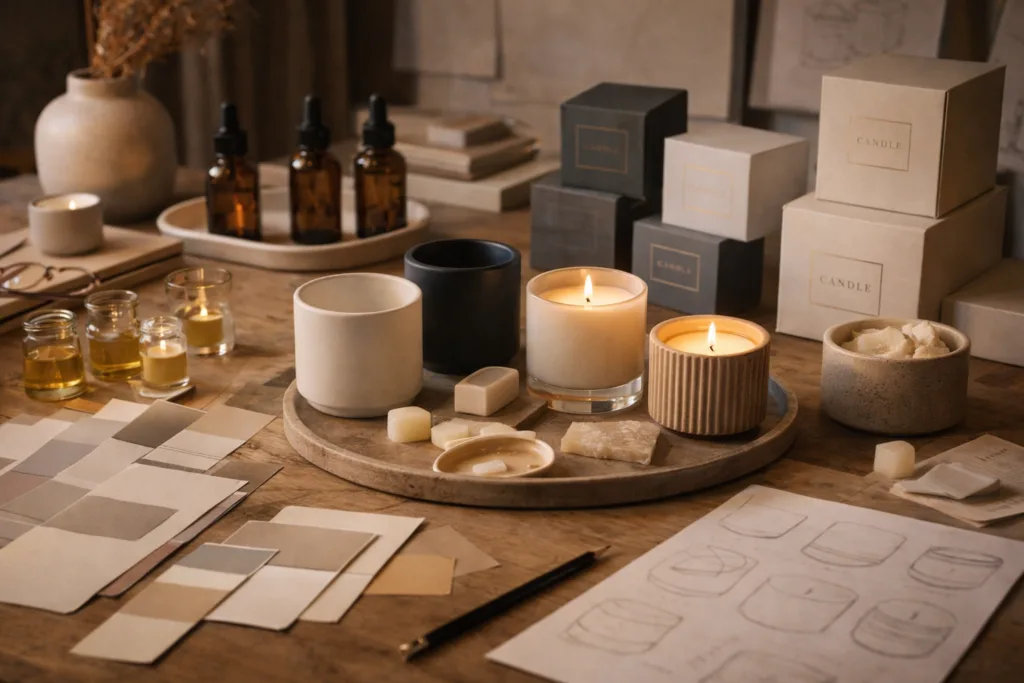 Off-the-shelf candles can work for styling, but many design professionals eventually run into limitations. The scent may be wrong. The vessel may clash with the palette. The label may be visually intrusive. The size may not suit the scale of the room. The brand story may have nothing to do with the project.
That is why custom candles are becoming more attractive for interior designers, developers, boutique hotels, and branded residential concepts.
A custom candle program allows professionals to control:
- vessel color and finish
- glass or ceramic style
- fragrance profile
- label or branding treatment
- packaging presentation
- size and burn time
- consistency across multiple spaces or properties
For example, an interior designer working on a high-end show apartment may want a soft stone-colored vessel with minimal branding and a clean fig-wood fragrance that complements the project’s neutral palette. A boutique hotel may want a signature scent echoed across guest rooms, lobby styling, and retail take-home products. A developer may want candles included as part of a premium closing gift for buyers.
These are not niche use cases anymore. They reflect a broader shift toward experience-driven interiors and branded environments.
How Designers Can Use Candles to Increase Project Value
Luxury candles do more than beautify a space. They can also increase perceived value.
They improve first impressions
Whether the setting is a private residence reveal, a photoshoot, an open house, or a boutique hospitality property, first impressions are formed quickly. Candlelight and refined fragrance can make that first impression more emotional, which usually translates into a stronger perception of quality.
They make spaces more memorable
People may forget where a side table came from. They are less likely to forget the soft warm scent that made a room feel calm and expensive. Candles contribute to memory, and memory influences perceived value.
They support storytelling
Good design projects tell a story. Candles can support that story through scent and form. In a coastal residence, one might lean mineral, airy, and understated. In a moody urban penthouse, perhaps darker woods and smoked glass. In a wellness retreat, clean botanicals and natural finishes.
They offer a high-margin add-on opportunity
For some interior designers and lifestyle-focused studios, candles can also become part of a curated product extension. A bespoke candle developed for a signature project or design brand can serve as a retail object, client gift, or recurring branded item.
What Interior Designers Should Look for in a Candle Manufacturing Partner
If candles are being sourced professionally rather than casually, supplier selection matters. Designers need a manufacturing partner that understands not just product production, but design sensitivity.
A strong supplier should be able to support the following:
Design flexibility
Can they offer different glass finishes, ceramic vessels, lids, labeling methods, and packaging structures? Do they understand that the vessel is part of the interior object, not just a container?
Fragrance development support
Can they provide a broad fragrance library, scent recommendations for different project moods, and customization options when required? Do they understand regional taste differences for North America, Europe, and Oceania markets?
Quality consistency
Can they deliver repeatable production quality across larger orders? Interior designers and procurement teams do not want surprises between sampling and final delivery.
Low-friction sampling and communication
Professional buyers often move quickly. They need clear sampling processes, material options, lead times, and the ability to review finishes and scent directions without endless back-and-forth.
Certification and export readiness
For international projects, especially in premium retail or hospitality channels, compliance matters. A supplier with experience in testing, labeling, shipping coordination, and export documentation reduces friction significantly.
Packaging capability
If the candle is part of a designer gifting program, hotel retail collection, or premium presentation package, the supplier should be able to support packaging that feels appropriately elevated.
A Strategic Opportunity for Designers, Developers, and Hospitality Buyers
The market is moving toward more atmospheric, emotionally intelligent interiors. That creates an opening for designers who understand how to specify not just furniture and finishes, but also the sensory identity of a space.
Luxury candles fit perfectly into that shift. They are practical enough to be used daily, visual enough to belong in styled interiors, and expressive enough to reinforce brand or project identity. Few accessories carry that range.
For interior designers, they can become part of the project language. For developers, they can improve presentation. For boutique hotels and serviced residences, they can strengthen guest experience. For design-led retail or home brands, they can extend a visual identity into a repeatable, giftable product.
The key is sourcing well.
When the candle is thoughtfully designed, properly manufactured, and matched to the interior concept, it does more than decorate. It gives the space an emotional signature.
Final Thoughts: Why Luxury Candles Belong in Better Interior Design Spaces
The strongest interiors are rarely the loudest. They are the ones that feel considered from every angle—light, material, scent, mood, and memory included. Luxury candles help create that kind of completeness.
They soften hard lines. They enrich styling compositions. They turn ordinary surfaces into moments. They make private homes feel calmer, boutique hotels feel more distinctive, and staged spaces feel more alive. Most importantly, they help designers create rooms that people do not simply admire, but actually want to stay in.
That is why luxury candles deserve more serious attention in professional interior design.
For designers sourcing products for residential projects, show homes, hospitality spaces, or branded environments, the best candle is not merely pretty. It should align with the palette, reinforce the atmosphere, perform reliably, and support the overall concept of the space.
Done right, a candle is never just a candle.
It is a design tool.
FAQs
1. Why do interior designers use luxury candles in styling projects?
Interior designers use luxury candles because they add more than decoration. A well-made candle contributes ambient light, scent, texture, and emotional warmth, helping a room feel polished, inviting, and complete.
2. What type of luxury candle works best for interior design spaces?
The best luxury candle depends on the project, but designers usually prefer candles with refined vessels, sophisticated fragrance profiles, reliable burn quality, and finishes that complement the room’s palette and materials.
3. Can interior designers order custom candles for client projects?
Yes. Many manufacturers offer custom candle options for interior design projects, including vessel selection, fragrance customization, label design, and premium packaging for residential, hospitality, and branded spaces.
Suggested Internal Link Opportunities
- private label scented candles
- custom candle vessels
- luxury candle packaging solutions
- candle gift sets for hospitality and real estate clients
- custom home fragrance for boutique brands
Suggested CTA Direction
If you are an interior designer, hospitality buyer, developer, or home decor brand looking for custom scented candles that match your project aesthetic, a specialized candle manufacturing partner can help you build vessels, scents, and packaging that elevate the entire space.