
Fundamentals of Candle MOQ
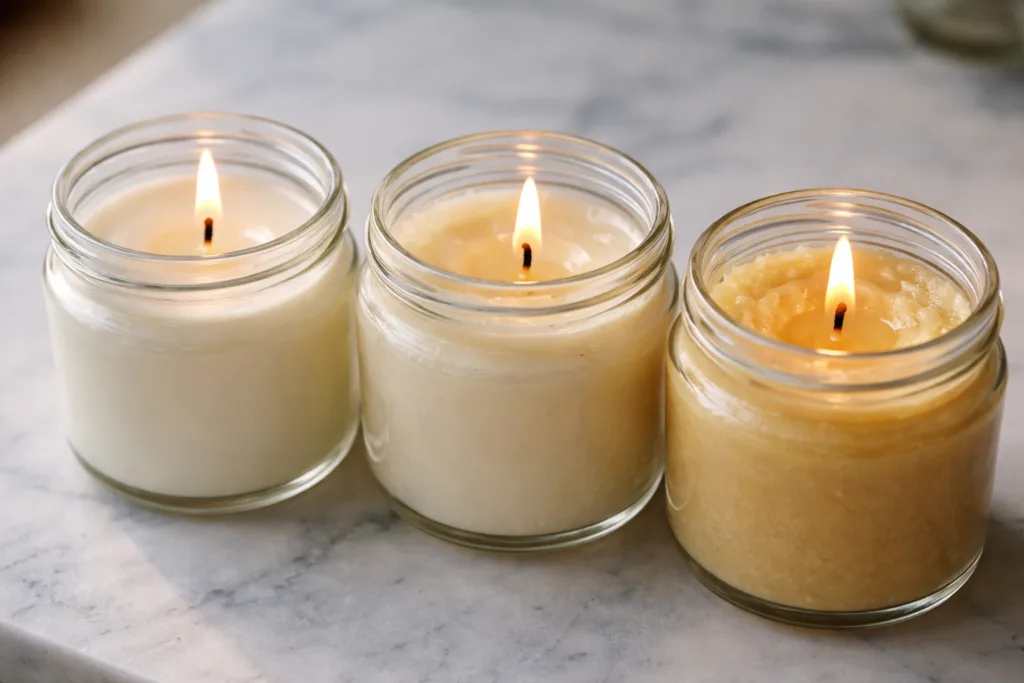
Candle MOQ is shaped by multiple factors: wax blend selection, vessel sourcing, fragrance system, and the level of customization required. For glass jar candles, the threshold usually lands between 300 to 1,000 units for generic designs with standard wax blends. Lower MOQ is possible for regular, unembellished glass vessels due to supply chain stability and efficiencies in melting, pouring, and packaging. In contrast, custom colors, shapes, and decorative coatings elevate the minimum order as manufacturers need to batch produce to achieve cost-effective operations.
Key Factors Influencing MOQ for Glass Jar Candles
The following elements directly affect the minimum order quantity for glass jar candles:
- Vessel Type & Finish: Standard clear glass jars enable lower MOQ; frosted, colored, or embossed designs may increase it.
- Wax Formula: Common blends (soy, coconut, beeswax) support small runs better than niche blends requiring special sourcing.
- Fragrance Load & System: Custom scent systems may impose higher MOQ due to ingredient batch sizes and stability testing.
- Packaging: Off-the-shelf formats keep MOQ low, while branded boxes and foil caps often require tooling and batch runs.
- Compliance & Labeling: IFRA-compliant fragrances and CLP labeling affect supply lead times, sometimes raising MOQ.
Standard vs. Custom Glass Jar Candle MOQ
Regular glass jar candles—those leveraging molds and finishes already in manufacturer inventory—can achieve notably lower MOQs. For private-label buyers seeking quick market entry, a selection of classic shapes, clear finishes, and standard capacities (e.g., 200g, 300g) keeps minimum order requirements manageable. Circe Home often sets lower MOQ for such programs, enabling small brands or test launches.
| Wax Blend | Scent Throw | Burn Time | MOQ (Standard Vessel) | MOQ (Custom Vessel) |
|---|---|---|---|---|
| Soy Blend | Strong | 35–45 hrs | 300 pcs | 750 pcs |
| Coconut Soy | Bold | 37–48 hrs | 350 pcs | 800 pcs |
| Beeswax | Subtle | 32–40 hrs | 400 pcs | 900 pcs |
| Rapeseed Blend | Clean | 34–44 hrs | 300 pcs | 850 pcs |
Choosing from manufacturers’ standard glass jars or opting for common wax blends is the simplest way to reduce MOQ and streamline procurement.
Wax Formulations and Their MOQ Impact
Wax choice significantly affects the minimum order size for glass jar candles. Soy, coconut, rapeseed, or beeswax blends are the pillars of luxury candle manufacturing due to their clean burn, refined scent throw, and ability to carry high fragrance loads. Formulas with uncommon ratios or added botanicals may require special sourcing and batch melting, increasing MOQ. For standard waxes, manufacturers often maintain inventory, enabling swift turnaround and smaller batch production.
- Select wax based on desired burn profile and fragrance compatibility.
- Confirm source availability with manufacturer.
- Align wax and vessel volume for optimal performance.
- Leverage manufacturer expertise to design for low MOQ runs.
Circe Home Lab Insight: “Premium wax blends like coconut-soy or triple-filtered beeswax allow for nuanced fragrance layering and long, soot-free burn times—even in low MOQ runs—but only when paired with standard glass vessels and classic wicking.”
Fragrance System Selection and Customization
Fragrance profile is a cornerstone of luxury candle results. Essential oils deliver natural cold throw, while fragrance oils offer controlled hot throw and extended scent retention. Custom fragrance development or allergen declarations can raise MOQ by necessitating larger batch testing and compliance checks. For buyers wanting rapid launch and cost-sensitive runs, select from existing scent libraries, enabling lower MOQ and faster turnaround. IFRA compliance and fragrance load limits must be verified for each wax and vessel type.
Wick Choices, Vessel Sizing, and Burn Profile
Proper wick sizing and core material (cotton, wood, paper-core) determine burn quality, mushrooming risk, and soot index. Manufacturers set wick type and length based on vessel diameter, wax formula, and target burn hours. Specifying standard vessel sizes (e.g., 70mm, 85mm diameter glass jars) and classic wick options allows both reliable performance and reduced MOQ. Custom wicking for wide or multi-wick jars may drive MOQ higher due to setup and sourcing complexity.
Quality Control, Compliance, and Safety Testing
Every batch of glass jar candles requires thorough QC checks—centring wicks, verifying burn length, inspecting fragrance dispersion. For batches below 500 units, streamlined testing protocols allow manufacturers like Circe Home to maintain luxury standards while minimizing waste. IFRA 51st amendment and CLP labeling compliance ensure safe import to EU and global markets, with wax blends and fragrances registered per batch. Buyers should confirm QC steps and request testing logs for each production run.
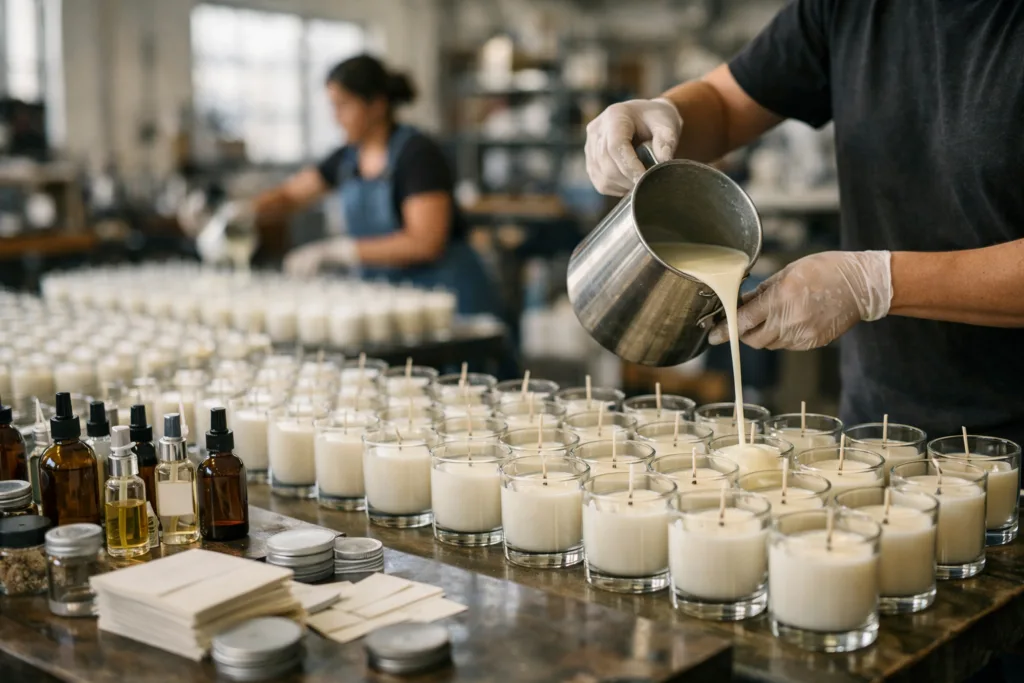
- Visual vessel inspection
- Wick placement/centering tolerance
- Fragrance dispersion and consistency
- Burn time and soot index measurement
- Compliance verification (labels, declarations)
Packaging, Labeling, and Design Considerations
Custom packaging—branded boxes, foil caps, embossed labels—often drives MOQ upward due to tooling setup and batch carton ordering. Standard packaging (kraft or white box, screen-printed label) supports lower MOQ while maintaining a refined look. For both minimalist and luxury positioning, collaborating with manufacturers who offer modular design systems unlocks flexibility. Consider eco-packaging, soy ink, and FSC cartons for sustainable programs. CLP and IFRA-compliant labels are required for EU-bound candles, affecting order preparation on all MOQs.
MOQ Optimization Strategies for Sourcing Success
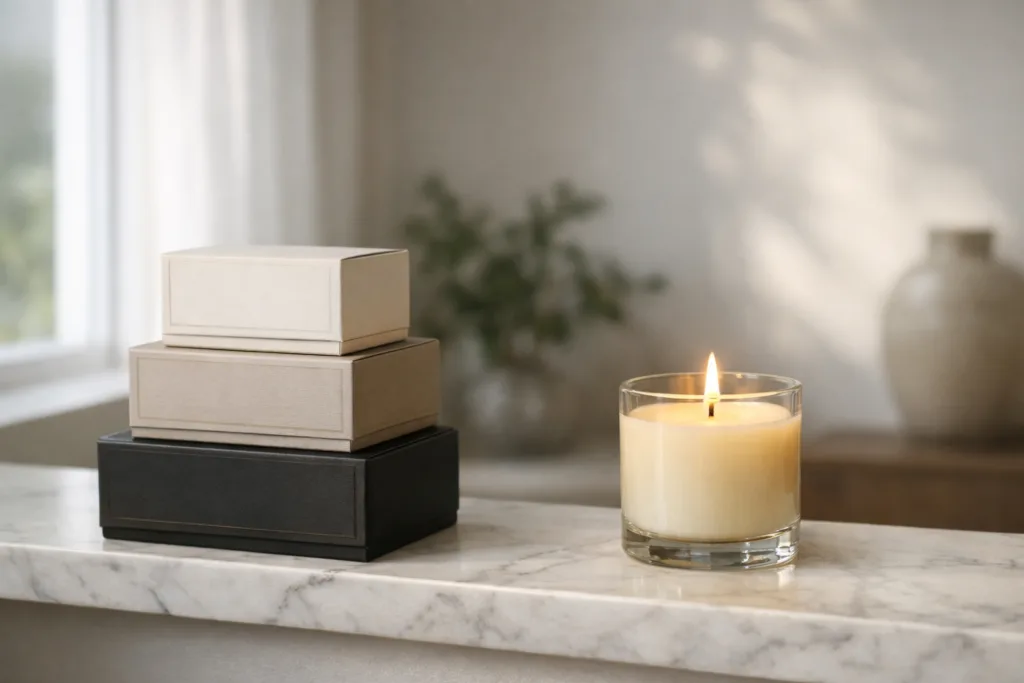
Successful candle sourcing hinges on balancing desired product attributes against realistic MOQ constraints. These strategies help optimize your procurement:
- Choose standard glass jar shapes and finishes in manufacturer catalog.
- Use established wax and fragrance blends for rapid production.
- Limit embellishments—stick to screen-print or simple label formats.
- Target test launches with lower MOQ (e.g., 300-500 units) before scaling up.
- Negotiate with experienced manufacturers like Circe Home for solutions aligning brand vision and MOQ.
By understanding the manufacturing process, cost drivers, and compliance requirements, brands can launch refined glass jar candles with manageable minimum order commitments—preserving both luxury and agility.
Frequently Asked Questions
What is the typical MOQ for standard glass jar candles?
Standard glass jar candles usually start at 300–500 units. Lower MOQ is possible for generic vessels and basic packaging.
Does custom fragrance development increase MOQ?
Yes, especially if unique essential oil blends or specific allergen profiles are required. Batch testing and compliance checks raise the minimum.
Can I order different scents or label designs within one MOQ batch?
Some manufacturers allow mixed scents and labels within total MOQ, but each variant may need to meet internal minimums based on setup.
How does vessel customization affect MOQ for glass jar candles?
Custom colors, shapes, or decorative finishes require larger production runs due to tooling, increasing the minimum order size.
What compliance should be considered for importing glass jar candles?
Ensure IFRA-compliant fragrances, CLP labeling, and adherence to local safety regulations for each country or region.
Are there sustainable packaging options for low MOQ glass jar candles?
Many suppliers offer FSC cartons, soy ink print, or recyclable boxes for low MOQ orders—check options during sourcing.