
What Does Candle MOQ Really Mean?
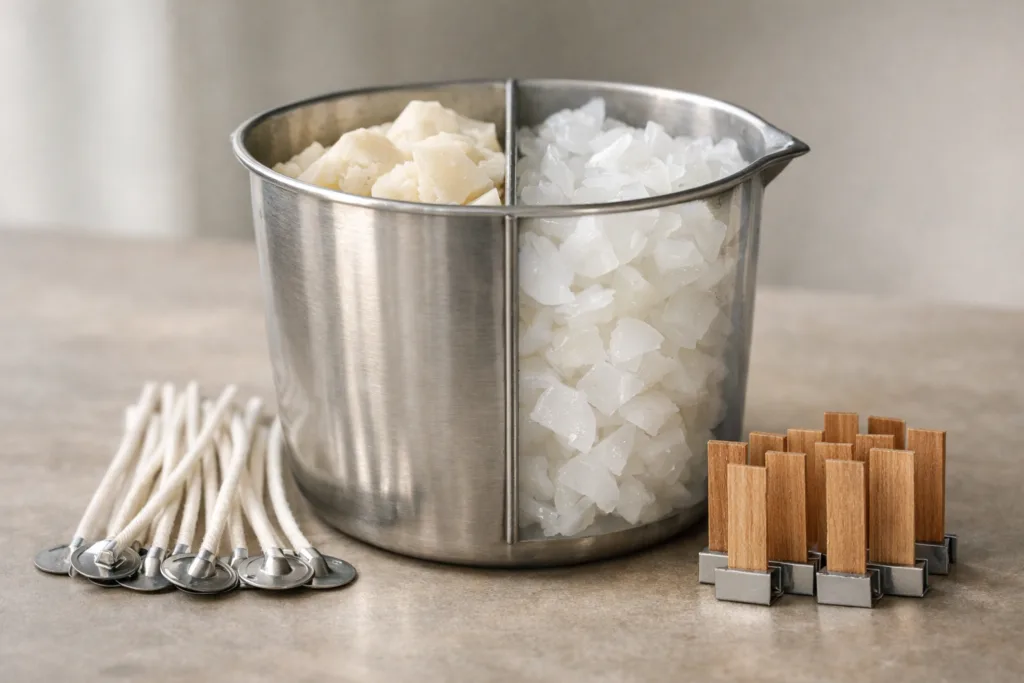
Candle MOQ, or minimum order quantity, is the least number of finished candles a manufacturer can produce per run. MOQ thresholds are set for good reason: material sourcing, labor setup, and consistency in fragrance and finish all require efficiencies that only batch production allows. For luxury and custom candle production, MOQs typically range from 200 to 1000 pieces per fragrance or vessel type, depending on the supplier and complexity of design.
Key Factors Affecting MOQ
- Packaging customizations (color, embossing, specialty glass)
- Fragrance complexity (bespoke blends vs. stock scents)
- Vessel selection (molded, printed, or painted containers)
- Wax type and formulation (soy, coconut, blends, beeswax, paraffin)
- Compliance requirements (IFRA, CLP, warning labels)
The True Cost Drivers of Candle MOQ
Every element of a candle’s build affects your unit price, especially at MOQ scale. Wax blends influence performance and margin, fragrance percentages determine scent strength and ingredient expense, while packaging and artisan labor define presentation and tactile impression. Let’s deconstruct these core components.
Packaging Costs: More Than a Container
The journey from glass jar or custom tin to finished product involves much more than vessel pricing. Consider:
Material Sourcing and Customization
- Glass: Standard jars cost less but limit differentiation. Custom colors, glass coatings (frosted, glossy, matte), printing and embellishments raise the per-unit price, especially at low MOQs.
- Metals & Ceramics: Luxury tins, porcelain, or concrete vessels require molds, often with 500–1000 MOQ minimums.
Secondary Packaging Elements
- Outer boxes: Printed, embossed, foiled, or lined formats vary widely in cost. Rigid boxes elevate brand feel and candle protection.
- Labels & Wraps: Materials such as cotton paper, textured vinyl, or eco-certified stocks impact both perceived value and unit economics.
- Custom inserts, tissue, or foils add further cost but enhance unboxing and gifting experience.
| Vessel Type | Min. MOQ | Avg. Cost/Unit | Branding Options |
|---|---|---|---|
| Clear Glass | 200 | $0.65–$1.30 | Label, Silk Print |
| Frosted/Colored Glass | 500 | $1.00–$2.10 | Label, Direct Print |
| Ceramic or Concrete | 1000 | $2.60–$6.50 | Emboss, Paint, Foil |
| Luxury Tin | 500 | $1.40–$2.80 | Emboss, Print, Label |
Fragrance Costs: Essence and Brand Signature
Fragrance is where a candle’s emotion and value are truly forged. Whether using pure essential oils, high-performing fragrance oils, or customized blends, the following shape cost outcomes:
Types of Fragrances
- Essential oils: All-natural, premium, but with low flash points and subtle cold/hot throw. Typically, 2–6% max load by wax type.
- Fragrance oils: Engineered for strong hot and cold throw, broad scent library, and high compatibility. Load up to 10–12% for high-end luxury effect with longer curing times.
- Custom blends: Unique scent signatures developed with perfumers; require larger MOQ or R&D payment upfront to defray testing costs and compliance checks.
Cost Impact by Wax Blend and Fragrance Load
- Soy and coconut blends absorb higher loads for more intense throw but cost more than paraffin-based blends.
- Fragrance compliance (IFRA, allergen, CLP for EU): Critical for retail and export, needing documentation per scent and sometimes additional safety testing fees.
Circe Home Lab Insight: “Fragrance costs spike at low MOQs due to batch fees and testing. Per-unit price drops sharply at 1,000+ candles per scent or wax blend.”
Labor and Manufacturing Costs: The Touch Behind Each Candle
Manual expertise is essential in luxury candle production, especially for sophisticated blends and vessels. Key labor inputs at MOQ scale include:
- Wax melting/blending: Accurate temperatures, eliminating air bubbles
- Fragrance integration: Stirring, balancing load %, and ensuring scent throw consistency
- Poured and topped by hand: Leveling, centering wicks, perfection in surface finish (no dimples or sinkholes)
- Curating and curing: Aging candles for optimal scent development, particularly for high fragrance loads (often 7–14 days for soy or coconut wax)
- Quality control: Wick centering, weight checks, burn-testing (e.g., >35 hours for 200g candle)
- Labeling, boxing, and outbound prep: Fine touches that affect shelf appeal and customer reviews
Key Process Requirements
- Onsite safety and compliance checks (CLP, IFRA files per blend)
- Bespoke scent blending rooms (to avoid cross-contamination)
- Dedicated curing and storage to lock in scent and prevent frosting
How Wax Blends, Fragrance Loads, and Vessel Types Define MOQ
The interaction between chosen waxes, fragrance systems, and packaging determines technical and cost boundaries. Considerations for buyers include:
- Soy wax: Clean burn, excellent scent retention, susceptible to frosting, compatible with botanical fragrances, higher base cost
- Coconut/rapeseed blends: Smooth finish, intense cold and hot throw, high customization, pricier but more sustainable
- Paraffin: Easy-to-process, longest burn, less sustainable but lowest cost per unit
- Beeswax: Allergen-sensitive, naturally scented, often paired with minimal fragrance for pure burn
Wick Selection & Burn Profile
- Cotton: Standard, zero-soot, reliable for most vessels
- Wood: Sensory crackle, higher labor, requires test burns by vessel size
- Paper-core/eco wicks: Lower smoke, better for white-label wellness lines
Comparing MOQ Costs: Customization, Compliance, and Batch Size
Many of the premium touches that differentiate luxury private-label candles—custom glass, unique scent blends, foil-embossed boxes—require higher upfront investment and raise MOQ. Compliance (with IFRA’s 51st amendment, CLP/Allergen for EU, or California’s Proposition 65) is non-negotiable for market access but adds documentation and QA steps, factored into both material and labor.
Common Candle MOQ Cost Scenarios
| MOQ | Per Candle Cost | Customization Level |
|---|---|---|
| 200–500 | $5.50–$9.00 | Stock vessel, stock fragrance, branded box label only |
| 500–1000 | $3.50–$6.00 | Custom color or packaging, unique scent blend |
| 1000+ | $2.60–$5.00 | Full bespoke vessel, custom box, compliance pack |
Quality & Safety: What’s Built into the MOQ Price
Stringent QC is the silent hero of luxury candle production. Reputable manufacturers like Circe Home embed multiple rounds of checks for safety, burn profile, and flawless presentation. Built-in costs include:
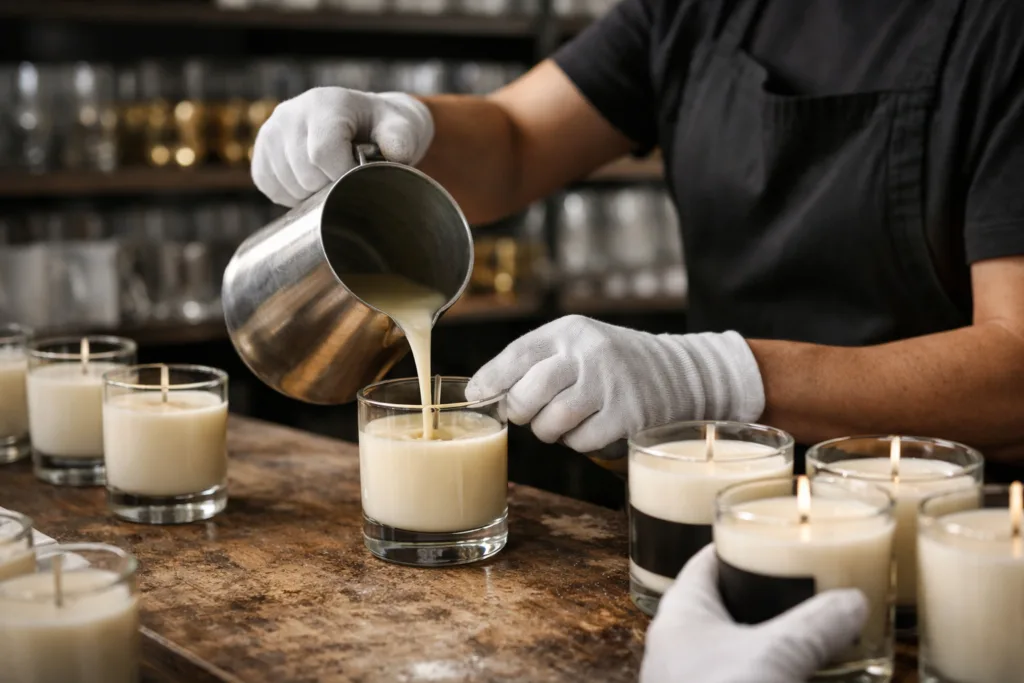
- Burn-performance tests (assuring expected burn hours and clean melt pool)
- Wick centering, adhesion, and sizing per wax and vessel diameter
- Visual consistency (label placement, foil integrity, vessel clarity)
- Allergen statements, fragrance SDS, and CLP warning implementation
Common Quality Pitfalls at MOQ Scale
- Under-pouring fragrance for cost, risking low scent throw and poor reviews
- Skipping full-size test burns to save time or wax
- Improper curing, yielding weak cold/hot throw
Optimizing Your Candle MOQ Spend for Brand Value
New candle brands—and even established home fragrance designers—often grapple with balancing upfront MOQ cost against long-term profit and customer loyalty. To optimize, focus on:
- Prioritizing scent quality over lowest per-piece price
- Choosing a vessel and box that reflect market positioning, even if it means higher initial MOQ
- Partnering with experienced OEM/ODM producers (like Circe Home) able to layer compliance, depth of fragrance development, and flexible production scale
- Requesting comprehensive QC, burn data, and compliance support in your supplier agreements
Sustainability and Compliance in MOQ Decisions
Modern luxury candles must not only look and smell divine; they must be clean-burning, responsibly sourced, and safety-certified for their destination market. This increasingly influences MOQ costs by driving demand for:
- FSC-certified packaging, soy inks, and recycled glass
- Biodegradable or easily refillable containers
- Full CLP and IFRA certification (critical for EU, UK, and U.S. retail)
- Vegan, phthalate-free, and toxin-free formulations for wellness markets
Use Cases and MOQ Strategy by Brand Type
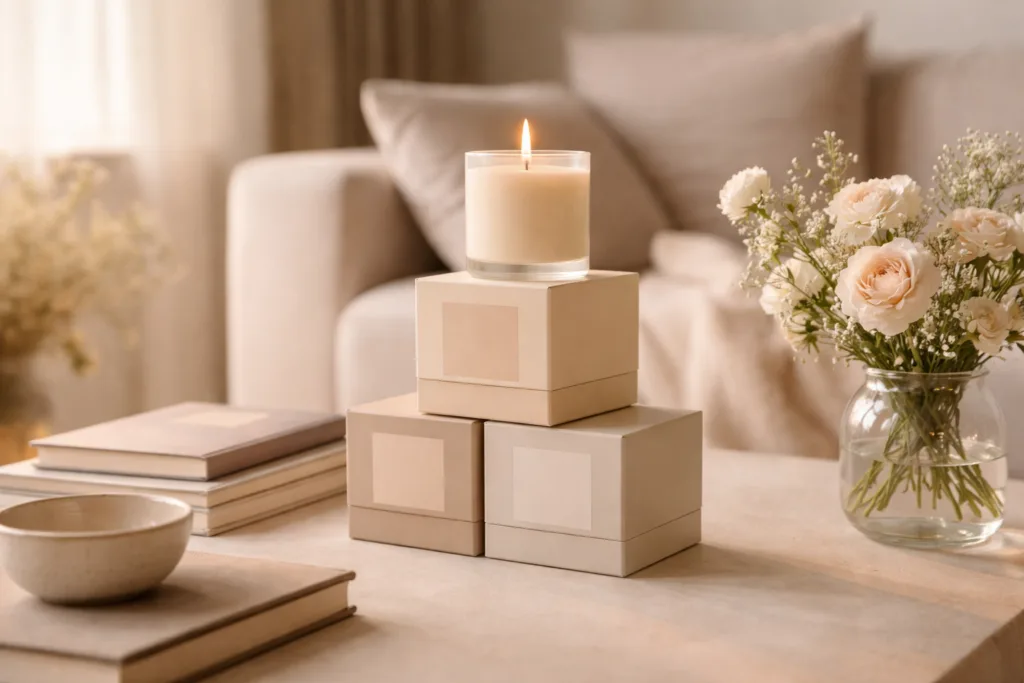
Whether you’re launching a minimalist home décor line or developing scent signatures for boutique hotels, your MOQ choices impact more than just cost. Higher MOQ enables full customization, but lower MOQ may work for premium gifting, highly curated launches, or test runs. For example:
- Wellness & Spa Brands: Focus on soy/coconut blends, clean fragrance, FSC-packaging, moderate customization at 500+ MOQ
- High-End Retail Private Label: Unique vessels, bespoke perfume blends, custom rigid boxes, 1000+ MOQ
- Subscription/Gifting Lines: Smaller batch runs (200–500 candles), simpler vessels/labels but premium wax and scent as core value
Frequently Asked Questions
What is the typical MOQ for custom luxury candles?
Minimum order quantities for custom luxury candles usually start at 200–500 pieces per fragrance or vessel, depending on customization requirements and supplier capabilities.
How do fragrance costs impact my candle MOQ price?
Bespoke and high-fragrance-load candles have increased per-unit costs at low MOQs, due to premium raw materials, batch testing, and compliance documentation.
Can I use eco-friendly packaging for low-MOQ orders?
Many manufacturers offer eco-friendly or FSC-certified packaging at 500+ MOQ, but full customization and specialty finishes may require larger batches.
What’s the value of burn and scent testing for MOQ batches?
Burn and scent consistency tests are essential for quality. They help avoid channel returns and negative reviews by ensuring clean burn, strong throw, and safety.
How are compliance costs incorporated in candle MOQ?
Compliance with IFRA, CLP, and other standards adds costs for documentation, QC labor, safety labeling, and occasional third-party lab testing, especially at lower MOQs.
Are labor costs higher for artisanal or hand-poured candles?
Hand-poured and artisan batch candles require specialized labor at each stage, which increases unit costs notably for lower MOQs and highly customized projects.