
If you sell candles in the US, EU, or UK, compliance is not a box to tick at the end. It is part of product development, packaging design, fragrance selection, documentation, warehousing, and retail approval from day one.
That is the first thing many new candle brands underestimate.
They spend months on vessel design, fragrance mood boards, and outer packaging, then discover late in the process that the warning label is incomplete, the fragrance paperwork is missing, the claim language is too loose, the import file is weak, or the retailer wants documents the supplier cannot provide. At that point, the problem is no longer creative. It is commercial. Launch dates slip. Amazon listings get flagged. Retail buyers lose confidence. Customs, insurers, or marketplaces start asking questions no one on the team can answer quickly.
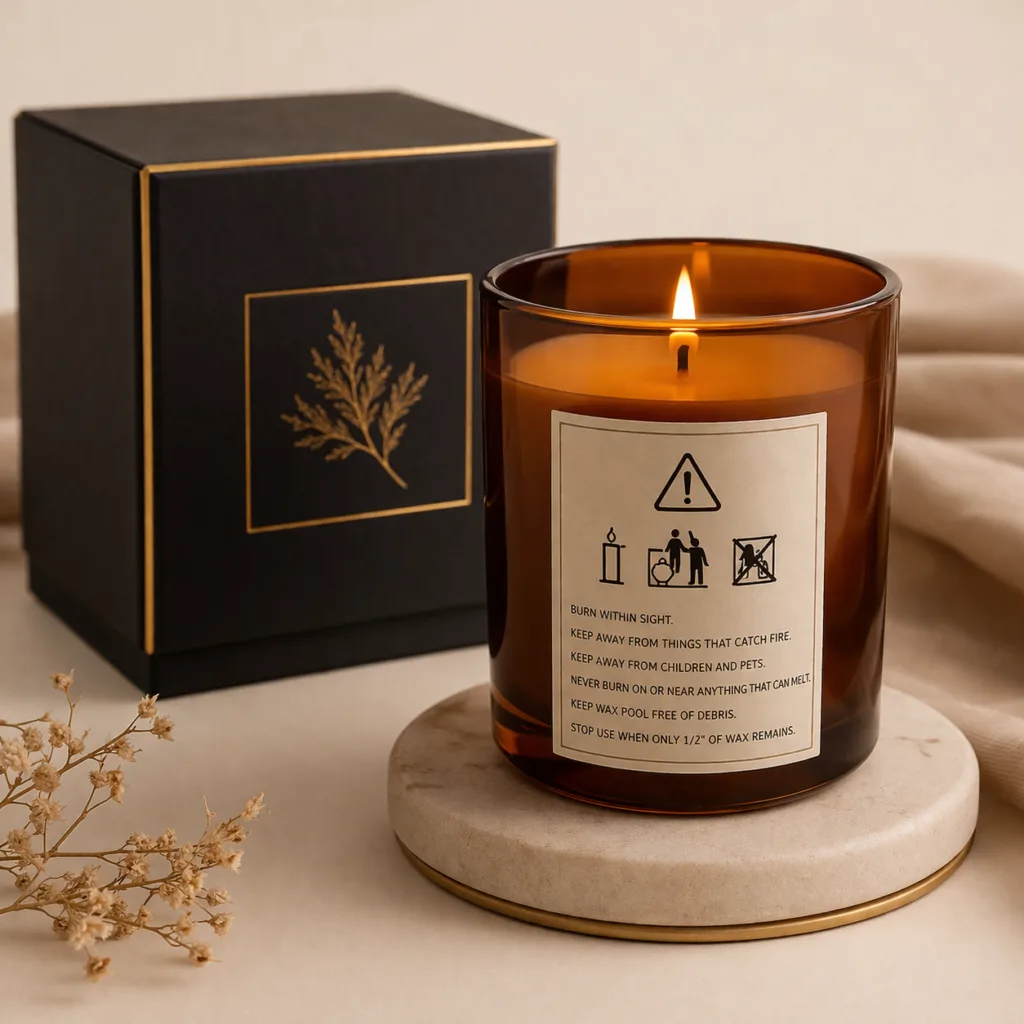
For serious B2B buyers, that is where supplier selection becomes very simple. The cheapest quote stops looking cheap when it cannot support compliant market entry.
This guide is written from a procurement and private label perspective. It is not a theoretical legal summary. It is a practical candle compliance checklist for brands, importers, distributors, and retail buyers sourcing for the US, EU, and UK. The goal is to help you understand what matters before you place a production order, what documents you should ask for, where the real risks sit, and how a capable supplier helps reduce those risks.
The short version is this: beautiful candles are easy to source; compliant candle programs are much harder. If you want to build a line that can move through wholesale, retail, hospitality, gift, and marketplace channels with fewer delays, you need to treat compliance as part of the product itself.
Why compliance matters more in B2B than in small-batch direct sales
A founder selling a few handmade candles at a local market can sometimes get away with informal systems for longer than they should. A brand supplying chain retail, department stores, concept stores, hotel groups, or regional distributors cannot.
B2B buyers are not just buying scent and packaging. They are buying operational reliability.
When a buyer places a larger order, they are taking on several layers of risk at once:
- product safety risk
- claims risk
- label risk
- import and customs risk
- retailer onboarding risk
- insurance risk
- reputational risk
- recall risk
That is why professional procurement teams do not only ask, “What is the price?” They ask:
- What standards does this product follow?
- Can the supplier provide the correct warning label format?
- Is the fragrance backed by IFRA paperwork?
- Are there SDS documents for the finished product or relevant mixtures?
- Can the packaging and container hold up in real burn conditions?
- Does the product file support our target market?
- Who is responsible for importer details, local labeling, and post-market obligations?
The higher the order value, the less tolerance there is for vague answers.
In practice, compliance is also tied directly to margin. A product that gets blocked, relabeled, or reworked after production is far more expensive than one that is developed correctly from the start. That is why experienced buyers prefer suppliers who can discuss the boring part well: warning text, fragrance restrictions, glass suitability, batch traceability, and document readiness.
US, EU, and UK: the same product does not always travel under the same rules
One of the most common mistakes in private label candles is assuming that one label and one technical file will work everywhere.
It often will not.
The US market is heavily shaped by industry standards and retailer expectations around fire safety labeling, candle performance, and container suitability. The EU market adds a stronger chemicals compliance layer through classification, labeling, and safety communication for hazardous mixtures where applicable. The UK remains closely related to EU-derived chemical rules but now operates under its own framework in Great Britain after Brexit, which means brands selling in both the EU and UK must check whether the same labeling and support structure still works for both markets.
For buyers, that means a candle line intended for multi-market distribution must be scoped properly at the beginning. Not after the fragrance has been locked, not after the box has been printed, and definitely not after goods have been packed.
Below is the strategic overview.
Market view at a glance
| Area | US | EU | UK |
|---|---|---|---|
| Core candle safety focus | Fire safety labeling, burn performance, container suitability | Chemical classification and labeling where applicable, plus safe product support | Similar chemical communication framework in Great Britain, plus market-specific details |
| Common standards and frameworks | ASTM candle-related standards | CLP, REACH, IFRA, product documentation | GB CLP, UK REACH, IFRA, product documentation |
| Buyer concern | Warning label format, glass safety, retailer onboarding | Allergen or hazard communication, documentation, importer readiness | Similar to EU, but with separate GB compliance considerations |
| Risk of using one universal label | Moderate | High | High if selling alongside EU without checking requirements |
For procurement teams, the message is simple: build compliance by market, not by assumption.
The Top 15 candle compliance checklist for US, EU, and UK brands
1. Confirm the target market before development starts
This sounds obvious, but many sourcing problems begin here.
A supplier cannot prepare the right documentation or label logic if the buyer has not clearly stated where the product will be sold. “Europe” is not specific enough. “UK and EU and maybe the US later” is also not specific enough if you want the first production run to be right.
Before sampling, define:
- destination country or region
- sales channel: retail, wholesale, Amazon, hospitality, subscription, gifting
- who the importer or responsible business will be
- whether the same fragrance will be used across all markets
- whether final labeling will be applied at origin or after import
This single step influences almost every compliance decision after it.
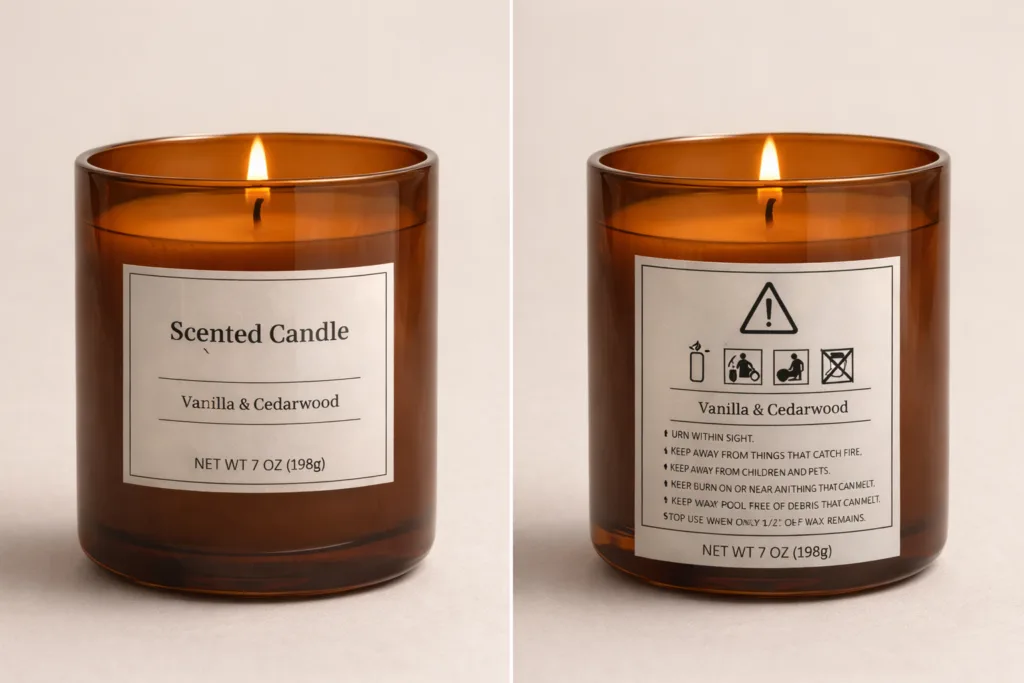
2. Lock the correct warning label strategy early
For candles, warning labels are not decorative. They are part of the safety system.
In the US, buyers commonly work around ASTM-based fire safety labeling expectations. In the EU and UK, label obligations can become more complex when the finished product or fragrance mixture triggers hazard communication requirements. Even where the candle itself is not treated the same way as a bottle of chemical mixture, buyers still need accurate safety communication, sensible use instructions, and no misleading claims.
A practical B2B label review should cover:
- burn safely wording
- keep away from children and pets
- keep away from flammable objects
- never leave a burning candle unattended
- container heat warning where relevant
- wick trimming instruction
- safe burn duration instruction
- batch or traceability code
- supplier, importer, or responsible party details where required
A common mistake is leaving warning text until the artwork stage. At that point, the brand has already chosen a tiny label area or an all-over design that leaves no room for legally necessary information.
Smart buyers review label space before approving the vessel and box structure.
3. Check whether the fragrance system is supported by IFRA documentation
For fragranced candles, IFRA paperwork is one of the first things professional buyers ask for.
That is not because IFRA replaces law. It does not. It matters because it shows whether the fragrance house has assessed the formula for the intended end use and whether the fragrance is being used within the appropriate safe-use framework.
In real sourcing work, the useful question is not “Do you have IFRA?”
The useful question is:
Can you provide an IFRA certificate or equivalent conformity support for this exact fragrance, for this intended candle application, from the actual fragrance manufacturer or qualified supplier?
That wording matters.
Buyers should verify:
- the document comes from the fragrance manufacturer or authorized source
- the fragrance identity matches the product being bought
- the intended use category is relevant to candles
- the version is current enough for active commercial use
- any maximum use guidance is understood by both fragrance supplier and finished-product manufacturer
A weak supplier often says “our fragrance is IFRA compliant” but cannot show clear paperwork. That is not enough for a serious buying program.
4. Ask for SDS support before production, not after problems appear
Safety Data Sheets are one of the most misunderstood parts of candle sourcing.
Different markets and product configurations create different document expectations, and not every candle will be treated identically in every context. Still, in B2B purchasing, the rule is simple: if there is any chance the buyer, importer, warehouse, insurer, retailer, or authority will ask for safety documentation, you want that conversation settled before mass production.
An experienced supplier should be able to clarify:
- whether an SDS is available for the fragrance
n- whether an SDS is available or advisable for the finished product or related mixture - whether transport classification is relevant
- whether warehouse handling teams need hazard communication
- what emergency contact or poison-center-related requirements may apply in the destination market if the product falls within those rules
From a buyer’s point of view, missing SDS support is not just a paperwork gap. It is a signal that the supplier may not understand the downstream compliance burden.
5. Review CLP and hazard communication exposure for EU sales
This is where many non-EU suppliers get caught out.
In the EU, chemical classification and labeling obligations can apply when a mixture is classified as hazardous. For fragranced consumer goods, the practical effect is that buyers must understand whether the formula or its presentation triggers label elements, hazard statements, precautionary statements, and related support documentation.
For candles, the exact treatment depends on composition and regulatory interpretation in the supply chain. That is why sophisticated buyers do not rely on generic claims like “everyone sells it this way.” They ask their fragrance supplier, regulatory consultant, and manufacturing partner to align on the actual product profile.
At procurement level, your checklist should include:
- hazard classification review where applicable
- label element review for the destination market
- allergen and composition communication where relevant
- verification of supplier and importer details
- support for poison centre notification or UFI-related obligations if the product falls into scope
Even when the final product ends up outside one narrow requirement, the buyer still needs an evidence trail showing that the issue was checked properly.
6. Separate EU and UK compliance planning instead of treating them as identical
This is one of the most important commercial points in this article.
A lot of brands still speak about “Europe and UK” as though it were one technical market. It is not.
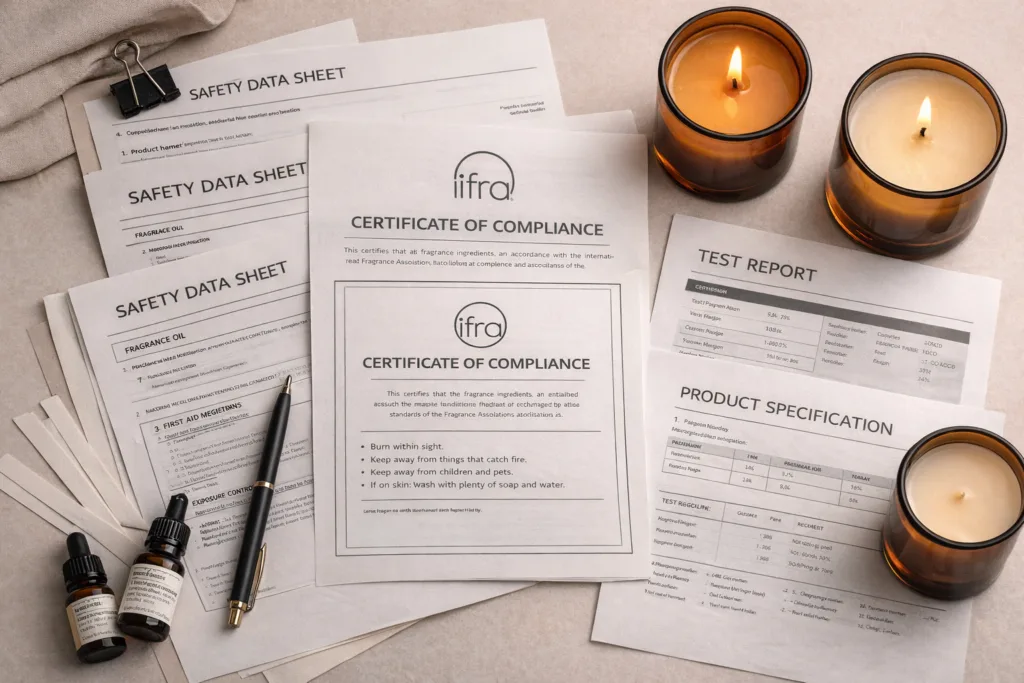
Great Britain now operates under GB CLP and UK REACH arrangements. The underlying logic still resembles the older EU-derived framework in many areas, but businesses selling in both markets should not assume that one label, one address line, one notification path, or one importer setup always covers both.
For buyers, that means you should check:
- whether the EU and Great Britain need separate importer or responsible business details
- whether artwork needs different market versions
- whether warehousing and entry routes differ
- whether your regulatory support partner covers both EU and UK requirements
- whether your product file is written in a way that can be adapted market by market
For larger programs, this is not a minor detail. It affects packaging inventory, fulfillment complexity, and relabeling cost.
7. Verify container suitability, especially for glass vessels
Many candle complaints blamed on “bad wax” or “poor burning” are actually container-system problems.
When a candle burns, the glass gets hot. That is not a defect by itself. It is basic thermal reality. What matters is whether the entire system has been developed responsibly: vessel thickness, thermal performance, fill weight, wick choice, fragrance load, burn behavior, and user instruction.
For encased candles, buyers should review:
- whether the glass type is appropriate for candle use
- whether the container source is stable and documented
- whether the fill weight is matched to vessel dimensions
- whether the wick series has been tested in that exact system
- whether the label warns about heat and safe handling where needed
- whether the vessel remains commercially presentable after repeated burns
Cheap container substitutions are a classic hidden risk in candle sourcing. A sample can look excellent while bulk production quietly shifts to a lower-control vessel source. That is why large buyers need batch consistency, not just a good first sample.
8. Demand real burn testing, not only visual approval
A beautiful sample is not a technical approval.
For B2B programs, candle testing should cover more than fragrance acceptance and logo placement. At minimum, the buyer should understand how the supplier approaches:
- flame height
- soot or visible emissions risk
- container temperature behavior
- stability during repeated burns
- wick mushrooming or carbon build-up
- wax pool behavior
- end-of-life performance
- labeling and usage instruction consistency with actual test conditions
The higher the order value, the less useful vague language becomes. “We tested it and it is fine” is not a professional answer.
A serious supplier should be able to explain its burn testing logic, sample iteration process, and technical adjustments when the candle does not perform correctly on the first round.
9. Control claims around health, wellness, and natural positioning
This is an area where many brands accidentally create compliance risk through marketing language.
Candles are often sold with emotional positioning: calming, sleep-friendly, uplifting, wellness-inspired, clean, natural, toxin-free, aromatherapy, non-toxic, safe for babies, and so on. Some of these phrases may be commercially common, but that does not make them low risk.
From a B2B perspective, buyers should pressure-test all front-of-pack and online copy. In particular, be careful with:
- medical or therapeutic claims
- unsupported “non-toxic” claims
- “chemical-free” language
- overbroad environmental claims
- unsupported essential-oil superiority claims
- statements that imply safety beyond what the product can reasonably prove
Procurement teams sometimes focus so hard on physical product compliance that they ignore marketing compliance. That is a mistake. Retail rejection often starts with claims, not only chemistry.
10. Make sure batch traceability exists and can survive scale
If a brand grows, traceability stops being optional.
You need to know which fragrance batch, wax batch, wick lot, glass lot, and packaging run were used in which production batch. Without that, any quality issue becomes messy, expensive, and reputationally dangerous.
A strong supplier should have a traceability method that supports:
- batch coding on product or packaging
- internal linking to raw material lots
- production date control
- retained sample practice where appropriate
- complaint follow-up by batch
- targeted corrective action instead of broad panic recalls
For hospitality, retail chain, and distributor buyers, this is a big point. It shows whether the supplier is built for repeat commercial business or only for opportunistic trading.
11. Check packaging compliance and transit fitness, not just appearance
For gift candles, outer packaging often drives perceived value. But it can also create avoidable compliance and logistics problems.
A premium rigid box may be commercially right, but buyers still need to ask:
- does the box allow necessary warning information?
- is the insert stable enough to protect glass in transit?
- are there inks, coatings, and decorative finishes that may complicate documentation?
- will labeling be applied before or after final packing?
- does the pack-out method support e-commerce, wholesale, or pallet delivery?
Too many candle brands overspend on presentation and underspend on packaging logic. In B2B, packaging is not just branding. It is part of safe delivery, label readability, and retail readiness.
12. Clarify who owns importer and local market responsibilities
A supplier can support compliance, but the supplier is not automatically the importer of record or local responsible business in your target market.
This needs to be discussed clearly, especially for EU and UK sales.
Buyers should identify:
- who imports the goods
- whose address appears where required
- who maintains the local technical file if needed
- who handles post-market complaints
- who updates artwork when rules change
- who communicates with distributors and retailers when documents are requested
This is one of the biggest differences between buying a candle and buying a commodity. You are not only buying wax in a jar. You are buying a product that enters a regulatory and commercial ecosystem.
13. Audit document readiness before deposit payment
The right time to review documents is before the large order moves, not when the goods are already in production.
A practical pre-order compliance file should normally include as many of the following as relevant to the product and market:
- fragrance IFRA support
- SDS documents where applicable
- burn test records or technical summaries
- warning label artwork review
- product specifications
- packaging specifications
- batch coding method
- declaration or explanation of market compliance approach
- importer or market-entry plan
- shipping and handling notes where relevant
If the supplier cannot assemble a clean document pack before production, the buyer should assume that after-sales support will also be weak.
14. Do not separate compliance from MOQ, price, and customization decisions
This is the procurement reality many new brands miss.
High customization often creates higher compliance complexity.
Why?
Because every change can affect the product system:
- a new vessel may require fresh burn validation
- a higher fragrance load can shift performance and paperwork
- metallic decoration may change packaging cost and handling
- a new wax blend can change melting behavior
- multi-market packaging can require separate print runs
This means your compliance plan is tied to MOQ and price from the beginning. Large buyers understand this instinctively. Low-maturity buyers often do not. They want luxury-level customization, low MOQ, fast lead time, and full document support at the same time. In real manufacturing, those goals usually conflict.
A credible supplier will explain the trade-offs instead of hiding them.
15. Choose suppliers who can discuss compliance in plain commercial language
This final point matters more than most buyers realize.
Good suppliers do not impress serious buyers by throwing regulation names around. They impress buyers by turning those requirements into an executable sourcing plan.
That means they can explain, in plain English:
- what documents they can provide
- what documents come from the fragrance house
- what needs buyer-side regulatory support
- what label space is needed
- what versioning is required for US, EU, and UK
- what changes may affect performance or compliance
- what risks remain and how to manage them
In other words, the best supplier is not the one that says “yes” to everything. It is the one that helps you avoid expensive mistakes before they happen.
What buyers should ask a candle supplier before placing a larger order
If you are evaluating private label or custom candle partners, these are the questions worth asking in the quotation and sample stage:
- Which target markets have you supported for similar candle programs?
- Can you provide fragrance IFRA support from the actual fragrance supplier?
- Can you explain your burn testing process for this exact candle system?
- What glass or vessel controls do you use for encased candles?
- What warning label framework do you recommend for our destination market?
- What batch coding and traceability method do you use?
- Can you share sample document formats before we place bulk production?
- If we sell in both EU and UK, what packaging version changes should we expect?
- Which compliance items are covered by you, and which stay with the importer or brand?
- Have you supported clients supplying retail chains, distributors, or hospitality groups before?
These questions quickly separate presentation-focused suppliers from execution-focused suppliers.
Common compliance mistakes that delay candle projects
To make this guide more practical, here are the mistakes we see most often in international candle sourcing.
Mistake 1: Treating compliance as a post-design task
By the time the artwork is finished, many expensive decisions are already locked.
Mistake 2: Using fragrance paperwork that does not match the final product
A generic file from a similar scent is not a proper substitute.
Mistake 3: Assuming one label works globally
US, EU, and UK sales should be reviewed market by market.
Mistake 4: Focusing only on the candle and forgetting the system
Wick, wax, vessel, fragrance, fill weight, and use instruction must work together.
Mistake 5: Confusing supplier confidence with supplier capability
Many suppliers sound certain. Far fewer can provide clean documents on time.
Mistake 6: Making aggressive health or clean-product claims
This creates avoidable legal and retailer risk.
Mistake 7: Waiting until the retailer asks for documents
At that point, the commercial leverage is gone and the pressure is high.
A practical document checklist for professional candle buyers
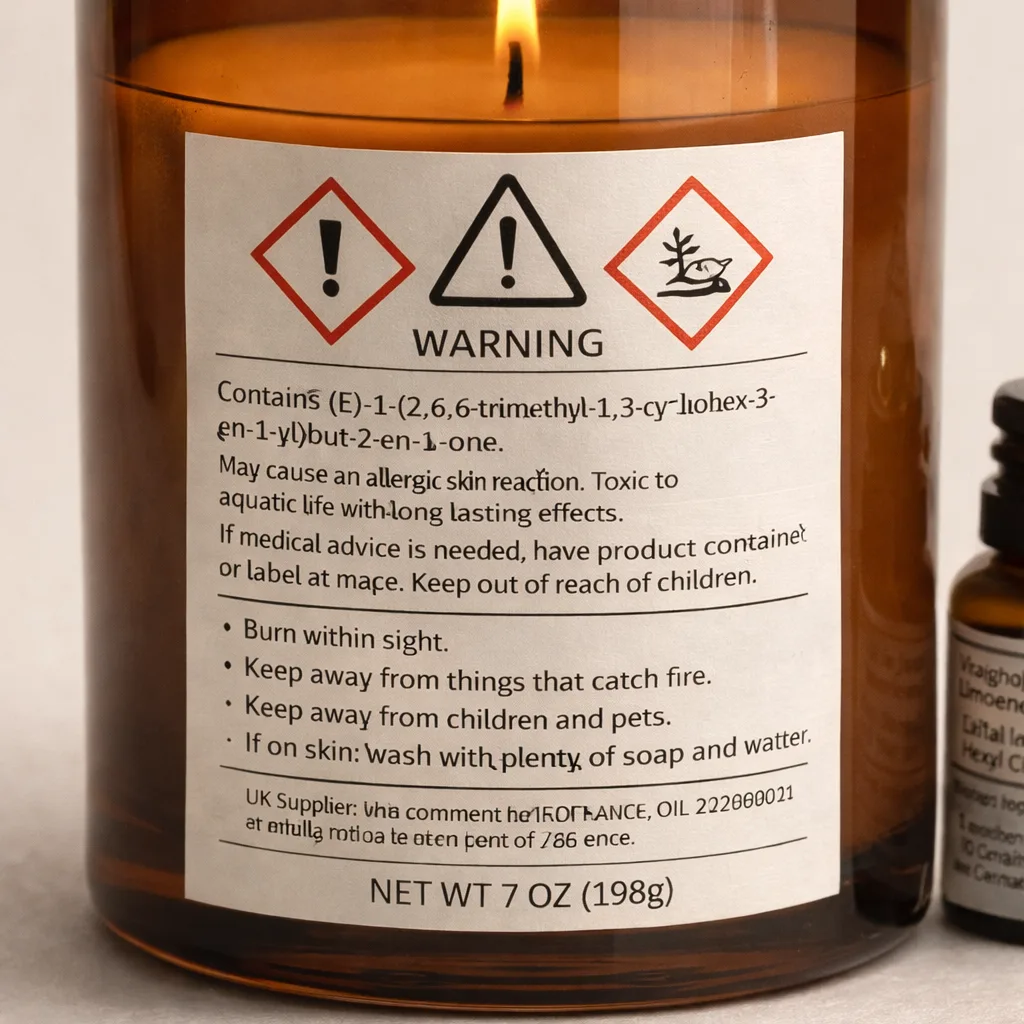
If you are building a candle line for serious wholesale or retail distribution, your working file should usually include the following items as applicable to the product and destination market:
- product specification sheet
- fragrance specification and IFRA support
- SDS support where relevant
- warning label text and artwork version
- burn testing record or technical summary
- vessel specification
- packaging specification
- batch traceability method
- shipping configuration details
- importer or responsible-party plan
- market-specific labeling version plan for US, EU, and UK where needed
This is the difference between buying samples and building a scalable program.
The real B2B takeaway: compliance is part of the offer
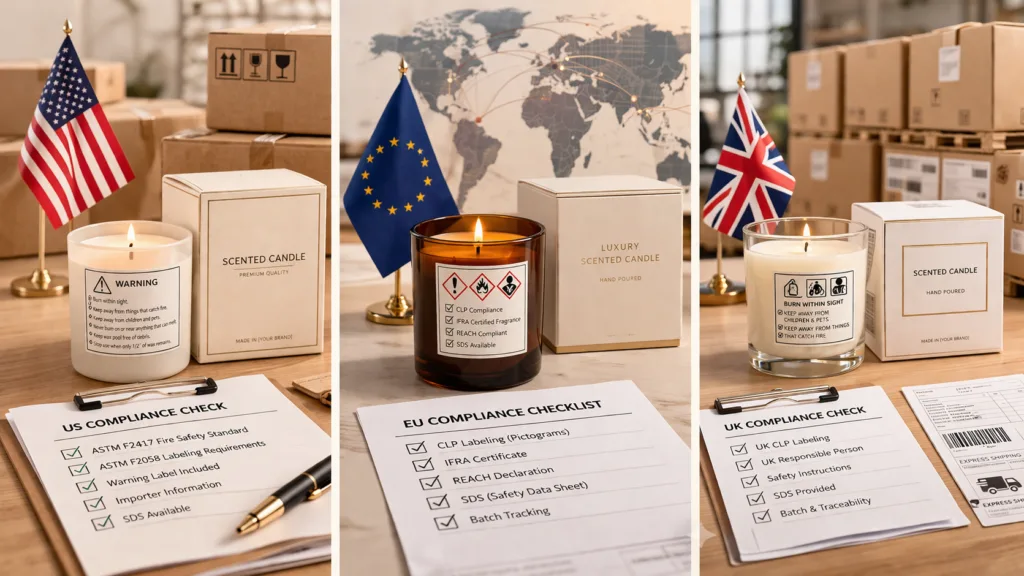
For large-order buyers, compliance is not separate from product quality. It is part of product quality.
A candle that smells good but comes with weak documentation is not a strong product. A luxury gift set with unstable labeling logic is not a premium product. A beautiful vessel without disciplined burn validation is not a mature retail product.
The brands that scale more smoothly usually do three things well:
- they define their target markets early
- they choose suppliers who can support documentation and testing conversations clearly
- they build compliance into the sourcing brief rather than trying to repair it later
That is also where an experienced manufacturing partner adds value. Not by pretending to replace the buyer’s legal obligations, but by making the product development and sourcing side much more controlled.
For private label buyers, distributors, hotel groups, retailers, and established brand owners, that control matters. It shortens approval cycles, reduces surprises, and makes larger orders less risky.
If you are sourcing candles for the US, EU, or UK market, the best time to review your compliance checklist is before you approve the final sample, not after you place the order.
FAQs
1. What documents should I ask for when buying private label candles in bulk?
For most professional B2B purchases, ask for a product specification sheet, fragrance IFRA support, SDS support where relevant, warning label review, burn testing information, packaging specifications, and batch traceability details. Exact requirements depend on market and product profile.
2. Is one candle label enough for the US, EU, and UK?
Usually, buyers should not assume that. The US, EU, and UK can require different safety communication, importer details, and chemical compliance considerations. Multi-market brands should review labeling by destination.
3. Does IFRA compliance mean the whole candle is legally compliant?
No. IFRA support is important for fragrance safety management, but it does not replace national or regional legal requirements, finished-product assessment, labeling obligations, or importer responsibilities.
Final note for serious buyers
If your goal is only to buy a cheap candle, many suppliers can send you a price list.
If your goal is to build a candle line that can stand up to distributor onboarding, retailer document requests, and multi-market sales, you need a supplier that can support compliance planning alongside product development.
That is where the right manufacturing partner makes the difference: better document readiness, clearer label planning, safer system design, stronger batch control, and fewer surprises when the order size gets real.