
Safety Tips for Glass Jar Candles
Glass jar candles remain a popular choice for their clean burn, chic design, and aroma diffusion. Yet, concerns about heat resistance, glass fractures, and whether candle jars can explode are common among both end users and sourcing professionals. Understanding the science and best practices behind safe glass candle use is essential—whether you’re lighting a scented candle at home or developing a private-label line with precise burn requirements.
Understanding Can Candle Jars Explode?
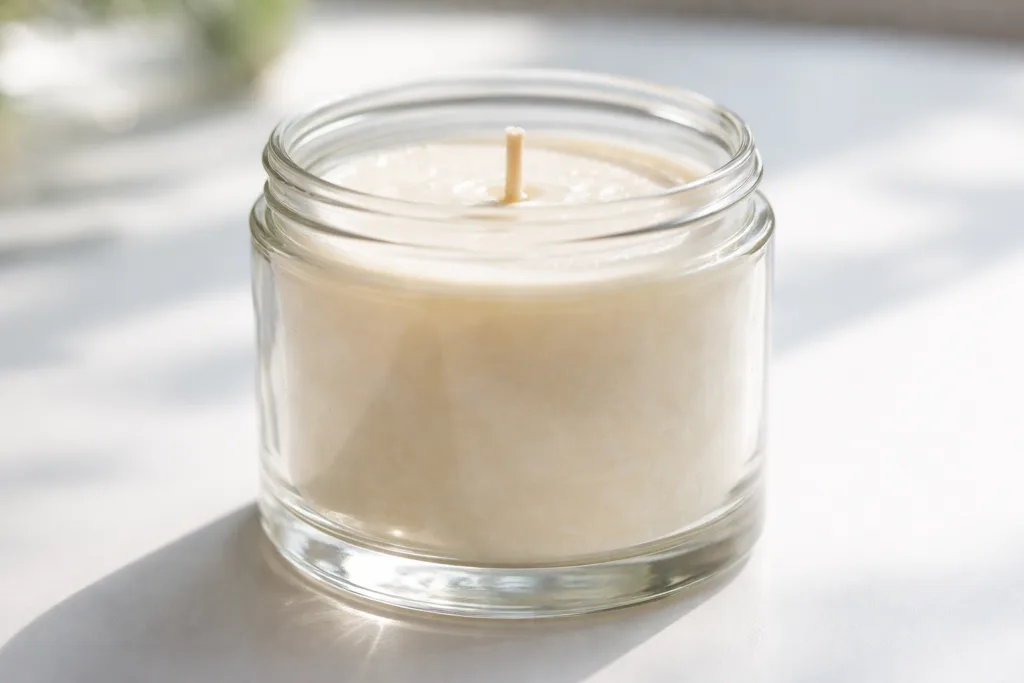
While rare, candle jar explosions or fractures can occur if materials or usage do not meet industry safety standards. These critical issues often stem from improper glass selection, overfilling, thermal stress, or poor wick placement. High temperatures and localized heat buildup lead to a risk of cracking or breakage, especially if the glass is not tempered or specifically engineered for withstanding thermal cycles.
- Low-grade glass prone to stress fractures
- Excessive wax fill increasing heat exposure
- Incorrect wick sizing leading to uneven burning
- Failure to dissipate heat from the jar base
Manufacturers like Circe Home invest in rigorous glass sourcing and quality checks to avoid these safety hazards.
How Heat-Resistant Glass Is Chosen for Candles
Not all glass is suitable for candle-making. Specialized, heat-resistant vessels are chosen to withstand thermal cycles while protecting the wax and fragrance integrity. These include soda lime glass, borosilicate for premium blends, and patented glass composites tailored for luxury candle projects. Key selection criteria:
- Thermal shock resistance rating
- Uniform wall thickness (typically 3–5 mm)
- Smooth finish to prevent micro-cracks
- Food-grade or lab-tested materials
Table: Comparative Properties of Common Candle Glass Types
| Glass Type | Thermal Shock Resistance | Optical Clarity | Typical Uses |
|---|---|---|---|
| Soda Lime (tempered) | Good | High | Mass market, classic jars |
| Borosilicate | Excellent | Premium | Luxury blends, spa |
| Specialty composites | Variable—spec driven | Medium to High | Bespoke, designer |
Sourcing Safe Glass Jars: Key Questions to Ask
Selecting the right glass supplier is non-negotiable for safe, elegant candle lines. Common QC checkpoints include:
- Batch thermal shock simulation
- Base thickness measurements
- Visual and tactile defect screening
- Label adhesion and chemical resistance tests
For OEM/ODM projects, Circe Home integrates these steps with custom embossing and packaging requirements to ensure seamless safety and style alignment.
Optimal Wax Blends and Fragrance Load for Safety
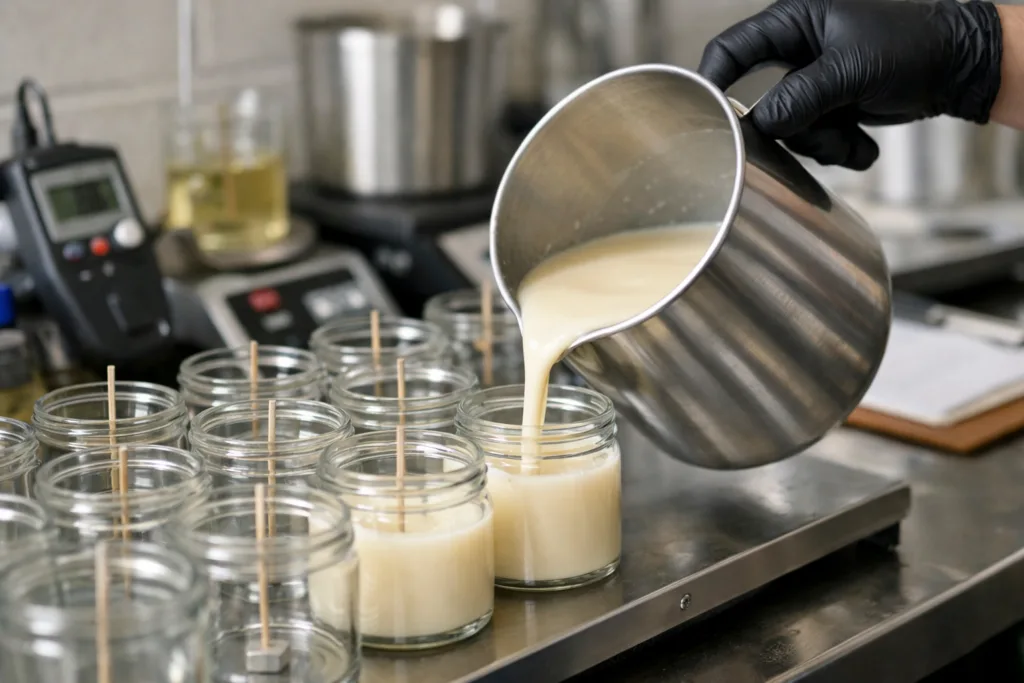
High-performance waxes—soy, coconut, rapeseed, beeswax—are engineered for clean combustion and steady wicking. Safety-first operations calculate the optimal fragrance load (typically up to 10% for soy), and monitor curing time (7–14 days). This minimizes excess heat generation and ensures a predictable burn profile, without glass-stressing flare-ups or frosting issues.
Circe Home Lab Insight: “We test every wax blend for flash point, burn rate, and vessel heat retention, prioritizing thermal stability in every batch.”
Tips for Ensuring Clean & Safe Burn
- Use only manufacturer-recommended maximum fragrance load
- Blend at appropriate temperature for each wax type
- Allow full cure before first burn to prevent tunneling
Preventing Soot, Mushrooming, and Overheating
Soot, wick “mushrooming,” and overheating are frequent safety complaints. These issues can obscure the glass, create unwanted residues, or expose the vessel to damaging thermal spikes. Recommended best practices include:
- Selecting low-soot, pre-waxed cotton wicks
- Reviewing manufacturer wick sizing charts for each vessel diameter and wax blend
- Keeping wick trim length at 5–7 mm per use
- Never burning candles longer than 4 hours at a stretch
- Rotating the candle to prevent hot spots
Safe Candle Placement and Burning Practices
Even with laboratory-tested glass and carefully crafted waxes, user behavior greatly impacts candle safety. Never place a burning glass jar candle:
- Directly on wooden or flammable surfaces
- Near curtains, plants, or pets
- In drafty windows or on slanted shelves
- Within a cluttered arrangement that blocks airflow
Allow at least 10 cm of space above and around the jar, and extinguish candles when only 1 cm of wax remains at the base to prevent glass overheating.
Compliance, Warning Labels, and Production Testing
To meet global safety standards, brands must perform comprehensive batch testing and maintain clear labeling. At minimum, glass jar candles should be certified for:
- IFRA and CLP (for EU and international markets)
- Soot index and wick centering tolerance
- Burn time consistency (e.g., >35 hours for 200g)
- Allergen and hazard warnings
- Instructions for trim and extinguishing
Eco-conscious manufacturers like Circe Home use FSC packaging, soy ink labeling, and offer refill options where applicable.
Luxury Experiences: Scent, Aesthetic, and Safety in Harmony
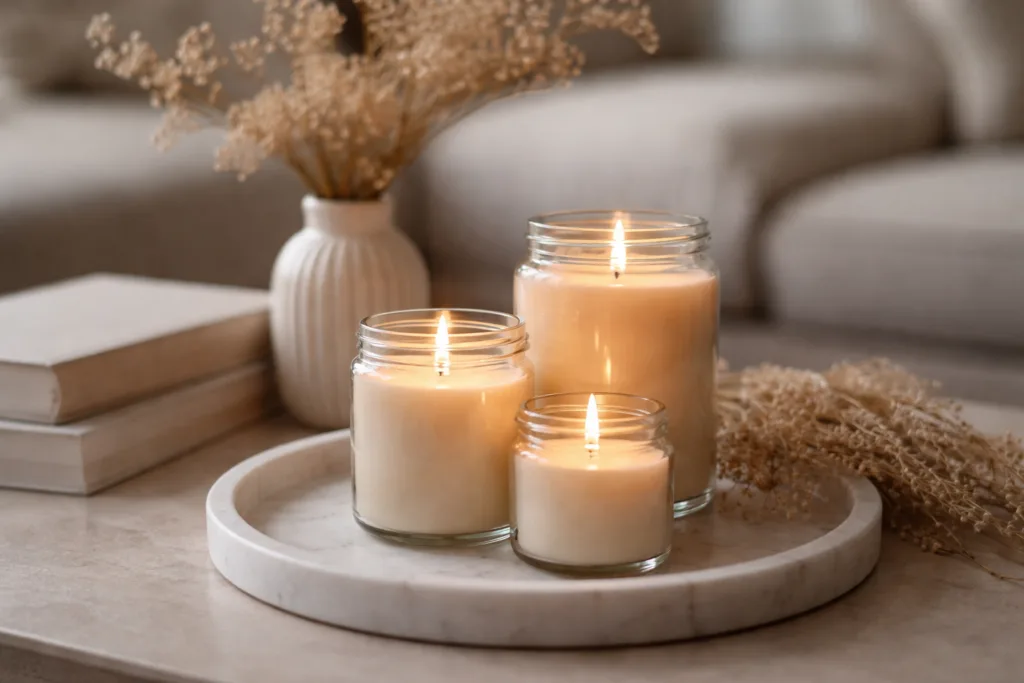
Well-designed glass jar candles must balance fragrance throw, clean wax burn, vessel elegance, and user safety. Custom blends of soy, coconut, or beeswax paired with advanced fragrance systems—tested for allergen exposure and essential oil compatibility—enable both mesmerizing aroma diffusion and peace of mind.
End-users and private label buyers benefit from proper education on burn care, storage, and glass selection, reducing the likelihood of accidents while elevating the everyday experience.
Frequently Asked Questions
Can candle jars explode when burning?
Jar breakage is rare but possible if the glass is not heat-resistant, the wick is misaligned, or the candle burns too long. Always purchase candles with tested glass and follow burn guidelines.
How do I know if a glass jar is safe for candles?
Check for uniform thickness, heat resistance markings, smooth finishes, and supplier assurances. Brands like Circe Home prioritize lab-tested glassware.
What wax blends are safest for glass jar candles?
Soy, coconut, rapeseed, and beeswax blends with balanced fragrance load offer steady burns and reduced thermal risk. Paraffin may burn hotter and require extra care.
Is soot buildup dangerous?
Routine soot is usually harmless but can signal wick issues or poor airflow. Consistent buildup may obscure jars or introduce contaminants—keep wicks trimmed and use as directed.
How long can I safely burn a glass jar candle?
Avoid burning longer than 4 hours at a time. Extinguish when 1 cm of wax remains at the bottom to prevent overheating and glass stress.
Are decorated or colored jars less safe?
Decorative coatings or coloring do not inherently reduce safety if applied to certified, heat-resistant glass. Always verify compatibility with the wax formula and fragrance system.