
Concrete jar candles are no longer a niche craft product. For modern home fragrance brands, lifestyle retailers, gift companies, boutique hotels, and design-led importers, they have become a serious product category with strong retail potential. The reason is not simply that concrete looks different from glass. The deeper reason is that concrete jar candles sit at the intersection of fragrance, interior design, material texture, private label customization, and perceived value.
In today’s home fragrance market, a candle is rarely just a candle. Mature buyers are not only asking whether a scent smells good. They are asking whether the vessel fits their retail shelf, whether the packaging can support a premium price point, whether the product photographs well for e-commerce, whether the container can be reused after burning, and whether the overall design can help their brand stand out in an increasingly crowded candle category.
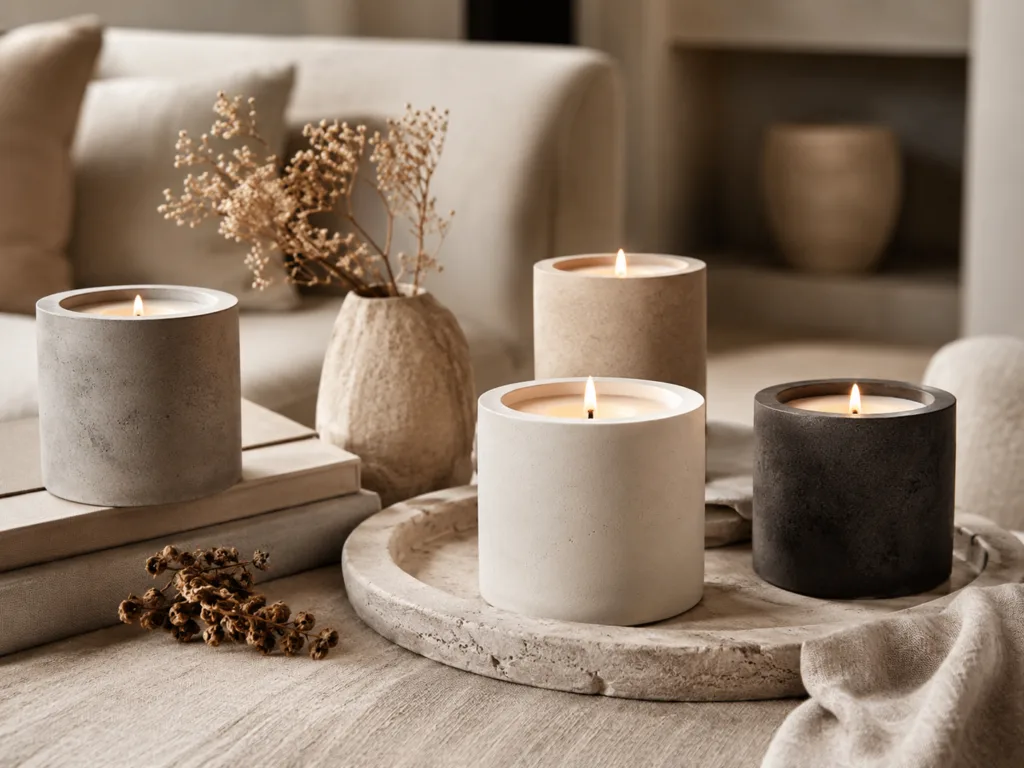
This is where concrete jar candles have become especially attractive. A concrete vessel has architectural character. It feels solid, tactile, modern, and slightly sculptural. It can be minimal without looking cheap, neutral without looking boring, and decorative without becoming overly seasonal. For buyers developing modern home fragrance lines, concrete offers something many standard glass candle jars cannot easily provide: a strong design identity before the candle is even lit.
For wholesale buyers, however, choosing concrete jar candles should not be treated as a purely aesthetic decision. The material has practical implications for MOQ, customization, weight, packaging, shipping, surface finishing, inner coating, and retail positioning. A successful concrete candle project requires the right balance between design ambition and commercial feasibility.
This guide explains why concrete jar candles are becoming popular in modern home fragrance, what kinds of buyers they suit best, how they compare with traditional candle vessels, and what mature buyers should consider before placing a large order.
1. Concrete Jar Candles Match the Modern Interior Design Mood
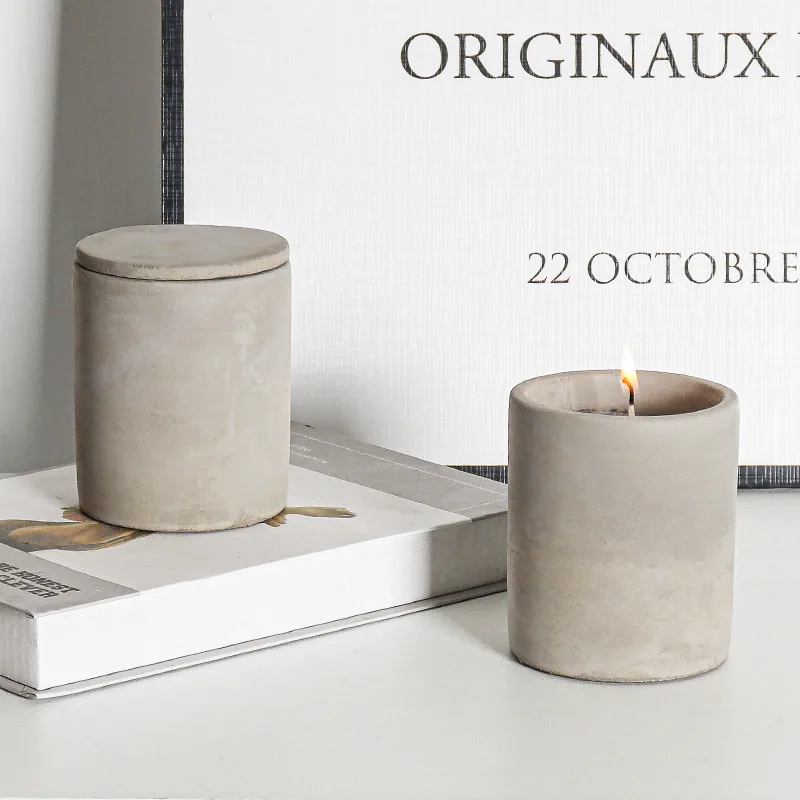
Modern home fragrance is heavily influenced by interior design. Consumers no longer buy candles only for scent; they also buy them as visible objects for coffee tables, bathroom shelves, bedside tables, retail displays, spa rooms, hotel suites, and gift boxes. That means the candle vessel must speak the same visual language as the home.
Concrete jar candles fit especially well with several current interior directions:
- Minimalist interiors
- Japandi-inspired spaces
- Scandinavian home décor
- Industrial loft styling
- Neutral luxury interiors
- Spa and wellness environments
- Boutique hotel aesthetics
- Modern rustic homes
- Concept store displays
The appeal comes from the material itself. Concrete naturally has a matte, stone-like surface. It does not reflect light the way glossy glass does, so it creates a softer and calmer visual effect. Its neutral grey, ivory, beige, charcoal, taupe, sand, and clay tones work easily with wood, linen, ceramic, stone, metal, and natural fibers.
For home décor retailers, this matters. A concrete candle jar can be styled with trays, books, dried flowers, ceramic vases, bath accessories, towels, incense holders, and small decorative objects. It belongs in a lifestyle scene, not just a fragrance aisle. That gives buyers more merchandising flexibility.
A glass jar candle often needs a label, color wax, metallic lid, or decorative box to create visual impact. A concrete jar candle already has a physical presence. Even with a simple label or no label at all, it can feel designed. This is one reason concrete vessels are becoming more attractive for brands that want a quieter but more premium look.
2. Concrete Turns a Candle into a Decorative Object
One of the strongest selling points of concrete jar candles is that the vessel can outlive the candle. Many consumers throw away standard candle containers after use, especially when the jar looks generic or difficult to repurpose. A well-designed concrete vessel, however, feels more like a small home object.
After the wax has burned, the vessel can be reused as:
- A small planter
- A pen holder
- A makeup brush cup
- A bathroom storage cup
- A jewelry holder
- A bedside container
- A decorative tray accessory
- A refillable candle container
For retail buyers, this increases perceived value. The customer is not only purchasing fragrance and burn time; they are also purchasing a reusable vessel that can remain in the home. This helps justify a higher retail price, especially in boutique, gift, wellness, and home décor channels.
This also supports better storytelling. Instead of selling “a scented candle in a jar,” a brand can sell “a modern concrete vessel candle designed for fragrance, décor, and reuse.” That shift sounds small, but it changes how the product is positioned. It moves the candle from a low-cost commodity category toward a lifestyle product category.
For mature buyers, this is important because the candle market is already crowded with glass jars, tins, clamshell wax melts, and basic gift sets. Concrete vessels create a more distinctive product language. They help a brand look intentional, design-led, and less dependent on heavy decoration.
3. Concrete Candle Jars Help Brands Stand Out from Standard Glass Jars
Glass remains one of the most practical and widely used candle vessel materials. It is transparent, familiar, scalable, and suitable for many price levels. For large-volume candle programs, glass can be a very efficient choice. But this is also the problem: because glass is so common, many glass candle collections look similar.
For buyers who want differentiation, concrete creates a stronger first impression.
A concrete jar candle usually feels:
- More tactile
- More architectural
- More modern
- More decorative
- More handmade or artisanal
- More suitable for neutral home décor
- More aligned with boutique retail positioning
This does not mean concrete is better than glass in every situation. For mass-market promotional candles, entry-level gift sets, or very lightweight e-commerce shipments, glass or tin may be more cost-efficient. But for brands selling through design stores, home décor shops, spa channels, hotel gifting, lifestyle boutiques, and premium online stores, concrete can offer a stronger visual difference.
The shelf effect is also worth considering. A row of clear glass candles may require colorful labels to stand out. A row of concrete candles can stand out through shape, texture, weight, and neutral color blocking. This makes concrete suitable for brands that want a more refined and less noisy visual identity.
For buyers building a private label range, concrete vessels can also create family consistency. A brand can develop the same vessel shape in several colors, sizes, or fragrance themes. For example, a buyer may launch a core collection in ivory, warm grey, and charcoal, then add seasonal colors later. This gives the product line continuity while still allowing new launches.
4. Concrete Jar Candles Are Strong for Private Label Development
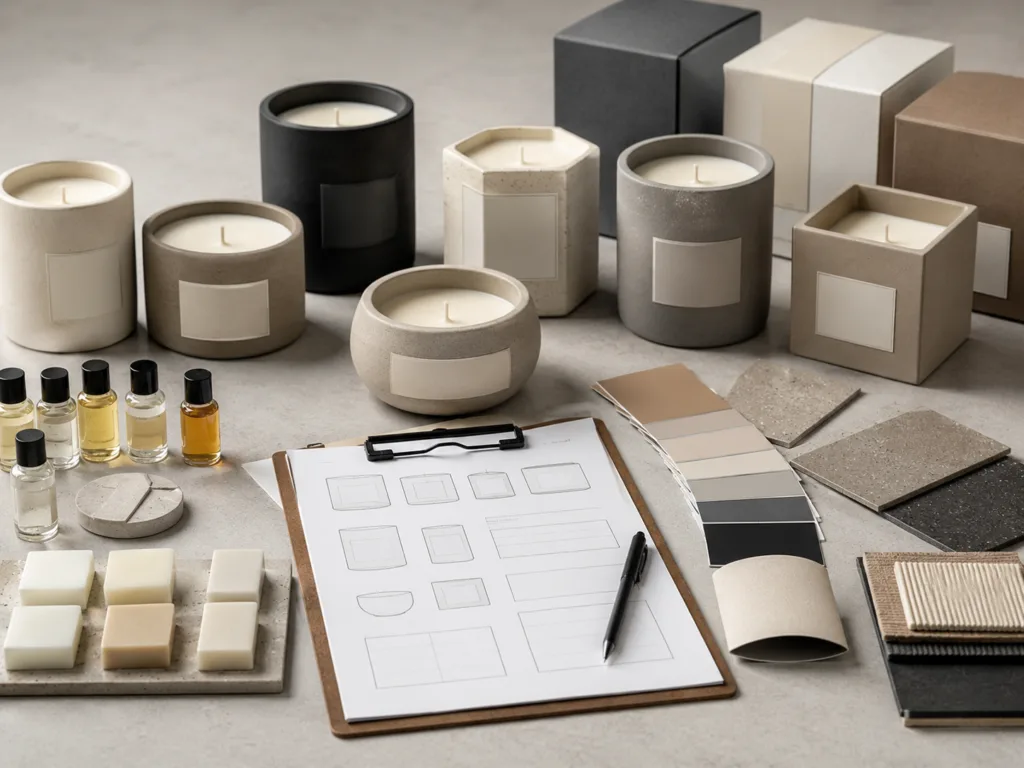
Concrete jar candles are particularly suitable for private label candle brands because they offer multiple customization points. The vessel itself can become part of the brand identity, not just a container.
Depending on order quantity and project complexity, buyers may customize:
- Vessel shape
- Vessel size
- Surface texture
- Vessel color
- Inner coating
- Wax blend
- Fragrance
- Wick type
- Logo label
- Debossed or printed branding options
- Lid option
- Dust cover
- Individual box
- Gift box
- Set packaging
- Export carton packing
For small test quantities, it is more realistic to choose existing or standard styles. If a buyer only needs around 100 pieces, the best option is usually stock or regular vessel styles with limited customization, such as fragrance selection, label design, and simple packaging. At this stage, the goal is market testing, product photography, sample presentation, or small retail trial.
For 500 pieces and above, customization becomes much more practical. Buyers can usually develop a stronger private label project, including vessel color adjustment, fragrance matching, logo label, packaging box, and more coordinated branding. At this quantity level, suppliers have more room to support production planning, packaging development, and consistent bulk output.
This quantity logic is important for serious buyers. Concrete vessels involve molds, finishing, curing time, coating, quality control, and protective packing. A highly customized concrete candle project is not the same as putting a sticker on a stock glass jar. The more customized the design, the more important the order quantity becomes.
For mature buyers, the best strategy is often to start with a practical structure:
- 100 pieces: stock or regular concrete vessel styles for testing
- 500+ pieces: stronger private label customization
- 1000+ pieces: better planning for custom colors, packaging systems, gift sets, and repeat production
This approach helps buyers avoid over-investing before market validation while still leaving room to build a distinctive product line later.
5. Concrete Vessels Can Also Be Sold Separately
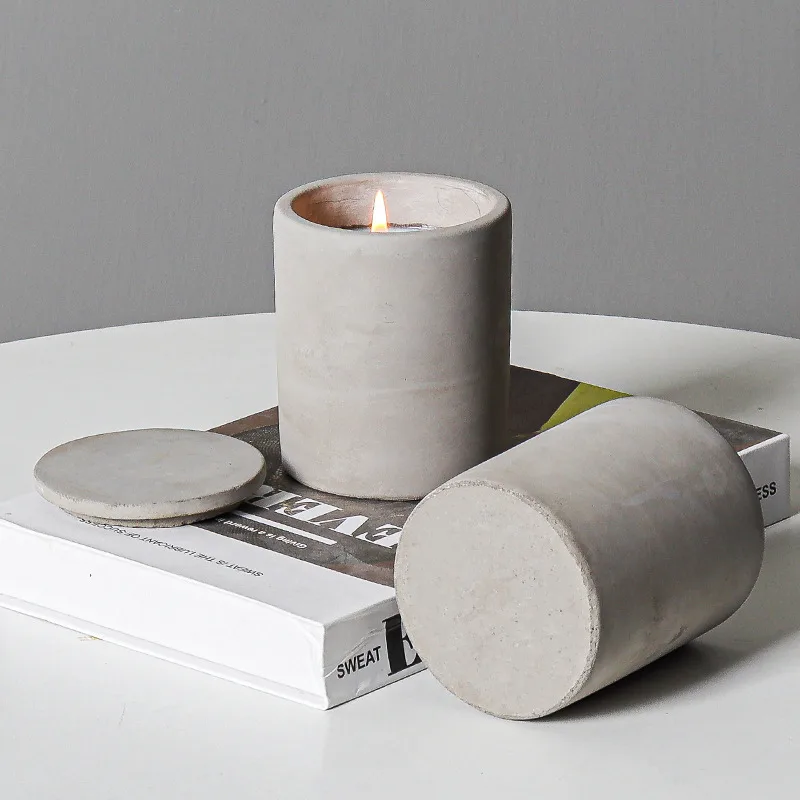
Not every buyer needs finished jar candles. Some buyers already have their own candle filling facility, fragrance house, or local production partner. For these buyers, purchasing empty concrete candle jars may be the better solution.
Selling the concrete vessel itself opens another wholesale opportunity. Empty concrete candle jars can serve:
- Candle makers
- Private label candle studios
- Home fragrance brands
- DIY candle kit brands
- Boutique manufacturers
- Local filling workshops
- Retailers with in-house candle production
- Gift companies developing custom sets
For these buyers, the key concerns are different from finished candles. They need to know the vessel dimensions, capacity, inner coating, heat resistance, surface finish, packaging protection, and compatibility with their wax and wick testing.
This is especially relevant for importers and brands that want to control fragrance development locally. They may prefer to import empty concrete vessels in bulk, then fill them domestically to reduce fragrance compliance complexity, shorten replenishment cycles, or promote local pouring.
For suppliers, this creates two business models:
- Finished concrete jar candles with wax, fragrance, wick, and packaging
- Empty concrete candle jars for buyers who fill locally
Both models can lead to large orders, but they appeal to different types of buyers. Finished candles are better for retailers and brands that want a ready-to-sell product. Empty vessels are better for candle manufacturers and established brands with their own production system.
6. The Premium Feel Comes from Weight, Texture, and Restraint
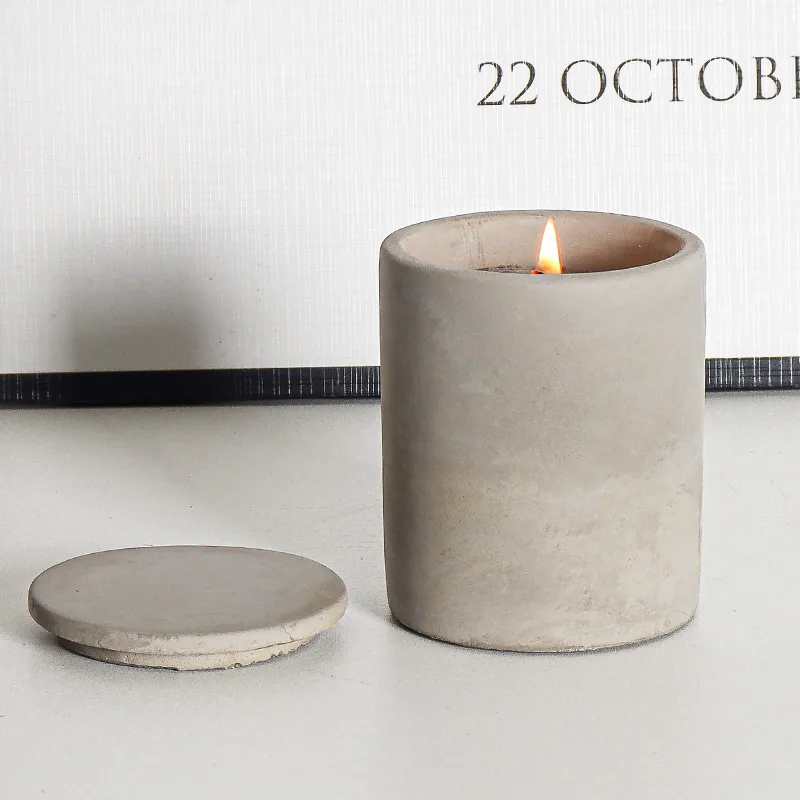
Concrete has a natural sense of weight. When a consumer picks up a concrete candle, the vessel feels substantial. This physical weight contributes to perceived quality. It gives the product a grounded, premium feeling that lightweight packaging may not achieve.
The texture is equally important. Concrete is not perfectly uniform like machine-made glass. It may show subtle tonal variation, small pores, soft surface movement, or hand-finished character. For minimalist and modern home fragrance brands, these details can be an advantage. They make the product feel more tactile and less industrially generic.
However, mature buyers should understand that concrete beauty comes from controlled variation, not absolute sameness. A good supplier should maintain consistent shape, size, coating, color direction, and finishing quality, while allowing slight natural texture differences within an acceptable range.
This is where professional production control matters. Poorly made concrete vessels may look rough, inconsistent, dusty, or unfinished. Well-made concrete vessels should feel intentional: clean edges, stable base, smooth interior, controlled surface texture, and suitable coating for candle use.
The best concrete candle designs are often restrained. They do not need excessive decoration. A simple cylindrical vessel, soft square jar, rounded concrete cup, ribbed design, or low-profile bowl can be enough. The premium feeling comes from proportion, finish, color, label placement, and packaging coordination.
For buyers targeting modern home décor retailers, restraint is a commercial strength. A calm, neutral, well-proportioned concrete candle can fit more homes, more shelves, and more gifting occasions than an overly decorative vessel.
7. Concrete Jar Candles Work Well for Gift and Lifestyle Collections
Concrete jar candles are highly suitable for gift programs because they look substantial and presentable. A buyer can position them as home fragrance gifts, spa gifts, wellness gifts, housewarming gifts, hotel gifts, corporate gifts, or seasonal retail items.
They can also be developed into sets:
- Three-piece fragrance sets
- Mini concrete candle gift boxes
- Concrete candle and diffuser sets
- Candle and towel spa sets
- Candle and bath accessory sets
- Holiday fragrance collections
- Hotel amenity gift sets
- Boutique retail discovery sets
For gift buyers, packaging is critical. A concrete jar candle should not be packed like a cheap commodity. Because the vessel is heavier than tin or lightweight glass, it needs protective packaging that prevents chipping, scratching, and movement during shipping. For retail presentation, an individual box, sleeve, rigid gift box, kraft box, or custom printed box can make a significant difference.
This is where a mature buyer should think beyond unit price. A lower unit price with weak packaging may lead to damage, poor unboxing, and retail complaints. A slightly higher product cost with proper inserts, dividers, and export carton planning may protect the order better and improve customer experience.
In modern home fragrance, packaging is not just protection. It is part of the product story. For concrete candles, packaging should communicate the same visual language as the vessel: clean, calm, natural, modern, and premium.
8. Sustainability Appeal Should Be Framed Carefully
Many buyers ask whether concrete jar candles are sustainable. The best answer is nuanced. Concrete should not automatically be marketed as more sustainable than every other vessel material. Sustainability depends on raw materials, production process, weight, transport distance, packaging, reuse rate, and end-of-life behavior.
The stronger and safer selling point is reusability and durability.
A concrete vessel is solid and decorative enough to be kept after the candle has burned. That gives it a longer life in the consumer’s home. Instead of being perceived as disposable packaging, it can become a reusable home object.
For eco-conscious brands, this is a practical message:
- Reusable vessel
- Long-lasting container
- Decorative after use
- Suitable for refill concepts
- Less disposable product feeling
- Compatible with natural wax positioning
- Works well with kraft or plastic-reduced packaging
Buyers can also pair concrete vessels with soy wax, coconut wax, beeswax blends, cotton wicks, FSC-style paper packaging, paper bands, or refillable candle concepts. The sustainability message should be honest and specific rather than exaggerated.
For example, instead of saying “concrete candles are eco-friendly,” a better claim is: “Designed with a durable reusable concrete vessel that can be repurposed after burning.” This is more credible and safer for mature markets.
9. Key Production Considerations for Concrete Candle Jars
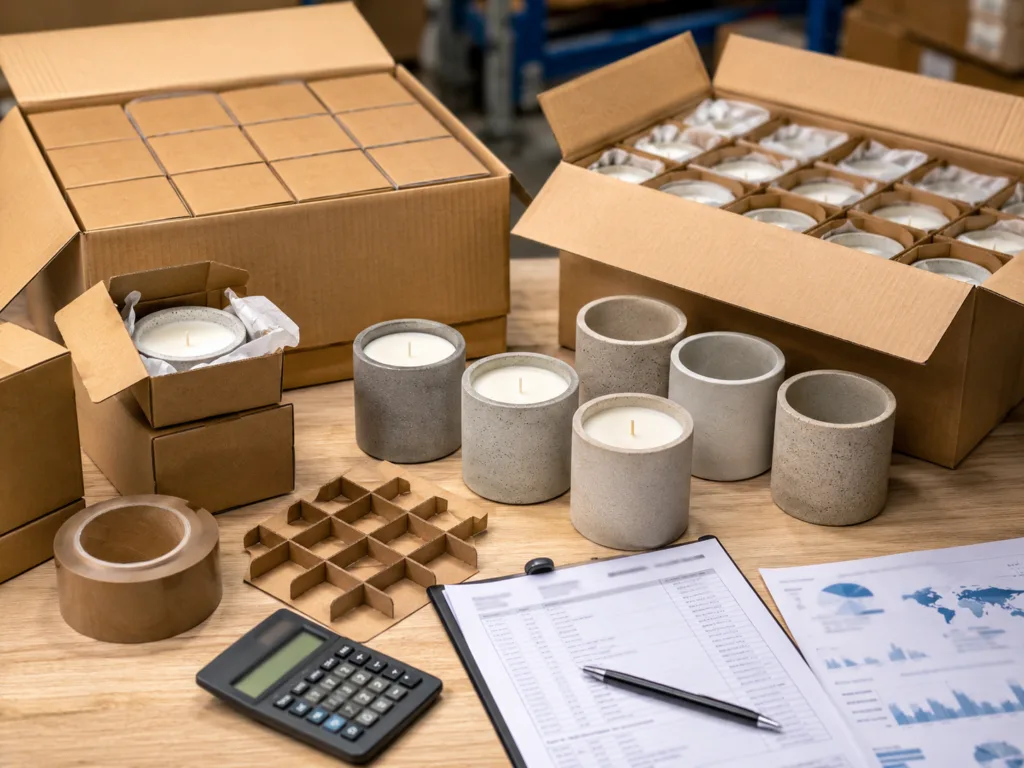
Concrete candle jars require more technical attention than many buyers expect. A beautiful vessel on a product photo is not enough. For bulk orders, buyers should check several production details before confirming the project.
Inner Coating
Concrete is porous by nature. For candle use, the inner wall normally needs proper sealing or coating to reduce wax absorption, fragrance oil seepage, staining, and performance issues. Buyers should confirm whether the vessel is treated for candle filling and whether samples should be tested with the intended wax and fragrance load.
Weight and Freight
Concrete vessels are heavier than many glass or tin options. This can increase shipping costs, especially for air freight or small parcel delivery. For bulk orders, carton efficiency and pallet planning become important. Buyers should ask for gross weight, carton size, packing method, and freight estimates before final pricing.
Surface Variation
Concrete may have slight color and texture variation. This is part of the material’s character, but it must be controlled. Buyers should define acceptable quality standards before bulk production, especially for color, edge finishing, air bubbles, chips, cracks, and surface marks.
Packaging Protection
Concrete can chip if poorly packed. Proper protection may include inner boxes, molded pulp inserts, paper dividers, foam alternatives, carton dividers, corner protection, and export-grade outer cartons. For premium retail, packaging should protect both the vessel and the brand image.
Heat and Burn Testing
Every candle vessel should be tested with the selected wax, wick, fragrance load, and burn conditions. Concrete vessels may perform differently depending on thickness, coating, size, and candle formula. Mature buyers should not skip sample testing.
These points do not make concrete a difficult product; they make it a product that needs professional handling. For serious buyers, this is a good thing. The more technical the product, the more opportunity there is to build a differentiated range that competitors cannot easily copy.
10. What Types of Buyers Should Choose Concrete Jar Candles?
Concrete jar candles are not for every buyer. They are best suited for brands and retailers that care about visual identity, material texture, and lifestyle positioning.
They are especially suitable for:
- Modern home fragrance brands
- Boutique candle brands
- Home décor retailers
- Concept stores
- Gift companies
- Spa and wellness brands
- Boutique hotels
- Interior design shops
- Premium lifestyle retailers
- Private label importers
- Brands developing minimalist product lines
They may be less suitable for buyers whose only priority is the lowest possible unit cost. Concrete vessels require more attention to production, packing, and shipping. The buyer should be willing to pay for stronger visual value, better retail presentation, and a more distinctive vessel.
For a mature buyer, the right question is not “Is concrete cheaper than glass?” The better question is: “Can this concrete vessel help my brand sell at a better price point, create stronger shelf impact, and build a more recognizable home fragrance collection?”
If the answer is yes, concrete jar candles can be a smart product direction.
11. How Buyers Can Start a Concrete Jar Candle Project
A practical sourcing process can help buyers avoid unnecessary cost and delays.
Step 1: Decide Whether You Need Finished Candles or Empty Vessels
If you want a ready-to-sell product, choose finished concrete jar candles with wax, fragrance, wick, and packaging. If you already have a filling facility, choose empty concrete candle jars.
Step 2: Confirm Quantity Level
For around 100 pieces, choose stock or regular styles. This keeps cost and lead time more manageable. For 500 pieces or more, you can explore deeper customization such as vessel color, fragrance range, label design, and packaging.
Step 3: Choose the Design Direction
Decide whether your brand needs a soft minimalist style, industrial grey concrete, warm neutral tones, black luxury style, spa-inspired ivory, or natural stone effect.
Step 4: Select Fragrance and Wax
Concrete vessels pair well with woody, herbal, mineral, smoky, fig, sandalwood, amber, citrus, tea, linen, and spa-inspired fragrances. The wax blend should be tested for burn performance and visual finish.
Step 5: Plan Packaging Early
Do not leave packaging until the end. Concrete candles need protective packing and retail-ready presentation. Packaging affects both cost and customer experience.
Step 6: Test Samples Before Bulk Production
Samples help confirm vessel quality, coating, fragrance, wax, wick, label placement, packaging, and freight assumptions. This is especially important before 500+ piece private label orders.
Conclusion: Concrete Jar Candles Are Popular Because They Sell a Lifestyle, Not Just a Scent
Concrete jar candles are becoming popular in modern home fragrance because they answer several buyer needs at once. They offer a minimalist look, architectural texture, reusable vessel value, strong shelf presence, private label flexibility, and premium home décor appeal.
For mature buyers, the opportunity is clear. Concrete candles can help a brand move beyond ordinary glass jar candles and build a more distinctive product line. They are especially powerful for home décor retailers, boutique fragrance brands, spa and wellness companies, gift buyers, and lifestyle importers looking for products with both fragrance value and visual identity.
The key is to source them correctly. Small quantities around 100 pieces are better suited to stock or regular styles. Orders of 500 pieces and above can support stronger customization, including vessel color, fragrance, label, and packaging development. Buyers can also purchase empty concrete candle jars if they prefer to fill locally or manage fragrance production themselves.
In a market where many candles look similar, concrete gives buyers a more memorable material story. It is modern without being cold, minimal without being plain, and premium without needing excessive decoration. For brands that want to build a calm, stylish, and design-led home fragrance collection, concrete jar candles are not just a trend. They are a practical product direction with real wholesale potential.
FAQ
1. Are concrete jar candles suitable for private label brands?
Yes. Concrete jar candles are highly suitable for private label brands because the vessel, fragrance, wax blend, label, color, and packaging can be customized. For small trial quantities around 100 pieces, stock or regular styles are usually more practical. For 500 pieces and above, buyers can develop a more complete private label collection.
2. Can I buy empty concrete candle jars without wax filling?
Yes. Empty concrete candle jars can be supplied for candle makers, private label studios, and brands that prefer to fill candles locally. Buyers should confirm vessel size, capacity, inner coating, packing method, and compatibility with their own wax and wick testing.
3. Why are concrete candle jars more popular for modern home fragrance?
Concrete candle jars offer a minimalist, architectural, and premium look that fits modern interiors. They work well with neutral home décor, spa styling, boutique retail, and reusable vessel concepts, making them more distinctive than many standard glass jars.
4. What should buyers consider before ordering concrete jar candles in bulk?
Buyers should check MOQ, vessel weight, inner coating, surface finish, packaging protection, freight cost, fragrance selection, wax and wick testing, and customization options. For bulk private label orders, sample testing is strongly recommended before mass production.