
The Real Reason Most Candle Projects Fail (And It’s Not Packaging)
If you’ve worked on a candle project before, you already know this:
The visuals are easy.
You can find:
- a beautiful glass jar
- a premium rigid box
- a clean label design
You can even replicate a luxury brand look within weeks.
But then everything slows down at one point.

This is where most projects break.
From a supplier’s side, we see a consistent pattern across US boutique brands, EU retailers, and Amazon FBA sellers:
- The scent smells great in the bottle, but disappears when burned
- The buyer selects 8–12 scents, but only 2–3 actually sell
- The supplier offers “custom scent,” but cannot control performance
- Sampling drags on for weeks without clear improvement
At that point, the problem is no longer design.
It’s system.
And that system is built on one thing:
👉 Fragrance Library + Lab Capability
Why Fragrance Is the Core of a Candle Brand
Let’s be very direct.
A candle is not a decoration product.
It is a repeat purchase system built on scent memory.
Customers do not come back because:
- your box had gold foil
- your jar looked premium
They come back because:
- the scent filled their space
- the experience matched their expectation
- the product felt consistent every time
Data Insight (From Retail Patterns)
Across mid-range and premium candle brands:
- 60–70% of repeat purchases are driven by scent preference
- products with strong hot throw outperform weak-scent competitors by a wide margin in reviews
- signature scents often generate 2–3× higher lifetime value than seasonal SKUs
What This Means for Buyers
If you are building a candle line:
👉 Fragrance is not one part of the product
👉 It is the product itself
Everything else supports it.
What Is a Professional Fragrance Library?
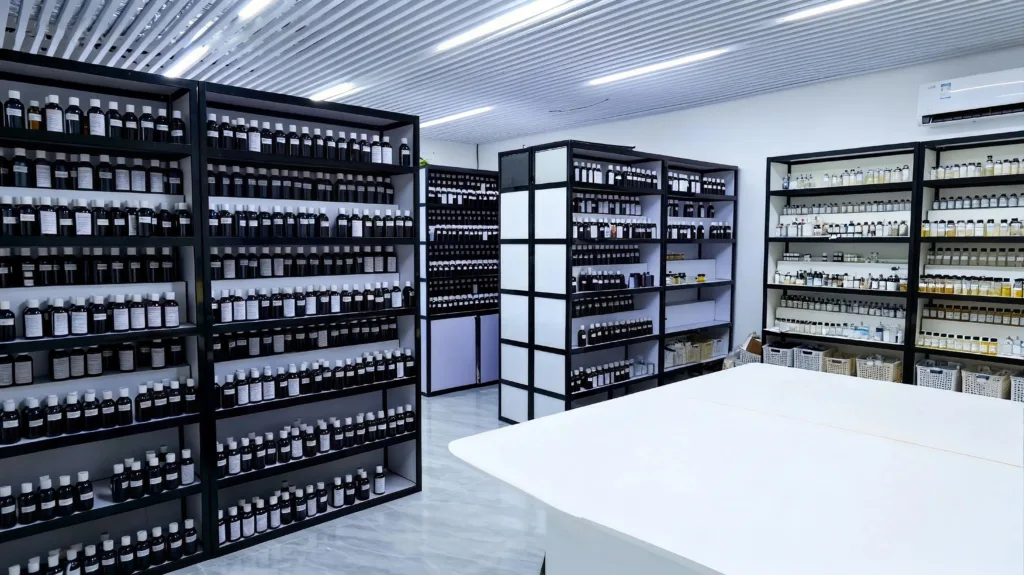
Most suppliers claim they have a “fragrance list.”
That usually means:
- limited SKUs
- basic duplication
- no real development capability
But what serious buyers actually need is different.
A true Fragrance Library is a supply chain system, not a catalog.
At the top level, it should answer one question:
👉 Can this supplier match or build almost any scent I want — reliably and at scale?
What a Strong Fragrance Library Really Means (Supplier-Level Capability)
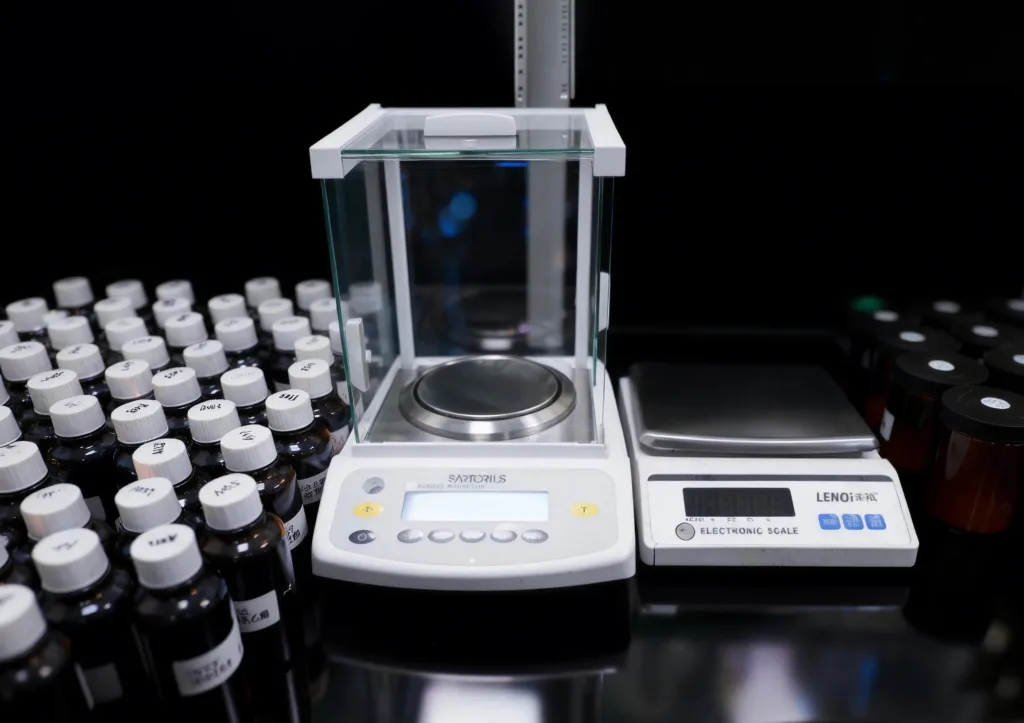
A high-level fragrance system is built on three layers:
1. Access Layer: Raw Materials & Fragrance Sources
This is where most suppliers are weak.
A strong supplier has:
- access to multiple fragrance houses (not just one source)
- a wide range of raw aroma chemicals and natural extracts
- stable sourcing for key notes (vanilla, sandalwood, citrus oils, musks, etc.)
This is what allows:
- accurate scent matching
- consistency across batches
- flexibility in formulation
👉 Without this layer, “custom scent” is just marketing language.
2. Library Layer: Almost Full Market Coverage

A real fragrance library is not about “variety.”
It is about coverage + reconstruction capability.
In a mature system, the library:
- covers most commercial perfume directions on the market
- includes structures that can replicate popular fragrances
- is continuously updated based on trends and best-sellers
That means:
👉 If you bring a reference (perfume / competitor product / concept),
👉 the supplier can analyze, match, and rebuild it.
This is what buyers actually mean when they say:
“Can you copy this scent?”
The real answer depends on whether the supplier has:
- enough scent structures
- enough raw materials
- enough formulation experience
3. Lab Layer: The Ability to Make It Work in a Candle

Even if a scent is matched perfectly in oil form, it still needs to work in a candle.
This requires:
- adjustment for wax system (soy / blends)
- control of evaporation behavior
- balancing top/mid/base notes for burning conditions
This is where a dedicated lab becomes critical.
👉 Matching a perfume is one skill
👉 Making it perform in a candle is another
A strong supplier does both.
Most suppliers say they have a “fragrance list.”
That usually means:
- 20–50 basic scents
- limited testing
- inconsistent results
A real Fragrance Library is completely different.
It is a structured, scalable system designed for product development.
1. Depth: Not Dozens, But Hundreds (or More)
A strong fragrance library includes:
- 300–1000+ scent profiles
- continuous updates based on market trends
- coverage across all major scent families
This includes:
Floral
- Rose, peony, jasmine, lavender
Woody
- Sandalwood, cedarwood, oud, vetiver
Fresh / Clean
- Linen, cotton, citrus, green tea
Gourmand
- Vanilla, caramel, coffee, bakery
Oriental / Complex
- Amber, spice blends, musk
Functional / Lifestyle
- Spa, relaxation, hotel-inspired scents
Seasonal
- Christmas, autumn, summer collections
👉 This is what allows buyers to “enter the system” instead of starting from zero.
2. Structure: Built for Decisions, Not Browsing
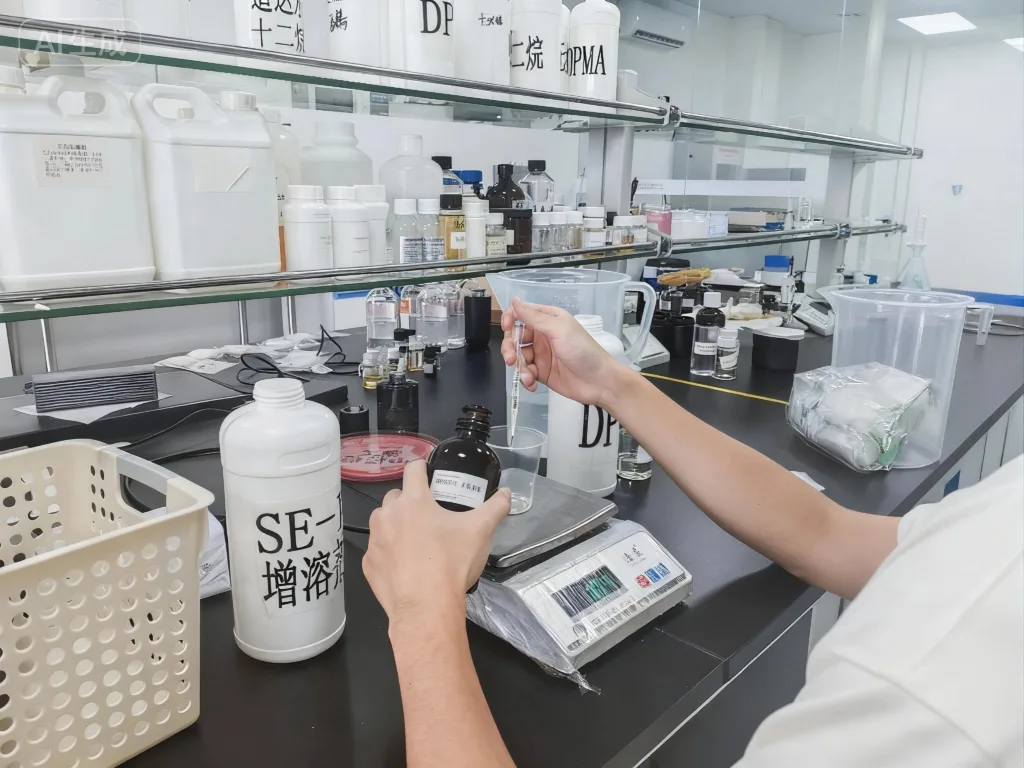
A professional fragrance library is organized by:
- scent family
- intensity (light / medium / strong)
- market preference (US vs EU)
- application (candle / diffuser)
This matters because:
👉 You are not picking smells
👉 You are building a product line
3. Performance: Pre-Tested for Candle Use
A fragrance oil that smells strong in a bottle may fail completely in a candle.
Professional libraries only include scents that are:
- tested in wax systems
- stable under burning conditions
- optimized for diffusion
👉 This eliminates most trial-and-error.
4. Speed: Ready-to-Sample System
With a strong fragrance library:
- you skip “starting from zero”
- you move directly into testing
Typical timeline:
- Day 0–1: scent shortlist
- Day 7–10: finished candle samples
For Amazon launches and seasonal retail, this speed is decisive.
Candle Fragrance Library: How Professional Suppliers Create Any Scent
Most successful products are not created from scratch.
They are built through controlled modification of proven bases.
Step 1: Start from a Base Profile
- vanilla base
- sandalwood base
- citrus blend
This solves ~70–80% of development.
Step 2: Adjust for Market Fit
- less sweet for EU
- stronger projection for US
- more woody depth for premium lines
Step 3: Test in Real Conditions
- hot throw
- cold throw
- wax compatibility
Step 4: Controlled Iteration
- 1–3 rounds max for efficiency
Inside a Candle Fragrance Lab: What Really Happens Behind the Scenes
A real lab is about control and repeatability.
Lab Function 1: Fragrance Engineering
- adjust load %
- rebalance top/mid/base notes
- tune evaporation curve
Lab Function 2: Test Pouring
- real wax (soy / blends)
- real wick systems
Lab Function 3: Burn Testing
- 2–4 hour cycles
- room diffusion checks
Lab Function 4: Stability Control
- consistency over time
- no separation / degradation
Case Study 1: “Perfect in Bottle, Weak in Candle”
US boutique brand selected vanilla caramel.
Problem after pour:
- weak hot throw
Fix:
- adjust fragrance load
- rebalance formula for wax system
Result:
- +40–50% throw improvement
- became best seller
Lesson: bottle smell ≠ product performance
Case Study 2: Too Many SKUs, No Profit
EU retailer launched:
- 12 scents × low volume
Result:
- high cost
- slow turnover
Fix:
- cut to 4 core scents
- increase volume per SKU
Result:
- lower unit cost
- clearer brand identity
- faster cash cycle
MOQ, Cost, and Fragrance Strategy (What Buyers Must Understand)
1. Each Scent Has Real Cost
- separate batching
- line cleaning
- testing time
More scents = higher cost.
2. Low MOQ Limits Customization
- full custom is inefficient at low volume
- library selection is optimal to start
3. Packaging Often Sets the MOQ
- rigid box MOQ: ~500+ per design
- inserts increase cost and complexity
Practical Pricing Logic (How Orders Are Structured)
This is what most suppliers won’t explain clearly.
Scenario A: Entry Test Order
- 3 scents
- 100–300 pcs per scent
- standard glass + label
Goal: test market, not perfect product
👉 lowest cost, fastest launch
Scenario B: Retail-Ready Order
- 3–5 scents
- 500 pcs per scent
- branded box (folding or rigid)
Goal: retail presentation + margin balance
👉 most common for boutiques
Scenario C: Scale Order
- 3–5 core scents
- 1000+ pcs per scent
- optimized packaging
Goal: cost control + stable supply
👉 where real margins are built
Cost Drivers You Should Actually Care About
Forget minor price differences.
Focus on:
1. Cost per SKU
More SKUs = higher total cost
2. Packaging Complexity
Rigid boxes can double packaging cost
3. Fragrance Efficiency
A strong scent allows lower load % → better margins
Comparison: Library vs Custom Scent Development
| Approach | Speed | Cost | Risk | Best For |
|---|---|---|---|---|
| Library | Fast | Low | Low | New brands |
| Adjusted | Medium | Medium | Medium | Scaling brands |
| Full Custom | Slow | High | High | Established brands |
Buyer Psychology: What Separates High-Order Clients
Low-Commitment Buyers
- focus on small quantities
- over-customize early
- delay decisions
High-Order Buyers
- accept structured process
- prioritize speed to market
- scale what works
👉 High-volume orders come from clarity, not perfection
How to Build a Scalable Candle Fragrance Strategy
Phase 1: Entry
- 3–5 scents
- use fragrance library
- simple packaging
Phase 2: Validation
- identify winners
- refine scents
Phase 3: Expansion
- custom scent development
- packaging upgrade
The Role of a Strong Fragrance Supply Chain
A strong supplier provides:
- extensive fragrance library (full coverage)
- dedicated lab (in-house testing)
- controlled sampling (7–10 days cycles)
- scalable production (stable quality)
This allows:
- faster launches
- predictable costs
- reliable scaling
Final Thoughts: Fragrance Is the Only Real Barrier
Everything else can be copied.
Fragrance—when done correctly—becomes:
- your product identity
- your repeat purchase driver
- your long-term advantage
CTA (For Serious Buyers)
At Circe Home, fragrance development is built as a system, not an add-on.
We support projects with:
- a large-scale fragrance library covering nearly all commercial scent types
- a dedicated fragrance lab for controlled testing
- a specialized production setup focused on scent performance
Typical workflow for new projects:
- Define target market + scent direction
- Select 3–5 scents from library
- Sample in 7–10 days
- Adjust if needed
- Move to 500–1000+ pcs production
If you are:
- planning a new candle line
- restructuring an existing product range
- scaling from small batches to retail-level production
We can help you build a fragrance-first product strategy that actually converts into repeat orders.
👉 Send us your concept (reference images or scent direction), and we will structure a practical sampling and pricing plan for you.
FAQs
1. What is a fragrance library?
A structured system of tested scent profiles used to speed up candle development and reduce risk.
2. Can I develop a fully custom scent?
Yes, but most brands start from existing bases and refine them for efficiency and cost control.
3. What MOQ should I start with?
For most brands: 3–5 scents with 300–500 pcs per scent is a practical starting point.