
For many candle buyers, the first question sounds simple: “How much does one candle cost?”
But in candle manufacturing, the better question is: “What kind of candle can my order quantity actually support?”
That is where many new buyers misunderstand pricing. They compare a 100-piece test order with a 500-piece private label order or a 1,000-piece production order as if they are the same product. They are not.
A 100-piece candle order is usually a market test. It works best with stock glass jars, existing wax formulas, simple labels, and minimal packaging. A 500-piece order is often the first realistic point for private label branding, custom glass options, logo work, and standard gift packaging. A 1,000-piece order gives the supplier more room to optimize cost, improve packaging, and reduce the unit price. For a well-structured candle gift set using suitable components, the unit cost can fall to around USD 3.67 per set at 1,000 pieces.
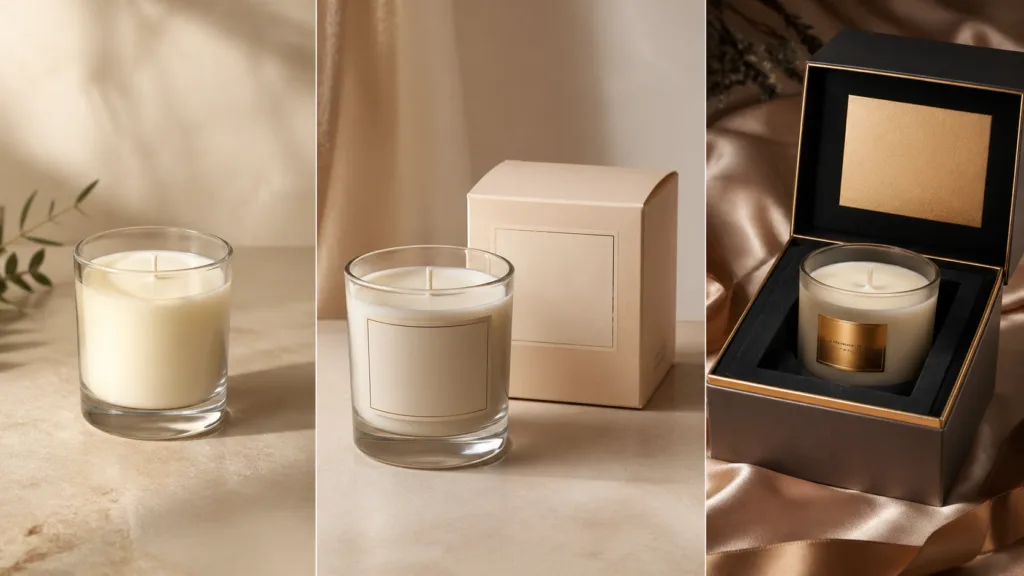
The key point is this: MOQ does not only decide the quantity. MOQ decides the customization level.
The more complex your candle vessel, packaging, fragrance system, insert, logo process, and visual identity are, the higher the MOQ normally becomes. This is not because suppliers want to make buying difficult. It is because every part of the product has its own production logic, setup cost, material minimum, and factory threshold.
If you are a mature buyer, a brand owner, an importer, a wholesaler, or a retailer planning a candle line, understanding this structure will help you make better sourcing decisions. It will also help you avoid one of the most expensive mistakes in candle development: asking for luxury customization with a testing-order budget.
This guide breaks down candle manufacturing cost per unit at MOQ 100, 500, and 1000, with practical pricing logic from a buyer’s perspective.
Why Candle Cost Per Unit Changes So Much by MOQ
Candle pricing is not just wax plus fragrance plus jar. A finished candle is a small supply chain system.
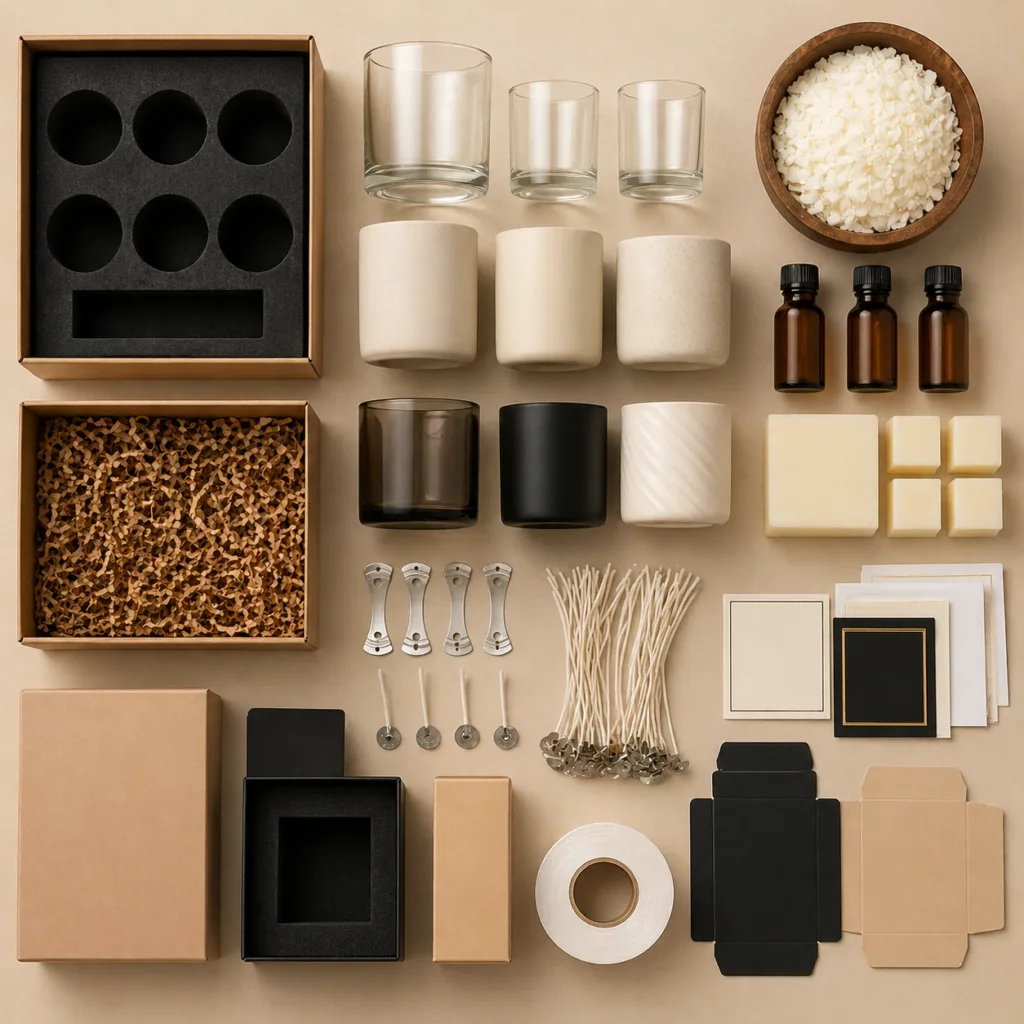
A typical private label candle includes:
- Candle vessel: glass, ceramic, tin, concrete, metal, or custom shape
- Wax: soy wax, coconut wax, paraffin blend, beeswax blend, palm wax, or custom blend
- Fragrance oil: standard fragrance, premium fragrance, duplicated scent, or custom fragrance development
- Wick: cotton wick, wood wick, multi-wick system, or special wick specification
- Label or logo: sticker, silk screen printing, hot stamping, engraving, decal, or printed sleeve
- Inner packaging: dust cover, lid, insert, foam, paperboard, or protective structure
- Outer packaging: folding carton, rigid gift box, drawer box, sleeve box, or retail display packaging
- Compliance documents: SDS/MSDS, warning label, IFRA-related fragrance support, packaging markings
- Labor: pouring, curing, labeling, cleaning, assembly, inspection, packing
- Freight-related packing: carton strength, drop-test consideration, palletizing, export carton layout
Some of these costs are variable. Wax, fragrance, and basic labor usually increase with quantity. If you make more candles, you use more wax and fragrance.
But many other costs are fixed or semi-fixed. Printing setup, packaging structure, mold development, color matching, production line adjustment, sample development, and supplier coordination do not shrink simply because the buyer only wants 100 pieces.
This is why small orders often look “expensive.” The supplier is not only charging for 100 finished candles. The supplier is trying to cover the work needed to make the product possible.
At higher quantities, those fixed costs are spread across more units. That is the basic reason a candle at MOQ 100 may look expensive, while the same candle structure at MOQ 1000 may become commercially reasonable.
For mature buyers, the goal is not always to chase the lowest unit price. The goal is to match the right MOQ with the right product strategy.
The Real Cost Drivers in Candle Manufacturing
Before comparing MOQ 100, 500, and 1000, buyers need to understand what truly drives cost.
Many new buyers assume the main cost is wax. In reality, wax is rarely the biggest decision factor in private label candle manufacturing. Wax matters, especially if you choose premium coconut wax, beeswax, or a special blend. But in most commercial projects, the largest cost pressure comes from the vessel and packaging.
1. The Vessel Decides the Customization Boundary
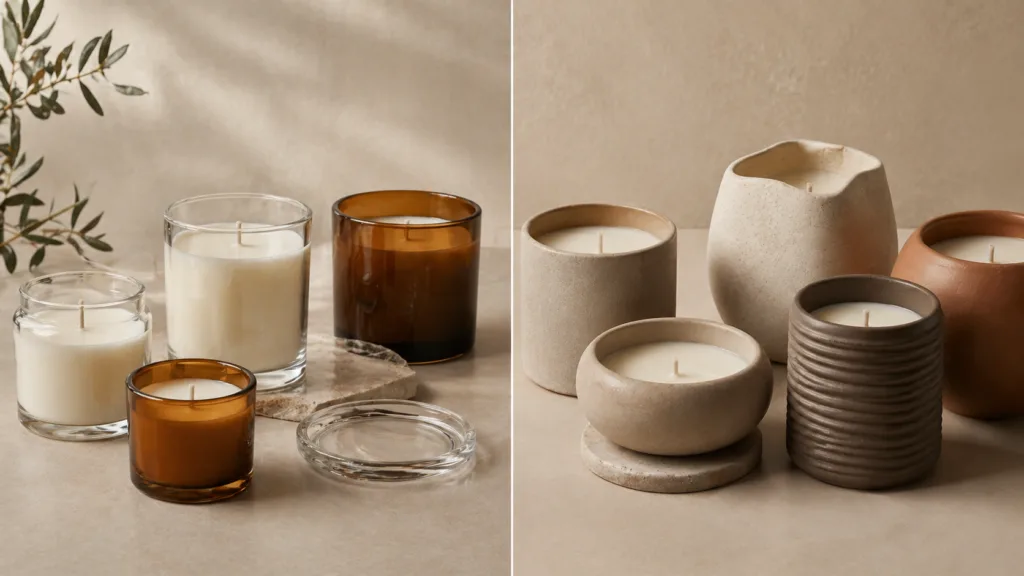
The candle vessel is often the first major MOQ gate.
Stock glass jars are the most flexible option. They are already available in the factory’s supply chain. The shape exists, the mold exists, and the production line is stable. That means a buyer can often start with a lower quantity, especially if the branding method is simple.
Custom glass is different. If the buyer wants a new shape, new color, new finish, new mold, special thickness, electroplating, spraying, frosting, or a unique lid structure, the MOQ increases. Glass factories need stable production volume to run a custom batch. A new mold or custom color is not practical for 100 pieces.
Ceramic vessels can create a more premium and decorative feeling, but they also bring higher MOQ pressure. Ceramic production involves forming, drying, firing, glazing, color consistency, shrinkage control, and quality loss. Even for relatively standard ceramic styles, 500 pieces is often a more realistic starting point. For special ceramic shapes or custom molds, the MOQ may need to be much higher.
This is why a buyer may be able to start with 100 pieces in stock glass, but not in fully custom ceramic.
2. Packaging Often Raises MOQ Faster Than the Candle Itself
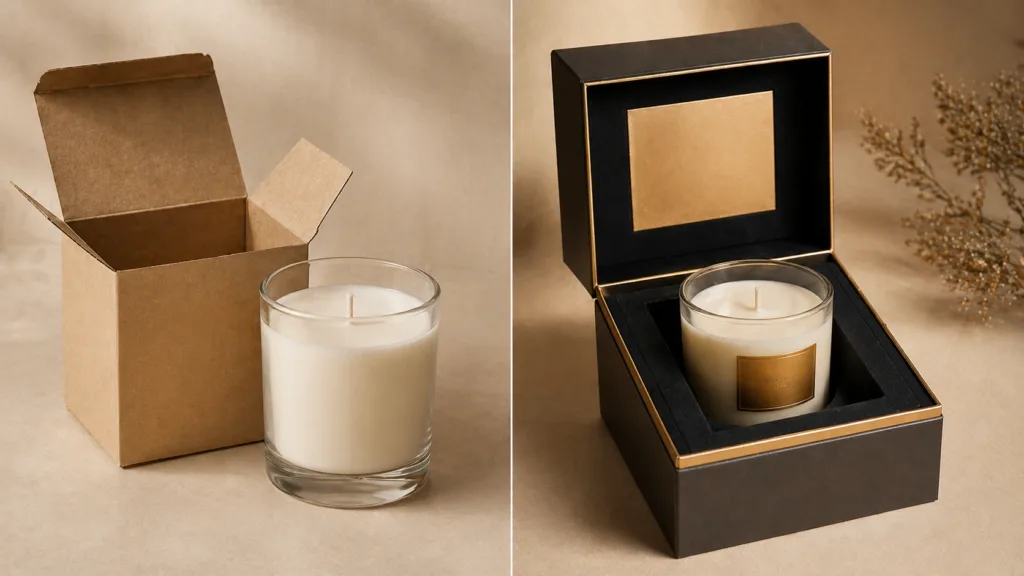
Packaging is where many projects become unrealistic.
A buyer may say, “I only need 100 candles.” But if the product includes a printed rigid gift box, custom insert, foil logo, special paper, magnetic structure, drawer box, or multiple box designs, the packaging factory may require 500 pieces or more per design.
This means the candle MOQ and packaging MOQ may not match.
For example:
- Candle quantity requested: 100 pieces
- Gift box factory MOQ: 500 pieces per design
- Insert MOQ: 500 pieces per structure
- Logo printing setup: fixed cost per design
If the buyer insists on 100 finished sets, the packaging cost must be absorbed by only 100 units. That makes the unit price look unreasonable.
This is why suppliers often recommend simplified packaging for 100-piece test orders. The goal is not to reduce quality. The goal is to keep the project commercially sensible.
3. Logo Method Changes Both Cost and MOQ
Logo application seems small, but it can change the entire cost structure.
Common logo methods include:
- Sticker label: lowest MOQ, fastest, most flexible
- Paper label with special finish: suitable for small to medium private label projects
- Silk screen printing: cleaner look, higher setup requirement
- Hot stamping: premium effect, higher setup and positioning requirement
- Engraving or embossing: strong brand effect, often higher MOQ
- Ceramic decal: used for ceramic vessels, requires firing and process control
- Metal label or badge: premium but adds material and labor cost
For a 100-piece order, sticker labels or simple printed labels are usually the most practical choice. For 500 pieces, buyers can start considering more polished branding, depending on the vessel and packaging. For 1000 pieces, more refined logo processes become easier to justify because the setup cost is spread across more units.
4. Fragrance Development Can Also Affect MOQ
If you choose existing fragrance oils from a supplier’s library, the MOQ can stay lower. The supplier already has formulas, testing experience, and material access.
If you want to duplicate a reference scent, adjust a fragrance direction, or develop an exclusive scent, the supplier may need several rounds of testing. This adds time and cost. It may also require a stronger production commitment.
For mature brands, fragrance customization can be worth it. A signature scent helps create brand memory. But for a very small first order, it is often better to start with a proven fragrance family such as sandalwood, amber, fig, vanilla, vetiver, lavender, citrus, tea, or woody floral.
5. Labor and Assembly Are Not the Same for Every Candle
A simple candle in a stock jar may only require pouring, curing, trimming, labeling, cleaning, and packing.
A luxury candle gift set may require:
- Jar inspection
- Wax pouring
- Fragrance batch control
- Wick centering
- Surface correction
- Label alignment
- Dust cover placement
- Box folding or rigid box assembly
- Foam or paper insert fitting
- Sleeve or ribbon assembly
- Warning label application
- Final QC
- Export carton packing
The more steps involved, the higher the labor cost. When quantity is low, this labor becomes expensive per unit.
MOQ 100: Best for Testing, Not Full Custom Manufacturing
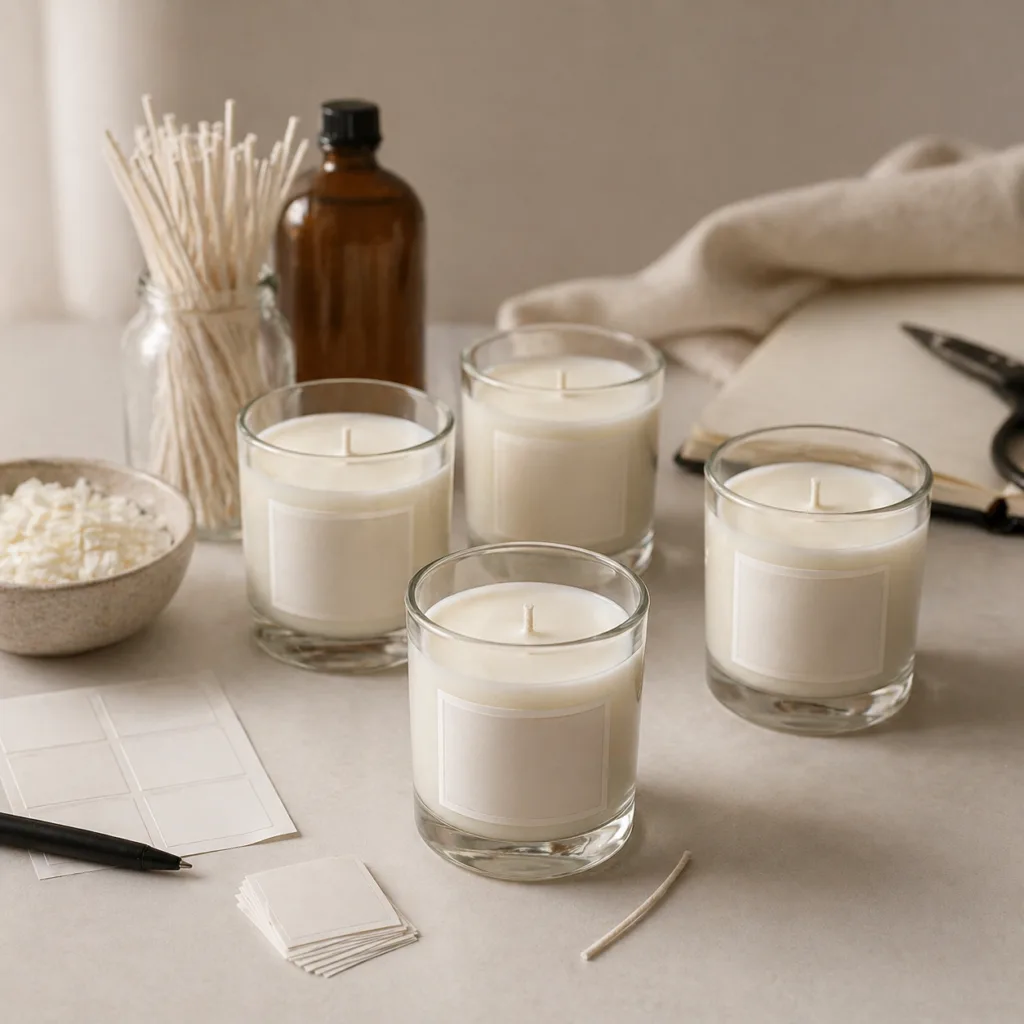
A 100-piece candle order can be useful, but buyers need to understand what it is best for.
MOQ 100 is usually not a true production order for a fully customized candle line. It is closer to a market validation order. It is suitable when the buyer wants to test a concept, check customer reaction, create a small launch batch, photograph the product, test retail pricing, or collect feedback before scaling.
At 100 pieces, the most practical structure is:
- Stock glass jar
- Existing wax formula
- Standard fragrance from supplier library
- Simple sticker label or paper label
- Standard lid if available
- Simple white box, kraft box, or no individual gift box
- Basic warning label
- Export-safe packing
This structure keeps the order possible.
What You Can Usually Customize at MOQ 100
At MOQ 100, customization should be light and controlled.
You can usually customize:
- Fragrance selection from an existing fragrance library
- Wax type within available formulas
- Label design
- Logo sticker
- Basic color direction if using available vessels
- Simple packaging sticker
- Warning label content
You usually cannot fully customize:
- New glass jar shape
- New ceramic mold
- Custom rigid gift box
- Multiple vessel colors
- Hot stamping on glass
- Custom lid mold
- Custom insert structure
- Complex retail packaging
- Multiple fragrance and packaging combinations
A buyer who wants 100 pieces with five vessel colors, custom ceramic cups, printed rigid boxes, foil logos, and custom inserts is not really asking for a 100-piece candle order. They are asking several factories to activate custom production systems for a quantity that cannot support those systems.
Estimated Unit Cost at MOQ 100
The unit cost for MOQ 100 varies widely depending on materials, jar size, fragrance load, packaging, and branding. But for a small private label project using stock components, buyers may often see a cost range around:
- Basic stock glass candle with simple label: USD 4.50–7.50 per unit
- Better fragrance or larger wax fill: USD 6.00–9.00 per unit
- With simple individual box: USD 7.00–11.00 per unit
- With attempted premium packaging: often commercially inefficient
These numbers are not universal quotes. They are a realistic way to think about small-batch cost behavior.
At MOQ 100, the supplier has limited room to reduce the unit price because the order does not absorb much setup work. Even if the buyer chooses cheaper wax, the savings may be small compared with the fixed work involved.
Who Should Choose MOQ 100?
MOQ 100 works for:
- New brands testing their first candle concept
- Boutique stores testing a seasonal product
- Influencers or creators testing a small merchandise item
- Buyers who need product photography before a full launch
- Small retailers who are not ready for inventory risk
- Buyers who accept stock vessels and simple branding
MOQ 100 does not work well for:
- Buyers expecting luxury retail packaging
- Buyers requesting custom ceramic vessels
- Buyers needing several SKUs at once
- Buyers comparing unit price against mass production
- Buyers who want a full private label collection immediately
The best way to use MOQ 100 is to keep the product simple. Test the market first. Once the product direction is proven, move to 500 or 1000 pieces to improve margin and branding.
MOQ 500: The Practical Starting Point for Private Label Candles
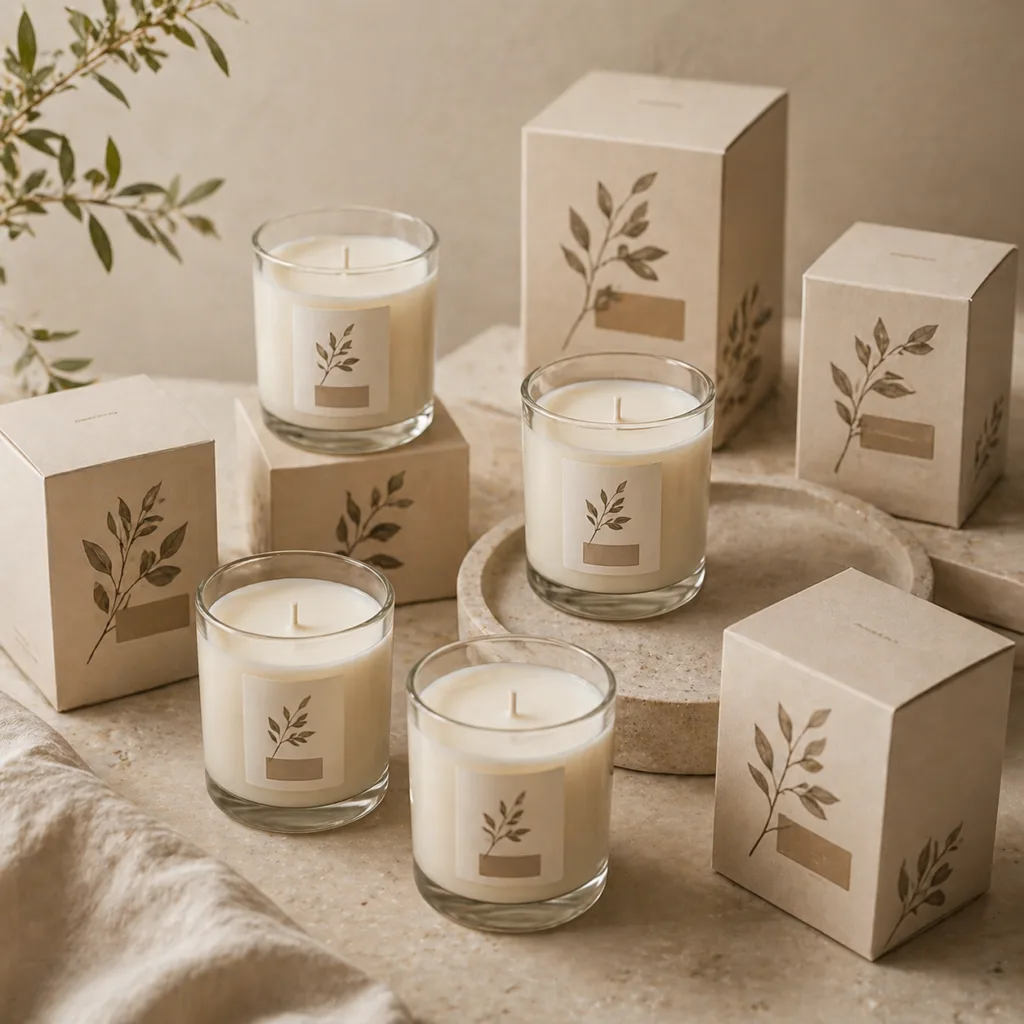
For most serious candle brands, MOQ 500 is where the project becomes more commercially meaningful.
At 500 pieces, suppliers have more room to coordinate components, packaging, and branding. The buyer can start moving beyond a simple test order and build a product that looks closer to a retail-ready candle.
MOQ 500 is often suitable for:
- Custom glass candle options
- Some standard ceramic vessel styles
- Logo printing or higher-quality labels
- Basic rigid gift box or printed folding carton
- More polished brand presentation
- Boutique retail launch
- Small wholesale batch
- Seasonal collection
- Corporate gift candle sets
This is why 500 pieces is often the realistic entry point for private label candle manufacturing.
What You Can Customize at MOQ 500
At MOQ 500, buyers can usually discuss a wider range of customization:
- Stock glass jar with customized color finish
- Selected custom glass options if molds already exist
- Some common ceramic vessel styles
- Logo label, silk screen, or simple foil effect depending on supplier capability
- Custom printed box if structure is standard
- Rigid gift box with standard structure
- Paper insert or foam insert depending on packaging design
- 1–2 fragrance options if the project is structured carefully
- Brand warning label and packaging artwork
However, 500 pieces still has limits.
It may not be enough for:
- Fully new ceramic mold development
- Fully new glass mold
- Many vessel colors under one order
- Multiple box designs
- Multiple fragrance SKUs with separate packaging
- Very complex luxury packaging
- High-end metal accessories
The key is to control the number of variables.
A strong 500-piece candle project might use one vessel style, one packaging structure, one logo system, and one or two fragrances. A weak 500-piece project tries to divide the order into too many colors, scents, boxes, and finishes. Once that happens, the real MOQ becomes much higher because each component needs its own minimum.
Estimated Unit Cost at MOQ 500
For a well-structured private label candle at MOQ 500, buyers may often see a cost range around:
- Stock glass candle with label: USD 3.50–5.50 per unit
- Custom-style glass with branding: USD 4.50–6.50 per unit
- Candle with printed box: USD 5.00–7.50 per set
- Candle gift set with rigid box and insert: USD 5.50–8.50 per set
- Standard ceramic vessel with simple packaging: often higher, depending on the vessel
Again, these are not fixed quotes. They are practical pricing bands to help buyers understand how cost behaves.
The biggest advantage of MOQ 500 is balance. It gives the buyer more brand expression than MOQ 100, while keeping inventory risk lower than 1000 or 3000 pieces.
Why MOQ 500 Often Makes More Sense Than MOQ 100
Many buyers start by asking for 100 pieces because they want to reduce risk. That is understandable. But sometimes MOQ 100 creates a different kind of risk: the product looks too basic to test the real market.
If the final retail concept depends on packaging, gift value, shelf presentation, or premium branding, a 100-piece simplified version may not represent the real product. Customers may reject the test product not because the candle idea is weak, but because the test version does not look finished.
MOQ 500 allows the buyer to test a more realistic product.
For example, if your retail strategy depends on a candle gift set, the packaging is part of the value. Testing a naked stock jar without the gift box may not give useful market feedback. In that case, 500 pieces may actually be the safer commercial decision.
Who Should Choose MOQ 500?
MOQ 500 is ideal for:
- Boutique candle brands preparing a real launch
- Retailers testing a private label line
- Importers building a small wholesale collection
- Gift companies developing seasonal candles
- Hotels or spas creating branded amenities or retail products
- Buyers who need better packaging and logo presentation
MOQ 500 is not always enough for advanced customization, but it is the level where buyers can start building a real branded product.
MOQ 1000: Better Unit Cost, Stronger Branding, and More Serious Margin
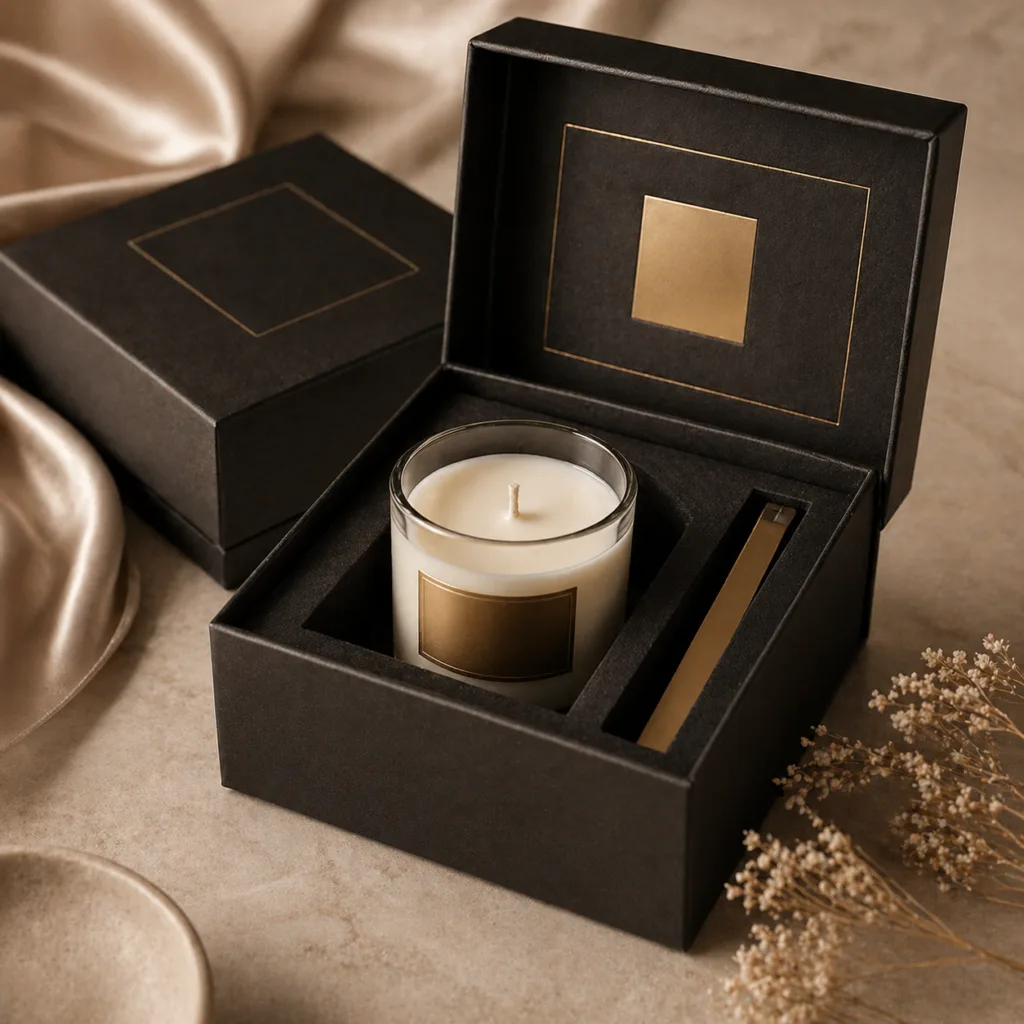
MOQ 1000 is where candle manufacturing becomes much more efficient.
At this level, the supplier can spread setup costs across more units. Packaging becomes more reasonable. Logo work becomes easier to justify. Component planning becomes more stable. Freight cost per unit can also improve, especially if the shipment is planned well.
For a mature buyer, MOQ 1000 is often the point where the product can move from “interesting concept” to “commercial line.”
What You Can Customize at MOQ 1000
At MOQ 1000, buyers can usually explore:
- Better glass customization options
- More stable ceramic vessel production for selected styles
- Printed logo on vessel
- More professional retail packaging
- Rigid box with insert
- Foil logo or premium paper finish depending on design
- Stronger fragrance planning
- Better cost control per unit
- More suitable wholesale pricing structure
- More room for DDP freight planning
MOQ 1000 does not mean everything is possible. Very complex custom ceramic molds, new glass molds, special accessories, and multi-color designs may still require higher volume. But compared with MOQ 100 or 500, 1000 pieces gives both buyer and supplier much more flexibility.
Realistic Unit Cost at MOQ 1000
For a well-controlled candle gift set using suitable components, the unit cost can go as low as around USD 3.67 per set.
This type of price usually requires a smart product structure:
- Existing or efficient glass vessel
- Controlled wax fill weight
- Standardized fragrance choice
- Reasonable logo method
- Packaging structure that is not overcomplicated
- One main design rather than many variations
- Efficient production planning
A USD 3.67 candle set does not mean every 1000-piece candle project can reach that price. If the buyer wants a heavy ceramic vessel, premium imported fragrance, thick rigid box, metal lid, custom insert, and multiple print finishes, the price will be higher.
But MOQ 1000 gives the project the best chance to lower the unit cost while keeping a professional retail look.
Why Mature Buyers Prefer MOQ 1000
Mature buyers do not only look at unit price. They look at margin structure.
A candle that costs USD 7.50 at small quantity may be difficult to sell profitably through wholesale channels. If the buyer sells to retailers, the product may need to pass through multiple margins:
- Factory cost
- Freight and duty
- Importer margin
- Wholesale price
- Retail markup
- Promotion or discount
- Returns or damage allowance
If the manufacturing cost is too high, the final retail price becomes uncomfortable.
At MOQ 1000, the buyer has more room to build a realistic margin. This is especially important for:
- Wholesale candle brands
- Retail chains
- Gift distributors
- Subscription box companies
- Home decor importers
- Boutique brands planning repeat orders
A serious candle business needs a product that looks good and makes financial sense. MOQ 1000 helps make that possible.
MOQ Decides Customization Level: A Practical Comparison
The table below shows how buyers should think about MOQ and customization.
| Order Quantity | Best Use | Vessel Options | Branding Options | Packaging Options | Cost Logic |
|---|---|---|---|---|---|
| MOQ 100 | Market testing | Stock glass, standard jar | Sticker label, simple logo | Simple box or no gift box | Highest unit cost, limited customization |
| MOQ 500 | Private label launch | Custom glass options, some standard ceramic styles | Better labels, possible printing | Printed box, basic rigid box, standard insert | Balanced cost and branding |
| MOQ 1000 | Commercial production | More glass customization, selected ceramic options | Stronger logo process | More polished retail packaging | Lower unit cost, better margin |
This is the most important lesson for buyers: MOQ is not only about how many units you buy. It is about how many production systems you can activate.
A 100-piece order can activate existing components.
A 500-piece order can activate light customization.
A 1000-piece order can activate stronger branding and better cost efficiency.
For highly complex vessels or packaging, even 1000 pieces may not be enough. If the design requires a new mold, multiple colors, special materials, or several packaging structures, the real MOQ may move to 3000, 5000, or higher.
Example: How a 1000-Piece Candle Set Can Reach Around USD 3.67
Let’s look at a practical example.
A buyer wants a private label scented candle set for retail or wholesale. The target is to keep the product premium enough for gifting, but not so complicated that cost becomes impossible.
A smart structure may look like this:
- Vessel: existing glass jar
- Wax: soy wax blend
- Fill weight: controlled medium size
- Fragrance: existing fragrance from supplier library
- Logo: label or efficient printing method
- Packaging: standard rigid box or well-designed printed box
- Insert: standard foam or paper insert
- Quantity: 1000 sets
In this structure, the supplier can plan materials more efficiently. The glass jar does not require a new mold. The fragrance does not require expensive development. The box uses a standard structure. The logo process is controlled. The insert is functional but not overdesigned.
This is how the buyer protects both visual quality and unit cost.
At 1000 pieces, a unit cost around USD 3.67 per set becomes possible for certain product structures. The number depends on final specifications, but the logic is clear: the buyer saves money by simplifying the right parts, not by making the product look cheap.
This is the difference between cost cutting and cost engineering.
Cost cutting removes value.
Cost engineering protects value while removing unnecessary complexity.
A strong supplier should help the buyer restructure the product so that it can be manufactured at the right MOQ and the right price.
Why 100 Pieces Cannot Support Luxury Customization
Many buyers send beautiful reference images and ask for 100 pieces. The design may include ceramic vessels, custom colors, thick gift boxes, gold foil logos, molded inserts, fragrance customization, and several SKUs.
The design direction may be excellent. The problem is not taste. The problem is production economics.
A luxury candle is not one item. It is a combination of several suppliers:
- Vessel supplier
- Wax and fragrance supplier
- Wick supplier
- Label supplier
- Box supplier
- Insert supplier
- Printing supplier
- Assembly team
- Export packing team
Each part has its own MOQ.
If the buyer wants 100 pieces, but the box supplier requires 500 boxes, the project immediately becomes unbalanced. If the ceramic supplier requires 500 vessels per color, but the buyer wants 100 total pieces across three colors, the project becomes impossible. If the buyer wants a custom molded insert, but the insert supplier needs a minimum production batch, the cost becomes too high.
This is why professional suppliers often say:
For 100 pieces, choose stock components.
For 500 pieces, start private label customization.
For 1000 pieces, build a serious commercial product.
This is not a refusal. It is a practical production roadmap.
Budget Allocation: Where Buyers Should Spend Money
A candle budget should not be spread evenly across every component. Mature buyers know which parts influence customer perception and which parts can be simplified.
Spend More on the Vessel If the Candle Is Sold as Home Decor
If your candle is positioned as a home decor item, the vessel matters. Customers may keep the jar after burning. The vessel becomes part of the perceived value.
For this strategy, spend more on:
- Better glass thickness
- Elegant shape
- Ceramic texture
- Matte finish
- Reusable design
- Clean logo placement
But if the vessel is complex, accept that the MOQ may rise.
Spend More on Packaging If the Candle Is Sold as a Gift
If your candle is positioned as a gift, packaging matters more.
Gift buyers judge the product before smelling it. A rigid box, insert, paper texture, foil detail, or well-structured opening experience can increase perceived value.
For this strategy, spend more on:
- Gift box structure
- Insert protection
- Brand color consistency
- Logo finish
- Retail shelf presence
But packaging has its own MOQ. If the order is too small, premium packaging may become the most expensive part of the product.
Spend More on Fragrance If Repeat Purchase Matters
If your candle line depends on customer loyalty, fragrance matters deeply.
A beautiful candle may get the first sale. A good scent gets the second sale.
For this strategy, spend more on:
- Fragrance oil quality
- Fragrance load balance
- Hot throw and cold throw testing
- Scent family planning
- Signature fragrance direction
However, fragrance development should match order size. For 100 pieces, use proven scents. For 500 or 1000 pieces, consider more refined fragrance selection or adjustment.
Simplify What Customers Do Not Value
Not every detail deserves budget.
A buyer may want custom color, custom jar, custom box, custom insert, custom ribbon, custom lid, custom scent, custom label, and custom carton all in one order. But if the retail customer does not care about every detail, the buyer is wasting budget.
A better approach is to decide the product’s main value driver:
- Is it a luxury gift?
- Is it a home decor candle?
- Is it a wellness candle?
- Is it a hotel amenity?
- Is it a seasonal retail product?
- Is it a wholesale item?
Once the positioning is clear, the budget becomes easier to allocate.
How to Choose Between MOQ 100, 500, and 1000
There is no perfect MOQ for every buyer. The right MOQ depends on business stage, sales channel, product positioning, and budget.
Choose MOQ 100 If You Are Testing
MOQ 100 is right if your main goal is learning.
Choose this path if:
- You are testing your first candle product
- You are unsure about market demand
- You need product photos
- You want to test scent feedback
- You accept stock vessels
- You do not need premium packaging yet
Your strategy should be simple: launch fast, collect feedback, then improve.
Do not try to build a luxury custom candle at 100 pieces. Build a clean, acceptable test product.
Choose MOQ 500 If You Are Launching
MOQ 500 is right if your main goal is selling.
Choose this path if:
- You already know your target customer
- You need a product that looks retail-ready
- You want logo and packaging
- You are preparing a small wholesale or boutique launch
- You can accept controlled customization
- You want a balance between risk and brand presentation
This is often the best starting point for real private label candle buyers.
Choose MOQ 1000 If You Are Scaling
MOQ 1000 is right if your main goal is margin.
Choose this path if:
- You already have demand or distribution
- You need better unit cost
- You want stronger packaging
- You are preparing wholesale pricing
- You want a more stable supply plan
- You are building a repeatable product line
At 1000 pieces, buyers can negotiate better structure, reduce unit cost, and create a more serious commercial product.
The Hidden Risk of Too Many SKUs
One common mistake is dividing the order too much.
A buyer may say:
“I want 500 pieces total. Can I do five scents, five colors, and five box designs?”
Technically, that becomes 100 pieces per SKU. From a production point of view, the project no longer behaves like MOQ 500. It behaves like five small 100-piece orders.
Each scent needs batch planning. Each color may need separate vessel sourcing. Each box design may trigger separate printing setup. Each label design may need separate artwork control.
This increases cost and risk.
For a first private label candle order, fewer SKUs are usually better.
A smart launch might include:
- 1 vessel style
- 1 packaging structure
- 2 fragrance options
- 1 brand color system
- 1 logo method
This gives the buyer enough variety without destroying production efficiency.
Mature buyers understand that simplicity is not weakness. Simplicity helps scale.
How Mature Buyers Talk to Candle Suppliers
If you want accurate pricing, do not only ask, “How much for 500 candles?”
A supplier needs specifications.
A strong inquiry should include:
- Target quantity
- Candle size or wax fill weight
- Vessel material: glass, ceramic, tin, or other
- Stock vessel or custom vessel
- Fragrance direction
- Number of scents
- Logo method
- Packaging type
- Target market
- Compliance needs
- Shipping destination
- Target price if available
- Product reference images
The clearer your information, the better the supplier can suggest a realistic structure.
A good supplier may not simply follow the reference image exactly. They may tell you which parts should be simplified, which parts need higher MOQ, and which parts can be adjusted to protect cost.
That is valuable.
A supplier who only says “yes” to everything may create problems later. A supplier who explains the production logic helps you avoid wasted time, failed samples, and unrealistic pricing.
Cost Breakdown: What Buyers Should Expect in a Quote
A professional candle quote should make the product structure clear.
It may include:
- Candle vessel specification
- Wax type and fill weight
- Fragrance type or scent direction
- Wick type
- Logo process
- Packaging description
- Unit price
- MOQ
- Sample cost
- Sample lead time
- Production lead time
- Carton packing information
- Shipping option if requested
- Payment terms
For a gift set, the description should be even more specific.
For example:
Private label scented candle set, stock glass jar, soy wax blend, 220g fill weight, selected fragrance from supplier library, logo label on glass, packed in printed rigid gift box with protective insert, warning label included, export carton packing.
This kind of description prevents misunderstanding.
If the quote only says “candle USD 3.67,” the buyer does not know what is included. A low price without specification is not useful. A mature buyer should always compare structure, not just number.
Freight and Packaging Protection Also Affect Real Cost
Manufacturing cost per unit is only part of the final landed cost.
Candles are heavy and fragile. Glass jars, ceramic vessels, wax weight, and gift boxes all increase shipping cost. If the packaging is weak, damage risk increases. If the packaging is too bulky, freight cost rises.
For international buyers, especially those importing to North America, Europe, or Australia, the real cost should include:
- Product unit cost
- Export carton cost
- Shipping cost
- Duty and tax if applicable
- Customs clearance
- Local delivery
- Damage allowance
- Warehousing cost
This is why DDP shipping can be useful for some buyers. It gives a clearer door-to-door cost picture. But even with DDP, product structure matters. A heavy ceramic candle in a large rigid box will cost more to ship than a compact glass candle in efficient packaging.
Mature buyers consider freight early, not after production.
Common Mistakes That Increase Candle Cost Per Unit
Mistake 1: Asking for Full Customization at MOQ 100
This is the most common mistake. The buyer wants a luxury product but gives the supplier a test-order quantity. The result is usually frustration.
Better approach: use stock components for 100 pieces, or increase the MOQ to support customization.
Mistake 2: Creating Too Many Variations
Five scents, five colors, and five boxes may sound exciting, but it breaks production efficiency.
Better approach: start with fewer SKUs and scale after sales data.
Mistake 3: Overdesigning Packaging
Premium packaging can help sales, but only if the order quantity supports it.
Better approach: choose a standard box structure and invest in clean artwork.
Mistake 4: Comparing Quotes Without Comparing Specifications
One supplier may quote a stock jar with simple label. Another may quote a thicker jar with rigid box. The prices cannot be compared directly.
Better approach: compare vessel, wax fill, fragrance, packaging, logo method, and shipping terms.
Mistake 5: Ignoring Retail Margin
A candle may look affordable at factory level, but after freight, duty, wholesale margin, and retail markup, the final price may not work.
Better approach: calculate target retail price first, then work backward.
A Practical Buyer Roadmap
If you are building a candle line, the smartest path often looks like this:
Stage 1: Concept Test — 100 Pieces
Use stock glass, simple label, and existing fragrance. Keep the product clean and fast. Focus on customer feedback.
Stage 2: Brand Launch — 500 Pieces
Improve the vessel, logo, and packaging. Build a product that can sit on a retail shelf or be sold as a gift.
Stage 3: Commercial Scaling — 1000 Pieces
Optimize unit cost, packaging, freight, and margin. Start thinking like a wholesale or retail buyer.
This roadmap prevents overinvestment too early while still leaving room for growth.
Final Thoughts: MOQ Is a Business Decision, Not Just a Factory Rule
Candle manufacturing cost per unit is not random. It follows production logic.
At MOQ 100, buyers should focus on testing with stock or regular styles. The goal is speed and validation, not full customization.
At MOQ 500, buyers can start building a real private label candle with custom glass options, selected standard ceramic styles, logo work, and packaging. This is often the best balance for boutique brands and smaller retailers.
At MOQ 1000, buyers can reach better unit cost, stronger retail presentation, and more serious margin. For the right product structure, the unit cost can go as low as around USD 3.67 per set.
The most important point is simple:
MOQ decides the customization level.
The more complex the vessel, packaging, logo, fragrance, and assembly process, the higher the MOQ needs to be. A mature buyer does not fight this logic. A mature buyer uses it.
If your budget is limited, simplify the right parts. If your brand positioning requires luxury packaging or special vessels, prepare a higher MOQ. If your goal is long-term wholesale growth, design the product around margin from the beginning.
A good candle supplier should not only give you a price. They should help you structure the product so the price, MOQ, packaging, and market positioning all work together.
That is how a candle project moves from a small test order to a profitable product line.
FAQ
1. What is a realistic MOQ for private label candles?
A realistic MOQ depends on the level of customization. For 100 pieces, buyers should usually choose stock glass jars, existing fragrances, and simple labels. For 500 pieces, private label customization becomes more practical, including logo work, custom glass options, and basic packaging. For 1000 pieces, buyers can usually achieve better unit cost, stronger packaging, and a more commercial product structure.
2. Why is the unit cost so high for 100 candles?
The unit cost is high because many production costs are fixed or semi-fixed. Label setup, packaging coordination, labor, sample preparation, and supplier management do not become much cheaper just because the order is small. Also, many packaging and vessel suppliers have their own MOQs. At 100 pieces, these costs cannot be spread across enough units.
3. Can I make custom ceramic candle vessels at 100 pieces?
In most cases, custom ceramic candle vessels are not realistic at 100 pieces. Ceramic production usually requires higher quantity because of forming, firing, glazing, color control, and quality loss. At 100 pieces, stock glass or existing regular styles are usually more practical. Some standard ceramic styles may become possible around 500 pieces, while more complex ceramic customization often requires higher MOQ.