
If you are planning a candle gift set project and asking one practical question—how much does 500 sets actually cost—you are already thinking like a serious buyer.
That is usually the point where a project starts becoming real. The concept is there. The scent direction is there. The packaging mood board is probably there too. But once the conversation moves from inspiration to procurement, one thing matters more than anything else: cost structure.
And this is where many buyers get frustrated.
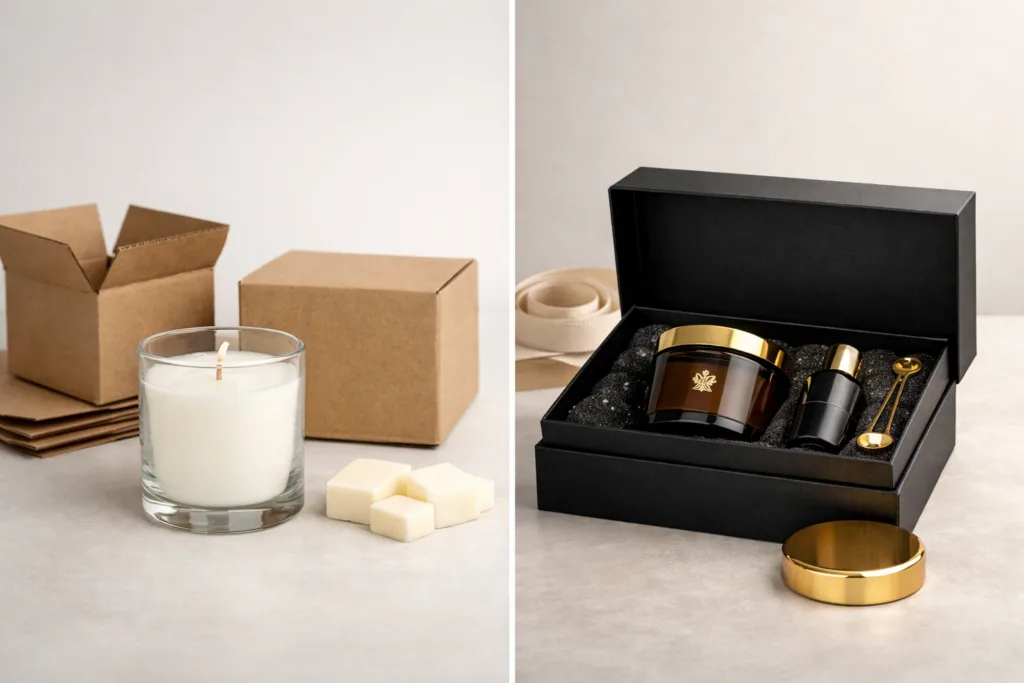
One supplier says USD 3.20 per set. Another says USD 5.40. Another says USD 8.00 or even higher. At first glance, all of them seem to be quoting “a candle gift set.” But in reality, they are often quoting completely different products, different packaging assumptions, different decoration methods, different freight terms, and very different levels of production support.
So if you are a retailer, importer, boutique chain, hospitality buyer, or private label brand planning a 500-set candle gift project, this article is for you.
This is not a generic lifestyle piece about candles. It is a procurement-focused guide written from the supplier side, using the way real candle projects are actually costed. We will break down where the money goes, why MOQ affects your options, when rigid boxes push the price up, how DDP freight changes landed cost, and what smart buyers usually do when they want a premium look without turning a mid-size launch into an unnecessarily expensive project.
The goal is simple: help you evaluate a 500-set candle gift set project the way an experienced buyer would.
Why a 500-Set Project Sits in a Very Specific Cost Zone
A 500-set order is not a tiny sample-level project, but it is not yet a large-volume production run either. It sits in an awkward middle zone.
That matters because at 500 sets, you are large enough to expect real customization, but not always large enough to unlock the best unit economics on every component.
This is especially true for gift sets.
A standard jar candle with a sticker label is relatively straightforward. But once you move into a gift-set format, cost no longer depends on the candle alone. It becomes a combination of:
- the vessel
- the wax fill
- the fragrance load
- the logo decoration method
- the outer box structure
- the insert material
- the carton packing efficiency
- the freight method
- the trade term used in the quote
That is why buyers often underestimate cost at the beginning. They think they are buying “a candle,” when in practice they are buying a full packaged gift product ready for retail or distribution.
At 500 sets, every packaging decision matters more because MOQ pressure has not disappeared yet. In fact, packaging often becomes the hidden cost driver.
A Realistic Example of a 500-Set Candle Gift Set Configuration
Let’s start with a realistic configuration that reflects the kind of project many boutique brands and premium retailers actually develop.
Example Product Setup
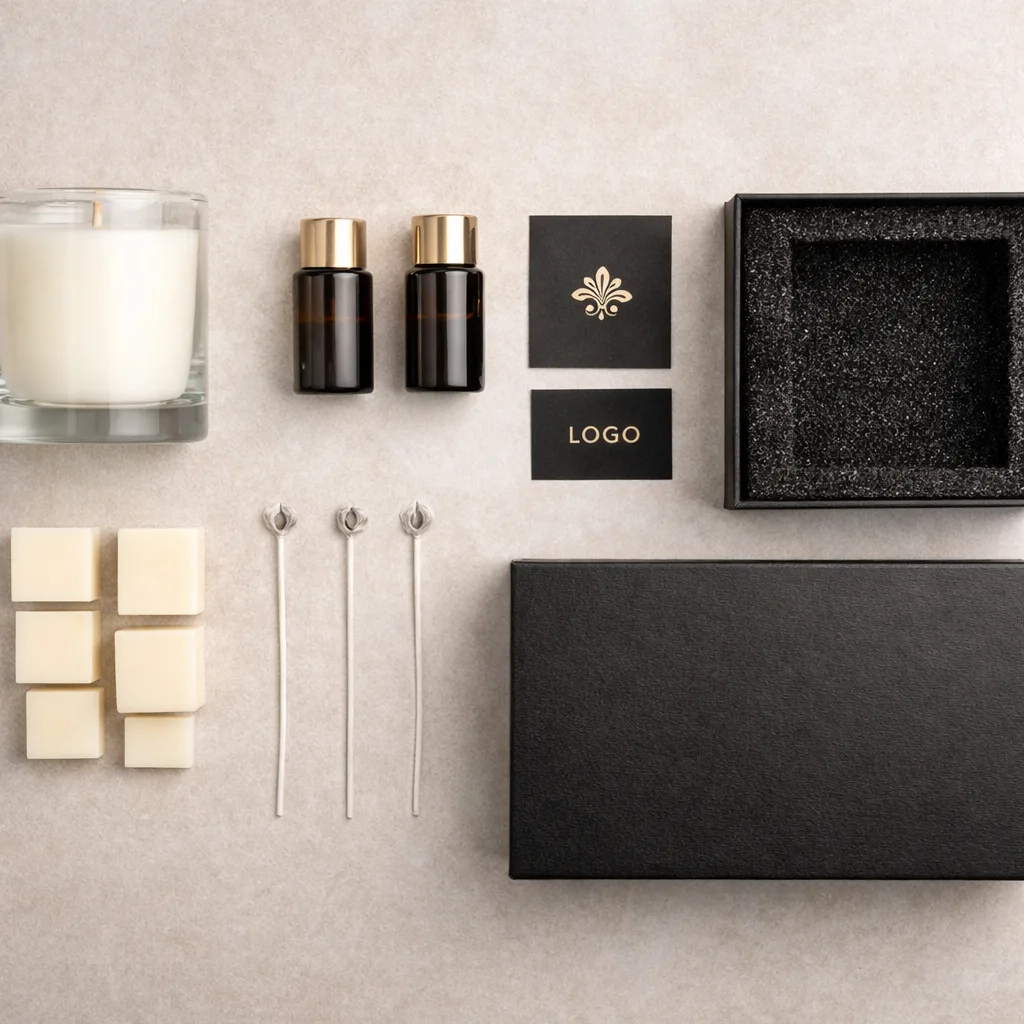
- Vessel: amber glass jar, clear glass finish, not frosted
- Jar size: 80 × 90 mm
- Wax type: soy wax
- Wax fill: around 220–250 g
- Fragrance: custom or selected production fragrance
- Logo on jar: gold foil
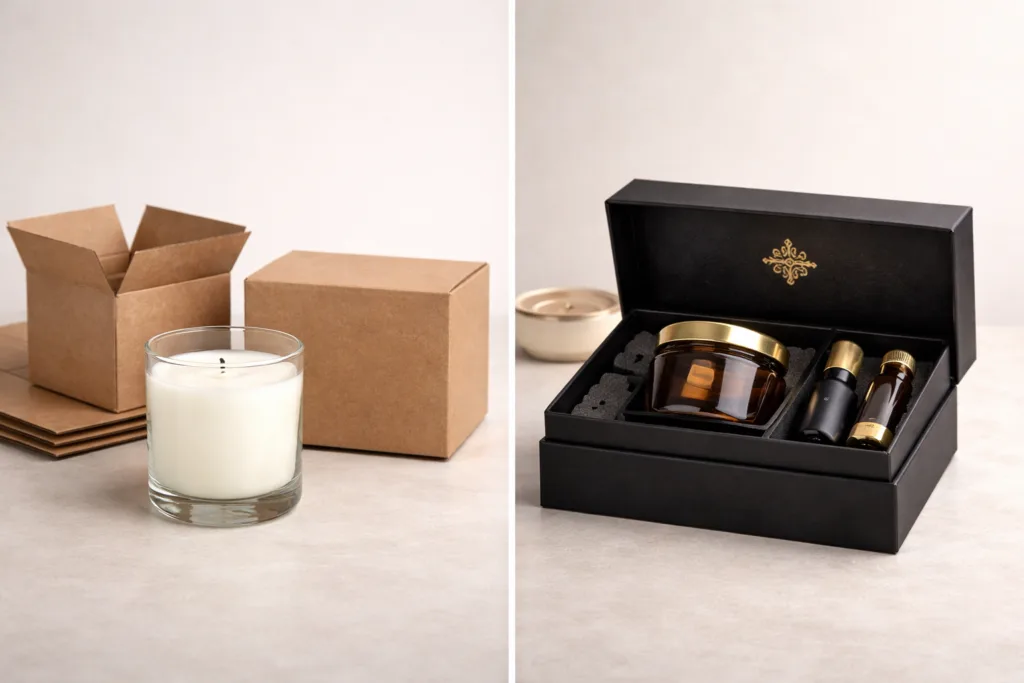
- Packaging: rigid lid-and-base gift box
- Insert: black pearl cotton insert
- Quantity: 500 sets
On paper, this does not look overly complicated. It is not ceramic. It is not a sculptural vessel. It does not involve a metal lid, electroplating, or a magnetic box with multi-layer inserts. But it is still a premium-format product.
That means it will not price like a basic jar candle.
For a project like this, a realistic EXW product cost may land around USD 5.40 per set, depending on fragrance complexity, print method, packaging details, and final packing specifications.
Now let’s break down why.
The 500 Candle Gift Set Cost Breakdown, Line by Line
1. Glass Vessel Cost
For a gift-set candle in an 80 × 90 mm glass format, the jar cost depends on several variables:
- glass weight
- glass color
- whether the finish is clear, frosted, sprayed, or electroplated
- whether the jar is a standard mold or custom mold
- order quantity
For a standard amber clear glass vessel, the cost is more manageable because the mold already exists and the supplier is not building a custom glass program just for your project.
This is one reason experienced buyers often start with standard jars at the 500–1000 set stage. The vessel already carries a premium appearance, but the MOQ risk stays under control.
If you switch from a standard amber glass jar to a custom ceramic vessel, your unit cost can rise sharply, and the MOQ requirement often rises with it. That is not because the supplier is arbitrarily charging more. It is because ceramic development, color control, kiln consistency, and production rejects all make the project more complex.
2. Wax and Filling Cost
Soy wax is often requested for private label candle projects because it aligns with how many premium and lifestyle buyers want to position the product. But not all soy programs cost the same.
Wax cost depends on:
- wax type and blend
- fragrance load
- burn performance requirements
- seasonal stability
- fill weight
In a 220–250 g candle, the wax itself is not usually the biggest cost driver. The more important issue is how well the fragrance performs in that wax and whether the formula remains stable in production.
This matters because a supplier is not just filling jars. A serious supplier is responsible for producing a candle that performs consistently enough for retail sale.
Buyers who push for the cheapest formula often discover later that low cost creates new problems: weak scent throw, surface defects, inconsistent tops, tunneling complaints, or stability issues during shipment.
3. Fragrance Cost
Many first-time buyers underestimate fragrance cost completely.
They assume scent is just a small addition. In reality, fragrance can materially affect final pricing, especially when:
- the fragrance load is high
- the oil blend is premium
- the scent needs to be newly developed
- multiple revisions are needed during sampling
- the candle is expected to match a reference product
For buyers planning a signature scent, it is smart to treat fragrance development as a technical and commercial decision, not just a creative one.
A scent that smells wonderful in a fine fragrance strip does not automatically perform well in candle wax. Hot throw, cold throw, compatibility, and stability matter. And if you are selling into quality-conscious retail channels, poor burn performance will cost you much more than a slightly higher development budget upfront.
4. Logo Decoration Cost
A gold foil logo looks premium, but it changes the cost structure compared with a simple sticker.
Decoration method is one of the easiest ways to shift unit cost up or down.
Common options include:
- sticker labels
- screen printing
- decal application
- hot stamping or foil effects
- direct print with specialty finishes
For a 500-set project, foil decoration on glass is often possible, but buyers should understand that premium decoration creates additional process steps and tighter quality control requirements.
If the budget is under pressure, one of the first things smart buyers compare is not the candle size, but the branding method.
Sometimes the commercial difference between a workable project and an overpriced project is simply changing from a complex decoration method to one that still looks premium but is easier to execute.
5. Rigid Box Packaging Cost
This is where many budgets get hit.
A rigid gift box instantly improves perceived value. It photographs better. It feels more substantial in hand. It supports premium positioning. It often lifts retail price expectations. For many brands, it is worth it.
But rigid boxes are rarely cheap.
Their cost depends on:
- structure type
- paper wrap
- board thickness
- print process
- foil or embossing
- insert structure
- assembly requirements
- carton packing efficiency
A rigid lid-and-base box with insert may easily become one of the largest single components in the whole set.
At 500 sets, this matters even more because many box suppliers prefer higher quantities for the best pricing. In practical terms, that means a 500-set launch can carry some packaging inefficiency that would start to disappear at 1000 or 2000 sets.
This is one reason many experienced suppliers recommend that buyers spend carefully on the outer presentation. The right rigid box can elevate the product. The wrong one can absorb budget that would have been better invested in fragrance quality, vessel appearance, or freight flexibility.
6. Insert Cost
Insert cost sounds minor until it is not.
Black pearl cotton, EVA, molded pulp, cardboard partitions, and custom-cut foam all create different cost and presentation outcomes.
A black pearl cotton insert gives a premium visual contrast, especially when paired with amber glass and a red rigid box. It presents well and protects the product. But again, it is a premium choice relative to simpler internal packing solutions.
When buyers want to control cost without cheapening the outside appearance, insert simplification is often one of the most practical places to review.
What a Real Product Cost Might Look Like at 500 Sets
For a configuration like the one above, a rough product-side cost logic might look like this:
- candle unit with jar, wax, fragrance, wick and basic assembly: approximately USD 2.80–3.50
- rigid gift box with insert: approximately USD 2.00–3.20
- estimated EXW total: around USD 5.40 per set in a realistic mid-range scenario
This is not a universal number for every candle gift set. It is a realistic way to understand why many premium-looking 500-set projects do not land at entry-level pricing.
If someone quotes much lower, you need to ask what has changed.
Is the box downgraded?
Is the logo a sticker instead of foil?
Is the glass lighter?
Is the wax fill smaller?
Is the fragrance standard stock fragrance instead of custom development?
Is the quote EXW while another supplier is quoting DDP?
In B2B sourcing, low numbers are meaningless unless the spec is aligned.
Why MOQ Matters More in Gift Sets Than Buyers Expect
MOQ is not just a factory rule. It is a cost logic.
For a gift set, your project is made of multiple parts, and each part may have a different MOQ threshold.
A simplified example:
- standard glass jar may support a relatively low MOQ
- soy wax filling may be flexible
- sticker labeling may be flexible
- rigid box production may prefer 1000 units or more
- custom insert may increase setup cost even at moderate quantities
So while a buyer sees “500 sets,” the supplier sees a mixed-MOQ project.
That is why 500 sets is already considered a workable but still relatively low quantity for a customized candle gift set with premium packaging.
The best suppliers do not hide that reality. They explain it early.
If your project involves standard components, 500 sets may be very efficient. If it involves several custom parts, 500 sets may still be possible, but some cost pressure is unavoidable.
This is also why many experienced buyers decide where they want their customization to live.
Do they want the money in the vessel?
Do they want the money in the fragrance story?
Do they want the money in the rigid packaging?
Trying to maximize all three at 500 sets often leads to disappointment.
Sea DDP vs Air DDP: The Freight Question Buyers Actually Care About
Once product cost is clear, the next big question is landed cost.
And this is where many purchasing conversations become much more serious.
For a 500-set project with gift boxes, total shipment weight can easily become meaningful. A realistic estimate for 500 fully packed gift sets may be around 350 kg, depending on vessel weight, insert type, master carton design, and packaging density.
Typical DDP Freight Scenarios
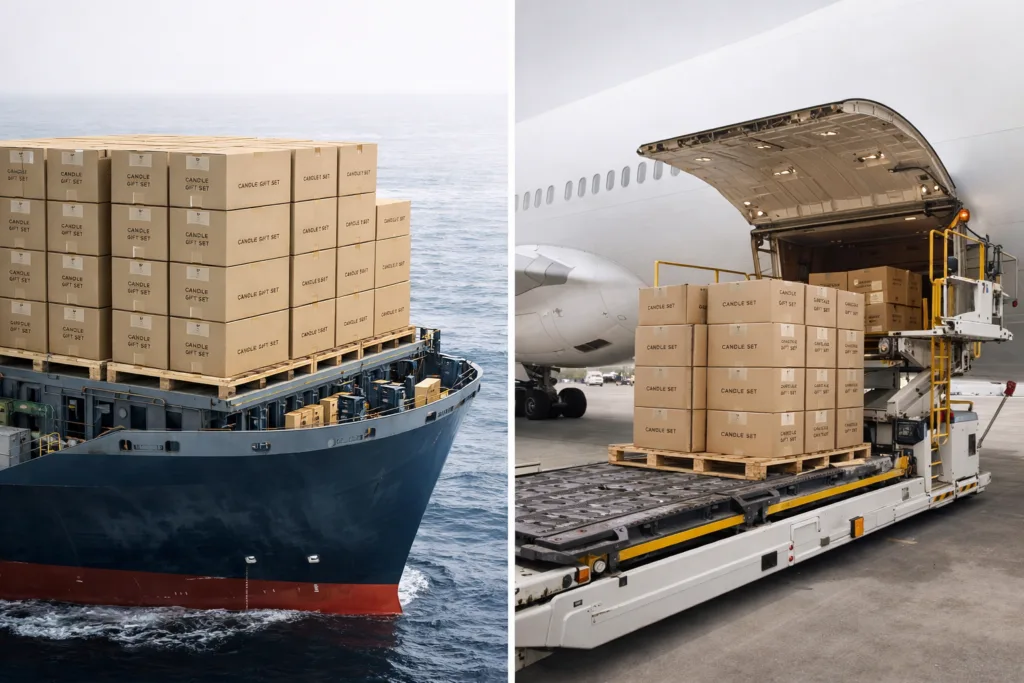
Option 1: Sea DDP
- Estimated freight: around USD 750
- Transit time: around 20–30 days
Option 2: Air DDP
- Estimated freight: around USD 2800
- Transit time: around 10–15 days
For most retail buyers, sea DDP is the normal commercial choice unless the launch deadline is urgent.
Why?
Because the packaging format that makes a gift set attractive also makes it freight-sensitive. Rigid boxes create better perceived value, but they also take up space. If the project is not time-critical, sea shipping is usually the more rational option for margin protection.
Air DDP is useful when:
- you are launching urgently
- you missed a seasonal production window
- the order value justifies the speed
- the quantity is limited enough that freight pain is acceptable
But for ongoing programs, buyers who use air on every shipment usually end up solving one problem by creating another: margin erosion.
Why DDP Matters So Much in Candle Procurement
Many newer buyers compare prices without comparing trade terms. That is a mistake.
A supplier quoting EXW and a supplier quoting DDP are not quoting the same thing.
DDP changes the conversation because it bundles responsibility differently. For importers and retail buyers who want a cleaner landed-cost calculation, DDP can simplify decision-making.
That does not mean DDP is always better for every buyer. Larger importers with their own freight programs may prefer other terms. But for many mid-size projects, DDP offers clarity.
And clarity matters because the candle itself is only one part of the purchasing decision. A buyer still has to think about:
- landed cost
- retail margin
- warehousing
- delivery timing
- carton footprint
- damage risk
A quote that looks cheaper on paper can easily stop being cheap once freight, customs handling, and delivery complexity are added back in.
Why Some Quotes Are Much Lower Than Others
This is one of the biggest practical questions in the market.
Here is the short answer: because buyers often request “the same product” and unknowingly receive quotes for different quality levels.
A much cheaper quote may reflect one or more of the following:
- lighter glass
- smaller wax fill
- sticker branding instead of foil
- folding carton instead of rigid box
- standard fragrance instead of custom development
- simpler insert
- different outer carton efficiency
- incomplete testing or lower process control
That does not automatically mean the lower-priced supplier is wrong.
But it does mean the buyer should compare intelligently.
The real question is not “Who is cheapest?”
It is “What exactly am I buying at this price, and will it hold up in retail?”
For B2B buyers, that second question is the one that protects margin, reputation, and reorder potential.
The Hidden Commercial Risk: Overbuilding Too Early
Many candle gift set projects become expensive not because the product needs to be expensive, but because the first version is overbuilt.
This happens all the time.
A buyer wants:
- custom scent
- custom glass color
- foil logo
- custom box structure
- premium insert
- low MOQ
- fast lead time
- aggressive pricing
Those goals do not always coexist comfortably.
The most successful mid-size launches usually start by simplifying one or two variables.
For example:
- use a standard premium jar instead of custom glass development
- keep the premium rigid box, but simplify the insert
- use an existing fragrance base before developing a fully custom formula
- reduce decorative complexity while protecting the overall luxury look
This is not about downgrading the brand.
It is about spending money where the customer actually feels it.
Good buyers do this well. They do not chase complexity for its own sake. They build a product that is commercially sensible first, then increase customization once reorder volume proves the concept.
What Serious Suppliers Usually Recommend for 500–1000 Set Projects
For projects in this range, the most practical route is often:
- use a standard glass vessel with premium visual appeal
- keep the wax and burn system stable
- focus branding on clean decoration
- choose packaging that feels premium but is not structurally over-engineered
- align shipping method with retail calendar, not emotion
This is usually where cost and presentation meet in the healthiest way.
Buyers who take this route often get a better result than buyers who try to make a 500-set launch look like a 20,000-unit global program.
And from the supplier side, this is also where execution tends to be smoother.
The sampling is clearer. The quotation is cleaner. The production risk is lower. The lead time is easier to control.
A Typical Development Flow for This Type of Order
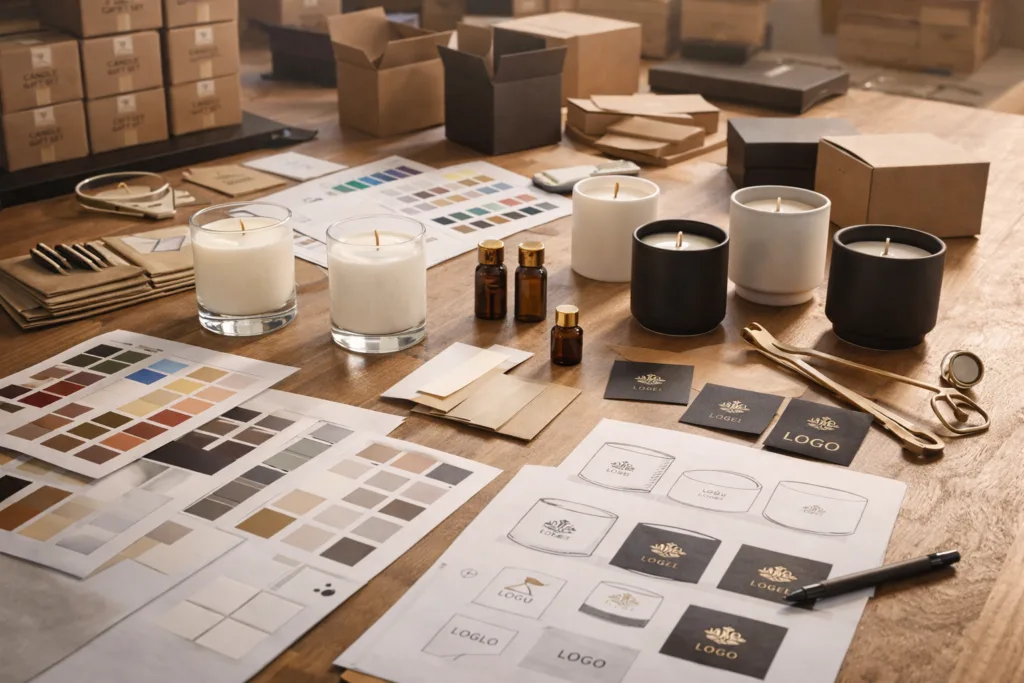
If you are planning a 500-set project, the working flow often looks like this:
Step 1: Confirm Product Specifications
This includes:
- vessel size
- vessel finish
- wax type
- approximate fill weight
- fragrance direction
- logo method
- packaging structure
- insert type
The clearer this stage is, the better your quote quality will be.
Step 2: Sampling
For many custom candle projects, sampling may take around 10–15 days, depending on fragrance work and packaging complexity.
Step 3: Cost Refinement
Once the sample direction is approved, suppliers can refine unit cost based on the final spec rather than assumptions.
Step 4: Bulk Production
For a moderate project like this, production may often take around 15–20 days, again depending on final packaging and whether all components are already confirmed.
Step 5: Shipment Planning
At this point the buyer chooses whether to move by sea or air, and whether the project is shipping under DDP or another agreed term.
A strong supplier does not just send a number. They help the buyer understand which configuration is commercially practical before bulk production starts.
What Buyers Should Prepare Before Asking for a Quote
If you want a quote that is useful—not vague, not inflated, not full of assumptions—send the supplier the right information.
The most helpful things you can provide are:
- target quantity
- destination country or ZIP/postal code
- jar size reference
- packaging style reference
- expected scent direction
- target retail positioning
- whether your price target is EXW or landed
The more concrete your brief is, the easier it becomes for a supplier to guide the project properly.
This matters because better input produces better commercial advice. A serious buyer does not ask only for a price. They ask for a structure that can survive retail reality.
Final Thoughts: A 500-Set Gift Set Is Not Small—It Is a Real Buying Decision
A 500-set candle gift set order sits at an important stage in the sourcing journey.
It is large enough to deserve real supplier attention. It is large enough to justify meaningful packaging decisions. It is large enough that freight and MOQ logic matter. And it is large enough that the wrong cost assumptions can damage your launch budget quickly.
If you remember only one thing from this article, let it be this:
A 500 candle gift set cost breakdown is never just about the candle. It is about the full commercial package—product, packaging, MOQ, freight, and margin.
The buyers who succeed in this category are usually not the ones who force the lowest quote.
They are the ones who understand where the money goes, simplify where necessary, and invest in the details that actually support retail sell-through.
If you are planning a project in the 500–1000 set range, the smartest next step is not to chase random low numbers. It is to align the spec, understand the trade-offs, and build a quote around what your business really needs.
If you already have a packaging idea, scent concept, or target budget, you can usually get to a much more workable proposal once the supplier can see the project clearly.
That is how gift-set development moves from mood board to purchase order.
FAQs
1. How much does a 500-set candle gift set usually cost?
A 500-set candle gift set can vary widely depending on vessel type, wax fill, fragrance development, decoration method, and packaging structure. For a premium glass jar candle with rigid gift box packaging, a realistic EXW range may land around the mid-level pricing zone rather than entry-level candle pricing.
2. Why is rigid box packaging so expensive in candle gift sets?
Rigid boxes add perceived value, improve presentation, and support premium retail positioning, but they also involve more material, more hand assembly, and often higher MOQ expectations than basic folding cartons.
3. Is sea DDP better than air DDP for candle gift set orders?
For most standard retail programs, sea DDP is the more margin-friendly option. Air DDP is typically chosen only when the launch deadline is urgent or the order value justifies the higher freight cost.