
This in-depth guide confronts the top misconceptions around MOQ in candle manufacturing. If you’re launching or scaling your brand, understanding these realities will help you sidestep costly missteps, negotiate smarter, and forge productive partnerships—directly impacting your bottom line and brand reputation. Along the way, we’ll draw on best practices from world-class suppliers like Circe Home to show how MOQ, customization, and cost structures truly interact behind the scenes.
Understanding MOQ in Candle Manufacturing
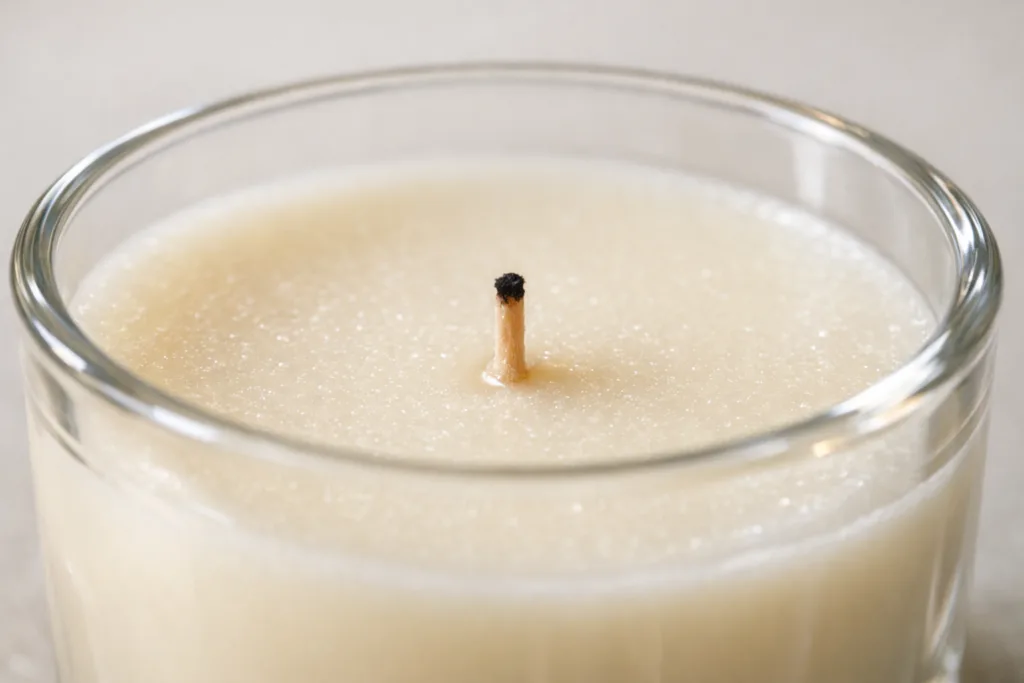
MOQ isn’t arbitrary—it’s shaped by a web of manufacturing realities, from raw material packs to machinery changeover. For candle startups, grasping MOQ’s origins is step one for smart sourcing and product planning.
What Actually Determines MOQ?
- Material batch sizes: Wax, fragrance oils, wicks, and custom packaging have supplier-set minimums well before assembly.
- Production setup costs: Changing wax tanks, cleaning auto-filling lines, switching labels, and prepping molds all add expense at low volumes.
- Quality control thresholds: For consistent burn profiles, machines need a stable “run”—tiny batches simply aren’t feasible.
- Supplier scale: Top fragrance houses or specialty glass makers may only offer bulk volumes, pushing up the MOQ for small brands.
Candle Startup Supply Chain Flow
- Ingredient sourcing (wax, oils, wicks, containers, labels)
- Batch blending and fragrance dosing
- Wick gluing and vessel prep
- Pouring by batch size
- Curing and cold/hot throw testing
- Quality control, boxing, labeling
“MOQ reflects upstream realities: wax must be purchased by carton, fragrance by kilo, and custom jars by the case. Orders below that aren’t sustainable.” —Circe Home Lab Insight
Misconception #1: MOQ Is Factories “Making Life Hard” for Startups
The first myth? That manufacturers set MOQs to exclude newcomers or as leverage. In truth, MOQs are grounded in practical, often inescapable, supply-chain mathematics.
Why MOQs Safeguard Quality and Cost
- Raw inputs for luxury candles (e.g., coconut or rapeseed wax, custom perfume oils) must be sourced in bulk—splitting or storing leftovers degrades scent quality.
- Changeover time and labor plummet per-unit costs only when spread across larger batches. Frequent small runs drive up per-candle pricing exponentially.
- QC relies on batch consistency—a single 100-unit run may never stabilize for fragrance load, curing time, or burn profile checks.
Case Example: The Fragrance Oil Dilemma
Suppose your dream scent involves a proprietary blend from Grasse or a top fragrance house. These are rarely available in sub-kilo batches, and must be opened, measured, mixed, and poured within a narrow time frame—or you risk evaporation, oxidation, or scent drift. If your order is under the minimum sourcing threshold, the cost and wastage climb sharply.
Misconception #2: “I Want Only 100 Candles, So I Should Order 100 of Everything”
It’s tempting to think that small orders mean matching material buys. However, supply chains don’t work this way—and this reality impacts everything from pricing to fragrance selection and vessel choice.
The Reality of Batch Sourcing
- Wax & Blend Packs: Soy or beeswax is shipped in cartons or blocks, often 20–25kg at minimum. Leftovers are hard to store, especially if blended with fragrance.
- Custom Containers: Glass factories set case minimums—often 500–1,200 pcs—even if you only plan to pour 100 at launch. Custom glass color or emboss may push it higher.
- Perfume Oils: Most suppliers start at 1 kg or higher per scent; for high-load formulas (9–12%), a minimum batch easily covers 300+ candles.
| Component | Typical MOQ | Notes |
|---|---|---|
| Wax (soy, coconut, blends) | 20–25 kg | Sourced by case |
| Fragrance oil | 1–5 kg | Proprietary blends, IFRA-compliant |
| Glass jar | 500–1,200 pcs | Custom color/shape increases MOQ |
| Wick | 5,000–10,000 pcs | Various sizes, carton-packed |
This systemic scale—the “materials’ MOQ stack”—means you may end up buying (and storing) extra materials if ordering very low candle numbers. Factor this into your brand’s pricing and launch plans.
Misconception #3: Lowering MOQ Always Lowers Per-Unit Cost
Many startups believe that getting manufacturers to drop their MOQ means a cheaper, safer pilot run. The truth: lower MOQs generally mean higher per-unit costs, heftier surcharges, and potentially less factory attention—or cutbacks in customization and compliance support.
Why Tiny Batches Cost More Per Candle
- Manual labor replaces machines—hand-pouring, small-batch blending, and hand-labeling raise costs and increase variability.
- Leftover raw materials (custom wax, packaging runs) either go to waste or are charged to you in the factory’s quote.
- Quality checks (e.g., burn time testing, curing for cold/hot throw, labeling) cost the same regardless of batch size.
- Special shapes, foiling, or box designs below MOQ may require setup fee premiums in addition to higher per-unit charges.
Per-Unit Cost Illustration
| Order Size | Customization Scope | Estimated Unit Cost |
|---|---|---|
| 100 pcs | Basic glass, stock fragrance | $8.50 |
| 500 pcs | Custom jar, custom scent, embossed box | $7.00 |
| 1,200 pcs | Full bespoke (wax, jar, scent, packaging) | $5.75 |
Misconception #4: Industrial Candle Manufacturers Can Run 50–100 Piece Orders
Industrial or semi-automated candle manufacturers have set equipment timings, tank sizes, and QC requirements. At the industrial scale, true “small batch” simply doesn’t fit efficiently—or sometimes at all—into their workflows.
Setup tasks (tank cleaning, dosing fragrance, preheating wax, prepping wicks and vessels) all require minimum volumes. Dropping below these thresholds can create burn profile instability, unintended scent changes, or inefficient use of energy and labor. This ultimately jeopardizes both quality and cost, making sub-minimum runs unattractive for both supplier and startup.
How Top Makers Approach Micro-Batch Orders
- Some may offer sample/prototype batches at a premium for market testing, but not as regular production lines.
- Expect hand-pouring, limited customization, and priority for brands with clear growth potential.
- For private label lines (e.g., spa or hotel), higher MOQs ensure consistency, compliance, and supply reliability.
How to Navigate MOQ Constraints as a Candle Startup
Savvy founders learn to approach MOQs strategically rather than as a hurdle. Smart planning lets you balance creative vision, cash flow, and the realities of raw material supply, line setup, and burn-testing demands.
1. Build Your Starting Range Around Feasible MOQ Tiers
Choose 1–2 hero scents and containers with stock or near-stock availability to keep MOQs lower on first runs. Expand into custom when you have volume data.
2. Use “Bridge” Runs and Sampling Services
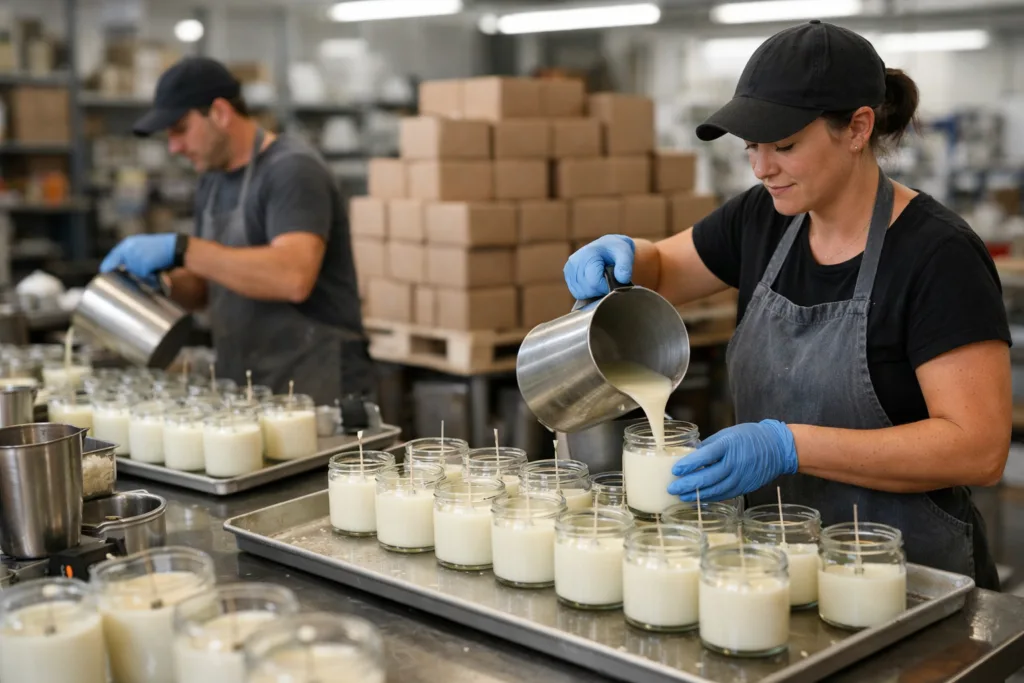
Manufacturers like Circe Home may offer premium-priced micro-batch samples. Use these for product shots, market testing, and feedback, not for your core retail inventory.
3. Ask About Group Buys and Shared Sourcing
Some OEMs batch multiple startup orders within a time window (especially on stock jars, base fragrances, or core soy blends). This can lower your exposure to full-volume solo runs, although custom elements still drive higher thresholds.
4. Plan for Scale—Not Just a Minimum Launch
Work backwards from your marketing plan. Ensure your forecast can support MOQ for core SKUs, and avoid tying up cash in “custom everything” before you’ve validated demand.
Wax Blends, Fragrance Loads, and MOQ Impacts
Choosing the right wax blend not only impacts performance—scent throw, clean burn, burn time, and visual clarity—but also MOQ and price. Below, see how different waxes and blends play into typical MOQs and key sensory attributes:
| Wax Type | MOQ | Max Fragrance Load % | Burn Time (200g) | Notes |
|---|---|---|---|---|
| Soy | 20 kg | 8–9% | 40–45h | Excellent cold throw, may frost |
| Coconut/Soy Blend | 20 kg | 10–12% | 44–50h | Superior scent throw, creamy finish |
| Rapeseed/Beeswax Blend | 25 kg | 6–8% | 36–42h | Clean, eco, natural scent freshness |
| Paraffin | 20 kg | 10–12% | 40–48h | Strong throw, shorter cure time |
How Fragrance Choice Drives MOQ
- Essential oils have lower max fragrance loads and require careful blending for IFRA/CLP compliance.
- Complex fragrance oils (multi-note, slow-releasing) may only be offered above a certain MOQ tier.
- Custom scent development (bespoke for your brand) nearly always starts at 5 kg or 300+ candles for economic viability.
Luxury Packaging, Compliance, and MOQ
Luxury presentation—embossed glass, foil printing, tactile boxes—often has stricter MOQ, as does compliant labeling for fragrance allergens and safety.
Packaging Customization and Supplier Policies
- Printed carton factories typically require 500–1,000 pcs minimum, especially for multi-color, textured or eco-format boxes.
- CLP/IFRA labeling and barcodes must be applied at scale (rarely feasible for orders under 300 pcs).
- Responsibly sourced options (FSC-certified paper, soy ink, compostable wraps) may have higher MOQ but vastly increase brand story value.
How Circe Home Tackles MOQ for Candle Startups
Circe Home specializes in luxury OEM/ODM candles, blending refined scent experiences, clean-burn waxes, and elegant packaging. For startups, Circe Home provides:
- Guidance on balancing creativity and practical MOQ tiers for soy, coconut, rapeseed, and beeswax blends
- Custom fragrance prototyping for market validation (premium pilot batch minimums apply)
- Packaging format consulting, including support for IFRA/CLP regulatory requirements
- Responsible sourcing options (eco-pack, soy ink), offered at scalable MOQ
While strict minimums exist—for quality and compliance—Circe Home works to make the first step easier for ambitious, well-prepared young brands.
What Candle Startups Get Wrong About MOQ (And How to Fix It)
Candle startups often enter the market misunderstanding MOQ, viewing it as restrictive or negotiable at whim. In reality, MOQ is integral to supply chain economics, quality assurance, and long-term brand viability. By reframing your early-stage sourcing strategy and collaborating with manufacturing partners who prioritize sensory detail, compliance, and artistry, you can unlock the economies of scale needed for a truly premium product line—without sacrificing flexibility or vision. Smart navigation of MOQ is part of what separates enduring artisanal lines from short-lived experiments.
Frequently Asked Questions
Why do candle manufacturers have MOQs?
MOQs reflect batch sourcing realities, setup costs, and the need for quality and compliance in mass production. They’re not arbitrary barriers but operational necessities for sustainable pricing and premium consistency.
Can I order a test batch under the advertised MOQ?
Some factories offer paid test runs or prototypes for market validation, but these usually cost more per unit and feature limited customization. They’re intended for sampling, not ongoing retail inventory.
How can startups work around high MOQ for custom jars or packaging?
Founders often start with stock or semi-custom containers, or join “group buy” programs pooling multiple startup orders into a core production run. Full customization typically requires higher commitment.
Does a lower MOQ guarantee a cheaper price per candle?
In most cases, the lower the MOQ, the higher the per-unit price—due to manual labor, unused raw materials, and setup premiums. True economies of scale start at mid-quantity volumes.
Which wax blends offer the best scent throw at lower MOQ?
Coconut/soy blends offer superior scent throw and clean burn, but most premium blends have similar MOQs driven by raw material pack sizes and fragrance compatibility.
What if my order is smaller than the minimum for fragrance or jars?
You’ll likely pay for (and receive) the minimum batch size anyway, or need to store excess materials for future runs. Plan inventory and scent selections around material MOQs to conserve cash and avoid waste.