
Why MOQ Is a Critical Factor in Candle Business Startup Costs
MOQ refers to the lowest number of candles or components a factory or supplier is willing to produce for a single order. Many luxury candle manufacturers, including specialists like Circe Home, set MOQs to optimize material usage, production efficiency, and custom service levels. For startup and boutique brands, understanding the ripple effects of these thresholds is essential for budget planning and product strategy.
How MOQ Influences Overall Unit Economics
Low MOQs may feel accessible, but they often result in higher per-unit costs, increased waste, and unexpected surcharges. Larger MOQs allow you to spread mold fees, setup, and procurement costs across hundreds or thousands of units, ultimately reducing the finished candle’s landed price.
| MOQ Level | Wax/Fragrance Cost per Candle | Packaging Cost per Candle | Setup & Waste |
|---|---|---|---|
| 100 units | $2.25 | $1.80 | High (material overage, idle jars) |
| 500 units | $1.65 | $1.10 | Moderate (more efficient printing) |
| 1,000 units | $1.30 | $0.85 | Low (material and print runs optimized) |
Typical MOQ Ranges in the Candle Industry
- Ready-stock vessels and simple packaging: 100–200 units
- Custom jar shape or tinted glass: 500–2,000 units
- Private-label or exclusive fragrances: 300–500 units per scent
- Fully bespoke packaging: 1,000+ units per artwork or box
How Small MOQ Leads to Higher Individual Candle Costs
The practical reality is that a low MOQ usually results in a much higher candle landed cost than many new makers expect. This isn’t just about raw material prices—it centers on the inherent inefficiencies of small-batch procurement and production. Whether working with soy, coconut, or specialty blends like those created by Circe Home, manufacturers must buy minimum volumes from their own suppliers, mix materials precisely, and run machines or hand-pour lines that are not optimized for small runs.
Unpacking the Per-Unit Pricing
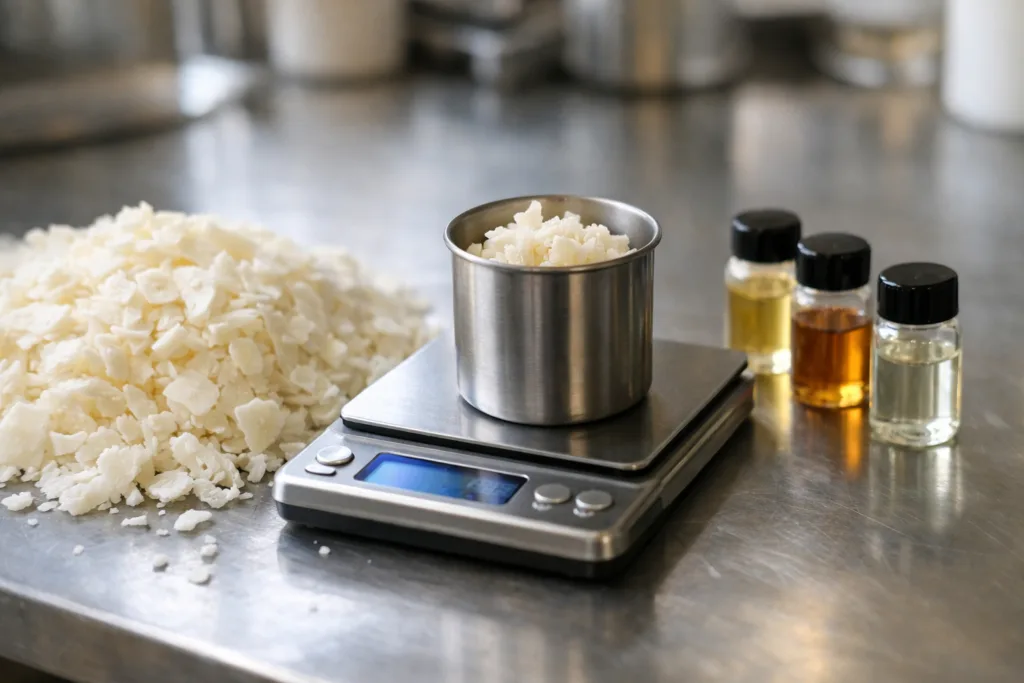
- Raw Material Loss: Industry-standard wax comes in 25 kg bags. Ordering enough for 100 candles may leave 8–12 kg leftover that can’t be cost-effectively reused. The same holds for fragrance oils and dyes, which have minimum purchase sizes and short shelf life after opening.
- Packaging Inefficiency: Custom-printed boxes, foil labels, or specialty glass can double in price below a supplier’s print-run MOQ. Smaller brands pay a premium or absorb excess packaging stock.
- Labor and Setup Fees: Each label, vessel, and scent batch requires unique setup time. Production lines optimized for 5,000+ units must be stopped and reset for small changes, with costs not recoverable in tiny runs.
- Quality Control Overhead: Repeated small-batch QC checks (scent throw, burn profile, soot testing) add labor and scrap without the economies of scale larger orders benefit from.
Material Efficiency: The Hidden Cost of Low MOQ in Candle Production
One of the least visible—but most expensive—MOQs for startup candle brands lies in leftover or wasted raw materials. Bulk waxes (soy, coconut, rapeseed) are sourced and delivered in supplier-specified quantities. Mixing for 123 candles instead of 1,200 means most manufacturers must buy excess, risking waste or storage costs. Fragrance oils tailored to your custom blend (e.g., sandalwood and citrus at 8% fragrance load) also come in minimum lots; the remainder may lose potency before use.
Circe Home Lab Insight: “Testing a new scent using a small vessel MOQ? Budget for 15–20% raw material overage due to minimum supplier pack sizes and trial batches—these hidden expenses often catch emerging brands off guard.”
How Material Wastage Affects Profit Margins
Unused wax and fragrance must be written off if future production isn’t planned. Low MOQs may feel low risk, but inventory lost to expiry can devastate a first run’s profitability. Smart brands build wax and scent buffer into their startup forecast, ensuring enough scale to use what’s purchased.
Packaging Economics: Why Small-Batch Printing Costs More
Custom packaging brings your candle brand to life on the shelf. However, box makers, printers, and label producers have their own material, plate, and setup fees—whether you print 100 or 10,000 units. Below certain print thresholds (usually 1,000–2,000 units), per-piece costs can climb sharply due to setup amortization and waste.
Packaging Cost Scenarios
- Digital short-run box printing: flexible but 2–3× higher per box than offset printing above 1,000 units
- Specialty finishes (foiling, emboss): minimum 500–1,000 units for cost effectiveness
- Stock label templates: affordable at every MOQ, but lack brand distinctiveness
Potential Solutions
Startups may choose simpler outer packaging for first runs or opt for versatile label sets over custom boxes. When ready to scale, pivot to larger quantities to unlock true cost savings with offset or flexo print.
Why Small Candle Brands Face High Per-Unit Pricing
In candle manufacturing, especially for luxury, wellness, or artisan positioning, low-volume runs don’t command the raw material discounts or production efficiencies of scale brands. The candle industry’s cost structure is fundamentally about volume—both in production batch size and component sourcing. Factors include:
- Batch blending: Waxes and scents must be melted and emulsified in minimum lots for consistency and clean burn
- QC testing: Small lots mean more frequent testing, raising average cost per unit
- Custom vessel sourcing: Unique jars, color coatings, or lids have supplier MOQs and surcharges below case pack sizes
- Compliance & safety labeling: CLP/IFRA-compliant artwork and language require expert review for each new SKU
Startups paying $8–$12 per candle to create a unique, high-performance product in small batches are encountering the true economics of low-MOQ sourcing.
Understanding MOQ for Wax Blends, Fragrance, and Vessels
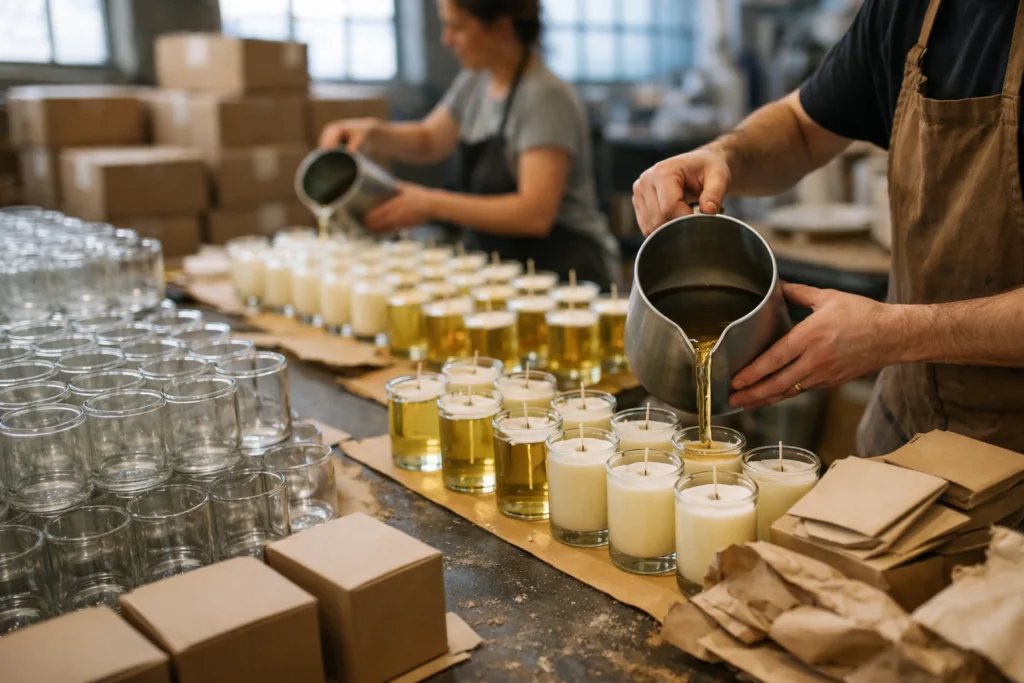
Each component of a candle—wax, fragrance system, wick, and container—has its own MOQ realities. Luxury blends (e.g., soy-coconut or rapeseed-beeswax formulas, signature scents) may set minimums higher to ensure batch uniformity and the unique clean burn Circe Home is known for. Vessel MOQ often leads the rest; jar manufacturers set packing in multiples of 24, 48, or 72, which then dictates feasible production quantities downstream.
Minimums for Compliance & Consistency
- Wax: Each melting tank cleaned and cooled for new blends, raising costs on small runs, especially with premium waxes.
- Fragrance: Custom fragrance houses have minimum formula lots, commonly 1–5 kg—even if you only need half for your first run.
- Wicks: Boxed in 100s/1,000s—smaller runs require bulk breakage fees or custom sizes at higher prices.
- Containers: Jars, tins, and lids often drive shipment carton sizes, which then define practical production MOQs.
Case Example: Launching a Private-Label Candle with a 100-Unit MOQ
Imagine you want to launch your signature line with a 100-candle MOQ. Your costs break down as follows:
- Soy wax (10kg minimum): excess wax leftover after 100 pours
- Custom glass container (cartons of 144): require full carton purchase
- Fragrance oil (1kg minimum, needed only 600g): unused oil goes to waste unless stored perfectly
- Printed box (500 minimum for cost efficiency, or digital for 100 at doubled price per box)
Result: Overall cost per candle may be 30–60% higher than an order at 500+ units, simply due to unused components and premium short-run packing charges.
Strategies to Minimize Candle Startup Costs at Low MOQ
While high per-unit costs at low MOQs are a reality, savvy businesses can soften the blow with a few targeted strategies:
- Choose standard vessels, fragrances, and packing from supplier stock sets for first production—it avoids custom minimums and unlocks lower unit pricing.
- Opt for versatile label sets or minimalist packaging for first batch, upgrading custom outer packaging for larger runs.
- Consolidate scent launches to maximize fragrance purchase efficiency (e.g., 300 candles in one scent rather than 3 scents x 100 each).
- Partner with manufacturers (like Circe Home) offering tiered MOQ and test-run programs aimed at startup brands, even if some customization is delayed.
- Plan product line extensions based on leftover wax or fragrance (e.g., wax melts, mini votives) to reduce waste.
When Is It Worth Accepting a Higher MOQ?
If your brand vision requires custom scents, unique vessels, and premium finishes, the math often points towards a higher initial MOQ. Committing to 500+ units can reduce per-candle landed cost by 20% or more, opening up more budget for secondary packaging, marketing, and QA testing. Larger MOQs also unlock freight efficiencies and may ease CLP/IFRA compliance rollouts since artwork and testing are amortized across more units.
For brands serious about growth, scaling up after test batches to higher MOQs ensures consistent quality, predictable supply, and optimal profit margins as your market presence builds.
Conclusion: Matching MOQ to Your Long-Term Candle Business Goals
Launching a candle business is an exercise in balancing creative vision with hard manufacturing reality. Understanding how MOQs shape your initial cash outlay, per-unit cost, and potential waste provides the clarity needed to build an enduring, profitable candle line. Whether starting with small-batch test runs or ready to commit to volume, optimizing for MOQ-driven efficiency is one of the most effective levers for success in the fragrance, private-label, and luxury home décor markets.
Frequently Asked Questions
What does MOQ mean in the candle business?
MOQ, or minimum order quantity, is the smallest number of candles or components a manufacturer or supplier will produce or sell in a single order, deeply affecting production and price structure.
Why do small candle orders cost more per unit?
Small orders increase per-unit costs because material purchasing is less efficient, setup fees are the same regardless of order size, and custom packaging is far more expensive below optimal print-run MOQs.
How does low MOQ cause raw material waste?
Manufacturers must buy wax, fragrance, and jars in supplier minimums. When you order below these thresholds, leftover materials often can’t be used before they expire, raising effective costs.
What packaging costs are most affected by MOQ?
Custom-printed boxes, embossed cartons, and foil labels become much pricier per unit at low run sizes due to setup and machine amortization fees, dramatically affecting small-batch startup economics.
How can I reduce cost when starting a candle business with low MOQ?
Start with standard vessels and scents, use generic or digital packaging, consolidate scents per batch, and plan ahead to use extra wax and fragrance in future runs or extension products.
Is it better to choose a higher MOQ for my first order?
Often yes, because larger combined orders reduce per-piece costs, minimize material waste, and allow access to more customization, but consider your brand’s risk tolerance and cash flow.