
Industry Standards: MOQ Demystified for Candle Manufacturing in 2026
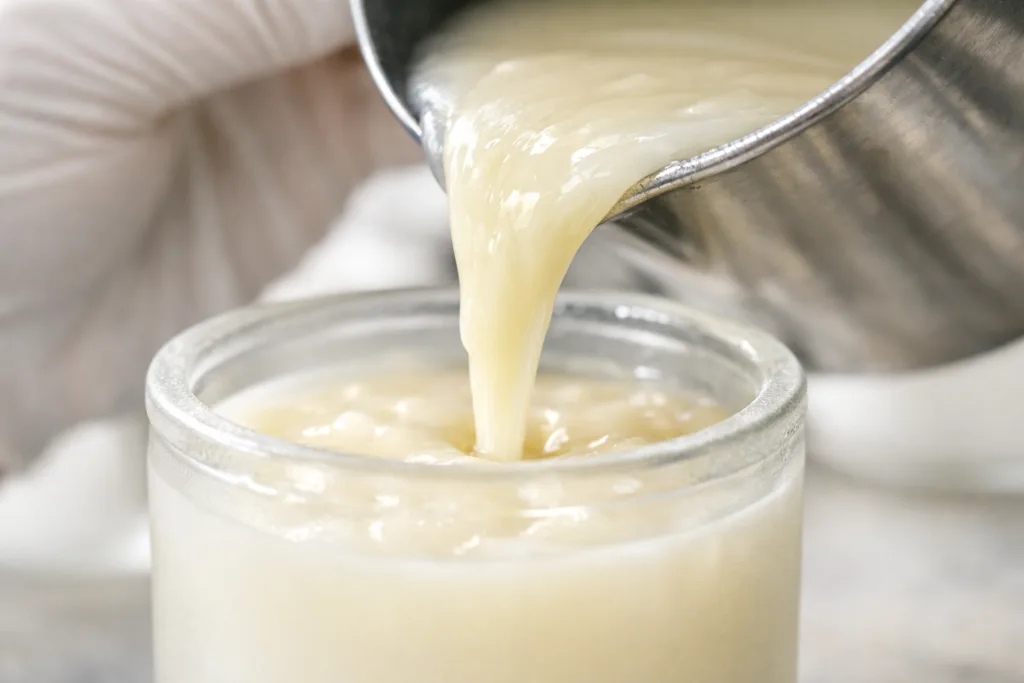
Understanding MOQs by production process is essential for efficient planning and realistic cost projection. The structure below provides a clear overview of what brands can expect when sourcing candles in 2026, whether prioritizing exclusivity, scalability, or design intricacy.
| Process | Minimum Order Quantity | Typical Use Scenario | Customization Level |
|---|---|---|---|
| Handmade | 100–299 pcs | Luxury gifting, boutique launches, fragrance sampling | Ultra-high: fragrance, vessel, packaging |
| Semi-industrial | 500–999 pcs | Private label, limited editions, spa and hospitality ranges | High: multiple fragrances and vessels available |
| Industrial | 1000 pcs and up | Global retail, DTC brands, standard lines | Medium: some limits on vessel and scent combinations |
Choice of manufacturing path impacts not just batch size, but technical parameters such as fragrance load, vessel sourcing, and compliance support. Below, we dissect each production approach and its implications for formulation, performance, and branding.
Handmade Candle Manufacturing: True Ultra-Low MOQ Flexibility
Handmade manufacturing remains the gold standard for ultra-low MOQs—typically as low as 100 pieces, depending on vessel and ingredient sourcing. This process is labor intensive, centered on artisanal pouring techniques and small-batch blending. Brands can specify wax type (soy, coconut, rapeseed, beeswax), vessel design, custom color, and fragrance, and request modifications to burn and scent throw (e.g., stronger hot throw or cleaner finish for certain markets).
Key Advantages
- Bespoke fragrance development (natural or synthetic blends)
- Full control over vessel aesthetic (glass, ceramics, pigment/embossing)
- Enabled for test marketing and small-batch gifting
Technical Considerations
- Hand-placed wicks allow ultra-precise sizing, ideal for difficult vessels
- Can incorporate special inclusions, botanicals, dual-wick formats
- Curing period control impacts final scent throw and cold/hot throw balance
“Circe Home Lab Insight: Ultra-low batch hand-pours allow iterative tweaking of wax composition and fragrance load, crucial for brands seeking signature olfactory profiles with maximum scent retention and minimal soot—even at 100 pcs.”
Semi-Industrial Candle Production: The Flexible Middle Ground
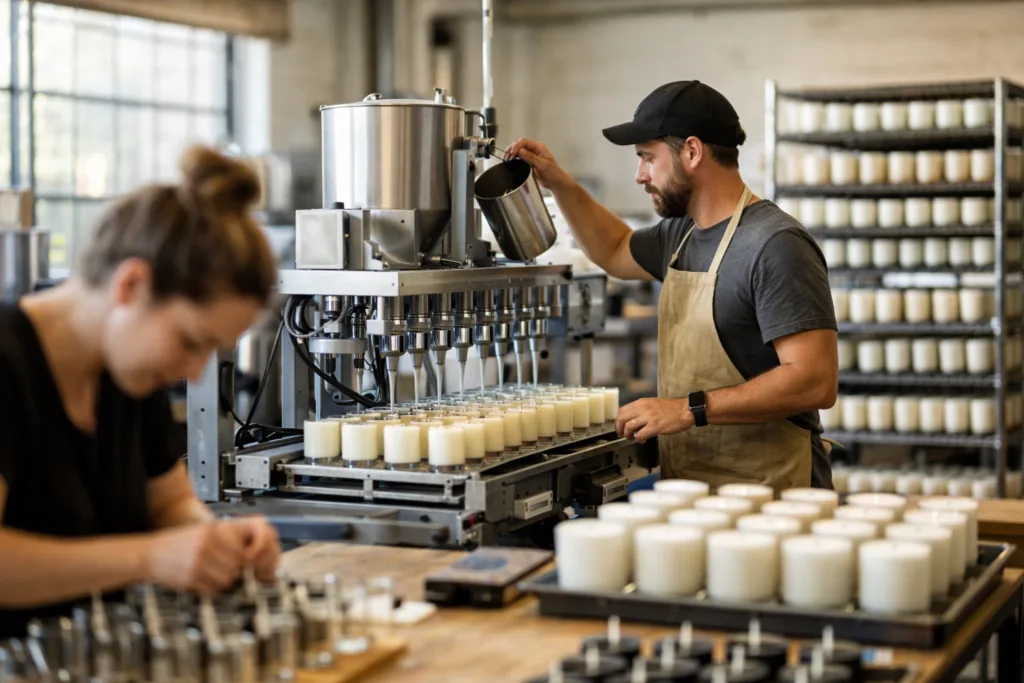
For brands seeking balance between agility and economies of scale, semi-industrial production is defining the evolved low MOQ tier in 2026. Leveraging compact pouring lines and hybrid manual/automated systems, batches start at 500 pcs.
What Makes It Different?
- Consistency in wax blending and topping (vital for spa and hotel lines)
- Faster turnaround vs. fully hand-poured (average lead time down to 14–25 days for standard blends)
- Wider vessel choice, including labeled and colored glass, tins with complex coatings, and sustainable concrete formats
- Compliance: IFRA 51st amendment, allergen declaration, and EU CLP labeling included as standard
Typical Customization
- Choose from pre-curated wax/fragrance combos or provide your own blend
- Label and packaging printing (including foil, debossing, and eco-inks)
- Mix and match: up to 3 fragrances, 2–3 vessel types per batch
Industrial Candle Manufacturing: Scale & Consistency for 1,000+ Units
Industrial-scale factories in China, Europe, and the US typically set “low” MOQs at 1,000 pcs per SKU in 2026, balancing material efficiencies with quality assurance requirements. Automated pouring, robotic wick placing, and in-line labeling yield exceptional batch-to-batch uniformity and enhanced testing regimens.
What’s Gained and Lost
- Volume discounts and global sourcing access for unique vessel materials (opal glass, stone, FSC carton outers)
- Automated quality checks: wick centering, fill weight, soot index, batch-level combustion safety
- Custom fragrance still possible but often requires 1,000 pcs per scent or more
- Mixing of eco-wax blends (e.g., 70% soy, 30% rapeseed, custom ratios) well standardized
Wax, Fragrance, and Burn Profile Control at Low MOQs
Even at the smallest batch sizes, brands expect performance benchmarks rivaling mass-market SKUs. Achieving this means considering the synergies between wax chemistry, fragrance structure, and wick selection—a space where leaders like Circe Home provide an edge.
Wax Blend Options
- Soy wax: blend customization for clean burn, reduced frosting, extended burn time
- Coconut & rapeseed: premium feel, improved cold/hot throw, natural perception (compatible with high fragrance loads)
- Beeswax: unique scent profile, golden color, compliant with most essential and fragrance oils
Fragrance Systems & Load
- Determine IFRA-compliant fragrance or essential oil blend
- Test cold and hot throw at varying wax load % (often 7–12%)
- Conduct at least 5-day curing at stable room temp for maximum scent retention
Wick and Vessel Matching
- Wick material—cotton, wood, paper core—should match wax melt pool dynamics
- Diameter and vessel shape dictate wick sizing for safe, soot-free burn
- Trim length and topping technique impact mushrooming and even combustion
Vessels and Branding at Low MOQ: Creative Freedom, Practical Limits
Handmade and semi-industrial tiers empower smaller brands to define unique looks, but some technical and sourcing realities remain. Vessel availability (glass, ceramic, tin, cement), finishing (frosted, painted, matte, metallic), and label formats (wrap, foil, debossed) are subject to supplier-run MOQs as low as 100–300 for stocked options—custom shapes or heavy embossing require higher volume.
Packaging Trends
- Rise in FSC-certified cartons, reusable outers, and low VOC/soy inks
- Private-label programs offer custom scent naming with compliant, boutique presentation
Safety and Compliance
Labels meet international standards—IFRA compliance for fragrance, CLP for EU (signal word, pictogram), and batch coding for recall traceability—no matter the batch size.
Applications & Use Scenarios for Low MOQ Candle Manufacturing
The 2026 landscape sees low MOQ manufacturing fueling high-impact launches for a variety of use cases:
- Luxury gifting and event collaborations
- Private-label and test market retail lines
- Hotel and spa signature scents
- Subscription box brand extensions
- Wellness and aromatherapy blends for e-commerce boutiques
With the right production partner, even boutique orders achieve high performance: >35 hour burn time for 200g vessels, consistent scent dispersion, and premium packaging options.
Quality Control: What to Expect—Even at Low MOQs
Quality and safety hold constant, regardless of production scale. At each level, essential checks include:
- Wick centering (typically ≤1 mm tolerance)
- Weight tolerance for pour (+/– 2g for most vessels)
- Soot and burn testing (soot index below regulatory maximums, e.g., <0.2 mg/m³/hour)
- Batch-level fragrance dispersion testing (uniformity, no channeling)
- Labelling: IFRA/CLP symbols, hazard statements, and country-of-origin
“Circe Home Lab Insight: Small batches can occasionally show wider variation; rigorous topping, curing, and double-checking wick positioning prior to boxing are critical for boutique and luxury results.”
Sustainability & Compliance in 2026: An Industry Standard
Eco-responsibility is non-negotiable. Across all MOQs, reputable suppliers offer:
- Wax tracing and allergen declarations per IFRA 51st amendment
- Option for biodegradable, refillable vessels and plastic-free outers
- Soy ink and water-based label adhesives
- Support for refill subscription programs and compostable packaging
Choosing the Best Low MOQ Candle Manufacturing Solution
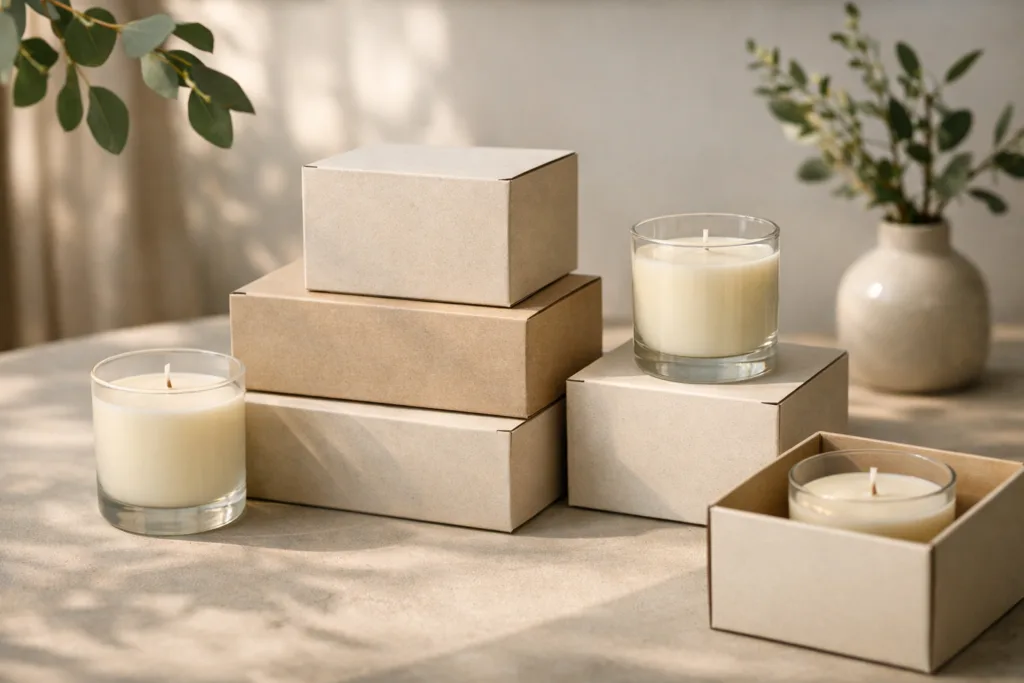
There’s no one-size-fits-all answer in 2026—choose the manufacturing scale and techniques that match your brand’s market, launch phase, and design ambitions. Handmade flexes for ultimate creativity in limited runs; semi-industrial unlocks speed and variety at modest batch sizes; industrial provides consistency and scale for standard lines. Strategic partners like Circe Home help bridge technical gaps with expert guidance on fragrance load, vessel engineering, burn consistency, and compliance.
Whether you’re introducing a test fragrance, launching a private-label spa collection, or building a luxury capsule, the only limitation is clarity of intent and a manufacturing partner who understands the details that define an exceptional candle experience—even at 100 units.
Frequently Asked Questions
How low can MOQs really go with handmade candles?
Handmade manufacturing supports MOQs starting at 100 pieces, offering the most flexibility for custom fragrance, vessel, and packaging design within boutique and luxury segments.
Can semi-industrial lines offer real customization under 1,000 pcs?
Semi-industrial methods allow batches from 500 units with options for multiple fragrances or vessels in a single batch, plus advanced packaging and labeling choices, blending manual skill with machine consistency.
What are the main wax and fragrance limits at low MOQs?
At 100–500 pcs, most premium waxes (soy, coconut, rapeseed, beeswax) and high fragrance loads (up to 12%) are available. Custom fragrances may increase lead times or setup costs but are feasible.
How does compliance work for low-quantity orders?
Even at low MOQs, professional manufacturers provide full IFRA/CLP documentation, hazard labeling, allergen declarations, and batch-level safety info—crucial for retail and export markets.
Is sustainable packaging realistic for small batches?
Many suppliers offer FSC-certified cartons, compostable fillers, and soy-ink labeling at MOQs as low as 100–500 pcs, supporting eco-focused launches and luxury positioning.
Which applications best fit low MOQ manufacturing?
Low MOQ shines for luxury gifting, test-market launches, spa and hotel exclusives, retail collaborations, and subscription box programs demanding high scent, burn, and packaging quality in boutique volumes.