
Tin candles are often seen as one of the most practical candle formats for wholesale buyers. They are lighter than glass candles, less fragile during shipping, easier to pack for e-commerce, and flexible enough for private label branding, gift sets, travel-size collections, event favors, subscription boxes, and seasonal retail programs.
But when buyers ask, “How much do tin candles cost?” the real answer is not a single number.
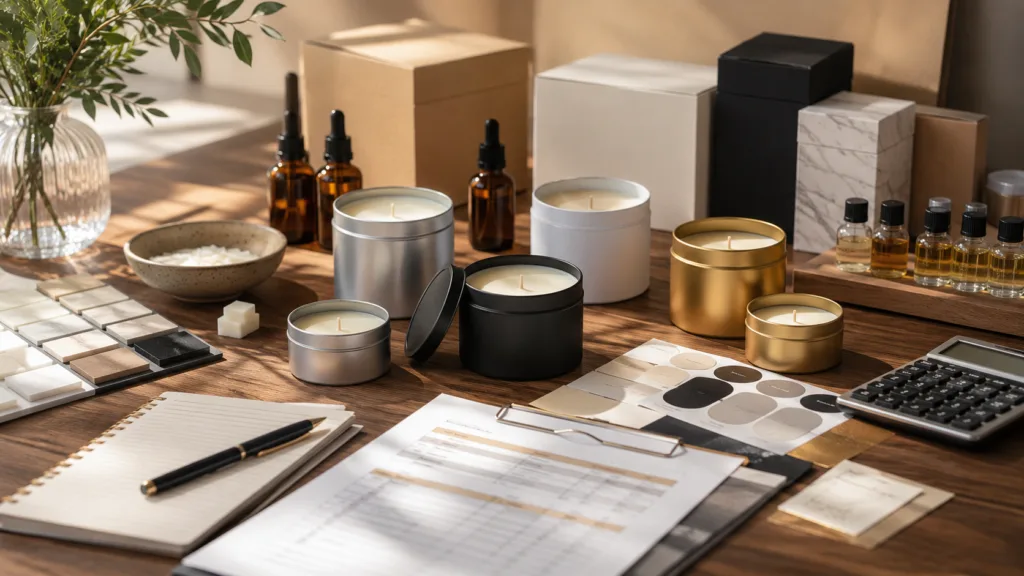
A tin candle’s final wholesale cost depends on size, wax fill weight, tin finish, wax type, fragrance oil, fragrance load, wick testing, label method, packaging structure, MOQ, labor, shipping method, and the level of customization required.
For mature buyers, the better question is:
What kind of tin candle cost structure supports my retail price, brand positioning, margin target, and reorder plan?
This guide breaks down the key pricing factors behind wholesale tin candles so boutique brands, gift companies, retailers, Amazon sellers, and event suppliers can make smarter sourcing decisions before placing a bulk order.
The candle category remains highly relevant in home fragrance and gifting. According to the National Candle Association, more than 1 billion pounds of wax are used in candles sold each year in the U.S., and about 35% of candle sales occur during the Christmas and holiday season. This makes candles a strong product category for both year-round retail and seasonal wholesale planning.
Why Tin Candles Are Popular for Wholesale Buyers
Tin candles are popular because they solve several practical sourcing problems at once.
For retailers and gift companies, tin candles are easier to display, pack, and ship than fragile glass candles. For Amazon sellers and ecommerce brands, they reduce breakage risk and help control shipping damage. For event suppliers, small tin candles work well as wedding favors, corporate gifts, hotel amenities, and seasonal promotional items.
Compared with ceramic vessels or heavy glass jars, metal tins usually offer:
- Lower container weight
- Lower breakage risk
- Easier carton packing
- Better portability
- Lower entry cost for private label projects
- Flexible label and packaging options
- Good compatibility with small and medium candle sizes
Tin candles are especially useful when a buyer wants to test a candle line before investing in higher-cost custom vessels or rigid gift boxes. A stock tin with a custom label allows a brand to launch faster, control MOQ, and test fragrance performance in the market before committing to a more expensive packaging system.
That said, tin candles are not automatically “cheap candles.” A basic travel tin can be very cost-efficient, but a premium tin candle with high-end fragrance oil, custom label material, individual box packaging, and a curated gift set structure can become a mid-range or premium product.
Typical Wholesale Tin Candle Cost Range
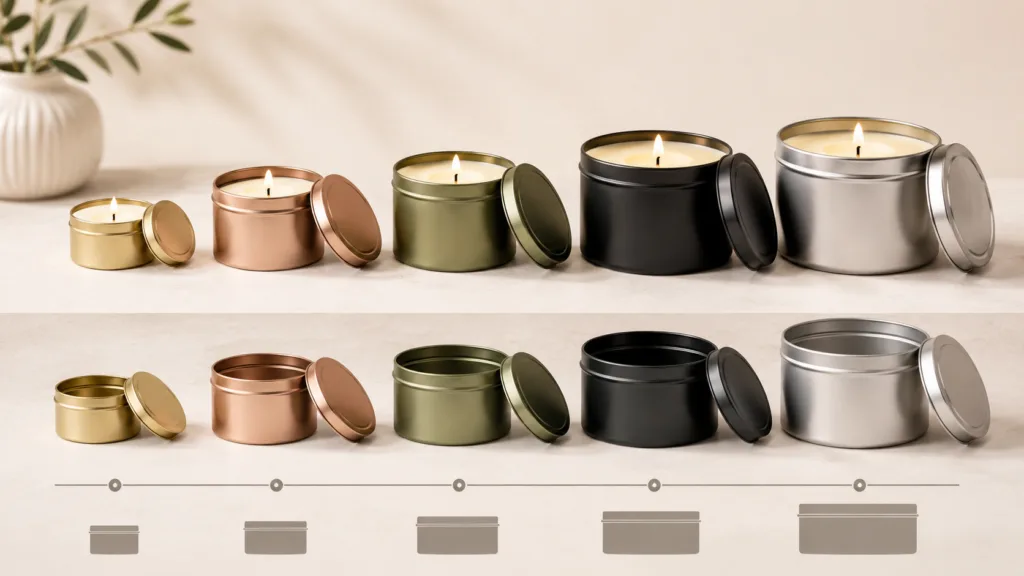
Wholesale tin candle pricing depends heavily on project specifications. However, for sourcing reference, tin candles usually fall into several commercial categories.
| Tin Candle Type | Common Use | Cost Level |
| 2oz–3oz mini tin candle | Event favors, sample sets, travel candles | Entry-level |
| 4oz tin candle | Boutique retail, gift boxes, subscription boxes | Low to mid-range |
| 6oz tin candle | Standard private label retail candle | Mid-range |
| 8oz+ tin candle | Larger home fragrance product | Higher unit cost |
| Multi-tin gift set | Holiday gifts, corporate gifts, fragrance discovery sets | Packaging-driven cost |
A small tin candle with stock fragrance and a simple label will have a very different cost structure from a six-piece fragrance discovery set in a custom printed gift box.
For serious wholesale buyers, the unit price should never be evaluated alone. A proper cost review should include:
- Candle unit price
- Label cost
- Individual packaging cost
- Master carton packing
- Export handling
- Inspection
- Shipping cost
- Import duties or DDP delivery cost
- Damage rate risk
- Reorder flexibility
A cheaper candle is not always the lower-cost business decision if it creates packaging problems, weak fragrance performance, poor shelf appeal, or higher customer complaints.
1. Tin Size and Wax Fill Weight
The first factor affecting tin candle cost is size.
A larger tin does not only mean more metal. It also means more wax, more fragrance oil, longer pouring time, longer cooling and curing time, heavier cartons, and higher shipping cost.
Common tin candle sizes include:
- 2oz–3oz:best for wedding favors, hotel amenities, gift samples, and discovery sets
- 4oz:suitable for small retail candles and subscription boxes
- 6oz:a balanced size for boutique brands and gift retailers
- 8oz or larger:better for full-size home fragrance products
Buyers should pay attention to both container size and wax fill weight. Two tins may look similar from the outside, but one may hold less wax due to wall thickness, lid structure, or internal shape.
For wholesale planning, fill weight matters because it affects:
- Wax material cost
- Fragrance oil cost
- Burn time
- Product positioning
- Shipping weight
- Retail price expectation
A 3oz tin candle can be positioned as a small gift or trial product. A 6oz or 8oz tin candle needs better fragrance performance, stronger branding, and a more complete retail presentation.
2. Tin Color, Finish, and Customization
The tin container itself also affects cost.
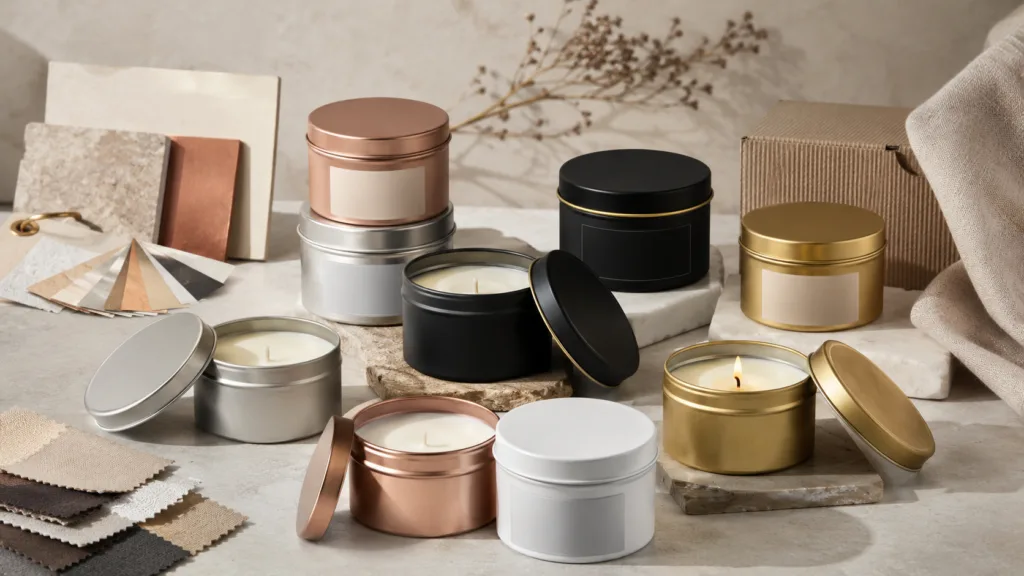
Basic silver tins are usually the most economical option. Black, white, gold, or matte tins may cost slightly more, depending on availability and finish. Special colors, custom printing, embossed lids, or unusual shapes usually require higher MOQ and longer lead time.
Typical tin options include:
- Plain silver tin
- Matte black tin
- White tin
- Gold tin
- Rose gold tin
- Custom color tin
- Printed tin
- Embossed lid tin
For first orders, most buyers should avoid over-customizing the tin itself. A stock tin with a custom label is usually the most practical route. It keeps cost under control while still allowing the brand to create a clear visual identity.
Custom printed tins can look attractive, but they often require a higher production quantity. They also reduce flexibility because any design change may require new printing arrangements or additional setup costs.
For mature buyers, the decision should be based on reorder confidence. If the product has already been validated and repeat volume is stable, custom tin printing may make sense. If it is a first launch, custom labels are usually safer.
3. Wax Type and Wax Blend

Wax type is another important cost factor.
Common wax options for tin candles include:
- Soy wax
- Coconut soy wax
- Beeswax blend
- Paraffin blend
- Vegetable wax blend
Soy wax is widely used for private label candle projects because it is familiar to consumers and works well for many container candles. Coconut soy blends can offer a smoother surface and a more premium positioning, but they may increase material cost. Beeswax blends can support a more natural story, but pure beeswax is more expensive and may require additional testing for scent throw, texture, and burn behavior.
The cheapest wax is not always the best option. Wholesale buyers should consider:
- Cold throw
- Hot throw
- Burn stability
- Surface appearance
- Compatibility with fragrance oil
- Shrinkage or cracking risk
- Brand positioning
- Target retail price
For example, a gift company selling seasonal promotional candles may prioritize cost efficiency and visual consistency. A boutique fragrance brand may care more about wax texture, fragrance performance, and brand storytelling.
The right wax is not simply the most expensive one. It is the wax that supports the product’s commercial purpose.
4. Fragrance Oil and Fragrance Load
Fragrance is one of the most underestimated cost drivers in candle manufacturing.
Many buyers focus on the tin container, but in a scented candle, fragrance oil can significantly affect the final unit cost. Premium fragrance oils cost more than standard fragrance oils. Complex scents with layered notes, niche fragrance profiles, or customized scent matching may also increase development cost.
Fragrance load matters too. A higher fragrance load may improve scent intensity, but it can also affect burn performance, wax stability, surface finish, and cost.
For wholesale buyers, fragrance planning should be commercial, not emotional.
Instead of launching too many scents at once, a better first-order strategy may be:
- 3 core bestselling scents
- 1 seasonal scent
- 1 signature scent
- Optional fragrance discovery set
Too many scents in a low-volume order can reduce production efficiency. Each scent requires separate material preparation, pouring, labeling, curing, and inventory management. If the order quantity is small, spreading it across too many fragrances can push up the practical cost per unit.
The National Candle Association notes that more than 10,000 candle scents are available to U.S. consumers, which shows how competitive fragrance selection can be in this category. For buyers, this means scent choice should be connected to target market, brand identity, and reorder potential rather than personal preference alone.
5. Wick Testing and Burn Performance
Tin candles look simple, but wick selection still matters.
A candle’s wick must match the container diameter, wax blend, fragrance load, and fill weight. If the wick is too small, the candle may tunnel and leave wax on the sides. If the wick is too large, the flame may become too high, the tin may become too hot, or the candle may burn too quickly.
Burn testing affects cost because it requires time, labor, and sometimes multiple rounds of adjustment.
A reliable tin candle project should evaluate:
- Flame height
- Melt pool development
- Sooting
- Burn time
- Container heat
- Wax residue
- Wick mushrooming
- Fragrance throw
- Safety performance
This is especially important for metal containers because tins conduct heat. Proper warning labels and safe burning instructions should be included. The National Candle Association states that candles should carry cautionary labeling with key fire-safety rules such as burning within sight, keeping away from combustibles, and keeping away from children.
For serious buyers, burn performance is not a technical detail. It is part of product quality, customer satisfaction, and brand protection.
6. Label and Branding Cost
For private label tin candles, branding is usually done through labels.
The most common options include:
- Top lid label
- Side label
- Bottom warning label
- Full-wrap label
- Textured paper label
- Waterproof label
- Foil label
- Kraft paper label
- Transparent label
For most wholesale projects, custom sticker labels are the most cost-effective branding method. They allow buyers to create a branded product without committing to custom tin printing or high-MOQ packaging.
However, label cost can vary depending on material, finish, size, and application method. A simple paper label is cheaper than a textured label with foil stamping. A full-wrap label may require more careful application than a small top label. Waterproof or heat-resistant label materials may cost more but can improve durability and appearance.
Buyers should not treat label design as an afterthought. For tin candles, the label often carries most of the product’s visual value. A basic tin with a strong label can look clean, modern, and retail-ready. A poorly designed label can make even a well-made candle look low-end.
Good label planning should include:
- Brand name
- Scent name
- Wax or product claim
- Net weight
- Safety warning
- Burning instructions
- Barcode if needed
- Country-specific compliance information
A missing or weak safety label can create problems for retail and ecommerce sales. CandleScience also notes that candles and wax melts generally need a primary label on the product or outer packaging, and most candles include a warning label.
7. Packaging Structure
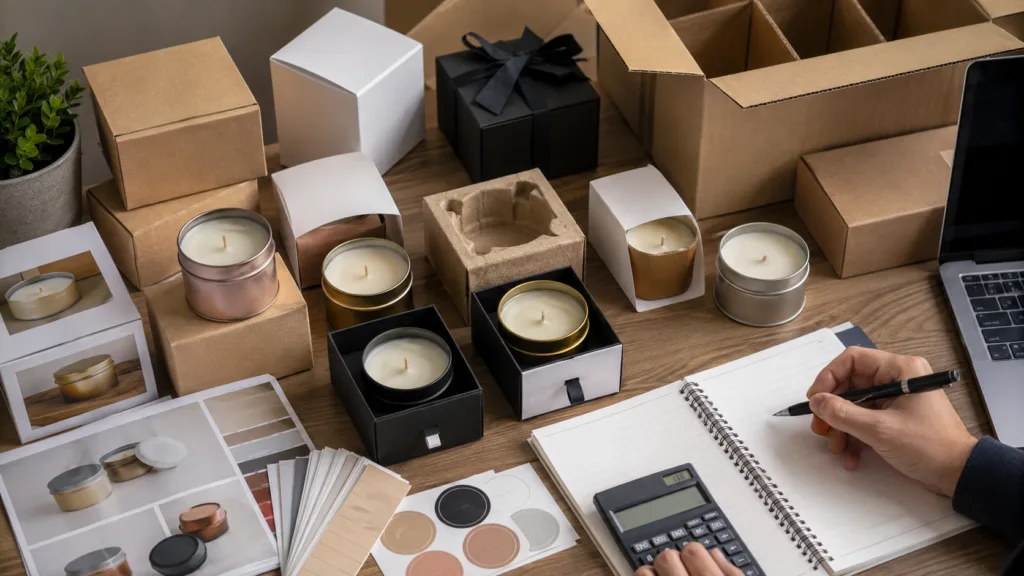
Packaging can change tin candle cost dramatically.
Some tin candles are sold without individual boxes. Others require kraft boxes, printed retail boxes, sleeves, hang tags, gift boxes, inserts, or multi-candle set packaging.
Common packaging options include:
- No individual box
- Kraft paper box
- White retail box
- Custom printed paper box
- Drawer box
- Rigid gift box
- Window box
- Multi-tin discovery set box
- Paper insert or divider
- Export carton only
A simple tin candle may be inexpensive, but a custom gift box can add significant cost. This is especially true for low-volume orders, where packaging setup costs cannot be spread across enough units.
For Amazon sellers, packaging must also consider drop testing, carton strength, barcode placement, and FBA requirements. For boutique retailers, shelf presentation may matter more than shipping efficiency. For corporate gift buyers, the unboxing experience may justify higher packaging cost.
Packaging should match the sales channel.
A candle sold as a low-cost event favor does not need the same packaging as a holiday gift set. A tin candle sold in a retail boutique may need stronger visual presentation than one sold as part of a bulk promotional order.
How MOQ Changes Tin Candle Cost
MOQ has a major impact on wholesale pricing.
Low MOQ orders are useful for market testing, but they usually have higher unit costs. Higher MOQ orders allow suppliers to purchase materials more efficiently, arrange production more smoothly, and reduce labor cost per unit.
Low MOQ Orders
Low MOQ tin candle orders are best for:
- New brands
- Small boutiques
- Wedding planners
- Event suppliers
- Market testing
- Influencer product launches
These orders usually rely on stock tins, stock fragrance options, and custom labels. They are flexible but less cost-efficient.
Medium MOQ Orders
Medium MOQ orders are better for:
- Boutique retailers
- Online stores
- Subscription boxes
- Gift companies
- Seasonal retail programs
At this stage, buyers can usually build a more professional product line with several fragrance options, private label design, and basic packaging.
Higher MOQ Orders
Higher MOQ orders are best for:
- Wholesale distributors
- Amazon sellers
- Chain retailers
- Corporate gifting companies
- Established candle brands
- Seasonal collection buyers
Higher order quantities can support better unit pricing, more customized packaging, and more efficient shipping. For buyers who already understand their target market, higher MOQ often creates better margin potential.
Sample Cost vs Bulk Order Cost
Sample candles are usually much more expensive per unit than bulk candles. This is normal.
A sample order may include:
- Small-batch wax preparation
- Fragrance selection
- Manual pouring
- Label mockup
- Packaging sample
- Internal coordination
- International courier freight
Buyers should not compare sample price directly with bulk order price. A sample is not just a small candle. It is a development tool.
The goal of sampling is to confirm:
- Tin size
- Wax appearance
- Fragrance direction
- Label effect
- Packaging structure
- Burn performance
- Overall product feeling
Once the sample is approved, bulk production can be quoted based on actual quantity, packaging method, and shipping plan.
Shipping Cost and Landed Cost
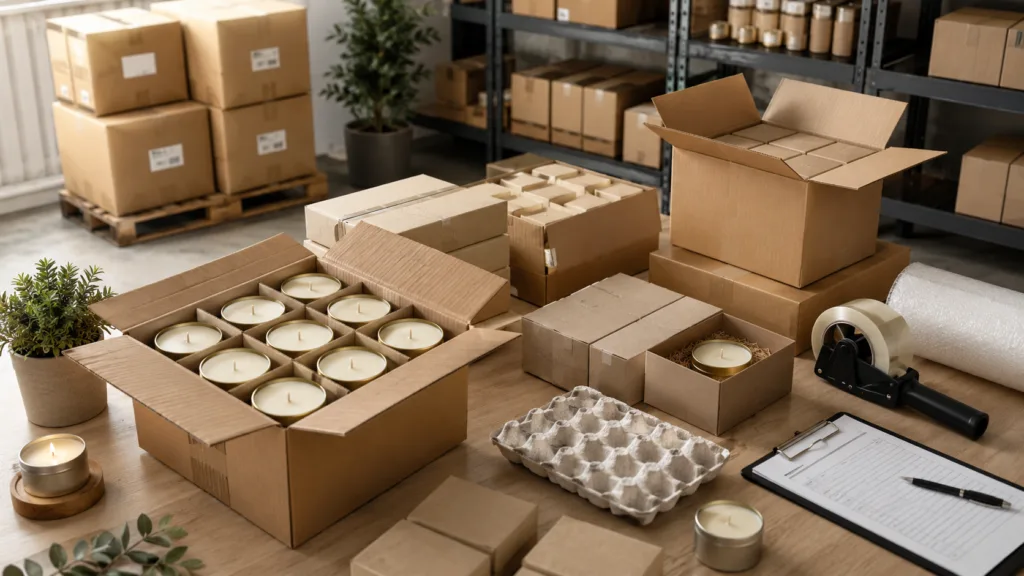
Tin candles are generally more freight-friendly than glass candles because they are lighter and less fragile. However, shipping cost still matters.
The final landed cost depends on:
- Carton weight
- Carton volume
- Packaging structure
- Destination country
- Shipping method
- Import duty
- Customs clearance
- Delivery address type
- Air freight or sea freight
For urgent small orders, air freight may be necessary. For larger wholesale orders, sea freight or DDP shipping is usually more cost-effective.
Mature buyers should always evaluate landed cost, not just factory price.
A candle that looks cheap at factory level may become expensive after adding bulky packaging, inefficient carton packing, or urgent air freight. On the other hand, a slightly higher unit price may still be a better option if packaging is optimized, carton space is used efficiently, and the shipping plan is stable.
How to Reduce Tin Candle Cost Without Damaging Quality
The smartest way to reduce tin candle cost is not to cut wax quality or use weak fragrance. It is to simplify the project at the right stage.
Practical ways to control cost include:
- Use stock tins instead of custom printed tins.
- Start with 3–5 fragrances instead of too many scents.
- Choose custom labels before investing in custom packaging.
- Use simple retail boxes for the first order.
- Avoid oversized packaging that increases shipping volume.
- Confirm artwork early to avoid delays.
- Increase MOQ once the product is validated.
- Plan seasonal orders earlier to avoid rush freight.
- Use one packaging structure across multiple scents.
- Compare landed cost instead of only unit price.
For serious buyers, cost control is not about making the cheapest candle. It is about building a product that can sell repeatedly with stable quality and healthy margins.
What Suppliers Need to Quote Tin Candles Accurately
To receive an accurate tin candle quote, buyers should prepare the following information:
- Tin size or reference photo
- Wax fill weight
- Order quantity
- Number of fragrances
- Wax preference
- Fragrance direction
- Label design requirement
- Packaging requirement
- Destination country
- Shipping method preference
- Required documents or certifications
- Target retail price if available
- Expected launch timeline
The more complete the information, the more accurate the quotation will be.
If a buyer only asks, “How much is a tin candle?” the supplier can only give a rough range. But if the buyer provides size, quantity, fragrance count, packaging style, and destination country, the supplier can build a realistic cost plan.
FAQ
1. How much does a wholesale tin candle cost?
Wholesale tin candle cost depends on size, wax fill weight, fragrance oil, label type, packaging, MOQ, and shipping method. Small stock tin candles with simple labels are usually the most cost-effective, while gift sets, custom packaging, and premium fragrance oils increase the final cost.
2. Are tin candles cheaper than glass candles?
In many wholesale projects, tin candles are more cost-efficient than glass candles because they are lighter, less fragile, and easier to ship. However, premium fragrance, custom labels, individual boxes, and gift packaging can still make a tin candle a mid-range or premium product.
3. What is the best MOQ for private label tin candles?
For testing, buyers can start with stock tins, stock fragrance options, and custom labels at a lower MOQ. For better unit pricing and more complete packaging customization, medium to higher MOQ orders are more practical. The right MOQ depends on whether the buyer is testing, launching, or reordering.
4. Can tin candles be used for premium gift sets?
Yes. Tin candles work well for fragrance discovery sets, holiday gift boxes, corporate gifts, wedding favors, and subscription boxes. To make them feel premium, buyers should focus on fragrance quality, label design, coordinated packaging, and a clear scent collection concept.
Conclusion
Tin candles are one of the most practical candle formats for wholesale buyers, but their cost is shaped by much more than the tin container itself.
The final price depends on tin size, wax fill weight, wax type, fragrance oil, fragrance load, wick testing, label material, packaging structure, MOQ, and shipping plan. A low-cost tin candle can work well for event favors or market testing, while a premium tin candle gift set may require better fragrance development, stronger packaging, and higher MOQ planning.
For boutique brands, gift companies, retailers, Amazon sellers, and event suppliers, the best approach is to match the product structure to the business goal.
Use stock tins and custom labels for early testing. Add better packaging once the product direction is validated. Increase MOQ when reorder confidence is clear. Compare landed cost instead of only factory price. Most importantly, do not reduce quality in areas that affect customer experience, such as fragrance performance, burn safety, and packaging presentation.
A well-planned tin candle line can be affordable, scalable, and highly giftable. With the right cost structure, it can also become a strong wholesale product for seasonal programs, private label collections, and long-term retail growth.