
Taper candles look simple. They are slim, elegant, familiar, and easy to understand at first glance. A buyer sees a 10-inch or 12-inch candle, chooses a color, asks for a box, checks the price, and assumes the product should be straightforward to produce.
But in real candle manufacturing, taper candles are one of those products where small details create big differences.
A taper candle has no container to hold melted wax. It stands exposed in the air. Its burn performance depends on the relationship between wax formula, wick size, candle diameter, room temperature, airflow, colorants, production consistency, packaging protection, and even how the end user places it in the holder. When any of these factors are poorly matched, the candle may drip heavily, burn unevenly, bend, smoke, tunnel, or fail to reach the promised burn time.

For retail brands, dripping taper candles can damage the customer experience. For wedding suppliers, they can stain tablecloths and create complaints from event clients. For restaurants and hotels, excessive dripping can increase cleaning work and safety concerns. For wholesalers and importers, inconsistent taper candle performance can lead to returns, negative reviews, and difficult conversations with downstream buyers.
That is why many mature buyers do not simply ask, “Can you make taper candles?” They ask better questions: Can the candle burn for the required number of hours? Is it drip-resistant under normal indoor conditions? Has each color been tested? Is the wick matched to this exact diameter? Will the candles arrive straight after international shipping? Can the packaging prevent bending and breakage? Can the supplier support custom colors, custom boxes, warning sheets, and DDP delivery?
This guide explains why taper candles drip, what causes poor burn performance, and how B2B buyers can reduce risk before placing a bulk order.
What Does Dripping Mean in Taper Candles?
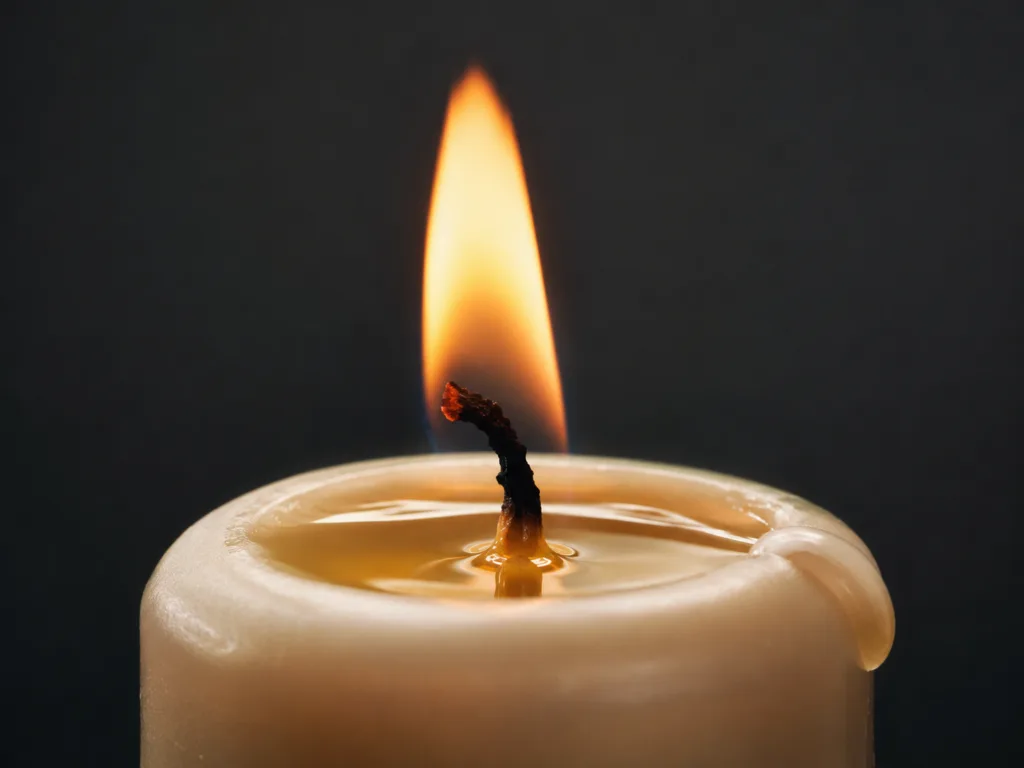
Dripping happens when melted wax flows down the outside of a taper candle instead of being consumed efficiently by the flame or contained in a stable melt pool near the top of the candle.
A small amount of wax movement can be normal, especially if the candle is used near airflow or not kept perfectly vertical. But heavy dripping is different. It usually means the candle design, formula, wick, or use environment is not properly controlled.
For B2B buyers, it is important to understand that “dripping” is not one single problem. It can appear in different ways.
Light Dripping
Light dripping may occur occasionally during normal use. It may not affect the whole burn experience, especially if the candle is used in a stable indoor environment. Some buyers accept minor dripping for decorative taper candles, especially if the visual effect is part of a rustic or vintage style.
However, if your customers expect clean-burning dinner candles, wedding candles, religious candles, hospitality candles, or premium retail taper candles, even light dripping should be reduced as much as possible through good formulation and testing.
Heavy Dripping
Heavy dripping means melted wax runs quickly down the candle body, often creating long wax trails, wasted wax, uneven shape, reduced burn time, and messy use. This is the type of dripping that leads to customer complaints.
Heavy dripping may be caused by a wick that is too large, a wax blend that is too soft, poor candle diameter control, unstable burning conditions, excessive colorants, or poor production consistency.
One-Sided Dripping
One-sided dripping means wax flows down only one side of the taper candle. This is common when the candle is leaning, the wick is off-center, the holder is not level, or there is airflow from one direction.
For event buyers, this matters because candles may look fine at setup but begin dripping after 20–30 minutes if the room has air conditioning, door movement, outdoor wind, or uneven holders.
Uneven Burn with Dripping
Sometimes a taper candle does not only drip; it also burns unevenly. The flame may lean, the wax may melt faster on one side, and the candle may lose its shape as it burns. This is more serious because it affects both performance and appearance.
For large orders, uneven burning is not just a technical defect. It becomes a brand risk.
Why Mature Buyers Care About Taper Candle Dripping
Many first-time buyers focus mainly on price, color, size, and packaging. Mature buyers look deeper because they understand that taper candles are often used in visible, experience-driven environments.
A candle that looks beautiful in a photo may still fail in real use.
Retail Brands Need Fewer Complaints
If a customer buys a box of taper candles from a boutique store and they drip heavily on a dining table, the problem is not seen as a “manufacturing detail.” The customer blames the brand. The result may be a poor review, a refund request, or a loss of repeat purchase.
For private label brands, product performance protects brand reputation.
Wedding and Event Buyers Need Clean Presentation
Taper candles are widely used for weddings, dinners, banquets, religious events, and seasonal tablescapes. In these settings, candles are placed on expensive table linens, floral arrangements, candle holders, and decorative surfaces.
If they drip heavily, the issue becomes immediately visible. It can stain fabrics, damage rented decor, and create extra cleaning costs after the event.
Restaurants and Hotels Need Reliable Daily Use
Restaurants, hotels, bars, and fine dining spaces often use taper candles repeatedly. They need candles that are elegant, consistent, safe, and easy for staff to manage.
A candle that drips too much can create extra work. It may also look messy on guest tables, especially in premium hospitality environments.
Importers Need Stable Bulk Quality
For importers and wholesalers, one perfect sample is not enough. The real question is whether 5,000, 20,000, or 100,000 pieces can perform consistently across different colors, cartons, and production batches.
This is why serious buyers should discuss burn testing, wick matching, wax blend, packaging protection, and QC standards before confirming the bulk order.
Top 7 Reasons Why Taper Candles Drip
Taper candle dripping is rarely caused by one isolated factor. In most cases, it is the result of several details interacting with each other. A candle may drip because the wax is too soft, but that softness may only become a serious issue when combined with a wick that is too hot, a narrow candle diameter, and a drafty room.
Below are the most common causes.
1. The Wick Is Not Properly Matched to the Candle
The wick is one of the most important parts of a taper candle. It controls how much heat is generated, how quickly the wax melts, how stable the flame remains, and whether the candle can consume melted wax efficiently.
A common mistake is assuming that one wick can fit every taper candle size. In reality, a 10-inch taper candle with a 0.8-inch diameter may need a different wick from a 10-inch taper candle with a 0.9-inch diameter. A colored candle may also require a different test result from a plain white candle.
When the Wick Is Too Large
If the wick is too large, the flame becomes too strong. It generates more heat than the candle body can manage. The wax melts too quickly, the melt pool becomes unstable, and liquid wax may spill over the edge.
This can cause:
- Fast dripping
- Shorter burn time
- Larger flame
- More soot risk
- Uneven candle shape
- Faster wax consumption
Some buyers ask for long burn time and low dripping at the same time. These two goals require careful balance. If the wick burns too aggressively, the candle may look impressive at first but fail during longer use.
When the Wick Is Too Small
A wick that is too small can also cause problems. It may not create enough heat to consume the melted wax properly. Wax may accumulate near the flame, move unevenly, or create poor burn performance.
A small wick may lead to:
- Weak flame
- Incomplete wax consumption
- Unstable burn
- Poor light output
- Inconsistent performance across batches
What Buyers Should Ask
Before placing a bulk order, ask your supplier:
- Has this candle size been burn-tested with this wick?
- Will the wick be adjusted if we change the diameter?
- Will the wick be tested again if we use custom colors?
- Can you test the candle for our target burn time?
- Can you provide photos or videos from burn testing?
A good taper candle manufacturer should not treat the wick as a minor component. Wick selection is part of product engineering.
2. The Wax Formula Is Too Soft or Poorly Balanced

Taper candles are different from jar candles. A jar candle has a glass or ceramic vessel to hold melted wax. A taper candle does not. It must maintain its own structure while burning.
That means the wax formula must have suitable hardness, melting behavior, surface finish, color compatibility, and burn stability.
Paraffin Wax for Taper Candles
Paraffin wax is widely used for taper candles because it can provide good hardness, smooth appearance, strong color performance, and stable production efficiency. It is also cost-effective for bulk orders.
However, paraffin quality and formulation still matter. A poorly balanced paraffin candle may drip excessively, burn too fast, or produce an unstable flame.
Beeswax for Taper Candles
Beeswax is often associated with premium taper candles. It has a naturally firm texture and can burn well when properly made. It may offer a cleaner, more traditional product story for certain markets.
The challenge is cost. Beeswax is usually much more expensive than standard paraffin or blended wax. It also has a natural color and scent that may not fit every brand collection.
For premium buyers, beeswax can be a strong option. For large retail programs, cost and supply stability must be considered carefully.
Soy Wax for Taper Candles
Soy wax is popular in container candles, especially in the natural and eco-conscious market. But pure soy wax is often too soft for taper candles. It may bend, deform, or drip more easily, especially in warm environments.
This does not mean soy cannot be used at all. It means soy usually needs to be blended with harder waxes or additives to improve structure and burning behavior.
For buyers, the key question is not simply “Is it soy?” but “Is this formula suitable for taper candles?”
Blended Wax for Commercial Orders
For many B2B taper candle orders, a blended wax formula is the most practical solution. A good blend can balance:
- Hardness
- Burn time
- Drip resistance
- Color performance
- Cost control
- Production stability
- Shipping durability
This is especially important for custom taper candles in multiple colors. A formula that works for one color may need adjustment when deeper pigments or different additives are used.
What Buyers Should Ask
Before ordering, ask:
- What wax blend do you recommend for taper candles?
- Is the formula suitable for warm-weather shipping?
- Can this wax support full-body color?
- Can the formula help reduce dripping?
- Will the wax be tested with the final wick and color?
A mature buyer does not choose wax based only on a marketing claim. They choose based on performance, cost, market positioning, and real use conditions.
3. The Candle Diameter and Shape Are Not Well Designed
Taper candles are narrow by nature. That is part of their charm. But the smaller the diameter, the less margin for error.
A candle with a very slim body may look elegant, but it has less wax volume around the wick. If the flame is too strong or the wax melts too quickly, the candle may drip faster. A slightly wider diameter can often improve burn stability, but it may also change the appearance, holder fit, packaging design, and customer expectations.
Common Taper Candle Sizes
Many buyers request taper candles around:
- 10 inches tall
- 12 inches tall
- 0.8 inch diameter
- 0.9 inch diameter
- Custom base size for specific holders
A difference of 0.1 inch may look small, but in taper candle production it can affect wick selection, burn time, holder compatibility, and drip performance.
Shape Consistency Matters
The taper shape must be consistent from top to bottom. If the candle body is uneven, too thin in certain areas, or poorly shaped near the base, the candle may burn unpredictably or fail to sit properly in the holder.
Poor shape consistency can cause:
- Leaning candles
- One-sided dripping
- Shorter burn time
- Poor holder fit
- Higher breakage risk
Buyers Should Avoid Over-Specifying Without Testing
Some buyers provide exact dimensions, exact burn time, exact colors, and exact packaging expectations before sample testing. This is understandable, but taper candles need performance validation.
If you require a 10-inch candle, 0.8-inch diameter, 7-hour burn time, full-body color, low dripping, and custom retail box, the supplier should confirm feasibility through sampling and burn testing before final bulk quotation.
4. The Candle Is Not Standing Straight
Even a well-made taper candle can drip if it is not standing upright.
Taper candles are designed to burn vertically. When the candle leans, the melt pool tilts. Liquid wax naturally moves toward the lower side and begins to run down the candle body.
This is one of the most common reasons for one-sided dripping.
Holder Fit Is Critical
Many taper candle problems are caused by poor holder fit. If the candle base is too small for the holder, it may wobble. If the base is too large, users may force it in and deform the bottom. If the holder is shallow, the candle may not stand securely.
For wholesale buyers, this is especially important if the candles are sold together with candle holders, used in event rentals, or supplied to restaurants and hotels with existing holders.
Base Size Should Be Confirmed Early
If your customer has a specific candle holder, the candle base dimension should be confirmed during the development stage. A beautiful taper candle that does not fit the holder correctly can become a performance problem.
For B2B orders, buyers should provide:
- Holder inner diameter
- Holder depth
- Candle base requirement
- Whether the candle must fit standard holders
- Photos or videos of the holder if available
Instruction Cards Can Reduce Complaints
For retail taper candles, brands can include a simple instruction card reminding users to place candles upright and away from drafts. This small packaging insert can reduce misuse and help protect the brand from avoidable complaints.
5. Airflow or Drafts Push the Flame to One Side

Airflow is one of the most underestimated causes of taper candle dripping.
When a candle burns in a drafty environment, the flame leans. When the flame leans, heat concentrates on one side of the candle. That side melts faster, and wax begins to drip.
This can happen even with a good drip-resistant taper candle.
Common Draft Sources
Taper candles may be affected by:
- Air conditioning vents
- Open windows
- Doorways
- Outdoor wind
- Fans
- Heating systems
- People walking past tables
- Restaurant service movement
For weddings, restaurants, and hotels, this is a real-world issue. The candle may perform well in a factory test room but behave differently in an outdoor dinner setup or busy dining room.
“Dripless” Does Not Mean Zero Dripping in Every Environment
This point is important for buyers and suppliers.
The word “dripless” usually means the candle is designed to reduce dripping under proper burning conditions. It does not mean the candle will never drip under wind, leaning, poor holders, high temperature, or incorrect use.
A professional supplier should be honest about this. Overpromising “100% dripless” can create future disputes.
A better promise is:
The candle can be developed to be drip-resistant under normal indoor use when placed upright and away from drafts.
This is more accurate and more responsible.
Solutions for Event and Hospitality Buyers
If taper candles will be used in restaurants, hotels, outdoor weddings, or event spaces, consider:
- Testing candles in the actual use environment
- Avoiding direct airflow
- Using heavier or better-fitting holders
- Using hurricanes or glass sleeves when appropriate
- Choosing a wax blend designed for better structure
- Providing user instructions for staff or customers
For large hospitality programs, a simple candle test before bulk purchase can prevent major operational problems later.
6. Colorants and Additives Affect Burn Performance
Colored taper candles are highly attractive for retail, weddings, seasonal collections, and home decor brands. Many buyers want full-color collections: ivory, black, red, burgundy, sage green, blush pink, navy, terracotta, gold, or custom Pantone-inspired shades.
But color is not only a visual decision. It can affect burn behavior.
Full-Body Color vs Surface-Dipped Color
There are two common approaches to colored taper candles.
Full-body colored taper candles are colored all the way through. If the candle is cut or burned down, the color remains consistent inside and outside. This is often preferred for premium retail and customers who want a higher-quality appearance.
Surface-dipped taper candles have color mainly on the outside. They may be more cost-effective or suitable for certain decorative purposes, but the inside may be a different color.
Both approaches can work, but they require different production control.
Dark Colors May Need Extra Testing
Deep colors often require more pigment. More pigment can affect how the wax melts, how the wick burns, and whether the candle performs consistently.
This is why a white candle test is not enough for a 10-color order.
If a buyer wants 10 colors in varying quantities, the supplier should test representative colors, especially darker or more heavily pigmented shades.
Metallic and Special Effects Need Care
Some buyers request metallic finishes, pearlescent effects, brushed looks, marble patterns, or layered colors. These decorative effects can be beautiful, but they may complicate production and burning.
For functional taper candles, appearance should not destroy performance. If a special finish affects flame stability or dripping, it may need to be adjusted or limited to packaging rather than the candle body.
What Buyers Should Ask
For custom colored taper candles, ask:
- Are the candles colored all the way through?
- Will each custom color be burn-tested?
- Are dark colors more likely to affect dripping?
- Can you match our target color from a physical sample or Pantone reference?
- Will color differences appear between sample and bulk production?
- How do you control color consistency in mass production?
Color is one of the strongest selling points for taper candles, but it must be managed technically.
7. Poor Production Consistency Causes Bulk Quality Problems
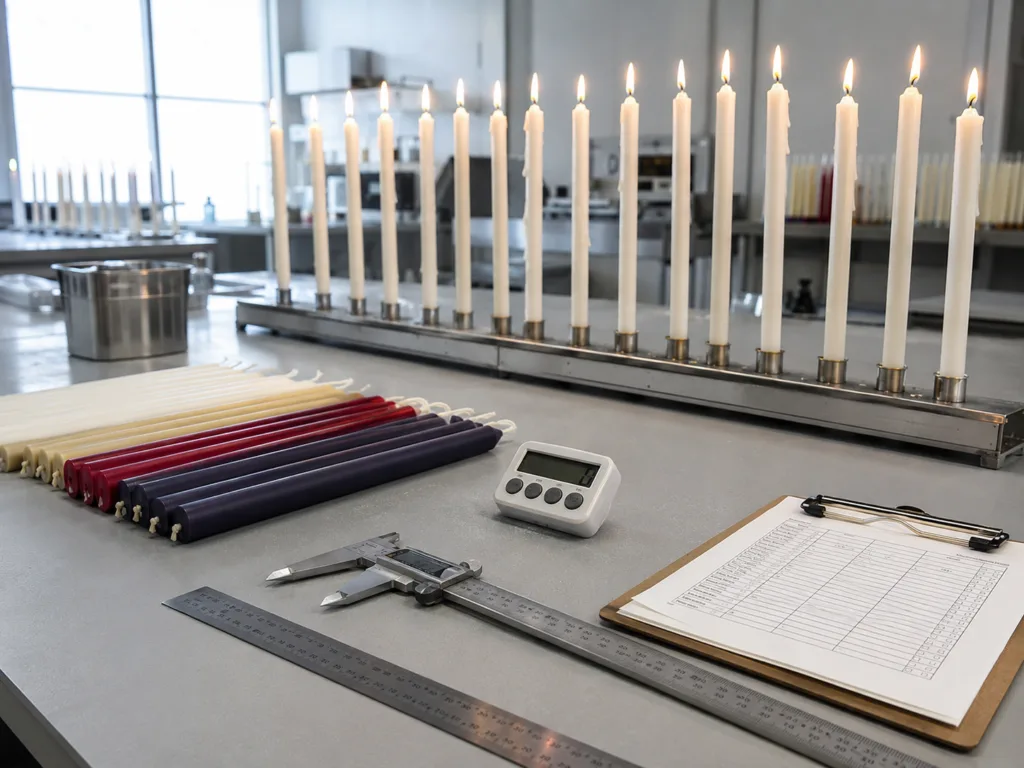
A taper candle may perform well as a sample but fail in mass production if production control is weak.
This is a major concern for importers, wholesalers, and private label brands. The goal is not to produce one beautiful candle. The goal is to produce thousands of candles with consistent size, color, straightness, wick position, packaging condition, and burn performance.
Common Production Issues
Poor production control can lead to:
- Off-center wicks
- Uneven candle bodies
- Warped or bent candles
- Size variation
- Color inconsistency
- Surface defects
- Air bubbles
- Cracks
- Fragile candles
- Inconsistent burn time
- Different drip behavior between batches
Any one of these issues can cause customer complaints.
Wick Centering Is Essential
If the wick is not centered, the candle will not burn evenly. One side receives more heat, melts faster, and may drip. Off-center wicks are especially problematic in slim taper candles because there is less wax around the wick to absorb imbalance.
Temperature Control Matters
Wax temperature, cooling speed, mold condition, and production environment can all influence final candle quality. Poor temperature control may cause surface defects, internal weakness, bending, or inconsistent burn behavior.
Packaging Also Affects Performance
Taper candles are long and narrow, so they can bend or break during storage and shipping. If a candle arrives slightly bent, it may not stand straight and may drip during use.
For export orders, packaging is not only about appearance. It is part of quality protection.
Common Taper Candle Dripping Causes and Solutions
| Cause | What Happens | Practical Solution |
|---|---|---|
| Wick too large | Wax melts too fast and runs down the candle | Adjust wick size and test burn rate |
| Wick too small | Melted wax is not consumed efficiently | Match wick to diameter and wax blend |
| Wax too soft | Candle loses structure and drips easily | Use a harder or blended wax formula |
| Candle not upright | Wax flows to one side | Improve base fit and holder compatibility |
| Airflow or drafts | Flame leans and melts one side faster | Avoid vents, windows, fans, and outdoor wind |
| Heavy colorants | Burn rate changes across colors | Test each custom color before bulk production |
| Poor QC | Sample and bulk performance differ | Control wick centering, dimensions, and burn testing |
| Weak packaging | Candles bend or break during shipping | Use trays, dividers, sleeves, or rigid boxes |
How to Reduce Taper Candle Dripping Before Bulk Production
For B2B buyers, the best time to solve dripping problems is before bulk production, not after the goods arrive.
A serious development process should include wax selection, wick testing, color testing, packaging evaluation, and realistic use-condition testing.
Choose the Right Wax Blend for the Use Case
There is no single “best wax” for every taper candle order. The right wax depends on your market, price level, target burn time, sustainability positioning, color needs, and shipping environment.
For example:
- A premium boutique brand may prefer beeswax or a premium blend.
- A wedding supplier may prioritize color range and drip resistance.
- A restaurant buyer may prioritize stable burn, low mess, and cost control.
- A mass retailer may prioritize consistency, packaging efficiency, and price.
- A natural lifestyle brand may prefer a formula with plant-based content, but still needs structural stability.
The wax formula should be selected based on commercial purpose, not marketing language alone.
Match the Wick to the Exact Candle Size
A supplier should not choose a wick casually. The wick should be tested with the final candle diameter, wax blend, color, and target burn time.
If the buyer changes the candle diameter, the wick may need to change. If the buyer changes wax formula, the wick may need to change. If the buyer changes from white candles to dark full-body colored candles, burn testing should be repeated.
For serious buyers, wick testing is not optional. It is part of product development.
Test Custom Colors Before Large Orders
If your order includes multiple colors, do not assume all colors will burn the same way.
A 10-color taper candle order should be reviewed carefully. Darker colors, special pigments, and high-pigment formulas may affect burn behavior.
For large orders, buyers can request:
- Pre-production samples
- Burn test videos
- Color confirmation samples
- Batch color standards
- Approved sample retention for production reference
This helps avoid disputes when the bulk order is produced.
Confirm the Burn Time Honestly
Many buyers ask for taper candles that burn for at least 7 hours. Burn time depends on height, diameter, wax type, wick, and burning environment.
A supplier should confirm the realistic burn time after testing. If the requested burn time is not feasible with the desired candle size, the buyer may need to adjust:
- Candle diameter
- Candle height
- Wax blend
- Wick type
- Performance expectations
Overpromising burn time is dangerous. A reliable supplier should give realistic feedback.
Use Proper Packaging to Prevent Bending and Breakage
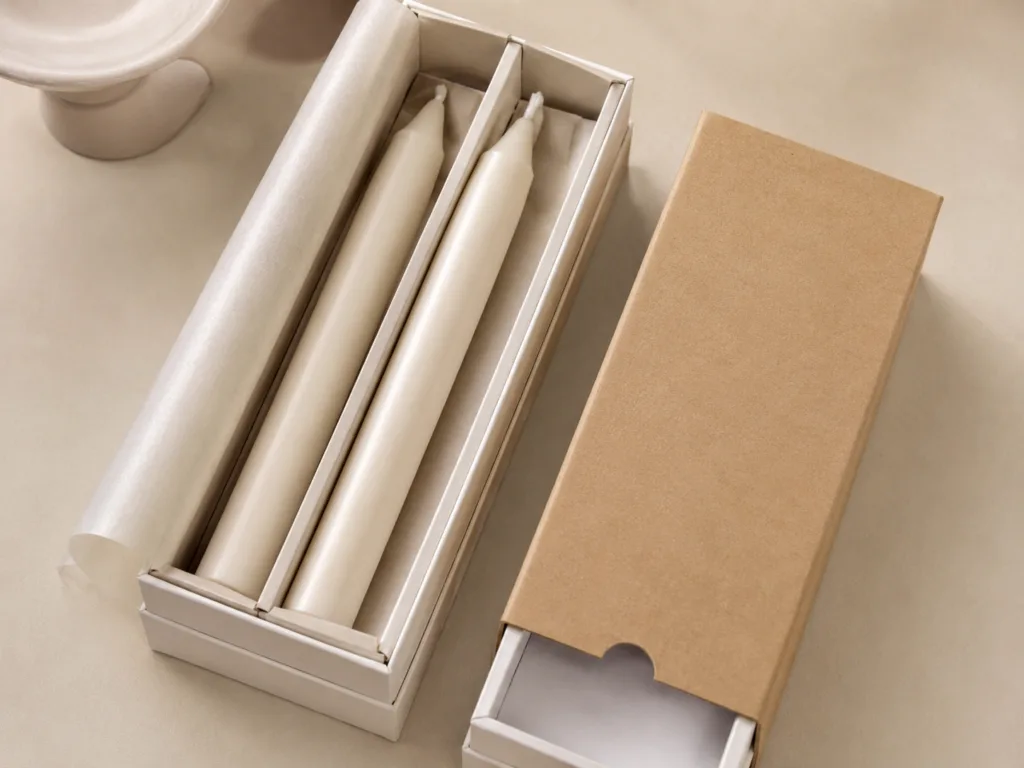
Because taper candles are slim and long, packaging must protect both appearance and performance.
If candles are bent during shipping, they may not stand straight. If they do not stand straight, they may drip more. If they break or rub against each other, the retail experience suffers.
For export and retail orders, packaging options may include:
- Paper sleeves
- Inner paper trays
- Cardboard dividers
- Molded pulp inserts
- PET or paper windows
- Rigid gift boxes
- Drawer boxes
- Lid-and-base boxes
- Warning or thank-you instruction sheets
- Strong master cartons for pallet shipping
Packaging should be designed based on candle size, quantity per box, transport method, and retail positioning.
For example, a 12-count taper candle box for retail requires different protection from a bulk carton for event suppliers. A premium gift box with candle collars or accessories needs more structure than a simple wholesale pack.
Test the Candle in Real Use Conditions
Factory burn tests are important, but real-use testing is also valuable.
If your taper candles will be used in restaurants, test them on actual tables. If they will be used for weddings, test them in the expected holders. If they will be used outdoors, test them with realistic airflow. If they will be sold in warm regions, consider storage and shipping temperature.
This is especially important for large orders. A small amount of testing before production is much cheaper than handling complaints after delivery.
Can Taper Candles Be Truly Dripless?
This is one of the most important questions buyers ask.
The honest answer is: taper candles can be made drip-resistant, but “dripless” should be understood carefully.
A well-designed taper candle can significantly reduce dripping under proper indoor conditions. This means the candle should be placed upright, away from drafts, in a suitable holder, and burned according to instructions.
However, no exposed taper candle can be guaranteed to remain completely drip-free in every environment. Airflow, candle angle, holder fit, high room temperature, user behavior, and production variables can all affect performance.
For this reason, mature buyers should avoid vague claims and focus on measurable expectations:
- What is the target burn time?
- Under what conditions was the candle tested?
- How much dripping is acceptable?
- Was the candle tested in the final color?
- Was the candle tested with the final packaging and holder if applicable?
- Can the supplier provide practical use instructions?
This creates a more professional development process and reduces misunderstanding.
What B2B Buyers Should Ask Before Ordering Taper Candles
If you are sourcing taper candles for retail, weddings, restaurants, hotels, import distribution, or private label collections, ask more than just price.
Here are the key questions to discuss with your supplier.
Product Performance Questions
- What wax blend do you recommend for our taper candle size?
- Can the candle be made drip-resistant under normal indoor use?
- What wick size will be used for this diameter?
- Has this wick and wax combination been tested?
- What is the realistic burn time?
- Can the candle reach at least 7 hours if required?
- Will each custom color be burn-tested?
- Are the candles full-body colored or surface-dipped?
- Can the candle remain straight during storage and shipping?
- What are the main performance risks for this design?
Customization Questions
- Can you make custom sizes such as 10-inch or 12-inch taper candles?
- Can you match custom colors?
- Can we order multiple colors in one bulk order?
- What is the MOQ per color?
- Can you make custom retail packaging?
- Can you include warning cards or thank-you sheets?
- Can you provide custom labels, barcodes, or carton marks?
- Can you support gift sets with candle holders or collars?
Supply Chain Questions
- What is the sample lead time?
- What is the bulk production lead time?
- Can you provide DDP shipping?
- Can you ship to the US, Europe, UK, or Australia?
- How are candles packed for international transport?
- Can you support palletized shipments?
- What documents can you provide for import or retail requirements?
- How do you control QC before shipment?
These questions help separate a basic supplier from a professional manufacturing partner.
Common Buyer Pain Points When Sourcing Taper Candles
Mature buyers usually come to taper candle sourcing with specific concerns. Understanding these pain points helps brands and suppliers build better products.
Pain Point 1: “The Candles Look Good but Drip Too Much”
This usually means the supplier focused on appearance but did not fully engineer the burn performance. The solution is not only to change the wax. The wick, wax blend, diameter, color, and testing environment must be reviewed together.
Pain Point 2: “The Sample Was Good, but Bulk Quality Was Different”
This is a production consistency issue. Buyers should confirm whether the supplier keeps approved samples, controls wick centering, checks straightness, and tests bulk production batches.
Pain Point 3: “The Candles Bent During Shipping”
Bent taper candles can drip because they do not stand straight. Export packaging must protect long candles from heat, pressure, and movement.
Pain Point 4: “Different Colors Burn Differently”
This is common when custom pigments are used. Each color should be tested, especially dark colors and full-body colored candles.
Pain Point 5: “The Supplier Says Dripless but Customers Still Complain”
This often happens because “dripless” was not defined clearly. The buyer and supplier should agree on realistic use conditions, testing methods, and acceptable performance.
Pain Point 6: “The Price Is Low, but the Product Feels Risky”
Low price may come from simplified materials, weak packaging, limited testing, or unstable production control. For a product used in visible home, dining, wedding, or hospitality settings, cheap candles can become expensive if they create complaints.
How to Evaluate a Taper Candle Supplier
A strong taper candle supplier should not only provide a product list. They should be able to discuss product development, testing, packaging, and logistics.
Look for a supplier who can support:
- Wax blend recommendations
- Wick matching
- Custom colors
- Burn testing
- Drip-resistant development
- Retail packaging
- Gift set packaging
- Warning and instruction inserts
- Carton and pallet planning
- DDP shipping
- Quality control before shipment
For private label buyers, the ideal supplier is not just a factory. It is a development partner who can help translate your market idea into a product that can survive real use, international shipping, retail display, and customer expectations.
Taper Candles for Different Buyer Types
Different B2B buyers have different priorities. A good product strategy should match the end market.
Retail Brands
Retail brands need attractive colors, clean packaging, reliable performance, and a strong shelf presence. They may prefer full-body colored taper candles, coordinated gift boxes, barcode labels, and seasonal collections.
Their main risks are customer complaints, poor reviews, and inconsistent repeat orders.
Wedding and Event Suppliers
Wedding buyers need visual beauty, color matching, bulk availability, and reduced dripping. They often need candles in ivory, white, blush, champagne, burgundy, sage, black, or custom theme colors.
Their main risks are staining table linens, messy event setups, and inconsistent color matching.
Restaurants and Hotels
Hospitality buyers need daily-use reliability. They may not need the most luxurious packaging, but they need stable burn, low mess, consistent supply, and safe use instructions.
Their main risks are cleaning issues, staff complaints, guest experience problems, and operational inconvenience.
Importers and Wholesalers
Importers need price competitiveness, reliable production, carton planning, pallet loading, documentation, and stable quality across large quantities.
Their main risks are inconsistent batches, late delivery, weak packaging, and supplier overpromising.
Private Label Candle Brands
Private label brands need more than a candle. They need a complete product system: candle formula, color palette, box design, insert, warning card, carton marks, compliance support, and logistics planning.
Their main risks are unclear product positioning, poor packaging decisions, and quality issues that damage brand trust.
Practical Development Process for Custom Taper Candles
For a serious B2B order, the development process should be structured.
Step 1: Confirm Product Specifications
Start with size, diameter, color range, wax preference, target burn time, scent or unscented requirement, packaging style, and destination market.
For example:
- 10-inch taper candles
- 0.8 or 0.9 inch diameter
- Unscented
- 10 custom colors
- 12 candles per box
- Minimum 7-hour burn time
- Retail box with warning sheet
- DDP shipping to the United States
Clear specifications help the supplier evaluate feasibility.
Step 2: Evaluate Wax and Wick
The supplier should recommend a formula and wick combination based on the size and target performance.
If the buyer has a preferred wax, such as paraffin, beeswax, soy blend, or plant-based blend, the supplier should explain the cost and performance implications.
Step 3: Make Samples
Samples should confirm:
- Size
- Shape
- Color
- Surface finish
- Wick performance
- Burn time
- Drip behavior
- Packaging fit
For custom colors, physical samples are more reliable than screen images.
Step 4: Conduct Burn Testing
Burn testing should not be rushed. The candle should be tested in a stable indoor environment and observed over time.
Important points include:
- Flame size
- Dripping level
- Burn time
- Smoke level
- Wax consumption
- Candle shape during burning
- Whether the candle remains stable in holder
Step 5: Confirm Packaging
Packaging should be tested for both retail presentation and transport protection.
For long taper candles, inner structure matters. If candles move inside the box, rub against each other, or bend under pressure, the final product may fail even if the candle formula is good.
Step 6: Approve Pre-Production Sample
Before mass production, buyers should approve a final sample that represents the actual bulk order. This includes candle size, color, wax, wick, packaging, labels, inserts, and carton requirements.
Step 7: Production and QC
During production, the supplier should control:
- Wick centering
- Candle straightness
- Size tolerance
- Color consistency
- Surface quality
- Packaging accuracy
- Carton strength
- Random burn checks if needed
Step 8: Shipping Planning
For large orders, shipping method affects cost and lead time. Buyers should discuss air, sea, DDP options, pallet loading, carton dimensions, gross weight, and destination requirements early.
How Packaging Helps Reduce Taper Candle Problems
Packaging is often treated as a design decision, but for taper candles it is also a protection system.
A taper candle is more fragile than it looks. Its long shape makes it vulnerable to bending, pressure, and breakage. If packaging is weak, candles may arrive damaged or slightly warped. That can affect both appearance and burning.
Good Packaging Should Protect Against
- Bending
- Breakage
- Surface scratches
- Color transfer
- Dust
- Heat exposure during storage
- Movement inside the box
- Pressure during pallet shipping
Retail Packaging Options
Retail buyers may choose:
- 2-piece sets
- 4-piece sets
- 6-piece sets
- 8-piece sets
- 12-piece boxes
- Drawer-style boxes
- Lid-and-base rigid boxes
- Kraft boxes
- Window boxes
- Seasonal gift boxes
The best option depends on price point, brand positioning, order quantity, and retail channel.
Bulk Packaging Options
For restaurants, event suppliers, or wholesalers, packaging may be simpler but must still protect the candles. Bulk packs may use dividers, sleeves, or layered inner cartons.
A cheaper box is not always cheaper if it increases damage, returns, or repacking work.
How to Write Better Product Requirements for Taper Candle Suppliers
If you want an accurate quotation, provide clear details from the beginning.
A strong inquiry should include:
- Candle height
- Diameter or base size
- Wax preference if any
- Scented or unscented
- Target burn time
- Color quantity and color references
- Full-body color or surface color
- Packaging style
- Quantity per box
- Total order quantity
- Destination country
- Shipping preference
- Required documents or testing needs
- Photos or reference samples
A vague inquiry such as “Please quote taper candles” will usually produce a vague quotation. A detailed inquiry allows the supplier to evaluate real cost, MOQ, lead time, and technical risk.
Final Thoughts: Dripping Is a Product Development Issue, Not Just a Defect
Taper candles drip for many reasons: wick mismatch, soft wax, poor diameter design, leaning holders, airflow, heavy colorants, weak QC, or poor packaging. The solution is not one magic material or one simple claim.
For mature buyers, the goal should be to develop taper candles that are attractive, commercially viable, and reliable under realistic use conditions.
That requires proper wax selection, wick matching, color testing, burn testing, packaging protection, and honest communication about what “dripless” really means.
If you are sourcing taper candles for retail, weddings, restaurants, hotels, seasonal gift sets, or private label collections, do not only compare unit prices. Compare the supplier’s ability to solve real product problems.
A low-cost candle that drips heavily, bends during shipping, or creates customer complaints is not a good deal. A well-developed taper candle can protect your brand, improve customer satisfaction, and support larger repeat orders.
Need Custom Taper Candles for Your Brand?
If you are developing custom taper candles for wholesale, retail, wedding, hospitality, or private label programs, we can help you evaluate the right wax blend, wick size, color system, packaging structure, and shipping solution.
We support custom taper candle development, including custom sizes, custom colors, drip-resistant wax blend options, burn testing, private label packaging, gift box development, warning or thank-you inserts, and DDP shipping for international buyers.
Share your target candle size, color range, burn time, packaging idea, and order quantity. Our team can help you turn your taper candle concept into a practical, production-ready product for bulk orders.
FAQ
1. Why do taper candles drip even when they are labeled dripless?
“Dripless” usually means reduced dripping under proper burning conditions, not zero dripping in every environment. If the candle is placed near airflow, used in a poor-fitting holder, tilted to one side, or exposed to high temperature, it may still drip. Wick size, wax formula, colorants, and production consistency also affect drip performance.
2. What is the best wax for drip-resistant taper candles?
There is no single best wax for every order. Paraffin is widely used for stable shape and color performance, beeswax can work well for premium candles, and soy usually needs blending because it is softer. For commercial taper candle production, a balanced wax blend is often the most practical choice for reducing dripping while controlling cost and maintaining stable burn performance.
3. Should every custom color be burn-tested before bulk production?
Yes, especially for large orders or dark-colored taper candles. Different pigments and additive levels can affect burn rate, flame behavior, and dripping. If you are ordering multiple colors, testing only one white sample is not enough. Representative custom colors should be tested before bulk production to reduce quality risk.