
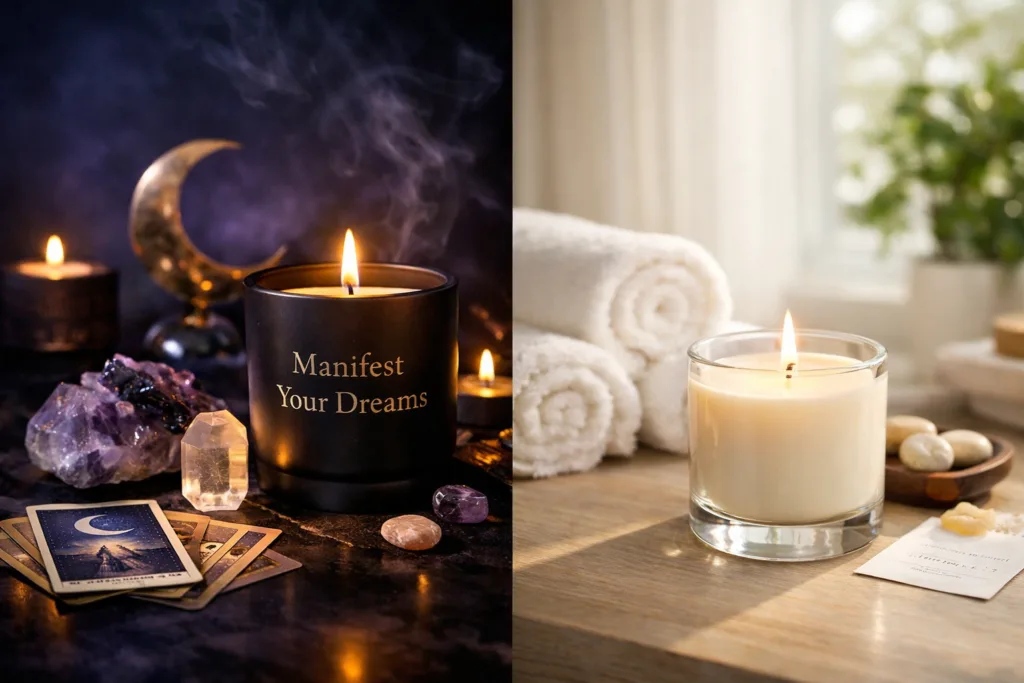
 Most candle buyers can tell you what smells good.
But when you’re building a brand, “smells good” is not a strategy.
In 2026, two candle categories keep getting mixed up:
- Ritual candles (sold for meaning, intention, and symbols)
- Aromatherapy candles (sold for mood, wellness, and scent experience)
They look similar on the surface—wax, wick, container—but they behave very differently in the market. They attract different customers, demand different packaging, and scale in totally different ways.
If you pick the wrong lane, you’ll feel it fast:
- Your pricing won’t make sense.
- Your MOQ will be wrong.
- Your packaging cost will eat your margin.
- Your product story won’t match your sales channel.
This guide breaks down the difference in a practical, brand-building way. If you’re developing private label candles (or planning a new collection), you’ll walk away knowing exactly what to build and why.
1) What Is a Ritual Candle?
A ritual candle is a candle used as part of a meaningful action.
It’s not mainly about scent.
It’s about what the candle represents and how it fits into a personal routine:
- setting an intention
- doing a meditation
- journaling
- new moon / full moon rituals
- spiritual or emotional “reset” moments
Think of ritual candles like “tools.” The buyer is not only buying a product—they are buying a moment.
Common ritual candle signals
Ritual candles often include:
- color meaning (white = cleanse, green = money, pink = love)
- words/affirmations (printed or engraved)
- symbol themes (zodiac, tarot, chakras, protection)
- crystals or botanicals (as decoration or concept)
- simple vessels (glass jars, tins, or pillar forms)
Where ritual candles sell best
- Etsy and marketplace shops
- TikTok and Instagram shops
- small DTC brands
- spiritual boutiques
What ritual candle buyers really want
They want a candle that feels like it belongs in their ritual.
The scent can be light or even unscented.
The story and the symbolism matter more.
2) What Is an Aromatherapy Candle?
An aromatherapy candle is a candle sold for its scent performance and mood effect.
The customer is buying:
- a calm living room at night
- a spa-like bathroom
- a clean hotel lobby mood
- a relaxing bedtime routine
Here, the fragrance is the product.
Common aromatherapy candle signals
Aromatherapy candles often include:
- fragrance notes (top/middle/base)
- essential-oil-inspired blends (lavender, eucalyptus, citrus)
- strong vessel design (glass, ceramic, stone-look)
- higher-end packaging (rigid boxes, inserts, gift sets)
Where aromatherapy candles sell best
- home concept stores
- lifestyle retail
- hotel and spa sourcing
- premium gift channels
- subscription boxes (mid to premium)
What aromatherapy buyers really want
They want a candle that:
- smells stable and consistent
- throws scent well
- looks premium on a shelf
- fits a lifestyle story (quiet luxury, wellness, modern home)
3) The Biggest Difference: Meaning vs Experience
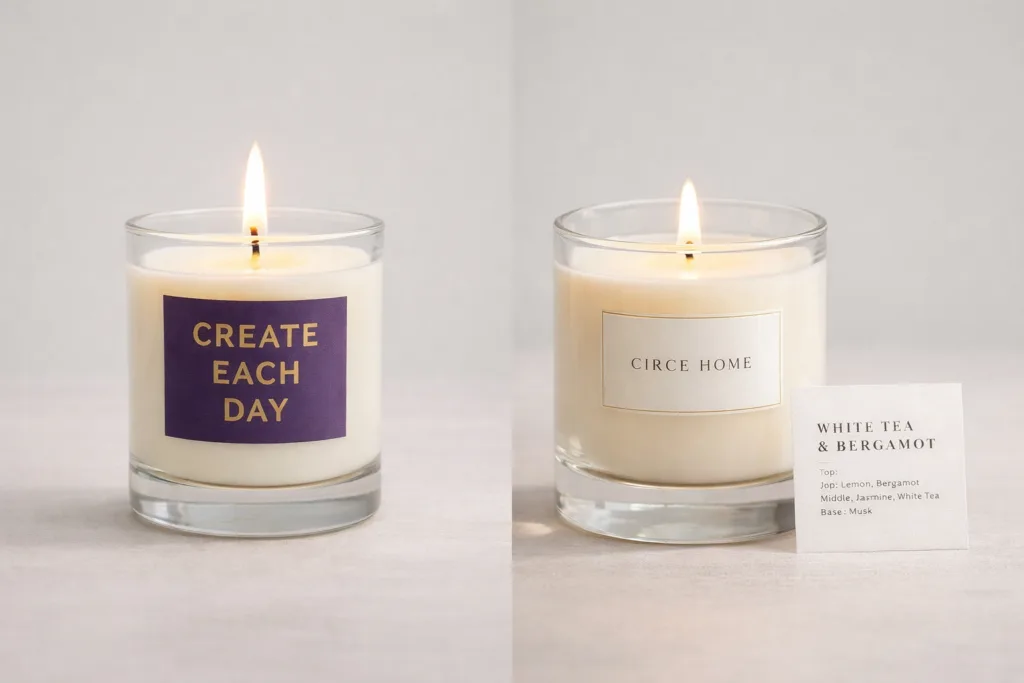 If you only remember one thing, remember this:
- Ritual candle = meaning-first
- Aromatherapy candle = scent experience-first
A ritual candle can be visually simple but conceptually powerful.
An aromatherapy candle can have a simple label but needs fragrance performance and premium design.
This difference shapes everything: pricing, packaging, and even your production timeline.
4) Customer Positioning: Who Buys Each Category?
Ritual candle customer profile
Ritual candle buyers are often:
- younger (Gen Z / young millennial)
- online-first shoppers
- interested in spiritual or self-care routines
- attracted by aesthetics and symbolism
They respond to:
- short, clear themes: “Protection,” “Self Love,” “New Beginnings”
- giftable, shareable visuals
- content marketing and story
Aromatherapy candle customer profile
Aromatherapy candle buyers are often:
- lifestyle-driven shoppers
- boutique retail customers
- gift buyers
- hotel/spa sourcing teams
They respond to:
- fragrance clarity (what it smells like)
- clean brand design
- quality cues (vessel, wick, wax type)
- certifications and compliance (especially in EU/US)
5) Product Design: What Matters Most in Each?
Ritual candle design priorities
- Theme clarity (the buyer should get it in 3 seconds)
- Color system (easy to build collections)
- Affirmation words (simple but strong)
- Giftable size (easy price point)
- Fast-to-launch packaging
Ritual candles don’t always need expensive vessels.
If the concept is strong, a standard jar can still sell.
Aromatherapy candle design priorities
- Fragrance formula and stability
- Scent throw (hot + cold)
- Vessel look and weight (luxury cues)
- Packaging structure (protect + upgrade AOV)
- Burn performance and safety
Aromatherapy candles get judged on details.
A weak scent or unstable burn will kill repeat orders.
6) Pricing: Why Ritual and Aromatherapy Price Differently
Ritual candle pricing logic
Ritual candles can have a wide price range, but the reason people pay is different.
They pay for:
- concept
- symbolism
- “this is my ritual candle” identity
A ritual candle is closer to an “emotional accessory.”
Aromatherapy candle pricing logic
Aromatherapy candle pricing is more structural.
The cost usually sits in:
- vessel
- packaging
- fragrance load and materials
- production standards
For a luxury candle brand, the wax itself is rarely the big cost.
The real cost is the presentation.
7) Packaging: The Silent Profit Lever
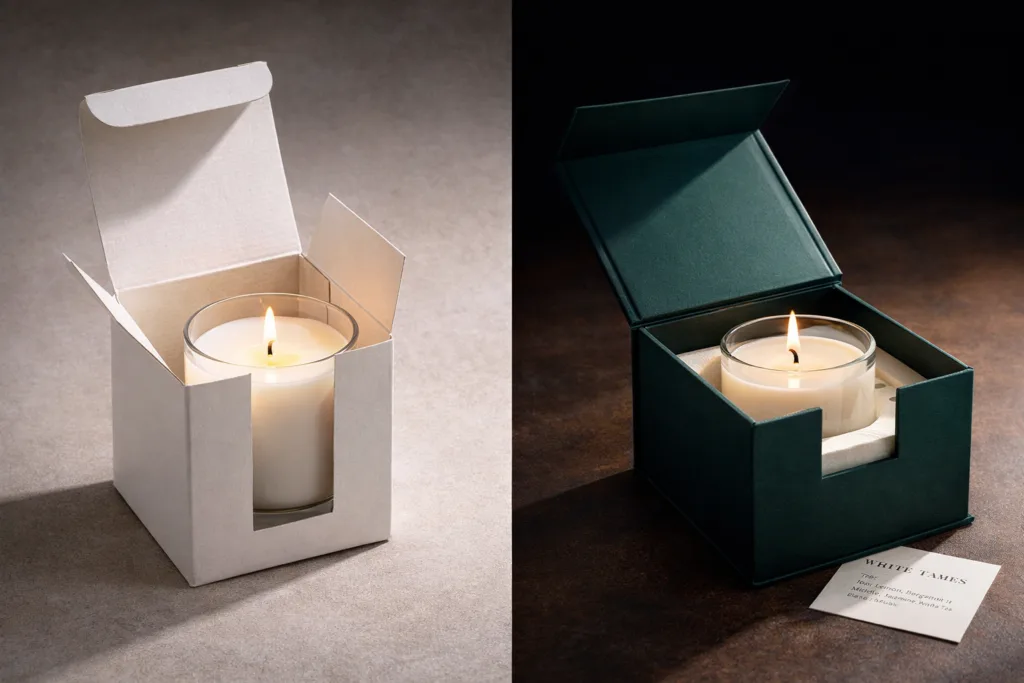 Packaging is where brands accidentally lose money.
Ritual candle packaging
Usually:
- label + shrink wrap
- simple folding carton
- small insert card with intention text
The packaging supports the ritual message.
It doesn’t need to be heavy.
Aromatherapy candle packaging
Often:
- premium folding carton with texture
- rigid boxes for gift sets
- inserts (EVA / paper pulp) for protection
- magnetic closure for high AOV
Aromatherapy buyers are very visual.
A good unboxing creates repeat purchases.
8) MOQ Reality: What Scales Easily and What Doesn’t
This is the part many new brands don’t plan for.
Ritual candle MOQ advantage
Ritual candles can be built with:
- standard glass jars
- standard tins
- standard labels
This allows lower MOQ in many cases.
It’s a good “testing lane.”
Aromatherapy candle MOQ reality
If you want a premium aromatherapy candle, the vessel choice matters.
- standard glass can often start lower
- custom ceramic usually requires higher MOQ
If you choose ceramic too early, your project can stall.
The smart move is often:
- test with standard glass
- scale the concept
- upgrade to ceramic when volume is ready
9) Retail Channel Fit: Where Each Product Wins
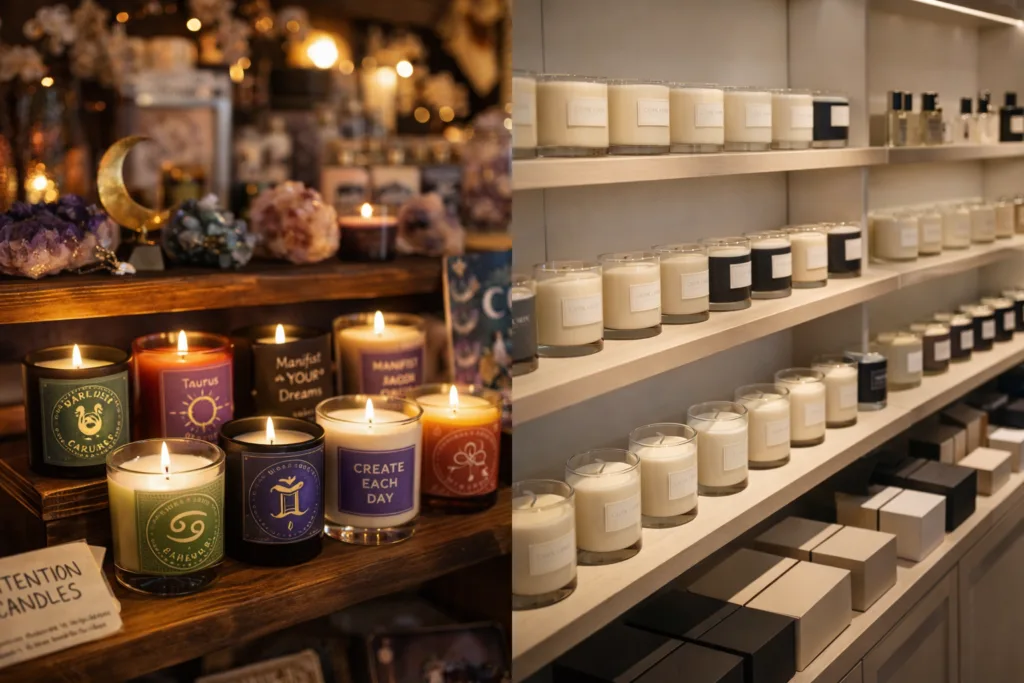
Ritual candles win in
- social commerce
- small boutiques
- online creators
- spiritual community stores
Because the story drives the sale.
Aromatherapy candles win in
- premium retail shelves
- hotel and spa environments
- corporate gifting
- home concept stores
Because the product becomes part of a lifestyle identity.
10) How to Choose Your Lane: 3 Practical Scenarios
Scenario A: You need to launch fast and test demand
Go with ritual candle positioning.
- standard jar
- strong themes
- simple packaging
- quick content rollout
Scenario B: You want wholesale buyers and repeat orders
Go with aromatherapy candle positioning.
- fragrance-first development
- strong vessel design
- structured packaging
- consistent performance
Scenario C: You want “luxury + meaning”
Build a hybrid:
- aromatherapy-level scent
- ritual-level concept and messaging
This is often the best path for premium private label.
11) The Hybrid Strategy: Ritual Concept + Aromatherapy Performance
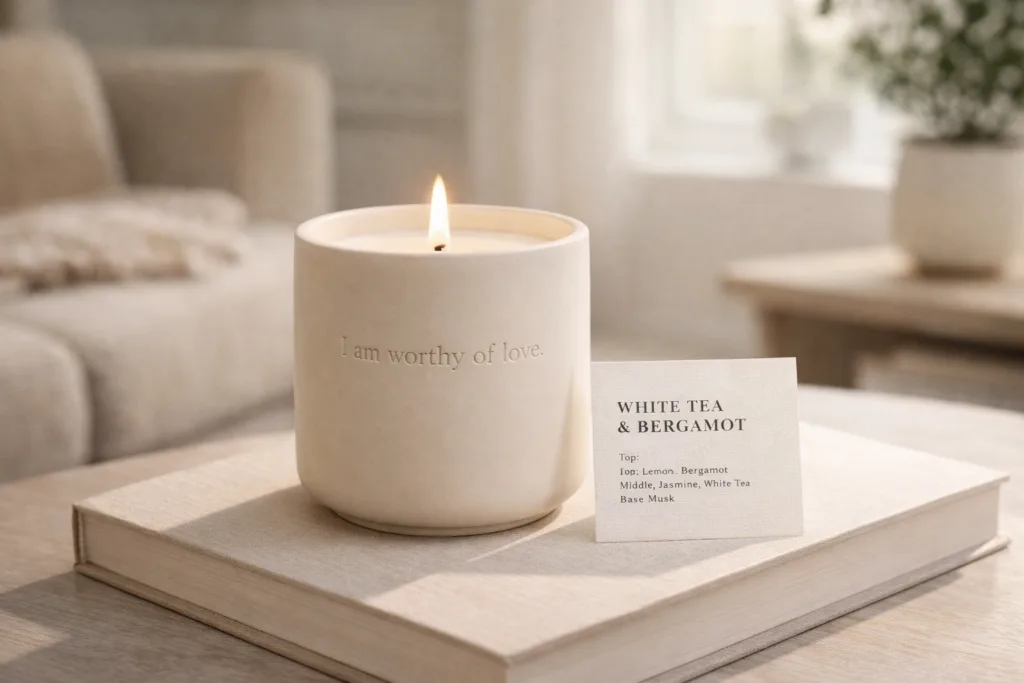 The strongest modern brands often blend both.
Example:
- a calming scent like “Lavender Smoke”
- paired with a simple intention: “Deep Rest”
- in a clean ceramic jar with an engraved phrase
This creates:
- gift appeal
- repeat use (because it smells good)
- strong marketing content (because it means something)
It also allows you to sell:
- a candle
- a gift set
- wax melts in the same scent
- diffuser in the same mood theme
That is how you build a collection, not just one SKU.
12) Common Mistakes Brands Make (and How to Avoid Them)
Mistake 1: Treating ritual candles like perfume products
Fix: focus on theme clarity, color system, and message.
Mistake 2: Treating aromatherapy candles like “just a jar”
Fix: invest time in fragrance performance and packaging structure.
Mistake 3: Starting with custom ceramic too early
Fix: test with standard vessels first, then upgrade.
Mistake 4: Ignoring channel reality
Fix: match product to where you sell (TikTok vs boutique vs hotel).
Mistake 5: Too many scents on day one
Fix: start with 6–12 core scents, then expand.
13) A Simple Development Checklist for Private Label Buyers
Use this checklist before you request quotes.
If you’re building ritual candles
- What are your 6–12 themes?
- What is your color system?
- Will the candle be scented or lightly scented?
- What is your target price point?
- What packaging level fits your channel?
If you’re building aromatherapy candles
- What is your target scent profile (notes + mood)?
- What vessel style fits your brand (glass vs ceramic)?
- What is your packaging goal (single vs gift set)?
- What compliance do you need (EU/US)?
- What is your launch MOQ plan?
14) Final Take: Positioning Determines Profit
Ritual candles and aromatherapy candles are not enemies.
They are two different business models.
- Ritual candles sell meaning.
- Aromatherapy candles sell experience.
If you choose the right lane, your next steps become clearer:
- what to design
- what to price
- what to package
- what MOQ to plan for
- how to scale without getting stuck
If you want to build a private label collection with the right positioning from day one, Circe Home can help you map the best route—whether you’re testing with standard jars or planning a full luxury upgrade.
FAQs
FAQ 1: Can a ritual candle also be an aromatherapy candle?
Yes. Many premium brands combine both: a strong scent profile plus a clear intention theme. This hybrid approach often increases gift value and repeat purchase.
FAQ 2: Which one is easier to start with for private label?
Ritual candles are often easier to start because you can use standard vessels and simpler packaging. Aromatherapy candles usually require more time on fragrance performance and shelf-ready presentation.
FAQ 3: Do aromatherapy candles always need essential oils?
Not always. Many brands use fragrance oils designed to match aromatherapy “moods” (calm, focus, energy). What matters most is scent quality, stability, and safety compliance for your target market.