
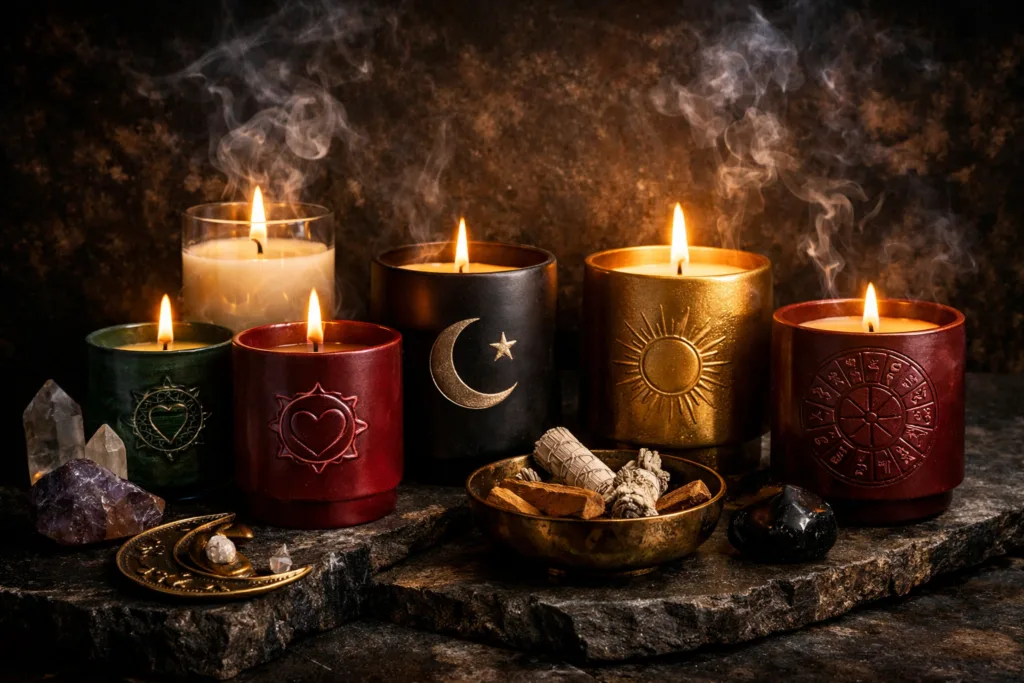
 Ritual candles are not just candles.
They are tools for emotion. Tools for focus. Tools for belief.
Over the past few years, more wellness brands, yoga studios, spiritual shops, and boutique retailers have added ritual candles to their collections. These products are no longer niche. They are now part of a growing global wellness market.
But here is the truth most new brands do not understand:
Ritual candle manufacturing is very different from producing a normal scented candle.
If you treat it like a standard 8oz jar with fragrance, you will lose money, waste time, or create a product that feels cheap.
In this guide, we break down the top 10 secrets behind successful ritual candle manufacturing for private label brands. These are practical, factory-level insights. No fluff. No hype.
Let’s begin.
1. A Ritual Candle Is a Function Product, Not Just a Scented Candle
Most scented candles sell based on smell.
Ritual candles sell based on intention.
Examples:
- Love and attraction
- Protection and cleansing
- Abundance and wealth
- Chakra balance
- Meditation focus
- Zodiac identity
This means your product development must start with purpose.
Ask these questions first:
- What problem does this candle solve?
- What emotion does it support?
- What moment is it used in?
Only after defining this should you choose fragrance, color, and packaging.
A ritual candle without a clear intention is just a normal candle with a fancy label.
2. Wax Selection Changes Brand Positioning
Wax is not just a raw material. It communicates values.
Soy Wax
- Clean burn
- Vegan friendly
- Affordable
- Good for entry-level ritual lines
Coconut Blend Wax
- Smooth surface finish
- Premium feel
- Better scent throw
- Good for higher price points
Beeswax
- Natural image
- Often used for “purity” or “earth-based” rituals
- Higher cost
- Strong brand storytelling value
Color is also important.
Chakra candles require specific colors. For example:
- Red for root chakra
- Orange for sacral
- Yellow for solar plexus
Manifestation or meditation candles often look better in neutral tones.
When planning private label ritual candles, align wax choice with your brand message.
3. Fragrance Must Match Emotional Function
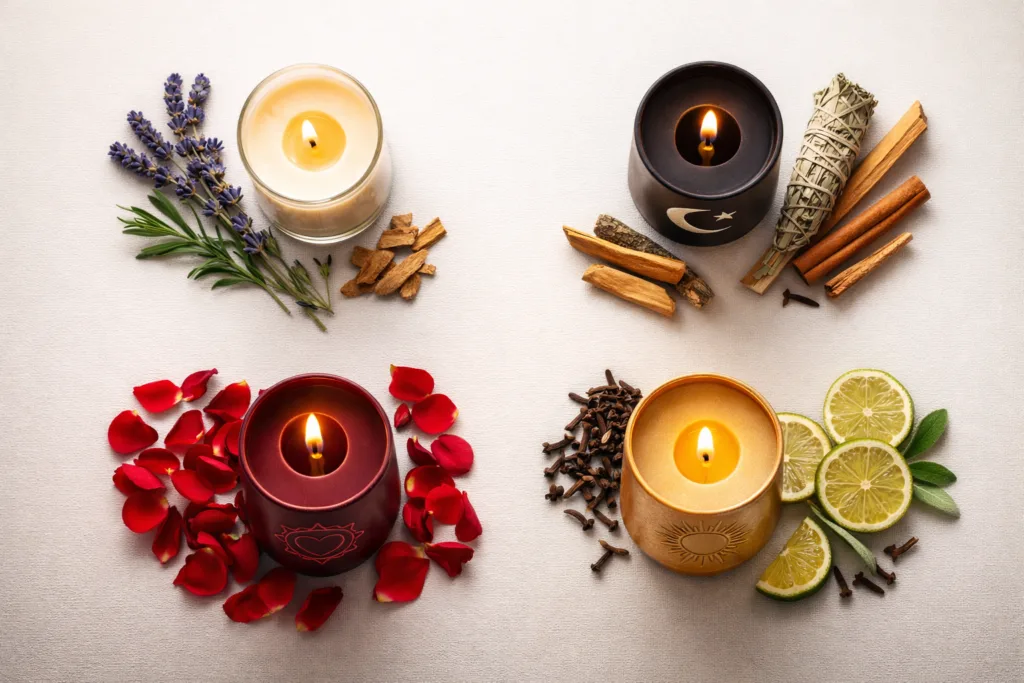 This is one of the biggest mistakes new brands make.
They choose fragrance based on what smells nice, not what supports the ritual theme.
Here is a simple pairing framework:
Relaxation / Meditation
- Lavender
- Sandalwood
- Chamomile
Energy / Motivation
- Bergamot
- Grapefruit
- Lemon
Protection / Cleansing
- Sage
- Palo Santo
- Cedarwood
Love / Self-worth
- Rose
- Jasmine
- Vanilla
Abundance / Prosperity
- Cinnamon
- Clove
- Patchouli
Fragrance must support the story printed on the jar.
If the label says “Calm Energy” but the scent is sharp citrus, customers will feel confused.
A professional ritual candle manufacturer will help test scent strength and performance in the correct wax type.
4. Jar Selection Impacts MOQ and Profit
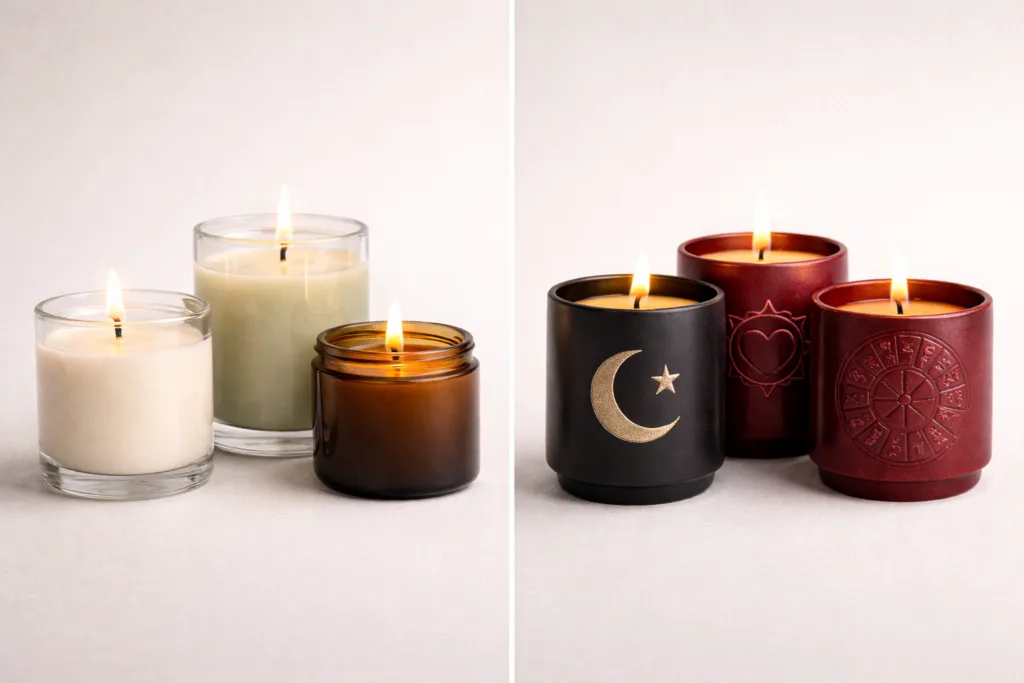 Container choice is where many private label brands struggle.
There are three main options.
Standard Glass Jars
- Lower MOQ (often 100–500pcs depending on design)
- Faster production time
- Lower tooling cost
- Good for testing market
Custom Printed Glass
- Higher MOQ
- Better branding impact
- More stable long-term product identity
Custom Ceramic Jars
- Premium look
- Strong ritual aesthetic
- Higher development cost
- Typically require 1000pcs or more
Custom ceramic mold development is not suitable for very small brands or early-stage testing.
If you are building your first ritual candle line, start with structured glass options before investing in ceramic tooling.
This protects cash flow and reduces risk.
5. Packaging Is Part of the Ritual Experience
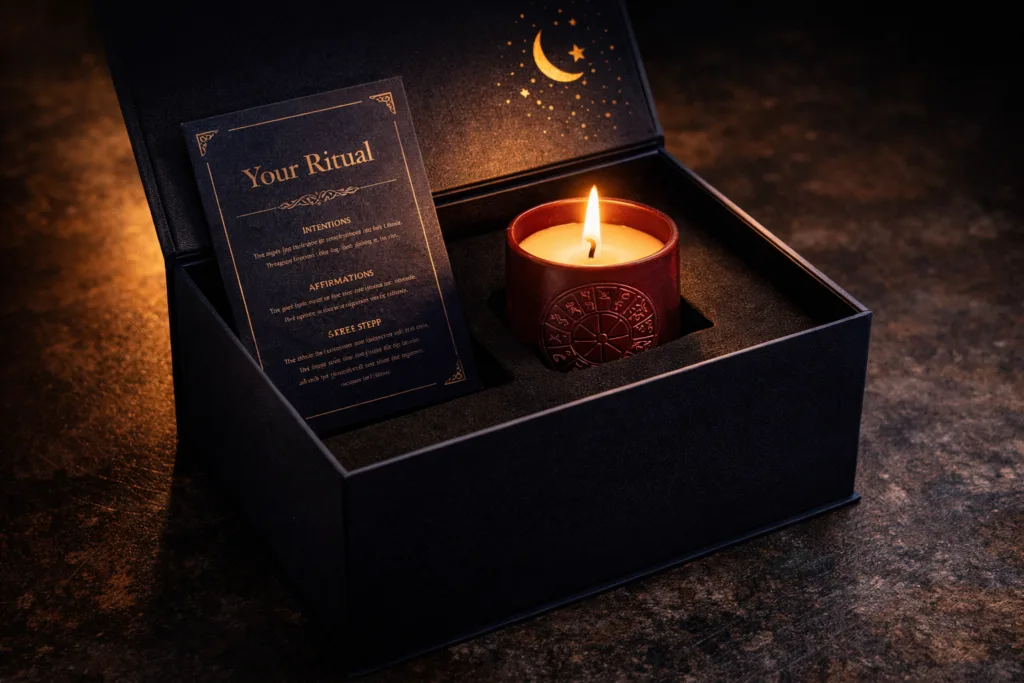 Ritual candles are often gifted.
This means packaging matters more than standard candles.
Options include:
- Folding carton with foil print
- Rigid gift box with insert
- Magnetic closure box
- Ritual guide card inside
- Affirmation message on lid
A strong packaging system increases perceived value by $5–10 in retail without significantly increasing manufacturing cost if engineered correctly.
For example:
- Upgrading from white carton to structured rigid box can add $2–3 production cost
- But retail price can increase much more
Smart packaging design is profit engineering.
6. Safety and Compliance Cannot Be Ignored
Even spiritual products must follow regulations.
For US and EU markets, you must consider:
- IFRA fragrance compliance
- CLP labeling for EU
- Warning labels for fire safety
- Proper ingredient declaration
A reliable ritual candle manufacturer will guide:
- Label placement
- Font size compliance
- Barcode positioning
- Export carton marking
Ignoring compliance can stop your shipment at customs.
This is not optional.
7. MOQ Strategy Should Match Growth Stage
Minimum Order Quantity is not the enemy.
It is a planning tool.
Example structure:
Entry Stage:
- Standard glass
- 1–2 fragrances
- 300–500pcs per SKU
Growth Stage:
- Custom printed glass
- 3–5 SKUs
- 500–1000pcs per SKU
Established Brand:
- Custom ceramic molds
- 7 or 12-piece collections
- 1000pcs+ per design
Trying to launch 12 zodiac candles at 200pcs each with custom ceramic molds is not realistic.
Production efficiency requires volume.
Smart brands scale in layers.
8. Collection Strategy Increases Repeat Orders
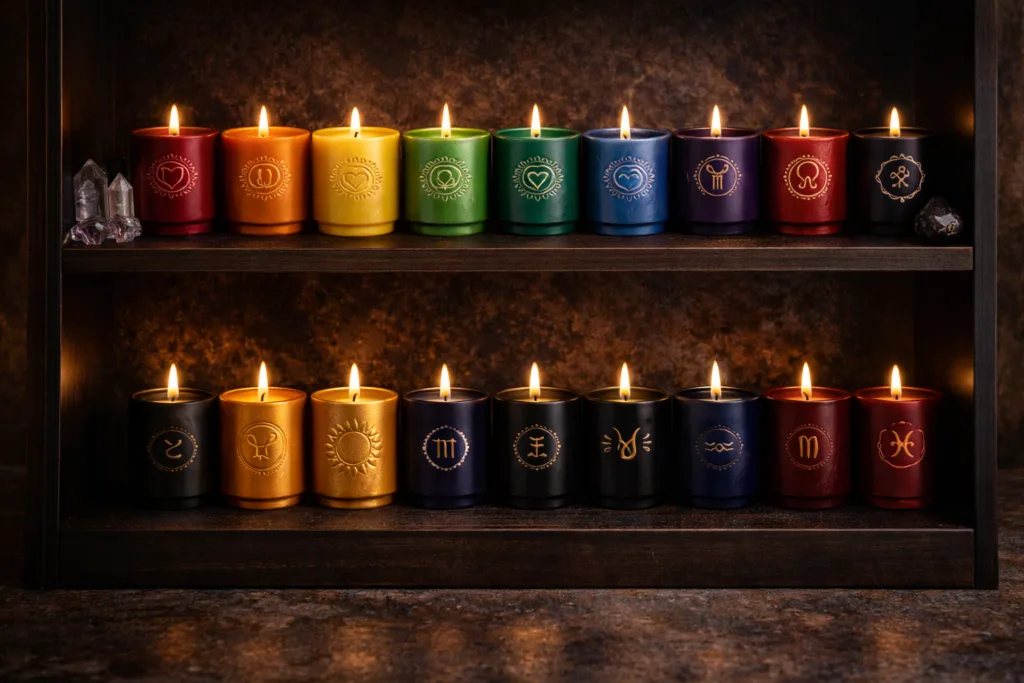 Ritual candles work best in series.
Popular structures:
7 Chakra Set
Strong color identity
Encourages bundle purchase
12 Zodiac Series
Long-term brand identity
Giftable all year
Moon Phase Collection
New moon
Full moon
Eclipse themes
Seasonal Energy Drops
Spring renewal
Summer abundance
Autumn grounding
Winter reflection
A strong collection increases average order value and improves retailer interest.
Buyers prefer systems, not random single SKUs.
9. Production Timeline Planning Prevents Delays
Ritual candle production involves:
- Fragrance sampling (7–10 days)
- Jar sampling (10–20 days depending on type)
- Packaging prototype (7–14 days)
- Mass production (25–35 days)
- Sea shipping (20–35 days)
If launching for Q4, production should begin by early summer.
Late planning leads to air freight, which destroys margin.
Work backward from your retail launch date.
10. Choose a Manufacturer That Understands Brand Building
Not all candle factories understand ritual positioning.
You need a partner who understands:
- Emotional branding
- Packaging engineering
- MOQ logic
- Compliance systems
- International shipping
A true ritual candle manufacturer is not just a wax filler.
They are a production strategist.
Cost Structure Overview for Private Label Ritual Candles
While exact pricing depends on design, here is a simplified breakdown for an 8–9oz glass ritual candle at 500pcs:
- Wax and fragrance: 20–30%
- Jar: 20–25%
- Packaging: 15–30%
- Labor and overhead: 10–15%
- Compliance and testing: 3–5%
Notice something important:
Wax is not the biggest cost.
Container and packaging drive positioning and margin.
This is why design decisions must be strategic.
Common Mistakes in Ritual Candle Manufacturing
- Too many SKUs at launch
- Custom ceramic mold with low volume
- Weak fragrance strength
- No safety labeling
- Overcomplicated packaging
- Ignoring freight cost impact
Avoiding these mistakes saves thousands of dollars.
Scaling From One Ritual Candle to a Full Collection
Step 1: Launch one hero product
Step 2: Add 2 supporting SKUs
Step 3: Introduce bundle option
Step 4: Develop limited seasonal edition
Step 5: Expand into gift set
Growth should be layered, not explosive.
Final Thoughts: Ritual Candle Manufacturing Is Strategic Production
Ritual candles sit at the intersection of emotion, design, and compliance.
They require more planning than standard scented candles.
But when executed correctly, they offer:
- Higher retail pricing
- Strong brand identity
- Repeat purchase behavior
- Better gift potential
Private label ritual candle manufacturing is not about filling jars.
It is about building belief systems in physical form.
Brands that understand this grow faster.
Brands that ignore structure struggle with cost and chaos.
If you are planning to develop private label ritual candles, think in systems, not single SKUs.
That is the real secret behind long-term success in ritual candle manufacturing.
Frequently Asked Questions (FAQ)
1. What is the typical MOQ for private label ritual candle manufacturing?
MOQ depends on the container and customization level.
For standard glass jars with simple label branding, MOQ can start around 300–500 pieces per SKU.
For custom printed glass or specialty finishes, MOQ is usually higher.
For fully custom ceramic molds, production typically requires 1000 pieces or more per design to be commercially viable.
Choosing the right structure based on your brand stage helps control risk and protect margin.
2. How long does ritual candle production take from sampling to shipment?
A realistic timeline includes:
- Fragrance sampling: 7–10 days
- Container or packaging sampling: 10–20 days
- Mass production: 25–35 days
- Sea shipping: 20–35 days depending on destination
Brands planning for holiday launches should begin development at least 4–6 months in advance to avoid expensive air freight.
3. Can a small brand start with one ritual candle instead of a full collection?
Yes, and this is often the smartest strategy.
Launching one strong hero ritual candle allows you to test:
- Market response
- Fragrance preference
- Pricing acceptance
- Retail feedback
Once validated, you can expand into a chakra set, zodiac series, or seasonal collection with lower risk and better cash flow control.