
 Private label candles have become one of the most structurally efficient profit drivers in modern retail. Across North America and Europe, mature retailers—including boutique chains, museum stores, hospitality groups, premium lifestyle brands, and department store private label divisions—have increasingly integrated candles into their product architecture not primarily as decorative items, but as margin instruments.
Unlike trend‑dependent categories such as apparel or seasonal décor, candles operate at the intersection of emotional value, repeat consumption, and flexible pricing control. When executed through a private label model, they allow retailers to capture value that would otherwise be retained by brand owners.
This guide provides a structured, buyer‑level analysis of how private label candles increase profit margin, focusing on pricing authority, cost structure efficiency, retail positioning, operational leverage, and long‑term margin stability.
1. Margin Expansion Through Vertical Brand Ownership
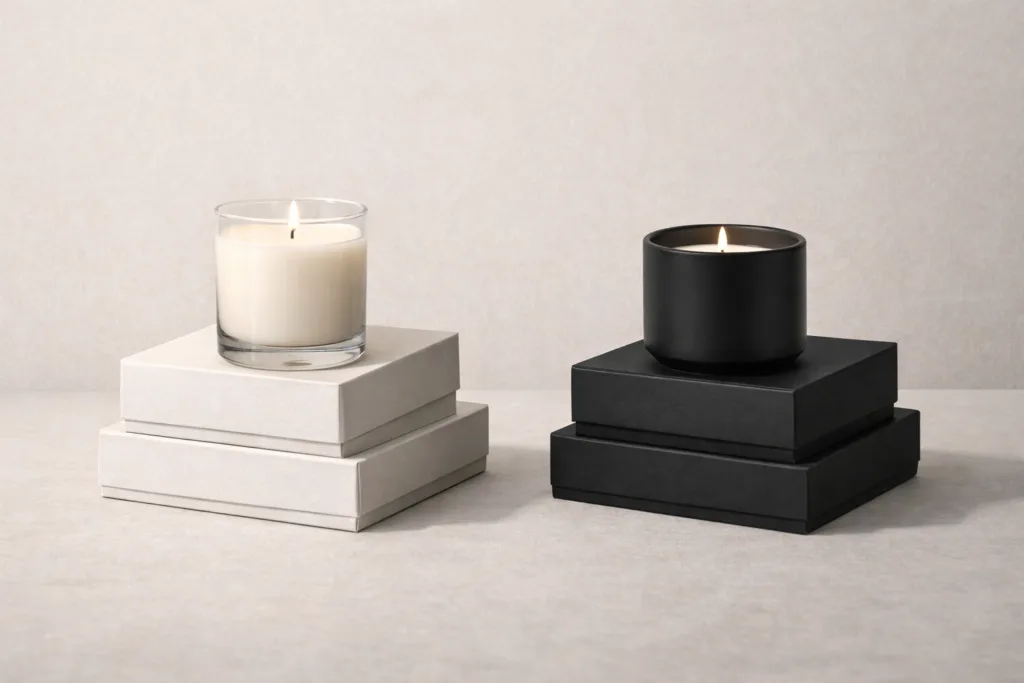 The most immediate margin advantage of private label candles comes from ownership of the product identity itself.
When retailers sell third‑party branded candles, the wholesale price includes multiple embedded cost layers:
• Brand marketing overhead
• Brand margin requirements
• Distributor margin (in some cases)
• Brand equity premium
These layers significantly increase acquisition cost while limiting pricing flexibility.
Private label candles remove these intermediary layers. The retailer effectively becomes the brand owner, allowing procurement cost to align directly with manufacturing cost rather than brand value extraction.
This structural difference often produces materially different margin profiles:
Typical branded candle retail structure:
Wholesale cost: $14
Retail price: $28
Retail margin: 50%
Private label candle retail structure:
Manufacturing cost: $6–8
Retail price: $28–38
Retail margin: 70–85%
This margin expansion is not driven by lowering retail price. It is driven by reducing upstream value capture.
Private label converts brand margin into retailer margin.
2. Candles Offer Exceptional Cost‑to‑Perceived‑Value Efficiency
Candles occupy a unique position among retail products. Their perceived value is primarily driven by experiential and emotional factors rather than raw material cost.
Core cost components remain relatively efficient even at premium quality levels:
• Wax base materials
• Fragrance oils
• Vessel and packaging
• Assembly and finishing
While vessel and packaging contribute meaningful cost, they simultaneously amplify perceived value far beyond their manufacturing expense.
Consumers evaluate candles through multiple non‑functional dimensions:
• Atmosphere creation
• Lifestyle association
• Gift suitability
• Brand aesthetic
• Emotional and sensory experience
This disconnect between production cost and perceived value creates one of the most favorable margin environments in physical retail.
In contrast to categories where consumers can easily evaluate intrinsic material value—such as electronics or commodity goods—candles exist within a perception‑driven pricing framework.
This allows premium retail pricing without proportional cost increases.
3. Full Retail Pricing Authority Without External Brand Constraints
Private label candles give retailers complete authority over retail pricing strategy.
When selling third‑party branded products, pricing is constrained by market transparency. Consumers can compare identical products across multiple retailers, limiting price flexibility.
Private label products do not have this constraint.
Retailers control:
• Brand identity
• Packaging presentation
• Retail positioning
• Distribution exclusivity
This eliminates direct price comparability.
The same candle production cost can support multiple retail price tiers depending on positioning strategy:
Production cost: $7
Retail positioning scenarios:
Entry premium tier: $18–22
Boutique tier: $26–32
Luxury positioning: $34–48
This pricing flexibility is not driven by cost differences, but by brand architecture and presentation strategy.
Private label allows margin to scale with positioning rather than cost alone.
4. Packaging Functions as a Margin Multiplier Rather Than a Cost Center
 Packaging is one of the most powerful margin leverage points in private label candle programs.
The incremental manufacturing cost of premium packaging—such as rigid boxes, magnetic closures, textured paper finishes, or embossing—is modest relative to the retail price increase it enables.
Typical packaging economics:
Standard folding carton:
Additional cost: $0.50–1.20
Retail price increase potential: $4–10
Rigid gift box packaging:
Additional cost: $1.50–3.50
Retail price increase potential: $10–25
The return on packaging investment is often disproportionate to its cost.
This is because packaging directly influences:
• Gift suitability
• Shelf presence
• Perceived luxury tier
• Consumer willingness to pay
Packaging does not merely protect the product. It defines its retail identity.
For mature retailers, packaging strategy is a pricing strategy.
5. Private Label Candles Eliminate Direct Price Competition
Retail margin erosion often occurs when identical branded products are sold across multiple channels.
Consumers compare prices across retailers, forcing price matching and compressing margins.
Private label candles remove this dynamic entirely.
Because the retailer owns the product identity, there is no direct competitor offering the identical item.
This creates pricing insulation.
Retailers compete on brand perception rather than price transparency.
This distinction is critical for margin preservation in both physical and online retail environments.
6. Repeat Purchase Behavior Improves Customer Lifetime Margin
Candles are consumable products.
Unlike permanent home décor items, they require replenishment.
This creates recurring revenue potential.
Customer lifecycle pattern:
Initial purchase → usage → repurchase → brand familiarity → repeat purchase
Once customers associate a specific scent or candle with a retailer’s brand identity, repeat purchasing becomes more likely.
This increases customer lifetime value without increasing acquisition cost.
Repeat purchasing improves overall margin efficiency by spreading acquisition cost across multiple transactions.
7. Candles Increase Average Order Value Without Increasing Acquisition Cost
Private label candles function effectively as complementary products.
They integrate naturally into existing retail environments, including:
• Apparel stores
• Lifestyle boutiques
• Hospitality retail
• Museum stores
• Home goods retailers
Candles are frequently purchased as add‑on items.
This increases average order value without increasing marketing expense.
Higher average order value improves overall retail profitability.
This is particularly valuable in physical retail environments where customer acquisition cost is fixed per visit.
8. Operational Efficiency and Low Return Rates Improve Net Margin
Operational efficiency directly impacts net profit margin, not just gross margin.
Candles offer several operational advantages:
• No sizing complexity
• No fit or compatibility issues
• Extremely low return rates
• Long shelf life
• Stable storage requirements
These characteristics reduce operational overhead and inventory risk.
Low return rates preserve margin that would otherwise be lost through reverse logistics and inventory write‑downs.
Candles convert gross margin more efficiently into net margin.
9. Shelf Space Efficiency Maximizes Profit per Square Foot
 Retail space is a finite and expensive resource.
Candles generate high profit relative to the physical space they occupy.
A single candle can produce substantial margin while occupying minimal shelf space.
This improves retail productivity per square foot.
This metric is particularly important for:
• Boutique retail environments
• Premium retail locations
• High‑rent urban retail
Candles provide efficient margin density.
10. Private Label Candles Strengthen Overall Brand Architecture
Private label candles contribute to broader brand identity development.
They allow retailers to create sensory brand extensions through scent.
Signature scent integration strengthens customer memory association.
This improves overall brand cohesion.
A strong private label program enhances perceived brand sophistication.
This can elevate pricing power across multiple product categories.
Candles function not only as standalone profit drivers, but as brand reinforcement tools.
11. Margin Stability Compared to Trend‑Driven Categories
Many retail categories experience volatility due to rapidly shifting trends.
Candles demonstrate consistent demand across seasons and retail cycles.
This stability supports predictable revenue and margin planning.
Predictable categories reduce financial risk and improve long‑term retail profitability.
12. Scalability Across Multiple Retail Channels
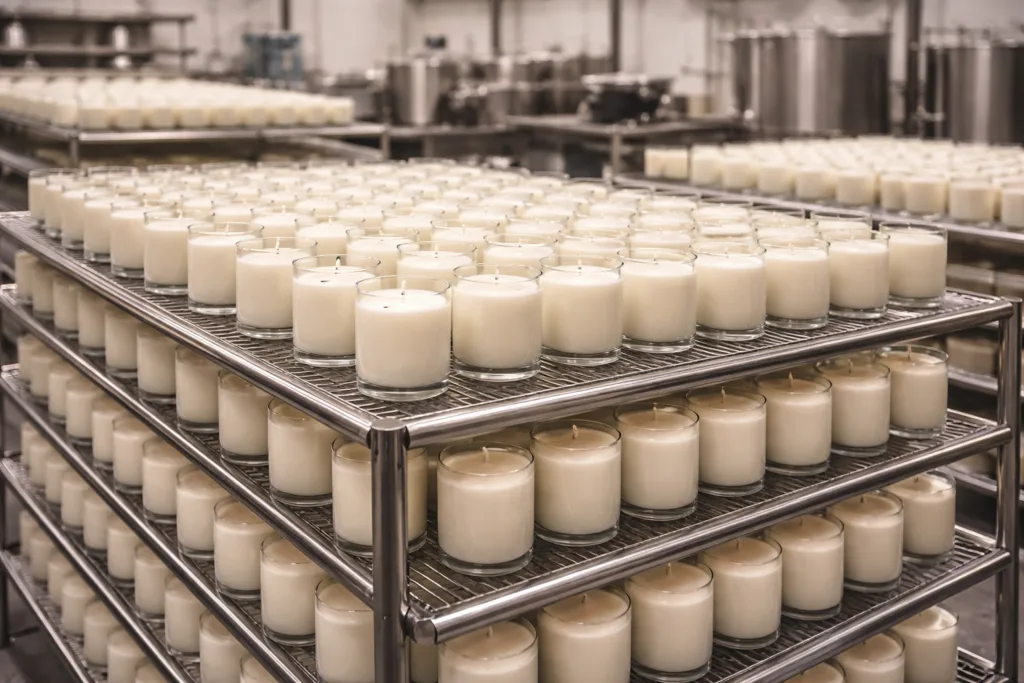 Private label candle programs scale efficiently across:
• Retail stores
• E‑commerce platforms
• Hospitality environments
• Corporate gifting programs
Manufacturing scalability allows consistent cost structures at volume.
This supports margin stability during expansion.
Private label candles integrate naturally into multi‑channel retail strategies.
Conclusion: Private Label Candles Are Structural Margin Instruments
Private label candles provide margin expansion through structural advantages rather than short‑term pricing tactics.
They allow retailers to:
• Capture brand ownership value
• Control retail pricing strategy
• Eliminate direct price competition
• Increase average order value
• Improve customer lifetime value
• Maximize shelf efficiency
• Strengthen brand identity
These characteristics make private label candles one of the most effective margin optimization tools available to mature retailers.
They are not simply products.
They are scalable profit infrastructure.
FAQ
FAQ 1: What profit margin do retailers typically achieve with private label candles?
Private label candle retail margins commonly range from 70% to 85%, depending on positioning, packaging, and retail pricing strategy. This is significantly higher than margins on third‑party branded candles, which often range between 45% and 60%.
FAQ 2: Why do private label candles support higher retail pricing?
Private label candles allow retailers to control brand identity, packaging, and positioning. Because the product is exclusive to the retailer, there is no direct price comparison. This allows retail pricing to reflect brand perception rather than manufacturing cost alone.
FAQ 3: Are private label candles scalable for multi‑store retail operations?
Yes. Private label candle manufacturing is highly scalable. Mature production programs support consistent quality, predictable cost structures, and efficient replenishment across large retail networks and international distribution channels.