
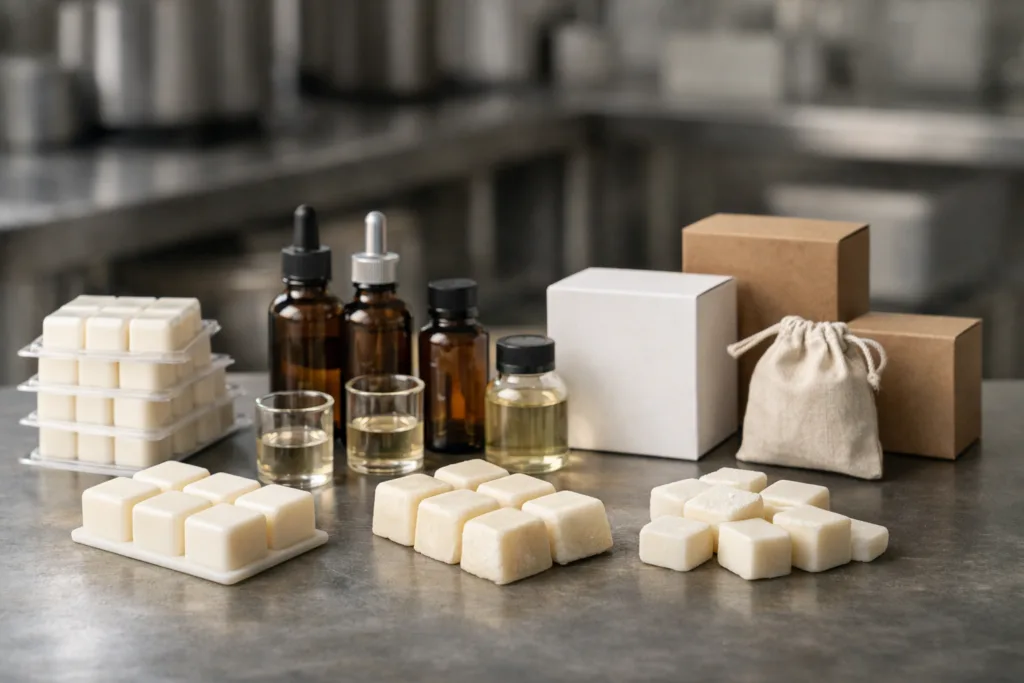
In recent years, wax melts have grown from a niche craft product into a fast‑moving category in home fragrance, gift retail, and wellness spaces. More brands are choosing wax melts because they are easy to use, cost‑effective to ship, and highly flexible for scent experimentation. For businesses, wax melts offer something even more valuable: a low‑barrier way to build a recognizable fragrance brand without investing in heavy equipment or complex production.
This is where a private label wax melts manufacturer plays a crucial role. Instead of selling generic, ready‑made products, a professional manufacturer helps brands design wax melts that feel intentional, consistent, and ready for the global market—from fragrance and wax formulation to packaging, labeling, and compliance.
This article explains how private label wax melt manufacturing works, what customization really means, and how brands can choose the right partner to support long‑term growth.
What Is Private Label Wax Melt Manufacturing?
Private label manufacturing means that products are produced by one company but sold under another company’s brand. In the wax melts industry, this goes far beyond placing a logo on an existing product.
A true private label wax melts manufacturer works with clients to:
- Develop or customize wax formulations
- Create unique or brand‑specific fragrance profiles
- Produce wax melts at consistent quality
- Design and apply custom packaging and labels
- Ensure products meet regulatory standards in target markets
Unlike wholesalers who sell stock items, private label manufacturers focus on process, repeatability, and brand alignment. The goal is not just to deliver wax melts, but to help brands create products that customers recognize and trust.
Who Uses Private Label Wax Melts?
Private label wax melts are used by a wide range of businesses, including:
- Independent home fragrance brands
- Candle brands expanding into wax melts
- Spa and wellness companies
- Gift and lifestyle retailers
- Interior and home décor brands
- Subscription box businesses
Many of these brands do not want to operate a production facility. They want to focus on branding, marketing, and customer relationships while relying on a manufacturer for technical execution.
Wax Melt Types and Wax Formulations
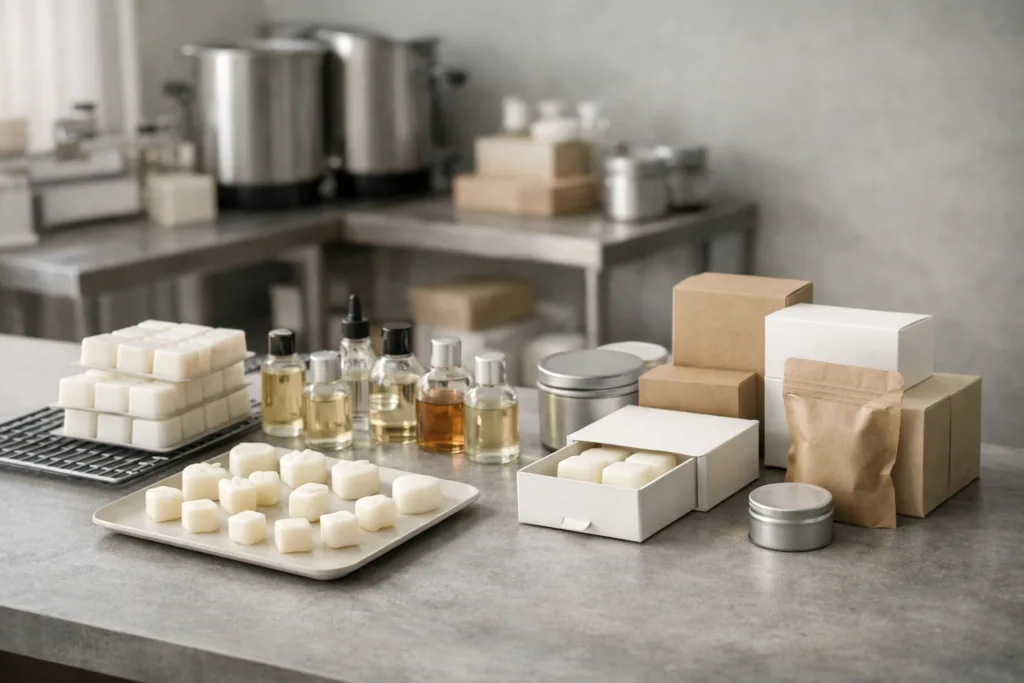
The foundation of any wax melt is the wax itself. The choice of wax affects scent throw, melt behavior, appearance, and customer perception.
Common Wax Options
Soy Wax
Soy wax is popular for its clean image and renewable sourcing. It offers a smooth appearance and works well for many fragrance types.
Coconut Wax
Coconut wax blends are often used for premium wax melts. They provide excellent scent throw and a softer melt profile.
Custom Wax Blends
Many manufacturers use proprietary blends that balance performance, cost, and stability. These blends are often designed specifically for wax melts rather than candles.
Why Wax Formulation Matters
Wax melts need to:
- Release fragrance quickly
- Melt evenly without burning
- Leave minimal residue in warmers
- Perform consistently across batches
A professional manufacturer tests wax and fragrance combinations to ensure reliable results. This testing phase is essential, especially for brands planning to scale.
Custom Fragrance Development
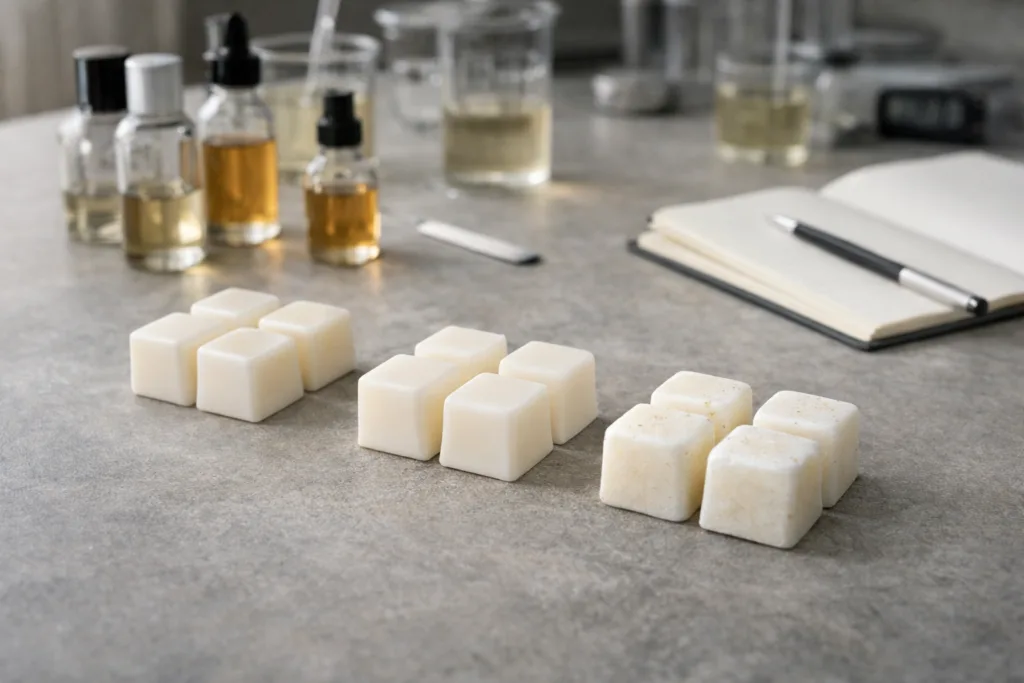
Fragrance is the emotional core of wax melts. A strong scent can define a brand, while an inconsistent one can damage trust.
The Fragrance Development Process
A typical custom scent process includes:
- Briefing – The client describes the mood, inspiration, or reference scents
- Fragrance Selection or Creation – Existing formulas or custom blends are proposed
- Testing – Scents are tested specifically in wax melt format
- Adjustment – Notes are refined based on performance and preference
- Approval – Final scent is locked for production
Single Notes vs Complex Blends
Some brands prefer simple, recognizable scents like vanilla or lavender. Others build layered fragrances that evolve as they melt. Both approaches are valid when supported by proper testing.
Safety and Standards
All fragrances used in professional manufacturing should comply with IFRA standards. This ensures safe usage and allows products to be sold in regulated markets such as the U.S., EU, and Australia.
Custom Packaging for Wax Melts
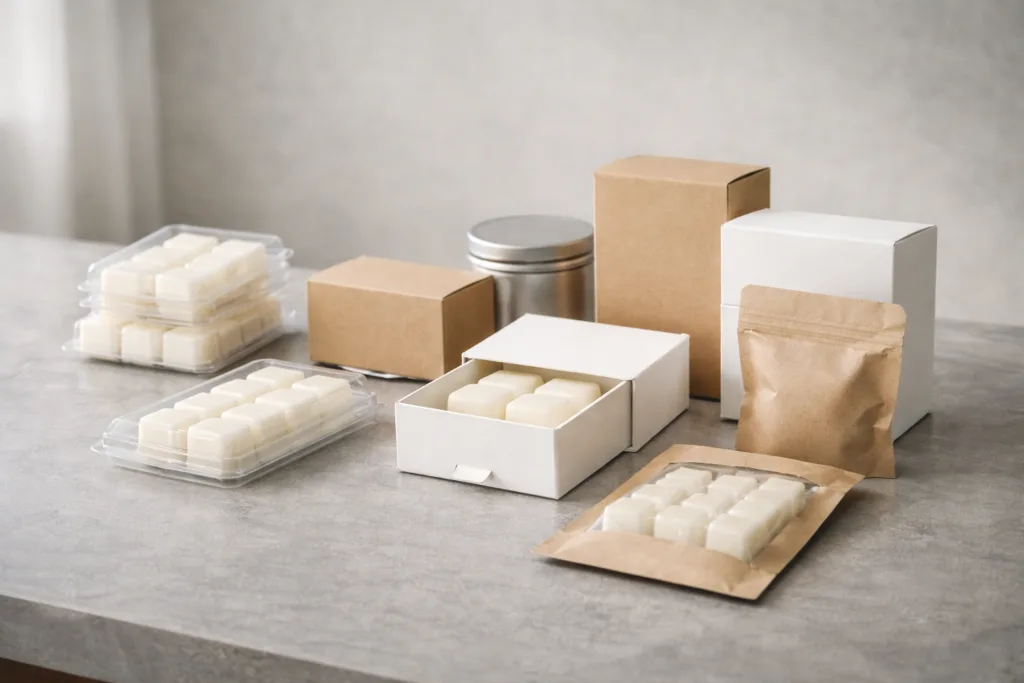
Packaging is often the first physical interaction a customer has with a brand. In wax melts, packaging must balance protection, presentation, and compliance.
Common Packaging Formats
- Plastic clamshells
- Paperboard boxes
- Resealable bags
- Bulk or refill packs
Material Choices
Brands increasingly request:
- Recyclable materials
- Minimal plastic designs
- FSC‑certified paper packaging
A manufacturer can help recommend packaging that fits both the brand image and production realities.
Labeling and Visual Identity
Custom labels may include:
- Brand logo
- Scent name and description
- Net weight
- Safety instructions
- Compliance symbols
Consistency across products helps build recognition and trust, especially for retail distribution.
Branding Support Beyond Manufacturing
An experienced private label manufacturer does more than produce wax melts. Many support brands with:
- Packaging layout guidance
- Label compliance checks
- Retail‑ready configuration
- Advice on scent assortment planning
For newer brands, this support can prevent costly mistakes and delays.
MOQ, Pricing, and Lead Times
Minimum Order Quantity (MOQ)
MOQs vary depending on:
- Number of scents
- Packaging complexity
- Level of customization
Lower MOQs may be available for standard packaging, while fully custom projects typically require higher volumes.
Pricing Structure
Pricing is influenced by:
- Wax type
- Fragrance cost
- Packaging materials
- Labor and testing
Transparent pricing helps brands plan margins realistically.
Lead Time
Typical timelines include:
- Sampling: 2–4 weeks
- Production: 4–6 weeks
- Shipping: depends on destination
Planning ahead is essential, especially for seasonal launches.
Quality Control and Testing
Quality control ensures that every batch performs the same as the last. This includes:
- Weight checks
- Visual inspection
- Scent consistency
- Melt behavior testing
Reliable quality control protects both the manufacturer and the brand.
Global Shipping and Compliance
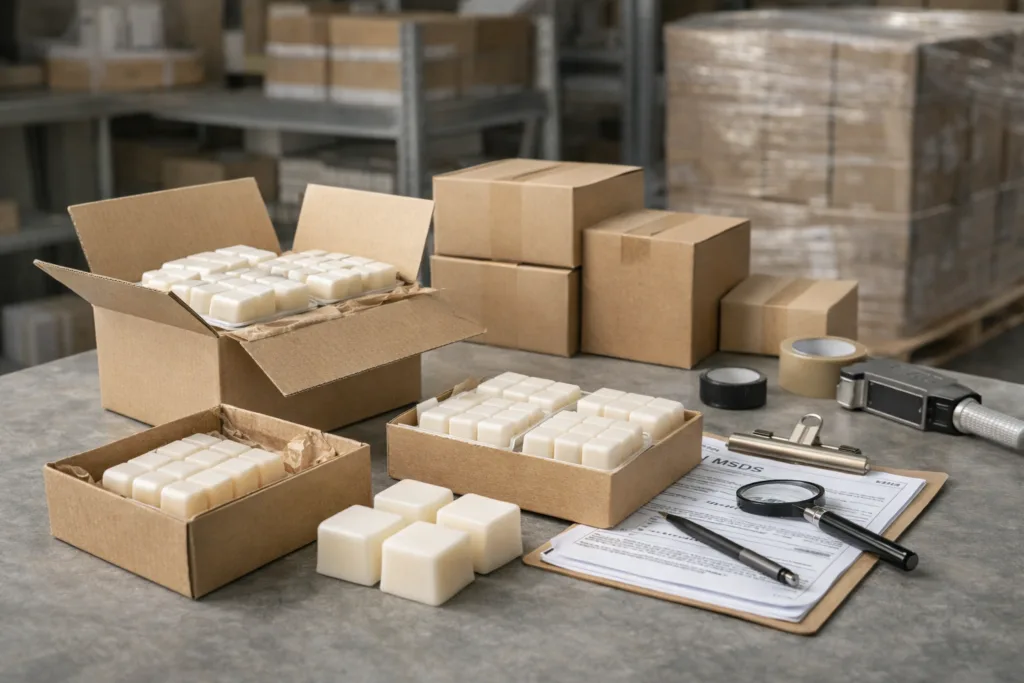
Selling wax melts internationally requires proper documentation. A professional manufacturer can provide:
- MSDS / SDS
- IFRA certificates
- Ingredient information
- Export‑ready packaging
Understanding destination regulations reduces customs delays and rejected shipments.
Why Work With a Specialized Wax Melts Manufacturer?
Choosing a specialized manufacturer offers clear advantages:
- Products designed specifically for wax melts
- Stable scent performance
- Scalable production
- Regulatory knowledge
- Long‑term partnership potential
This approach supports sustainable brand growth rather than short‑term sourcing.
Sample Programs and Product Testing
Most manufacturers offer sample programs to help brands test scents, wax, and packaging before committing to production. Samples allow brands to evaluate:
- Scent strength
- Melt speed
- Residue
- Packaging appearance
This step reduces risk and improves confidence.
Frequently Asked Questions (FAQ)
Can I create my own custom scent?
Yes. Many manufacturers offer custom fragrance development or can adapt existing formulas to your needs.
What is the minimum order quantity?
MOQ depends on customization level. Standard options usually allow lower MOQs than fully custom projects.
Are wax melts safe for international shipping?
Yes, when properly labeled and documented. Manufacturers provide required compliance documents.
Can I use my own packaging design?
Yes. You can supply designs, and manufacturers can advise on technical adjustments if needed.
How long does production take?
Production typically takes 4–6 weeks after sample approval, excluding shipping time.
Do you test fragrances in wax melts specifically?
Professional manufacturers test fragrances in wax melt format to ensure performance.
Final Thoughts
Private label wax melts manufacturing is not just about outsourcing production. It is about building a system that supports brand identity, quality, and growth. With the right manufacturer, wax melts become more than a product—they become a reliable extension of a brand’s vision.
By focusing on thoughtful formulation, consistent fragrance performance, and well‑designed packaging, brands can enter or expand in the wax melts market with confidence and clarity.