
What Is MOQ for Candle Vessels?
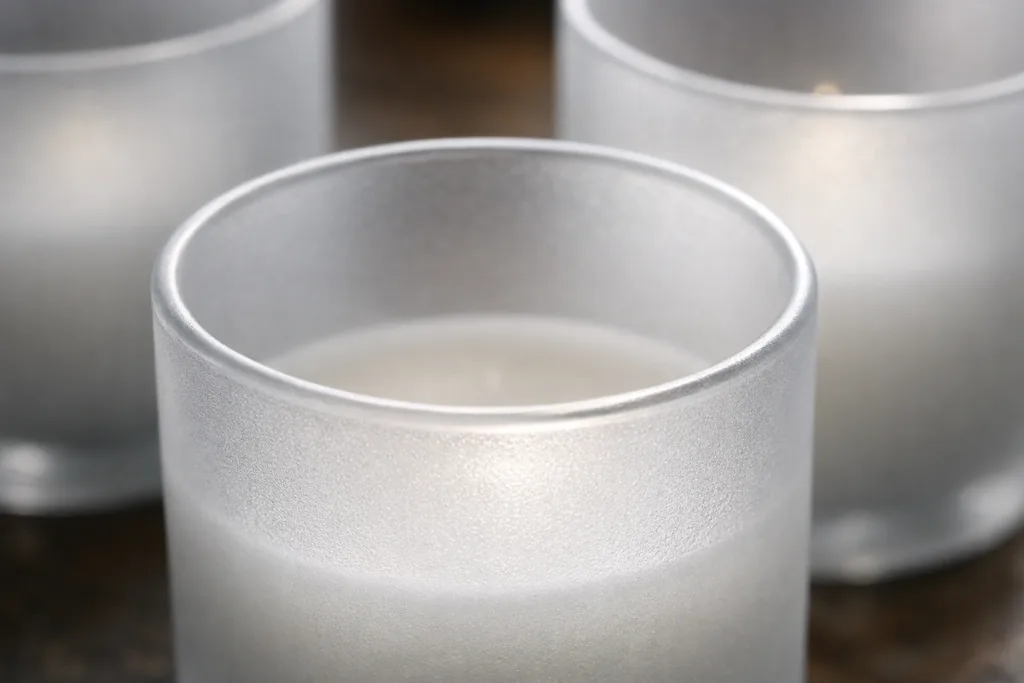
The Minimum Order Quantity (MOQ) is the smallest quantity a factory will produce or sell in one transaction. For candle glass suppliers, the MOQ typically starts at one case—rather than individual units—because of how glass production is organized. Cases provide logistical consistency, safer handling, and cost efficiency. Whether the vessel is a frosted tumbler, colored jar, or textured glass, MOQs set by manufacturers like Circe Home streamline manufacturing and keep product quality high.
MOQ and Vessel Type: Navigating Customization
MOQs can vary by vessel style. Standard jars with existing molds have lower thresholds, while custom-molded vessels (such as exclusive shapes or bespoke embossing) require significantly higher MOQs due to mold fees and setup time.
- Standard glass jars: MOQ 500–1,200 pieces (1–2 cases)
- Custom molds: MOQ 3,000–10,000 pieces (by pallet or container)
- Specialty coatings (e.g., iridescent or matte): May double typical MOQ
What Is Case Packing?
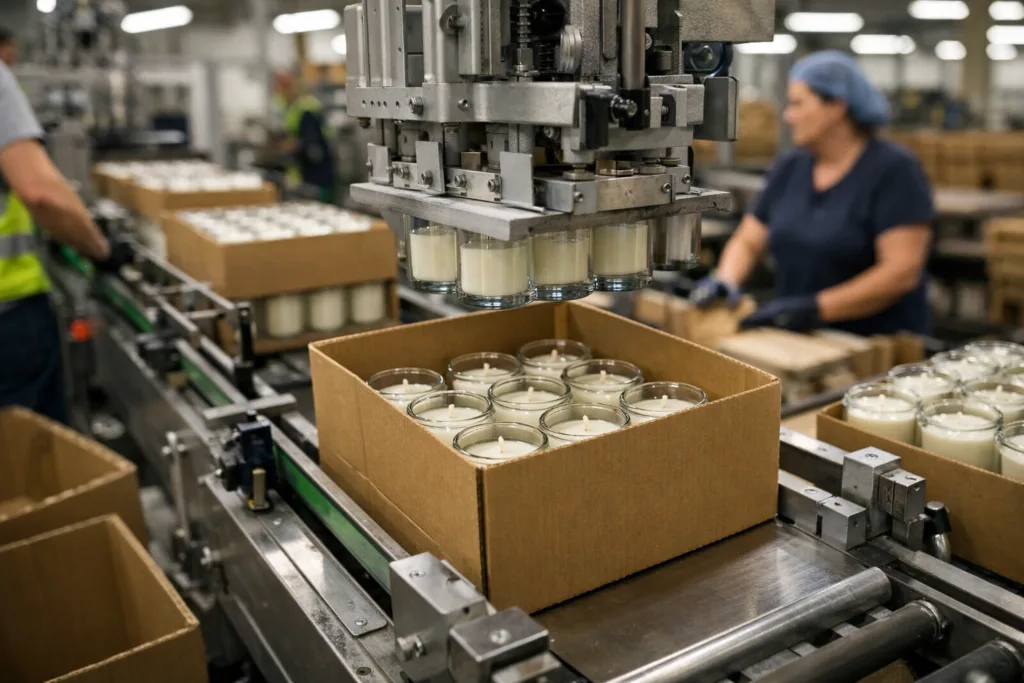
Case packing means glass vessels are grouped into uniform, protective cartons—typically holding 24, 36, 48, or 72 pieces per box. This bulk format safeguards items during transit, simplifies inventory management, and reduces sorting labor across production, warehousing, and fulfillment. Each case is optimized for stacking, minimizing damage during shipment or storage.
Key Benefits of Case Packs
- Reduces breakage by buffering with cardboard inserts
- Speeds up handling and receiving at filling plants
- Simplifies quality control by batch
- Lowers shipping costs versus loose items
- Supports accurate batch and lot tracking
Inside the Glassware Production Line: Step by Step
Producing candle glassware is a continuous, high-temperature process using precision equipment. Let’s walk through the steps from raw material to packed case:
- Material Loading: Silica sand, soda ash, and limestone are weighed and blended for batch consistency.
- Melting: Raw material is loaded into a furnace at 1,500°C, forming molten glass.
- Molding: Automated machines shape glass into vessels, using precision molds for consistency.
- Annealing: Vessels move through a lehr for controlled cooling, preventing stress cracks.
- Surface Finishing: Options include frosting, coloring, or outside coatings applied for effect.
- QC & Sorting: Each vessel is checked for visual flaws, measurements, and strength.
- Case Packing: Finished vessels are grouped into cartons with shock-absorbing dividers, sealed, and labeled by batch.
Circe Home Lab Insight
Candle glass failure rates drop by over 90% when vessels are transported and stored in shockproof case packs, safeguarding finish and roundness integrity for consistent filling and burn.
Explaining the Cost Structure: Why Factories Only Sell by the Case
Glass production is engineered for scale efficiency. Every detail—from raw material batch size to automated packing machines—is optimized around high-volume output. Here’s why case lots are the factory default:
1. Economies of Scale and Line Efficiency
Production lines are tuned for thousands of pieces per hour, not single units. Changeovers (resetting lines for different colors or shapes) have fixed costs, so large, homogenous runs minimize downtime and wasted glass. Small orders increase per-unit cost.
2. Packaging and Safety Considerations
Candles require flawless glass—free from hairline cracks or chips—because even invisible defects compromise filling and burn quality. Case packing ensures comprehensive protection and traceability from factory to filling room.
3. Logistics and Handling
It’s not just about making glass, but moving it efficiently. Loose vessels travel poorly, leading to elevated damage rates. Case lots allow standardized palletization, easier customs declarations, and more predictable freight quotes.
4. Cost Breakdown Per Vessel
| Phase | Cost Impact (per vessel) | MOQs Benefited |
|---|---|---|
| Raw glass batch | Low at scale, high single-unit | Case and pallet orders |
| Mold setup/changeover | Spread across run size | Large runs (multi-case min) |
| Coating/labeling | More cost-efficient at scale | Case or container loads |
| Packing & QC labor | Line-planned for case lots | Case MOQ |
| Logistics/freight | Best rates by case/pallet | Case MOQ or higher |
MOQ for Candle Vessels and Scented Candle Production: What It Means for Your Brand
For candle brands—especially luxury, private-label, or wellness lines—the case-based MOQ affects every stage of product development, from vessel choice to cash flow planning. Circe Home, for example, works with glass factories globally and leverages case-packed MOQs to guarantee flawless packaging and on-time launches for their clients.
Practical Applications:
- Develop a signature packaging style and forecast sales to meet MOQ
- Select from existing stock vessels to benefit from low MOQs and fast lead times
- For custom shapes, plan for higher MOQs to cover mold and production setup
- Order test cases for fragrance compatibility, curing, and burn trials before volume production
How MOQ Differs by Vessel Material and Finish
While glass is the preferred vessel for high-end scented candles due to its inertness, heat-resistance, and aesthetic flexibility, other materials—ceramic, tin, concrete—follow similar MOQ logic. Specialty finishes may raise MOQs due to coatings, double-walled construction, or hand-painted details. The following vessel types shape MOQ expectations:
Vessel Comparison Table
| Vessel Type | Standard MOQ (per case) | Customization Flexibility |
|---|---|---|
| Clear/Colored Glass | 1–2 cases (24–100 pcs/case) | High (coating, decal, embossing) |
| Ceramic | 500–1,200 pcs | Moderate (glaze, shape) |
| Tin | 1,000–3,000 pcs | Good (print, color) |
| Concrete | 300–1,000 pcs | Limited (surface finish) |
Glass Jar Quality and Consistency: The Impact of Case MOQs
High-quality candle vessels aren’t just about appearance—they directly affect fragrance diffusion, burn profile, safety, and compliance:
- Fragrance Load Testing: Case lots allow for representative burn and scent throw tests with the actual vessel material and glaze.
- Burn Profile Consistency: Proper vessel sizing ensures wick performance and even wax melt.
- Soot-Free Safety: Smooth interior finish minimizes soot accumulation and glass overheating risks.
- Compliance: IFRA and CLP regulations require lot traceability, best managed with batch-packed cases.
Typical QC Checks for Each Case
- Visual inspection for bubbles, chips, off-size
- Water/pressure test for microcracks
- Random drop testing for shock resistance
Sustainability, Packaging, and Glass Vessel MOQ Trends
Case pack MOQs also support sustainability: less overpacking, more efficient freight loads, and easier recycling. Innovative brands explore:
- FSC-certified outer cartons
- Soy-based or water-based inks
- Reusable case dividers
- Refill program compatibility (vessels designed for multiple pours)
Close supplier collaboration—from fragrance compatibility trials to packaging optimization—ensures brands deliver candles with impeccable presentation and experience.
MOQ for Candle Vessels: Why Glass Factories Only Sell in Case Packs
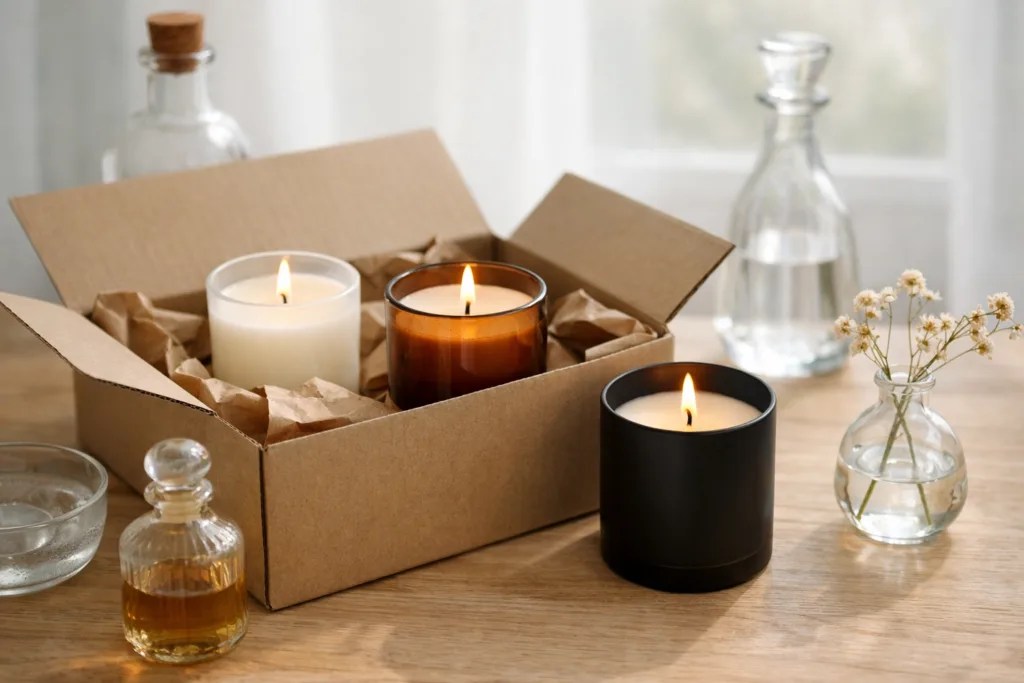
MOQ for candle vessels is fundamentally shaped by industrial scale, cost optimization, and the need for absolute consistency from batch to batch. Factories set case-based minimums because that’s how high-integrity glassware is produced, protected, and moved globally. For ambitious candle brands, understanding and embracing case MOQs enables smarter sourcing, more consistent quality, and impeccable final product presentation. Circe Home routinely navigates these details, bridging between global glass suppliers and luxury candle marketers for effortless, compliant launches at scale.
Frequently Asked Questions
What does MOQ for candle vessels mean?
MOQ stands for Minimum Order Quantity. For candle vessels, it refers to the lowest number of jars or containers a manufacturer will sell per order, usually structured as full case lots for efficiency and safety.
Why do glass factories only sell in case packs?
Factories pack glass candle vessels into cases to reduce breakage, improve warehouse handling, lower shipping costs, and streamline the production process. Selling individually leads to higher costs and more damage.
Can I order less than the case MOQ?
Most manufacturers do not allow orders below the case MOQ, but some brands offer small-batch or sample quantities for prototype testing—these can be subject to higher unit costs and limited vessel selection.
Does MOQ depend on vessel customization?
Yes. Custom-molded, colored, or coated vessels typically require higher MOQs to offset mold fees, setup costs, and changeover time. Standard stock vessels have lower MOQs and faster turnaround.
How does case packing improve quality control?
Case packing allows for batch testing, traceability, and consistent packaging, which is essential for identifying and isolating any quality or compliance issue, ensuring each vessel meets safety and performance standards.
How do case MOQs affect shipping and sustainability?
Case MOQs enable better palletization, reduce packaging waste, and increase shipping efficiency. This lowers the environmental impact of each vessel delivered and makes recycling easier.