
Luxury candles can be surprisingly controversial.
For consumers, the question is simple: why does one scented candle cost $12 while another sells for $90, $120, or even more? Is the expensive one truly better, or is the buyer simply paying for a heavy glass jar, a minimalist label, a French-sounding fragrance name, and a carefully edited lifestyle image?
For B2B buyers, the question is more serious.
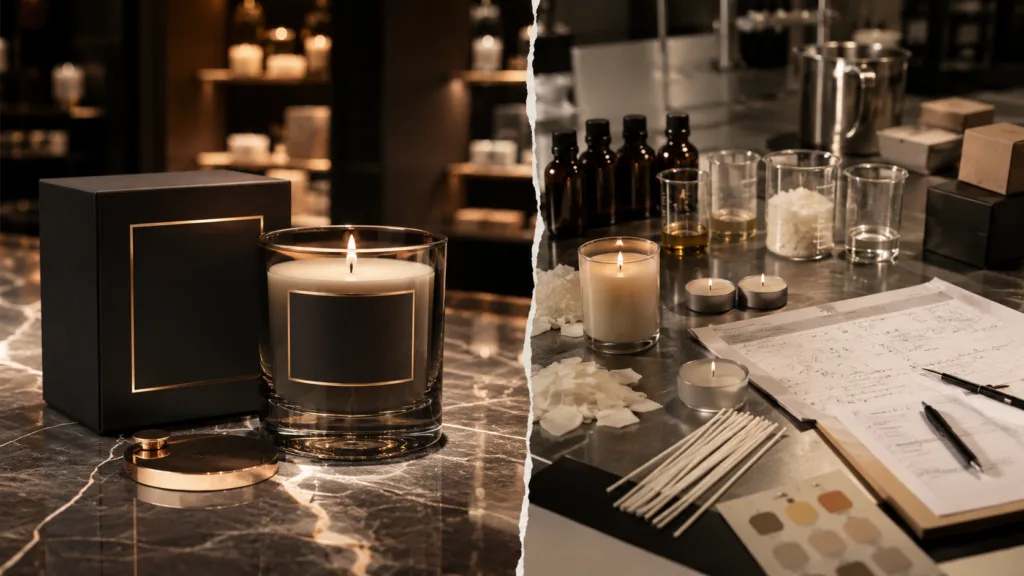
If you are a wholesaler, retailer, importer, gift company, hotel supplier, home fragrance brand, or private label buyer, you are not only asking whether luxury candles are worth the money. You are asking whether the product can support a strong retail price, repeat orders, brand credibility, customer reviews, and long-term margin.
So, are luxury candles a scam?
No. Luxury candles are not automatically a scam. But overpriced candles absolutely exist.
A real luxury candle is not just an expensive candle. It is a product where fragrance quality, wax formulation, wick performance, vessel design, packaging, safety documentation, and batch consistency work together. An overpriced candle, on the other hand, often relies on surface-level beauty while the actual product experience remains average.
This guide explains what B2B buyers should know before sourcing luxury candles, how to separate real value from marketing noise, and how to build a private label candle line that can actually justify premium positioning.
Why the Luxury Candle Question Matters in B2B Sourcing
The luxury candle category sits at the intersection of home fragrance, interior decor, wellness, gifting, and lifestyle retail. That is exactly why it attracts both serious brands and opportunistic sellers.
A candle is small, emotional, photogenic, and giftable. It can be sold in boutiques, department stores, hotels, spas, concept stores, online shops, Amazon storefronts, wedding gift collections, holiday gift sets, and corporate gifting programs. For the right brand, candles are not just home accessories. They are scent-based branding tools.
But the same qualities that make candles attractive also create confusion. A candle can look expensive in a photo but burn poorly in real life. A label can say “premium blend” without explaining the wax formula. A scent can be described as “Parisian evening,” “soft cashmere,” or “quiet luxury,” while the actual fragrance smells flat, weak, or generic.
This is why mature B2B buyers need a sourcing framework. You are not buying a mood board. You are buying a product that must survive production, shipping, storage, retail handling, customer use, and reorder expectations.
Why People Think Luxury Candles Are Overpriced
The suspicion around luxury candles usually comes from four problems: unclear materials, overdesigned packaging, vague fragrance language, and poor performance compared with the price.
Vague Wax Descriptions
Many candle brands use phrases such as “custom wax blend,” “premium wax,” “natural wax,” or “clean wax” without explaining what the blend actually contains. For consumers, this can feel evasive.
However, for professional candle manufacturing, a blend is not necessarily a bad thing. In many cases, wax blending is exactly how manufacturers achieve better fragrance throw, smoother tops, better adhesion, cleaner burning, or improved heat resistance.
The issue is not the word “blend.” The issue is whether the supplier understands why the blend is used.
A serious supplier should be able to explain whether the wax formula is chosen for burn time, fragrance load, container compatibility, surface finish, climate stability, cost control, or sustainability goals.
Packaging That Creates Artificial Value
Luxury packaging can be meaningful. A thick glass jar, ceramic vessel, wood lid, rigid gift box, embossed label, and carefully designed insert can all increase perceived value and improve retail presentation.
But packaging becomes misleading when it is the only premium part of the product.
If the candle tunnels, smokes, smells weak, overheats the container, or arrives with crooked labels, the packaging cannot save the product. Beautiful packaging may win the first order, but performance wins repeat orders.
Generic Fragrance With Premium Naming
Fragrance language is powerful. Names such as “Black Fig & Amber,” “Neroli Dawn,” “Cashmere Woods,” “Olive Blossom,” or “Santal Smoke” can create strong emotional appeal.
But a premium name does not automatically mean a premium scent.
For B2B buyers, the key question is not whether the scent description sounds beautiful. The real question is whether the fragrance has structure, stability, and brand fit.
A luxury candle scent should not smell like a generic fragrance oil poured into a nice container. It should feel intentional.
Storytelling Replacing Product Quality
Brand storytelling is part of luxury. Customers buy candles not only for scent but also for atmosphere, memory, design, gifting, and identity.
But when storytelling replaces product quality, the result becomes fake luxury.
A candle with a romantic brand story but poor burn performance is not luxury. It is a marketing product with weak manufacturing behind it.
The Real Difference Between Luxury Candles and Overpriced Candles
The most useful distinction for buyers is this:
Real Luxury Candle
A real luxury candle combines product value, sensory value, design value, and brand value.
It usually has:
- A refined fragrance profile
- Stable cold throw and hot throw
- A wax formula suitable for the vessel and market
- Correct wick selection
- Clean and controlled burning
- A container that supports the brand image
- Retail-ready packaging
- Safety and compliance documentation
- Consistent bulk production
- A clear reason for premium pricing
Overpriced Candle
An overpriced candle usually has:
- Generic fragrance
- Weak scent throw
- Average wax performance
- Poor wick matching
- Packaging that looks better than the candle performs
- No clear compliance support
- Unstable batch quality
- A price built mainly on branding
For B2B buyers, this difference matters because your risk is not only product cost. Your real risk is inventory that looks good but does not create repeat customers.
Market Signals: Why Luxury Candles Still Have Strong Demand
Even with skepticism, demand for premium candles remains strong because consumers continue to invest in home atmosphere, wellness rituals, emotional comfort, gifting, and visual lifestyle products.
Luxury candles benefit from several larger consumer behaviors.
Home Fragrance Is Becoming a Lifestyle Category
Home fragrance is no longer limited to covering odors. Consumers use scent to create mood, define space, support relaxation, prepare for hosting, and express personal taste.
This is especially important for retailers and importers because candles can be positioned across many retail moments: self-care, housewarming, wedding gifts, holiday gifting, spa collections, hotel amenities, interior decor, and seasonal lifestyle launches.
Pinterest and Social Media Reward Visual Products
Candles perform well on visual platforms because they are easy to style. A candle can appear in bathroom decor, bedroom styling, coffee table arrangements, dinner tablescapes, gift guides, wedding setups, spa content, and seasonal home inspiration.
For B2B buyers, this means packaging and vessel design are not secondary details. They directly affect how well the product can be photographed, shared, pinned, saved, and merchandised.
Amazon Shows Strong Category Competition
Amazon’s candle bestseller categories show that candles remain a highly competitive product type. This does not mean every buyer should compete on Amazon with generic candles. In fact, it suggests the opposite.
If the market is crowded, a mature buyer needs differentiation. That may come from fragrance concept, packaging system, gift set structure, eco-friendly materials, private label branding, or niche positioning.
Luxury Buyers Want More Than a Candle
A premium candle buyer is often buying a ritual, a gift, a design object, or a brand feeling.
That is why luxury candle sourcing should not start with the question, “What is your cheapest candle?”
It should start with:
What kind of customer are we trying to attract?
What retail price do we want to support?
What scent experience will make the customer remember the brand?
What packaging will make the product giftable?
What quality standard will protect repeat orders?
What Actually Makes a Candle “Luxury”?
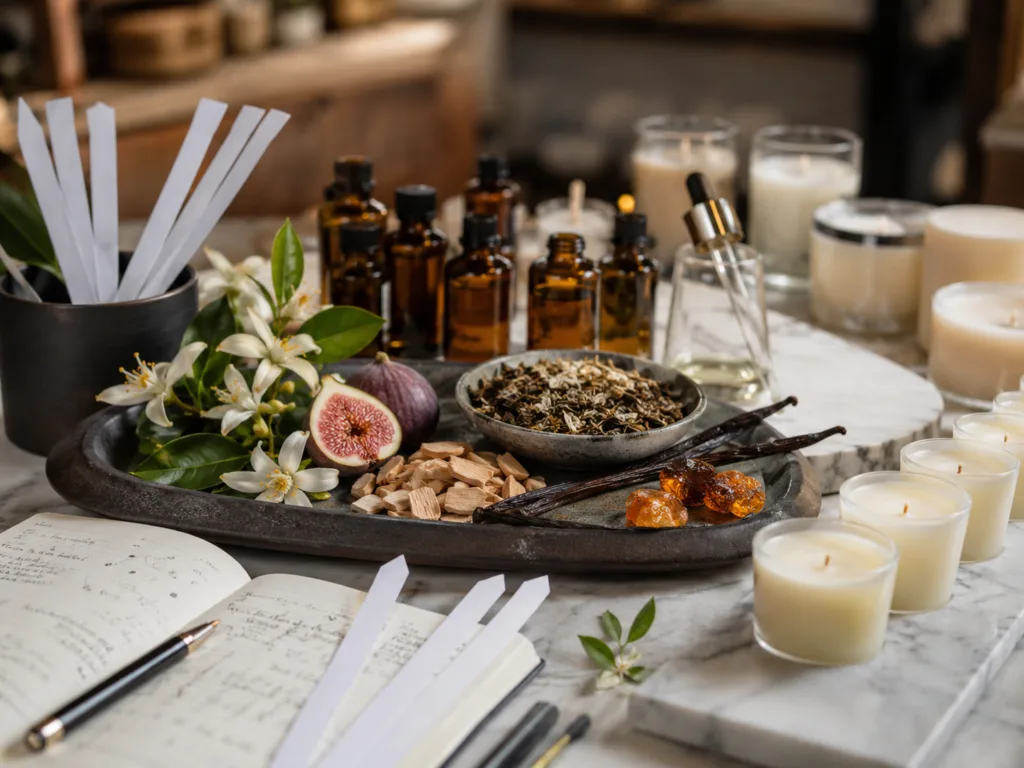
Luxury in candles is not one single feature. It is a complete product system.
1. Fragrance Quality and Scent Architecture
Fragrance is the soul of a luxury candle.
A premium fragrance should have depth, clarity, and balance. It should not smell harsh, oily, flat, or overly synthetic. It should create an atmosphere that matches the brand’s target customer.
For example:
- A hotel-inspired candle may need soft musk, white tea, neroli, sandalwood, amber, or clean linen notes.
- A holiday gift candle may use cinnamon, clove, vanilla, pine, orange peel, or smoked woods.
- A quiet luxury candle may focus on cashmere, iris, fig, olive blossom, vetiver, suede, cedar, or creamy sandalwood.
- A wellness line may use lavender, eucalyptus, rosemary, peppermint, chamomile, green tea, or herbal blends.
- A Middle Eastern-inspired line may use oud, musk, frankincense, amber, saffron, rose, sandalwood, or incense notes.
A professional manufacturer should help buyers evaluate cold throw, hot throw, fragrance load, wax compatibility, and scent stability over time.
2. Wax Formula and Performance
Wax is often used as a marketing keyword, but serious buyers should look beyond simple labels.
Soy wax, coconut wax, beeswax, vegetable wax, paraffin, and blended waxes can all be used in different product strategies. None of them automatically creates luxury by itself.
The better question is:
Does the wax formula perform well with this fragrance, wick, vessel, and target market?
A luxury candle wax formula should support:
- Smooth surface appearance
- Good adhesion to the container
- Stable fragrance throw
- Controlled melt pool
- Suitable burn time
- Minimal soot under proper use
- Climate and shipping stability
- Compatibility with the selected wick
In warmer regions or long-distance shipping, wax softness and melting point also matter. A candle that looks perfect in the factory but sweats, melts, cracks, or separates during transport can damage the buyer’s brand.
3. Wick Matching
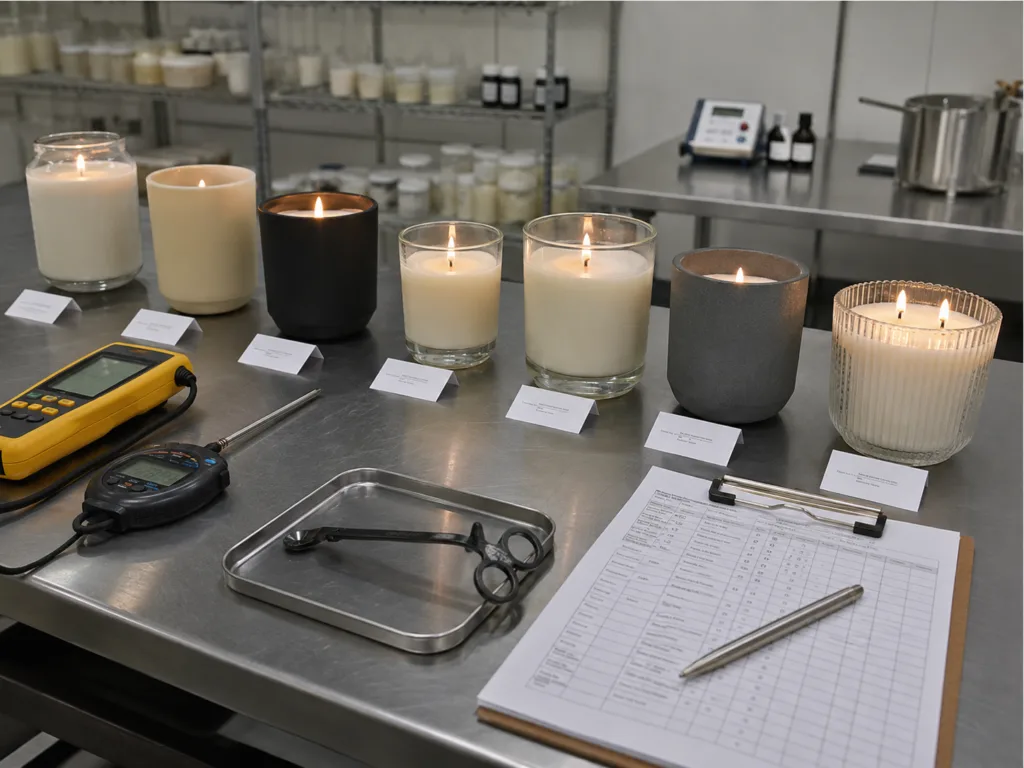
Many candle failures come from poor wick matching.
If the wick is too small, the candle may tunnel and leave wax on the sides. If the wick is too large, the flame may become too high, produce soot, overheat the vessel, or burn too quickly.
Luxury candle manufacturing requires wick testing for each combination of wax, fragrance, vessel size, vessel material, and candle diameter.
A responsible supplier should not treat wick selection as an afterthought. It is one of the most important technical decisions in candle production.
4. Burn Testing
A candle is not finished when it looks good. It is finished when it burns correctly.
Burn testing helps evaluate:
- Flame height
- Melt pool diameter
- Soot level
- Container temperature
- Tunneling risk
- Wax residue
- Scent throw during burning
- Wick mushrooming
- Burn time
- Safety behavior near the end of use
For B2B orders, burn testing protects both the buyer and the supplier. It is especially important for private label candles, custom containers, unusual shapes, high fragrance load formulas, and large-volume production.
5. Container Quality
The container has a major influence on both perceived value and product safety.
Common luxury candle vessels include:
- Thick glass jars
- Frosted glass containers
- Colored glass vessels
- Ceramic cups
- Metal tins
- Concrete vessels
- Marble-effect jars
- Reusable decorative containers
- Custom-molded vessels
- Candle bowls or multi-wick vessels
A premium vessel should match the brand positioning, but it must also be practical. It should tolerate heat, support proper wick placement, survive shipping, and maintain consistency in bulk production.
For example, ceramic vessels can look beautiful and high-end, but custom ceramic shapes may require higher MOQ and longer sampling time. Glass jars may offer better cost control and faster production. Metal tins are lighter and travel-friendly but may not support the same luxury perception as thick glass or ceramic.
The best choice depends on the buyer’s market, price point, packaging concept, and reorder plan.
6. Packaging That Supports Retail Value
Packaging is not fake value when it is done correctly. For luxury candles, packaging is part of the customer experience.
Retail-ready packaging may include:
- Rigid gift boxes
- Folding cartons
- Sleeve boxes
- Drawer boxes
- Magnetic boxes
- Kraft eco boxes
- Window boxes
- Embossed labels
- Foil stamping
- Textured paper
- Hang tags
- Dust covers
- Inserts
- Barcode labels
- Warning labels
- Gift set packaging
- Shipping cartons for e-commerce
For wholesalers and retailers, packaging affects shelf appeal, gifting potential, unboxing experience, damage rate, and perceived price.
A candle that sells as a gift needs stronger packaging than a candle sold as a basic home item. For seasonal programs, corporate gifting, hotel amenities, and premium retail sets, packaging can be the difference between average and high-margin sales.
Luxury Candle vs Overpriced Candle: A Practical Comparison

| Sourcing Factor | Real Luxury Candle | Overpriced Candle |
|---|---|---|
| Fragrance | Custom or carefully selected scent with depth | Generic scent with a fancy name |
| Wax | Chosen for performance and market fit | Used mainly as a marketing claim |
| Wick | Tested with wax, vessel, and fragrance | Selected casually or copied from another formula |
| Burn Quality | Stable melt pool, controlled flame, good throw | Tunneling, soot, weak scent, overheating |
| Container | Matches brand positioning and safety needs | Looks good but may lack performance testing |
| Packaging | Retail-ready and giftable | Decorative but not functional |
| Compliance | MSDS, IFRA, labels, and export support available | Limited documents or unclear claims |
| Bulk Quality | Consistent across production batches | Sample looks good, bulk varies |
| Price Logic | Built on product value and brand value | Built mostly on appearance |
This comparison is one of the fastest ways to evaluate a luxury candle supplier. If the supplier can only talk about appearance and price, the buyer should be careful. If the supplier can discuss fragrance, wax, wick, vessel, packaging, testing, compliance, and logistics, the cooperation is more likely to support serious orders.
What B2B Buyers Should Ask Before Sourcing Luxury Candles
Before placing a private label or wholesale luxury candle order, buyers should ask practical questions.
Fragrance Questions
Can you provide fragrance samples before candle sampling?
Can you customize scents based on our brand concept?
Can you create fragrance families for different collections?
Can you match a reference scent or develop a similar direction?
Can you provide IFRA-related fragrance documentation?
Wax and Formula Questions
What wax options are available?
Which wax formula do you recommend for our vessel and market?
Can the wax support our desired fragrance load?
How does the candle perform in warm-weather shipping?
Can you adjust the formula if we need a cleaner surface or stronger throw?
Burn Testing Questions
Have you tested this wick with this vessel?
What is the expected burn time?
Does the candle tunnel?
How strong is the hot throw?
Will the vessel become too hot during burning?
Can we review sample performance before bulk production?
Packaging Questions
Can you support private label packaging?
Can you make gift boxes, labels, lids, inserts, and shipping cartons?
Can packaging be made eco-friendly or recyclable?
Can you support barcode stickers, warning labels, and retail carton marks?
Can the packaging be designed for Amazon, boutique retail, hotel, or gift channels?
Production and Logistics Questions
What is the MOQ?
How long does sampling take?
How long does bulk production take?
Can you keep batch color and fragrance consistent?
Can you support repeat orders?
Can you ship to North America, Europe, or Oceania?
Can you support fast delivery or global warehousing solutions?
These questions help buyers move beyond surface-level quotations and evaluate whether a supplier can support a long-term product line.
How Mature Buyers Build Luxury Candle Lines That Sell
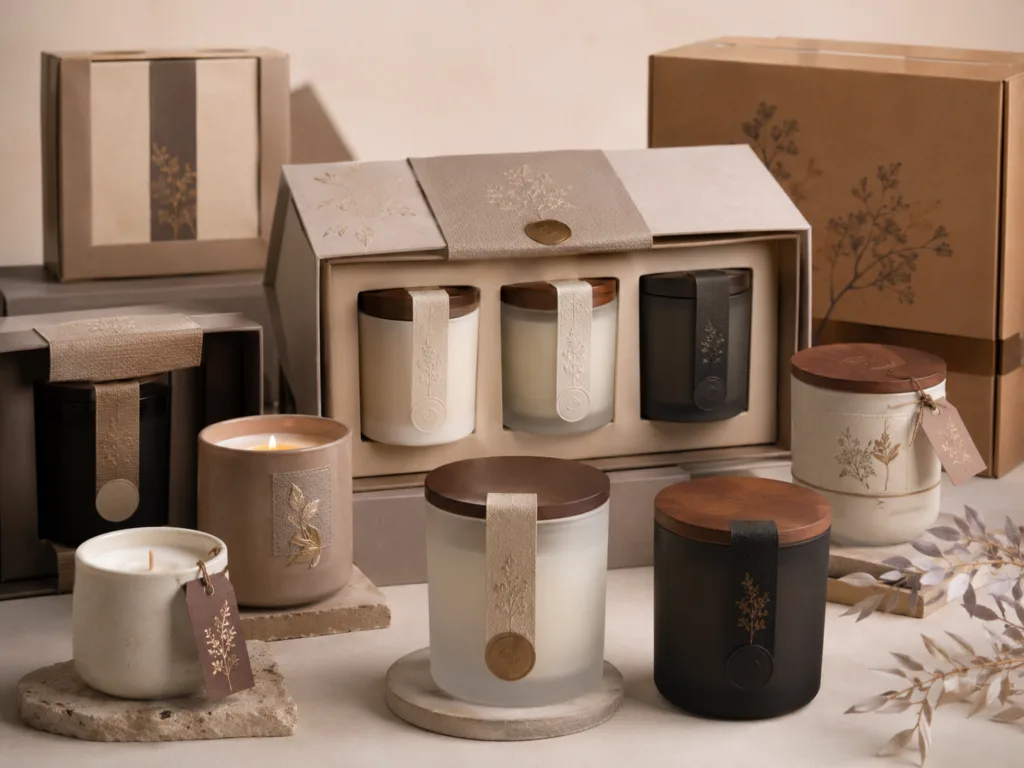
A strong luxury candle line is rarely built from one random candle. It is usually built as a collection.
Build Around a Clear Customer
Before choosing wax or packaging, define the end customer.
Are they buying for:
- Home decor?
- Self-care?
- Wedding gifts?
- Corporate gifts?
- Hotel rooms?
- Spa retail?
- Holiday gifting?
- Boutique shelves?
- Amazon premium listings?
- Interior design stores?
Different customers require different fragrance strength, packaging, vessel style, and retail price strategy.
Create a Fragrance System
A serious candle line should have fragrance logic.
For example:
- A wellness collection may include Calm, Focus, Sleep, and Reset.
- A hotel collection may include White Tea, Neroli, Cashmere, and Sandalwood.
- A seasonal collection may include Spring Garden, Summer Citrus, Autumn Fig, and Winter Amber.
- A luxury gift collection may include Rose Oud, Black Tea, Vanilla Smoke, and Cedar Suede.
This makes the line easier to merchandise and reorder.
Design Packaging as a Family
For B2B buyers, packaging should not be designed candle by candle. It should work as a product family.
Consistent packaging helps retailers display the products, helps consumers recognize the brand, and helps buyers expand the line in future seasons.
A strong packaging system may include:
- Same jar shape in different colors
- Same label format with different scent names
- Same gift box structure with seasonal artwork
- Same lid material across the collection
- Same warning label and barcode system
- Same carton structure for logistics efficiency
Plan for Reorders
Many new buyers focus only on the first order. Mature buyers think about reorders from the beginning.
Before launching a luxury candle line, buyers should consider:
- Which scents will be evergreen?
- Which scents will be seasonal?
- Which vessel will remain available long term?
- Can packaging be reordered easily?
- Can the supplier keep fragrance and color consistent?
- Is the MOQ realistic for repeat orders?
- Can the product margin support marketing and distribution?
A luxury candle line should not only look good at launch. It should be manageable after the first order sells through.
Compliance: The Hidden Part of Real Luxury
Compliance is not glamorous, but it is part of professional candle sourcing.
For North American and European markets, mature buyers often need documentation and labeling support. Depending on the market and product type, this may include:
- MSDS
- IFRA certificate or fragrance compliance support
- CLP labeling support for Europe
- REACH-related material awareness
- Warning labels
- Candle care instructions
- Carton marks
- Product specifications
- Packaging material details
- Export documents
A supplier that understands documentation can save buyers time, reduce risk, and support smoother retail entry.
This is especially important for wholesalers, importers, and retailers who sell through regulated channels or larger distribution networks. A product that lacks basic documents may be difficult to approve, ship, or scale.
Sustainability and Eco-Friendly Luxury Candles
Modern luxury does not only mean heavy packaging and expensive appearance. Many buyers now want premium candles with a more responsible material story.
Eco-friendly candle sourcing may include:
- Soy wax blends
- Coconut wax blends
- Vegetable wax options
- Beeswax options
- Recyclable packaging
- FSC-style paper options
- Reusable vessels
- Minimal plastic use
- Natural wood lids
- Refill concepts
- Clean label design
- Lower-waste gift packaging
However, sustainability claims must be realistic. Buyers should avoid vague claims such as “100% green,” “chemical-free,” or “non-toxic” without documentation.
A better approach is to build specific, verifiable product advantages:
- Recyclable paper box
- Reusable ceramic container
- Vegetable wax blend
- Reduced plastic packaging
- Refillable candle concept
- Responsible fragrance documentation
- Durable gift packaging designed for reuse
Luxury buyers increasingly value honesty. Clear material choices often build more trust than exaggerated eco claims.
Why Large Buyers Should Avoid the Cheapest Supplier
For commodity candles, price may be the main decision factor. For luxury candles, the cheapest supplier can become expensive later.
Low-cost sourcing may create hidden costs:
- Weak fragrance throw
- Unstable wax surface
- Poor label alignment
- Color differences between batches
- Damaged packaging
- High breakage rate
- Missing documentation
- Slow communication
- Delayed production
- Failed retail inspection
- Negative customer reviews
- No reorder consistency
For mature B2B buyers, the better question is not “Who is cheapest?” but “Who can protect our brand and support repeatable quality?”
A luxury candle supplier should be able to balance cost, design, performance, and production stability.
How Circe Home Supports Luxury Candle Sourcing

Circe Home works with B2B buyers who want more than a generic scented candle.
We support custom and private label candle development for wholesalers, retailers, importers, gift companies, hotels, spas, and home fragrance brands. Our focus is on creating candles that can support retail value, not just look good in a quotation sheet.
Custom Fragrance Development
Circe Home can support a wide range of fragrance directions, including floral, woody, herbal, gourmand, musky, clean, fruity, resinous, hotel-inspired, and seasonal scent profiles.
For buyers developing a premium collection, we can help structure scents by mood, season, usage scene, or target market.
Multiple Wax and Vessel Options
We support different candle formats and materials depending on the project, including glass candles, ceramic candles, metal tin candles, pillar candles, taper candles, shaped candles, and gift set candles.
Wax formula recommendations can be adjusted according to vessel type, fragrance direction, market needs, and performance expectations.
Private Label and Gift Packaging
Circe Home supports customized labels, lids, boxes, hang tags, gift sets, and retail-ready packaging. Whether the buyer needs a minimalist luxury look, a natural wellness style, a festive gift collection, or a boutique home decor line, packaging can be developed around the brand concept.
Sample Testing Before Bulk Production
For luxury candle sourcing, sampling is not a formality. It is the standard-setting stage.
We help buyers review fragrance, vessel, wax appearance, packaging, and burn performance before bulk production. The approved sample becomes the reference for bulk order consistency.
Export-Ready Support
Circe Home can support B2B buyers with export-oriented candle solutions, including documentation support, packaging planning, shipping coordination, and market-aware customization for North America, Europe, and Oceania.
For mature buyers, the goal is not simply to buy candles. The goal is to build a candle line that can be sold, reordered, and expanded.
Final Verdict: Are Luxury Candles a Scam?
Luxury candles are not a scam when the price is supported by real product value.
A premium candle deserves its price when it offers a memorable fragrance, stable burn performance, suitable wax formula, well-matched wick, quality vessel, retail-ready packaging, safety awareness, compliance support, and consistent bulk production.
But a candle becomes overpriced when it depends only on branding, vague words, and attractive packaging while the actual product performs like a basic candle.
For B2B buyers, the smartest sourcing strategy is to look beyond the label. Ask how the candle is made, tested, packaged, documented, and controlled in bulk production.
If the supplier can only sell a “luxury look,” be careful.
If the supplier can help you build a complete candle product system, you may have found a real manufacturing partner.
Work With Circe Home
If you are developing a private label luxury candle line, Circe Home can help you create custom scents, premium vessels, eco-conscious packaging, gift-ready candle sets, and export-ready home fragrance solutions for your market.
Whether you are sourcing for North American wholesalers, European retailers, Oceania importers, hotel projects, spa retail, boutique gift shops, or branded e-commerce collections, we can support your next luxury candle program from concept to sample to bulk production.
Contact Circe Home to discuss your custom luxury candle project.
FAQ
1. Are luxury candles really worth the price?
Luxury candles can be worth the price when they offer high-quality fragrance, stable burn performance, premium packaging, safe formulation, and consistent production. However, not every expensive candle is truly luxury. B2B buyers should evaluate the full product system, not only the label or vessel.
2. What makes a candle a luxury candle?
A luxury candle usually combines refined fragrance, suitable wax formula, accurate wick matching, attractive vessel design, retail-ready packaging, safety documentation, and consistent bulk quality. True luxury is created by both sensory experience and manufacturing reliability.
3. What should B2B buyers check before sourcing luxury candles?
B2B buyers should check fragrance samples, wax options, burn testing results, container quality, packaging customization, MOQ, production lead time, compliance documents, shipping method, and the supplier’s ability to maintain batch consistency.
4. Can Circe Home make private label luxury candles?
Yes. Circe Home supports private label luxury candle manufacturing, including custom fragrance development, glass and ceramic candle options, gift packaging, labels, lids, sample testing, and export-ready candle solutions for wholesalers, retailers, importers, hotels, spas, and home fragrance brands.