
In today’s candle market, fragrance moves fast.
One scent becomes viral on TikTok. Another becomes a bestseller in luxury retail. A hotel signature scent becomes a lifestyle product. A fast-fashion retailer wants a similar mood at a lower price point. A private label candle brand wants to capture the same emotional feeling without copying the original brand.
This is where candle scent matching reverse engineering becomes valuable.

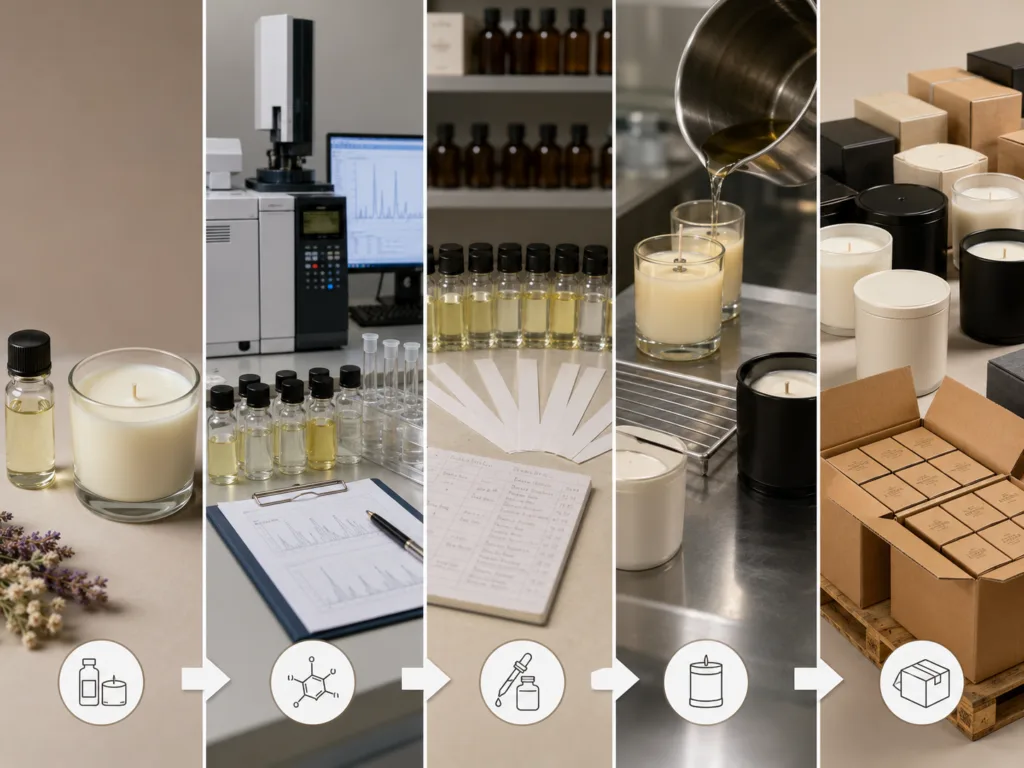
With modern GC-MS laboratory testing, a custom candle factory can analyze a fragrance sample, identify key aroma compounds, and rebuild a similar scent profile for candle production. The goal is not to copy a brand name, packaging, or trademarked product. The goal is to understand the scent structure and create a legally safe, commercially usable fragrance direction.
For fast-fashion retailers, dupe brand owners, home fragrance startups, and private label candle brands, this process can shorten development time and reduce guesswork.
Instead of saying, “We want something like this famous fragrance,” you can send a physical sample and receive a technical fragrance analysis, a matched oil sample, and a candle-ready formula.
The Dematerialization of Fragrance: How Advanced Analytics Replicates Aroma
Fragrance used to feel mysterious.
A scent was described with words like “warm,” “clean,” “woody,” “sensual,” or “expensive.” These words are useful for marketing, but they are not enough for production.
A candle factory needs more exact information:
- What aroma materials are inside?
- Which notes evaporate first?
- Which ingredients create the base?
- How strong should the fragrance load be?
- Will the scent survive hot wax?
- Can the formula pass IFRA requirements?
- Can the scent perform in soy wax, coconut wax, or other plant wax blends?
This is why advanced lab analysis has changed the candle industry.
Today, fragrance can be partly “decoded” through testing. A premium perfume, a cult candle, or a hotel aroma sample can be studied in the lab. The result is not magic. It is chemistry, data, and experienced fragrance work.
Mass retail buyers often need scent matching because they are working under pressure. They may need to launch a new candle collection quickly. They may already know which scent family sells well. They may want a “luxury-inspired” fragrance profile at a more accessible cost.
For example, a retailer may want:
- A clean sandalwood candle for a minimalist home line
- A smoky amber scent for winter gifting
- A fig and cedar candle for Mediterranean-style collections
- A rose and musk profile for beauty-inspired retail
- A hotel-style white tea fragrance for spa products
Instead of developing from zero, scent matching gives the buyer a clear starting point.
For private label candle brands, this can make product development faster, more controlled, and more cost-effective.
Gas Chromatography-Mass Spectrometry GC-MS: The Scent Scanner
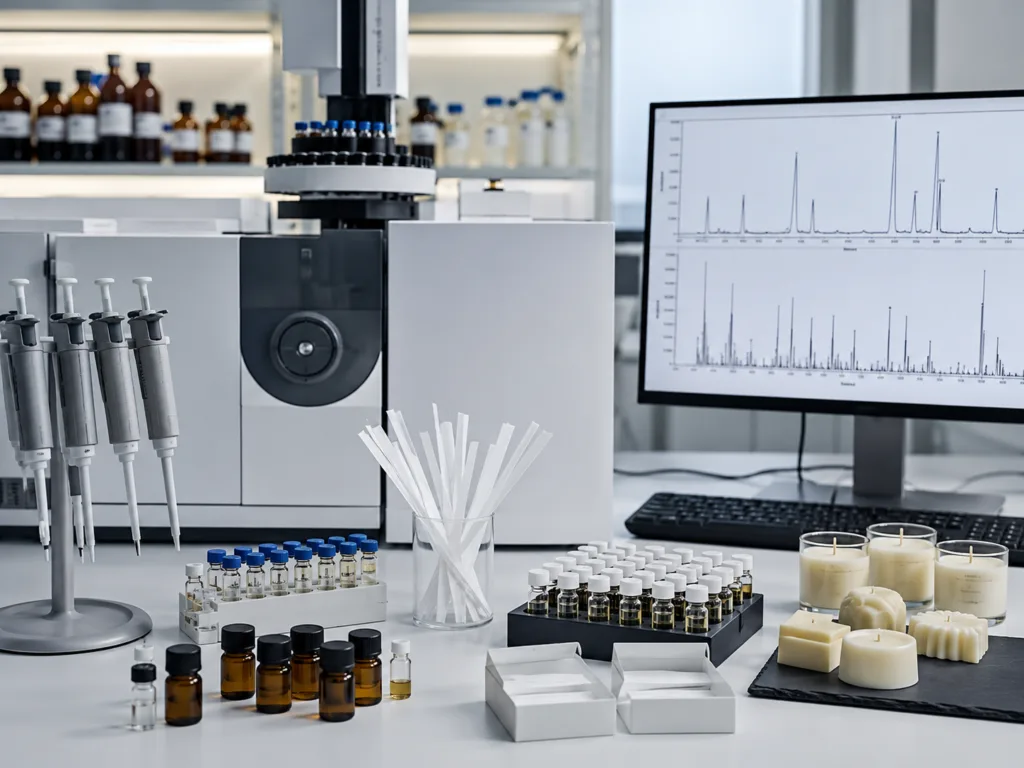
GC-MS stands for Gas Chromatography-Mass Spectrometry.
In simple terms, it is a laboratory method used to separate and identify chemical compounds inside a fragrance sample.
You can think of GC-MS as a “scent scanner.”
The process usually works like this:
First, the fragrance sample is prepared for testing. This may be a perfume oil, a finished candle, wax residue, or another scented product.
Then the sample is heated and vaporized. As the fragrance becomes gas, the machine separates the different compounds.
Each ingredient moves through the system at a different speed. Lighter molecules may appear earlier. Heavier molecules may appear later.
The mass spectrometer then helps identify these compounds by reading their molecular patterns.
The final GC-MS report may show many fragrance components, sometimes down to very small levels such as PPM, which means parts per million.
This can help identify materials such as:
- Citrus compounds
- Floral molecules
- Woody aroma materials
- Musk components
- Vanilla-like ingredients
- Amber materials
- Green notes
- Spicy notes
- Synthetic aroma chemicals
- Some natural essential oil markers
However, GC-MS is not enough by itself.
A machine can give data, but it cannot fully “smell” like a human nose. Some ingredients may appear in tiny amounts but have a strong smell. Other ingredients may be present in larger amounts but have less impact.
That is why scent matching requires both lab technology and experienced perfumers.
The best results come from combining GC-MS data with human evaluation, trial blending, candle testing, and formula adjustment.
Reconstructing Olfactory Pyramids from Raw Chemist Data
After the GC-MS report is complete, the next step is interpretation.
Raw chemical data needs to be translated into a fragrance structure.
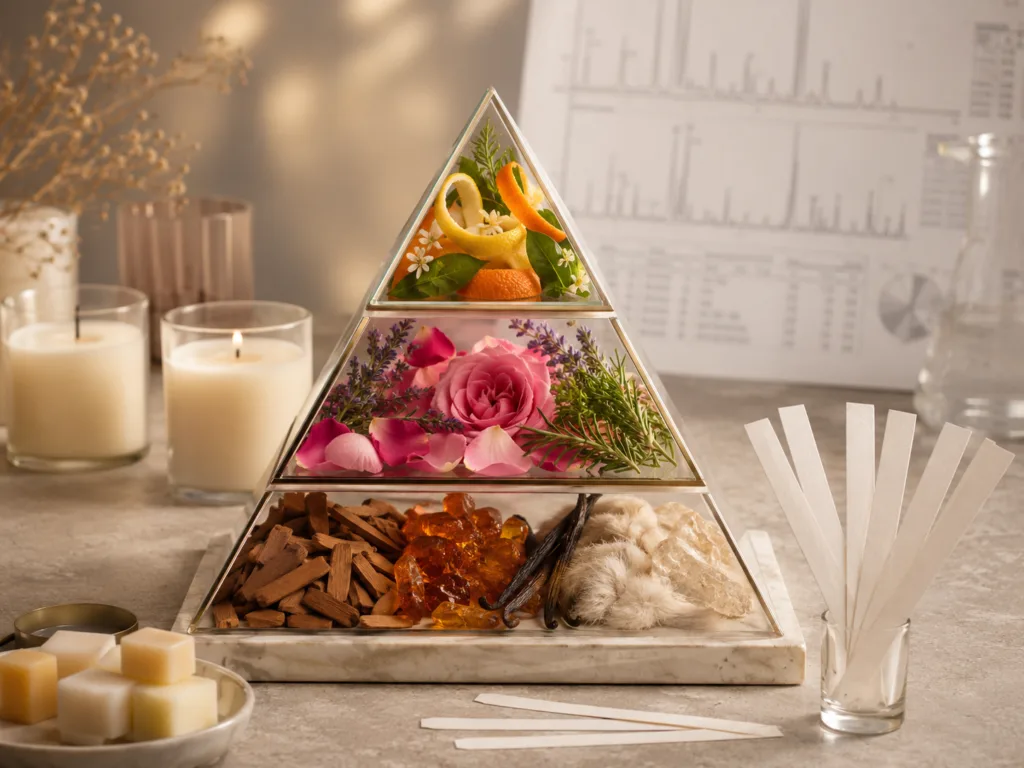
Most fragrances are built like an olfactory pyramid:
Top notes are the first impression. They are usually lighter and more volatile. They may include citrus, green, fruity, or fresh notes.
Middle notes form the heart of the fragrance. They often include floral, herbal, spicy, or creamy elements.
Base notes last the longest. They may include woods, musk, amber, vanilla, resin, leather, or smoky notes.
A GC-MS report can help show which ingredients are present, but a fragrance developer still needs to decide how these materials work together.
For candle scent matching, this step is especially important.
A perfume worn on skin and a candle burned in wax do not behave the same way. Skin warmth is gentle. Candle wax is heated, melted, and burned. The fragrance must be stable enough to survive the candle-making process and strong enough to release into the room.
This is why candle reverse engineering is not only about copying a formula. It is about rebuilding a scent for a new application.
A luxury perfume oil may smell beautiful on paper, but it may fail in soy wax. A fine fragrance may have delicate top notes that disappear during hot pouring. A complex floral accord may become flat after curing.
So the scent matching team must adjust:
- Evaporation balance
- Top-to-base ratio
- Fragrance strength
- Wax compatibility
- Hot throw performance
- Cold throw quality
- Stability after curing
- IFRA compliance
The goal is to create a fragrance that smells close to the reference sample while also working properly inside a candle.
Performance Adjustments for Optimal Hot Throw in Plant Waxes
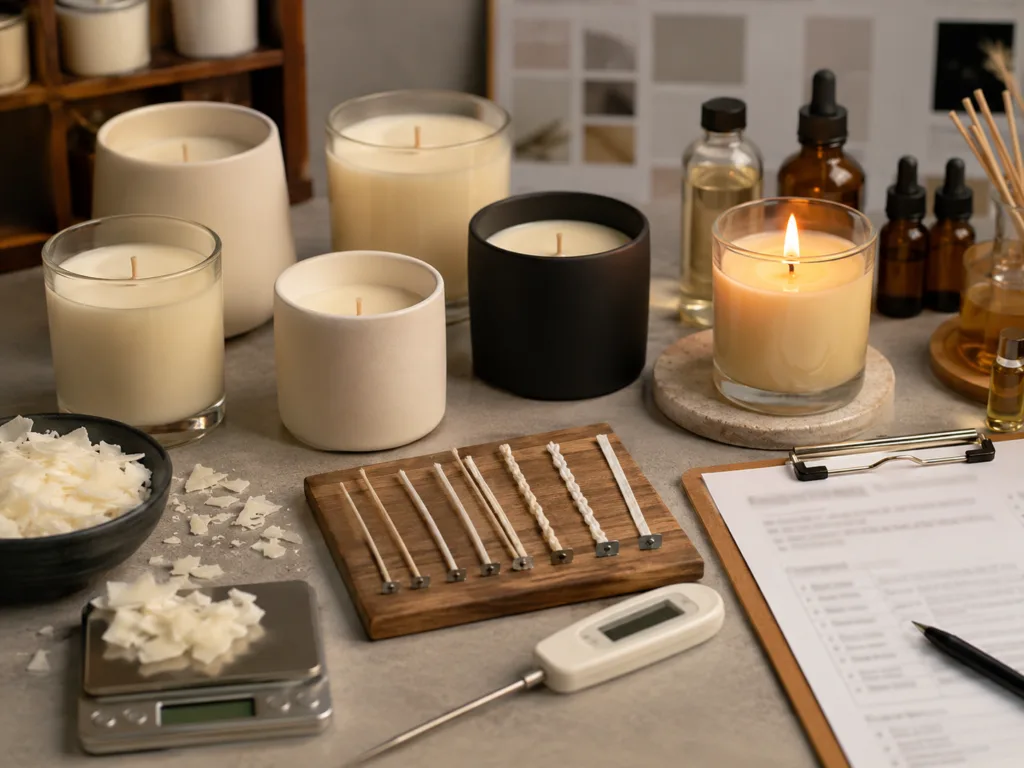
Many modern candle brands prefer plant-based waxes such as soy wax, coconut wax, rapeseed wax, or blended vegetable waxes.
These waxes are popular because they fit current market demand for cleaner, softer, and more natural-looking candles. But they also create technical challenges.
Plant waxes can be harder for fragrance throw.
A scent that performs well in paraffin may not perform the same way in soy wax. Some aroma molecules bind too tightly with plant wax. Some notes become muted. Some top notes disappear. Some base notes become too heavy.
This is why a fragrance match must be adjusted for candle production.
When developing a matched fragrance oil for plant wax candles, the factory may adjust the molecular balance. The goal is to make sure the scent can survive molten pour heat and still release well during burning.
Common candle performance factors include:
1. Cold Throw
Cold throw means how the candle smells before burning.
For retail products, this is important. Customers often smell candles in store before buying. A weak cold throw can reduce sales.
2. Hot Throw
Hot throw means how the candle smells when burning.
For actual use, this is even more important. A candle may smell strong in the jar but weak in the room. Good candle scent matching must include burn testing.
3. Pour Temperature Stability
Some fragrance ingredients are sensitive to heat. If the wax is too hot, delicate notes may weaken. The formula may need to be adjusted so the fragrance survives production.
4. Wick Compatibility
The wrong wick can change the scent experience. It can make the candle burn too hot, too smoky, or too weak. Scent matching should be tested with the final wax and wick system.
5. Fragrance Load
More fragrance oil does not always mean better performance. Too much oil can cause sweating, poor burning, or safety issues. A professional candle factory will test a suitable fragrance load based on wax type, jar size, wick, and IFRA limits.
For premium-inspired candle collections, performance matters as much as scent accuracy.
A buyer does not only need a similar fragrance. They need a fragrance that works in real candle production.
Navigating IP and Legal Boundaries in Olfactory Reconstruction
Scent matching must be handled carefully.
It is important to understand the difference between fragrance inspiration and illegal brand copying.
A candle factory can help develop a scent profile inspired by a fragrance direction, but it should not copy protected brand assets.
You should not use another brand’s:
- Trademarked name
- Logo
- Packaging design
- Product photos
- Marketing claims
- Brand story
- Protected collection name
For example, it is risky to sell a candle using a luxury perfume brand name in the product title. It is also risky to copy the exact packaging style of another brand.
A safer approach is to describe the fragrance family and mood.
Instead of saying “Brand X duplicate,” a private label candle brand can use descriptions like:
- Amber woods and soft musk
- Fresh fig, green leaves, and cedar
- White tea, citrus, and clean musk
- Rose petals, powder, and sandalwood
- Smoky vanilla, resin, and tonka
This allows the product to stand on its own.
Another key issue is IFRA compliance.
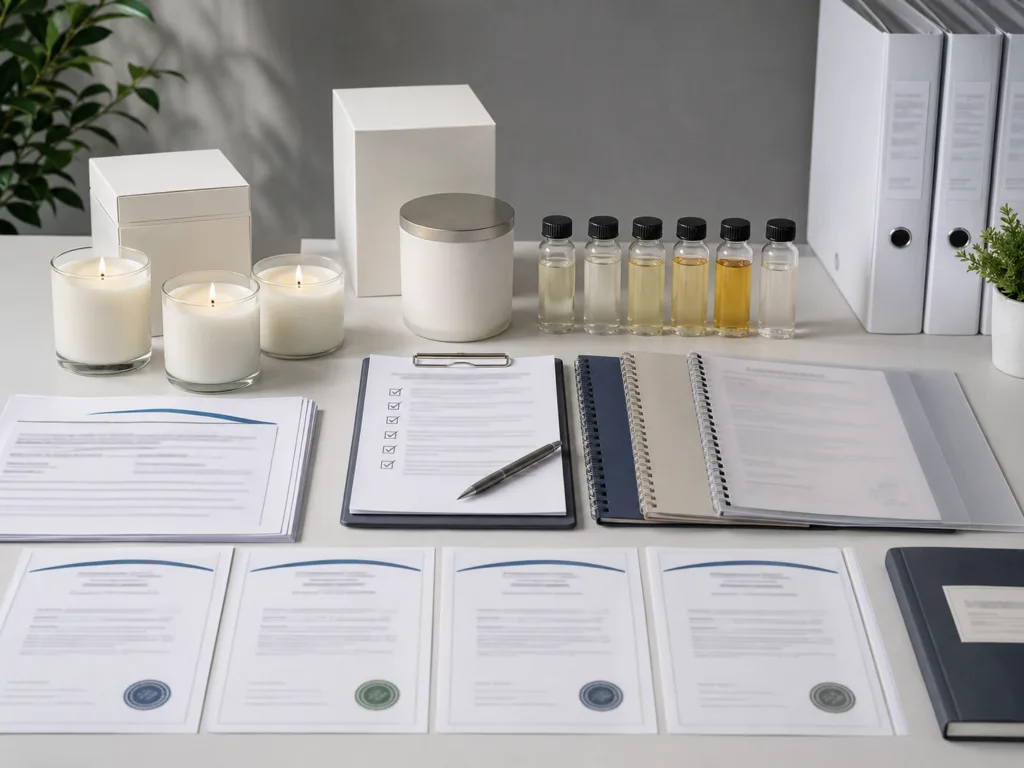
IFRA standards help guide the safe use of fragrance materials in consumer products. A professional fragrance supplier should provide documents such as:
- IFRA certificate
- SDS or MSDS
- Allergen declaration when needed
- Technical fragrance information
- Usage recommendations by product category
For candle brands, this is important because fragrance oils must be suitable for the intended product type.
A good supplier should not simply say, “Yes, we can copy anything.” A reliable supplier should guide the buyer through safe, practical, and legally responsible fragrance development.
How the Candle Scent Matching Process Works
A professional candle scent matching project usually follows a clear process.
Step 1: Send the Reference Sample
The buyer sends a fragrance sample, perfume sample, finished candle, wax melt, reed diffuser oil, or another scented product.
For better analysis, the sample should be clean, well-sealed, and not too old.
Step 2: GC-MS Lab Testing
The lab analyzes the sample and identifies major fragrance components.
This gives the technical team a data-based starting point.
Step 3: Perfumery Interpretation
The fragrance team studies the report and smells the reference sample. They rebuild the scent structure based on chemistry and sensory evaluation.
Step 4: Trial Formula Development
A trial fragrance oil is blended.
At this stage, the first version may be close but not perfect. Fine-tuning is normal.
Step 5: Candle Application Testing
The matched fragrance is tested in the actual candle wax system.
This step is critical because the scent must perform in wax, not only in the bottle.
Step 6: Buyer Review
The buyer receives the sample and compares it with the reference scent.
Feedback may include:
- Make it stronger
- Make it less sweet
- Add more woody depth
- Reduce the powder note
- Improve hot throw
- Make the opening fresher
- Make the dry-down warmer
Step 7: Final Formula Approval
After adjustments, the final fragrance formula is approved for production.
Then the factory can move forward with candle sampling, packaging, and bulk manufacturing.
Who Needs Candle Scent Matching Reverse Engineering?
This service is especially useful for commercial buyers who already understand their target market.
It is a good fit for:
Fast-Fashion Retailers
Fast-fashion retailers often need quick product development. They may want seasonal candle lines inspired by current fragrance trends.
Scent matching helps them move faster from concept to shelf.
Dupe Brand Owners
Dupe brands need fragrance profiles that feel familiar but are presented under their own branding.
They need accuracy, stable supply, and safe documentation.
Private Label Candle Brands
Private label brands may want to build a full candle collection around popular scent families.
A factory with scent matching ability can help turn inspiration into a production-ready formula.
Hotels and Spa Brands
Hotels may want to recreate a signature scent experience for candles, room sprays, or reed diffusers.
GC-MS testing can help rebuild the scent direction when the original formula is not available.
Retail Gift Set Buyers
Gift set buyers may need multiple scents that match premium market trends.
Scent matching can help develop a cohesive collection with strong commercial appeal.
Why Work with a Custom Candle Factory for Scent Duplication?
A fragrance lab can analyze scent. But a candle factory understands candle production.
For candle brands, this difference matters.
A custom candle factory can help with:
- Fragrance matching
- Wax selection
- Wick testing
- Jar and vessel sourcing
- Packaging development
- Private label production
- Compliance documents
- Bulk order manufacturing
- Export packing
- Retail-ready gift sets
This is especially important for B2B buyers.
You do not only need a nice scent. You need a candle that can be produced consistently, packed safely, shipped internationally, and sold under your brand.
Send Us a Sample for Scent Duplication
If you have a fragrance sample, candle, perfume oil, wax melt, or reed diffuser scent you want to match, we can help evaluate it.
Our team can support fragrance analysis, scent matching, candle application testing, and private label candle production.
Send us your sample and tell us:
- Your target scent
- Your wax type
- Your candle size
- Your target market
- Your order quantity
- Your packaging needs
- Your expected price range
From there, we can recommend the best development path for your candle project.
CTA: Send Us a Sample for Scent Duplication
FAQs
1. How long does the lab GC-MS process take?
The GC-MS testing process usually takes around 7 to 15 working days, depending on the sample type and lab schedule. After the report is ready, the fragrance team still needs time to rebuild the scent and prepare a matched sample. For candle application testing, extra time may be needed for wax pouring, curing, and burn testing.
2. Is it legal to sell candles with identical luxury scents?
You should be very careful. A fragrance profile can be inspired by a scent family, but you should not use another brand’s trademark, logo, product name, packaging, or marketing identity. A safer approach is to create your own brand name and describe the scent by notes, mood, and fragrance family. Always check local legal requirements before selling.
3. What is the minimum sample volume required?
The required sample volume depends on the lab and the product type. In general, a few milliliters of fragrance oil or perfume may be enough for initial testing. For finished candles, it is better to send a complete candle or enough wax sample with strong fragrance. A fresh, sealed sample gives better results than an old or weak sample.
4. Can essential oil blends be cloned as accurately?
Essential oil blends can often be analyzed, but natural oils are complex and can vary by harvest, origin, season, and supplier. GC-MS can identify many important markers, but natural variation makes exact duplication more difficult. For candle use, the formula may also need adjustment to improve hot throw, stability, and safety compliance.