
Understanding Candle Packaging MOQ
For luxury candles, packaging is never an afterthought—it’s an extension of your brand, safeguarding your product while creating an unforgettable first impression. But as many candle brands or startup resellers quickly discover, custom box suppliers often insist on a minimum order quantity, or MOQ, of at least 1,000 pieces. Why? The answer lies deep within the mechanics of modern printing, substrate handling, and the economics of production runs. In this guide, we’ll explain the realities behind candle packaging MOQ, focusing on the essential concept: printing machines require a minimum output to operate efficiently, and this directly shapes the cost and viability of custom boxes for your scented candle line.
Candle Packaging MOQ Explained: Why Custom Boxes Start at 1000pcs
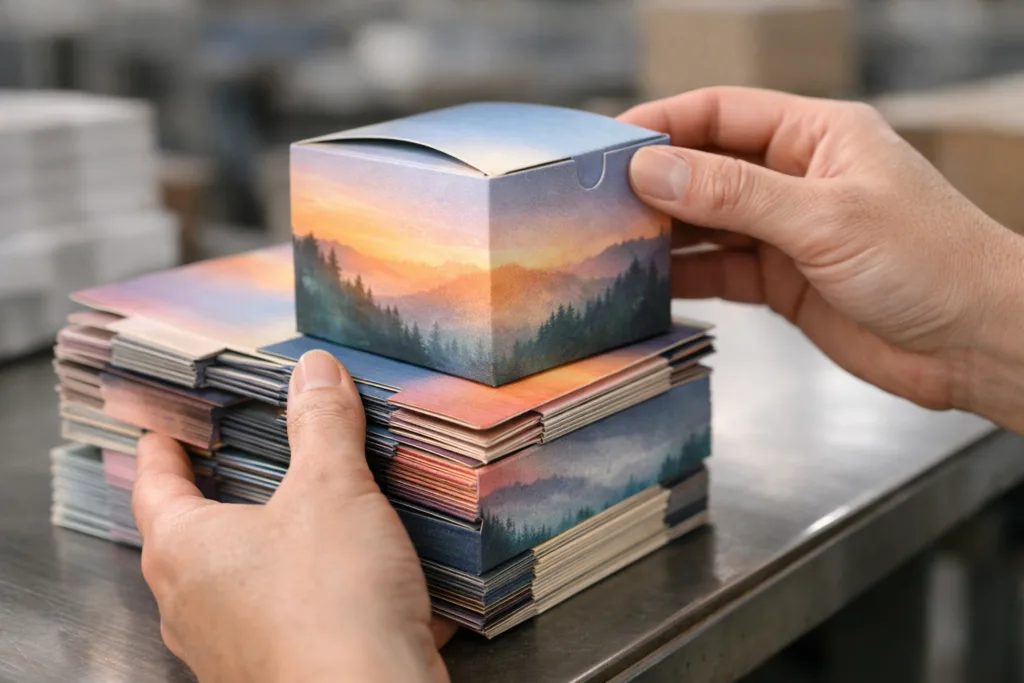
“MOQ”—Minimum Order Quantity—represents the lowest volume a supplier will accept for a custom packaging run. If you’ve ever wondered why most custom candle boxes start at 1,000 pieces, you’re not alone. The answer isn’t simply about profit margins; it’s rooted in the fundamental setup processes required by modern printing technology and packaging machinery. For new, growing, or even established brands planning their next scented collection, understanding these basics can help optimize budgets, reduce waste, and set realistic expectations for launch timelines.
The Core Cost Drivers in Custom Candle Box Production
Every custom folding carton or rigid box order passes through a series of steps before it arrives at your studio or fulfillment center. Beyond raw materials, several fixed costs are integral in box manufacturing:
- Printing Setup Fee: The cost a factory incurs to calibrate, color-match, and initiate the printing press, regardless of run size.
- Die-Cutting Mold: A custom-made steel mold is created to ‘cookie-cut’ paperboard or specialty material into the precise box shape and creaselines you’ve specified.
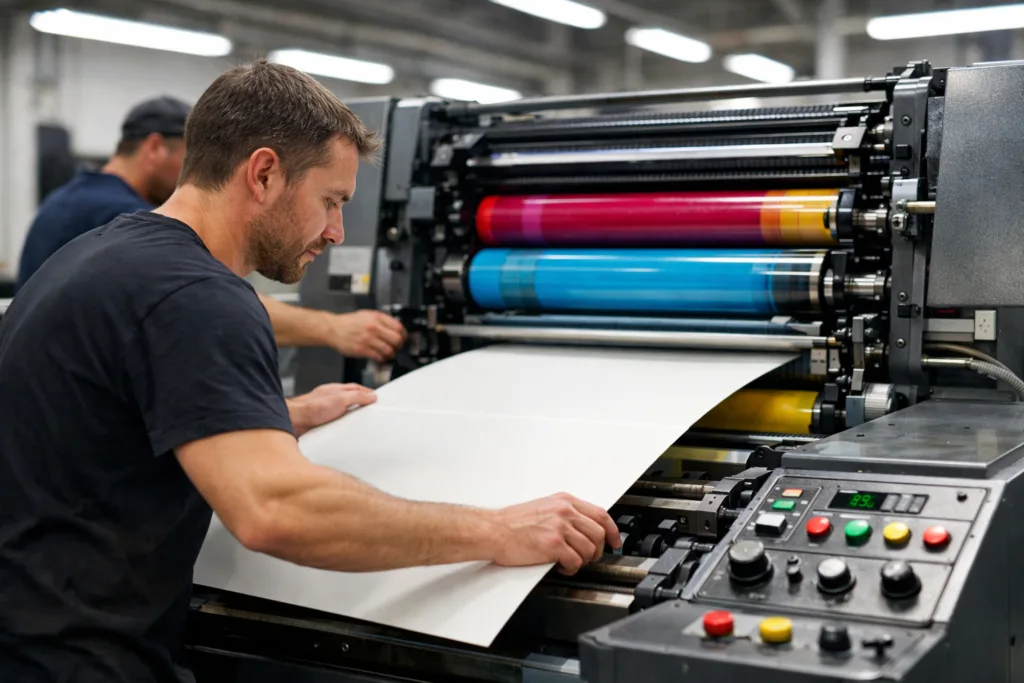
- Machine Stabilization Run: After a press starts up, several hundred to thousands of sheets may be required before prints achieve consistent color density and register. These are essential for quality control, not for sale.
How Printing Setup Drives MOQ
High-speed offset and digital presses, as used in luxury candle box production, cannot operate profitably by producing single or double digits. Setup fees—often $150-$400 per color or run—are decentralized among all units. The cost of calibrating and testing, once the machine begins, is unaffected by total quantity. The lower your volume, the higher your per box expense, occasionally rendering short runs prohibitively expensive. For 1,000 boxes, the setup cost is manageable per unit; for 200, the expense skyrockets, eclipsing the box value itself.
Circe Home Lab Insight: “For bespoke packaging, a well-calibrated press safeguards color fidelity and edge sharpness—must-haves for luxury candle presentation. Achieving this consistency sets the baseline MOQ.”
Table: MOQ Impact on Custom Box Unit Price
| Qty | Setup Fees | Box Material & Print | Die-Cut & QC | Total Cost | Unit Price |
|---|---|---|---|---|---|
| 200 | $300 | $90 | $80 | $470 | $2.35 |
| 500 | $300 | $225 | $120 | $645 | $1.29 |
| 1000 | $300 | $400 | $150 | $850 | $0.85 |
| 3000 | $300 | $1,050 | $210 | $1,560 | $0.52 |
As shown, while setup and die-cut costs remain essentially fixed, material and per-unit costs fall as quantity rises. This underpins why suppliers standardize moq at 1,000pcs—the threshold where per box rates become feasible for luxury and boutique brands.
Printing Machine Constraints: Why Short Runs Are Costly
Carton presses and die-cut apparatuses are engineered for efficiency with medium-to-large runs. Here’s what happens under the hood:
- Initial Warm-Up Sheets: Technicians feed blank or sacrificial sheets to achieve optimal print density and register.
- Ink & Alignment Calibration: Color density, trapping, and image position are verified with precision instruments.
- Die-Cutter Setup: The new knife is fitted, pressure adjusted, creasing scored, scrap stripping tested for clean folds.
Below 1,000 units, waste from setups and calibration alone might rival your actual production count. This inefficiency translates directly into per-piece pricing—often three to five times higher at very low volumes. The threshold of 1,000pcs aligns with the minimum output after which quality stabilizes and costs normalize.
Custom Candle Box Features That Influence MOQ
While 1,000pcs is an industry benchmark for MOQ, some design features may further impact both feasibility and per unit cost. Key factors include:
- Special Effects: Foil stamping, emboss/deboss, spot varnish demand additional setup and passes.
- Unusual Structures: Windowing, magnets, rigid board require tool changes and manual assembly.
- Multi-Color or PMS Spot: Each color or spot ink increases setup complexity.
- Custom Insert Trays: Blister or EVA inserts carry separate tooling and minimum production runs.
Basic cartons with single or two-color prints are most efficient. Intricate finishes, however, must be balanced against expected sales velocity and brand positioning.
Die-Cut Mold Cost and Its Unavoidable Role
To achieve the crisp lines and perfect fit buyers expect from premium candle packaging, a steel die-cut mold is custom-fabricated for each box size and shape. This process can cost anywhere from $120–$300, amortized over the production run. Much like print setup, this is a flat cost—producing 200 or 2,000 boxes changes the per-box mold expense dramatically. Every new box size or design revision resets this fee, so careful prototyping and sampling phase is essential.
Quality Assurance and Regulatory Costs
Premium candle brands like Circe Home understand that visual polish must be matched by technical and regulatory compliance. These steps are factored into MOQ:
- Color fidelity checks after press calibration
- Adhesive/burn test for hot-melt used in box assembly
- Dimensional tolerance verification for snug candle fit
- Label placement and clarity, including IFRA, CLP, and safety standards
Every box must be compliant and pristine, justifying the minimums needed to ensure every step—visual, tactile, and regulatory—is performed consistently and economically.
Strategies to Navigate Candle Packaging MOQ
If your production needs don’t justify 1,000+ boxes—or you’re trialing new scents—there are still creative options. Consider these approaches:
- Modular Designs: Use one box for several fragrances by changing only the label or insert.
- Blank Cartons + Custom Labels: Stock plain boxes and decorate per run to sidestep setup costs.
- Cluster Orders: Group multiple SKUs or collections into one print run to leverage economies of scale.
- Alternate Materials: Fabric pouches or kraft sleeves may enable smaller minimums for limited runs.
Working with an OEM partner skilled in luxury candle production—such as Circe Home—can streamline these options, ensuring your packaging both elevates your brand and respects your bottom line.
Packaging MOQ and Sustainability
Modern consumers value both product quality and responsible production. Matching sustainable practices to MOQ constraints brings additional benefits:
- FSC or recycled board: High-volume orders make eco-certified materials more cost-competitive.
- Soy-based inks: Less efficient for micro-runs, but ideal for 1,000+ units.
- Reduced Waste: Optimizing MOQ cuts manufacturing scrap and overage.
- Eco Bulk Programs: Leverage larger orders for refillable or compostable box options.
This approach supports a premium, eco-forward brand narrative without sacrificing commercial practicality.
Packaging MOQ by Application Scenario
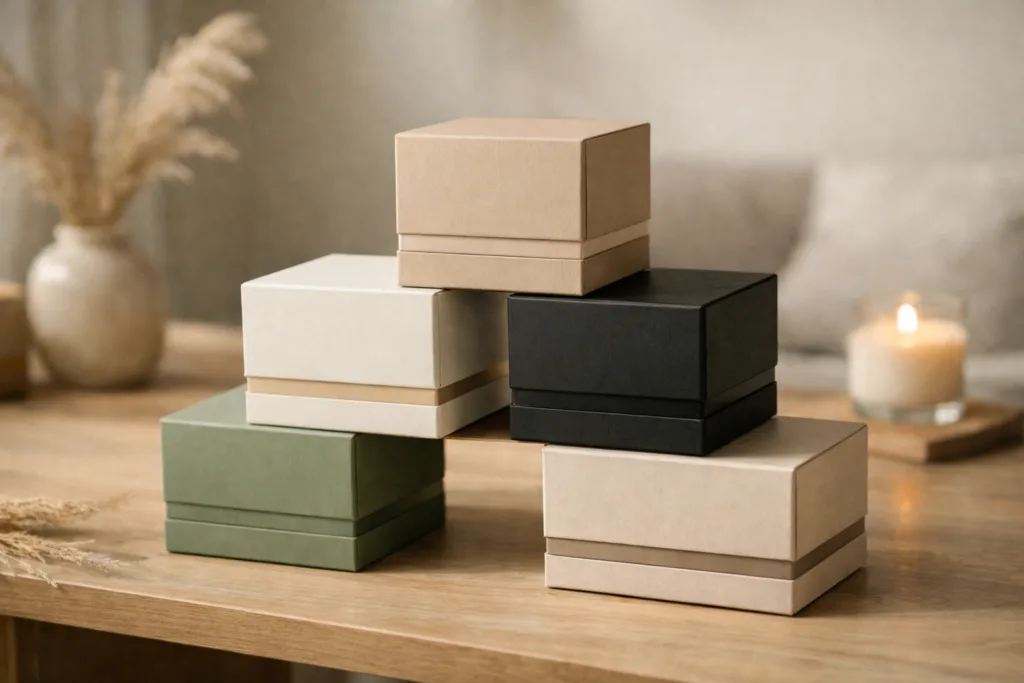
Different markets and product positioning will influence the optimal approach to MOQ. Here’s a brief breakdown:
- Private-Label Retail: Standardized boxes, high MOQ
- Luxury Gifts: High-concept design, variable MOQ
- Wellness/Hotel Spa: Limited edition runs, may require hybrid solutions
- Home Décor Startups: Lower risk with multipurpose plain boxes + branded sleeves
By balancing setup costs, stock risk, and customer experience, brands of all sizes can pinpoint the sweet spot for packaging investment.
Frequently Asked Questions
What is included in the candle packaging MOQ?
The MOQ covers the minimum number of custom boxes a factory will produce in a single run, reflecting setup, die-cut, and machine calibration costs.
Why don’t suppliers offer MOQ below 1,000pcs?
High setup and mold costs are fixed, meaning lower quantities drive per-unit prices up significantly, making small batches commercially unviable for custom printing.
Can I order multiple box styles within one MOQ?
Most suppliers consider each different box style or size as a separate SKU, requiring its own setup. Combining orders is only possible if the sizes and print processes are identical.
Are digital print methods viable for low box MOQs?
Digital printing reduces some setup costs, but factors like die-cutting and quality checks still set practical minimums, often 300–500 units at best, for luxury packaging.
How can I minimize costs if my brand is just starting?
Consider modular packaging, blank boxes with custom labels, or partnering with an OEM that supports small-batch runs for startups and limited editions.
What quality checks matter for custom candle packaging?
Inspections for color accuracy, structural integrity, fit, and regulatory label compliance are all crucial for luxury and retail-ready candle boxes.