
If you are sourcing candles for a serious brand, this is not a small wording issue.
The difference between a candle manufacturer and a candle supplier affects your pricing structure, speed to market, customization options, quality consistency, compliance workflow, inventory risk, and long-term margin.
Many buyers use these two terms as if they mean the same thing. In real procurement, they do not. A manufacturer and a supplier can overlap, but they do not solve the same business problem.
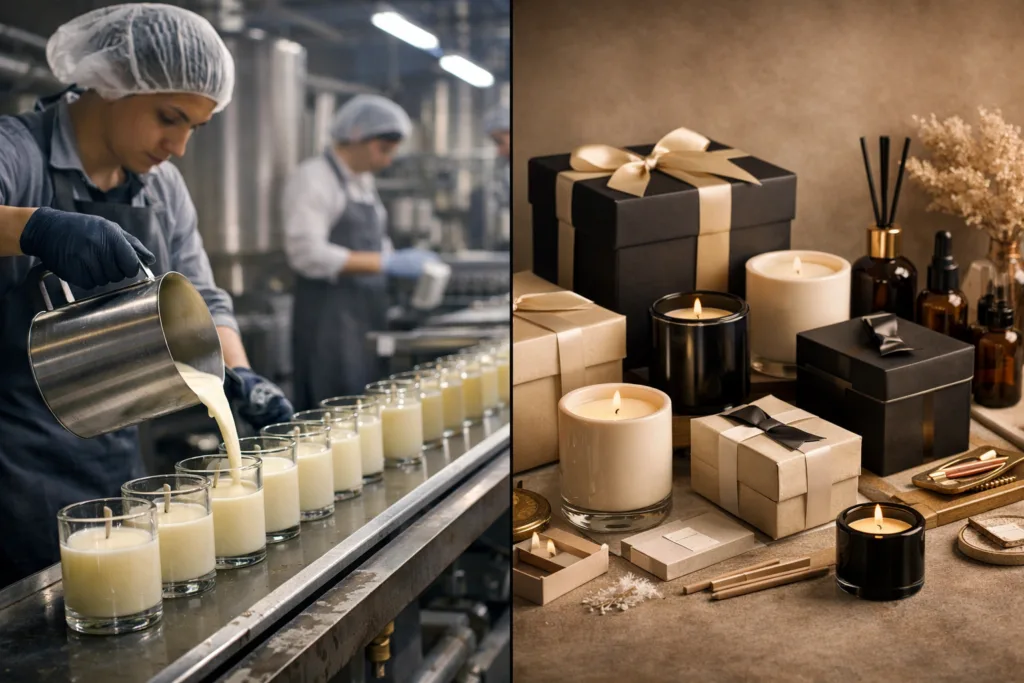
That distinction matters even more in today’s candle market. Industry reports estimate the global candle market at USD 14.77 billion in 2025, with continued growth projected over the next several years. At the premium end, the luxury candle segment is also expanding quickly as brands push deeper into gifting, home fragrance, hospitality, and lifestyle retail. For buyers, that growth creates opportunity—but it also creates more noise, more middlemen, and more sourcing mistakes.
This article is written from a B2B procurement perspective, not from a beginner hobby angle. It is for buyers who care about real commercial questions:
- Who gives better cost control?
- Who can handle custom fragrance and packaging properly?
- Where do MOQs become a trap?
- Who owns sampling and quality accountability?
- When is a supplier actually better than a factory?
- What model works best for mature brands placing larger orders?
If your goal is to build a candle line that can scale, not just buy a few nice-looking jars, you need to understand the operating difference behind the label.
Why This Question Matters More Than Most Buyers Think
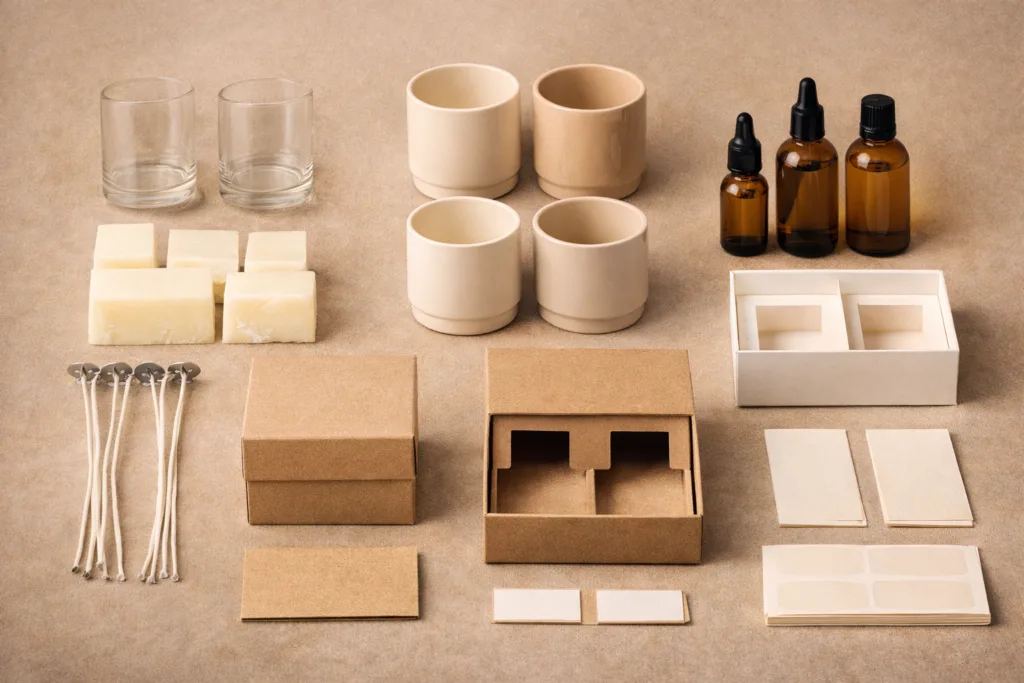
A candle is not just wax in a vessel.
A sellable candle product is a small supply chain made of multiple linked decisions:
- vessel material and sourcing
- wax system
- fragrance loading and stability
- wick matching
- burn performance
- decoration method
- primary packaging
- transit protection
- warning label compliance
- carton configuration
- freight mode
- replenishment speed
When buyers choose the wrong sourcing model, problems usually do not appear on day one. They appear later, after money has already been committed.
For example:
- The price looks competitive, but the fragrance throws weakly in final production.
- The box looks premium, but the insert is not protective enough for cross-border shipping.
- The vessel is attractive, but the burn test reveals overheating or instability.
- The supplier promises low MOQ customization, but every small custom change triggers hidden setup cost.
- The factory can produce well, but cannot coordinate packaging, fragrance adaptation, or delivery terms properly.
That is why experienced buyers do not ask only, “Can you make this candle?”
They ask:
- Who controls the upstream components?
- Who manages cross-category coordination?
- Who is responsible if fragrance, vessel, and packaging do not work together?
- Who can protect consistency when the program grows from sampling to repeated production?
This is where the difference between a manufacturer and a supplier becomes commercially important.
What Is a Candle Manufacturer?
A candle manufacturer is a company that actually produces candles.
That usually means the business controls some or most of the following processes:
- wax melting and filling
- wick selection and assembly
- fragrance blending or fragrance handling
- curing and production scheduling
- burn testing and quality checks
- labeling and basic packing
- batch-level production management
Some manufacturers are highly specialized.
They may focus on:
- jar candles only
- molded candles only
- taper candles
- tealights
- wax melts
- contract filling for private label programs
Others are broader and can handle multiple candle formats plus packaging assembly.
What manufacturers are good at
A strong candle manufacturer is usually the better option when your project requires:
- custom size or custom fill weight
- fragrance matching or a signature scent direction
- wick and wax optimization
- more control over material selection
- lower ex-factory unit cost at scale
- consistent repeat production
What manufacturers are often weak at
A factory is not automatically a full solution.
Many candle factories are good at production, but weaker in areas such as:
- retail packaging development
- vessel sourcing beyond standard options
- visual merchandising understanding
- brand-side communication
- cross-factory consolidation
- DDP logistics coordination
- documentation flow for international procurement
In other words, a manufacturer may be excellent at making candles, but not excellent at managing the entire commercial chain around the candle.
That is why some buyers who go “factory direct” still struggle.
They save on one layer of markup, but they take on much more coordination work themselves.
What Is a Candle Supplier?
A candle supplier is broader.
A supplier may or may not own production. In many cases, the supplier sources from one or multiple factories and acts as the commercial bridge between production and buyer.
A supplier may provide:
- existing candle collections
- stock products with lower MOQs
- sourcing from multiple factories
- packaging coordination
- consolidation of accessories and inserts
- export handling
- logistics solutions
- faster communication and simpler procurement flow
In practical terms, a supplier often solves a different buyer problem.
Instead of asking, “Who can physically produce this candle?” the supplier model asks, “Who can organize the right combination of product, packaging, timing, and delivery with less friction?”
What suppliers are good at
A good candle supplier can be valuable when you need:
- speed to launch
- a lower-risk initial order
- access to existing vessels or ready-made formats
- sourcing flexibility across several factories
- a simpler communication structure
- one point of contact for mixed-product programs
What suppliers are often weak at
Not every supplier controls real technical depth.
If the supplier is too shallow, problems can include:
- limited understanding of burn performance
- weak visibility into actual production conditions
- poor QC follow-through
- unstable pricing due to factory dependency
- limited technical support when customization becomes complex
So a supplier can be a smart solution—or just an unnecessary layer.
The key is whether the supplier adds real operational value.
Candle Manufacturer vs Candle Supplier: The Core Difference
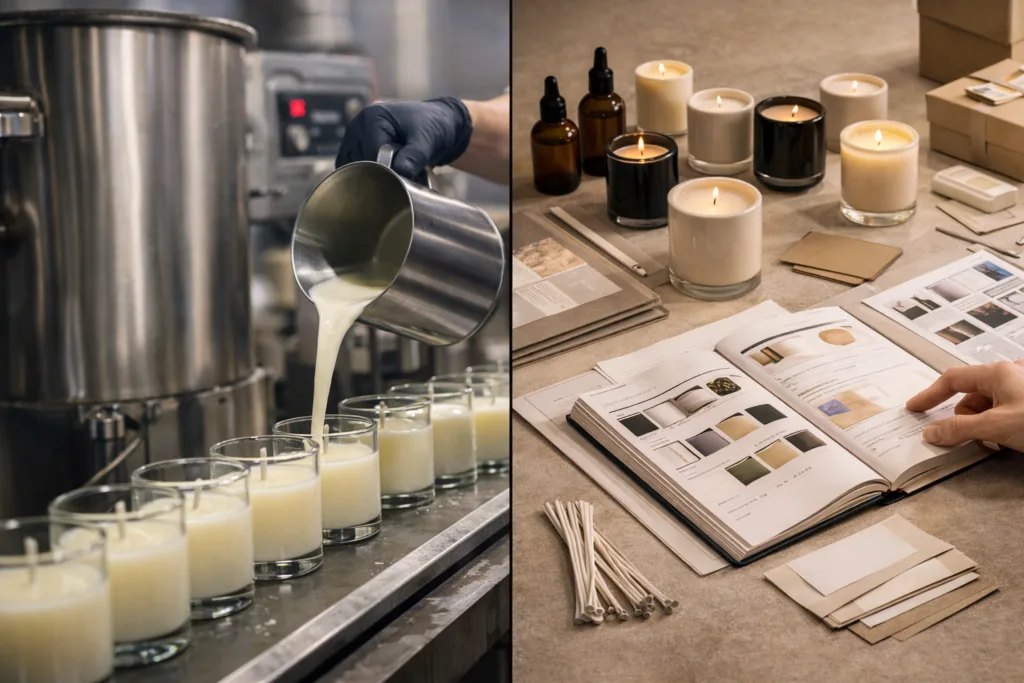
The cleanest way to understand it is this:
- A manufacturer is primarily a production operator.
- A supplier is primarily a commercial and sourcing operator.
The manufacturer’s core strength is making.
The supplier’s core strength is organizing.
Some companies do both. Some claim to do both but are only strong in one side. Serious buyers need to know which function is actually strong, because the wrong assumption creates procurement risk.
Let’s break that down by the issues buyers actually search for and care about.
1. Product Control and Technical Depth
If your brand needs real product control, the manufacturer model usually wins.
Why? Because candle performance is technical.
A quality candle depends on correct matching between:
- wax type
- fragrance load
- wick size
- vessel diameter
- vessel heat behavior
- ambient burn conditions
When you change one variable, you often affect the others.
For example, a stronger fragrance load may require burn-performance retesting. A wider vessel changes melt pool behavior. A ceramic jar may behave differently from a glass vessel. Decorative inclusions may create fire risk if they are not properly evaluated.
This is not just branding. It is engineering at a product level.
ASTM candle safety standards, including ASTM F2417, exist because candle products involve real fire safety considerations. The National Candle Association and ASTM have long worked with regulators and industry stakeholders to push performance and labeling standards forward. For fragrance safety, IFRA standards remain a major reference point for safe fragrance use in fragranced consumer products.
A true manufacturer usually understands these dependencies better than a general trader.
That matters when your brand wants to do more than put a logo sticker on a stock jar.
Procurement takeaway
Choose manufacturer-led development when:
- the scent profile matters
- the vessel is non-standard
- performance consistency is critical
- you need repeatability across larger production runs
2. Customization Ability
This is where many buyers get misled.
A lot of suppliers say “customization available.” But customization can mean very different things.
Level 1: Light customization
This usually means:
- choosing from existing jars
- choosing from existing fragrances
- adding a sticker label
- changing carton artwork
This is real customization, but limited.
Level 2: Commercial customization
This may include:
- custom outer box printing
- foil stamping
- gift set assembly
- custom scent selection from a fragrance library
- vessel color adjustments
- insert design for presentation and protection
This is more suitable for growing brands.
Level 3: Product development customization
This is where true manufacturing capability becomes necessary:
- custom vessel development
- fragrance brief matching
- specific wax requirements
- custom mold development for shaped candles
- wick testing and reformulation
- packaging structure developed around your product
At this stage, many “suppliers” lose depth quickly unless they have a real factory network and strong project management.
Procurement takeaway
If you only need an attractive entry product, a supplier can be enough.
If you want a differentiated product line that competitors cannot easily copy, you need manufacturer-level execution, whether directly or through a supply-chain-integrated partner.
3. MOQ: The Most Misunderstood Number in Candle Sourcing
MOQ is one of the biggest reasons buyers choose the wrong partner.
Many sourcing conversations are distorted by one question:
“What is your MOQ?”
That question matters, but on its own it is too simple.
In candles, MOQ is rarely one single number. It is usually a combination of several MOQs layered together:
- vessel MOQ
- fragrance MOQ
- box MOQ
- decoration MOQ
- insert MOQ
- shipping carton MOQ
- production efficiency threshold
That is why a supplier may appear to offer a lower MOQ than a manufacturer. In many cases, the supplier is using existing materials, stock vessels, standard fragrances, or simplified decoration methods.
That lowers entry cost.
But once you move into premium packaging or product differentiation, MOQ climbs because the real constraints are often outside the wax itself.
Examples that buyers commonly discover too late:
- Standard glass vessels can work at relatively low quantities.
- Custom ceramic development usually requires higher volume.
- Rigid gift boxes often require higher MOQs than folding cartons.
- Foil stamping and special print finishes make small runs less efficient.
- New vessel development may require tooling and much larger commitment.
Procurement takeaway
The smart question is not “What is your MOQ?”
The smart question is:
“What is the MOQ by component, and which parts of the project are driving that MOQ?”
A mature partner should be able to separate these variables clearly.
4. Cost Structure: Unit Price vs Total Procurement Cost
Many buyers compare only unit price.
That is a mistake.
A candle program should be evaluated by total procurement cost, not by candle fill cost alone.
Your real cost includes:
- vessel
- wax
- fragrance
- wick
- decoration
- unit assembly
- primary packaging
- protective insert
- export carton
- testing and sampling
- shipping mode
- damage rate risk
- replenishment risk
- internal coordination time
A manufacturer often gives a better unit cost at scale.
A supplier may give a better total operating cost in early-stage or mixed-sourcing projects because they reduce friction, simplify communication, and consolidate multiple tasks.
Example scenario
A buyer choosing a manufacturer may get a lower EXW unit price, but then has to separately manage:
- packaging vendor
- insert vendor
- freight coordination
- product consolidation
- inspection communication
- production timing across suppliers
That “cheaper factory” may become more expensive in labor, delay, or failure risk.
Procurement takeaway
For mature buyers with larger recurring orders, the winning model is usually not the cheapest quote line.
It is the sourcing model that gives:
- predictable landed cost
- stable quality
- manageable reorder speed
- fewer hidden coordination failures
5. Lead Time and Launch Speed
Suppliers often win on speed.
Manufacturers often win on control.
That is the tradeoff.
If your project is built around existing formats, a supplier can often move faster because the supplier is not starting from zero. They may already know which vessel, fragrance family, and packaging structure can be deployed quickly.
If your project is custom, lead time will naturally expand.
Typical timeline drivers include:
- fragrance briefing and matching
- lab confirmation
- vessel sourcing
- packaging artwork confirmation
- print proofing
- sample approval rounds
- final production scheduling
- curing time
- export booking
The biggest delay in candle sourcing is usually not wax filling. It is the coordination between all the linked pieces.
Procurement takeaway
Ask not only for production lead time, but for:
- sample lead time
- packaging lead time
- artwork approval timeline
- fragrance confirmation timeline
- ex-factory timeline
- door-to-door timeline
That full timeline is what matters to procurement.
6. Quality Control: Who Actually Owns the Problem?
One of the most important differences between a manufacturer and a supplier is what happens when something goes wrong.
Because something eventually will.
In candle programs, common quality issues include:
- frosting perception on wax surface
- weak hot throw
- glass imperfections
- off-center wick placement
- wick mushrooming
- label alignment issues
- print color mismatch
- scratched vessels
- transit breakage
- box compression damage
When there are multiple parties involved, accountability can become blurred.
The vessel factory blames the candle filler. The packaging supplier blames the freight handler. The fragrance house blames the wax system. The trader blames the factory.
Serious buyers should focus on one question:
Who owns the problem until it is solved?
A good factory-direct relationship can work well if the factory is organized enough to manage the surrounding chain.
A good supplier relationship can also work well if the supplier has real QC discipline and production visibility.
A weak version of either model is dangerous.
Procurement takeaway
Look for partners who can define:
- pre-production checks
- sample sign-off process
- in-line QC process
- final inspection standard
- packaging drop-risk considerations
- corrective action workflow
7. Compliance, Safety, and Documentation
Mature buyers do not source candles as if they were generic décor objects.
Candles are fragranced, combustible consumer products. Depending on market and sales channel, procurement may involve documentation and product information beyond a simple invoice.
Depending on the program, buyers may need:
- safety labels and warning format support
- fragrance-related documentation references
- SDS or related data from relevant materials
- packaging specification records
- consistency in labeling language for target markets
- documentation for marketplace or importer requirements
Industry bodies such as IFRA provide globally recognized guidance for fragrance ingredient safety, while ASTM standards define important candle fire-safety performance benchmarks. Buyers in the U.S. market also pay close attention to fire safety communication, proper warning labels, and general consumer safety expectations around open-flame products.
For higher-level buyers, documentation is not a side issue. It is part of the sourcing decision.
Procurement takeaway
A mature sourcing partner should be able to talk comfortably about:
- warning label application
- fragrance safety framework references
- burn and vessel-use considerations
- packaging protection for transit
- export documentation flow
If the conversation becomes vague at this stage, that is a red flag.
8. Packaging: The Hidden Decision Driver
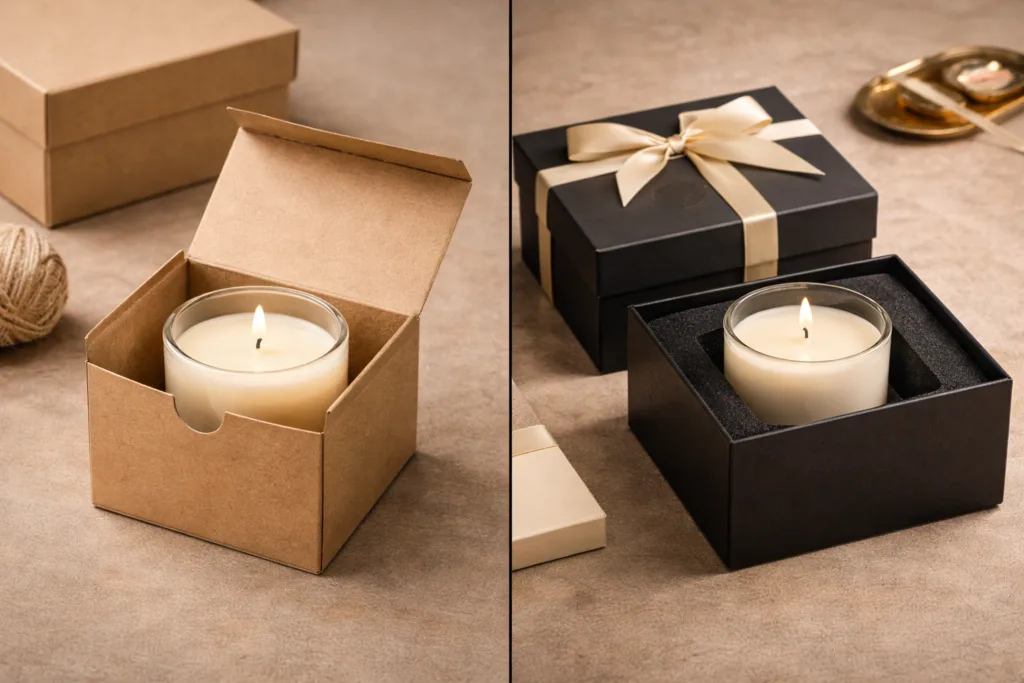
Many candle buyers think they are buying a fragrance product.
Their customers often experience it first as a packaging product.
For premium candle lines, packaging heavily affects:
- perceived value
- giftability
- shelf impact
- damage rate
- freight efficiency
- reorder economics
This is where the supplier model can sometimes outperform a pure manufacturer.
Why? Because many candle factories are not deeply specialized in premium packaging strategy. They can fill and label well, but luxury presentation involves another layer:
- rigid lid-and-base gift boxes
- foam or pearl cotton inserts
- carton crush resistance
- foil or emboss finishing
- fit between candle and insert
- efficient outer carton loading
For retail-ready programs, packaging cannot be treated as an afterthought.
Procurement takeaway
Ask your partner:
- Is this packaging designed for presentation only, or for real shipping protection too?
- What is the MOQ for the box separately?
- Is the insert customized or standard?
- Will the sample use digital print and production use final print process?
- How does packaging choice affect freight cost per unit?
These are mature buyer questions.
9. Logistics: Manufacturer vs Supplier Under Real Delivery Terms
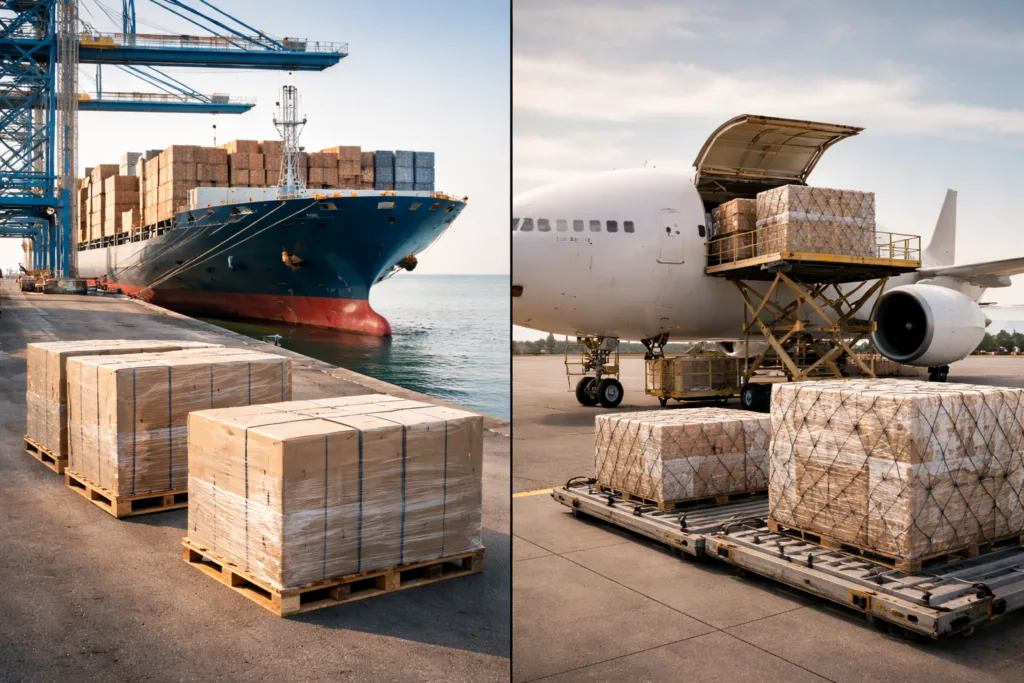
On paper, sourcing decisions often stop at EXW price.
In real life, mature buyers increasingly care about the delivered result.
That means asking who can support:
- EXW
- FOB
- CIF
- DDP
- mixed-SKU consolidation
- multi-carton gift set packing
- destination-specific labeling preparation
A supplier often has an advantage here because they are built around coordination.
But some experienced candle supply-chain partners combine factory knowledge with logistics management, which is often the strongest model for international buyers.
For cross-border candle projects, freight is not trivial. Candles are heavy relative to value, and premium packaging increases volume quickly. The wrong packaging structure can inflate shipping cost and raise damage risk at the same time.
Procurement takeaway
The right partner should not quote freight as an afterthought.
They should help you think through:
- air vs sea tradeoff
- landed cost logic
- damage prevention
- packaging density
- replenishment planning
- what delivery model fits your business stage
10. When a Candle Manufacturer Is the Better Choice
A manufacturer-led model is usually the better fit when your brand has most of the following characteristics:
You already know what you want
You have a developed product vision, not just a mood board.
You need differentiation
You want fragrance, packaging, or product details that are not easy to copy.
You are scaling volume
You want better cost structure at commercial quantities.
You care about technical consistency
You need repeat production with tighter control.
You have internal buying capability
Your team can manage more direct development communication.
This is common for:
- established home fragrance brands
- mature boutique retailers
- hospitality groups
- subscription brands with repeat reorder logic
- importers building long-term private label programs
11. When a Candle Supplier Is the Better Choice
A supplier-led model is often the better fit when:
You need speed
You want to launch quickly with fewer development rounds.
You are testing a category
You want market feedback before investing deeper.
You need sourcing flexibility
You may want candles, wax melts, gift sets, and accessories sourced together.
You want one point of contact
You do not want to coordinate multiple production parties internally.
Your order structure is mixed
You may not want to place a large single-SKU manufacturing program yet.
This is common for:
- concept-led lifestyle brands
- retailers testing seasonal candles
- gift businesses
- importers testing new channels
- early-stage premium brands
12. The Best Model for Serious Buyers: Supply Chain Integration
For mature buyers, the real answer is often neither “manufacturer only” nor “supplier only.”
The strongest commercial model is often supply chain integration.
That means working with a partner who understands manufacturing deeply but can also coordinate the broader commercial chain.
In candle sourcing, this model is powerful because the product sits at the intersection of several categories:
- fragrance
- vessel
- packaging
- presentation
- export logistics
- retail positioning
A supply-chain-integrated partner can help buyers:
- choose the right factory based on project type
- avoid over-customization at the wrong stage
- balance MOQ with brand ambition
- manage sample rounds more efficiently
- build packaging that supports both presentation and transit
- consolidate procurement communication
- move from test order to repeat production with less disruption
This model is especially valuable for buyers who are no longer beginners but do not want to waste internal resources managing every moving piece themselves.
13. What Mature Candle Buyers Should Actually Ask Before Choosing
If you are comparing a candle manufacturer and a candle supplier, ask these questions instead of only asking for a quote.
Product and development
- Who controls wick, wax, and fragrance matching?
- Can you explain how you test burn performance?
- What parts of this project are standard and what parts are custom?
MOQ and cost
- What is the MOQ by vessel, box, decoration, and fragrance?
- Which item is driving the MOQ?
- What cost changes if we simplify one component?
Packaging
- Is this box retail-ready, shipping-ready, or both?
- What insert material do you recommend and why?
- Is the sample finish the same as mass production finish?
Quality control
- Who checks vessel quality before filling?
- What is your in-line QC process?
- How do you handle breakage-risk packaging?
Logistics
- Can you support DDP or only EXW/FOB?
- How do you recommend optimizing freight for this format?
- What is the realistic total timeline, not just factory lead time?
Documentation and safety
- What safety labeling support do you provide?
- Can you support fragrance-related documentation flow?
- What standards or compliance references do you work against?
The partner who answers these clearly is usually the better partner, even before you compare price.
14. Red Flags Buyers Should Watch For
Whether you are talking to a manufacturer or a supplier, watch for these warning signs:
“Everything is low MOQ and fully custom.”
That is usually not true in real candle procurement.
“The vessel, box, fragrance, and finish all have the same MOQ.”
Also unlikely.
“No need to test, this style is always fine.”
Dangerous answer.
“We can do any fragrance exactly.”
Possible in some cases, but real matching usually requires process and tolerance, not casual certainty.
“We only need your artwork.”
If your project is custom, artwork is only one piece.
“Shipping is easy, no problem.”
Candles are heavy, fragile, and packaging-sensitive. Serious partners speak specifically.
15. So, Which One Is Better for Your Brand?
There is no universal winner.
The right model depends on what stage your brand is in and what kind of commercial control you need.
Choose a candle manufacturer when:
- you want deeper product control
- you need custom development
- you are ready for larger-scale repeat orders
- you can handle a more direct production relationship
Choose a candle supplier when:
- you want faster and simpler sourcing
- you need flexibility across multiple components
- you are testing without overcommitting
- you value coordination efficiency
Choose a supply-chain-integrated partner when:
- you want the discipline of manufacturing plus the flexibility of sourcing
- you care about packaging, logistics, and repeatability as much as the candle itself
- you are building a real brand, not just placing a one-off order
For mature buyers placing larger orders, this third model is often the most commercially efficient.
It reduces internal friction while protecting product quality and long-term scalability.
Final Thoughts
The real difference between a candle manufacturer and a candle supplier is not vocabulary.
It is how your project gets built, controlled, and scaled.
A manufacturer gives production depth.
A supplier gives sourcing flexibility.
A strong integrated partner gives you both where it matters.
If your goal is to build a serious candle line—especially one with premium positioning, fragrance identity, custom packaging, and repeat purchasing potential—you should choose based on operating fit, not on the lowest headline quote.
In B2B candle sourcing, the most expensive mistake is often not paying too much.
It is choosing the wrong model, then paying later in delay, inconsistency, damage, or rework.
The buyers who win are the ones who understand the chain behind the candle.
FAQs
1. Is a candle manufacturer always cheaper than a candle supplier?
Not always. A manufacturer may offer a lower unit cost at scale, but a supplier can reduce total procurement friction in earlier-stage or mixed-sourcing projects.
2. Can a candle supplier handle custom private label projects?
Yes, but the depth of customization varies. Many suppliers can support light or mid-level customization, while deeper product development usually requires real manufacturer-level coordination.
3. What is the biggest sourcing mistake buyers make?
Focusing only on MOQ or unit price. Serious candle procurement should evaluate component MOQ, quality control ownership, packaging protection, lead time, and landed cost together.