
Why Candle Factories Require 500 Units: Labor, Material, and Setup Costs
For buyers exploring custom and private-label candles, the seemingly universal minimum order quantity (MOQ) of 500 units can feel restrictive. Yet this number isn’t arbitrary—it represents a carefully calculated balance, reflecting the real-world labor, material, and setup costs at work inside modern candle factories. In this guide, we’ll decode the economic foundation behind the 500 MOQ, demo the manufacturing complexity hidden in each batch, and reveal how this threshold benefits both producers and discerning brands alike.
Economics of Candle Manufacturing: Unpacking the 500 MOQ
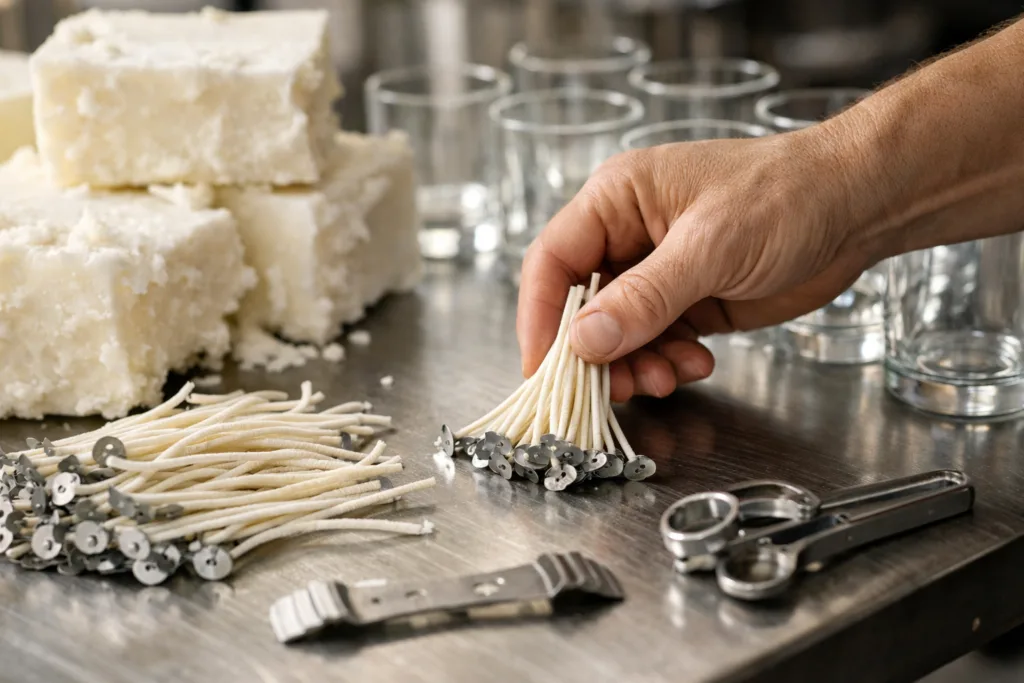
MOQ is more than just a production policy—it’s a core economic safeguard for both factories and their clients. The 500-unit threshold is designed to offset fixed and variable costs while maintaining quality standards. Let’s break down the principal expense categories:
- Labor: from skilled blending to hand-pouring and quality checks
- Material: wax blends, fragrance, custom containers and labels
- Machinery Setup: line calibration, safety checks, mold and wick prep
- Packaging: design, printing, and compliant labeling
- Waste & Quality Control: trial runs, setup losses, batch sampling
Attempting production with lower volumes often drives costs up exponentially per-unit, diminishing both value and consistency.
Labor Breakdown: Skilled Hands Behind Every Batch
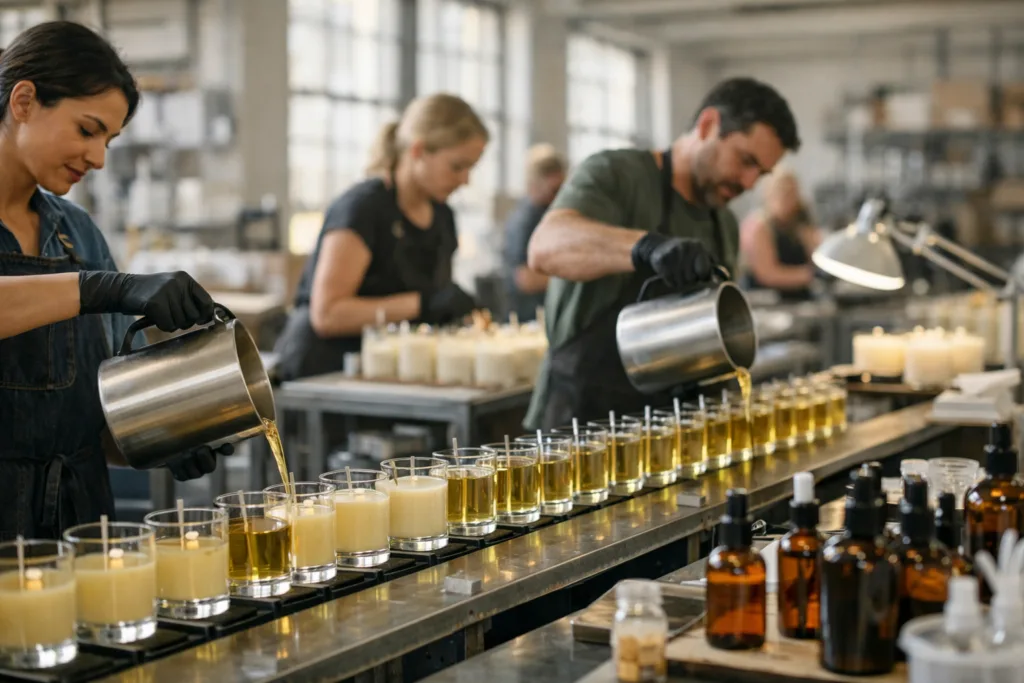
Contrary to common belief, luxury candle factories—like those producing for Circe Home—rely significantly on manual operations. Tasks include precise wax melting, homogeneous fragrance oil blending, controlled pouring, and detailed finishing (like smoothing, labeling, and boxing). Staff also manage real-time burn testing, compliance checks, and documentation.
Typical Labor Workflow for a 500-Unit Batch
- Weigh and prepare premium waxes: soy, coconut, rapeseed, beeswax
- Select and mix fragrance oils, respecting load and compatibility
- Wick selection and vessel prepping (wick gluing, position check)
- Melting, blending, and controlled-pour into vessels
- Curing in dedicated racks (48–72 hours depending on blend)
- Topping, smoothing, further QC, and labeling
- Final boxing and preparation for shipment
Costs scale poorly for small runs—labor overheads don’t shrink just because the order is half-sized. That’s why factories define the MOQ at a point where workflow remains efficient.
Material Sourcing: Bulk Economics Drive Candle Factory Minimums
Candle factories negotiate bulk pricing for blended waxes, premium essential and fragrance oils, wicks, and custom vessels. These suppliers often impose their own MOQs. A 500-unit order aligns with:
- Master carton sizes (to minimize transit damage)
- Bulk fragrance orders (matching optimal price brackets)
- Branded vessel production runs (glass factories, ceramic mold providers)
- Label and box printer runs (setup and color match tolerated by industrial printers)
Even slight drops below 500 units risk loss of these cost advantages and may introduce inconsistencies due to altered supply chain logistics or partial batches.
The Impact of Setup Costs on Batch Size
Setup costs refer to the fixed investments per batch: recalibrating pouring machines, cleaning vats, custom-mixing dyes, configuring label printers, and preparing safety documentation for the specific fragrance profile of each run. These processes consume significant time and materials—whether you’re pouring 100 candles or 1,000. Distributing these expenses across 500 units keeps per-candle pricing reasonable and leaves headroom for rigorous QC.
Quality, Safety, and Compliance Testing
Every batch, regardless of size, must meet regulatory and brand-specific quality standards. Testing includes:
- Burn profile checks: real burn, cool-down, and smoke assessment
- Soot index measurement for clean-burn assurance (especially soy, coconut blends)
- Container integrity testing (stress and seal tests for glass/ceramic)
- IFRA compliance for fragrances, CLP labeling (particularly for EU markets)
These activities incur steady overhead. For factories like Circe Home, which prioritize elegance and responsible production, lowering batch sizes would compromise either cost-competitiveness or the high standards associated with luxury candles.
Comparative Table: How Batch Size Impacts Candle Making Economics
| Order Size | Per-Candle Wax Cost | Fragrance Options | Packaging Customization | Unit Labor Cost | QC Investment |
|---|---|---|---|---|---|
| 100 units | High | Very Limited | Basic | High | Low |
| 500 units | Standard | Wide | Full Custom | Optimized | Robust |
| 2,000+ units | Lowest | Extensive + Bespoke | Premium/Unique | Lowest | Extensive |
Wax and Fragrance Complexity: From Soy to Signature Blends
Luxury candle makers manipulate four principal wax types: soy (vegetable base, clean burn), coconut (smooth texture), rapeseed (sustainable, mild throw), and beeswax (natural, subtle aroma). Each blend alters melt point, burn time, visual clarity, and scent throw capacity. Factories must maintain stock and specialist know-how for several formulas, all of which favor scale economies—another hidden factor locking the MOQ at 500 units and above.
Fragrance Integration: Why Blend Size Matters
- Consistent fragrance load for strong cold and hot throw
- Safe allergen declaration and IFRA compliance
- Fragrance/wax compatibility for desired burn profile
- General range: 7–12% fragrance load depending on base
Circe Home Lab Insight: “Ensuring a candle’s signature scent is evenly distributed requires not just the right formula, but also batch stability—below 500 units, the risk of uneven scent throw and batch-to-batch variation increases sharply.”
Customization Drives Minimums: Private-Label Candle Realities
For growing brands and designers, factory MOQs unlock premium container finishes, outer box enhancements, and signature scent work. Customization—embossed labels, metallic toppers, multicolor glass, and proprietary fragrance development—commands fixed investments whether for 100 or 500 units. High-mix, low-volume production is possible, but costs surge, and quality controls suffer. 500 units ensures robust execution and cost predictability.
Key Custom Features Enabled at 500 MOQ
- Complex vessel treatments (frosted, engraved, metallic glass)
- Custom fragrance systems (bespoke blends, natural oils, complex accords)
- Full-color outer box runs with foil, emboss, or specialty varnishes
Sustainability, Compliance, and Responsible Production
Ethical production is inseparable from economic batch sizing. 500-unit runs optimize material utilization, reduce partial-batch wastage, facilitate proper eco-labeling, and ensure audit-friendly traceability. Factories adhering to the latest IFRA and CLP guidelines (including those partnering with Circe Home) require time and documentation investments that scale best from 500 units upward. Further, packaging innovations—FSC cartons, soy ink, recycled glass, or refill systems—depend on volume commitments to be viable and affordable.
Applications: MOQ 500 in Real Market Scenarios
What does a 500 MOQ enable for various candle buyers?
- Luxury gifting brands: guarantee pristine packaging and sophisticated scent
- Private-label retailers: launch several SKUs with confidence in scent and appearance
- Hotels and spas: offer signature, IFRA-compliant blends in customized vessels
- Wellness and minimalist décor lines: debut clean-burning, sustainable blends with memorable branding
Why Candle Factories Require 500 Units: Labor, Material, and Setup Costs
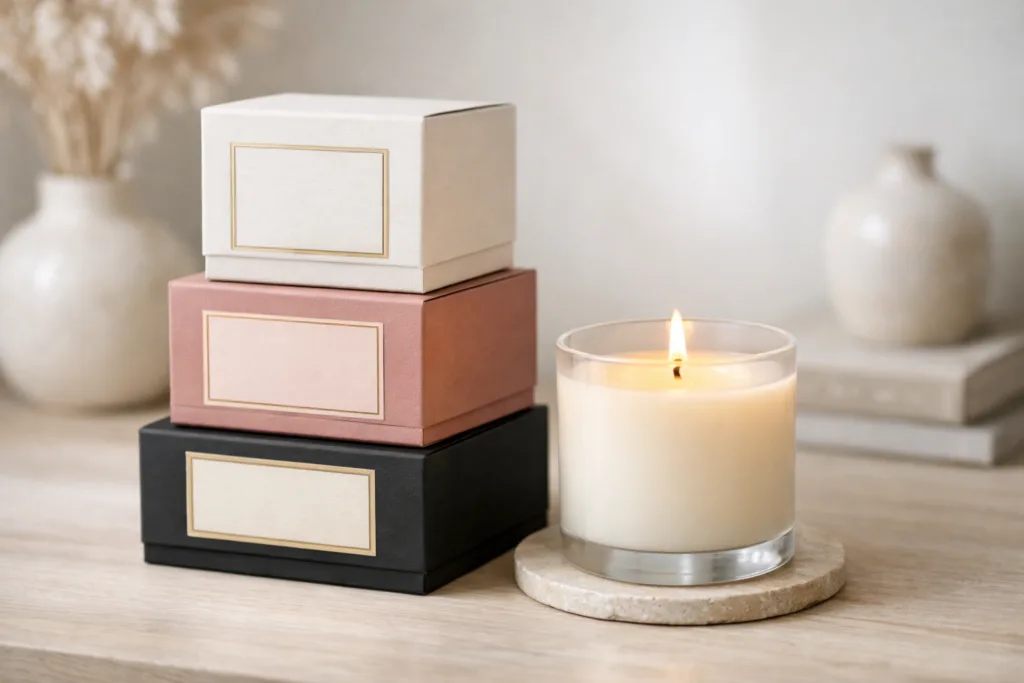
The 500 MOQ stands as a cornerstone for modern candle manufacturing—from technical setup, labor efficiency, and raw material management to complex customization, compliance, and sustainability. This threshold helps brands secure a product true to their design vision, while factories can commit skilled teams and premium inputs without compromise. Whether launching an artisanal collection or revitalizing a heritage fragrance, understanding the reasoning behind MOQ will help both new and established clients achieve cost-effective, quality-first results in the luxury candle market.
Frequently Asked Questions
Why is 500 the standard minimum order for candle factories?
The 500-unit minimum helps cover setup, labor, material, and quality control costs, allowing factories to offer custom scent and packaging while maintaining consistent standards.
Can I order fewer than 500 candles for a custom project?
Some factories may consider lower MOQs, but expect higher costs, limited customization, and potential compromises in quality or compliance due to less efficient batch scaling.
How does batch size impact fragrance consistency?
Larger batches ensure homogeneous wax blending and fragrance distribution, minimizing issues like uneven scent throw or color variation in the finished candles.
What candle types benefit most from 500-unit minimums?
Custom-branded, luxury blends (like those using soy, coconut, rapeseed, or beeswax) see stronger cost, quality, and design advantages at or above this MOQ threshold.
How is quality checked in a 500-unit candle run?
Quality control includes burn and smoke testing, wax and scent stability checks, container inspection, and full IFRA/CLP compliance documentation for each batch.
What added options open up at the 500 MOQ?
Buyers can access enhanced vessel finishes, personalized fragrance development, detailed packaging, and sustainability features that aren’t viable for short runs.