
A lot of people do not want to quit their jobs overnight. They do not necessarily want to burn everything down, disappear into the mountains, or become full-time entrepreneurs by next Tuesday.
What they want is something more practical.
They want a business they can start on the side. They want something tangible. They want something creative enough to feel meaningful, but realistic enough to launch without building an entire factory, learning a highly technical skill, or taking on reckless levels of risk.
That is exactly why the idea of a candle business side hustle has become so compelling.
A candle brand sits at a very interesting intersection. It combines product design, scent, packaging, gifting, self-care, lifestyle positioning, and emotional storytelling. It can be premium or minimalist. It can be gift-driven, wellness-led, seasonal, hotel-inspired, or deeply tied to a founder’s personal identity. Most importantly, it is one of the few product businesses that allows beginners to test the market without creating impossible operational complexity on day one.
For professionals, creators, consultants, boutique retailers, and people quietly dreaming about a new path, candles often make sense for one simple reason: they are easier to turn into a brand than many other physical products.
This does not mean the business is effortless. It does not mean every candle idea will succeed. And it definitely does not mean aesthetics alone are enough.
But if your goal is to start small, validate an idea, and explore whether your taste, story, or personal brand can become a real commercial asset, a candle business is one of the smartest low-friction places to begin.
This guide explains why.

Why a Candle Business Works So Well as a Side Hustle
Most side hustles fail before they begin because they are either too abstract or too operationally heavy.
Some ideas depend entirely on constant content creation. Some require deep technical expertise. Some look simple online but become a nightmare once sourcing, shipping, compliance, branding, and customer expectations start colliding.
A candle business is different.

It gives you a product with emotional value
People do not buy candles only for utility. They buy them because candles change the atmosphere of a room. They help shape routines. They create mood. They are associated with rest, taste, gifting, ritual, hospitality, memory, and identity.
This is important because it means you are not trying to sell a dead commodity. You are building around something people can connect with emotionally.
That makes brand storytelling much easier.
It is easier to position than many other categories
A candle brand can be positioned in many directions without becoming confusing. For example, you can build around:
Wellness and relaxation
A soothing line inspired by sleep, self-care, mindfulness, spa rituals, or slow evenings.
Luxury home fragrance
A more elevated line with premium vessels, refined fragrance stories, gift-ready packaging, and a higher-end visual identity.
Clean minimalist interiors
A design-led brand for people who want candles that match curated spaces and modern homes.
Seasonal and gift-led collections
A candle business built around gifting moments, holidays, weddings, celebrations, and limited-edition launches.
Founder-led lifestyle storytelling
A personal brand extension where the candle is not just a product, but a reflection of the founder’s taste, values, aesthetic, memories, or point of view.
The flexibility of the category is a major advantage. It gives beginners room to explore a brand voice without needing twenty different product forms.
It can start narrow without looking weak
Many new founders think they need a large catalog to look serious. That is one of the fastest ways to waste money.
With candles, starting with one vessel, two to three scents, and one clear packaging language can look intentional rather than limited. In fact, a small launch often feels more focused, more premium, and more believable.
That is a huge side-hustle advantage. You can test the business without pretending to be a department store.
Why This Business Attracts a Broader Type of Customer Than People Think

When many people hear “candle business,” they imagine one of two extremes.
The first is a hobby seller hand-pouring candles at home and posting them on social media. The second is a large-scale wholesale factory serving established retail brands.
In reality, there is a much wider middle ground, and that middle ground is where a lot of opportunity lives.
A candle business can attract:
- first-time founders
- professionals exploring a second income stream
- creators testing product-market fit
- boutique hotels and spas
- event businesses and wedding-focused brands
- gift companies
- wellness studios
- interior-led lifestyle brands
- beauty or fashion founders extending into home fragrance
- service professionals building a more personal consumer brand
That last category matters more than many suppliers realize.
There is a growing pool of people who may never have described themselves as “retail entrepreneurs” a few years ago, but who are now actively exploring product-based businesses. These include people with stable careers and good income, yet growing interest in ownership, creativity, and long-term flexibility.
They may be doctors, therapists, lawyers, consultants, designers, marketers, recruiters, real estate professionals, yoga instructors, beauty founders, or content creators. Some are burned out. Some are simply curious. Some want a more aesthetic business. Some want to test whether their taste can sell. Some are not even trying to replace their primary income at first. They just want to start something that belongs to them.
For this kind of founder, candles are unusually attractive.
A Candle Business Is a Good Gateway Into Personal Branding
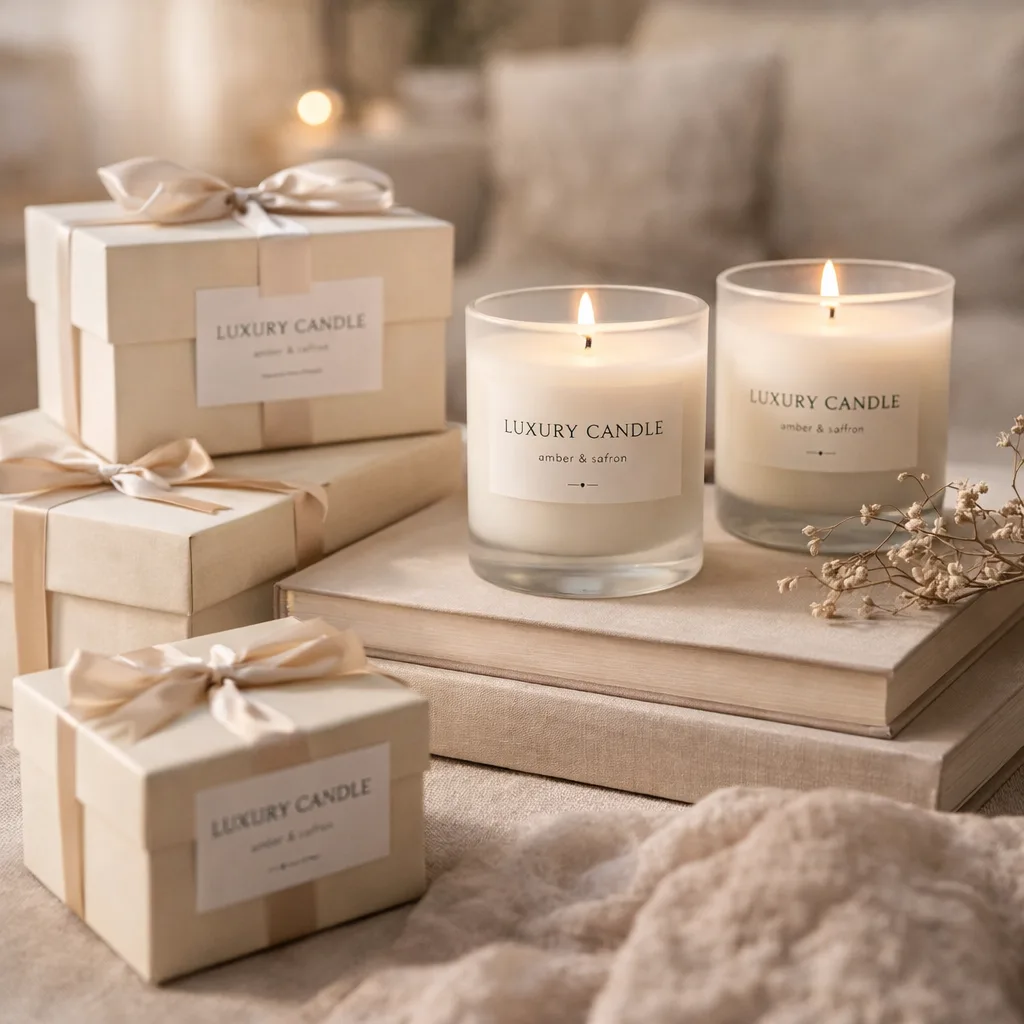
One of the strongest reasons this category works so well as a side hustle is that it naturally supports personal brand testing.
A personal brand is not just your face online. It is your taste, your point of view, your sensibility, your editorial eye, your product choices, and the emotional world you create around what you sell.
Candles make that easier because the category is inherently expressive.
Your scent story becomes part of your identity
A candle line can reflect travel memories, interior design preferences, seasonal moods, family rituals, cultural references, hotel atmospheres, literary themes, or even professional background.
A founder who works in wellness might launch a candle line around evening reset rituals. A lawyer with a strong minimalist aesthetic might build a refined office-to-home fragrance brand. A therapist might create a collection around calm, grounding, and emotional softness. A fashion founder might approach candles as an extension of visual language and luxury packaging.
The candle becomes a medium through which the founder’s taste becomes legible.
The visuals are naturally content-friendly
A product that looks beautiful on a coffee table, in a gift box, beside a bathtub, on a bedside tray, or in a styled interior is much easier to photograph, package, and market.
For side hustlers, this matters. If every piece of content requires exhausting explanation, your marketing becomes heavy. Candle content, when designed well, often communicates itself faster.
It is easier to build a coherent small-world brand
Strong branding is not about offering everything. It is about building a world people understand and want to enter.
Candles help founders create that world quickly because scent names, packaging textures, vessel colors, mood photography, and gift presentation all reinforce brand identity. Even a very small collection can feel complete when the creative direction is clear.
Why This Category Feels More Reachable Than Starting Many Other Product Businesses
A lot of product-based businesses become overwhelming because the founder has to solve too many high-stakes technical problems immediately.
With candles, the startup path can be more manageable, especially if you work with an experienced manufacturer instead of trying to build everything yourself.
You do not need to invent a new product type
You are not trying to develop a medical device, engineer wearable tech, or formulate a highly regulated skincare line from scratch. That lowers the barrier to entry.
You can start with an existing production system
Many side-hustle-friendly candle brands start through private label or semi-custom manufacturing. This means the founder focuses on the brand, the packaging direction, the scent selection, and the go-to-market angle instead of learning industrial production from zero.
You can keep the first launch operationally simple
A beginner launch can look like this:
One vessel
A standard glass jar or other commercially viable container.
Two or three scents
Enough variety to create customer choice without multiplying complexity.
One packaging system
A consistent box style, label logic, and shipping approach.
Limited initial volume
Enough to make the project commercially sensible, but not so broad that inventory becomes unmanageable.
This structure allows a founder to test positioning, pricing, and audience response before overexpanding.
Who Is Most Likely to Succeed With a Candle Business Side Hustle
Not everyone is a great fit for this category. The people who do best usually share a few characteristics.
They understand that taste is not enough without structure
A good eye helps. A good moodboard helps. A nice logo helps. But none of that replaces practical decisions around product setup, pricing, margin, packaging, delivery, and customer clarity.
The strongest founders combine aesthetic judgment with basic business discipline.
They are willing to start with fewer SKUs
Discipline is underrated. The founder who says, “I am launching one jar, three scents, and one gift-ready box” often gets to market faster and learns more than the founder who tries to build a complete empire before the first sale.
They understand that a side hustle is a test, not a fantasy performance
A side business does not need to imitate a giant brand on day one. It needs to prove that people respond to the offer. A candle business works best when treated as a focused test of audience, positioning, and product experience.
They are open to working with specialists
The right factory, packaging supplier, or development partner can save months of waste. Founders who understand this usually move more efficiently.
How a Candle Business Can Expand Your Customer Base If You Are Already in the Industry
This is especially relevant for suppliers, manufacturers, and existing B2B sellers.
If you already work in candles, home fragrance, or adjacent product development, expanding your message beyond traditional retailers can unlock a much broader client base.
Many suppliers keep talking only to established wholesale buyers. That leaves money on the table.
There is a growing market of smaller but often higher-intent buyers who are not asking because they do not know what is possible yet. These are people interested in building a personal brand, a boutique concept, a niche gift business, or a founder-led lifestyle line.
They may not speak in factory language. They may not arrive saying “I need vessel sourcing support and custom fragrance development.” Instead, they say things like:
- I want to start my own candle line
- I have a personal brand and want a product
- I want something for my wellness audience
- I am testing a gift concept
- I want a small but premium collection
- I have an idea but do not know where to begin
That is not a weak lead. It is simply a different lead.
If your website, blog, email flow, and service language are built only for seasoned buyers, you miss these people entirely.
A strong SEO strategy should therefore speak to both:
Established B2B buyers
People who already understand production, MOQ, packaging logic, and supply chain realities.
Emerging founder-buyers
People who are commercially serious but new to the category and need guidance.
This second group may actually be more brand-driven, less purely price-driven, and more open to supplier recommendations if trust is built correctly.
The Best Positioning Angles for a Side Hustle Candle Brand
One reason many beginners stall is that they try to be “for everyone.” A candle business becomes much stronger when the positioning is narrow and vivid.
Here are some of the most commercially promising directions.
Minimalist home fragrance brand
This works well for founders with a clean visual eye and a modern audience. The focus is less on novelty and more on restraint, materials, silhouette, packaging finish, and quiet luxury.
Wellness and sleep ritual brand
This direction centers on evening routines, rest, comfort, gentle scent stories, and emotional reset. It often pairs well with content around slow living, self-care, or sensory calm.
Gift-first candle brand
Some founders are not trying to dominate daily household consumption. They are focusing on gifting moments. That means presentation, customization potential, message value, and occasion-led storytelling become central.
Founder-story candle brand
This is ideal for creators and professionals whose audience already connects with their lifestyle, worldview, or voice. The candle becomes a physical expression of the founder’s narrative.
Boutique hospitality or spa-inspired line
This direction can appeal to wellness professionals, hotel-minded founders, aesthetic clinics, salons, retreat operators, or people inspired by premium sensory environments.
A side hustle becomes much more believable when the brand angle feels coherent.
How to Start a Candle Business Without Making It Overcomplicated
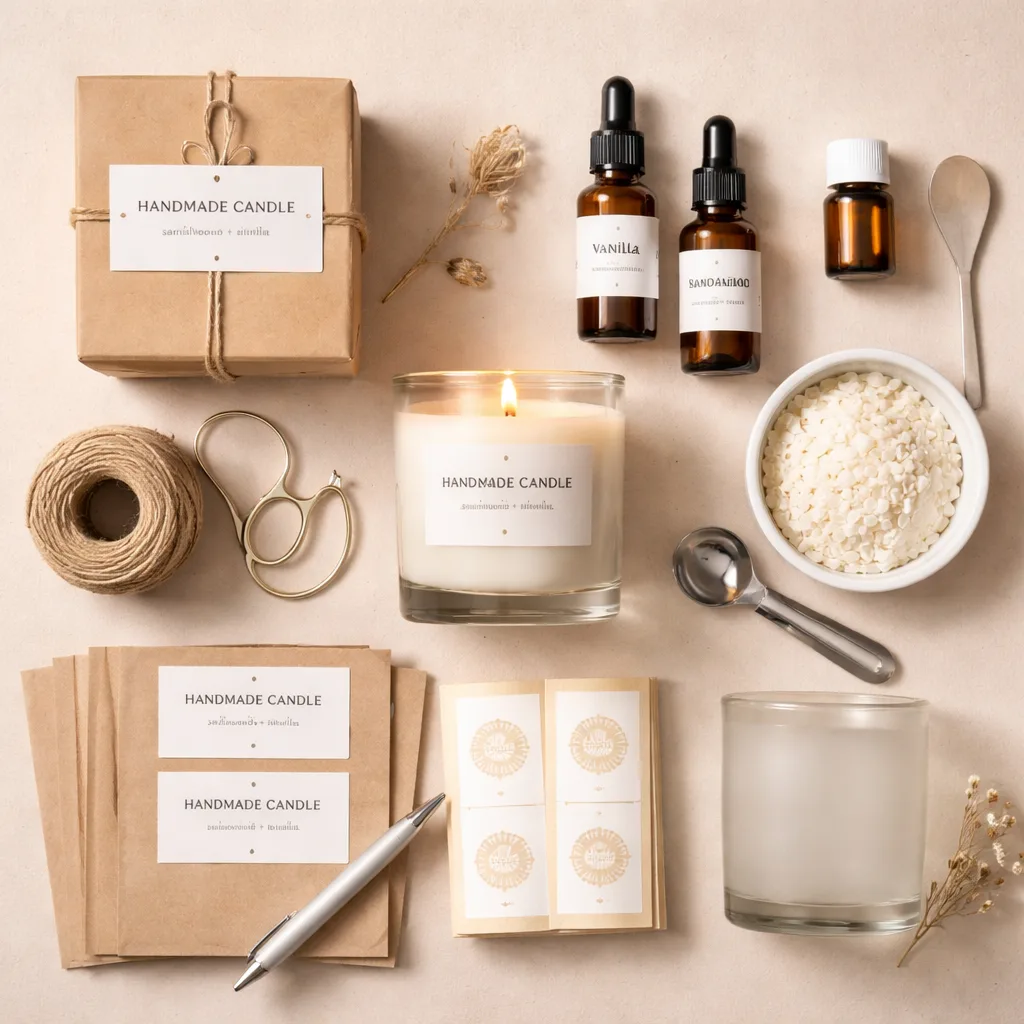
Beginners often assume the business becomes stronger when every decision is customized from the beginning. In reality, too much customization too early can destroy momentum.
The smarter path is usually structured simplicity.
Start with a proven vessel format
Instead of creating an entirely new container from scratch, start with a vessel that is commercially practical and aesthetically aligned with your positioning. A standard glass jar is often easier for first launches because it keeps cost, breakage planning, packaging compatibility, and lead time more manageable.
Choose a tight fragrance direction
More scents do not automatically create more value. The better approach is to define a scent point of view. For example:
- soft woods and clean linen
- warm amber and skin-like musks
- spa greens and herbal calm
- hotel-inspired fresh elegance
- bakery or nostalgic comfort themes
A focused fragrance direction makes the brand feel intentional.
Keep packaging clear and scalable
Your first packaging system should be attractive enough to support perceived value, but simple enough to reorder and scale. Many early-stage brands fail because their first packaging setup is visually impressive but operationally fragile.
Protect your margins from the beginning
A side hustle is not just a creative outlet. If the numbers make no sense, it becomes a draining hobby. Founders need to think about landed cost, packaging cost, shipping, retail pricing, and profit margin early.
Use your first launch to learn, not to prove everything
The purpose of a first collection is not to demonstrate infinite capability. It is to gather signal.
Which scent resonates?
Which vessel photographs best?
What price point feels acceptable?
What content converts?
What kind of customer responds fastest?
What objections keep appearing?
Those answers shape the second launch.
What New Founders Usually Get Wrong
The candle category may be accessible, but that does not mean the common mistakes are harmless.
They overbuild before validating
Too many scents, too many colors, too many SKUs, too many packaging variations, too many dreamy plans. Complexity makes a side hustle harder to launch and harder to understand.
They confuse beautiful branding with commercial readiness
A clean brand deck is not the same as a workable business. You still need a viable cost structure, reliable production, realistic lead time, and a clear offer.
They choose the cheapest path and hurt the brand
The category is emotional and sensory. Poor vessel quality, weak scent throw, careless labeling, thin packaging, or inconsistent burn performance can damage trust quickly.
They do not define the target buyer clearly enough
A candle for “people who like nice things” is not a strategy. A candle for women building evening rituals after stressful workdays is stronger. A candle for boutique gifting with premium packaging is stronger. A candle for hotel-inspired interiors is stronger.
They underestimate how much guidance buyers need
If you are a supplier or manufacturer serving first-time founders, your educational content matters. Buyers new to the category need clarity on product setup, MOQ logic, packaging choices, scent direction, and what is actually feasible.
Why Private Label and Guided Manufacturing Matter So Much
For beginners, the biggest hidden challenge is not creativity. It is translation.
They may have taste. They may have ideas. They may even have a clear brand mood. But they often do not know how to convert that into a manufacturable product system.
This is where a good production partner changes everything.
A good manufacturer reduces decision chaos
Instead of asking a beginner to navigate every possible wax system, vessel type, finish, packaging style, and logistics route without structure, an experienced partner narrows the path.
It shortens time to launch
The faster a founder gets from concept to sample to first market test, the better. Delays do not just waste time. They erode confidence.
It helps first-time founders avoid expensive vanity decisions
Not every beautiful concept should be made immediately. Good guidance often means steering the buyer toward something more commercially viable first.
It allows the founder to focus on brand-building
A side hustle founder usually has limited hours. If manufacturing support is stable, they can spend more energy on messaging, visuals, launch plan, retailer outreach, content, and customer acquisition.
Why This Business Can Mark the Beginning of a New Chapter
It is easy to overstate what a side hustle can do. A candle business will not magically repair burnout, remove uncertainty, or solve identity questions overnight.
But it can still matter deeply.
Because sometimes the change people need is not a dramatic escape. It is a credible beginning.
A business started on evenings or weekends can change how someone sees their future. Not because the first launch immediately becomes huge, but because the act of building something real creates momentum.
A candle business can be that kind of beginning.
It is tactile. It is visible. It is giftable. It is brandable. It gives form to taste. It turns mood into product. It allows someone with a professional life elsewhere to experiment with ownership in a manageable way.
For many people, that is enough to reopen possibility.
They do not need a fantasy. They need proof that their instincts can become something tangible.
That is why the category works so well.
What This Means for SEO and Brand Strategy
If you are writing content, building a candle manufacturing website, or creating a founder-facing candle brand, your messaging should reflect the wider opportunity.
Do not talk only about candles as a product.
Talk about candles as:
- a side hustle with commercial potential
- a personal brand test vehicle
- a lifestyle product with emotional value
- a scalable starting point for first-time founders
- a bridge between stable income and creative entrepreneurship
- a practical entry point into physical product branding
This broader narrative helps attract better-fit traffic.
It also widens the funnel.
You are no longer only speaking to people already searching for wholesale candle factories. You are also speaking to people searching for a way to begin.
And those searchers may become some of your most important future customers.
Final Thoughts
A candle business side hustle is not appealing because it is trendy. It is appealing because it combines creativity, brand potential, emotional product value, and manageable business structure in a way that many other physical products do not.
It can work for beginners. It can work for professionals. It can work for personal brands. It can work for boutique retail concepts. It can work for suppliers willing to expand beyond the usual buyer profile.
Most importantly, it can be started without pretending you already have everything figured out.
That is what makes it powerful.
Not the fantasy of instant success.
But the fact that it offers a realistic way to build something of your own, test whether your taste has value, and open the door to a different future without needing to throw away your current life first.
If you are exploring a product-based side business, or if you are a supplier trying to reach a wider pool of founder-buyers, this may be one of the strongest categories to build around.
Sometimes a new chapter does not begin with a giant leap.
Sometimes it begins with one clear product, one focused idea, and the willingness to start.
FAQs
Is a candle business a good side hustle for beginners?
Yes. A candle business can be a strong side hustle for beginners because it is easier to position, easier to brand, and often easier to launch than many other physical product categories. With the right product setup and manufacturing support, beginners can start with a focused collection instead of a large catalog.
Can a candle business help test a personal brand?
Yes. A candle business is one of the most effective product categories for testing a personal brand because it naturally combines storytelling, visual identity, scent direction, packaging, and lifestyle positioning. Even a small candle line can express a founder’s taste and build brand recognition.
What is the best way to start a candle business on the side?
The best way to start a candle business on the side is to keep the first launch simple. Start with one commercially viable vessel, a small scent range, clear packaging, and a realistic target customer. Working with a private label or guided manufacturing partner can help reduce risk and speed up the process.