
A manufacturer-led perspective for brands and buyers
Introduction: Relaxation Is No Longer a Trend — It’s a Product Requirement
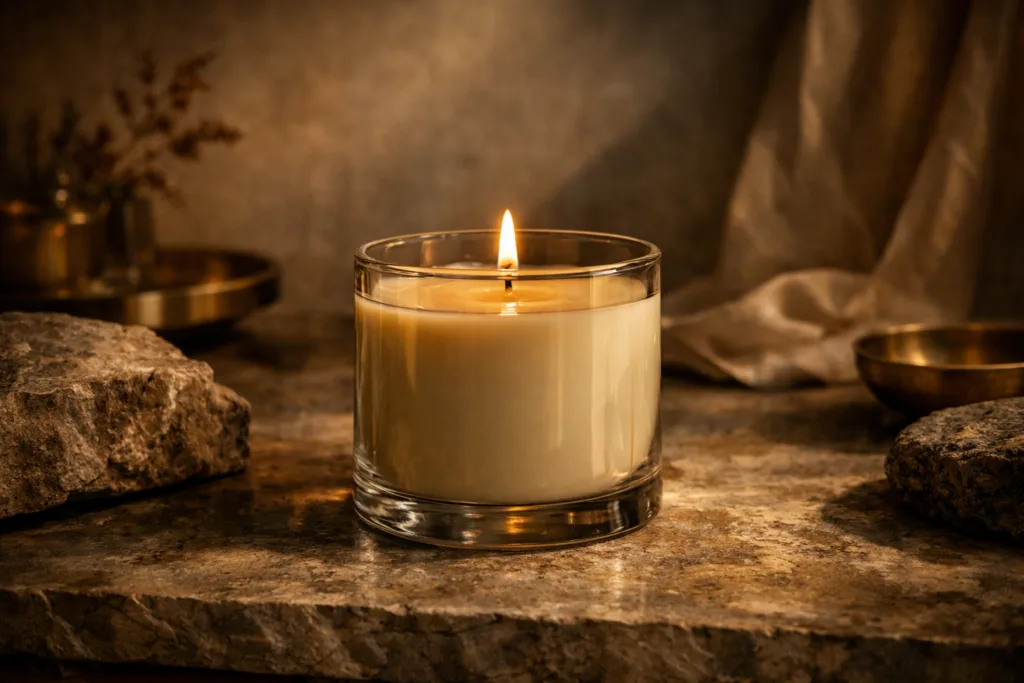 In 2026, relaxation is no longer a lifestyle luxury. It has become a functional expectation.
Across North America, Europe, and Oceania, we see growing demand for candles positioned around stress relief, sleep support, and emotional decompression. Yet from a manufacturing and retail standpoint, many so-called “relaxation candles” fail to deliver consistent results — not because the idea is wrong, but because the product logic behind them is incomplete.
From scent structure to wax behavior, from burn stability to scent tolerance over time, a truly relaxing candle requires different design decisions than a standard home fragrance product.
This guide explores what actually makes a scented candle suitable for relaxation in 2026 — not from a consumer review angle, but from a production-ready, retail-realistic perspective.
What Makes a Candle Truly Relaxing?
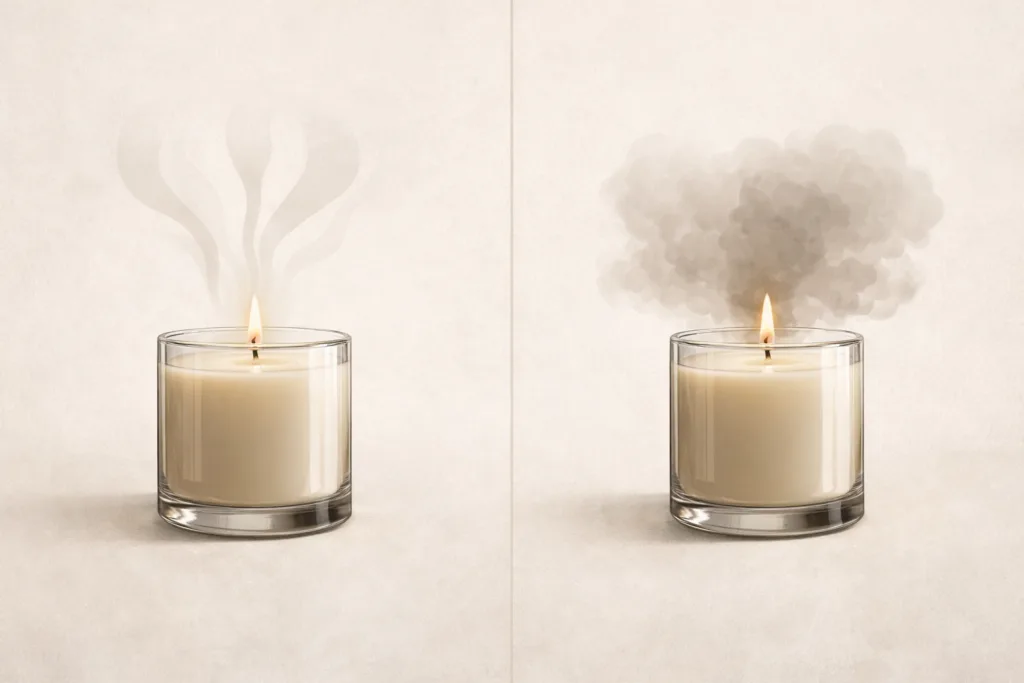 From a manufacturing standpoint, relaxation is not about intensity or novelty. It is about sensory stability.
A relaxation candle must meet four core conditions:
1. Low-Stimulation Scent Profile
Relaxing scents typically sit in the mid-to-low aromatic range. They are not designed to “project,” but to settle.
Scents commonly associated with relaxation include:
- Lavender and herbal notes
- Soft woods such as sandalwood or cedar
- Tea, chamomile, and light resinous accords
What matters is not the ingredient list, but how the fragrance behaves when heated over extended burn cycles. Scents that feel pleasant cold can become intrusive after 90 minutes of continuous use.
2. Controlled Scent Throw
Contrary to popular belief, stronger is not better for relaxation.
High scent throw increases the risk of:
- Olfactory fatigue
- Headaches
- Consumer rejection during long burns
Relaxation candles benefit from moderate, even diffusion, particularly in bedrooms and enclosed spaces.
3. Clean, Stable Burn Performance
A flickering flame, soot buildup, or uneven melt pool introduces subconscious tension. For relaxation products, burn consistency is not cosmetic — it is functional.
This places higher demands on:
- Wick selection
- Wax blend compatibility
- Vessel dimensions
4. Long-Term Sensory Tolerance
Relaxation candles are often used repeatedly, sometimes daily. Unlike statement fragrances, they must remain tolerable over time.
Repeat usability is one of the most overlooked design criteria in this category.
Best Candle Scent Categories for Relaxation in 2026
Rather than ranking brands, it is more useful to examine scent categories that perform reliably in relaxation-focused products.
Herbal & Lavender-Based Blends
Best for: sleep routines, nighttime use
These blends tend to perform well at lower fragrance loads and remain stable across longer burn sessions.
Soft Woody & Resinous Notes
Best for: post-work decompression, meditation
Wood-based profiles anchor the scent experience and reduce perceived sharpness.
Tea, Chamomile & Minimal Florals
Best for: emotional fatigue, overstimulation
These scents are often chosen by consumers who dislike traditional “perfumed” candles.
Neutral Warm Scents (Low Aroma Presence)
Best for: all-day background use
In 2026, there is increasing demand for candles that create atmosphere without a clearly identifiable scent signature.
Why Wax Choice Matters More Than Fragrance Strength
In relaxation candles, wax selection directly affects sensory perception.
From production experience, wax blends that perform best for relaxation tend to offer:
- Clean melt behavior
- Minimal off-scent when heated
- Stable fragrance release over time
Wax systems that amplify scent too aggressively can undermine the intended calming effect, particularly in smaller rooms.
For brands developing relaxation lines, wax choice should be evaluated alongside scent — not as a secondary decision.
Candle Size, Burn Time, and the Psychology of Relaxation
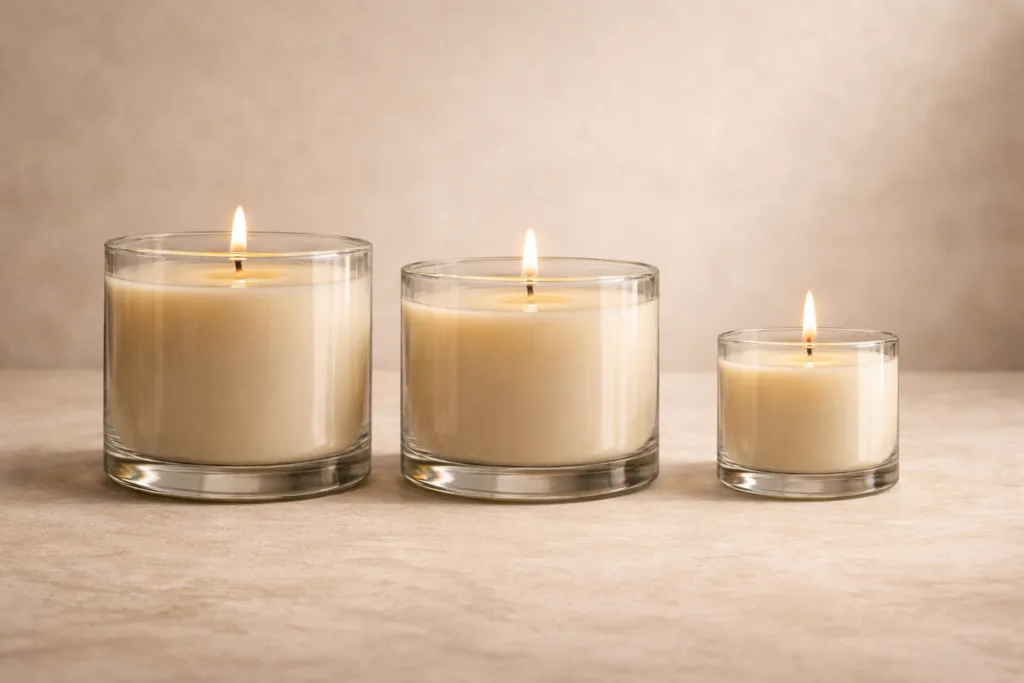 Size is not merely a pricing or aesthetic choice.
Larger jar candles often provide:
- Longer uninterrupted burn sessions
- A stronger sense of continuity and presence
- Fewer interruptions in daily rituals
Smaller candles may be suitable for sampling or gifting, but for core relaxation products, burn longevity plays a key role in perceived value and effectiveness.
From a retail perspective, consistency across multiple burns matters more than dramatic first impressions.
Common Mistakes in Relaxation Candle Development
From a manufacturing and sourcing standpoint, we frequently observe the following issues:
- Over-fragrancing to meet “strong scent” expectations
- Using decorative vessels that compromise heat distribution
- Prioritizing novelty scents over long-term tolerance
- Treating relaxation as a marketing claim rather than a product function
Avoiding these pitfalls requires aligning fragrance development, wax selection, and vessel design from the earliest stage.
What “Retail-Ready” Relaxation Candles Look Like in 2026
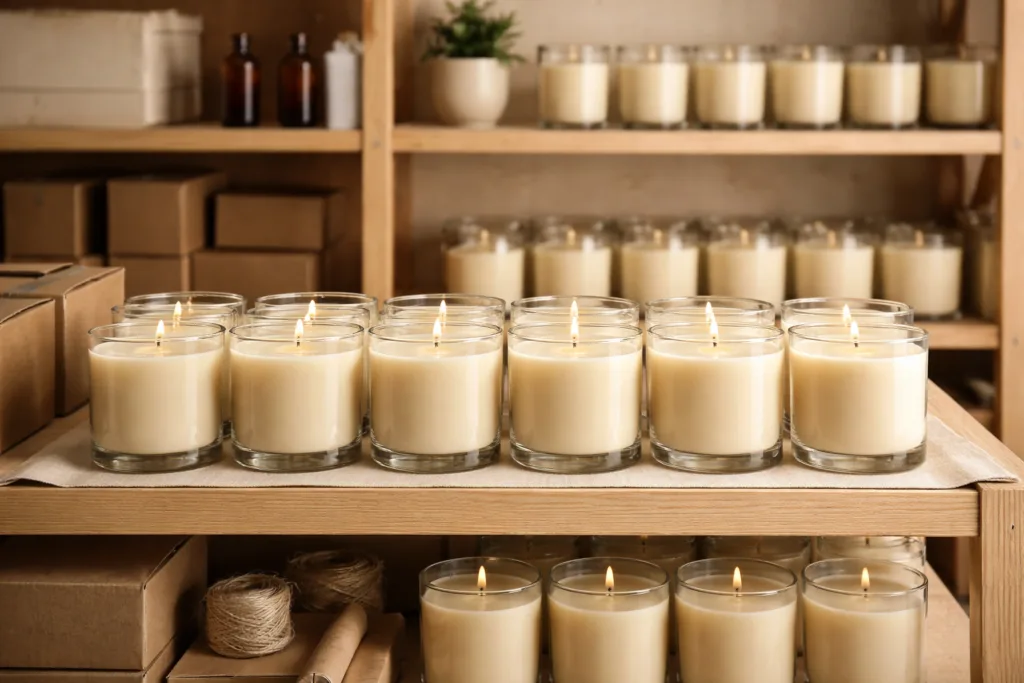 For brands and buyers, a relaxation candle must satisfy both emotional and operational criteria.
Retail-ready products typically demonstrate:
- Consistent burn performance across batches
- Stable scent experience over extended use
- Clear positioning without exaggerated wellness claims
- Compliance with regional safety and labeling standards
In 2026, consumers are increasingly skeptical of overstated benefits. Calm, credible product design builds longer-term trust.
Final Thoughts: Designing for Calm, Not Hype
Relaxation is not achieved through excess — not in scent, not in design, and not in messaging.
The most effective relaxation candles are the ones that disappear into the background of daily life, supporting routines rather than demanding attention.
For brands developing relaxation-focused candle lines, the goal is not to impress in the first five minutes, but to remain welcome after the fifth burn.
From a manufacturing perspective, that is where real value is created.
FAQs: Relaxation Candles (Manufacturer Perspective)
1. What makes a scented candle suitable for relaxation rather than general home fragrance?
From a manufacturing perspective, relaxation candles prioritize sensory stability over intensity. This means moderate scent throw, clean and consistent burn behavior, and fragrance profiles that remain tolerable during long burn sessions. Unlike general home fragrance candles, relaxation candles are designed for repeated, extended use without causing olfactory fatigue or irritation.
2. Are stronger scented candles more effective for stress relief?
Not necessarily. Strong scent throw can be counterproductive in relaxation-focused products, especially in bedrooms or enclosed spaces. Overly intense fragrance diffusion may lead to headaches, sensory overload, or consumer rejection over time. For stress relief, controlled and even scent diffusion is typically more effective than high fragrance strength.
3. Does candle size affect relaxation performance?
Yes. Larger jar candles often support relaxation rituals better because they offer longer, uninterrupted burn times and a greater sense of continuity and presence. While smaller candles are suitable for sampling or gifting, core relaxation products benefit from extended burn duration and consistent performance across multiple uses.
4. What should brands consider when developing private label relaxation candles?
Brands should evaluate relaxation candles as functional products, not just marketing concepts. Key considerations include fragrance behavior under heat, wax compatibility, burn stability, vessel design, and long-term sensory tolerance. Retail-ready relaxation candles must also meet regional safety and compliance standards while avoiding exaggerated wellness claims.