
Wax Types for Custom Scented Candles: Deep Dive
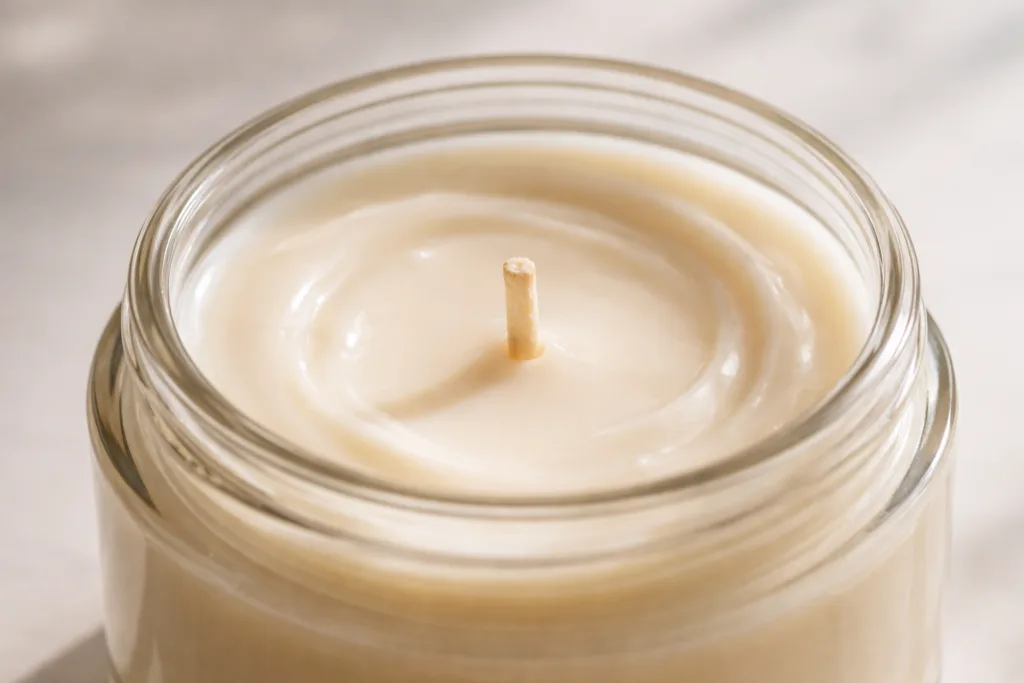
Candle wax acts as the backbone for fragrance dispersion and overall burning quality. Below, we examine the characteristics of the leading waxes used in custom and private-label candle manufacturing, highlighting their strengths and limitations.
Soy Wax: The Custom Candle Favorite
Soy wax is a hydrogenated vegetable oil prized for its clean burn, subtle gloss, and compatibility with high fragrance loads. This eco-friendly option is preferred for brands seeking natural positioning and impressive scent throw.
- Advantages: Soot-free burn, moderate to high fragrance load (~8-10%), excellent cold throw, slow even burn, biodegradable.
- Disadvantages: Prone to frosting, can require longer curing time for full fragrance strength, may tunnel if under-wicked.
Coconut Wax: OEM Luxury & Sustainability
Coconut wax is a luxury choice for OEM candle production—celebrated for its creamy appearance, superior scent diffusion, and smooth finish. It pairs beautifully with essential oil blends, elevating bespoke fragrance profiles.
- Advantages: Exceptional cold and hot throw, ultra-clean burn, low soot, fast fragrance release, stable blend with soy or rapeseed.
- Disadvantages: Higher raw material cost, softer consistency (may require blending), lower melting point, limited pure coconut wax options.
Beeswax: Heritage & Wholesale Appeal
Natural beeswax, sourced sustainably, lends honeyed aromas and a hard, drip-free burn. Often chosen for wellness and artisanal brands, it fulfills a niche for premium and wholesale candle suppliers.
- Advantages: Naturally aromatic, longest burn time, minimal smoke, hypoallergenic, visually appealing golden hue.
- Disadvantages: Limited scent throw for heavy fragrance, higher cost, challenging to blend, may overpower delicate perfumes.
Rapeseed Wax: The Rising Eco Choice
Rapeseed wax is gaining traction for its sustainability and impressive burn profile. Its versatility makes it attractive for minimalist and wellness lines seeking a balance between price, eco performance, and scent capacity.
- Advantages: Clean burning, European-grown, excellent base for blends, good scent retention, low soot.
- Disadvantages: Slightly lower maximum fragrance load, may need stabilizers for optimal glass adhesion.
Paraffin & Custom Blends
Paraffin delivers strong hot throw and vibrant scent projection. While less favored for eco-focused luxury brands, paraffin remains popular in certain retail niches and is often blended with vegetable waxes to balance performance and cost.
- Advantages: Sharp scent throw, economical, customizable hardness, bright color acceptance.
- Disadvantages: Higher soot potential, non-renewable, may require fragrance compliance checks.
Fragrance Performance & Burn Time Comparison
The success of a custom candle lies in its ability to fill a space with fragrance (scent throw) and sustain elegant burning for optimal ambiance. Let’s compare the waxes side-by-side for these attributes.
| Wax Type | Scent Throw (Cold/Hot) | Burn Time (200g) | Soot Level | Melt Point (°C) |
|---|---|---|---|---|
| Soy Wax | High/Moderate | 40-45 hrs | Low | 46-54 |
| Coconut Wax | Very High/High | 38-42 hrs | Very Low | 36-39 |
| Beeswax | Natural/Low for Added | 50-56 hrs | Minimal | 62-65 |
| Rapeseed Wax | Moderate/Moderate | 42-48 hrs | Low | 54-58 |
| Paraffin Blend | Very High/Very High | 38-41 hrs | Moderate-High | 54-60 |
How to Select Wax According to Brand Positioning
Wax selection is integral to expressing the ethos of your custom candle brand. Whether you’re courting the luxury market, targeting eco-conscious buyers, or seeking the strongest scent diffusion for spa and hotel candles, alignment between wax type and brand narrative creates distinction.
Luxury Home Décor
For premium home décor lines with an emphasis on refined sensory experiences and elegant presentation, coconut and high-grade soy waxes lead. Their creamy visual appeal and scent compatibility evoke sophistication, supporting layering of complex perfumes.
Eco & Responsible Production
Brands prioritizing sustainability often turn to soy, coconut (in blends), rapeseed wax, or responsibly sourced beeswax. These ingredients pair with FSC packaging, soy ink, and are often aligned with refillable vessel programs and clean labelling (CLP, IFRA compliance).
Wholesale & Artisanal Lines
Beeswax and beeswax blends appeal to wellness and heritage brands. For wholesale, consistency in burn profile and visual uniformity is critical; quality assurance often involves batch testing for wick centering and burn dispersion.
Private Label & Rapid Scent Customization
OEM/ODM partners like Circe Home specialize in coconut and soy wax blends, providing flexibility for unique container formats, exclusive fragrance systems, and rapid go-to-market customization—even for minimal order quantities.
Formulation Steps for Optimal Scent Throw and Burn
Creating top-tier scented candles requires precise control at each stage. Use this checklist for small batch or scaled manufacturing:
- Pre-heat vessels and prepare wicks (trim, glue, center).
- Weigh wax and fragrance according to wax type’s max load (e.g., soy: up to 10%, coconut: up to 12%).
- Melt wax at recommended temperature (avoid overheating to preserve scent integrity).
- Blend fragrance into wax at flash point (below 75°C for most waxes).
- Pour into vessels in controlled environment to minimize air bubbles.
- Allow slow cooling, cover for dust protection.
- Cure for optimal fragrance dispersion (soy: 5–7 days, coconut: 3–5 days, beeswax: 1–2 weeks).
Quality Control and Compliance in Candle Manufacturing
Technical precision drives both performance and safety in luxury custom candles. Brands must verify burn profile, scent consistency, labeling, and regulatory compliance.
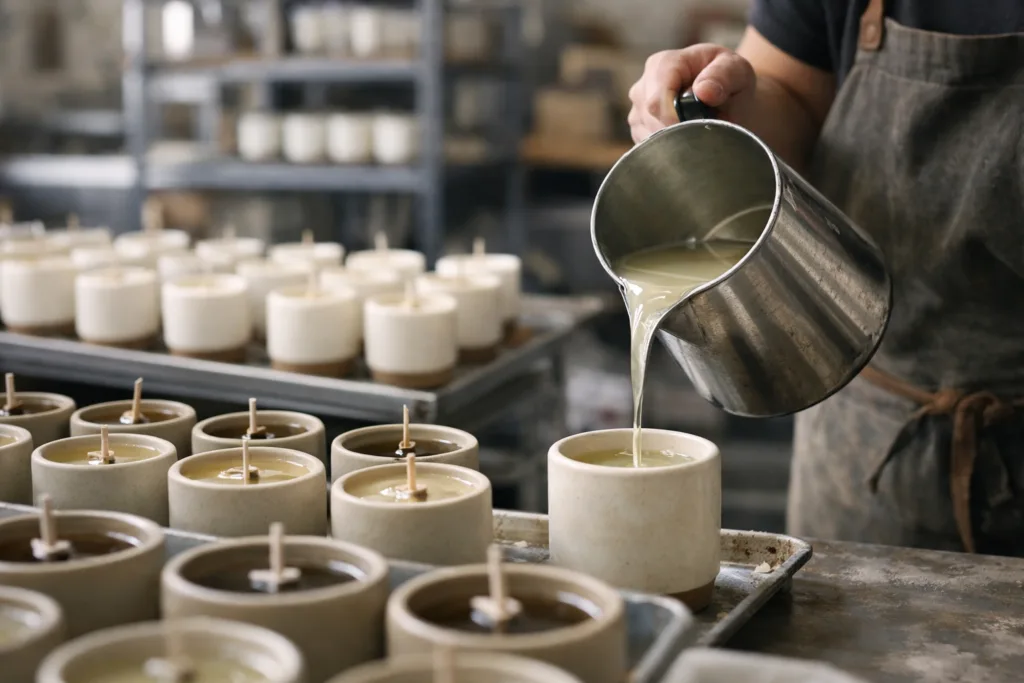
- Burn Testing: Check for >35 hours for standard 200g candle, monitor wick mushrooming, and soot minima.
- Scent Dispersion: Ensure uniform throw in both cold and hot phases across all vessels.
- Label Compliance: Adhere to IFRA 51st amendment and CLP standards, with allergen disclosure and pictogram use.
- Packaging & Presentation: Source FSC, recycled, or compostable material options for outer and inner packaging.
Circe Home Lab Insight: “Optimizing fragrance load in coconut-soy blends may require incremental adjustment during pilot pours. Our fragrance specialists recommend starting with 8% and increasing in 1% increments, observing cold throw and burn clarity before scaling.”
Container & Wick Considerations for Custom Candle Performance
Wax selection influences vessel choice and wick configuration—together defining the candle’s visual and functional experience.
Container Options
Glass, ceramic, concrete, and luxury metal tins offer distinct tactile and aesthetic impacts. High-wall glass jars support coconut blends, while beeswax suits shallow tins for even diffusion. Embossed foil-capped vessels and minimalist matte ceramics are trending for high-end brands.
Wick Types & Burn Profile
Wick diameter and material (cotton, wood, paper-core) must be tailored to wax viscosity, vessel diameter, and expected fragrance load. For heavy scent loads (coconut, paraffin blends), thicker flat-braid cotton or crackling wood wicks improve full-surface melt pools and reduce tunneling risk.
Applications and Use Scenarios
Candle wax options cater to a wide spectrum of applications, aligning with the desired sensory ambiance and environmental stance of the brand.
Luxury Gifting & Spa Candles
Coconut-soy blends, pristine glass vessels, and advanced soft-touch packaging make ideal choices for spa and hotel candles requiring instant scent immersion and burn clarity.
Minimalist & Wellness Home Lines
Rapeseed and beeswax fit minimalist brands prioritizing subtle scents, hypoallergenic properties, and long slow burns for extended mindfulness sessions.
Retail & Private Label Expansion
Candle manufacturers such as Circe Home support brands with OEM/ODM services: fragrance compliance consulting, custom box formats, and blend development to satisfy both boutique retailers and mass-market chains.
Sustainability, Compliance, and Packaging
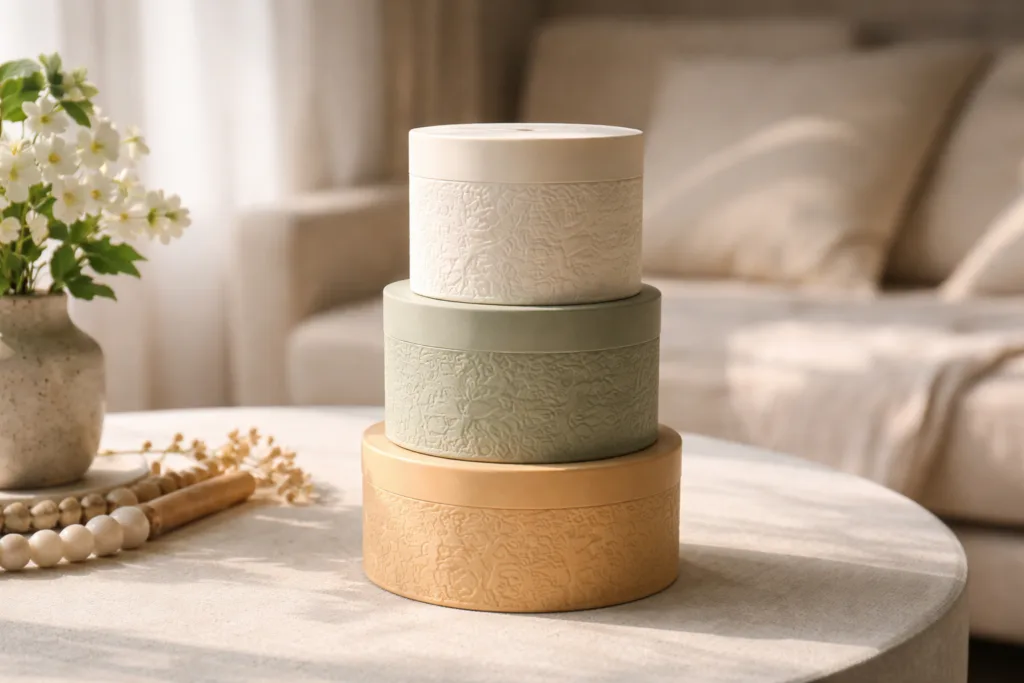
Candle wax selection and packaging practices underscore your brand’s commitment to both environmental and fragrance safety standards. Choose waxes with renewable sourcing credentials, and ensure all containers and outer cartons meet recyclability or compostable benchmarks. Adherence to IFRA and CLP keeps every candle on-shelf and regulatory complaint, bolstering consumer trust.
Frequently Asked Questions
What is the difference between soy and coconut wax for custom candles?
Soy wax offers a clean, slow burn and is ideal for natural brands. Coconut wax delivers a smoother finish with superior scent throw, but is softer and typically blended for stability.
How does wax type affect fragrance throw in scented candles?
The wax determines how much fragrance can be loaded and how it diffuses. Coconut blends maximize both cold and hot throw, while beeswax holds less added fragrance but provides a subtle, natural aroma.
Which wax is best for luxury candle brands seeking long burn times?
Beeswax and soy wax are top choices for extended burning. Beeswax lasts longest, while soy provides a smooth, soot-free burn for premium market positioning.
Are there sustainable wax options for eco-focused custom candle brands?
Yes, soy, coconut (as a blend), rapeseed, and responsibly harvested beeswax are all eco-friendly options, often paired with biodegradable packaging and clean labels.
How to ensure fragrance compliance in candle manufacturing?
Manufacturers must follow IFRA guidelines and CLP regulations, declare allergens, and test for safe burn and scent dispersion across all vessels and batches.
Can custom wax blends improve performance in scented candles?
Custom blends (e.g., coconut-soy) allow brands to tailor burn quality, scent throw, and container compatibility for unique formulations and private-label expansion.