
Introduction: Why Serious Buyers Audit Candle Suppliers Before They Scale
In the candle business, most mistakes don’t happen at the beginning.
They happen after you place your first real order.
A sample looks perfect. The scent is right. The packaging feels premium. Everything seems ready to scale.
Then the bulk production arrives — and something changes.
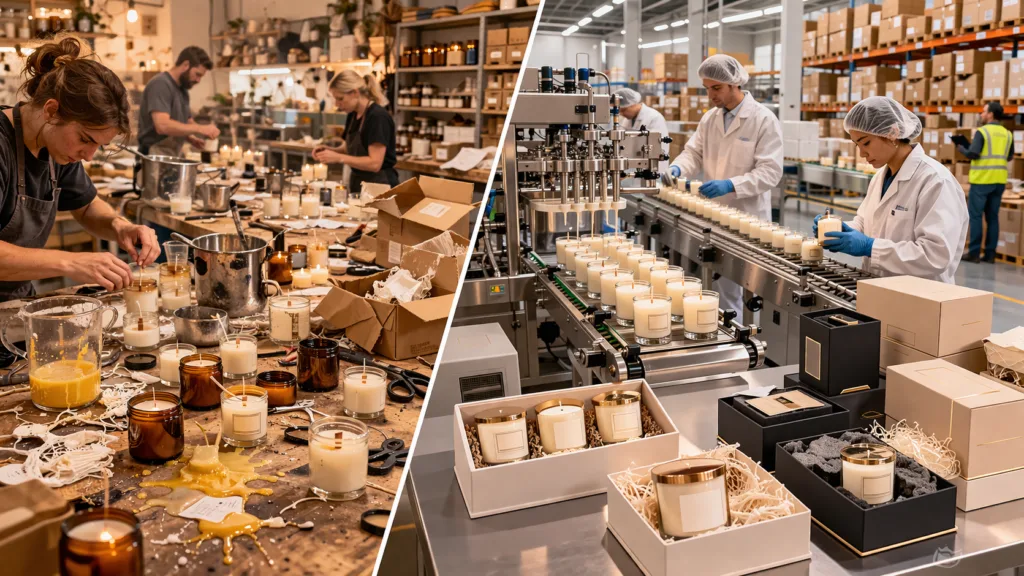
The fragrance is weaker.
The burn is uneven.
The glass overheats faster.
The packaging feels slightly cheaper.
Individually, these issues seem small. Collectively, they destroy your product experience.
For B2B buyers — especially retailers, hospitality groups, and brand owners — this is not a minor inconvenience. It is a direct hit to margin, reputation, and repeatability.
This is why experienced buyers do not “choose suppliers.”
They audit them.
A proper candle supplier audit is not about checking boxes. It is about answering one critical question:
Can this supplier deliver the same product, at scale, consistently, across multiple production cycles?
If the answer is unclear, the risk is unacceptable.
Understanding the Candle Supply Chain: Why It’s More Complex Than It Looks

At first glance, candles appear simple: wax, fragrance, a container, and a wick.
In reality, they sit at the intersection of multiple supply chains:
- Vessel manufacturing (glass, ceramic, metal)
- Wax sourcing and formulation
- Fragrance chemistry and blending
- Wick engineering
- Packaging production (boxes, inserts, printing)
Each component has its own lead time, MOQ, and failure risk.
This creates a fundamental truth:
A candle supplier is not a single factory.
It is a coordination system.
And most failures in candle sourcing do not come from production defects.
They come from misalignment between these components.
For example:
- Glass production delayed → packaging arrives first → warehouse congestion
- Fragrance reformulated → burn behavior changes → wick mismatch
- Packaging supplier changes paper stock → perceived quality drops
A proper audit focuses on how well a supplier manages these dependencies.
1. Manufacturing Capability: What Actually Limits Your Order
Most suppliers will tell you they can handle large orders. What they rarely explain is where their real bottlenecks are.
In candle production, wax pouring is rarely the limiting factor.
The real constraints are:
- Vessel availability
- Packaging production
- Multi-component synchronization
What to Audit
A. Vessel Strategy
- Are they using standard glass molds or custom molds?
- What is the MOQ per vessel design?
- Do they control vessel supply or depend on external suppliers?
Custom vessels often require higher MOQs and longer lead times. If a supplier cannot clearly explain this, they are not operating at a professional level.
B. Production Capacity (Real vs Theoretical)
Ask for:
- Monthly output (units, not vague descriptions)
- Peak season capacity (Q3–Q4)
- Current production load
A supplier that claims “high capacity” without numbers is a risk.
C. SKU Complexity Handling
A critical but often overlooked factor:
Handling 1 SKU at 5,000 units is easier than handling 5 SKUs at 1,000 units each.
Complexity increases exponentially with:
- scent variations
- packaging variations
- labeling differences
A strong supplier can manage SKU diversity without compromising consistency.
2. Fragrance Development Capability: The Core of Product Identity

In the candle category, fragrance is not an accessory.
It is the product itself.
And yet, many buyers underestimate how fragile fragrance development is.
The Reality
Many candle suppliers do not develop fragrances.
They source them.
This creates a dependency risk:
- limited customization
- inconsistent batches
- lack of technical understanding
What to Audit
- Do they have access to a professional fragrance lab?
- Can they recreate a reference scent accurately?
- How many sampling iterations are included?
- Can they explain hot throw vs cold throw?
Cost Insight
Fragrance typically accounts for 20–40% of total product cost.
Yet it is the least controlled variable in many projects.
Red Flags
- Only offering stock fragrance lists
- Unable to explain fragrance load percentages
- No documentation (IFRA, MSDS)
A supplier without fragrance depth cannot support a serious brand.
3. Wax System and Burn Performance: The Engineering Layer
A candle is not a static product.
It is a combustion system.
Performance depends on the interaction between:
- Wax type (soy, paraffin, blends)
- Wick size and material
- Fragrance load
- Container dimensions
What to Audit
- Do they conduct structured burn tests?
- Do they adjust wick specifications per vessel?
- Do they record:
- burn time
- flame height
- soot levels
Real Risk Scenario
A candle may perform perfectly in sampling, but fail in bulk production due to:
- slight changes in wax batches
- variation in wick supply
- fragrance oil differences
This is one of the most common causes of large-order failure.
4. Compliance and Safety: The Non-Negotiable Requirement
Candles are regulated in major markets such as the US, EU, and UK.
Ignoring compliance is not an option.
Required Documentation
- MSDS (Material Safety Data Sheet)
- IFRA certification (fragrance safety)
- ASTM standards (US)
- CLP labeling (EU)
What to Audit
- Do they include warning labels by default?
- Do they understand heat transfer risks in glass containers?
- Can they provide compliance documents proactively?
Real Consequence
Non-compliance does not just result in rejected shipments.
It can result in:
- legal liability
- product recalls
- brand damage
5. Quality Control System: Where Scale Breaks Down
Quality issues rarely appear in samples.
They appear when you scale.
What to Audit
Process Control
- Wax pouring consistency
- Wick centering
- Label alignment
Batch Control
- Do they retain approved samples?
- Do they compare production batches?
Documentation
- QC reports
- inspection photos
- defect rate tracking
Key Insight
Even a 2–3% defect rate becomes critical at scale.
At 10,000 units:
👉 300 defective units = operational problem
6. Packaging Capability: The True Driver of Perceived Value

In premium candle brands, packaging is not secondary.
It is central to the product.
Cost Structure Reality
Typical breakdown:
- Vessel: 20–30%
- Wax + fragrance: 30–40%
- Packaging: 30–50%
What to Audit
- Can they produce rigid boxes?
- What is the MOQ per packaging type?
- Do they offer inserts (foam, paper, pearl cotton)?
Strategic Impact
Packaging decisions determine:
- Retail pricing potential
- Brand positioning
- Margin structure
Suppliers who outsource packaging without coordination often create delays and inconsistencies.
7. Supply Chain Coordination: The Real Differentiator
This is where most suppliers fail.
A candle project requires synchronization between:
- vessel supplier
- fragrance supplier
- packaging supplier
- production timeline
What to Audit
- Do they manage suppliers proactively?
- Do they have backup suppliers?
- How do they handle delays?
Real Scenario
A common failure:
- Glass delayed by 7 days
- Packaging arrives early
- Production stalls
A strong supplier anticipates and manages these risks.
8. Sample vs Bulk Consistency: The Biggest Financial Risk
This is the number one issue in candle sourcing.
Why It Happens
- Different raw material batches
- Lack of process standardization
- Poor formulation control
What to Audit
- Do they lock formulations?
- Do they retain reference samples?
- Do they provide pre-production samples?
Golden Rule
Never move to bulk production without a pre-production sample confirmation.
9. Communication: The Invisible Risk Multiplier
Communication quality directly impacts execution quality.
What to Evaluate
- Response time
- Clarity of explanations
- Ability to communicate trade-offs
Insight
Poor communication during sampling becomes amplified during production.
10. Logistics Capability: The Final Execution Layer
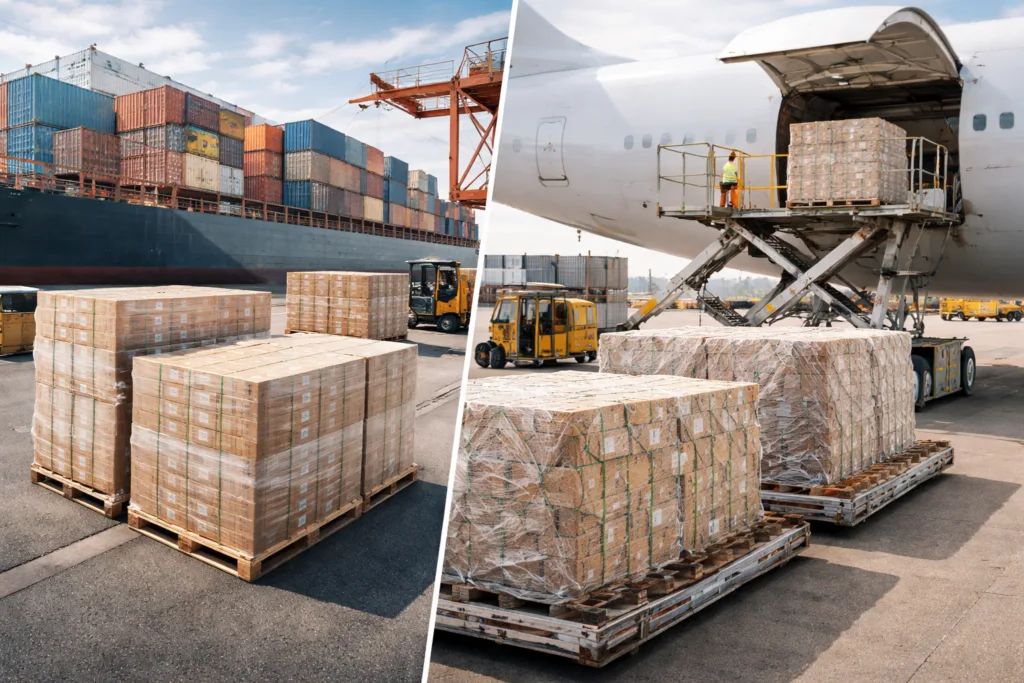
Your product is not finished until it is delivered.
What to Audit
- Export experience
- Packaging for transit protection
- Ability to offer DDP shipping
Real Impact
Weak logistics can lead to:
- damaged goods
- delayed delivery
- increased costs
11. Cost Structure Transparency: A Marker of Professionalism
Serious suppliers explain their pricing.
Typical Breakdown
- Vessel cost
- Wax + fragrance
- Packaging
- Labor
Red Flag
A single price with no breakdown usually indicates:
- lack of control
- hidden instability
12. Experience with Similar Buyers: Reducing Execution Risk
A supplier who has worked with similar clients understands your requirements.
What to Ask
- Case studies
- Past clients
- Similar product experience
This reduces trial-and-error in development.
The 500 vs 5,000 Units Reality: Why Scale Changes Everything
One of the biggest misconceptions in candle sourcing:
500 units and 5,000 units are fundamentally different.
At 500 Units
- Manual adjustments are possible
- Flexibility is high
At 5,000+ Units
- Systems must be stable
- Variation becomes visible
Weak suppliers can deliver samples.
Strong suppliers deliver systems.
Why Most Candle Suppliers Fail at Scale
Based on industry experience, failures usually come from:
- weak fragrance control
- lack of burn testing
- poor packaging coordination
- overpromising customization
Rarely from price.
Conclusion: What You Are Really Buying
When you source candles at scale, you are not buying a product.
You are buying:
- consistency
- repeatability
- supply chain reliability
Because in B2B:
Margins are built on stability.
Not on the lowest quote.
FAQ
What is the typical MOQ for custom candles?
MOQ usually starts from 500 units for standard vessels and increases significantly for custom packaging or vessels.
How long does candle production take?
Production typically takes 15–30 days, depending on customization and supply chain coordination.
What is the biggest risk when sourcing candles?
The biggest risk is inconsistency between samples and bulk production, especially in fragrance and burn performance.