
Most candle products do not fail because the founder lacks taste.
They fail earlier than that.
They fail in development.
A buyer finds a beautiful reference photo, asks for a custom vessel, wants a gift box that feels premium, chooses a rich fragrance profile, adds a foil logo, asks for quick samples, and expects the whole project to stay commercially friendly. On paper, that sounds normal. In reality, that is exactly where many candle launches start to drift off course.
In B2B candle sourcing, product development is not just about making something beautiful. It is about building a product that can survive cost analysis, minimum order quantity requirements, shipping realities, testing, compliance, and repeat production. A candle that looks right in a mood board but cannot scale cleanly is not a strong product. It is an expensive prototype.
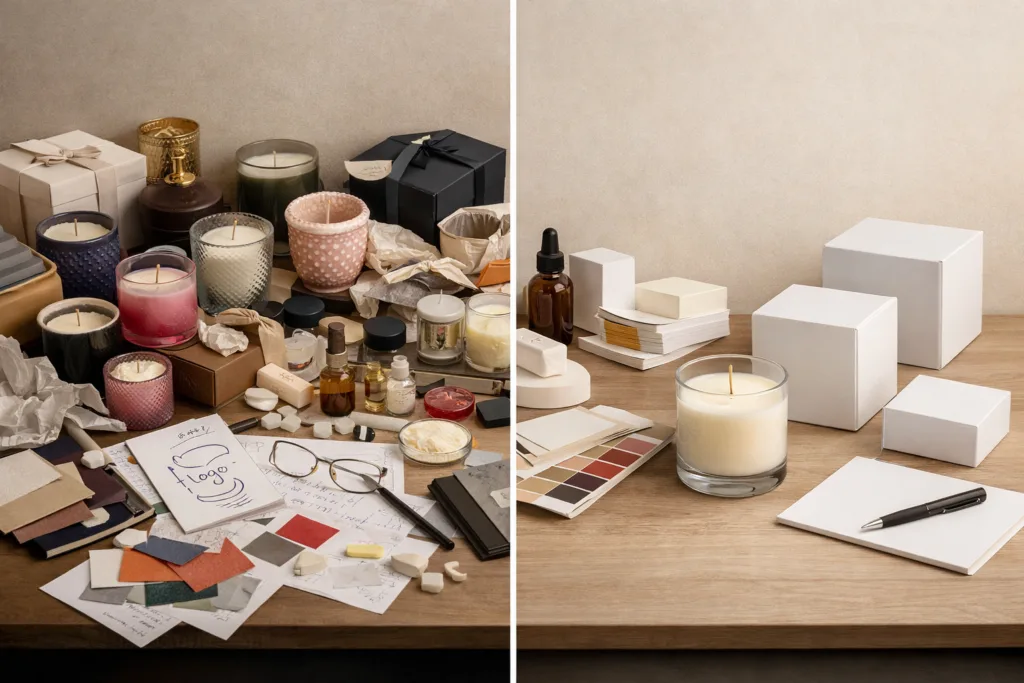
That is why experienced buyers do not search for inspiration alone. They search for reliability. They want to know which decisions increase cost, which details delay production, which packaging choices destroy freight efficiency, which fragrance concepts are hard to stabilize, and which suppliers can tell them the truth before they lose time and money.
This is also where an experienced supply chain partner matters more than a factory that simply says yes to everything.
A reliable candle and home fragrance supplier should not only make jar candles. They should be able to guide development across the broader category: scented candles, wax melts, gift sets, and reed diffusers. They should understand vessel sourcing, fragrance development, packaging engineering, sampling workflows, compliance logic, logistics, and the commercial structure behind each choice. In other words, they should think like a buyer, not just like a workshop.
This article breaks down the most common mistakes in candle product development from a B2B sourcing perspective. It is written for importers, retailers, wholesalers, private label brands, design-led home fragrance buyers, and procurement teams that want to launch a product line that is commercially viable from day one.
If you are developing a candle or diffuser line and want stronger margins, cleaner execution, and fewer surprises, these are the mistakes to avoid.
Why This Matters More Than Most Buyers Think
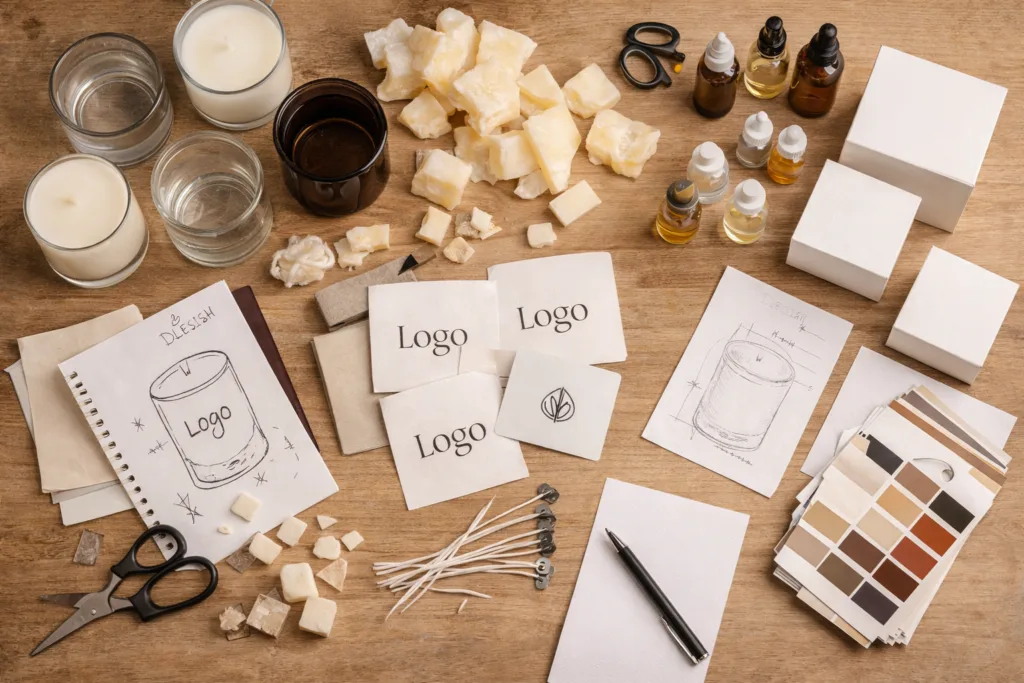
Product development decisions shape almost everything that comes later:
- your MOQ
- your unit cost
- your packaging cost
- your fragrance performance
- your compliance path
- your shipping cost
- your retail margin
- your reorder potential
Many buyers treat development as a creative stage and cost as something to solve later. In reality, cost is already being decided during development. So is complexity. So is risk.
A common example is the buyer who starts with a heavily customized candle vessel, a rigid gift box, a custom insert, several fragrances, several fill sizes, and multiple finish options, all before a clear launch strategy is set. Each of those choices may seem manageable on its own. Combined, they can turn a promising concept into a slow, expensive, high-MOQ program that is difficult to approve and even harder to reorder.
That is why disciplined product development matters. Good development keeps the concept attractive while reducing unnecessary friction. It aligns product design with sourcing logic, sales expectations, compliance requirements, and freight economics.
The best candle products are rarely the most over-designed. They are the most commercially intelligent.
Mistake 1: Over-Customizing Too Early
This is one of the most expensive mistakes in candle product development.
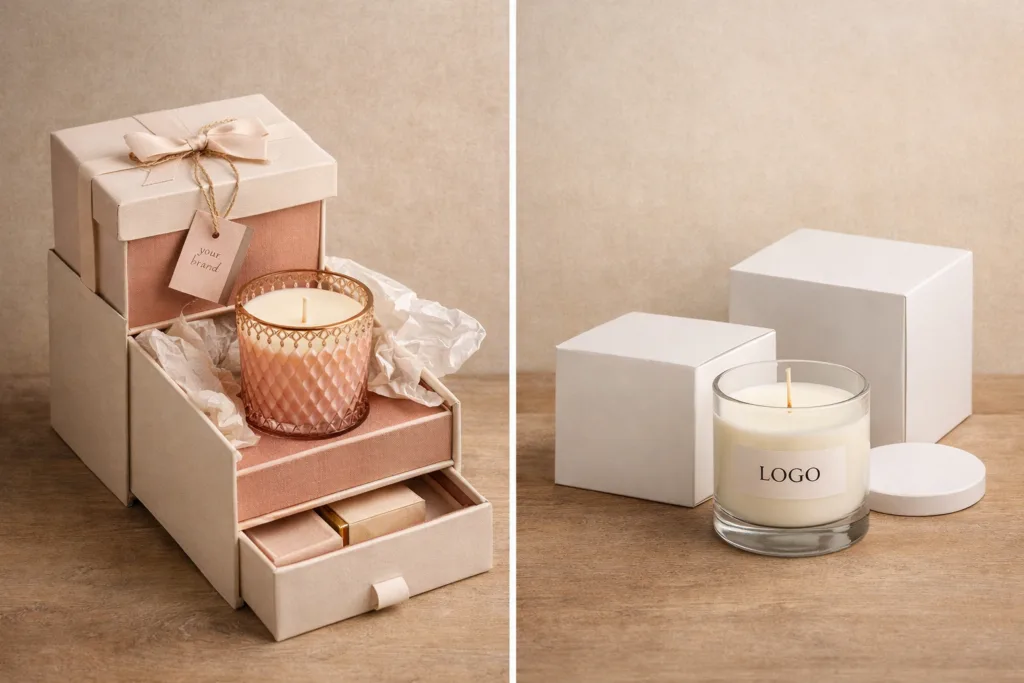
A buyer wants to stand out, so the first instinct is often to customize everything: the jar, the lid, the color finish, the outer box, the insert, the label treatment, and sometimes even the structure of the product itself. The problem is not customization by itself. The problem is timing.
Early-stage over-customization pushes a project into a cost structure that many brands are not ready for.
A fully custom candle usually does not mean one custom item. It means several custom items layered together. A custom vessel may require mold development, color matching, or special surface treatment. A custom rigid box may require a higher minimum order quantity than the candle itself. A custom insert adds tooling or labor complexity. Once multiple custom parts move together, the whole program becomes less flexible.
This is how buyers unintentionally create high MOQs before they have validated sell-through.
How to avoid it
Start with a staged development strategy.
For many brands, especially new launches, the smarter path is:
- use an existing standard jar or proven vessel shape
- customize the branding through label, print, decal, or foil
- keep packaging elegant but structurally simple
- test the market with fewer variables
- move into deeper customization only after the product direction is proven
This approach does not weaken the brand. It protects the launch.
A good supplier should be able to show where the real visual impact comes from. In many cases, the buyer does not need a fully custom vessel to look premium. A strong fragrance concept, a good glass choice, a clean logo treatment, and smart packaging can create a high-end result without forcing the project into an unnecessary MOQ trap.
The same principle applies to reed diffusers. Many buyers focus immediately on custom bottles, custom caps, custom reeds, and luxury rigid boxes. But diffuser development can also be staged. Start with the right bottle proportions, a strong fragrance direction, compliant usage levels, and packaging that supports the intended price point. Customize deeper after proof of market.
Mistake 2: Designing Without a Clear Target Price
A surprising number of buyers start development without a cost target.
They know the aesthetic they want, but not the numbers that must support it.
This creates a predictable problem. The product is designed first, and then the supplier is asked to make the price work. But price does not appear at the end of development. It is built into every decision made before the first quote is finalized.
A candle buyer should not begin with only the question, “Can you make this?”
They should also begin with:
- what retail price am I targeting?
- what landed cost range can I accept?
- what gross margin do I need?
- what channel am I selling into?
- what order volume is realistic for my first run?
A product for an upscale boutique, a museum store, a gift retailer, and a large-volume chain buyer may all look “premium” on the surface, but their cost tolerances are very different.
How to avoid it
Reverse-engineer the product from the selling reality.
Start from the intended market:
- wholesale model
- retail price band
- target margin
- packaging expectations
- shipping method
- reorder strategy
Then build the product accordingly.
For example, if the buyer needs a candle that can support wholesale distribution cleanly, the development process should immediately consider not only the jar and fragrance, but also carton dimensions, weight, pallet efficiency, damage risk, and whether the packaging fits the retail environment without overbuilding the cost.
Reliable suppliers help buyers work backward from commercial reality. They do not just send a price. They help explain why a certain vessel, lid, glass thickness, box style, or fragrance load changes the economics.
That is especially important in home fragrance programs that include both candles and diffusers. Buyers often want a coordinated range, but not every design choice that works for candles works for diffusers. The cost structure, bottle fill, fragrance concentration, and packaging protection can be different. A supply chain partner should help create visual consistency without forcing identical cost logic across product types.
Mistake 3: Treating Fragrance as a Creative Detail Instead of a Technical Decision
Fragrance sells candles. That part is obvious.
But fragrance is not only a branding choice. It is also a technical, operational, and compliance decision.
Many buyers approach fragrance development with a consumer mindset: they choose what smells good in a bottle. That is only the beginning. A fragrance that smells attractive as a raw oil may behave very differently in wax, in a diffuser base, or under actual use conditions.
In candle development, fragrance affects:
- cold throw
- hot throw
- wax compatibility
- discoloration risk
- wick performance
- soot behavior
- surface appearance
- stability over time
In reed diffuser development, the technical side becomes even more sensitive. The same fragrance family that works nicely in a candle may face different usage limitations or performance issues in a diffuser system. The oil must work with the diffuser base, the reed performance, and the product category requirements. A scent profile that feels easy in concept may be harder to execute across both candle and diffuser formats.
How to avoid it
Treat fragrance development as product engineering, not just scent selection.
A strong supplier should be able to do the following:
- develop fragrance options from a brief or reference
- advise on wax compatibility
- flag oils that may cause color shift or instability
- adjust fragrance style based on product format
- support different home fragrance products, including reed diffusers
- explain the difference between “good smell” and “good performance”
This matters because B2B buyers are not only buying fragrance. They are buying repeatability.
If a fragrance smells wonderful during sample review but performs inconsistently in bulk production, the product becomes difficult to scale. If it works in a candle but not in a diffuser, the planned collection becomes fragmented.
The better strategy is to define fragrance direction early, then validate it against format, usage, compliance, and commercial feasibility.
Mistake 4: Launching Too Many SKUs Too Soon
This mistake often comes from enthusiasm.
A buyer wants to make a strong first impression, so they plan a wide line: multiple scents, multiple sizes, maybe multiple vessels, maybe a gift set, and maybe a diffuser extension too. On paper, the range looks impressive. Operationally, it can become messy very quickly.
Each SKU adds pressure to forecasting, sampling, packaging coordination, fragrance approval, production planning, inventory holding, and freight calculation. What felt like a bigger launch can turn into a diluted one.
In candle programs, too many SKUs can fragment the order so much that none of them are being produced efficiently. Instead of one healthy production run, the project becomes a complicated patchwork of smaller runs with more room for error.
How to avoid it
Start narrower and build depth later.
For many private label launches, a more disciplined opening structure works better:
- one hero vessel
- two or three core fragrances
- one packaging system
- one clear price architecture
After the first launch proves demand, then expand.
This is also the smart way to build a coordinated home fragrance line. Instead of launching candles, wax melts, and diffusers in too many scent variants at once, develop a small fragrance architecture that can scale across formats. This simplifies sourcing, helps branding stay coherent, and improves reorder logic.
A professional supplier should help the buyer identify which SKUs are worth launching first and which should wait. The goal is not to show the biggest catalog. The goal is to build a line that buyers can reorder with confidence.
Mistake 5: Ignoring Packaging Strategy Until the End
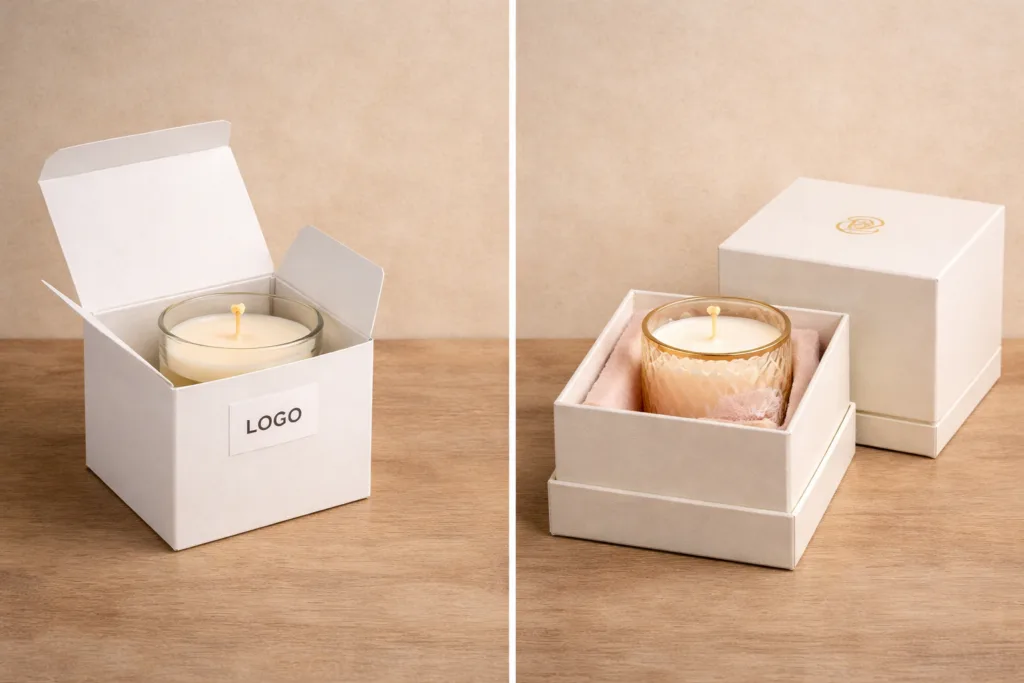
Packaging is often treated as decoration. In B2B candle sourcing, it is much more than that.
Packaging affects the look, of course, but it also affects labor, MOQ, damage rate, freight cost, shelf presence, perceived value, and margin.
One of the most common development mistakes is when a buyer finalizes the candle and only later starts thinking seriously about the box. At that point, the supplier may need to redesign dimensions, rebuild inserts, revise carton planning, or re-quote based on the actual structure.
The biggest packaging mistake is not “bad taste.” It is building packaging that is too heavy, too expensive, too complicated, or mismatched to the intended sales channel.
How to avoid it
Think about packaging as part of the commercial model from the start.
Ask early:
- does this line need a gift box or a standard retail box?
- does the packaging need to communicate luxury, value, or simplicity?
- does the insert really add value, or only cost?
- what does the packaging do to freight weight?
- what is the MOQ for this packaging format?
- is the packaging scalable across several SKUs?
A rigid box can look premium and support a higher perceived value. In some channels, that makes sense. In others, it weakens the margin. A lighter folding carton may create a stronger business result even if it looks simpler.
Good packaging development is not about making the most expensive-looking structure. It is about matching the structure to the commercial reality.
The same applies to diffuser packaging. Reed diffusers often need stronger leak-conscious thinking, clean component fit, and a box structure that protects glass bottles and caps during transit. A supplier that handles both candles and diffusers should be able to create packaging logic that works across the line, not just make individual boxes.
Mistake 6: Forgetting That Shipping Is Part of Product Development

Many candle products are designed as if freight does not exist.
Then the quotation arrives, and suddenly the buyer realizes that the product is beautiful but expensive to move.
Candles are fragile, relatively heavy, and often packed in glass. Add rigid boxes, inserts, secondary packaging, and outer cartons, and the freight profile becomes a serious part of the landed cost. This is especially important for overseas buyers importing to North America, Europe, or Oceania.
A candle that looks only slightly larger on a mood board may increase weight significantly once the real vessel, wax fill, box, and protection materials are included. That change can affect both sea and air freight economics.
How to avoid it
Design with freight in mind from the beginning.
That means looking at:
- vessel weight
- fill weight
- lid material
- insert material
- outer box type
- master carton efficiency
- units per carton
- pallet configuration
- breakage risk
- destination and shipping method
A supply chain partner should be able to flag freight-heavy choices early. Sometimes the smarter option is not the cheapest ex-works product, but the product with the stronger total landed economics.
This is where practical sourcing experience matters. A supplier who regularly supports door-to-door export projects understands that product development is not complete until the buyer knows what the product costs to ship, not just to make.
The same principle becomes even more important when a line includes diffusers. Glass diffuser bottles, fragrance oils, and cap systems can create different packing and shipping concerns than candles. A coordinated supplier can help buyers develop both categories with logistics in mind, rather than treating them as two separate problems.
Mistake 7: Underestimating the Sampling Process
Some buyers assume that once the brief is clear, the first sample should be close to final.
That expectation creates frustration on both sides.
In real B2B candle development, sampling is not a formality. It is a controlled problem-solving phase. It is where the buyer and supplier discover what needs refinement before volume production locks everything in.
Sampling may involve:
- vessel confirmation
- color matching
- logo method testing
- label material selection
- fragrance adjustment
- wax surface review
- wick tuning
- burn performance review
- packaging fit check
- insert revision
- carton drop-risk evaluation
The more customized the project, the more important this stage becomes.
How to avoid it
Set realistic expectations for sampling.
A structured development process usually works best:
- confirm the target product direction
- approve material and packaging approach
- create samples
- review fragrance and visual details
- revise where necessary
- confirm the production standard
- move into bulk production only after the standard is clear
A good supplier should be organized enough to explain what is being tested at each stage. That is what separates a real development partner from a general trading contact who simply forwards messages.
Sampling is not wasted time. Poorly managed bulk production is wasted time.
Mistake 8: Copying a Reference Photo Without Checking Feasibility
This is common in private label development.
A buyer sees a candle online, on Pinterest, or in a retail store and wants “something like this.” That is a perfectly normal starting point. The problem begins when the reference is treated as a ready-made production plan.
A photo does not reveal:
- the true glass specification
- whether the vessel is stock or custom
- the actual box construction
- the mold cost behind the component
- the fragrance performance
- the production volume that supports the design
- the defect tolerance required to make it consistently
In other words, inspiration is not the same as feasibility.
How to avoid it
Use reference images as direction, not as manufacturing instructions.
A reliable supplier should help break a reference down into practical layers:
- which parts are easy to replicate
- which parts need adaptation
- which parts increase MOQ
- which parts may affect lead time
- which details are cosmetic versus structural
- which alternative methods can achieve a similar look with a better cost structure
This is especially important for novelty candles, dessert candles, sculptural shapes, and decorative home fragrance pieces. These products often look simple in photos but are much more sensitive in mold design, wax behavior, surface finish, hand-applied details, and transit stability.
An experienced supplier does not kill the idea. They make it producible.
Mistake 9: Choosing Suppliers by Lowest Quote Instead of Development Capability
This is the mistake that sits behind many others.
Some buyers compare quotations as if they are buying interchangeable products. But in custom candle development, the cheapest quote often reflects the narrowest understanding of the project.
A low quote may exclude hidden details, ignore packaging risk, overlook fragrance complexity, underestimate shipping impact, or assume a quality level that does not match the buyer’s market.
For large-order buyers, the real question is not, “Who is cheapest today?”
It is, “Who can support this program cleanly at scale?”
A dependable supplier should offer more than manufacturing capacity. They should offer development judgment.
That includes:
- understanding which ideas are scalable
- knowing how MOQ changes across components
- coordinating fragrance, vessel, and packaging logic
- supporting candles and diffusers under one supply framework
- being transparent about trade-offs
- keeping communication clear during development
- helping protect the buyer from avoidable cost inflation
Large orders do not come from cheap samples alone. They come from confidence.
Buyers place bigger orders when they believe the supplier understands the business behind the product, not only the object itself.
What Good Candle Product Development Actually Looks Like
At this point, it helps to step back and define what strong development really means.
Good candle product development is not about adding more features. It is about creating a product system that works commercially.
That system includes:
- a vessel that matches the positioning
- a fragrance that performs in the intended format
- packaging that supports the margin
- an MOQ structure that fits the launch stage
- a sampling workflow that reduces surprises
- compliance awareness from the start
- a freight profile that the buyer can live with
- a reorder plan that does not break the business
For buyers building a broader home fragrance collection, good development also means thinking beyond candles. Reed diffusers are a natural extension for many brands, but they should not be treated as an afterthought. The fragrance behavior, category-specific restrictions, bottle design, reed function, and packaging requirements all need product-specific attention.
This is why a coordinated supply chain partner is often more valuable than a single-product factory. A supplier with broader category capability can help build a more coherent range and reduce the friction that comes from managing too many disconnected vendors.
A Smarter Development Framework for B2B Buyers
If you want to avoid the mistakes above, this framework is a practical place to start.
1. Define the commercial objective first
Before asking for samples, be clear on:
- target market
- target retail or wholesale price
- launch volume
- expected margin
- ideal order structure
- whether this is a test launch or a scaled program
2. Simplify the first version
Do not try to solve every branding ambition in the first production run. Focus on the few elements that create the strongest impact.
3. Align vessel, fragrance, and packaging early
Do not develop these in isolation. A premium-looking vessel with weak packaging logic or unstable fragrance does not create a premium product.
4. Build around repeatability
A good sample is not enough. Ask whether the product can be repeated consistently, packed efficiently, and reordered without the same confusion each time.
5. Develop freight-conscious packaging
A great box that destroys landed cost is not actually a great box.
6. Keep the SKU count disciplined
A tighter launch usually performs better than a scattered one.
7. Work with a supplier who can challenge weak decisions
You do not need a partner who approves everything. You need one who helps protect the project.
Where Serious Buyers Usually Gain the Most
For larger wholesale, retail, or importer clients, the biggest gains usually do not come from squeezing pennies out of a single unit price. They come from better product structure.
That may mean:
- reducing unnecessary customization
- using one packaging system across multiple scents
- standardizing vessels where it does not hurt the brand
- choosing fragrance directions that are easier to scale
- aligning candle and diffuser development into one clear collection
- minimizing avoidable freight weight
- approving samples with clearer production standards
These are not dramatic changes. But together, they often make the difference between a product that can support a healthy reorder cycle and one that becomes difficult after the first run.
Why Buyers Looking for Large Orders Need a More Reliable Supply Chain
If you are planning to buy in volume, reliability matters more than presentation.
A nice catalog is not enough.
A professional buyer needs confidence in:
- sourcing consistency
- product development judgment
- packaging coordination
- fragrance support
- export communication
- problem-solving speed
- the ability to support multiple home fragrance categories
That is where a more flexible supply chain model has real value.
Instead of forcing every project into the limits of one factory setup, a stronger supplier can integrate different production strengths: glass, ceramic, fragrance development, packaging, candles, and diffusers. That gives buyers a better chance of matching the right production path to the right product concept.
For buyers building premium private label or OEM home fragrance lines, that flexibility matters. It often leads to better pricing logic, more appropriate MOQs, cleaner development, and better category coordination.
Final Thoughts
The most common mistakes in candle product development are not random. They usually come from the same root issue: too many buyers treat development as an aesthetic process when it is actually a commercial one.
A successful candle or diffuser launch needs more than a good-looking concept. It needs disciplined product structure, realistic cost thinking, category knowledge, packaging strategy, and supply chain judgment.
If you get those pieces right, development becomes faster, cleaner, and more scalable. If you get them wrong, the project may still reach sampling, but it often struggles when it is time to quote, ship, reorder, or grow.
That is why serious B2B buyers do not just look for a candle factory. They look for a reliable home fragrance supply chain partner who can help them avoid mistakes before those mistakes become costs.
If you are developing private label candles, wax melts, or reed diffusers and want a product line that is commercially stronger from the start, the right supplier should not only make what you ask for. They should help you build what makes sense.
FAQ
1. What is the biggest mistake in candle product development?
The biggest mistake is over-customizing too early. Many buyers add custom vessels, rigid boxes, inserts, and multiple SKUs before validating the product direction, which quickly raises MOQ and cost.
2. How can I reduce candle development cost without making the product look cheap?
Start with a proven stock vessel, focus on strong fragrance development, and use smart branding methods like labels, decals, or foil details. Good design does not always require full customization.
3. Can the same supplier develop both candles and reed diffusers?
Yes, but not every supplier is equally capable. A stronger home fragrance supplier should be able to support candles and reed diffusers together, including fragrance direction, packaging, and production planning across the full line.
Suggested Internal Linking Opportunities
- private label candle manufacturing guide
- candle packaging types and MOQ comparison
- rigid box vs folding carton for candle brands
- candle sampling process explained
- how to develop a reed diffuser line for your brand
Article Summary for Search Intent Alignment
This article is written for wholesale buyers, importers, retailers, and private label brands searching for practical guidance on candle product development mistakes, cost control, MOQ planning, packaging strategy, fragrance development, and reliable candle and diffuser manufacturing support.