
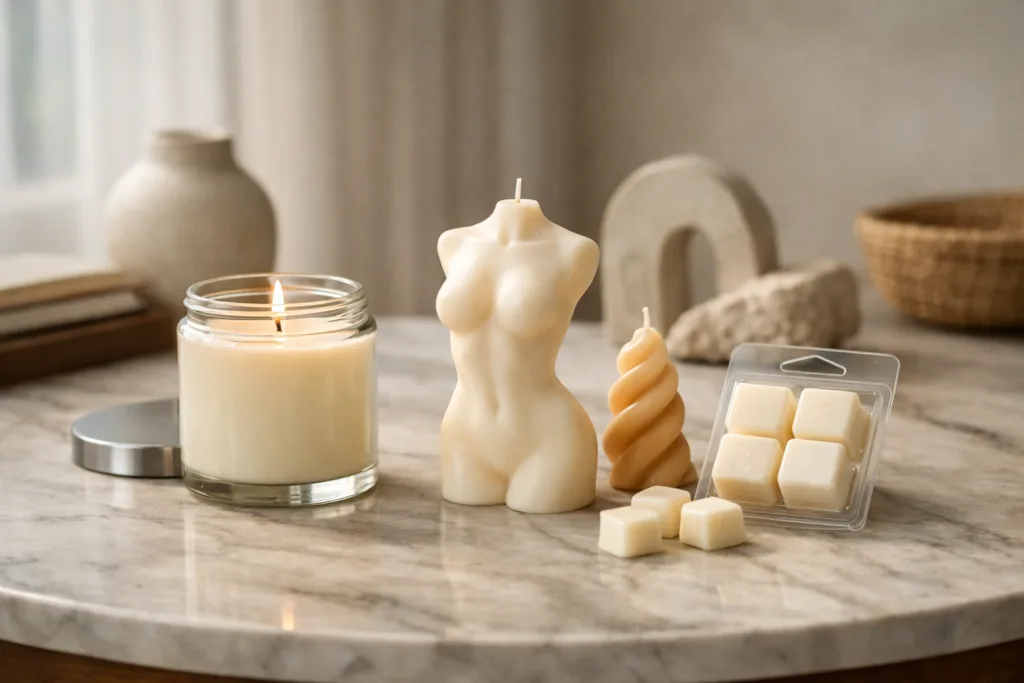
 Walk any serious retail floor today, from a premium home boutique in California to a concept store in Copenhagen, and you will notice the same thing: candles are no longer a side category. They are not just add-on gifts near the cash desk. They have become a visual language for how a brand wants to be felt.
That shift matters because candle buyers are no longer choosing a product only by fragrance. They are choosing a format.
A jar candle says one thing. A shaped candle says something else. Wax melts play a completely different commercial role again. If you are a retailer, importer, distributor, or private label brand, the question is not simply which one looks better. The real question is which format gives you the best chance of sell-through, repeat orders, cleaner inventory turns, stronger margins, and a brand story that can scale.
This is where many buyers lose time and money.
They choose shaped candles because they photograph beautifully, but later discover the format is trend-sensitive and slower to replenish. Or they start with standard jar candles because they feel safe, but fail to build enough visual distinction in a crowded market. Or they underestimate wax melts, treating them as secondary, when in fact wax melts can become one of the most profitable, repeat-driven formats in the whole fragrance line.
The right answer depends on who you sell to, how your customers shop, what your price architecture looks like, and what role the candle category is supposed to play in your assortment.
For large retailers, multi-store buyers, and serious private label programs, this decision is not cosmetic. It is strategic.
The global candle category continues to expand alongside the broader home fragrance market, supported by ongoing demand for self-care products, home ambience, gifting, and premium lifestyle goods. Within that market, candle format is becoming one of the clearest levers for differentiation. Jar candles remain the volume backbone of the category. Shaped candles increasingly sit at the intersection of fragrance, decor, and collectible object. Wax melts keep gaining ground because they are lightweight, scalable, and friendly to repeat-purchase models.
So which sells best?
There is no universal winner.
There is only the format that best matches your customer, your channel, and your commercial intent.
This guide breaks down jar candles, shaped candles, and wax melts from a retailer’s point of view, not as lifestyle fluff, but as a real product line strategy. We will compare margins, merchandising logic, shipping reality, replenishment potential, artistic value, and channel fit, so you can decide what belongs in your assortment and what does not.
Why Candle Format Matters More Than Most Buyers Think
Many buyers still approach candles as if scent is the whole game. Scent matters, of course. But in practice, format often determines whether a product performs at all.
Format influences first impression. It affects how the item sits on shelf, how it photographs online, how safely it ships, how easily it gifts, how fast it replenishes, and how expensive it feels before a customer even smells it.
A well-developed jar candle gives customers familiarity. It is easy to understand, easy to display, and easy to restock. A shaped candle introduces novelty, form, and visual theater. It can function almost like sculpture, especially when bought by design-conscious consumers or stores with a strong point of view. Wax melts, meanwhile, often win in practicality. They are compact, easier to sample across multiple scents, and naturally suited to fragrance-led shoppers who care less about vessel design and more about variety, value, and re-purchase.
For retailers, that means candle format affects six commercial variables at once.
First, it affects sales velocity. Familiar formats tend to move more steadily, especially in broad retail environments.
Second, it affects margin structure. Some formats carry better packaging efficiency, lower freight cost, or stronger bundle potential.
Third, it affects inventory risk. Novelty formats can spike quickly, but they can also date faster.
Fourth, it affects brand positioning. A heavy glass candle signals permanence and premium quality. A sculptural candle can signal artistry or trend authority. Wax melts can signal accessibility, versatility, or fragrance expertise.
Fifth, it affects operational complexity. Different formats require different molds, curing considerations, packing protections, and replenishment planning.
Sixth, it affects customer lifetime value. Formats with strong repeat behavior help turn a one-time buyer into a recurring customer.
That is why candle format should never be treated as an aesthetic decision alone. It is part assortment strategy, part supply chain decision, part branding choice.
Jar Candles: The Core Format That Still Carries the Category
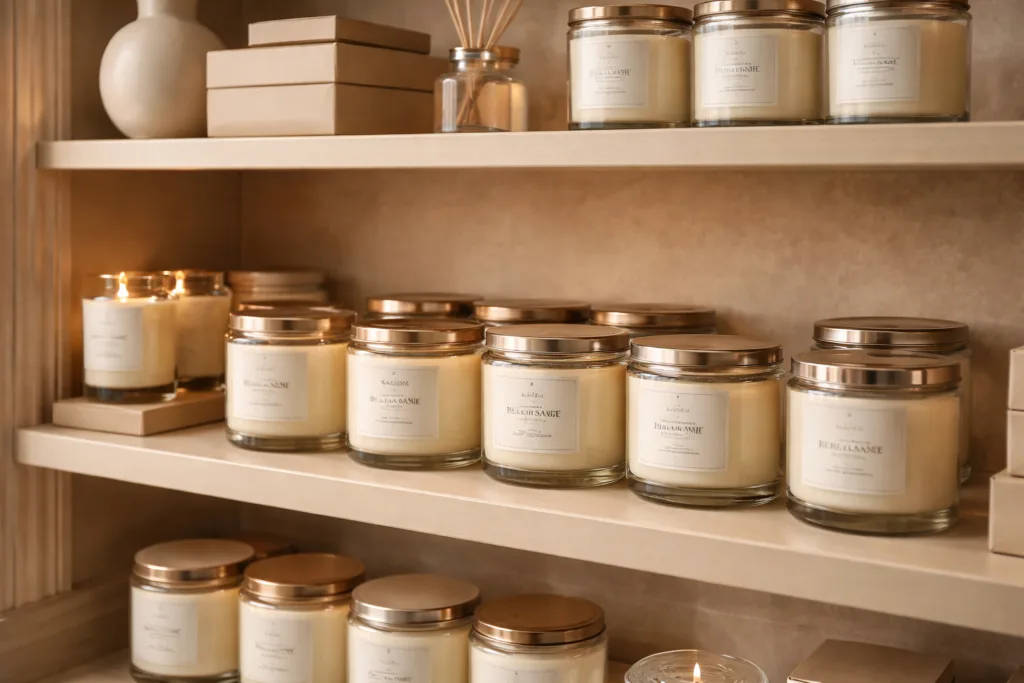 If one format still anchors the commercial candle business, it is the jar candle.
There is a reason serious brands, hotel groups, department stores, and home fragrance specialists continue to rely on jar candles as the foundation of their assortment. They are the most understood, the easiest to merchandise, and in many retail environments, still the most dependable sellers.
Jar candles work because they solve several problems at once.
They protect the wax.
They frame the fragrance as a complete product.
They support a wider price ladder.
They create space for branding through labels, cartons, lids, embossing, decoration, and vessel color.
They also sit naturally in nearly every retail context, from luxury shelves to spa counters to corporate gifting programs.
For large retailers, jar candles are often the best starting point because they create a clear hero SKU architecture. You can build a line by size, vessel color, fragrance family, or seasonal collection without constantly re-educating the customer. The format is familiar enough that the shopper immediately understands what they are buying.
That familiarity matters more than many newer brands want to admit.
In retail, the easier a product is to process visually, the faster it can convert. Jar candles have low explanation cost. Customers know how to use them, how long they are likely to burn, how to display them, and what kind of value they expect at different price points.
From a manufacturing perspective, jar candles also offer the best balance between customization and repeatability. A buyer can stay cost-efficient with stock glass, or build a more differentiated range through custom spray, screen printing, electroplating, ceramic vessels, unique lids, gift boxes, and secondary packaging. That flexibility is what makes jar candles ideal for both conservative retail chains and design-driven private labels.
Where Jar Candles Perform Best
Jar candles are strongest when the goal is consistency.
They are highly effective for:
- lifestyle and home decor retailers
- department store fragrance programs
- boutique hotel retail corners
- spa and wellness channels
- gifting assortments
- private label candle launches
- brands that need repeatable core SKUs
They also perform well in multi-store rollouts because they are easier to standardize. Packaging dimensions are predictable. Shelf presence is stable. Unit economics are easier to forecast.
For large buyers, this predictability is not boring. It is valuable.
Commercial Advantages of Jar Candles
The biggest commercial strength of jar candles is that they combine visual value with functional credibility.
A well-made jar candle can command a healthy retail price because the customer is not only buying fragrance. They are buying the vessel, the styling, the object quality, and often the post-use reusability of the container. That gives retailers more storytelling material and better perceived value.
Jar candles also support tiered assortment planning very well. You can build:
- entry 6 oz to 8 oz candles for accessible gifting
- mid-tier 9 oz to 12 oz candles for everyday premium use
- statement 14 oz and above candles for decor-driven customers
- multi-wick candles for gift or center-table impact
This is much harder to execute at scale with highly novelty-driven formats.
Limitations of Jar Candles
Jar candles are not perfect.
They are heavier than wax melts. Freight costs matter more. Glass breakage must be managed. Custom vessels can push MOQ upward. In a crowded category, a generic jar candle without distinctive design may feel interchangeable.
That is why large buyers should not ask only, “Should we do jar candles?” They should ask, “What role will our jar candle play?”
If the answer is “core revenue driver,” then the vessel, fragrance direction, packaging, and size strategy need to be designed accordingly.
A jar candle is often the best commercial format. It is not automatically the most memorable one.
Shaped Candles: The Most Visual Format, and Often the Most Strategic for Brand Theater
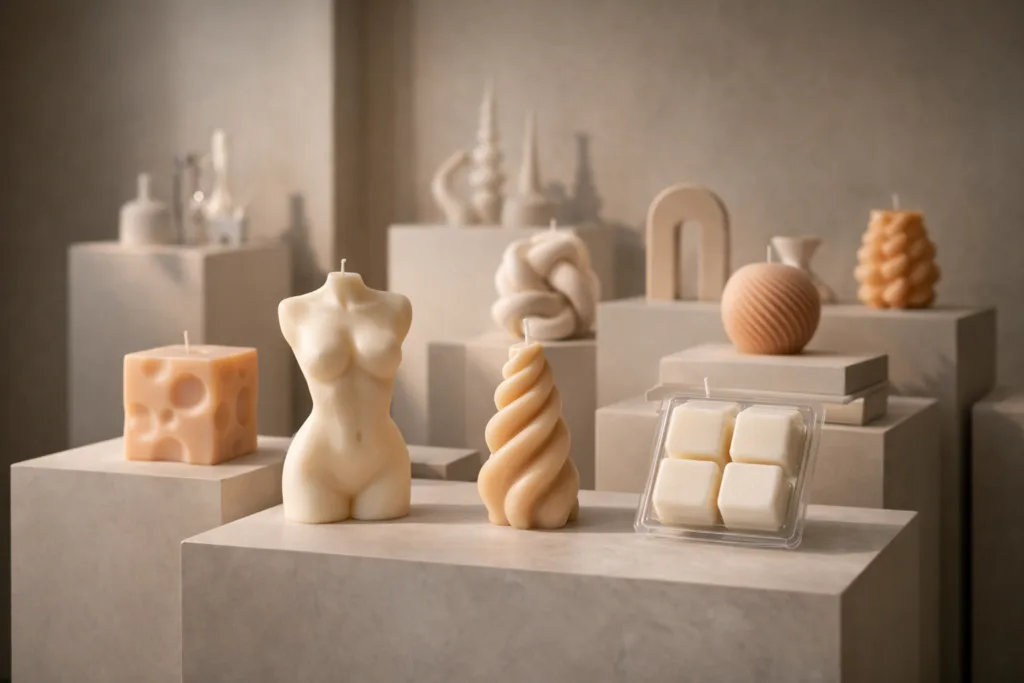 Shaped candles are where the category becomes more interesting.
This is the format that turns a candle from a consumable into an object. Sometimes it behaves like decor. Sometimes like a gift. Sometimes like a collectible. In the best cases, it behaves like all three.
That is why shaped candles have become so important for brands that need stronger visual distinction. In a social media environment where products are expected to carry narrative and image value, shaped candles can do what standard vessels often cannot: stop the scroll.
A torso candle, fruit candle, pastry candle, flower candle, abstract geometric form, twisted taper, shell form, chess piece, architectural silhouette, hand-cast bust, or artist-led sculptural candle all communicate something before fragrance ever enters the conversation.
For some brands, that is exactly the point.
Shaped candles can function as a category entry vehicle. A customer may buy one because it looks clever, beautiful, collectible, ironic, or giftable. This makes the format particularly valuable for design stores, museum shops, fashion-led retailers, concept boutiques, seasonal pop-ups, and younger brands building attention online.
But shaped candles should not be dismissed as just novelty. At the higher end of the market, they can also sit comfortably within art, design, and collectible retail.
This is where the category becomes especially relevant to artists.
Why Shaped Candles Matter for Artists and Design-Led Brands
For artists, shaped candles offer a rare commercial bridge between functional product and sculptural practice.
A painting or ceramic artwork may be difficult to scale for retail. A shaped candle, however, can translate an artist’s visual language into a more accessible object. That opens the door to collaborations with galleries, museum stores, design fairs, fashion brands, and limited-edition drops.
An artist-led candle line does not need to compete with mainstream scented candle programs. It can occupy a different logic entirely: object-based retail, collectible gifting, and limited capsule merchandising.
This is important because many large retailers today are not only seeking products. They are seeking points of view. A shaped candle designed by an artist, ceramicist, illustrator, or set designer gives a retailer an instant story.
It also allows for strategic segmentation:
- open-stock decorative shaped candles for impulse gifting
- limited-edition artist capsules for PR and editorial value
- sculptural seasonal collections for holiday windows
- fragrance-free decorative candles for table styling and decor programs
- vessel-inspired shaped candles that merge art object and burn function
For the right retailer, that can be far more powerful than another safe glass candle in a neutral box.
Where Shaped Candles Sell Best
Shaped candles perform best where visual merchandising matters as much as fragrance performance.
That includes:
- design stores
- concept boutiques
- museum or gallery retail
- gift shops with strong visual identity
- curated online shops
- fashion-adjacent lifestyle brands
- seasonal merchandising programs
- artists’ own direct retail channels
They are particularly strong when the store environment rewards discovery. A shaped candle often sells because it sparks conversation.
Commercial Advantages of Shaped Candles
Their biggest strength is differentiation.
In an oversupplied market, shaped candles give a buyer the chance to carry something that does not look like everyone else’s stock. They also deliver strong content value. For social media, lookbooks, holiday edits, and press pitching, shaped candles are often more photographable than standard jar formats.
They are also excellent for gifting because the visual story is immediate. The customer does not need to understand wax chemistry or fragrance nuance. The object itself does enough of the work.
For artists and collaborating brands, shaped candles are also flexible in price architecture. Depending on detail level, size, material blend, packaging, and whether the item is more functional or more collectible, they can enter the market at accessible prices or move upward into premium territory.
Limitations of Shaped Candles
The weaknesses are real and buyers should understand them early.
Shaped candles are often more labor-intensive. They may require custom molds, more delicate handling, more variable burn performance, and tighter packaging protection. Some look spectacular but are not practical as all-day burn products. Others are better positioned as decorative candles rather than core home fragrance items.
Trend exposure is another issue. What looks fresh this season may not replenish equally well next year. The format can be more sensitive to aesthetic cycles, especially if built around very literal motifs.
For large retailers, the smart move is usually not to make shaped candles the entire candle strategy. It is to use them as a high-impact visual layer within a broader assortment.
That is where they are most powerful.
Wax Melts: The Quiet Commercial Winner Many Retailers Still Undervalue
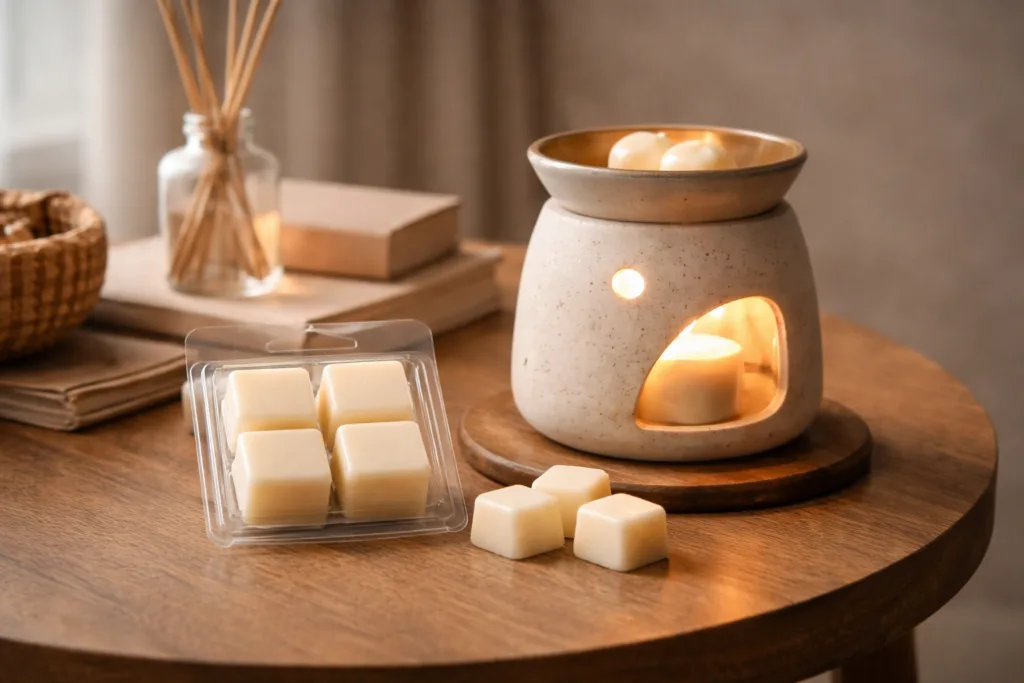 Wax melts rarely receive the same glamour as jar candles or sculptural candles, but from a business perspective, they deserve far more respect than they usually get.
In many brands, wax melts are not the side category. They are the repeat engine.
They are lighter, more compact, easier to ship, easier to sample across multiple fragrance profiles, and often more attractive for customers who want flexibility without open flame. In some markets, they also benefit from a strong enthusiast culture, where customers own warmers, rotate fragrances often, and repurchase more frequently than traditional candles.
For retailers looking at margin, assortment density, and basket-building, wax melts can be extremely efficient.
A customer who hesitates over a larger candle price may happily buy several melt variants in one order. That creates natural multi-unit purchasing behavior. It also encourages scent exploration in a way that jar candles do not always manage.
Where Wax Melts Perform Best
Wax melts tend to be especially effective in:
- e-commerce-focused brands
- fragrance-led home brands
- subscription boxes
- gift bundles
- value-conscious premium programs
- stores targeting younger households
- channels where shipping efficiency matters
They are also useful for retailers expanding a candle line without adding too much packaging weight or freight burden.
Commercial Advantages of Wax Melts
The strongest commercial advantage is repeatability.
Because wax melts are often lower-ticket and easier to rotate by scent, they naturally support replenishment. This can improve customer lifetime value, especially when a brand has a good fragrance library and releases new seasonal blends regularly.
The second advantage is shipping efficiency. Compared with glass candle jars, wax melts usually reduce fragility concerns and dimensional weight pressure. That matters for online brands, export orders, and cross-border retail.
The third is assortment flexibility. A retailer can carry more fragrances in wax melts than in heavier candle formats. That means broader scent presentation without the same inventory investment per SKU.
The fourth is sampling logic. Wax melts are ideal for fragrance discovery. A customer may test several scents in melts, then later commit to a larger candle.
This is why smart brands often use wax melts not as an isolated category, but as an on-ramp into the wider fragrance system.
Limitations of Wax Melts
Wax melts do not create the same immediate decor presence as a premium jar candle or sculptural statement piece. They depend more heavily on fragrance, packaging clarity, and education around warmers or usage habits.
In some premium retail environments, they may feel less luxurious unless the branding, wax quality, fragrance direction, and packaging execution are elevated.
Still, for the right channel, they can be among the most profitable and operationally efficient formats in the entire range.
Side-by-Side Comparison: Which Candle Format Wins on What?
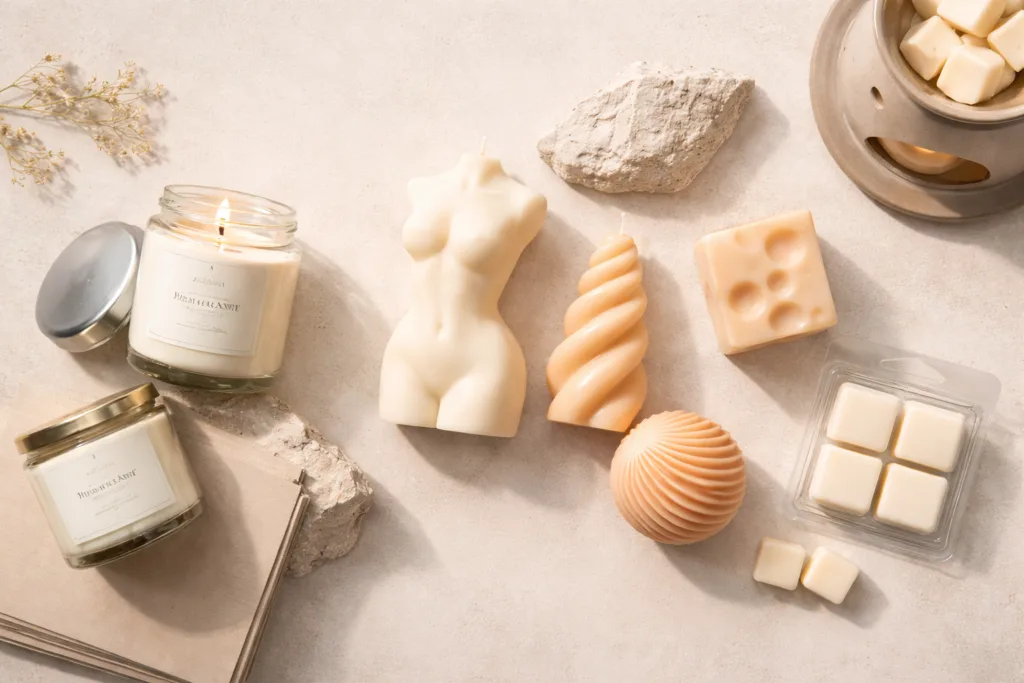 A clear comparison helps buyers avoid vague assumptions.
1. Best for Sales Stability
Jar candles win.
They are still the most commercially stable candle format because customers understand them immediately and retailers know how to merchandise them. If you need a dependable everyday seller, jar candles usually perform best.
2. Best for Visual Impact
Shaped candles win.
No other format creates faster visual differentiation. They are ideal for windows, social content, seasonal edits, and gift moments.
3. Best for Repeat Purchase
Wax melts win.
Their lower ticket, fragrance variety, and easier rotation make them naturally suited to recurring sales.
4. Best for Freight Efficiency
Wax melts win.
They are lightweight and generally easier to pack and ship than glass-based formats.
5. Best for Core Brand Building
Jar candles win.
For a retailer building a long-term fragrance assortment, jar candles create the strongest core SKU framework.
6. Best for Artistic Collaboration
Shaped candles win.
They are the most natural format for artists, designers, and collectible object programs.
7. Best for Broad Retail Distribution
Jar candles win.
Their format translates across mainstream premium retail, hospitality, gifting, and department store channels.
8. Best for Lower-Risk Fragrance Expansion
Wax melts win.
They let a brand add more scents without carrying the same vessel cost and inventory burden.
Which Format Fits Your Business Model?
Now the more practical question: which should you choose if you are actually buying for a business?
If You Are a Large Retailer
Start with jar candles as your core program.
A large retail environment needs dependable replenishment, broad customer understanding, and clean shelf logic. Jar candles should form the revenue backbone. Then add shaped candles selectively for campaign moments, holiday merchandising, or artist collaboration capsules. Add wax melts only if your customer is fragrance-engaged enough to support repeat behavior.
If You Are a Premium Home Brand
Use jar candles plus wax melts.
Jar candles create the visual identity. Wax melts increase basket size and repeat frequency. This is one of the most commercially balanced combinations in the category.
If You Are a Concept Store or Design Shop
Lean into shaped candles, but anchor with a few jar SKUs.
A concept store thrives on point of view. Shaped candles create discovery and storytelling. But a limited jar candle line helps stabilize sell-through and serve customers who still want a familiar fragrance format.
If You Are an Artist or Artist-Led Brand
Start with shaped candles.
Treat them as editioned objects, not mass-core candles. Consider collaborations with ceramic vessels, unusual pigments, or forms inspired by your own practice. Then decide whether fragrance should be central or secondary. For many artists, unscented or lightly scented sculptural candles can be more coherent than trying to compete head-on with mainstream fragrance brands.
If You Are an E-commerce Brand Focused on Repeat Revenue
Prioritize wax melts and jar candles.
Wax melts encourage trial and replenishment. Jar candles act as anchor products and giftable higher-ticket items. Shaped candles can be added later as campaign-driven launches.
If You Are Building a Corporate Gift or Hospitality Line
Start with jar candles.
They are easier to customize with labeling, packaging, sleeves, gift boxes, and scent storytelling tied to brand identity. Shaped candles can work for special projects, but jar candles usually offer better consistency and safer execution.
The Best Product-Line Strategy Is Usually Not One Format Only
This is where many brands make the wrong choice.
They assume they must pick a single winning format and build the whole line around it. In reality, the best-performing candle assortments often combine formats, because each one does a different job.
A strong retail strategy may look like this:
Strategy A: The Stable Growth Model
- Core line: jar candles
- Repeat layer: wax melts
- Seasonal spotlight: limited shaped candles
This works very well for serious private label brands, larger home retailers, and fragrance-led lifestyle companies.
Strategy B: The Design-Driven Merchandising Model
- Core line: a curated jar candle program
- Visual hook: shaped candles or artist capsules
- Gift expansion: small wax melt sets or fragrance samplers
This is ideal for boutiques, museum retail, and design shops.
Strategy C: The Artist Collaboration Model
- Hero line: shaped candles based on the artist’s visual language
- Supporting line: one or two premium jar candles for broader commercial sell-through
- Special release: collectible gift sets or editioned objects
This helps artists stay authentic while still giving retailers commercially viable entry points.
Strategy D: The E-commerce Repeat Model
- Core line: wax melts by fragrance family
- Upsell layer: mid-size jar candles
- Campaign layer: shaped candles for launch moments, holidays, or viral content
This works particularly well for brands that care about lifetime value and efficient shipping.
How Large Buyers Should Evaluate Candle Formats Before Committing
Before placing a large order, retailers should evaluate more than aesthetics.
Ask these questions:
1. Is this format meant to drive traffic, conversion, or replenishment?
Not every product needs to do everything. A shaped candle may drive attention. A jar candle may drive conversion. A wax melt may drive reorder frequency.
2. What is the expected role of fragrance?
Is scent the main reason people buy, or is visual form doing more of the work? This matters when deciding between shaped and jar formats.
3. What is the freight reality?
Large glass programs, especially in custom vessels, can change landed cost significantly. Wax melts may improve the margin equation on export-heavy business.
4. How trend-sensitive is the format?
Core jar candles are generally more stable. Literal shaped motifs may have shorter product life.
5. How much explanation does the product require on shelf?
The easier it is for a customer to understand the item, the faster the conversion usually is.
6. Can this format support line extension?
Can you build size, fragrance, season, gift set, or collaboration stories around it?
Retailers who answer these questions honestly tend to choose better.
What Sells Best in Practice?
If the question is strictly, “What sells best overall?” the answer is still jar candles.
They remain the strongest all-around format for large retail, broad consumer recognition, and repeatable merchandising. They are the commercial center of gravity in the category.
If the question is, “What sells best for visual differentiation and artistic storytelling?” the answer is shaped candles.
They are not always the most stable format, but they are often the most memorable. For artists, design-led brands, and retailers who need objects with personality, they can be invaluable.
If the question is, “What sells best for repeat-purchase efficiency and low-friction fragrance expansion?” the answer is wax melts.
They are often the smartest format for brands that care about reorder behavior, shipping efficiency, and fragrance variety.
So the real answer is this:
- Jar candles sell best as the core line.
- Shaped candles sell best as the visual statement line.
- Wax melts sell best as the repeat and assortment-expansion line.
The strongest brands know how to use all three with intention.
Final Verdict: Choose the Format That Matches the Job
There is no single candle format that wins in every channel, at every price point, for every kind of customer.
Jar candles are still the best choice for brands and retailers that need dependable, scalable, all-channel performers. They are the strongest commercial foundation.
Shaped candles are best when your brand needs aesthetic distinction, artistic energy, editorial value, or a giftable object that feels like more than a candle. They are especially powerful for design retailers and artists who want to bring visual language into product form.
Wax melts are best when you want lighter freight, higher repurchase logic, and a fragrance-first format that can expand without too much inventory pressure.
For most serious retail programs, the answer is not either-or.
It is hierarchy.
Use jar candles to build the backbone.
Use shaped candles to create attention and identity.
Use wax melts to drive variety and repeat purchase.
That is how you move from selling candles to building a candle category that actually works.
If you are developing a private label range, planning a retail assortment, or building an artist-led candle concept, the smartest next step is to map each format to a specific commercial purpose before you buy. When format and channel align, sell-through gets easier, storytelling gets sharper, and the line becomes much more profitable to scale.
FAQs
1. Are jar candles or wax melts better for repeat customers?
Wax melts are usually better for repeat purchasing because customers can try more fragrances at a lower ticket price and replenish more often. Jar candles, however, are stronger as core hero products and often generate higher single-order value.
2. Do shaped candles work for serious retail, or are they just novelty products?
Shaped candles can absolutely work for serious retail when they are positioned correctly. They perform especially well in design stores, artist collaborations, museum retail, fashion-led gifting, and seasonal merchandising. The key is to treat them as visual statement products, not always as the only core format.
3. What is the best candle format for a new private label brand?
For most new private label brands, the best starting combination is jar candles plus wax melts. Jar candles establish the brand visually and commercially, while wax melts add scent variety, improve shipping efficiency, and support repeat-purchase behavior.